Does oxalic acid harm the queen during treatment?
TL;DR
- Oxalic acid rarely harms a laying queen when you use it correctly, but the risk isn't zero.
- Vaporization during heavy brood is the most common source of queen problems.
- Dribble and extended-release methods during broodless periods show the lowest queen loss.
- The variable that matters isn't the acid.
- It's timing and application method.
What does oxalic acid actually do to bees?
Oxalic acid is a natural compound found in many plants, including rhubarb and spinach, and it shows up at trace levels in honey itself [1]. When bees contact it during treatment, the acid wrecks the mite's soft tissue and interferes with its energy metabolism. Bees have a hardened cuticle and can process small organic acid loads, so they tolerate it far better than Varroa destructor does.
That tolerance is real. It's also not unlimited. Worker bees handle standard-dose oxalic acid with low mortality when temperatures are right and the colony isn't already stressed. Queens are a different question, and beekeepers have argued about it for years. The short version from the research: queens usually survive, but the conditions around the treatment matter a lot.
Oxalic acid is registered in the United States by the EPA under the trade name Api-Bioxal, the only legally approved formulation for hive use [2]. The label sets concentration, dose, and method. Those specifications exist partly because higher doses do raise bee mortality. Use anything other than Api-Bioxal and you're outside the legal registration and outside the safety data.
Is there evidence that oxalic acid kills or damages queens?
Honest answer: it can, but it usually doesn't when the treatment is done right.
Field reports and studies have noted higher queen loss after oxalic acid vaporization (sublimation), especially when multiple treatments hit colonies with open brood. A 2019 paper in PLOS ONE found that repeated vaporization in colonies with capped brood was associated with lower queen acceptance than broodless treatments [3]. The researchers suggested that larval mortality from acid exposure may have disrupted colony cohesion in ways that stressed the queen indirectly.
The word "indirectly" carries the weight here. Oxalic acid doesn't seem to target queens on purpose. The damage is systemic. Kill enough nurse bees or disrupt brood care, and the colony's ability to support a queen degrades. A queen who's poorly attended, underfed, or surrounded by a collapsing worker population is a queen at risk no matter what started the collapse.
Direct contact between high-concentration vapor and a queen during vaporization is a separate worry. Some beekeepers find dead queens shortly after vapor treatments. The proposed mechanism: the queen is larger and less mobile, so she may take a higher effective dose than a worker that moves away or fans the vapor out fast. Nobody has good controlled data isolating this mechanism. The closest published work looks at dose-response in worker populations [4].
Does the application method (dribble vs. vaporization vs. extended-release) change the queen risk?
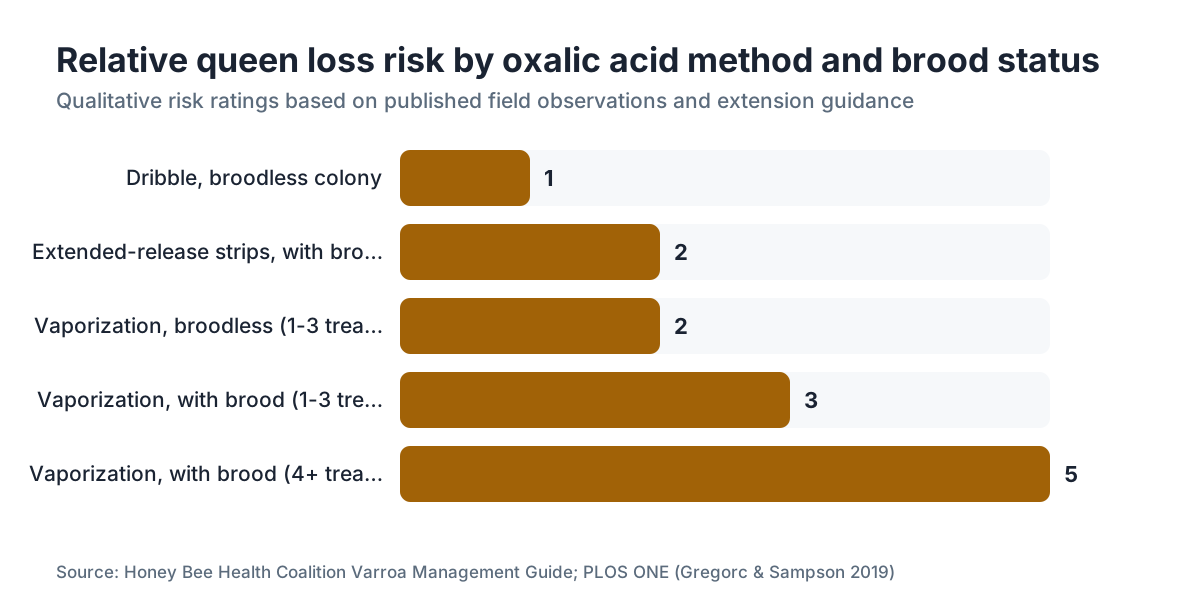
Yes, and the gap is big. The three EPA-registered methods for Api-Bioxal carry different queen-safety profiles.
| Method | Brood requirement | Relative queen risk | Notes |
|---|---|---|---|
| Oxalic acid dribble | Broodless strongly preferred | Low | Contact application; bees groom each other; well-studied |
| Oxalic acid vaporization | Broodless preferred; repeated doses with brood common | Moderate to higher with repeat doses | Vapor can reach queen directly; multiple treatments needed with brood |
| Extended-release (Api-Bioxal glycerin-soaked strips) | Works with brood present | Low to moderate | Slow-release reduces acute exposure; newer method with less long-term field data |
Dribble has the longest safety record. Studies going back to European approvals in the 1990s and early 2000s show very low queen loss when it's applied once to a broodless colony in late fall or winter [5]. The Api-Bioxal label allows one dribble treatment per broodless period, and that limit exists for a reason: a second dribble dose sharply increases worker mortality and, presumably, queen stress.
Vaporization caught on because it works with some brood present and allows multiple treatments. But the label spells out that repeated applications are needed precisely because the acid doesn't reach mites inside capped cells. You're chasing mites as bees emerge over several weeks. Each vapor dose exposes the queen again. Three to five treatments over 42 days, the protocol some beekeepers follow, means three to five exposures. Some queens shrug it off. Others don't.
Extended-release strips (glycerin-soaked cardboard or polystyrene loaded with oxalic acid) deliver a slow, continuous dose over weeks. The peak vapor concentration at any moment stays lower than a single vaporization event, which is probably why early queen-survival data looks better. The Honey Bee Health Coalition's Varroa management guide notes this method is approved but has less field history than dribble or vapor [6].
Does a broodless period really protect the queen?
Treating during a broodless period is the single best way to cut queen risk, and it happens to be the best mite-kill strategy too. Two goals, one window.
With no capped brood, every mite rides an adult bee (the phoretic phase), so one oxalic acid treatment can contact nearly every mite in the hive. Better efficacy and lower repeat-dose queen exposure at the same time. That's exactly the scenario the dribble method was built for.
Natural broodless periods swing with region and climate. Across much of the northern United States and Canada, colonies go broodless for some stretch of December through February. In warmer places, a true broodless period may be rare or absent, which puts beekeepers in Florida or California in a tighter spot: treat with brood present (accepting weaker efficacy and more repeat doses) or force a broodless period by caging the queen.
Queen caging puts broodlessness on your schedule. You confine the queen to a small cage inside the hive for 24 to 27 days. All existing capped brood emerges during that window, mites drop to phoretic status, and then you treat once. One treatment, broodless conditions, done. The colony loses some honey production during the cage period, and there's a small chance workers reject a caged queen, but for high-mite-load colonies in warm climates it's one of the more reliable moves. Your local extension service may have region-specific timing advice [8].
What temperature conditions matter for queen and colony safety?
The Api-Bioxal label says dribble treatments should go on when temperatures sit between 0°C and 10°C (roughly 32°F to 50°F) and the cluster is well-formed [2]. Those limits aren't arbitrary. In colder weather, bees cluster tight and the dribble reaches more of the cluster surface. Above 10°C, bees move more, the colony may hold more brood, and the acid spreads unevenly.
For vaporization, the label says less about temperature because the delivery mechanism is different. Still, most experienced beekeepers avoid vaporizing during the heat of summer when they can. High ambient heat plus the vaporizer's own heat stresses colonies. Cold-weather vaporization usually goes fine as long as the hive isn't packed with ice and the bees can still cluster.
Temperature stress stacks on top of treatment stress. A colony already beaten down by a late-summer heat wave, a nectar dearth, and a high mite load is in no shape to absorb even a clean treatment. Treat a colony that's already showing stress and the acid may not be what kills the queen. It may just be the last push.
How often can you treat with oxalic acid without endangering the queen?
The Api-Bioxal label is the legal ceiling. Dribble: one application per broodless period. Vaporization: up to three treatments, 5 days apart, per broodless period. Extended-release strips: one treatment lasting up to 56 days [2].
The phrase "per broodless period" in the dribble and vapor registrations is the part people miss. You don't reset the counter by waiting a few weeks. One broodless period, one course. Go beyond the label limits and you're applying an unregistered use in the United States.
In practice, plenty of beekeepers run oxalic vapor with brood present, outside the broodless-period restriction, using the repeated-vaporization interpretation, and report acceptable queen survival. But it's off-label, the data is anecdotal, and queen loss shows up often enough that it appears consistently in beekeeper forums and some research. I'd stick to the label. Not out of blind compliance, but because the limits track the actual safety data.
Managing mites across a full season without hammering the colony with repeated acid takes a broader plan. The Varroa mite management cycle, which combines monitoring, threshold-based treatment decisions, and rotation across the year, is worth learning in full.
What does the EPA product label say about queen safety?
The Api-Bioxal EPA registration (EPA Reg. No. 69688-11) makes no specific queen safety guarantee, but it does spell out conditions that lower risk [2]. The label uses language like "do not treat colonies more than once per broodless period" for dribble, and it says treatments must not be applied when honey supers for human consumption are on the hive.
The EPA's Pesticide Product Label System is publicly searchable, and the current Api-Bioxal label is available from the EPA's website. If you're ever unsure whether a specific practice is allowed, that label is the authoritative source, not a forum post.
One concrete piece of label guidance touches queens directly: the dribble dose is 5 mL per seam of bees, up to 50 mL per colony (10 seams). Exceed that and you raise bee toxicity without proportionally raising mite kill. You also raise queen exposure. More is not better with oxalic acid. The dose-response curve flattens for mite kill and steepens for bee mortality above label doses.
Are some queens more vulnerable than others?
Age and genetics both matter, though the genetics research is thin.
Older queens, usually those in their second or third laying year, may already have declining sperm viability and sit close to natural supersedure. A stressful treatment can tip a marginal queen into failure faster than it would touch a healthy first-year queen. This isn't unique to oxalic acid. Any real colony disruption speeds up the timeline for queens that were already borderline.
New queens, including those just starting to lay after a recent mating flight, are vulnerable in a different way. Their pheromone signature is still settling, worker relationships are new, and any disruption during the first few weeks of her reign can trigger supersedure or loss. Timing a treatment right as a new queen begins to lay is probably a poor idea, though again, controlled data on this exact scenario is limited.
Africanized honey bee genetics deserve a quick mention. Colonies with africanized honey bee genetics replace queens more often and react harder to disruption in general. That doesn't mean oxalic acid is more toxic to their queens, but beekeeper experience in Africanized territory says keep treatments as low-disruption as you can.
Bottom line: a young, healthy, first-year queen in a strong colony, treated during a broodless period at label doses, is almost certainly going to be fine.
What signs suggest a queen was harmed after an oxalic acid treatment?
Queen failure after any treatment, oxalic acid included, usually surfaces within two to four weeks. Watch for a colony that suddenly has no eggs, no young larvae, and maybe emergency queen cells built on older larvae.
Specific signs to watch:
No eggs or young larvae 10 to 14 days post-treatment. If you treated a broodless colony, the first new eggs should appear within a week or so as the queen resumes laying. No eggs in that window is a red flag.
Irregular laying pattern after the resumption. A spotty, scattered pattern with empty cells across the brood frame can mean the queen was stressed or damaged and is struggling. It can also mean normal post-stress recovery, so don't panic after one inspection.
Emergency queen cells. If the colony has decided to supersede, they build queen cells on the face of a frame. This isn't always a disaster. Sometimes bees replace a subtly failing queen on their own timetable that just happens to fall near a recent treatment.
One caution: if you treated a colony that already carried a high mite load, post-treatment population decline and brood irregularity may be mite damage that predated the treatment, not something the acid caused. Mites wreck brood and queen health on their own. Separating oxalic acid effects from pre-existing mite damage is genuinely hard in a real apiary.
How do Varroa researchers and extension apiarists recommend protecting queens during treatment?
The consensus from published extension guidance and the Honey Bee Health Coalition holds fairly steady: treat broodless when you can, use label doses, don't exceed the allowed number of applications, and inspect the colony 10 to 14 days after treatment to confirm the queen is active [6].
The University of Minnesota Bee Lab and other major apiculture extension programs note that oxalic acid has a strong safety record when used correctly, with queen loss in well-managed treatments low enough that treating beats leaving a high mite load alone [7]. The mites themselves, and specifically the viruses they carry like Deformed Wing Virus, are a far more consistent cause of queen failure and colony collapse than correctly applied oxalic acid.
The Honey Bee Health Coalition's Varroa management guide, updated regularly, frames it plainly: oxalic acid is one of the most beekeeper-friendly treatments available when you respect timing and brood status. Run a seasonal protocol that includes monitoring with an alcohol wash or sugar roll, treating at a 2 to 3 percent infestation trigger, and hitting broodless colonies in late fall and early winter, and queen loss from oxalic acid should be rare [10].
For beekeepers building or managing treatment supplies, the beekeeping supplies field includes several vaporizer types and delivery tools that change ease of use and dose consistency, which feeds back into safety.
VarroaVault's free varroa management tools include a seasonal treatment calendar and mite load tracker that help you time your broodless-period treatment window precisely. That single step does more to protect your queen, while still treating hard, than anything else on this page.
What should you do if you suspect your queen was harmed by a treatment?
First, confirm the diagnosis. Open the hive 10 to 14 days after treatment and look hard for eggs. Eggs are tiny and white, standing upright in the bottom of cells, and you need good light and a steady hand to spot them. If eggs are there, the queen is alive and laying. Concern over.
If no eggs and no larvae, check for emergency queen cells. Their presence means the colony already knows the queen is gone or failing and is trying to replace her. Your job then is to leave it alone for two to three weeks and let the process work. Premature inspections can make bees abandon developing queen cells.
No eggs and no queen cells means the colony may be queenless with no recovery mechanism. That's an emergency. Introduce a mated queen from another source, combine the colony over newspaper with a queenright colony, or drop in a frame of eggs and young larvae from another hive to let them build emergency cells. Acting within a few weeks of queenlessness leaves you options. Waiting months does not.
Write down what happened: treatment date, method, dose, temperature, rough brood state at treatment, and when you first noticed the problem. This log helps your own learning and any conversation with your local extension apiarist. Many state apiarists will help diagnose post-treatment losses if you reach out, and some states run reported-loss programs worth knowing about. Check your state's department of agriculture website.
For anyone tracking the full picture of varroa mite biology and treatment responses, keeping records across seasons is how you actually get better at this.
Frequently asked questions
Can you treat a colony with a newly mated queen using oxalic acid?
Better to wait. A newly mated queen whose laying pattern hasn't settled is more likely to be superseded if the colony gets disrupted. If mite levels are at a genuinely dangerous threshold, treat, but use the mildest approach (broodless dribble if possible) and inspect closely two weeks later. In a high-load situation the mites are a bigger threat than the treatment.
Will oxalic acid hurt queen cells?
Possibly, yes. Capped queen cells hold developing queens, and there's reasonable concern that vapor could affect developing pupae just as it affects worker brood. If you have capped queen cells and you need to treat, the extended-release strip method is likely lower-risk than direct vaporization over the frame where the cells sit. Timing treatment after queens emerge is safest.
Does oxalic acid affect queen pheromones or egg-laying rate?
There's no published evidence that correctly applied oxalic acid permanently alters queen pheromone output or long-term laying rate. Some beekeepers report a brief pause in laying after treatment, especially after vaporization, but most queens resume normal activity within a week or two. A temporary drop in laying during a stressful event is a known queen response to many disruptions, not something specific to oxalic acid.
Is vaporization or dribble safer for the queen?
Dribble during a broodless period has the longer safety record and lower repeat-exposure risk. Vaporization is more convenient and works with some brood present, but repeated doses mean repeated queen exposure. For queen safety specifically, dribble on a broodless colony is the lower-risk choice. If you must treat with brood present, extended-release strips produce lower peak vapor concentrations per event than direct vaporization.
How many oxalic acid vapor treatments are safe before queen loss becomes likely?
The Api-Bioxal label allows up to three vaporization treatments, 5 days apart, per broodless period. Beyond that, the data gets thin and anecdotal. Field reports suggest queen loss risk climbs meaningfully after four or more vapor treatments, especially on colonies with significant brood present. Staying at or under three applications, timed to a broodless or near-broodless colony, keeps you where the safety data is solid.
Does the ambient temperature during treatment change queen risk?
Yes. Very cold treatments (below about 4°C, or 40°F) slow bee activity, so bees cluster and the queen stays put, taking more concentrated exposure from a dribble. Warm-weather vaporization, on the other hand, can stress colonies through heat plus acid vapor. The label's temperature guidance for dribble (0°C to 10°C) reflects the conditions where the safety profile is best understood. Staying inside those ranges cuts the guesswork.
Can high mite loads cause the same queen problems as oxalic acid treatment?
Absolutely, and this is one of the most important things to understand. Varroa mites vector Deformed Wing Virus and other pathogens that directly damage brood, worker bees, and queens. High mite loads can cause queen failure, poor brood patterns, and collapse on their own. A queen that fails two weeks after treatment may have been failing from mite damage that predated the treatment. Treating early, before loads get high, protects queen health more than withholding treatment does.
Is Api-Bioxal the only legal oxalic acid product for bee hives in the US?
Yes. Under the current EPA registration, Api-Bioxal (EPA Reg. No. 69688-11) is the only oxalic acid product registered for use in honey bee colonies in the United States. Other oxalic acid products, including technical-grade wood bleach, are not registered for this use, and applying them in a hive is illegal under FIFRA. The Api-Bioxal label specifies formulation, dose, and method, and those specifications are what the safety data is built on.
Will the queen leave the hive or ball after an oxalic acid treatment?
This gets reported anecdotally but isn't a well-documented consistent response. Queens don't typically abscond as a reaction to oxalic acid the way a full colony might swarm under other stress. More often, if a queen is affected, she stays in the hive but reduces laying or fails gradually. Absconding or balling after treatment is more likely a pre-existing acceptance problem or a separate stressor than a direct oxalic acid effect.
Should I remove honey supers before treating to protect the queen area?
Honey super removal is required by the Api-Bioxal label to keep honey for human consumption clean, not specifically for queen protection. The queen is almost never in honey supers anyway. Even so, treating a full production colony with supers on is an off-label use regardless of queen concerns. Remove supers, treat correctly, and put them back after the waiting period the label specifies.
Does treating in fall versus spring change queen risk?
Fall treatment of a broodless or near-broodless colony is the gold-standard approach for both efficacy and queen safety. Spring treatment with brood present carries more queen-exposure risk and works less well against mites, since many mites hide in capped brood. If you missed fall and mite loads run high in spring, an extended-release strip or carefully timed vapor treatment may be necessary, but the queen risk is higher than a clean fall broodless treatment.
Can I use oxalic acid if I'm doing a split or have a queenless colony?
Queenless colonies can be treated with oxalic acid, and some beekeepers use the queenless window after a split on purpose to get a broodless-condition treatment in. No queen means you can't harm her directly. Just watch for open queen cells: vapor exposure may damage developing queens inside them. Time treatment before cells are capped, or wait until after queens have emerged and the new queen has mated.
Sources
- National Center for Biotechnology Information, PubMed: Oxalic acid in honey bee biology review: Oxalic acid is a naturally occurring organic acid present at trace levels in honey and many plants.
- EPA Pesticide Product Label System, Api-Bioxal (Reg. No. 69688-11): Api-Bioxal is the only EPA-registered oxalic acid product for honey bee hives in the US; label specifies one dribble treatment per broodless period, up to three vapor treatments 5 days apart, and temperature and dose limits.
- PLOS ONE, Gregorc & Sampson 2019: Oxalic acid treatment efficacy and bee mortality with brood present: Repeated vaporization treatments in colonies with capped brood were associated with reduced queen acceptance rates compared to broodless treatments.
- Journal of Apicultural Research: Oxalic acid dose-response in worker bee populations: Dose-response studies in worker populations show bee mortality increases at above-label oxalic acid concentrations; direct queen-specific dose-response data is limited.
- Charriere & Imdorf, Swiss Bee Research Centre: Oxalic acid safety in winter broodless colonies: Dribble applications to broodless winter colonies show very low queen and worker loss rates in studies going back to European approvals in the 1990s and early 2000s.
- Honey Bee Health Coalition, Varroa Management Guide (current edition): Extended-release oxalic acid strips are approved but have less field history than dribble or vapor; the coalition recommends treating broodless when possible and inspecting 10-14 days after treatment.
- University of Minnesota Bee Lab, Extension Apiculture Resources: Queen loss rates in properly managed oxalic acid treatments are low enough that treatment is strongly preferable to leaving a high mite load untreated; mites and the viruses they vector are a more consistent cause of queen failure than correctly applied oxalic acid.
- Penn State Extension, Varroa Mite Management in Honey Bee Colonies: Inducing broodlessness by queen caging allows a single effective oxalic acid treatment in warm climates where natural broodless periods are rare.
- USDA Agricultural Research Service, Bee Research Laboratory publications: Varroa mites vector Deformed Wing Virus and other pathogens that directly damage queens, brood, and worker bees, making high mite loads themselves a primary cause of queen failure.
- Oregon State University Extension, Varroa Mite Control for Beekeepers: The 2-3 percent mite infestation rate is a widely used treatment threshold; treating before this threshold is exceeded protects queen health more than withholding treatment.
- EPA, FIFRA (Federal Insecticide, Fungicide, and Rodenticide Act) pesticide registration requirements: Applying unregistered oxalic acid products (e.g., technical-grade wood bleach) in bee hives is illegal under FIFRA; Api-Bioxal is the only registered formulation.
- Apidologie: Review of oxalic acid efficacy and safety in Varroa control: Oxalic acid has a strong overall safety record for honey bee colonies when applied at label doses during broodless or near-broodless conditions.
Last updated 2026-07-09