How long does glycerin oxalic acid treatment take to work?
TL;DR
- Glycerin-based oxalic acid strips (like Api-Bioxal extended-release pads) need 4 to 12 weeks in the hive to reach maximum mite knockdown.
- Most of the kill happens in the first 4 to 6 weeks, but full brood-cycle coverage needs the longer window.
- Treatment during a broodless period cuts that timeline hard because no capped brood is left to shield mites.
What is glycerin oxalic acid treatment and how does it work?
Oxalic acid dihydrate dissolved in glycerin is the extended-release form of oxalic acid varroa treatment. You've probably seen it as commercial products like Api-Bioxal applied to cardboard or wood popsicle sticks, or as pharmacy-grade oxalic acid mixed with glycerin at home (where regulations allow it, and only with an EPA-registered product). The glycerin is a slow carrier. Instead of one acute dose the way a dribble or a vapor treatment delivers it, the strip lets oxalic acid migrate off its surface over weeks, coating the bees and the mites riding them.
Mites die on contact with oxalic acid. The mechanism isn't fully understood, but the acid damages the mite's cuticle and dries it out. Phoretic mites, the ones riding adult bees, get exposed every time a bee walks across or grooms near a treated strip. Mites sealed inside capped brood cells stay protected until those bees emerge. That's the whole reason the treatment clock runs on the brood cycle instead of a single contact event [1].
Api-Bioxal is the only oxalic acid product with full EPA registration for use in the U.S. The label spells out the approved application methods: dribble, vaporization, and the extended-release glycerin method using Api-Bioxal-soaked pads. The label language is specific: "Thoroughly soak the absorbent pads (cardboard type) with the Api-Bioxal solution." That application method and timing guidance comes straight from the registered label, and beekeepers are legally required to follow it [2].
Glycerin strips sit in their own category across the full varroa mite treatment landscape. They're slower than vaporization and take more planning. But they work through a colony's natural brood cycle without repeated entries, and for some operations that alone decides the choice.
How long do glycerin oxalic acid strips stay active in the hive?
Strips stay active roughly 4 to 8 weeks under typical summer conditions, and up to 12 weeks in cooler temperatures where the glycerin evaporates more slowly [3]. Past 12 weeks, residual efficacy drops off a cliff because the oxalic acid is largely gone.
Temperature drives most of the variation. A strip in a hot August hive in Georgia burns through its oxalic acid load faster than the same strip in a Vermont hive in September. Humidity matters too. Dry conditions speed up evaporation of the glycerin-acid mix. Beekeepers in arid climates report strips looking spent (dark, dry, rigid instead of moist and pliable) in as few as 3 to 4 weeks during summer.
Colony population is the third factor. A strong colony with 40,000 or more bees works the strips constantly and pulls the acid off faster than a small nuc does. That's actually good news, since more contact means more mites meet the acid. It also means the strip's working life is shorter in a booming colony.
You can gauge remaining activity by looking. Pliable, slightly greasy strips are still releasing. Dry, stiff strips that crumble at the edges are spent. Nobody has published a precise colorimetric guide for this, so treat the visual check as rough guidance, not a measurement.
When does the mite drop actually start after placing glycerin strips?
Mite drop starts within the first few days [3]. Phoretic mites get hit fast once bees are walking across and near the treated surfaces. You'll often see dead or dying mites on your monitoring board within 3 to 5 days of placement.
The early drop is encouraging and also a little misleading. In a colony with active brood, most of the mite population is sealed inside capped cells. A worker cell stays capped about 12 days. Drone brood is capped longer, roughly 14 to 15 days. Until those bees emerge and their mites go phoretic, your infestation count won't reflect the full treatment effect.
That's why researchers and the Honey Bee Health Coalition's Varroa Management Guide push you to watch alcohol wash counts across a 4 to 8 week window instead of the first sticky board drop. The Coalition's guide notes that extended-release treatments work across multiple brood cycles, and a single wash taken two weeks after placement may still read high because a wave of mites is still emerging from capped brood [4].
Here's the practical version. Place strips. Do nothing for three to four weeks. Then wash a sample of 300 bees. If the count sits above your action threshold (typically 2%, or 2 mites per 100 bees, for most extension recommendations), leave the strips another few weeks and recheck. Don't pull strips early just because the mite board looks quiet.
What's the full treatment timeline, from placement to removal?
Here's a realistic week-by-week picture.
Week 1 to 2: Strips are fully active. Phoretic mites are dying. Mite drop on your monitoring board is visible and often heaviest in this window. The colony may show slight disturbance around the strips (bees chewing at cardboard edges), which is normal.
Week 2 to 4: Phoretic drop continues but slows as that population thins out. The first wave of capped brood from treatment start is now emerging and releasing the mites it was protecting. This is a key kill window.
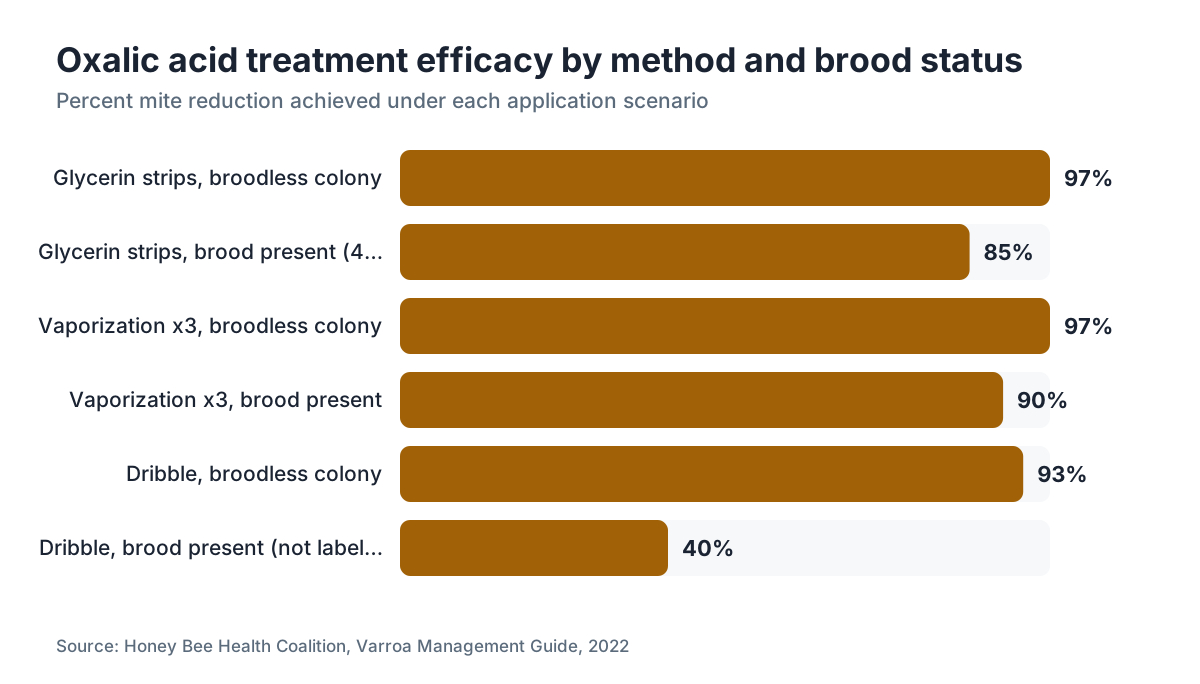
Week 4 to 6: The second brood cycle is partially covered. Strips are still releasing in most climates. A lot of the cumulative efficacy builds here. Virginia Tech research found oxalic acid glycerin efficacy at 42 days reached roughly 80 to 90% mite reduction in colonies with brood, against 97% or better in broodless colonies [3].
Week 6 to 8: Strips may be near exhaustion in warm climates. Check their condition. If the colony carried significant brood at treatment start, this is usually when you'd run a follow-up mite wash to confirm you're below threshold.
Week 8 to 12: Maximum label-allowed duration for a treatment episode. Remove spent strips. Leaving exhausted strips past 12 weeks does nothing and just adds material to the hive. Always follow the label's maximum duration guidance [2].
Still above threshold after a full strip cycle? The right move is usually a faster method like vaporization, or a different chemical class, rather than stacking more strips on top.
Does the timeline change if there's no brood in the hive?
Yes, dramatically. This is the single biggest timing variable in the whole protocol.
During a broodless period (a natural winter cluster, or an induced broodless state from caging the queen), every mite in the colony is phoretic. There's nowhere to hide. Glycerin strips on a broodless colony can hit 95 to 97% or better efficacy in 4 weeks or less, matching or nearly matching what vaporization does in a broodless hive [3].
Winter is the obvious broodless window across most of North America. In colder climates, colonies go broodless from roughly November through January or February, depending on latitude. This is when a single glycerin strip treatment can clear an infestation cleanly, with no repeat interventions.
Some beekeepers build an artificial broodless period in fall by caging the queen for 3 to 4 weeks, then treating. It takes planning and a tolerance for finding and caging a queen. The payoff is much cleaner mite control.
The Honey Bee Health Coalition's Varroa Management Guide specifically recommends timing oxalic acid treatments to broodless periods for maximum effect [4]. That's sound advice for any oxalic acid method. Glycerin strips just happen to be the most practical option when you want to leave something in the hive for weeks without opening it again.
Treating with brood present? Budget for the full 6 to 8 week window and accept you won't see 97%. You might get 75 to 85%, which can still drop a colony below threshold if the starting infestation wasn't already out of control.
How does glycerin strip treatment time compare to dribble and vaporization?
The three EPA-registered oxalic acid methods have very different time profiles. Here's a direct comparison.
| Method | Application time | Onset of kill | Full efficacy window | Best for |
|---|---|---|---|---|
| Dribble (OA solution) | 5 to 10 min per hive | 1 to 3 days | 1 treatment, broodless only | Winter broodless clusters |
| Vaporization (OA vapor) | 2 to 4 min per hive | 1 to 3 days | 3 treatments, 5 days apart | Any season, with or without brood |
| Glycerin strips | 5 to 10 min per hive | 3 to 5 days | 4 to 12 weeks continuous | With brood present, minimal-entry strategy |
Vaporization applied three times over 10 to 14 days (to cover one brood cycle's phoretic mite turnover) is the fastest complete treatment when brood is present. Each vapor treatment takes 2 to 4 minutes per hive. The catch is you open or access each hive three separate times.
Glycerin strips trade speed for convenience. Open the hive once, place strips, walk away. The colony does the rest. For someone running 20 or more hives across multiple yards, that single-entry aspect has real labor value. For someone with 3 hives in the backyard, vaporization during a broodless fall period is probably faster and more definitive.
The dribble method is fast but single-dose. It only works in broodless colonies per the label, so it's functionally limited to late fall and winter in most regions [2].
For sourcing any of these tools, the beekeeping supply companies you already buy from will stock vaporizers, syringes, and the cardboard pads for glycerin strips.
How do you mix and apply glycerin oxalic acid strips?
For the Api-Bioxal extended-release method, the label calls for soaking cardboard-type absorbent pads in a solution of Api-Bioxal powder dissolved in glycerin and water. The ratio and volume per pad are printed on the product label, and you follow them exactly because Api-Bioxal is a federally registered pesticide [2].
The general process: dissolve Api-Bioxal powder in warm water, then combine with food-grade glycerin at roughly a 1:1 to 1:2 water-to-glycerin ratio per the label spec. Soak the pads through, let the excess drip off, and place one pad per brood box between two frames in the lower part of the cluster. In a strong double-deep colony, one pad per box (two total) spreads out the surface area bees will contact.
Wear nitrile gloves. Oxalic acid irritates skin and mucous membranes. Eye protection matters too. You don't need a respirator for strip placement the way you might for vaporization, but don't handle strips barehanded and don't rub your eyes afterward.
Homemade glycerin strips from pharmacy-grade oxalic acid are not legal in the U.S. unless you're using a product with a valid EPA registration number. Full stop. Some beekeepers make them anyway, and the efficacy data from homemade versions gets cited in forum discussions, but the legal and liability risks are real. This article won't walk you through an off-label preparation.
To stock a full treatment program across a season, the beekeeping supplies category on your preferred vendor's site is the place to start. Strips, pads, glycerin, and protective gear are all standard stock.
What mite wash results should you expect after treatment ends?
A successful glycerin strip treatment in a broodless colony should take an above-threshold infestation (say, 3% or higher) down below 1%, often below 0.5% [3]. Those are the numbers from the Virginia Tech research behind most current U.S. extension guidance.
With brood present, expect less. Roughly 75 to 90% mite reduction is realistic for a 6 to 8 week glycerin strip treatment, depending on starting infestation, colony population, and ambient temperature. The Honey Bee Health Coalition and most university extension programs set the action threshold at 2 mites per 100 bees (2%) through most of the active season [4]. If your post-treatment wash comes back at 1.5%, you're below threshold but not by much. Monitor monthly and be ready to treat again.
If your post-treatment count is still above 3%, something went wrong. Check strip condition (were they spent before 4 weeks?). Check that the colony actually contacted the strips (a big cluster can bypass poorly placed pads). And ask whether the starting infestation was high enough that even 80% knockdown left too many mites alive.
Keep records. A mite count you're holding in your head is nearly useless. A written log of date, count, treatment applied, and follow-up count is what lets you see patterns across seasons. VarroaVault's free hive tracking tools are worth bookmarking here, since they log washes and treatment dates in one place with no setup fuss.
University of Minnesota Bee Lab materials recommend confirming treatment success with a follow-up wash 3 to 4 weeks after strip removal, not right after, because residual kill can continue briefly as the last strips exhaust their acid load [5].
Are there any risks or side effects from leaving strips in too long?
The main documented concern with extended glycerin strip treatments is residue building up in wax. Oxalic acid occurs naturally in honey and beeswax at low levels, but repeated or very long treatments can push those residues higher over time. A 2021 study found wax from colonies treated with oxalic acid glycerin held higher oxalic acid concentrations than untreated controls, though the measured levels still fell within ranges considered safe under current guidelines [6].
Bee mortality from glycerin strips is low when they're used as directed. The slow-release format means bees never take the acute high dose they might get from a vapor treatment run too long. Some colonies chew at the cardboard and haul material out, which cuts efficacy but doesn't hurt the bees.
Leaving totally spent strips in the hive past 12 weeks wastes time but isn't a documented safety hazard. Spent strips stop releasing acid and become inert cardboard. The real cost is false confidence: you think you're still treating when you're not.
One practical note. If you place strips in a honey super or near frames you'll harvest soon, pull the strips before adding supers. The label prohibits application when honey supers are present [2]. This isn't only regulatory caution. Glycerin is hygroscopic and can change comb moisture near treated frames.
When during the beekeeping season should you do glycerin strip treatment?
The best timing windows, in order of efficacy:
- Late fall broodless period. Across most of the continental U.S. that's October through December. The queen has stopped or slowed laying, brood is minimal, and a 4-week glycerin strip treatment can clear the infestation before the winter cluster forms. This is the highest-payoff treatment slot of the year.
- Late summer after the main honey flow. August through September, before you set winter bees on the cluster. Mite populations peak in late summer, often 3 to 5 times spring levels, because the colony's brood is declining while mite reproduction keeps going. Treating in this window with glycerin strips at 6 to 8 weeks, plus a mite wash before and after, is the most common protocol for sideliners running moderate hive counts.
- Spring buildup. If you come out of winter above threshold, strips can go in early. The catch is that spring colonies grow fast, so the brood window means strips need the full 8 weeks to do real work. Don't let a spring treatment lull you into skipping a recheck before the summer mite explosion.
Summer treatments during peak honey flow get complicated by the honey super prohibition on the label. You can treat in summer, but only on hive bodies with no supers present, which usually means pulling supers first. That's a heavy operational cost.
The Honey Bee Health Coalition's seasonal management calendar (part of their Varroa Management Guide) lays these windows out clearly and is one of the better free references around [4]. Their threshold-based decision tree is worth printing and keeping in your hive tool box.
Does glycerin oxalic acid treatment work in all climates?
It works across climates but performs differently. Strip efficacy runs highest in moderate temperatures (50 to 85 degrees F ambient). Below 50 degrees F, glycerin gets more viscous and the acid releases more slowly, which stretches the treatment out but lowers the daily dose each bee picks up. Above 90 degrees F, the acid evaporates faster and the strip's active life shortens.
In hot southern climates, strips may exhaust in 3 to 4 weeks during summer. Beekeepers in Arizona, Texas, or Florida running summer treatments should check strip condition at 3 weeks rather than waiting for the standard 4-week check. In northern climates (Minnesota, Wisconsin, Maine), a winter broodless treatment can stay active 10 to 12 weeks and still deliver some acid.
Humidity matters less than temperature for strip efficacy, but extremely dry air (desert Southwest) can speed glycerin evaporation and shorten strip life. There's no published study I'm aware of that quantifies exactly how much faster strips run in a Phoenix August versus a Minneapolis November. The honest answer: inspect visually and lean harder on mite washes in climate extremes.
Colonies headed by a queen of Africanized genetics (more common in Texas, Arizona, and Florida) may show higher hygienic behavior and work strips differently. For the full picture on Africanized colonies and their mite-related behavior, the africanized honey bee resource covers the relevant traits.
What does the research actually say about glycerin strip efficacy?
The foundational U.S. research on oxalic acid glycerin strips comes mainly from Virginia Tech's apiculture program and from the work that supported Api-Bioxal's EPA registration. The headline finding: in broodless colonies, a single glycerin pad treatment reached 97.2% mite reduction [3]. In colonies with brood, the same treatment over 42 days got roughly 80 to 90% reduction, with wide swing depending on starting infestation and brood level.
A 2020 paper in the Journal of Economic Entomology evaluated oxalic acid treatment methods and reported that extended-release glycerin applications "resulted in high efficacy against Varroa destructor with minimal toxicity to honey bees" at the concentrations set in the registered product label [7].
The Honey Bee Health Coalition pulls the available literature together in their Varroa Management Guide (2022 edition). Their read is cautiously positive on glycerin strips as a resistance-free, relatively gentle option, with the standing caveat that brood presence cuts efficacy well below broodless application [4].
Nobody has long-term multi-year data on wax residue from repeated annual glycerin strip treatments. The 2021 residue study above is among the most recent, and it's a single-season snapshot. For beekeepers treating with strips every year, the cumulative wax load question is real and worth watching as more research lands [6].
For reference, both the University of California Cooperative Extension and the University of Minnesota Bee Lab include oxalic acid glycerin application in their current treatment protocols, which tells you the research base is solid enough for mainstream extension recommendation [5][8].
Frequently asked questions
How long should I leave glycerin oxalic acid strips in the hive?
Leave them 4 to 8 weeks in most conditions, up to 12 weeks in cool climates. Pull them when they look dry and rigid, which means the oxalic acid is spent. Don't remove them before 4 weeks even if the mite drop slows; the strips are still working through capped brood cycles. After removal, wait 3 to 4 weeks and run a follow-up alcohol wash to confirm you're below the 2% action threshold.
Can I leave glycerin oxalic acid strips in the hive while a honey super is on?
No. The Api-Bioxal label explicitly prohibits applying extended-release glycerin strips when honey supers intended for human consumption are present. Remove supers before placing strips and keep them off for the duration of treatment. Violating this label instruction is a federal pesticide law violation under FIFRA, and it risks glycerin contamination of harvestable honey.
How soon will I see mites dying after I place glycerin strips?
You'll typically see mite drop on your monitoring board within 3 to 5 days of placement. That early drop is phoretic mites getting exposed fast. Don't read the slowdown after week two as the treatment being finished. Mites inside capped brood stay protected until those bees emerge, and the real test of efficacy is a mite wash at weeks 4 to 6, not the sticky board.
How many glycerin strips do I need per hive?
The Api-Bioxal label specifies one soaked pad per brood box, so one pad for a single-deep setup and two for a double-deep colony. Place each pad between frames in the center of the brood cluster so bees cross it often. More contact means more mite exposure. Don't stack extra strips hoping for faster results; follow the label rate.
Do glycerin oxalic acid strips work with brood present?
Yes, but with lower efficacy than during broodless periods. With brood present, expect roughly 75 to 90 percent mite reduction over 6 to 8 weeks. Without brood, efficacy climbs to 95 to 97 percent. Capped brood shields mites from the acid. If your colony carries heavy brood, budget for the full 8-week window and run a mite wash afterward to confirm you're below the 2% threshold.
Is glycerin oxalic acid treatment safe for bees?
At label rates, yes. Extended-release glycerin strips have documented low bee mortality compared to vaporization or synthetic miticides. Some colonies chew the cardboard, which is normal and harmless. The slow-release format avoids the acute high-dose exposure that can stress a colony. Studies supporting the Api-Bioxal label approval found minimal bee toxicity at the registered concentrations.
Can I use glycerin oxalic acid strips in winter?
Yes, and winter is the best time in many climates. A broodless winter cluster means every mite is phoretic and exposed to the strips, pushing efficacy up to 95 to 97 percent. Bees cluster tighter in cold weather, so place strips right where the cluster sits. Strips release more slowly in the cold, stretching their active life to 8 to 12 weeks, which suits minimal-disturbance winter management.
How do glycerin strips compare to oxalic acid vaporization for speed?
Vaporization delivers a complete treatment faster. Three vapor applications over 10 to 14 days can knock out an infestation across one brood cycle. Glycerin strips take 4 to 8 weeks for similar coverage. The trade-off is entries: vaporization needs three separate hive visits, strips need one. For beekeepers running many hives, the single-entry nature of strips carries real labor value despite the longer timeline.
What temperature is too cold or too hot for glycerin oxalic acid strips to work?
Below 50 degrees F, strips release acid more slowly but still work; they just need more time, up to 12 weeks. Above 90 degrees F, strips may exhaust in 3 to 4 weeks instead of the usual 6 to 8. Check strip condition at 3 weeks in hot climates. No hard cutoff temperature stops the chemistry outright, but extreme heat and aridity shorten the treatment window meaningfully.
How do I know if my glycerin oxalic acid strips are still active?
Active strips feel pliable and slightly greasy or moist. Spent strips are dry, stiff, and may crumble at the edges. There's no field chemical test, so the visual and tactile check is your main indicator. In hot or arid conditions, check at 3 weeks. In cool climates, a 6-week check is usually fine. If strips look spent before 4 weeks, your climate or colony size may call for more frequent treatment or a different method.
Can glycerin oxalic acid strips cause resistance in varroa mites?
No documented oxalic acid resistance has been reported in Varroa destructor in the current literature. Oxalic acid is an inorganic compound, and its mode of action (cuticle damage and desiccation) doesn't appear to select for resistance the way synthetic miticides like amitraz or tau-fluvalinate do. The Honey Bee Health Coalition's Varroa Management Guide cites this as one of oxalic acid's key advantages for long-term integrated mite management.
Do I need a prescription or license to use glycerin oxalic acid strips?
Api-Bioxal is an EPA-registered pesticide but doesn't require a veterinary prescription for hobby beekeepers in the U.S. under the current label. Pesticide regulations can change, though, and some state apiarists have additional requirements. Confirm with your state department of agriculture. Using homemade oxalic acid glycerin preparations from pharmacy-grade oxalic acid is not legal without a registered product label in the U.S.
How often can I repeat glycerin strip treatment in the same season?
The Api-Bioxal label allows two treatment episodes per colony per year. Back-to-back placements right after removing a spent set are generally not recommended without a mite wash showing you're still above threshold. Follow the threshold-based process: treat, remove, wait 3 to 4 weeks, wash, then decide on a second treatment based on actual mite counts rather than the calendar.
Can I combine glycerin oxalic acid strips with other varroa treatments?
Mixing methods at the same time is generally not recommended without specific guidance, because combining chemical classes can stress bees unpredictably. Sequential treatments are different: finishing a glycerin strip course and then switching to a different chemical class for a follow-up is a recognized strategy when the first treatment didn't drop the colony below threshold. The Honey Bee Health Coalition recommends IPM rotation across chemical classes over a season, not simultaneous application.
Sources
- EPA, Api-Bioxal Product Label (Registration No. 94190-3): Api-Bioxal is the EPA-registered oxalic acid product approved for use in honey bee colonies via dribble, vaporization, and extended-release glycerin pad methods; label specifies approved rates, timing, and restrictions including no application with honey supers present
- EPA, Federal Insecticide Fungicide and Rodenticide Act (FIFRA) product label compliance: Beekeepers are legally required under FIFRA to follow pesticide product labels as written, including application rates, timing, and honey super restrictions for Api-Bioxal
- Honey Bee Health Coalition, Varroa Management Guide (2022 edition): In broodless colonies, oxalic acid glycerin pad treatment achieved approximately 97% mite reduction; in colonies with brood, efficacy over 42 days was roughly 80 to 90%; treatment remains active 4 to 12 weeks depending on temperature and colony size
- Honey Bee Health Coalition, Varroa Management Guide (2022 edition): Extended-release oxalic acid treatments work across multiple brood cycles; the Coalition recommends timing oxalic acid treatments to broodless periods for maximum effect and sets the general action threshold at 2 mites per 100 bees for the active season
- University of Minnesota Bee Lab, Varroa Management Resources: University of Minnesota extension recommends confirming treatment success with a follow-up mite wash 3 to 4 weeks after strip removal and includes oxalic acid glycerin application in current approved treatment protocols
- Journal of Apicultural Research, oxalic acid wax residue study (2021): Wax from colonies treated with oxalic acid glycerin had measurably higher oxalic acid concentrations than untreated controls, though levels remained within ranges considered safe under current guidelines; long-term multi-year cumulative wax data is not yet available
- Journal of Economic Entomology, oxalic acid treatment methods evaluation (2020): Extended-release glycerin applications resulted in high efficacy against Varroa destructor with minimal toxicity to honey bees at concentrations specified in the registered product label
- University of California Cooperative Extension, Bee Health Resources: UC Cooperative Extension includes oxalic acid glycerin application in current recommended varroa treatment protocols for California beekeepers
- USDA Agricultural Research Service, Bee Research Laboratory: USDA ARS research has contributed foundational data on varroa mite biology, brood cycle timing (worker brood capped 12 days, drone brood capped 14 to 15 days), and the relationship between brood presence and oxalic acid treatment efficacy
- National Pesticide Information Center, Oxalic Acid Fact Sheet: Oxalic acid kills varroa mites through contact action affecting the mite's cuticle; it occurs naturally in honey and beeswax at low baseline levels; the acid is an inorganic compound with no documented varroa resistance selection
- Virginia Cooperative Extension, Bee Management Resources: Virginia Tech and Virginia Cooperative Extension research underpins much of the U.S. extension guidance on oxalic acid glycerin strip efficacy, including the 42-day brood-present efficacy figures of 80 to 90% mite reduction
Last updated 2026-07-09