Newspaper combine method after varroa treatment: does it work?

TL;DR
- You can combine a treated colony with a healthy one using the newspaper method, but timing decides everything.
- Wait until the chemical treatment window is fully closed and both colonies test under 2 percent mites.
- The newspaper buys the bees 24 to 48 hours to accept each other.
- Done right, it rescues a weak post-treatment colony without dumping mites into a strong one.
What is the newspaper combine method and why use it after varroa treatment?
The newspaper combine method is exactly what it sounds like. You lay a single sheet of newspaper between two hive bodies, stack the weaker colony on top of the stronger one, and let the bees chew through the paper on their own schedule. By the time they break through, usually inside 24 to 48 hours, the two colonies have swapped enough scent that most bees accept the merge without a serious brawl.
Beekeepers reach for this after varroa treatment for a plain reason. A colony that just finished an oxalic acid or formic acid cycle is often weaker than it went in. It may have lost its queen if she was sensitive to the treatment. Worker numbers can crash because brood damaged by mites before treatment hatched poorly, and a small cluster struggles to build back in time for the next flow or for winter. Combining that colony with a strong, mite-clean one saves the surviving bees and their stores instead of watching them fade.
The method is cheap, needs nothing but a sheet of newsprint and a pin or two, and has decades of hobbyist use behind it. It is not magic, though. Combine a colony that still carries a heavy mite load into a healthy one and you have imported a mite problem, not fixed one [1].
When is it safe to combine after varroa treatment?
This is the step that trips up most beekeepers. The answer depends on which treatment you ran and what your post-treatment mite wash shows. No wash, no combine.
For oxalic acid (OA) dribble or vaporization, the Honey Bee Health Coalition's Varroa management guide recommends confirming efficacy with an alcohol wash or sugar roll 7 to 10 days after the last OA application [1]. If that wash reads below 2 mites per 100 bees (a 2 percent infestation rate), the colony is safe to combine without much risk of infecting the recipient. Oxalic leaves no residue that harms bees or queens, so the mite count is the only gate.
Formic acid is different. For Formic Pro or MAQS, the strips off-gas active vapor while they work, and those vapors can kill a newly introduced queen in the receiving colony. Formic Pro's EPA-approved label sets the treatment at either 10 or 20 days depending on temperature [2]. Don't combine while strips are still in. Pull them, wait, wash, then merge.
Apivar (amitraz strips) runs a minimum 56-day course per label [3]. If you're mid-treatment and the weak colony is collapsing, you have a harder call. Finish the treatment on that colony in isolation, confirm mite drop is trending down, then combine after the strips come out. I'd skip combining mid-Apivar. Amitraz residues in comb can reach the queen in the receiving colony, and the data on combining during treatment is thin.
The go signal is simple. Mite wash under 2 percent, treatment window closed, no active chemical in the box.
How do you actually do the newspaper combine step by step?
- Confirm both colonies are ready. Run an alcohol wash on each. The weak colony should read below 2 percent, and so should the strong one. A strong colony with a high mite load doesn't need more bees. It needs its own treatment first.
- Decide which queen stays. For most post-treatment combines, keep the queen from the stronger, healthier colony. If the weak colony is queenless (common after a rough treatment), the choice makes itself. If both have queens, find and remove the weaker one before you start. Don't let the bees settle it by fighting. Two queens in a combine usually means one dead queen and sometimes a second one that's damaged.
- Remove the cover and inner cover from the strong hive. Lay a single sheet of newspaper over the top box. Poke 5 to 10 small holes in it with a pencil or hive tool to give the bees a head start. Skip the holes and the process can drag past 3 days.
- Stack the weak colony's brood box directly on the newspaper. Replace the cover.
- Leave it alone for at least 48 hours. The bees are running a delicate social negotiation, and opening the hive mid-process wrecks it.
- At 48 to 72 hours, open up. You'll find shredded paper and, if it went well, one clustered group with no obvious balling. Cut out any emergency queen cells on the weak colony's frames. They're usually capped and will only confuse the merged colony.
- Consolidate the frames. Pull the keepers, ideally brood frames free of chalk brood or other disease, into the lower brood box. Toss frames that are heavily drone-laid or diseased.
- Re-wash the combined colony 10 to 14 days later to confirm mite loads held.
Does the newspaper method spread varroa between colonies?
Yes, if you skip the mite check first. That's the most common and most expensive mistake with this technique.
Varroa mites move between colonies mainly through drifting, robbing, and direct bee-to-bee contact [4]. A newspaper combine creates exactly that kind of close, sustained contact, which is a highway for mites hitching from a loaded colony to a clean one. Cornell University's Pollinator Health program notes that mite transfer during merges can re-infest a treated population within days when the source colony wasn't treated well enough first [4].
So if your post-treatment wash on the weak colony reads 3 percent or higher, treat it again before combining. Don't push the merge. A second OA vaporization is fast and cheap, and it beats dropping a mite bomb into your best hive.
There's one useful exception. If the weak colony is broodless (queenless and past the brood-hatching window), a single OA vaporization at that point wipes out nearly every mite because there's no capped brood to hide in [5]. You can often drop a broodless colony from 5 percent down under 1 percent in one treatment, then combine within a few days.
What happens if the combined colony still has a varroa problem after merging?
You treat it. The combined colony is bigger now, and if the recipient was strong, it has the population to handle a full treatment round. Wash 10 days after the combine. If it reads above 2 percent, pick a treatment that fits your season and brood status.
Summer combines with capped brood present: extended-release oxalic acid (Api-Bioxal with a glycerin carrier, or commercial OA pads) or Apivar strips both work. Formic acid is an option when daytime highs sit between 50 and 92 degrees Fahrenheit, per the Formic Pro label [2].
Fall combines heading into winter: this is prime time for OA vaporization because brood is already winding down. The Honey Bee Health Coalition's guide names late fall as the most effective OA window precisely because mite-free emerging bees form the winter cluster [1].
Don't assume the combine fixed the mites. It didn't. It just handed you a stronger colony to treat.
Should you requeen the combined colony after the merge?
Often, yes. Especially if the surviving queen is more than two years old, or if her colony showed mite-related stress like deformed wing virus or spotty brood before treatment.
A young, locally adapted queen going into winter improves survival odds a lot. The Honey Bee Health Coalition lists queen age and health among the core factors in overwintering survival [1]. A colony that just came through a hard treatment cycle and a merge has already spent a lot of its reserves. A young queen cuts the risk of a mid-winter supersedure at the worst possible moment.
If you have a mated queen from your own apiary or a trusted local breeder, introduce her 24 to 48 hours after the newspaper is chewed through, while the colony is still reorganizing socially. A direct release (pulling the cork right away) is riskier at this stage than a candy-plug introduction. Let the bees free her over 3 to 5 days on their own timeline.
Can you use the newspaper combine if one colony had a disease other than varroa?
Only if you're certain it isn't American Foulbrood. Full stop.
American Foulbrood (AFB) comes from the bacterium Paenibacillus larvae, and its spores survive for decades in comb and honey. The USDA Animal and Plant Health Inspection Service (APHIS) states there's no treatment that clears AFB from a colony, and most state regulations require destroying affected colonies by burning [6]. Combine an AFB colony, even behind a newspaper buffer, and you seed spores into the recipient. From there, robbing and shared equipment can take out every hive in your yard.
European Foulbrood (EFB) is a different animal. It's bacterial but produces no persistent spores. A colony with mild EFB that's been treated with oxytetracycline per label and carries low mite loads can sometimes be combined, though many extension services push you to requeen first because stronger genetics lower EFB susceptibility. Check with your state apiarist before you commit [6].
Chalkbrood, sacbrood, and most viral conditions are manageable in a combine as long as mite loads stay controlled, since varroa is the main vector driving viral loads up in the first place [4].
What are the alternatives if combining is not the right call?
Sometimes a colony is too far gone to save even its bees, and combining does more harm than good. If the weak colony shows AFB signs, mite loads above 5 percent after a full treatment course, laying worker syndrome with no viable queen cells, or advanced chalkbrood, you're probably better off not combining.
Here are the other roads.
Shake-out: Move the hive at least 3 miles away (or to the far edge of your yard), open it, and let the bees drift into other hives. This helps when you don't want compromised frames going into a healthy stack. The bees carry some mites with them, so it isn't a clean solution either.
Euthanize and reset: For severe cases, above all any AFB suspicion, freeze frames for 48 hours (that kills wax moths, not AFB spores) or burn the combs and scorch the boxes with a propane torch before reuse. This is the conservative, equipment-saving move.
Adult-bees-only combine: Shake just the adult bees through a queen excluder into the receiving colony and leave every frame and all the brood behind. This keeps comb-borne disease out but still carries mite risk. A niche move, occasionally the right one.
If you want a seasonal protocol that covers these calls in order, a treatment log helps. VarroaVault's free tracker lets you record mite washes, treatment dates, and combine decisions across multiple colonies so nothing slips.
What does the research say about combining weak and strong colonies for overwinter success?
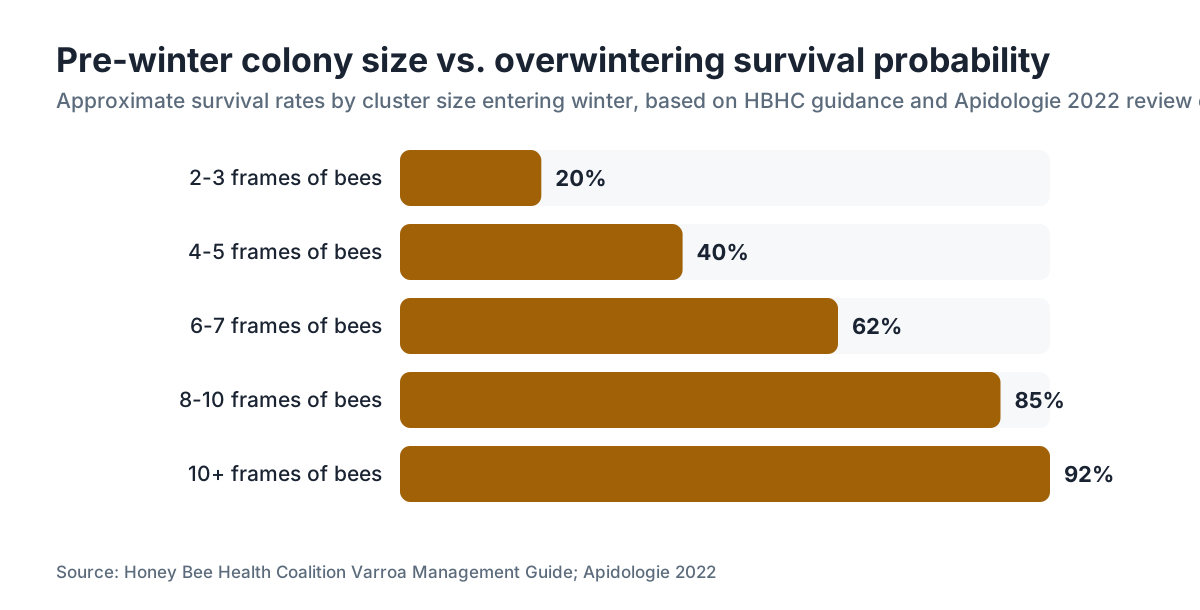
The pattern is clear. Small clusters struggle to hold heat through winter. The Honey Bee Health Coalition's Best Management Practices guide says colonies entering winter should cover at least 8 to 10 frames of bees for a strong shot at survival [1]. A colony that barely covers 4 frames after a late treatment may not make it alone, even in a mild climate.
A 2022 review in Apidologie looked at colony loss data across several European countries and found winter mortality tracked closely with pre-winter colony size and mite load. Colonies below roughly 5,000 bees showed sharply higher loss rates [7]. Merging two marginal colonies into one adequate colony beats trying to carry both small ones through winter.
The catch is mite control. That same review found merged colonies with uncontrolled mite loads had higher spring loss than untreated singles, likely because the merge hid the mite problem from the beekeeper while the mites kept climbing inside [7].
The newspaper method itself hasn't been tested against direct combine in a controlled peer-reviewed trial that I've seen. Its edge over a direct dump is practical: fewer fighting losses during the merge, which matters most in late summer and fall when colonies are defensive. Extension guides from Penn State, NC State, and others treat the newspaper method as the lowest-risk way to merge two colonies [8][9].
For the biology behind why pre-combine mite control isn't optional, see our piece on the varroa mite.
How do you track whether the combine actually worked?
Set three checkpoints after a combine.
Day 3 to 5: Visual check. One cluster or two? Any fighting or balling at the entrance? Are bees flying normally? A combine that went sideways shows heaps of dead bees at the entrance and a jumpy, aggressive cluster.
Day 14: Alcohol wash. Pull 300 bees from the brood area of the combined colony. Below 2 percent and you're in good shape. Climbing, and you treat.
Day 30: Brood pattern. A queen settling into a merged colony can take 2 to 3 weeks to hit her stride. By day 30 you want a solid, even brood pattern across several frames. Spotty brood at that point points to a queen problem or lingering viral pressure from mites.
Keep records. A colony that dies in November is much harder to read if you have no September wash data. Logging mite counts, treatment dates, and combine dates in a notebook or a digital tracker (VarroaVault has a free colony log) turns a murky post-mortem into a clear plan for next year.
Monitoring gear, including alcohol wash kits and sticky boards, comes from most beekeeping supply companies, and you can often find free shipping from honey bee supply companies if you order ahead of the season.
Common mistakes beekeepers make with newspaper combines after treatment
Skipping the mite wash before combining is the big one, covered above. Several others cost beekeepers colonies every year.
Combining two queens. Stack without a queen plan and you get a fight, often with both queens dead. Know where your queens are before you add newspaper.
Using the wrong paper. Bees chew through standard black-and-white newsprint fine. Glossy magazine pages, cardboard, and printer paper take too long or never get chewed. One sheet of plain newsprint.
Opening at 24 hours. The bees are still negotiating. Cracking the lid disrupts scent equilibration and can restart aggression. Give it the full 48.
Wrong colony on top for the season. Weak colony goes on top in almost every case, because heat and colony odor rise through the hive and help blend scents. In hard cold some beekeepers put the stronger colony up top for heat management, but that's a fringe case. Default to weak on top.
Leaving the empty weak box in the yard. A box that still smells like a colony draws robbers, who then hit your freshly combined hive. Move it off-site or store it inside the moment you've pulled and consolidated the frames.
Frequently asked questions
How long should I wait after oxalic acid treatment before combining colonies?
Wait until your post-treatment alcohol wash, ideally 7 to 10 days after the final OA application, reads below 2 mites per 100 bees. Oxalic acid leaves no meaningful residue that harms bees or queens, so there's no chemical waiting period. The mite count is the only gate. Clean wash, you combine. Dirty wash, you treat again before merging.
Can I do a newspaper combine while Apivar strips are still in the hive?
I'd avoid it. Apivar runs a 56-day course per the EPA label, and amitraz residues in wax can reach a queen in the receiving hive. Finish the treatment on the weak colony in isolation, pull the strips, run a mite wash, then combine. The extra few weeks beats risking the recipient colony's queen.
What if both colonies are queenright when I want to combine them?
Find and remove the weaker queen before you stack. Keep the queen from the stronger, younger, or healthier colony. Kill the removed queen or set her up in a nuc if you want her genetics. Never let the newspaper combine settle a two-queen situation on its own. It ends in a fight, and you'll often lose the queen you meant to keep.
Does it matter which colony goes on top in a newspaper combine?
Yes. Put the weaker colony on top. Heat, odor, and forager movement all trend upward in the hive, so this orientation blends the scents faster. The weak colony's bees also tend to move down through the paper toward the warmth of the stronger cluster, which speeds acceptance. The stronger colony's established odor anchors the merged group's identity.
How do I know if the newspaper combine failed?
Check the entrance 48 to 72 hours after combining. A pile of dead bees, visible balling, or extreme defensiveness are bad signs. Open carefully and look for a queen ball deep in the cluster. If you find one, break it apart gently with a spray of sugar syrup. A failed combine usually means two queens made contact, or mite stress had the bees agitated before the merge.
Can I combine a treated colony that lost its queen with a strong colony that is queenright?
Yes, and this is the easiest version. Queenless colonies are less defensive and accept a merge more readily. The queen in the strong colony takes over the combined group. Confirm the weak colony's mite load is below 2 percent first. Queenless colonies often show higher wash counts because there's no capped brood, so mites are phoretic and easy to see, which can actually read as good post-treatment efficacy.
How many frames of bees does a colony need to survive winter, and does combining help meet that threshold?
The Honey Bee Health Coalition recommends entering winter covering at least 8 to 10 frames of bees for reliable survival. A colony covering 4 to 5 frames has poor odds. Combining two 4-frame colonies into one 8-frame colony beats trying to overwinter both, as long as mite loads in both are controlled before the merge. October population is one of the strongest predictors of spring survival.
What type of newspaper works best for the combine method?
One sheet of standard black-and-white newsprint. Bees chew through it in 24 to 48 hours without trouble. Skip glossy magazine pages, cardboard, and printer paper, which take too long or never get chewed and leave a barrier that just stretches out your worry. Poke 5 to 10 small holes with a pencil before stacking to give the process a head start.
Should I feed the combined colony after the newspaper merge?
Spring or early summer with a flow on, no. Late summer or fall with low stores, light 1:1 sugar syrup for 1 to 2 weeks helps the colony build. A freshly merged colony can be a little unsettled and may not forage at full speed for a week or two. Don't overfeed in fall. You want bees building cluster, not a heavy flow triggering late brood.
Can I use the newspaper method to combine two treated nucleus colonies instead of full colonies?
Yes. It works the same with nucs. Stack one 5-frame nuc box on another with newspaper between. The smaller populations often finish faster, sometimes in 18 to 24 hours. Same rules: wash both, keep one queen, weak nuc on top. The merged colony may need to move into a full 10-frame box if the combined population warrants it, especially heading into winter.
Is there any chemical treatment that makes it unsafe to combine colonies for an extended period?
Formic acid (Formic Pro, MAQS) is the one to watch. Active strips produce vapor that harms open brood and stresses queens in a combined hive. Wait until strips are fully removed per label before combining. Oxalic acid and thymol-based products (ApiLife Var, Apiguard) leave no significant residue that would affect a combine once the treatment window closes.
What if one of the colonies I want to combine was recently robbed?
A recently robbed colony is defensive and disoriented, which makes it a poor combine candidate until it settles. Wait 5 to 7 days after robbing pressure stops before merging. Reduce the robbed colony to a single entrance, or screen the entrance temporarily, so its defensive pheromone state can normalize. Combining during active robbing just spreads the chaos to both colonies.
How does varroa mite load affect the success rate of a newspaper combine?
High mite loads hurt a combine two ways. Mite-stressed bees are more aggressive and agitated, which raises fighting during the merge. And viruses the mites carry (especially deformed wing virus) shorten bee lifespan, so the combined colony loses population faster than you'd expect. A colony at 5 percent infestation or higher should be treated before combining, not combined and then treated.
Sources
- Honey Bee Health Coalition, Varroa Management Guide (latest edition): Mite infestation threshold of 2 percent (2 mites per 100 bees) as the action threshold; recommendation to confirm OA efficacy 7-10 days post-treatment; colonies should enter winter covering 8-10 frames for reliable overwintering.
- Northern Apiaries / Formic Pro EPA-approved product label: Formic Pro treatment duration is 10 or 20 days depending on temperature; application temperature range 50 to 92 degrees Fahrenheit.
- Veto-Pharma / Apivar EPA-approved product label: Apivar (amitraz) strips require a minimum 56-day treatment period per label directions.
- Cornell University College of Agriculture and Life Sciences, Pollinator Health: Varroa mites transfer between colonies primarily through drifting, robbing, and direct bee-to-bee contact; mite transfer during colony merges can re-infest a treated population within days.
- USDA Agricultural Research Service, Bee Research Laboratory, Oxalic Acid Use in Beehives: Oxalic acid vaporization in broodless colonies achieves near-complete mite knockdown because no capped brood is present to shelter mites.
- Apidologie, 2022 review: Colony winter loss correlates with pre-winter size and mite load: Colonies below roughly 5,000 bees pre-winter showed sharply elevated loss rates; merged colonies with uncontrolled mite loads showed higher spring loss than untreated singles.
- Penn State Extension, Combining Honey Bee Colonies: The newspaper method is described as the lowest-risk standard technique for merging two honey bee colonies; weak colony placed on top.
- NC State Extension Apiculture, Varroa Mite Management: Newspaper combine method instructions and seasonal timing recommendations for post-treatment colony merges.
- EPA, Pesticide Registration: Api-Bioxal (oxalic acid) Label: Api-Bioxal approved for oxalic acid vaporization and dribble applications in honey bee colonies; no withdrawal period for honey supers when used per label.
Last updated 2026-07-09