Sacbrood vs deformed wing virus: how to tell them apart
TL;DR
- Sacbrood is a viral brood disease that turns larvae into fluid-filled sacs, with no varroa link.
- Deformed wing virus (DWV) is also viral but almost always amplified by varroa mites, producing shrunken wings and bloated abdomens in adult bees.
- Getting the diagnosis right matters because one calls for mite treatment and the other usually doesn't.
What are sacbrood and deformed wing virus, exactly?
Both are viruses that infect honey bees. Both show up in colonies that look like they're struggling. That's about where the similarity ends.
Sacbrood virus (SBV) belongs to the Iflavirus genus and infects larvae directly [1]. The virus stops the larva from shedding its final larval skin before pupation. Fluid builds up between the body and the unshed skin, forming the sac shape that gives the disease its name. Adult bees are rarely affected in any visible way, and a colony can often suppress mild outbreaks on its own through hygienic behavior.
Deformed wing virus (DWV) is also an Iflavirus, closely related to SBV, but its story is almost inseparable from varroa [2]. Varroa destructor mites reproduce inside capped brood cells and inject DWV straight into developing pupae while feeding. Without mites, DWV sits at low, mostly harmless titers in many colonies. With mites, viral loads can climb by a factor of a million or more, according to virus research summarized in Advances in Virus Research (2010) [2]. The result is adult bees that emerge with permanently crumpled, shrunken wings and shortened, bloated abdomens.
So the first diagnostic question is simple. Are you seeing the problem in the brood or in the adults? Sacbrood kills larvae before they finish development. DWV's most visible damage shows up in newly emerged adult bees.
What does sacbrood actually look like in the hive?
Sacbrood has a distinctive look once you've seen it once. Open the capped brood and look for cells with sunken, perforated, or partly chewed-through cappings. That's your first clue something is wrong with the larvae underneath.
When you uncap a sacbrood cell, you'll find a larva that has changed from healthy pearly white to pale yellow, then to a darker tan or brown as the infection runs its course [3]. The clearest sign is the fluid-filled sac. Lift the larva out with a toothpick or twig and it comes out as a water-balloon-like pouch. The head end is usually darkened and slightly upturned, giving it a gondola or Chinese-slipper shape. This is different from American foulbrood, where the larva melts into a ropy, caramel-colored goo that strings out when you probe it.
Over time, sacbrood larvae dry down into a flat, dark brown to black scale that lies along the bottom of the cell. That scale is not as firmly stuck as an AFB scale, and a nurse bee can often remove it. That ease of removal is part of why colonies sometimes clear sacbrood without any help from you.
You won't see deformed wings in sacbrood. The larvae are dead before they ever become pupae. Any deformity in adult bees alongside a sacbrood diagnosis means you likely have two separate problems running at once.
What does deformed wing virus look like in the hive?
DWV's signature is the adult bee with wings that look crumpled up and never unfolded. The wings are short, shriveled, and often held out at odd angles. The abdomen on the same bee is usually shortened and darker than normal. These bees can't fly [2].
You'll often find them crawling in front of the entrance, tumbling off the landing board, or clustering on the hive floor. In a colony with a serious mite problem, you might see dozens of these crawlers on a warm day. Seeing even a handful is a red flag. The Honey Bee Health Coalition's Varroa Management Guide notes that visible DWV symptoms in adult bees mean mite levels have already caused significant brood damage, even if your alcohol wash or sugar roll hasn't hit a formal action threshold yet [4].
Inside the hive, DWV at high titers also kills pupae outright, so you can see a spotty brood pattern. But spotty brood alone tells you nothing on its own. Sacbrood, chalkbrood, AFB, and simple laying gaps all create spotty patterns. The adult crawlers with deformed wings are the clearest sign specific to DWV.
One complication. DWV-infected pupae that die before emergence don't have a distinctive look the way sacbrood larvae do. They may just look like normal, discolored dead brood. You cannot reliably diagnose DWV from dead pupae alone without lab testing.
How do sacbrood and DWV compare side by side?
Here's a direct comparison of the diagnostic features that matter most.
| Feature | Sacbrood | Deformed Wing Virus (DWV) |
|---|---|---|
| Primary stage affected | Larvae (pre-pupal) | Pupae and newly emerged adults |
| Visible location | Inside capped or uncapped brood cells | Crawling adults at entrance or hive floor |
| Characteristic sign | Fluid-filled sac, upturned dark head | Crumpled, shrunken wings; short abdomen |
| Color progression | White > yellow > brown > black scale | Pale/normal pupae; darkened crawlers |
| Varroa connection | None established | Direct: mites amplify virus by 10^6x [2] |
| Contagious via? | Nurse bees feeding larvae | Varroa feeding on brood |
| Self-limiting possible? | Yes, with hygienic bees | Only if mite levels drop |
| Approved chemical treatment | None (management only) | Treat mites; no direct antiviral |
| Lab confirmation | PCR or ELISA | PCR or ELISA |
The table makes one thing clear. The practical response splits hard. Sacbrood is a husbandry and genetics question. DWV is a varroa question.
Why does the varroa mite connection matter so much for DWV?
Varroa destructor doesn't just feed on bee tissue. It injects viruses, including DWV, straight into the bee's body while feeding [2]. Virus research summarized in Advances in Virus Research (2010) confirms that mite infestation is the main driver pushing DWV from harmless background levels to lethal ones. Without varroa, DWV rarely causes visible disease in most temperate colonies.
A colony showing DWV symptoms is telling you your mite load is out of control. You can't treat the symptoms directly, because there's no approved antiviral for honey bees. The only response that works is to bring varroa counts down fast with an approved acaricide [5]. Oxalic acid, amitraz (Apivar), fluvalinate (Apistan), and coumaphos (CheckMite+) all have EPA-registered uses against varroa in U.S. colonies. The right choice depends on your season, whether you have capped brood, and your local resistance situation.
Sacbrood is the opposite case. Mite treatment does nothing, because mites aren't the vector. Misidentify sacbrood as DWV and treat for mites, and you've spent time and money on the wrong target. If you happen to have a real mite problem sitting on top of the sacbrood, you'd be treating for the right reason but diagnosing for the wrong one. Getting this right saves a colony.
If you're not sure whether mites are contributing, run an alcohol wash or a sticky board count before you decide on treatment. The VarroaVault varroa mite management resource walks through the threshold math and treatment timing.
Can a colony have both sacbrood and DWV at the same time?
Yes, and it's not rare. A colony under heavy varroa pressure is weakened in ways that leave it open to other pathogens, including SBV. Combine a high mite load with the nutritional strain of a booming summer population, and sacbrood can take hold in a colony that would normally shrug it off.
When you see both deformed adults crawling outside and classic fluid-sac larvae inside, mite management still comes first. Cutting varroa gives the bees' defenses a chance to recover, and the hygienic behavior needed to clean up sacbrood cells is itself suppressed when bees are worn down by DWV [4]. Treating the mites first doesn't mean ignoring the sacbrood. It means fixing the condition that's making everything worse.
In a dual infection, look carefully at brood of different ages. Sacbrood kills larvae at the pre-pupal stage, so you'll see them in the cell before they've turned into recognizable pupae. DWV mortality shows up as discolored, sometimes sunken capped cells with dead pupae inside, but no fluid sac. Different life stages, different cell locations. That separation helps you tell them apart on close inspection.
What other brood diseases could I be confusing this with?
Misdiagnosis is genuinely common, especially for newer beekeepers. Here are the confusions most likely to trip you up.
American foulbrood (AFB) is the one you most need to rule out, because it's a notifiable disease in most U.S. states and usually means burning infected equipment. AFB larvae turn into a coffee-brown ropy mass that strings 2 to 3 cm when you probe with a matchstick. The smell is distinctive, like rotting sneakers. Neither sacbrood nor DWV produces a ropy string test or that odor [6]. If you're uncertain, contact your state apiarist.
European foulbrood (EFB) kills larvae earlier than sacbrood, while they're still coiled and uncapped. EFB larvae turn yellow-brown, tend to melt out of position, and give off a sour smell. They don't form the fluid sac that sacbrood does.
Chalkbrood, caused by the fungus Ascosphaera apis, produces hard, chalk-white or mottled gray-black mummies that rattle in the cell. No fluid, no sac, no deformed adults.
Nutrition-related spotty brood or laying worker brood has irregular capping patterns that can look like DWV damage. But there are no crawlers, and no dead larvae with distinctive traits.
When in doubt, the USDA Bee Research Laboratory, university apiculture extension labs, and your state apiarist can run PCR confirmation.
How do I confirm the diagnosis in a lab?
Visual diagnosis gets you most of the way with sacbrood and DWV. If you want certainty, PCR (polymerase chain reaction) testing confirms the specific virus present.
The USDA Bee Research Laboratory in Beltsville, Maryland accepts samples from beekeepers for disease diagnosis, though processing times and fees vary [7]. Several university apiculture programs also offer diagnostics. Penn State's Department of Entomology, the University of Minnesota Bee Lab, and the University of Florida Honey Bee Research and Extension Lab are among the most accessible for hobbyists.
For a field approach, the Honey Bee Health Coalition recommends collecting at least 200 to 300 adult bees from your strongest symptomatic colony, dropping them in 70% isopropyl alcohol, and submitting to a lab. For brood diseases, cut a comb section with 10 to 15 affected cells and wrap it in newspaper. Skip plastic, which speeds up decomposition.
PCR pricing varies, but a basic brood pathogen panel runs roughly $40 to $100 depending on the lab, as of 2024 [11]. For most hobbyist cases where the visual presentation is clear, that money is better spent on a mite treatment. If you're seeing heavy unexplained colony losses, though, lab confirmation is worth every dollar.
What should I actually do if I think I have sacbrood?
Sacbrood is frustrating because there's no approved chemical treatment. You manage the virus indirectly [3].
First, requeen with a more hygienic line. This is the most effective long-term move. Bees with strong hygienic behavior detect and remove infected larvae before the virus multiplies and spreads. VSH (Varroa-Sensitive Hygiene) and Minnesota Hygienic lines have documented better hygienic behavior, though no line is a guarantee against sacbrood specifically. The USDA bee breeding program and several university extension resources list reputable queen breeders.
Second, improve nutrition. Sacbrood outbreaks often track with nutritional stress, especially protein shortage during dearth. Make sure the colony has adequate pollen stores. If natural pollen is scarce, a quality pollen substitute helps.
Third, reduce stress. Skip unnecessary inspections in bad weather. Don't split a colony that's already struggling. Give it decent ventilation.
Fourth, watch and wait in mild cases. Many colonies clear mild sacbrood on their own once the spring flow picks up and the population grows. If you're still seeing large numbers of affected cells after 4 to 6 weeks with good nutrition and good conditions, requeening becomes urgent.
Check mite levels regardless. Even if you're sure it's sacbrood, high mites weaken the hygienic response. A colony that can't clean house on mites probably can't clean house on sacbrood either.
What should I do if I think I have DWV?
Crawlers with deformed wings mean you need a mite count today, not next week. Visibly deformed bees tell you DWV has already reached pathogenic levels, which means your varroa infestation is well past the 2% action threshold for the brood-rearing season [4].
Run an alcohol wash. If you're above 2% (roughly 2 mites per 100 bees), treat immediately. The Honey Bee Health Coalition's 2022 Varroa Management Guide recommends oxalic acid (dribble, vaporization, or extended-release strips depending on brood presence) and amitraz (Apivar strips) as effective first-line options in most cases [12]. Fluvalinate and coumaphos have well-documented resistance issues in some regions and are generally less preferred as first-line treatments now, though both remain EPA-registered.
Timing matters for oxalic acid. Oxalic acid vaporization hits phoretic mites (mites riding on adult bees) hard but does almost nothing to mites sealed inside brood cells [5]. If you have a full brood nest, a product like Apivar (amitraz strips) that works through contact over 6 to 8 weeks is often the better fit for a high-load emergency.
After treatment, do a follow-up wash 4 to 6 weeks later. If counts are still above 2%, run a second treatment or switch product class. The crawlers won't vanish overnight. Bees that already emerged with deformed wings will live out their shortened lives no matter what you do. Treating protects the next round of brood.
VarroaVault's free seasonal protocol tools help you schedule treatments around your local nectar flow and honey super placement to stay within label requirements.
Are some colonies or bee lines more resistant to these viruses?
For sacbrood, yes. Hygienic behavior is the main natural defense, and it's heritable. Colonies that score high on the liquid nitrogen freeze-kill test or the pin test for hygienic behavior remove sacbrood-infected larvae faster and clear outbreaks more reliably [8]. Honey Bee Health Coalition management guidance names hygienic traits as a tool for SBV.
DWV is more complicated. VSH (Varroa-Sensitive Hygiene) bees cut mite reproduction rates, which keeps varroa populations lower, which keeps DWV at subclinical levels. So VSH bees show less DWV damage not because they resist the virus directly but because they suppress the vector. Breeding for direct antiviral resistance in honey bees is an active research area, not something a hobbyist can buy as of 2024 [10].
Small hive beetles and robbing spread both viruses between colonies, so apiary hygiene, proper spacing, and keeping colonies strong enough to guard their own entrance all count as indirect resistance factors.
If you're fighting sacbrood across multiple seasons, requeening from a documented hygienic source is the single most evidence-backed step you can take. The USDA and several university extension programs maintain lists of tested breeders [8].
How common are these diseases, and should I be worried?
Sacbrood is probably the most common viral brood disease in managed honey bee colonies worldwide. Most beekeepers who've kept bees for more than a few seasons have seen it, often without recognizing it. Mild infections are easy to miss or mistake for nutritional stress. Because it's usually self-limiting in healthy colonies, it doesn't set off the alarm that AFB does. In weak colonies or during stress periods, though, it can push a colony toward collapse.
DWV is just as widespread. A 2010 survey of UK colonies detected DWV in roughly 97% of colonies tested, though most were subclinical [2]. The virus is essentially everywhere. What matters is the mite load that decides whether it stays quiet or turns lethal. That's why varroa management isn't optional for keeping healthy bees in most parts of the world.
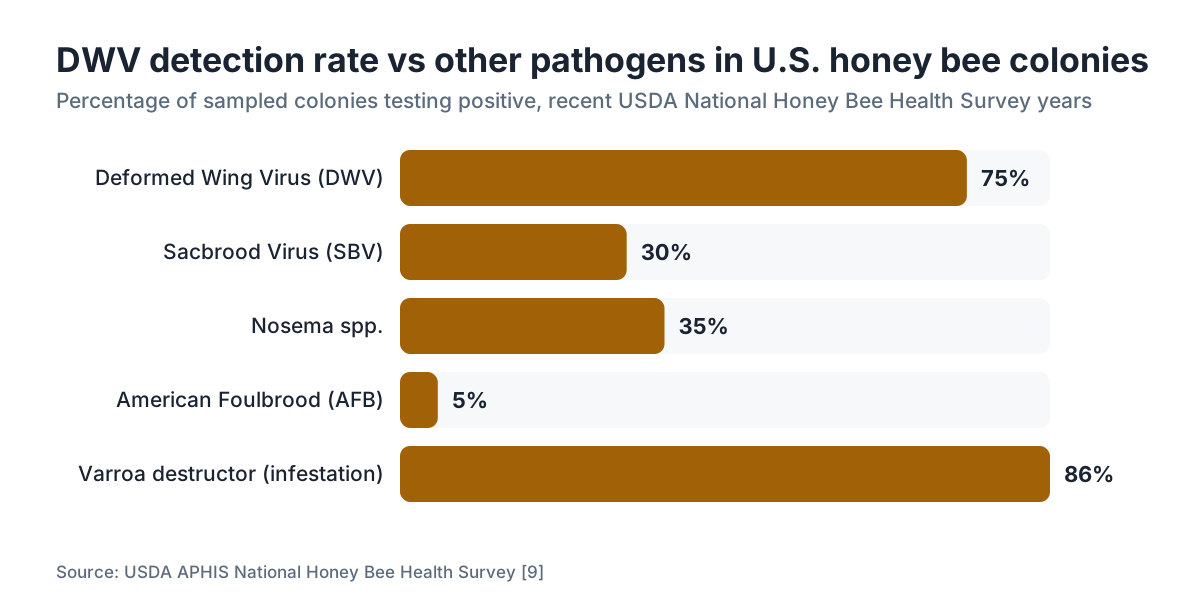
The USDA National Honey Bee Health Survey, run annually, has consistently found DWV among the most commonly detected pathogens in sampled colonies, appearing in roughly 70 to 80% of U.S. samples in recent survey years, though rates shift by season and region [9]. Sacbrood shows up less often in those surveys, partly because the sampling method (adult bees in alcohol) picks up DWV more reliably than SBV, which lives mainly in the brood.
Both are common. Both are manageable. The management paths differ enough that a correct diagnosis changes what you do next.
Frequently asked questions
Can sacbrood kill a colony?
Sacbrood rarely kills a healthy, well-fed colony with a strong queen on its own. It can tip an already-stressed colony into failure, especially in early spring when the population is small. Colonies with good hygienic behavior usually suppress outbreaks without help. If you're seeing extensive sacbrood across a large part of the brood frame, requeen and check the colony's nutrition and mite load.
Does sacbrood spread from hive to hive?
Yes, though the mechanism is indirect. Nurse bees that clean infected cells carry the virus on their mouthparts and pass it on when feeding healthy larvae. Robbing and drift spread it between colonies in the same apiary. There's no evidence sacbrood spreads through the air the way respiratory diseases do. Keeping colonies strong and cutting down on robbing are the main apiary-level controls.
What does a DWV-infected bee look like compared to a normal bee?
A DWV-affected bee has wings that are crumpled, shrunken, and often held out to the sides rather than folded over the abdomen. The abdomen is shorter and darker than normal. These bees usually can't fly. A healthy newly emerged bee has full-length wings that fold neatly over its back and a normally proportioned, lightly furred abdomen. The contrast is obvious once you've seen it side by side.
Is there any treatment specifically for sacbrood virus?
No. There's no approved antiviral treatment for sacbrood in honey bees in the United States. Management relies on requeening with hygienic stock, improving nutrition, cutting stress, and letting the colony's own immune and hygienic behavior clear the infection. Some beekeepers report improvement after removing and replacing frames of infected brood, though rigorous evidence for this as a standalone treatment is thin.
How do I tell the difference between sacbrood and AFB?
The ropy string test is your fastest field check. Probe a dead larva with a matchstick and slowly pull it out. AFB strings 2 to 3 cm of caramel-colored, mucilaginous material with a distinct rotting smell. Sacbrood larvae come out as a water-balloon-like sac with no stringing and a much milder odor. If you get any stringing at all, treat it as possible AFB and contact your state apiarist immediately.
Can varroa spread sacbrood virus the way it spreads DWV?
This one isn't fully settled. Varroa carries several bee viruses, and some studies have detected SBV in mites. But the evidence that varroa amplifies SBV the way it amplifies DWV is much weaker. Current extension guidance works on the assumption that sacbrood spreads mainly through nurse bees and oral routes, not primarily by varroa vectoring.
At what mite level do DWV symptoms typically appear?
Visible DWV crawlers can show up at mite loads above 2 to 3% in the brood season, though the relationship isn't perfectly linear. Once you see deformed adults, your mite population has usually been high for several weeks, because those visible bees came from pupae infected in capped cells 12 or more days earlier. The Honey Bee Health Coalition treatment threshold is 2% (2 mites per 100 bees) during brood-rearing season.
Do I need to destroy frames with sacbrood in them?
No. Unlike AFB, sacbrood does not require frame destruction. The virus doesn't form the long-lived spores that make AFB so persistent in equipment. You can leave affected frames in the colony and let bees clean the cells themselves. Some beekeepers remove heavily affected frames to force bees to draw fresh wax, but that's preference, not regulation. Always confirm you're not dealing with AFB before deciding to keep frames.
Are Asian honey bees more susceptible to sacbrood?
Apis cerana, the Asian honey bee, is the natural host of a distinct strain called Thai sacbrood virus (TSBV), which has caused serious losses in managed Apis cerana colonies in parts of Asia. The virus that infects Apis mellifera (European honey bees) appears to be a different but related strain. TSBV hasn't established in Apis mellifera colonies in the West to the same degree, though cross-infection is a concern where both species share territory.
Can I see DWV damage in brood cells, or only in adults?
DWV kills pupae inside capped cells at high viral loads, producing discolored, sunken, or perforated cappings. But the dead pupae inside don't have a distinctive look that lets you confirm DWV visually. They just look like dead brood. The reliable visual diagnosis point for DWV is the adult bee with deformed wings. For pupal-stage DWV mortality, you need lab PCR testing to confirm.
How do I collect a sample for sacbrood or DWV diagnosis?
For brood diseases like sacbrood, cut out a section of comb with 10 to 15 affected cells and wrap it in dry newspaper, then place it in a sealable bag. For adult bee viruses including DWV, collect 200 to 300 bees in 70% isopropyl alcohol. Label the sample with your name, state, date, and what you're seeing. Submit to the USDA Beltsville Bee Lab, a state apiarist, or a university apiculture extension diagnostic service.
Will oxalic acid treatment help if I have DWV symptoms?
Oxalic acid kills phoretic varroa mites (mites on adult bees) well but has little to no effect on mites inside capped brood cells. If you have a full brood nest and a heavy mite load driving DWV symptoms, oxalic acid vaporization alone may not drop counts fast enough. In that case, an extended-contact treatment like Apivar (amitraz strips) is often more effective. Always follow EPA label directions and honey super restrictions.
Is sacbrood the same as chalkbrood?
No. Sacbrood is caused by Sacbrood virus and produces fluid-filled larval sacs that darken and dry to a flat scale. Chalkbrood is caused by the fungus Ascosphaera apis and produces hard, chalky white or black mummies that look and feel like tiny chalk sticks. The two are visually very different on close inspection. Chalkbrood mummies sometimes turn up scattered on the landing board; sacbrood scales stay inside the cell until bees remove them.
Sources
- USDA ARS Beltsville Bee Research Laboratory: Sacbrood virus belongs to the Iflavirus genus and kills larvae by preventing the shedding of the final larval skin, causing fluid buildup
- de Miranda JR et al., Honey Bee Viruses, Advances in Virus Research (2010): Varroa mite infestation amplifies DWV titers by up to a million-fold compared to mite-free colonies, turning a subclinical infection into a lethal one; DWV detected in approximately 97% of UK colonies surveyed
- Penn State Extension, Honey Bee Diseases and Pests: Sacbrood larvae progress from pearly white to yellow to brown as infection advances, then dry to a flat dark scale; managed indirectly through requeening and nutrition
- Honey Bee Health Coalition, Varroa Management Guide (2022 edition): Visible DWV symptoms in adult bees indicate mite levels have caused significant brood damage; treatment threshold is 2% mite infestation during brood-rearing season; hygienic behavior is suppressed in DWV-compromised bees
- EPA, Pesticide Registration: Oxalic acid is EPA-registered for varroa control in honey bee colonies; effective against phoretic mites but limited efficacy against mites in capped brood cells
- USDA ARS Bee Research Laboratory, Diagnostic Services: The USDA Bee Research Laboratory in Beltsville, Maryland accepts colony samples for PCR-based disease diagnosis
- USDA ARS Baton Rouge Honey Bee Breeding, Genetics and Physiology Research: Hygienic behavior scored by freeze-kill or pin tests is heritable and improves removal of infected larvae; USDA and university programs maintain lists of tested hygienic breeders
- University of Minnesota Bee Lab: VSH (Varroa-Sensitive Hygiene) bees reduce mite reproduction rates, keeping DWV at subclinical levels indirectly; direct antiviral resistance breeding is not yet commercially available
- University of Florida IFAS Honey Bee Research and Extension Lab: PCR confirmation of brood virus infections is available through university apiculture extension diagnostic programs; brood pathogen panels cost approximately $40-100 as of 2024
- Honey Bee Health Coalition, Tools for Varroa Management: Oxalic acid (dribble, vaporization, extended-release strips) and amitraz (Apivar) are recommended as effective first-line varroa treatment options in most scenarios
Last updated 2026-07-09