September varroa treatment: is it too late to save your colony?
TL;DR
- September is not too late for varroa treatment, but the clock is running.
- The winter bees your colony raises from late August through October are the ones that must survive until spring.
- If mite loads sit above 2 to 3 mites per 100 bees right now, treat this week.
- Oxalic acid, Apivar, and Apiguard all still work, depending on your brood situation and overnight temperatures.
Is September really too late to treat for varroa?
No. September is not too late. It might be the single most consequential treatment window of the whole year.
Here is why. The bees your colony raises right now, from roughly late August through October, are the winter bees. They are built differently than summer bees. They have enlarged fat bodies, slower vitellogenin turnover, and they carry the cluster through to the first dandelions. A mite that feeds on a winter bee larva does more than shorten one bee's life. It weakens the entire overwintering cohort.
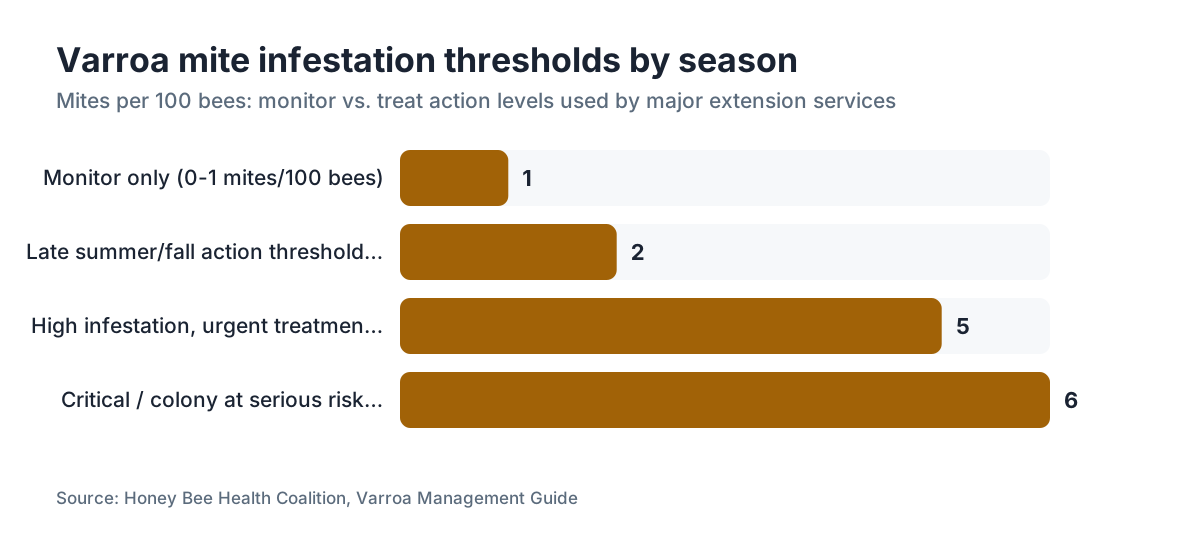
If your alcohol wash or sugar roll comes back above 2 mites per 100 bees in September, you have a problem to fix this week, not next month. The Honey Bee Health Coalition's Varroa Management Guide sets the economic threshold during brood-rearing season at 2 percent (2 mites per 100 bees) and recommends treating at or before that point to protect the next generation [1].
October is where options start closing. September still has every tool on the table.
What mite levels are dangerous heading into fall?
Two mites per 100 bees on an alcohol wash or sugar roll. That is the number that matters most in September, and it is not arbitrary. Colonies that pass 2 percent infestation during the fall brood-rearing period show much higher overwinter mortality, which is the reasoning behind the Honey Bee Health Coalition threshold [1].
Some extension services set the fall action point even lower. The University of Minnesota Bee Lab recommends treating when mite loads hit 2 percent in late summer through fall, and warns that mite populations can double in three to four weeks if you leave them alone [2].
Do the math. Count 3 mites per 100 bees in early September and you could sit at 6 or more by early October. That is a colony coming apart.
The table below shows how fast a varroa population scales against a shrinking fall bee population.
| Mites per 100 bees | Rough interpretation | Recommended action |
|---|---|---|
| 0-1 | Low, monitor monthly | Recheck in 3-4 weeks |
| 2-3 | Action threshold | Treat immediately |
| 4-6 | High infestation | Treat urgently, expect colony stress |
| >6 | Critical | Treat, consider combining or splitting off brood |
The colony's bee population is also falling in autumn, which pushes the ratio worse even when raw mite counts hold flat. Fewer bees, same mites, higher percentage. That is why September counts so much more than a June count at the same raw number.
Which varroa treatments still work in September?
You have more good options in September than you will in November. Here is the plain rundown of what works and what to watch.
Apivar (amitraz strips)
Apivar is one of the most effective treatments you can buy. Two strips per brood box, left in for 6 to 8 weeks per the EPA label [3]. That timeline fits September cleanly. A colony treated September 1st finishes by mid-October. The catch: amitraz resistance shows up in some varroa populations, especially where the chemical gets used hard. If you ran Apivar in spring and mites are still high, suspect resistance [4].
Apiguard or Api-Life VAR (thymol-based)
Thymol works, but it lives and dies on temperature. Apiguard needs sustained daytime temperatures above 59°F (15°C), and works best above 68°F (20°C) for good volatilization [5]. Early September is fine across much of the northern U.S. and Canada. Mid-to-late September gets dicey depending on where you are. If your nights already drop into the 40s regularly, thymol is losing its punch.
Oxalic acid (OA) vaporization
Oxalic acid vaporization is the most flexible fall option. It kills phoretic mites on adult bees. It does not reach into capped brood, which is its main limit, but in fall that limit shrinks: as brood rears down, more mites ride adult bees instead of hiding in cells, so OA gets steadily more effective. Api-Bioxal by dribble or vaporization can work well in September, and vaporization can be repeated. The EPA label for Api-Bioxal allows multiple vaporizations when no honey supers are on [6].
Mite Away Quick Strips (formic acid)
Formic acid gets into brood and kills mites under the cappings, which makes it useful when September still holds a lot of capped brood. The label calls for temperatures between 50°F and 85°F for the 7-day MAQS strips [7]. The upper limit matters less in September, but the queen loss risk is real, especially in smaller colonies or at higher temperatures.
For most beekeepers with capped brood still present, I would reach for Apivar or MAQS first. If the colony is already brood-light, oxalic acid vaporization moves up the list.
How does treatment timing affect winter bee survival?
The research is fairly clear. A 2019 study in PLOS ONE found that colonies treated in late summer had significantly higher overwinter survival than colonies treated in fall, after the winter bee cohort was already raised [8]. Varroa damage comes two ways: direct (feeding on fat bodies, transmitting viruses) and indirect (bees parasitized as larvae emerge shorter-lived and immunocompromised). You cannot undo that damage later.
Deformed Wing Virus (DWV) is the mechanism most researchers point to. Mites vector DWV, and high mite loads track directly with high DWV titers in adult bees. A winter bee that emerged from a heavily infested cell carries high viral loads, has less fat body mass, and will not last into spring. The Honey Bee Health Coalition notes DWV is detected in virtually all varroa-infested colonies [1].
September treatment is about more than dropping a mite count. It gives the larvae being raised right now, the ones that cluster in November, a chance to develop without a mite feeding on them.
Every week you wait in September shrinks that window.
What if you have honey supers still on in September?
This is the situation that causes the most delay, and the constraint is genuine. Take it seriously.
Apivar (amitraz) and MAQS (formic acid) cannot be used with honey supers on for human consumption. Oxalic acid by vaporization and dribble also cannot go on while supers are present, per the Api-Bioxal label [6]. Thymol products like Apiguard also require supers off.
So if you are still chasing a late honey crop in September, you are in a race. Pull the supers the moment the honey is capped and cured, extract, and get treatment on the same day. A week of delay to squeeze out a few more frames can cost you the colony. Most experienced beekeepers will tell you the same thing: if you are above threshold in September, the honey is not worth the hive.
If you truly cannot pull supers and your count is above threshold, oxalic acid dribble (not vaporization) is the only currently labeled U.S. option for use with supers on for bees not producing consumable honey. The label language is messy, and most beekeepers just pull the supers instead [6]. Read the current label yourself and check with your state department of agriculture if you have doubts.
A dead colony in February produces no honey at all.
Can you use oxalic acid in September if there is still brood?
Yes, with realistic expectations. Oxalic acid, vaporized or dribbled, kills phoretic mites on adult bees. It does not reach into capped cells, so any mite reproducing under a capping survives the treatment. That is the core limit.
Run a single OA treatment on a colony with a normal September brood pattern and you knock down the phoretic mites while leaving a reservoir sealed in the brood. Those mites emerge with the next batch of bees. That is why one dribble treatment underperforms mid-season compared to a broodless winter shot.
What actually works in September with brood present:
- Use a brood-penetrating product (Apivar or MAQS) as your primary treatment, or
- Repeat OA vaporizations every 3 to 5 days across 3 to 4 weeks to keep knocking down mites as they emerge, or
- Cage the queen for 21 to 24 days to force a broodless window, then do one OA treatment.
Option 3 takes labor but works extremely well. The Honey Bee Research Centre at the University of Guelph has studied queen caging plus OA and it can drive mite loads to near zero [9]. It also stresses the colony if done late in fall, so timing counts.
For most hobbyists, Apivar in September with brood present is the simplest high-efficacy path.
What if you treated in spring and mite counts are high again?
This happens more than people like to admit, and there are a few likely reasons.
Mites rebound fast. A spring treatment that dropped mites to near zero in April can bounce all the way back by July or August in a strong colony that got no follow-up management. That is not a failed treatment. That is varroa biology. varroa mite reproduction follows brood production, and a booming summer colony gives mites ideal conditions to multiply.
Then there is drift and robbing. If neighboring colonies (yours or somebody else's) are collapsing under mites, your treated hive can get reinfested by drifting or robbing bees carrying mites in. There is no clean fix, which is exactly why you monitor all season instead of trusting one spring treatment to carry you to fall.
And there is real treatment failure or resistance. Run the same chemistry over and over, and mites that stay elevated through treatment point to resistance. Amitraz resistance in varroa is documented in the scientific literature [4]. Rotating chemistries between seasons is sound practice.
High mites in September despite a spring treatment? Treat again. Do not let last spring's work talk you out of this fall's count.
How do you actually measure mite load in September?
Alcohol wash is the most reliable method. Take about 300 bees (roughly half a cup) from the brood area (not the top box, not from honey frames), drop them in isopropyl alcohol, shake for 60 seconds, pour through a strainer, and count the mites. Divide mites by bee count and multiply by 100 for your percentage [11].
Sugar roll is the alternative if you want the bees back alive. It reads lower and less consistently because mites do not always let go cleanly. Most researchers still prefer the alcohol wash.
Sticky boards (counting mite drop over 24 or 48 hours) give you a rough sense of mite levels but do not convert cleanly into a percentage threshold. Use them for tracking trends, not for a treat-or-not decision.
One rule for September: pull the sample from the brood nest. Mites concentrate where brood is, so sampling the wrong frames hands you a falsely low number and a missed problem.
VarroaVault carries tools for running accurate washes and keeping season-long records, plus free varroa management protocol sheets if you want a structured system.
Sample every colony on its own. Mite loads swing wildly hive to hive even in one apiary.
Is it worth treating a weak colony in September?
Honest judgment call.
A colony down to two or three frames of bees in September with high mites faces a stacked problem. It probably lacks the population to reach spring no matter how you treat it. Treatment might buy the bees a few more weeks, but it does nothing about the strength gap.
Your options with a weak, high-mite colony in September:
- Combine it with a strong, healthy colony after treating the combined unit (the newspaper method works fine)
- Buy a late-season queen and boost the colony with capped brood frames from a strong hive
- Accept the loss and save the drawn comb for a spring package or split
Beekeepers burn money and effort every year trying to rescue late-season weak colonies that were never going to make it. That is not harsh, just experience. The bees and comb from a doomed colony are worth more redistributed than watched to a slow death.
Colonies sitting on four or more frames of bees with high mites are different. Treat those aggressively. They can recover.
What does a September treatment schedule actually look like?
Here is a working timeline for a northern-hemisphere beekeeper with brood still present in early September.
Week 1 (early September): Alcohol wash every colony. Record results per hive.
Week 1, same day if above threshold: Install Apivar strips (2 per brood box) or MAQS per label directions [3][7]. Pull any honey supers first.
Week 3-4: Run a mid-treatment wash on a few colonies to confirm the treatment is working. You should see a clear drop.
Weeks 6-8 (mid-to-late October): Remove Apivar strips at the 8-week mark per label. Do not leave them longer; extra exposure feeds resistance selection.
Post-treatment (late October, if the colony is going broodless): Consider a single oxalic acid vaporization to clean up the last phoretic mites before the cluster tightens.
November onward: The colony is on its own. Once the cluster is tight and temperatures drop below 40°F, you have no effective options except OA vaporization in a broodless cluster.
You can find these products through beekeeping supply companies, but get the treatment bought and installed before you shop around for the best price. Right now time costs more than a few dollars on strips.
What happens if you do nothing in September?
Collapse. Most likely by November or December. And if the colony limps into winter, it crashes in early spring when the cluster breaks and the damaged winter bee population cannot sustain brood-rearing.
This is the pattern that blindsides new beekeepers. The colony looks fine in fall, maybe even okay through December, then dies in February or March in what feels like a mystery. It is almost always varroa. The winter bees were too damaged to reach spring build-up.
Colony loss is expensive. The USDA Agricultural Research Service and university extension programs have tracked overwinter losses for years. Annual U.S. losses have averaged around 40 percent in recent survey years, with varroa and varroa-associated viruses named as the leading biological cause [10].
Run the money. A new nucleus colony costs $150 to $250 or more depending on region and year. A mated queen runs $30 to $60. A round of Apivar for two hives costs roughly $20 to $35. The math is not close.
Do not skip the September count. Do not talk yourself out of treating because the bees look busy and the hive feels heavy. Mites do not announce themselves.
Frequently asked questions
Can you treat for varroa in October?
Yes, but options narrow as temperatures drop. Thymol products become unreliable below 59°F daytime. Formic acid needs temperatures above 50°F. Apivar still works in October and is the most practical choice if brood is present. Oxalic acid vaporization works in October, especially as the colony goes broodless, but repeated applications are needed if any brood remains.
What is the best varroa treatment for fall?
If brood is still present, Apivar (amitraz) is the most practical, effective choice for most beekeepers. It works across a wide temperature range, needs no special equipment, and its 6-8 week window fits September timing well. If your colony is already broodless or nearly so, oxalic acid vaporization is highly effective and drives mite loads very low with minimal disruption.
How do I know if my varroa levels are too high going into winter?
Run an alcohol wash on 300 bees from the brood nest. If you get 2 or more mites per 100 bees (2%), treat immediately. The Honey Bee Health Coalition's threshold for the late summer and fall brood-rearing period is 2%, because winter bees developing above that level carry higher virus loads and live shorter lives.
Does oxalic acid work when there is brood?
Partially. Oxalic acid kills phoretic mites on adult bees but cannot penetrate capped cells. With brood present, a single treatment lowers mite load but leaves a reservoir sealed in the brood. You can compensate with repeated vaporizations every 3 to 5 days over several weeks, or use a brood-penetrating product like Apivar or formic acid as the primary treatment.
Can I use Apivar and oxalic acid at the same time?
This is not a labeled combination in the U.S. and the research on interaction effects is thin. Most practitioners and extension guides recommend one treatment at a time, both to meet label requirements and to make it possible to see what is actually working. Run your Apivar course, then do an OA vaporization after the strips come out if you want to clean up remaining mites.
How many times can you vaporize with oxalic acid in fall?
The EPA-approved Api-Bioxal label allows multiple applications. Common protocols call for three vaporizations spaced 5 days apart when brood is present, to catch mites as they emerge. In a broodless colony, a single treatment is often enough to drive mite levels to near zero. Always follow the current product label and wear a respirator rated for OA vapor.
My colony looks strong in September. Should I still test for varroa?
Yes. Colony strength and mite load are not reliably linked. A large population can carry a heavy mite burden precisely because it raised so much brood. A colony that looks great in September can collapse by January if the winter bees developed under high mite pressure. Test every colony, every fall, regardless of how the hive looks from the outside.
What temperature is too cold for varroa treatment in fall?
It depends on the product. Thymol (Apiguard) needs above 59°F daytime, ideally above 68°F. Formic acid (MAQS) needs 50 to 85°F. Apivar (amitraz) has no hard lower temperature limit for efficacy and works in cooler fall conditions. Oxalic acid vaporization works in cold weather, including midwinter broodless periods, with some beekeepers vaporizing when temps are in the 30s.
Is it too late to split a colony in September to reduce mite load?
In most of the northern U.S. and Canada, September splits are too late to build a colony strong enough to overwinter on its own. A split might lower the parent colony's mite load, but the split itself is unlikely to survive winter as a standalone unit. If you want brood manipulation for fall mite control, caging the queen beats splitting.
Can robbing bees bring varroa mites into a treated hive?
Yes. Mite-carrying bees from collapsing colonies can drift into or rob your hive and deposit mites even after a clean treatment. This is called mite immigration or reinfestation. Reducing hive entrances in fall to limit robbing and keeping consistent management across all your hives cuts the risk. Neighbor colonies you cannot control are a harder problem.
How long does it take for varroa treatment to work?
Apivar usually shows a measurable mite drop within the first two weeks, but the full 6-8 week course is needed for maximum efficacy. Formic acid (MAQS) acts faster, killing mites within the 7-day application. Oxalic acid kills phoretic mites within hours of exposure. In every case, re-test mite loads 4 to 6 weeks after treatment to confirm it worked.
What if I treated in August and mites are still high in September?
Check three things: whether you used the product correctly for the full labeled duration, whether mites reinfested from outside via robbing or drifting bees, and whether resistance is a factor (especially with repeat amitraz use). If you suspect resistance, switch chemistry for the fall treatment. A formic acid or oxalic acid protocol is the typical rotation off amitraz.
Do I need to remove Apivar strips before winter?
Yes. The label sets a maximum exposure of 6 to 8 weeks [3]. Leaving strips in longer feeds amitraz resistance selection in varroa and may raise residue levels in wax over time. Remove them at the 8-week mark even if you worry mites are still present, and follow up with an OA vaporization once the colony has gone broodless.
Sources
- Honey Bee Health Coalition, Varroa Management Guide (latest edition): Action threshold of 2 mites per 100 bees during brood-rearing season; DWV detected in virtually all varroa-infested colonies
- University of Minnesota Bee Lab, Varroa Management: Recommends treating at 2% in late summer through fall; mite populations can double in 3-4 weeks if unchecked
- EPA, Apivar (amitraz) pesticide label: Apivar label specifies two strips per brood box, 6-8 week treatment duration
- Journal of Economic Entomology, studies on amitraz resistance in Varroa destructor (2009 onward): Amitraz resistance in varroa has been documented in the scientific literature
- Vita Bee Health, Apiguard product label and technical guide: Apiguard requires sustained daytime temperatures above 59°F (15°C) for effective thymol volatilization
- EPA, Api-Bioxal (oxalic acid) pesticide label: Api-Bioxal label allows multiple vaporizations when no honey supers are on; label conditions for use with supers
- EPA, Mite Away Quick Strips (formic acid) pesticide label: MAQS label requires temperatures between 50°F and 85°F for the 7-day application
- PLOS ONE, study on varroa infestation timing and overwintering colony survival (2019): Colonies treated in late summer had significantly higher overwinter survival rates compared to colonies treated after winter bee cohort was already raised
- University of Guelph, Honey Bee Research Centre: Queen caging to create broodless period followed by OA treatment can drive mite loads to near zero
- USDA Agricultural Research Service, Honey Bee Colony Losses surveys: Annual U.S. colony losses have averaged around 40 percent in recent survey years; varroa and varroa-associated viruses cited as the leading biological cause
- Penn State Extension, Varroa Mite Management: Alcohol wash method described: 300 bees from brood area, 60-second shake, count mites, divide by bee count
Last updated 2026-07-09