Varroa mite dispersal in your apiary during late summer
TL;DR
- In late summer, varroa mites spread fast between colonies through robbing bees and natural drifting.
- A collapsing high-mite hive can shed thousands of mites into neighboring colonies within days.
- Apiaries within a half-mile share mites.
- Monitor every 30 days and treat before mite levels pass 2 to 3 percent, and you stop infestation before it cascades across the whole apiary.
Why does late summer trigger a varroa dispersal crisis?
Late summer is the most dangerous window for varroa spread in a temperate apiary. The short version: colonies are shrinking in bee population while mite populations are still climbing, and that combination scatters mites from hive to hive at alarming speed.
Through spring and early summer, a big worker population keeps the mite-to-bee ratio manageable. But as the queen slows her laying in July and August, worker numbers drop while mites, which reproduce in capped brood, keep compounding. The Honey Bee Health Coalition puts it plainly: mite populations peak in late summer relative to bee population, which makes late summer the period of greatest colony risk. [1]
Nectar flows are tapering or already done. Colonies that were busy foraging turn restless, aggressive, and start probing every nearby hive for food. That shift from foraging to robbing is what physically moves mites from a collapsing colony into its neighbors.
How do varroa mites actually travel between hives?
Mites don't walk between hives on their own. They hitchhike, and they're very good at it.
The two main dispersal routes are robbing and drifting. Robbing happens when workers from one colony invade another to steal honey, then fly home carrying phoretic mites on their bodies. Phoretic mites are the reproductive stage living on adult bees rather than in capped cells, and they transfer to new hosts during close contact. A single robbing event can involve hundreds of bees cycling back and forth for hours or days, each trip a potential mite shuttle. [2]
Drifting is subtler. Workers and drones regularly end up in the wrong hive, especially in apiaries where boxes face the same direction or sit in tidy rows. Studies using marked bees and mites have shown that up to 40 percent of drifting workers can carry phoretic mites. [3] One Penn State Extension document notes that "drifting and robbing are the primary mechanisms by which varroa mites spread between colonies within and between apiaries," which makes apiary layout and colony spacing real decisions with real consequences. [4]
Swarms carry mites too. A swarm leaving a high-mite colony takes its phoretic load along and dumps it into whatever cavity or bait hive it occupies. If you catch swarms in late summer, test them before you assume they're clean.
How far can varroa mites spread across an apiary or neighborhood?
The dispersal radius matters a lot if you share a neighborhood with other beekeepers. Within your own apiary, mites can cycle through every colony within a few weeks once a high-mite hive tips into collapse.
Robbing speeds this up because bees from several colonies converge on the same dying hive, then fly home loaded with mites. The weaker the dying colony's defenses get, the more robbers flood in, and the faster the transfer runs. [2]
Across a wider area, research tracking mite spread between apiaries suggests meaningful transmission within 1 to 3 kilometers (roughly 0.6 to 2 miles), mostly through swarming and drone drifting. A study in Apidologie found that apiaries within 1 km of a varroa-infested source showed measurable mite immigration even when those colonies were treated, which tells you reinfestation pressure from neighbors is real and ongoing. [5] That's why isolated apiaries often show lower reinfestation rates after treatment than apiaries packed into busy beekeeping areas.
You can't control what your neighbors do. You can control how fast you detect and treat your own collapsing colonies before one of them becomes the source hive that infests everyone else.
What does a collapsing colony do to the rest of your apiary?
A hive in varroa collapse is, functionally, a mite bomb with no defenses left.
As the population crashes, the colony can no longer guard its entrance. Robbers pour in freely. Modeling work from the USDA Beltsville Bee Lab found that a single heavily infested collapsing colony can export thousands of mites into surrounding colonies within a few weeks through robbing alone. [6] The mites that leave aren't all phoretic adults. Some ride out on bees emerging from cells right before collapse, meaning they're newly reproductive-ready females hunting for brood to enter.
This is the feedback loop that makes late summer so treacherous. Your treated, healthy colonies look fine in July. By September they're crashing, and you wonder what happened. What happened is that an untreated neighbor colony or your own neglected hive fed mites into them all summer.
Find a colony in true collapse and the right move is usually to pull it from the apiary now, not to try to save it. A crashing colony has almost no chance of recovery without a major intervention, and every day it sits there it contaminates healthy neighbors. [1]
How do you monitor mite levels to catch dispersal early?
You can't manage what you don't measure. The two accepted methods are the alcohol wash and the sugar roll, and of those, the alcohol wash is more accurate. [1]
Alcohol wash protocol: take a half-cup (roughly 300 bees) from a brood frame, add 70 percent isopropyl alcohol, shake for 30 to 60 seconds, strain, and count the mites. Divide mites by bees and multiply by 100 to get your infestation rate as a percentage. The Honey Bee Health Coalition's Varroa management guide recommends treating at 2 percent in late summer (roughly August through September) because mite populations keep climbing even after you treat. [1]
The sugar roll is less accurate and has fallen out of favor with most researchers, but it spares the sampled bees if that matters to you. Most current extension guidance defaults to the alcohol wash as the standard. [4]
Do this in every single colony in late July or early August, more than the ones that look weak. Mite loads run high in populous, visually healthy colonies because there are plenty of brood cells to hide in. The colonies that look fine are often the ones building the mite populations that crash them in October.
You can plan and track your monitoring dates and results in free tools like those at VarroaVault, which lets you log washes across your whole apiary and spot which colonies are running hot before dispersal gets out of hand.
What are the thresholds that should trigger treatment in late summer?
The threshold most widely cited by U.S. extension programs is a 2 percent infestation rate in late summer and fall. That means 2 mites per 100 bees on an alcohol wash. [1] [4]
Some programs use a looser 3 percent threshold from May through July, when colonies are growing and can compensate a little, then tighten to 2 percent from August on. The logic is simple. A colony going into winter with even a 2 percent load in August will compound to damaging levels by October at normal mite reproduction rates.
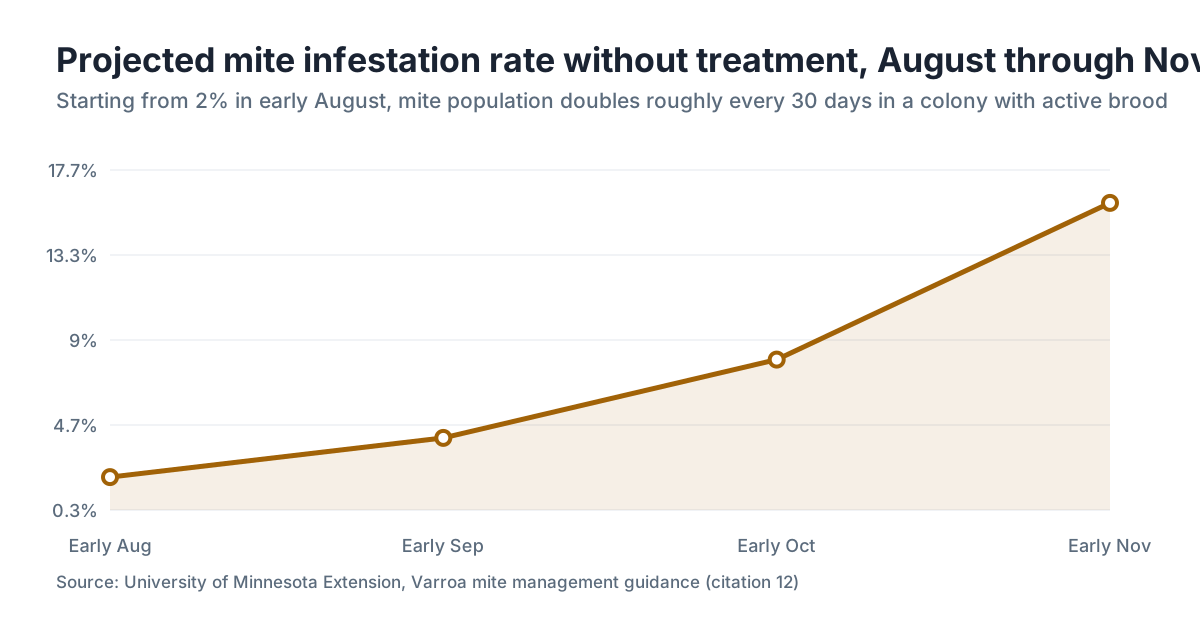
A mite population roughly doubles every 30 days in a colony with a healthy brood nest. Count 2 percent in early August and do nothing, and you can expect 4 percent by early September and 8 percent or higher by October, right when colonies are raising the winter bees that need to survive 5 to 6 months. Winter bees carrying heavy viral loads from varroa feeding are physiologically wrecked and die early, which is how decent-looking colonies dwindle to nothing by January. [1]
The threshold matters less than acting on it. Pick 2 percent, commit to it, and treat every colony that hits it. No exceptions.
Which treatments work in late summer heat and why does that matter?
Treatment choice in late summer is constrained by temperature, and getting it wrong can kill your queens or your colonies.
Here's a quick comparison of the main options:
| Treatment | Active ingredient | Temp range | Brood penetration | Honey supers off? |
|---|---|---|---|---|
| Mite Away Quick Strips (MAQS) | Formic acid | 50-85°F | Yes, kills mites in capped cells | No (per label) |
| Formic Pro | Formic acid | 50-85°F | Yes | No (per label) |
| Apiguard / Api Life Var | Thymol | 60-105°F upper; best 65-85°F | Partial | Yes |
| OAV (oxalic acid vaporization) | Oxalic acid | Above freezing | No (broodless only effective) | Yes |
| ApiVar strips | Amitraz | Wide range | No direct effect on capped brood | Yes |
In the heat of late July and August across much of the U.S., formic acid products need real caution. MAQS and Formic Pro both cap safe application at 85°F. Go above that and you risk queen loss and heavy bee mortality. Always read the current EPA-registered label before you apply. [7]
Thymol-based products (Apiguard, Api Life Var) work best between 65 and 85°F and can underperform in a very hot apiary. [8]
Oxalic acid vaporization is the most effective option when your colony is broodless, but in late summer that's almost never the case. OAV with brood present kills the phoretic mites it touches and does nothing for mites sealed in cells, which can be 70 to 80 percent of the total. Repeated OAV (every 5 days for several cycles) has been floated as a workaround, but the U.S. label doesn't currently authorize this for colonies with brood, so check your state regulations before trying it. [9]
ApiVar (amitraz strips) works across a wide temperature range and needs no special temperature conditions, which makes it practical in August. The tradeoff: it takes 6 to 8 weeks for full efficacy and doesn't kill mites in capped cells directly, relying on extended contact as bees emerge. [10]
How does apiary layout affect how fast mites spread?
Layout is one of the few dispersal variables you can actually change.
Hives lined up in a single row, all facing the same way, produce far more drifting than hives with varied orientations and spacing. Returning foragers navigate partly by visual cues, and a uniform line of identical boxes is a lousy cue. They land at the wrong hive, get accepted (especially if they're carrying food), and drop off whatever phoretic mites they're wearing. [4]
Some practical adjustments:
Face hives in different compass directions. Even alternating entries between southeast and southwest measurably cuts drifting. Paint hives different colors or set distinctive markers near each entrance, since bees use local visual cues to find home. [3]
Spacing helps but has diminishing returns. Hives 3 feet apart and hives 10 feet apart both show drifting. The bigger win comes from orientation variety, not raw distance, inside a typical backyard apiary.
Put your weakest colonies at the ends of rows or farthest from high-traffic areas. Strong colonies repel robbers better. If a weak colony collapses, end-of-row placement limits how many neighbors get hit at once.
Run 10 or more colonies? Consider splitting the apiary into two groups 50 to 100 feet apart with different orientations. It won't eliminate inter-colony mite exchange, but it slows the cascade when one group has a problem.
Can you prevent varroa mites from entering your hives from outside your apiary?
Honestly? Only partly. You can reduce reinfestation pressure, but you can't stop it.
Live somewhere with plenty of hobbyist beekeepers, wild colonies, or feral swarms (and there are more feral colonies than most people realize, especially in cities), and mites will find their way in through drone drifting and robbing no matter how well you run your own apiary. Nobody has clean data on reinfestation rates from external sources, but the Apidologie study cited earlier shows reinfestation from neighboring apiaries within 1 km is ongoing and can partly replenish mite populations after treatment. [5]
So treating once and assuming you're covered for the season is wrong. A colony that tests at 0.5 percent after a good August treatment can be back at 2 percent or higher by October if reinfestation pressure is high. Test again 4 to 6 weeks after any treatment to confirm it held.
The best partial shields against outside reinfestation: keep your own colonies strong (strong colonies rob less and defend better), treat promptly so your colonies don't become the source for the neighbors, and run entrance reducers to shrink the robbing entry point during the dearth. A reduced entrance is much easier for guards to hold.
What signs tell you a hive is being robbed and spreading mites right now?
Robbing looks chaotic and aggressive in ways normal forager traffic never does.
At a colony under attack, you'll see bees fighting at and around the entrance instead of moving in orderly streams. Bees tumble off the landing board grappling with each other. Some try to sneak in from odd angles, including the sides and back of the box. Inside, the noise runs higher than normal, and frames near the honey stores may show torn, ragged comb where robbers chewed through cappings fast instead of uncapping cells cleanly the way resident bees do. [1]
A colony being robbed is already transferring mites to whatever colonies those robbers came from. The right response: reduce the entrance immediately (down to 1 to 2 bee widths), clear away obvious attractants like spilled syrup or open feeders nearby, and decide whether the robbed colony is strong enough to defend itself or already in collapse.
If it can't hold even a reduced entrance, it's probably not coming back without significant intervention. Consider combining it with a healthy colony over a newspaper divide rather than leaving it as an open mite reservoir.
What's the best late-summer varroa management timeline to follow?
Here's the sequence most extension programs and the Honey Bee Health Coalition's guidelines converge on for temperate North America.
Early August: alcohol wash on every colony. Log the results. Any colony at or above 2 percent gets treated now, not in two weeks.
Mid to late August: finish the first treatment round on every colony that needed it. Using ApiVar? It needs 6 to 8 weeks in the hive, so strips in by mid-August means they come out before real cold sets in.
Early September: re-test any colony that was borderline in August or that you treated. Confirm the treatment worked. Still above 2 percent after treatment? Either the treatment failed (check for resistance or application error) or the colony is being reinfested from outside.
October: do a final check before the colony goes broodless or near-broodless. A broodless colony, or one with very little sealed brood, is the ideal window for oxalic acid because all mites are phoretic and fully exposed. An OAV or oxalic dribble here can knock out the residual mite population going into winter. [9]
The colonies raising winter bees right now (late July through September) are the ones that will or won't make it to spring. Every week you delay treatment in this window is a week of mites feeding on the bees your colony needs to survive. Get the timing right or accept higher winter loss.
VarroaVault's free protocol tools can walk you through building this exact calendar for your region and colony count.
Do native or feral bee colonies contribute to varroa dispersal?
Yes, and it's one of the genuinely frustrating parts of varroa management.
Feral European honey bee colonies in tree cavities and wall voids are common across most of North America, and they carry varroa. They pump out drones that drift into managed apiaries and swarms that land where your colonies forage. A 2018 review in the journal Insects described feral colonies as an essentially unmanaged reservoir of varroa that keeps contributing mites to the regional bee population. [11]
You can't treat feral colonies. What you can do is make sure your own colonies aren't the vulnerable ones when those feral-sourced mites arrive. A colony at 0.5 percent absorbs a wave of incoming phoretic mites and stays manageable. A colony sitting at 3 percent before the wave hits is going to collapse.
Where africanized honey bees are present, there's an extra wrinkle: africanized colonies show better hygienic behavior and some natural mite resistance, but they also swarm constantly, which can spread mites across a wider area through swarm casting. It's a mixed picture.
Frequently asked questions
How quickly can varroa mites spread from one hive to all hives in an apiary?
In active robbing conditions, mite transfer can be measurable within 48 to 72 hours and significant within 1 to 2 weeks. A heavily infested collapsing colony can export thousands of phoretic mites to neighbors during a single robbing event lasting several days. Research cited by the Honey Bee Health Coalition confirms robbing is the fastest intra-apiary dispersal mechanism. The more hives you have clustered together, the faster the spread.
What percentage of mites in a hive are phoretic and able to travel to new hives?
In a colony with active brood, roughly 15 to 30 percent of mites are phoretic at any moment. The rest are in capped cells reproducing. During a broodless period, 100 percent are phoretic. The phoretic mites are the ones that transfer during robbing and drifting. That's why a broodless window is such a good treatment opportunity: all mites are exposed and reachable by treatments like oxalic acid.
Should I treat all my hives at the same time even if only some test high?
Yes, treating the whole apiary at once is the right call in late summer. Colonies testing below threshold now will likely cross it within weeks as the dearth intensifies. Treating only high colonies leaves your low-mite hives open to reinfestation from outside the apiary and from residual exchange between your own hives. Synchronized whole-apiary treatment is standard guidance from the Honey Bee Health Coalition.
Can varroa mites survive off a bee long enough to crawl between hives on their own?
No, not in any practical sense. Phoretic varroa mites die within hours to a few days without a bee host. They cannot walk between hives across open ground. All meaningful dispersal happens on the bodies of bees through robbing, drifting, and swarming. That's actually useful: stop the bee movement and you stop the mite movement.
How does drone drifting spread varroa differently from worker drifting?
Drones drift at much higher rates than workers, sometimes 30 to 50 percent or more visiting multiple hives in their lifetime. They're also accepted into any hive freely, unlike workers who face more scrutiny. Because drones are often loaded with phoretic mites (they sit in the brood nest and pick up mites easily), their constant drifting across and between apiaries is a steady low-level mite redistribution that runs all season.
Does reducing the hive entrance actually reduce varroa dispersal from robbing?
It reduces robbing, which reduces mite transfer. An entrance narrowed to 1 to 2 bee widths gives guard bees a choke point they can defend. It won't stop determined robbers from a large colony hitting a weak one, but it slows the process and buys you time to step in. During late-summer dearth, entrance reducers on all colonies are a reasonable default, more than on weak ones.
Is it too late to treat for varroa in September?
No. September treatment is late but still useful, especially paired with an October oxalic acid treatment as the colony approaches broodlessness. Winter bees are still being raised in September across most of North America, so cutting mite loads before those bees are capped matters. A colony treated in September has a far better survival prognosis than one left untreated through fall.
Do I need to worry about varroa dispersal if I only have one or two hives?
Yes, because mites will arrive from neighboring beekeepers, feral colonies, and swarms regardless of your colony count. A single hive in a suburban neighborhood can pick up phoretic mites from feral colonies and nearby apiaries within its foraging range. Single-hive beekeepers still need to monitor and treat on schedule. The difference is you don't carry the within-apiary cascade risk of a larger operation.
Can I use powdered sugar or other home remedies to control varroa dispersal?
No. Powdered sugar does not meaningfully reduce varroa populations and is not a recognized treatment by extension programs or the EPA. Studies testing powdered sugar rolls found no significant mite drop beyond the mechanical disturbance of the wash itself. Focus on the four EPA-registered treatment categories: formic acid products, thymol products, oxalic acid products, and amitraz strips. These have real efficacy data behind them.
How do I know if my colonies are being reinfested after treatment?
Test 4 to 6 weeks after finishing any treatment. If mite loads have climbed back to near or above threshold, reinfestation from outside the apiary is likely, especially if your treated colonies all came in low. No treatment leaves a residual that blocks incoming phoretic mites from establishing. High reinfestation pressure means you may need to treat twice in fall and run entrance reducers to limit robbing traffic.
What role does a failed or queenless colony play in spreading varroa?
A queenless colony without laying workers eventually loses all its brood. As brood dwindles, mites in capped cells emerge with the last bees, pushing more of the mite population phoretic at once. The colony's defense weakens as its population falls, inviting robbers. That concentration of phoretic mites in a failing, undefended colony makes it an especially efficient mite source. Identify and address failing colonies promptly.
Are some bee breeds or hybrids better at resisting varroa spread within an apiary?
Colonies with Varroa Sensitive Hygiene (VSH) traits or Mite Mauler genetics show measurable mite suppression through hygienic removal of infested brood. This can slow local mite growth. No commercially available breed eliminates varroa or stops incoming phoretic mites from drifting robbers, though. Resistant stock genuinely helps, but it doesn't replace monitoring and treatment during late summer dispersal season.
What's the difference between varroa dispersal within an apiary and reinfestation from outside?
Within an apiary, dispersal is fast and driven by robbing between your own colonies. You can interrupt it by treating, removing collapsing hives, and using entrance reducers. Reinfestation from outside comes through drones, swarms, and robbers from neighboring apiaries and feral colonies up to 1 to 3 km away. You can reduce it but not stop it. Both happen at once in late summer, which is why monitoring every 4 to 6 weeks after treatment matters.
Sources
- Honey Bee Health Coalition, Varroa Management Guide (current edition): Mite populations peak in late summer relative to bee population; treatment threshold in late summer is 2% on alcohol wash; collapsing colonies export mites through robbing
- USDA AMS, National Honey Bee Survey and Varroa Research Program: Robbing is a primary mechanism for rapid intra-apiary mite transfer; a collapsing hive can export thousands of mites to neighbors
- Frey & Rosenkranz, Apidologie 2014, Infestation of worker bee populations by Varroa destructor: Up to 40% of drifting workers can carry phoretic mites; hive orientation affects drifting rates
- Penn State Extension, Varroa Mite Management: Drifting and robbing are the primary mechanisms by which varroa mites spread between colonies within and between apiaries; alcohol wash is the gold standard monitoring method
- Apidologie, Seeley & Smith 2015, Weak honey bee colonies: reinfestation from surrounding apiaries: Apiaries within 1 km of a varroa-infested source showed measurable mite immigration even when those colonies were treated
- USDA Beltsville Bee Lab, Varroa mite modeling and dispersal studies: A single heavily infested collapsing colony can export thousands of mites into surrounding colonies within weeks through robbing
- EPA, Mite Away Quick Strips (MAQS) registered label: MAQS application temperature range is 50-85°F; honey supers may remain on during treatment per label conditions
- Vita Bee Health, Apiguard product label and efficacy data: Apiguard (thymol) performs best between 65 and 85°F; may underperform outside this range
- EPA, Oxalic acid (Api-Bioxal) registered label: Oxalic acid vaporization is highly effective in broodless colonies; label specifies conditions for use with and without brood
- Elanco Animal Health, ApiVar (amitraz) registered label: ApiVar requires 6-8 weeks for full efficacy; works across a wide temperature range; honey supers must be removed during treatment
- Insects journal (MDPI), Feral honey bee populations and varroa reservoir dynamics, 2018: Feral colonies represent an essentially unmanaged reservoir of varroa that continuously contributes mites to the regional bee population
- University of Minnesota Extension, Varroa mite management: Late summer (August-September) threshold of 2% is recommended; mite populations double roughly every 30 days in colonies with active brood
Last updated 2026-07-10