Apivar amitraz strips: how they work, when to use them, and what to watch for
TL;DR
- Apivar strips contain 500 mg of amitraz each and kill varroa mites through contact as bees walk across and groom around them.
- Used correctly, two strips per brood box for 6 to 10 weeks, efficacy runs 93 to 99% in most studies.
- They're one of the most reliable varroa treatments available, but rotating with other modes of action is essential to slow resistance.
What is Apivar and how does amitraz actually kill varroa mites?
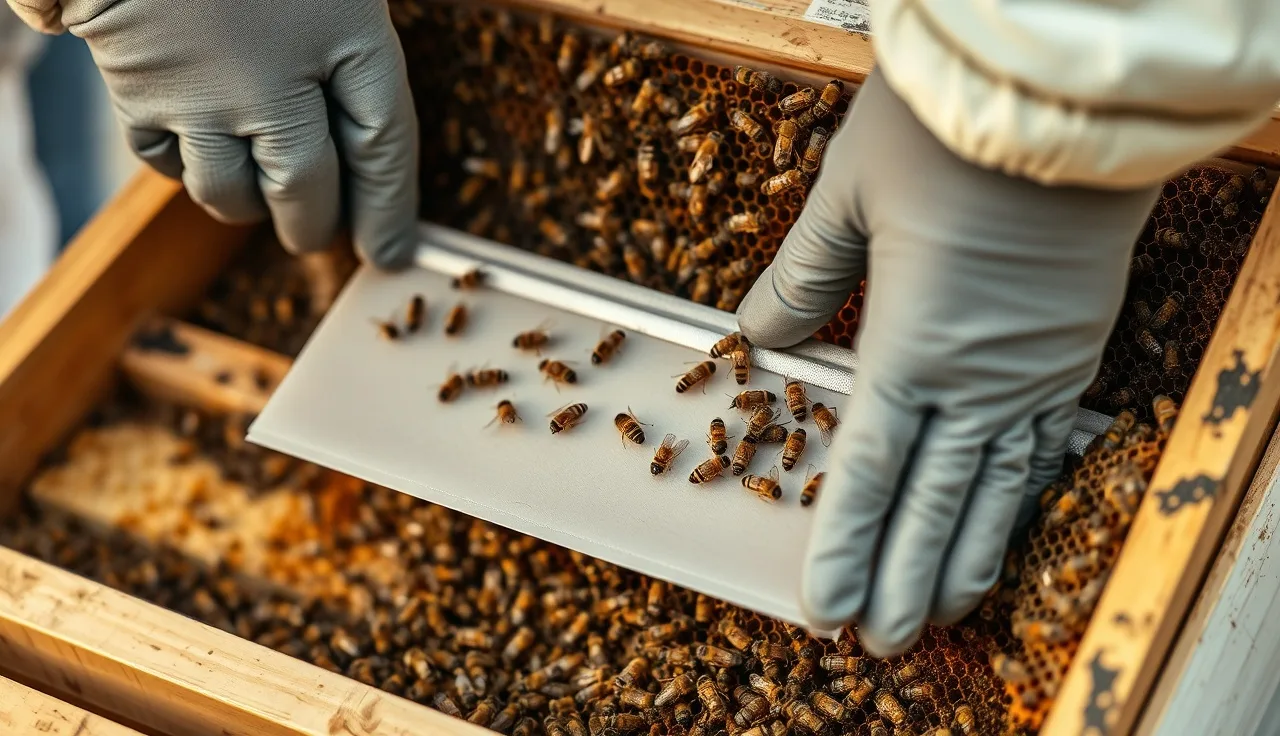
Apivar is a plastic polymer strip impregnated with amitraz, a formamidine-class acaricide. Each strip holds 500 mg of amitraz [1]. Bees walk across the strips, pick up tiny amounts of the active ingredient on their tarsi and body hair, and then distribute it through normal contact and grooming behavior across the colony. That contact transfer is the whole mechanism. There's no fumigant action in the sense of a gas filling the hive; distribution depends on how actively bees are moving.
Amitraz works by binding to octopamine receptors in the varroa mite's nervous system, essentially locking the mite in a state of overexcitation until it dies. Bees also have octopamine receptors, which is why concentration matters. At label rates, mites get a lethal dose through contact while bees are exposed to far smaller amounts during normal movement. The safety margin exists, but it's not infinite, so sticking to label instructions is non-negotiable.
The EPA registered Apivar (registration number 69130-1) for use in the United States, and the label is the legal document governing every aspect of its use [1]. If you haven't read the current label, that's the first thing to do before opening the package.
How effective is Apivar at reducing varroa loads?
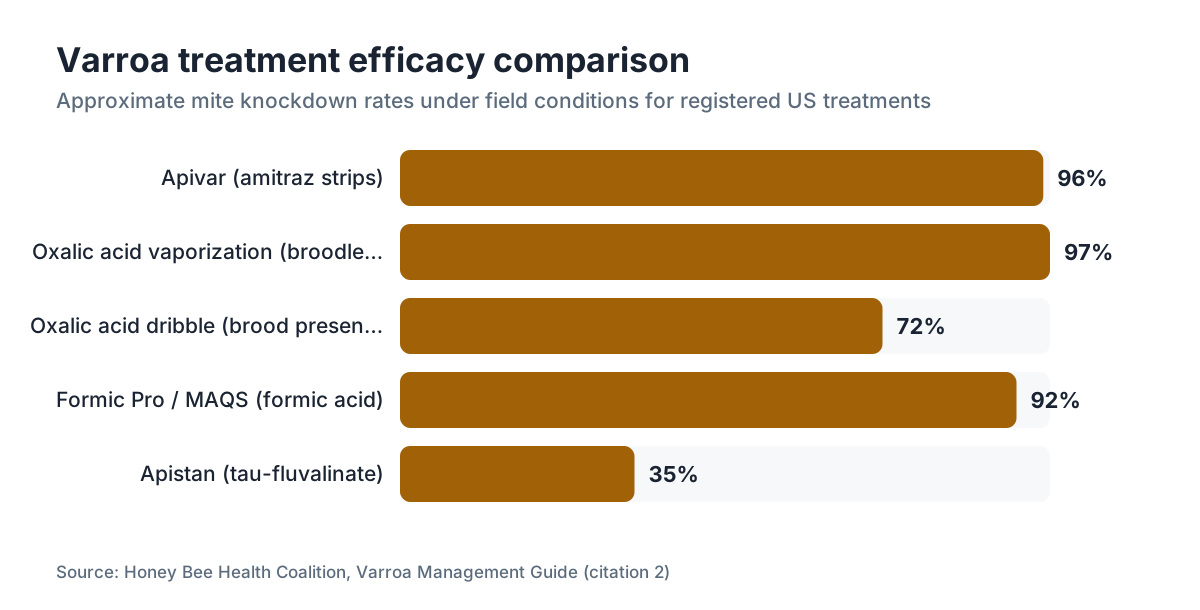
Multiple field trials and the Honey Bee Health Coalition's treatment efficacy reviews put Apivar's efficacy between 93% and 99% mite knockdown under real-world conditions [2][3]. That's among the highest figures for any registered varroa treatment, and it holds up across many ambient temperatures, which is one reason beekeepers in colder climates lean on it heavily.
The 93% floor is important to understand. A colony with a 5% mite infestation before treatment (already a crisis level) could still have enough surviving mites after treatment to rebuild a damaging population within a few weeks, especially in late summer when the colony is shrinking and the mite-to-bee ratio is naturally climbing. High pre-treatment loads demand monitoring after the strips come out.
Efficacy drops when there's a lot of capped brood present. Amitraz reaches phoretic mites on adult bees well, but it penetrates capped cells far less reliably. Most of the field trials showing 93%+ knockdown were conducted under conditions where colonies had some brood-free periods or the full 8 to 10 week treatment allowed multiple brood cycles to complete. One Oregon State University extension review noted that treatments applied during heavy brood production consistently showed lower effective kill rates than treatments timed around brood breaks [4].
Here's the honest version: Apivar is genuinely good, but it's not magic, and monitoring before and after treatment tells you whether your colony's specific result landed in the 93% range or the lower end.
What's the correct Apivar dosing and placement in the hive?
The label calls for two strips per colony, placed in the brood nest, hanging between frames where bees are actively clustered [1]. For a standard 10-frame Langstroth box, that means hanging one strip between frames 3 and 4 and another between frames 7 and 8. The exact frame position matters less than making sure the strips sit where bees are walking. If the cluster is shifted, center your strips in the cluster.
For a two-box colony with a lower brood box and a super, both strips go in the lower brood box. Adding a second set of strips in an upper brood box is not labeled and not something you should improvise.
Strips stay in the hive for a minimum of 6 weeks and a maximum of 10 weeks. Do not pull them early because you think the mites look gone. The extended contact period catches mites emerging from cells after the initial knockdown. Pull them late (past 10 weeks), and you're running up unnecessary exposure time with no added benefit.
If you're running nucleus colonies or packages in 5-frame nucs, the label specifies one strip per nuc. Don't eyeball and cut a strip in half; the active ingredient isn't evenly distributed end-to-end through the polymer.
Gloves. The label requires them, and you should actually wear them every time, more than when you remember [1]. Amitraz is absorbed through skin and can cause dizziness, low blood pressure, and bradycardia in humans at meaningful exposure levels.
When is the best time of year to use Apivar strips?
Apivar has a real advantage over oxalic acid and most organic acids: it works across a broad temperature range and doesn't require a brood-free window to be effective. That makes it usable in spring and late summer or early fall when colonies have active brood, which is typically when you need a treatment most.
The two treatment windows most beekeepers use are late summer (roughly late July through September in temperate North America) and early spring (April into May, depending on your location). The late-summer window is the more critical one. Mite populations typically peak in August and September just as colonies are raising the winter bees that need to survive until spring. A high mite load during that window means those long-lived bees are born with viral loads that shorten their effective life, and colonies that look fine going into October can collapse by January.
Spring treatment is more situational. If you monitored through winter and found mite loads climbing above your threshold before the main nectar flow, treating then makes sense. The risk is that treating during a strong build-up can slow your spring build if bees are dedicating energy to managing the strips, though this effect is minor compared to the harm of ignoring mites.
Apivar is NOT approved for use while honey supers intended for human consumption are on the hive [1]. You have to remove supers before hanging strips. That's not optional; amitraz residues in honey are a real risk and a legal issue. Plan your treatment windows around your honey harvest schedule.
How do Apivar strips compare to other varroa treatments?
There are four main registered varroa treatment categories: amitraz (Apivar), oxalic acid (Api-Bioxal and generics), formic acid (Mite-Away Quick Strips, Formic Pro), and synthetic pyrethroids (Apistan, though resistance is severe in most US populations). Here's how they compare on the factors beekeepers actually care about.
| Treatment | Active Ingredient | Efficacy (phoretic + brood) | Temperature Range | Super Removal Required | Brood-Free Window Needed |
|---|---|---|---|---|---|
| Apivar | Amitraz | 93 to 99% [3] | Wide (above ~50°F) | Yes | No |
| Api-Bioxal (dribble/vaporization) | Oxalic acid | 90 to 99% phoretic only [2] | Above 40°F for vaporization | No (vaporization) | Yes for single-dose effectiveness |
| Formic Pro / MAQS | Formic acid | 90 to 95% including capped brood [2] | 50 to 85°F (narrow) | No | No |
| Apistan | Tau-fluvalinate | Low (resistance widespread) | Wide | Yes | No |
Apivar's big advantage over oxalic acid is brood penetration. Oxalic acid only kills phoretic mites (those riding on adult bees outside of cells), so a single oxalic acid treatment in a colony with active brood leaves all the mites tucked inside capped cells alive. Apivar reaches some of those cell-phase mites through extended contact and multiple brood cycles during the treatment window.
Formic acid also penetrates capped brood and doesn't require super removal, which makes it competitive. Its narrow temperature window (treatments applied above 85°F can kill queens and cause significant brood loss) limits its usefulness in warm climates and hot summers. Apivar doesn't carry that same queen-kill risk at label rates.
The honest comparison: for a beekeeper who needs to treat a colony with active brood, doesn't want to manage a narrow temperature window, and wants predictable results, Apivar is a strong default choice. For a beekeeper doing a late-fall or midwinter treatment of a broodless or near-broodless colony, oxalic acid vaporization is cheaper and equally effective.
Is amitraz resistance in varroa mites a real problem?
Yes, it's real. Amitraz resistance in varroa has been documented in the United States, Europe, and elsewhere, though it's not as widespread or as severe as tau-fluvalinate (Apistan) resistance, which is essentially universal in most US varroa populations [5]. The mechanism involves changes in the mite's octopamine receptor that reduce amitraz binding affinity.
A 2019 study in Scientific Reports confirmed reduced amitraz susceptibility in varroa populations in several US states, though the authors noted that full resistance (treatment failure) was not uniformly distributed [5]. What that means practically: your Apivar treatment might work at 98% knockdown this year and 87% knockdown in three years if you've been running amitraz twice annually without rotating.
The Honey Bee Health Coalition's Varroa Management Guide recommends rotating chemical classes to slow resistance development [2]. That means alternating Apivar treatments with oxalic acid or formic acid rather than reaching for Apivar every single time. A reasonable rotation might look like: Apivar in late summer, oxalic acid vaporization in midwinter (broodless period), and then formic acid or another class in the following treatment window.
If you treat with Apivar and do an alcohol wash or sticky board count two weeks post-treatment and the numbers haven't moved much, don't assume your technique was off before you consider resistance. Do a proper efficacy check: pre-treatment wash, then a wash 4 weeks into treatment, then a wash 2 weeks after strips come out. A significant drop from baseline to mid-treatment is the sign you want.
What are the safety rules for handling Apivar strips?
Amitraz is a pesticide, and the label is a legal document, not a suggestion [1]. The safety requirements are specific.
Wear chemical-resistant gloves (nitrile or latex) every time you handle the strips. Wash hands and exposed skin thoroughly after handling even with gloves on. Do not eat, drink, or smoke while working with the strips. Store unused strips in their original sealed packaging, away from children and animals, and at temperatures between 40°F and 90°F.
Dispose of used strips properly. Do not burn them. Used strips still contain residual amitraz. In most US jurisdictions they're classified as pesticide-contaminated waste. Check your state's pesticide disposal regulations; many state departments of agriculture run periodic pesticide collection events at no cost.
Amitraz is toxic to dogs and cats, and exposure can cause sedation, hypothermia, and bradycardia in companion animals. Keep used and unused strips away from pets. There have been documented cases of dogs becoming seriously ill after chewing on used varroa treatment strips.
For beekeepers who are pregnant or have a history of cardiovascular sensitivity, a conversation with a physician before working with amitraz products is reasonable. The Apivar label includes first aid instructions: if ingested, call Poison Control at 1-800-222-1222. That number is worth knowing.
How do you monitor varroa levels before and after Apivar treatment?
You need a mite count before you treat and a mite count after you treat. Skipping this is how beekeepers end up either treating colonies that didn't need it (contributing to resistance pressure) or declaring victory on a colony that's still harboring a damaging load.
The alcohol wash is the most accurate monitoring method for live colonies. Take a sample of roughly 300 bees (about half a cup) from the brood nest area, ideally including the nurse bees around capped brood since those bees carry the highest mite loads. Submerge the sample in 70% isopropyl alcohol, shake for 30 to 60 seconds, and count the mites that wash off. Divide mites by the number of bees (count or estimate) to get a percentage [2].
The Honey Bee Health Coalition recommends a treatment threshold of 2% infestation (2 mites per 100 bees) for most of the active beekeeping season. In late summer (July through September), some extension recommendations lower the action threshold to 1 to 1.5% because the colony is shrinking and each mite represents more relative harm [2][4].
The University of Minnesota Extension's Bee Lab has detailed guidance on wash technique and threshold interpretation [6]. Their recommended monitoring schedule is every 4 to 6 weeks during the active season.
After Apivar treatment ends, wait about two weeks before doing your post-treatment wash to allow any mites that survived in brood to emerge and become detectable on adult bees. If your post-treatment count is still above 2%, you have a problem worth investigating, either resistance or a reinfestation from neighboring colonies.
Tools like the ones available through VarroaVault's free varroa management toolkit can help you log counts across seasons and spot trends before they become emergencies.
Can you use Apivar in honey supers, and what about wax and honey residues?
No. The label explicitly prohibits the use of Apivar when honey supers intended for human consumption are present on the colony [1]. Period.
Amitraz and its breakdown products, particularly DMPF (2,4-dimethylphenyl formamide), are detectable in beeswax and in honey at trace levels even after proper label-compliant use. Studies analyzing commercially traded honey have found amitraz residues in samples from multiple countries [7]. The levels detected are generally far below established regulatory tolerances, but that doesn't mean careless use is acceptable, and it absolutely doesn't mean you can leave supers on during treatment.
Beeswax accumulates amitraz residues over time. Comb that's been in a hive treated multiple times with Apivar will have higher amitraz concentrations than new comb, and that built-up residue can continue slow-release into bee tissues even between treatment periods. Some beekeepers on a regular Apivar rotation periodically replace old comb as part of their hive management specifically for this reason. There's no hard rule on how often; the practical standard is rotating out the darkest, oldest combs every three to five years.
If you're selling cut comb or extracted honey for premium markets that test for pesticide residues, document your treatment dates and windows carefully, and be aware that third-party testing by some certifiers has picked up amitraz metabolites in honey from hives treated within the previous season.
What does Apivar cost, and where do you buy it?
Apivar is sold in packs of 10 strips, which is enough to treat five standard colonies. As of 2024 to 2025, a 10-strip package typically runs between $25 and $40 in the US, depending on the supplier and whether you're buying in bulk [8]. That's $5 to $8 per colony for a full treatment course, which makes it one of the more cost-effective treatments on a per-colony basis.
Bulk packs (50 strips) bring the per-strip cost down meaningfully and are worth buying if you're managing more than eight or ten colonies. Sideliner operations running 20+ colonies often buy from beekeeping supply distributors rather than retail, which can cut costs further.
Apivar is available from most major beekeeping supply companies. If you're looking at suppliers, checking beekeeping supply companies can help you compare options and find the best pricing. Some operations also offer free shipping honey bee supply companies deals that make bulk orders more attractive. Always verify that the product you're buying carries the current EPA registration number (69130-1) on the label; there have been counterfeit or expired strips circulating through some gray-market channels.
Store unopened packages in a cool, dry place below 90°F. Amitraz degrades at elevated temperatures, and strips stored in a hot shed through summer before use may have reduced efficacy even if they look fine.
What are the most common mistakes beekeepers make with Apivar?
Removing strips too early is number one. Six weeks is the minimum, and many beekeepers pull at six weeks thinking they're done. The full brood cycle needs to run out to catch mites that were sealed in cells when you hung the strips. Eight weeks is the more practical target.
Leaving strips in too long is a close second. Past 10 weeks, you're not getting meaningful additional benefit, and you're just running up exposure time unnecessarily. Set a calendar reminder when you hang them.
Not treating all colonies in the same apiary or the same operation at the same time is a mistake that undermines the whole effort. Mites drift between colonies on forager bees. If the colony 20 feet away is heavily infested and you treated only the one you noticed struggling, the untreated colony will re-infest your treated one within weeks. Treat the whole yard.
Hanging strips outside the cluster. If the colony has contracted for winter and the cluster is tight in the center of the box, strips hanging at the outside frames aren't reaching bees. Walk the strips into where the bees are.
Ignoring the honey super rule. Beekeepers who cut corners on this risk adulterating their honey crop and violating federal pesticide law. It's not worth it.
Using Apivar every single treatment cycle for years without rotating. This is how you breed resistant mites on your own operation. Even if your Apivar treatments are working great right now, the resistance pressure is real. Alternate with other modes of action.
Not monitoring. Treating without a pre-treatment count means you don't know if you needed to treat, and not doing a post-treatment count means you don't know if it worked. Those two counts are the whole feedback loop.
Are there situations where Apivar is not the right choice?
A few. If you're in a region where amitraz resistance is already documented in local varroa populations and your previous treatments haven't performed well, treating again with Apivar before testing for resistance is a poor strategy. The Beltsville Bee Research Lab and some state departments of agriculture can run resistance bioassays on varroa samples, though the logistics are not simple for most hobbyists [9].
If you're a certified organic operation, amitraz is not permitted. Oxalic acid (in the form of Api-Bioxal) is currently the only EPA-registered varroa treatment compatible with USDA National Organic Program requirements for certified organic honey production.
If your honey flow is coming in the next few weeks and you can't pull supers, you need a treatment that doesn't require super removal, which means formic acid or oxalic acid vaporization. Plan your treatment calendar around your nectar flow, not the other way around.
If you're managing a colony that's already queenless, weak, or showing signs of collapse, treating for varroa without addressing the underlying colony health issue rarely saves the colony. Varroa treatment works best in colonies strong enough to benefit from it.
For beekeepers with very few hives who want to stay current on all available tools and protocols, the VarroaVault free tools can help you build a seasonal protocol that rotates treatments appropriately and tracks your monitoring results over time.
Frequently asked questions
How many Apivar strips do I use per hive?
Two strips per full-sized colony (8 to 10 frame boxes), positioned in the brood nest hanging between frames where bees are active. For a 5-frame nucleus colony, use one strip. Don't cut strips in half; the active ingredient isn't evenly distributed through the polymer, so halving a strip doesn't give you half the dose reliably.
How long do Apivar strips stay in the hive?
A minimum of 6 weeks and a maximum of 10 weeks per the EPA label. Eight weeks is a common practical target because it allows multiple brood cycles to complete, catching mites that were sealed inside capped cells when you first hung the strips. Pulling them at 6 weeks risks leaving a significant portion of the mite population alive.
Can I leave honey supers on while using Apivar?
No. The Apivar label explicitly prohibits use when honey supers intended for human consumption are on the colony. Remove all supers before hanging strips. Amitraz and its breakdown products accumulate in wax and honey, and leaving supers on during treatment creates both a food safety issue and a federal pesticide law violation.
Does Apivar work in cold weather?
Better than most alternatives. Apivar doesn't require a temperature minimum the way formic acid does, and it remains effective as long as bees are moving across the strips, which happens down to fairly cool temperatures in an active cluster. It's generally considered usable when daytime temps are above roughly 50°F, though the label doesn't specify a temperature minimum the way formic acid products do.
What's the difference between Apivar and Apistan?
Different active ingredients and very different resistance profiles. Apivar contains amitraz (a formamidine). Apistan contains tau-fluvalinate (a synthetic pyrethroid). Varroa mites developed widespread resistance to tau-fluvalinate starting in the 1990s, and Apistan is now largely ineffective in most US varroa populations. Amitraz resistance exists but is less prevalent, which is why Apivar still performs well in most apiaries.
Can varroa mites become resistant to Apivar?
Yes. Amitraz resistance in varroa has been confirmed in multiple US states and several European countries. A 2019 study in Scientific Reports documented reduced amitraz susceptibility in varroa populations across several states. Rotating treatment classes (alternating Apivar with oxalic acid or formic acid) is the main practical tool beekeepers have to slow resistance development in their own apiaries.
When should I do a varroa check after Apivar treatment?
Wait about two weeks after removing the strips before doing your post-treatment alcohol wash. That window lets mites that survived inside capped cells emerge onto adult bees and become detectable. A count taken the day strips come out will undercount surviving mites and give you a falsely optimistic result. Compare your post-treatment count to your pre-treatment baseline to assess true knockdown.
Is Apivar safe for the queen?
At label rates, Apivar does not carry the queen-kill risk that formic acid treatments do. Queen losses during properly applied Apivar treatment are rare and generally attributable to other causes. Formic acid at high temperatures or improperly applied has documented queen-kill rates, which is one reason beekeepers who are nervous about queen loss lean toward amitraz treatments.
What should I do with used Apivar strips?
Do not burn them. Used strips still carry residual amitraz and are classified as pesticide-contaminated waste. Most US states have specific disposal requirements for pesticide waste. Many state departments of agriculture run periodic hazardous waste collection events that accept pesticide containers and used strips at no cost. Check your state ag department's website for collection schedules.
Can I use Apivar with a brood break or queen-less period?
Yes, and a brood break actually improves efficacy. When all the mites are phoretic (on adult bees, not tucked in capped cells), amitraz contact kills them more completely. If you're doing a planned brood break for swarm management or requeening, timing an Apivar treatment to overlap with that broodless window can push knockdown closer to 99% rather than the 93% you might see in a colony with heavy brood.
How do I know if Apivar treatment is working?
Do an alcohol wash before treatment, then again at 4 weeks into the treatment window, and again 2 weeks after strips come out. A sharp drop from baseline (say, 4% down to under 0.5%) confirms the treatment is working. If your mid-treatment count hasn't moved meaningfully from baseline, consider whether resistance could be a factor or whether your strips are making proper contact with the cluster.
Does Apivar affect bee brood or colony strength?
At label rates, Apivar does not cause significant brood damage or meaningful loss of colony strength. Some beekeepers report slightly elevated brood mortality in weak colonies, but that's generally attributed to the underlying colony state rather than amitraz directly. Properly dosed treatments in healthy colonies show no detectable negative effect on brood development in the literature.
How often can I use Apivar in a year?
The label allows two complete treatment courses per year. Most beekeepers do one in late summer (critical for winter bee protection) and one in spring if monitoring shows it's needed. Running Apivar every single treatment cycle year after year without rotating to other modes of action accelerates resistance development, so even if two courses per year are legal, alternating with other treatments is better long-term practice.
Sources
- EPA, Apivar (amitraz) product label, registration number 69130-1: Each Apivar strip contains 500 mg amitraz; two strips per colony for 6 to 10 weeks; prohibited when honey supers are present; gloves required during handling
- Honey Bee Health Coalition, Varroa Management Guide (current edition): Treatment threshold of 2% mite infestation; Apivar efficacy range of 93 to 99%; recommendation to rotate chemical classes to reduce resistance
- Honey Bee Health Coalition, Varroa Management Guide, treatment efficacy comparison table: Apivar amitraz strips listed at 93 to 99% efficacy range across field trials reviewed
- Oregon State University Extension, Honey Bee and Varroa Management: Treatments applied during heavy brood production show lower effective kill rates than treatments timed around brood breaks; late-summer action thresholds
- Boncristiani et al., Scientific Reports (2019), 'In-vitro investigation of the miticide amitraz and its metabolites on the parasitic mite, Varroa destructor': Reduced amitraz susceptibility confirmed in varroa populations across several US states; full resistance not uniformly distributed
- University of Minnesota Bee Lab, Varroa Monitoring and Management: Recommended monitoring schedule of every 4 to 6 weeks during active season; alcohol wash technique and threshold guidance
- European Food Safety Authority (EFSA), Monitoring data on pesticide residues in honey (2022): Amitraz and its breakdown product DMPF detected at trace levels in honey samples from multiple countries; levels generally below regulatory tolerances
- Mann Lake Ltd., Apivar retail pricing 2024 to 2025 (representative supplier): Apivar 10-strip packages priced between approximately $25 and $40 in the US retail market as of 2024 to 2025
- USDA ARS Beltsville Bee Research Laboratory: Resistance bioassays for amitraz susceptibility in varroa available through USDA Beltsville Bee Research Lab
- University of Florida IFAS Extension, Varroa Mite Management: Apistan (tau-fluvalinate) resistance widespread in US varroa populations; Apivar remains more effective than pyrethroids in most US apiaries
Last updated 2026-07-09