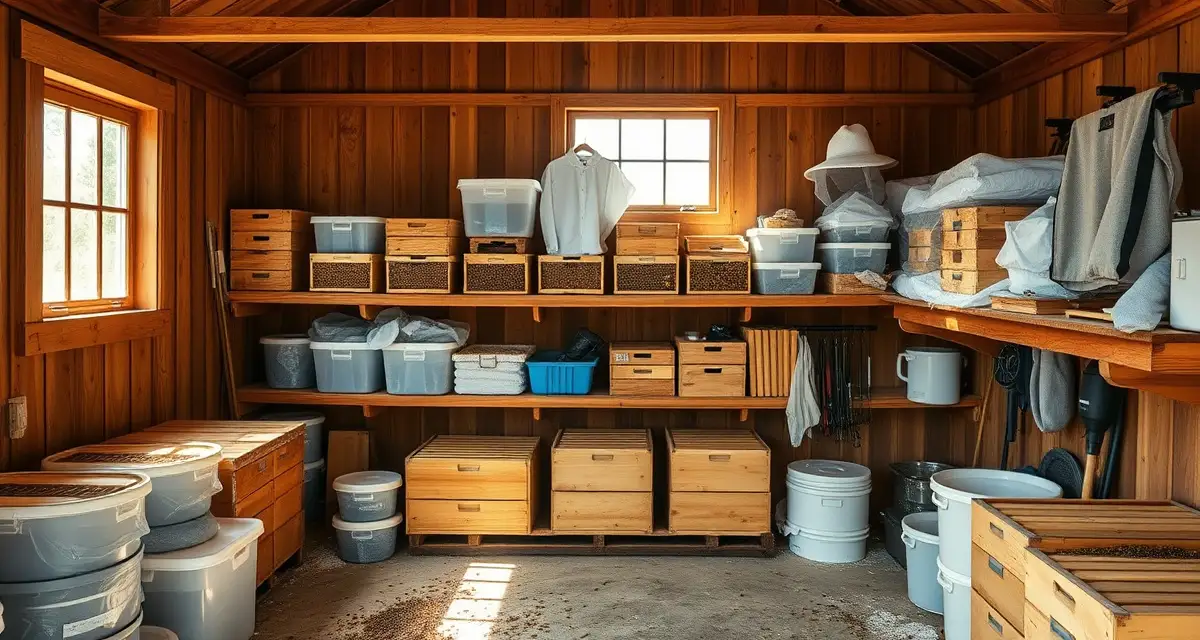
Bee Yard Biosecurity: Preventing Varroa Spread Between Apiaries
Using uncleaned equipment from a high-mite apiary in a low-mite yard can transfer hundreds of mites in a single visit. That's not a hypothetical. Phoretic mites on drawn comb, on gloves, on hive tools, and on uncleaned suits move between apiaries as surely as they move between colonies within an apiary.
Beekeepers who manage multiple locations often focus all their attention on treatment timing and threshold management within each apiary, and then inadvertently undermine their own work by moving contaminated equipment between yards without sanitization.
TL;DR
- Varroa spreads between apiaries through robbing, drifting, and swarms from untreated colonies nearby
- Disinfect hive tools between apiaries, not just between hives, to reduce disease spread
- Package bees and nucleus colonies from outside your operation are common introduction points for new mite strains
- Test incoming bees within 2 weeks of installation before mite loads have time to build
- Quarantine new colonies at least 10 feet from established hives for the first mite count cycle
- Log biosecurity notes and incoming colony tests in VarroaVault to track the origin of resistance or disease events
How Equipment Transfers Varroa
Phoretic varroa mites are not attached to specific bees. They're riding temporarily, waiting for an opportunity to enter a brood cell. When that bee rubs against a comb surface, against your glove, or against the wooden parts of a frame, mites can transfer.
The most significant equipment contamination routes:
Drawn comb moved between apiaries. Drawn comb surfaces contain propolis, brood debris, and potentially phoretic mites that transferred during the last inspection. Moving a comb from a 4% hive to a clean hive is a direct mite inoculation.
Gloves. Beekeeping gloves that contact bees in a high-mite colony get propolis and bee contact material on their surfaces. Phoretic mites on bees can transfer to glove surfaces. In a subsequent apiary visit, those gloves contact bees in the new colony.
Hive tools. Scrapers and hive tools contact comb, propolis, and bees throughout an inspection. They should be cleaned between apiaries at minimum and ideally between colonies within a high-risk apiary.
Suits and veils. Less significant than gloves and tools, but suits that have had bee contact at a high-mite yard can carry contamination. In research settings, suit surface contamination has been documented.
Shared equipment like feeders and frames. Any physical object moved from one colony to another without cleaning is a potential mite transfer vector.
Sanitization Methods That Actually Work
Not all cleaning methods are equal for varroa. Mites are arachnids, and the same thing that makes them difficult to kill with chemical treatments makes some "cleaning" inadequate.
Hive Tools
Heat is the most effective sanitizer. Flame-sterilization of hive tools between apiaries or between high-risk and low-risk colonies is standard practice in operations with rigorous biosecurity. Use a propane torch to heat the metal surfaces until discoloration occurs, then allow to cool before use. This kills mites, AFB spores, and other pathogens.
Alternatively, a 1:10 bleach solution or 70% isopropyl alcohol wipe-down is faster and adequate for varroa (though not for AFB spores, which require heat).
Gloves
Leather gloves are difficult to sanitize and retain contamination in pores and textured surfaces. Many biosecurity-conscious beekeepers use disposable nitrile gloves at each apiary visit. This is the most reliable approach for glove contamination control.
If you use reusable gloves, a 70% isopropyl wipe-down of the exterior surfaces between locations is the minimum. Allow to dry before use.
Drawn Comb
Drawn comb moved between apiaries should be frozen at 0°F or below for 48-72 hours before the move. Freezing kills varroa on comb surfaces. While it won't kill varroa inside sealed brood cells (if any remain), a properly broodless comb held at sub-freezing temperatures for 48 hours eliminates surface-riding mites.
Alternatively, only move comb within the same apiary where mite levels are known. Moving comb between apiaries without knowing the source apiary's mite status is a biosecurity risk regardless of how well-managed the destination is.
Suits and Veils
Run suits through a standard washing machine cycle between apiaries if you're managing high-risk locations. This is more practical for operations where different people work different yards rather than a single person traveling between apiaries on the same day.
For same-day multi-apiary visits, work the lowest-mite-risk yards first and save the highest-mite-pressure yards for last. You can't guarantee contamination prevention in this scenario, but sequencing reduces the risk of spreading from known problem yards to clean ones.
Logging Equipment Movement in VarroaVault
VarroaVault's equipment log tracks shared tools between apiaries with recommended sanitization steps. When you log a comb transfer or equipment movement between locations, the platform records the source and destination apiaries, the date, and any sanitation steps documented.
This log creates a contamination-tracing record. If a clean apiary shows unexpectedly rising mite counts after a period of equipment movement from a high-mite location, the equipment log helps identify whether that's a plausible cause. Without the record, the connection between equipment movement and count spikes may never be made.
The GPS mapping of hive locations in each apiary, available in VarroaVault's GPS hive mapping feature, also helps you track which physical hives in a multi-apiary operation have had shared equipment contact. Connecting equipment movement records to specific hive GPS positions gives you a spatial understanding of where contamination risk is concentrated.
Multi-Apiary Mite Load Discordance: A Warning Sign
If you manage multiple apiaries and regularly see count discordance, where one apiary consistently runs higher than another despite similar management, equipment movement is a possible explanation worth investigating. The higher-mite location may be acting as a persistent contamination source for your other yards.
Track this in VarroaVault's multi-apiary management software to compare count trends across locations over time.
Biosecurity for New Bees Entering Your Operation
Equipment biosecurity doesn't apply only to your own movements. Any bees, comb, or equipment entering your operation from outside represents a biosecurity introduction point.
New packages and nucs: Always do a mite count before integrating into your main operation. A new nuc placed in your apiary before knowing its mite status is an unknown risk.
Purchased drawn comb: Freeze before use. Old drawn comb from unknown sources is a contamination risk for both mites and AFB.
Borrowed equipment: Treat as high-risk. Any equipment borrowed from other beekeepers should be heat-sterilized before use regardless of the other beekeeper's reported management history.
Frequently Asked Questions
What biosecurity practices prevent varroa spread?
The core biosecurity practices are: flame-sterilize or alcohol-wipe hive tools between apiaries; use disposable nitrile gloves at each apiary visit or sanitize reusable gloves between locations; freeze drawn comb at 0°F for 48 hours before moving between apiaries; sequence multi-apiary visits from lowest-to-highest mite pressure on the same day; test new bees entering the operation before integrating into the main apiary; and treat borrowed or purchased used equipment as contaminated until sanitized. Logging equipment movement between locations creates a record for tracing unexpected mite count increases.
How often should beekeeping equipment be sanitized?
Between apiaries: every visit. Hive tools and gloves that contact bees at one location should be sanitized before use at the next location, particularly if the first location has elevated mite counts. Within the same apiary: between colonies that have known mite load differences (for example, between a colony you're treating and a colony at low mite levels). General hive tool sanitation with 70% isopropyl or heat is fast enough that there's no practical reason to skip it between sites.
Does VarroaVault track equipment movement between apiaries?
Yes. VarroaVault's equipment log records the movement of specific tools, frames, or comb between apiary locations, including the source location, destination, date, and any documented sanitization steps. This log creates a contamination-tracing record that can be reviewed if unexpected mite count increases occur in a location following equipment movement. The equipment log integrates with your apiary count history so you can compare movement dates against count trend changes over time.
How do I know if my varroa treatment is working?
Run a mite count 2-4 weeks after the treatment ends and compare it to your pre-treatment count. The efficacy formula is: ((pre-count - post-count) / pre-count) x 100. A result above 90% indicates effective treatment. Results below 80% should trigger investigation for possible resistance, application error, or reinfestation. Log both counts in VarroaVault to track efficacy trends across treatment cycles.
How often should I check mite levels in my hives?
At minimum, once per month (every 3-4 weeks) during the active season. Increase to every 2 weeks when counts are near threshold or after a treatment to verify it worked. In fall, monitoring frequency matters most because the window to treat before winter bees are raised is narrow. VarroaVault's monitoring reminders can be set to your preferred interval for each apiary.
What records should I keep for varroa management?
Each record should include: date of count or treatment, hive identifier, monitoring method used, number of bees sampled, mites counted, infestation percentage, treatment product name and EPA registration number, dose applied, treatment start and end dates, and PHI end date. State apiarists typically expect this level of detail during inspections. VarroaVault captures all of these fields in a single log entry.
What is Bee Yard Biosecurity: Preventing Varroa Spread Between Apiaries?
Bee yard biosecurity for varroa management is a set of practices designed to prevent varroa mites from spreading between separate apiaries. It covers equipment sanitation, quarantine protocols for incoming colonies, and logging biosecurity events. Because phoretic mites travel on comb, gloves, hive tools, and suits, even a single yard visit with contaminated gear can transfer hundreds of mites into a low-mite apiary, undoing months of careful threshold management.
How much does Bee Yard Biosecurity: Preventing Varroa Spread Between Apiaries cost?
Bee yard biosecurity is a set of practices, not a product, so there is no purchase required. The core steps—sanitizing hive tools between apiaries, quarantining new colonies, and testing incoming bees within two weeks—cost little beyond time and basic supplies like a propane torch or disinfectant solution. Tracking biosecurity events and mite test results can be done free or low-cost using a hive management tool like VarroaVault.
How does Bee Yard Biosecurity: Preventing Varroa Spread Between Apiaries work?
Biosecurity between apiaries works by breaking the transmission routes varroa uses to move from one yard to another. Mites travel on equipment, drawn comb, robbing bees, drifters, and swarms from nearby untreated colonies. Effective biosecurity means disinfecting all gear before crossing apiary boundaries, testing and quarantining incoming packages or nucleus colonies at least 10 feet from established hives, and logging each event so resistance or disease outbreaks can be traced back to their origin.
What are the benefits of Bee Yard Biosecurity: Preventing Varroa Spread Between Apiaries?
The main benefits are preserving low mite loads you have already achieved through treatment and threshold management, and preventing the introduction of new mite strains that may carry different resistance profiles or associated viruses. Multi-apiary beekeepers especially benefit because one contaminated visit can reset progress across an entire yard. Systematic quarantine and testing of incoming colonies also reduces the risk of importing resistant mite populations that are harder to control with standard treatments.
Who needs Bee Yard Biosecurity: Preventing Varroa Spread Between Apiaries?
Any beekeeper managing more than one apiary location needs a bee yard biosecurity protocol. It is also critical for beekeepers who regularly introduce package bees or nucleus colonies from outside their own operation, as these are common entry points for new mite strains. Hobbyists who share equipment with other beekeepers, participate in community hive programs, or keep bees near neighboring untreated colonies are also at elevated risk and should follow basic quarantine and sanitation steps.
Related Articles
- Honey Bee Health Coalition Varroa Management Guidelines: 2026 Update
- How to Use Oxalic Acid on Bees for Varroa Control
Sources
- American Beekeeping Federation (ABF)
- USDA ARS Bee Research Laboratory
- Honey Bee Health Coalition
- Penn State Extension Apiculture Program
- Project Apis m.
Get Started with VarroaVault
The information in this guide is most useful when you have your own mite count data to apply it to. VarroaVault stores every count, flags threshold crossings automatically, and builds the treatment history you need for state inspections and effective management decisions. See pricing and free tools at varroavault.com.