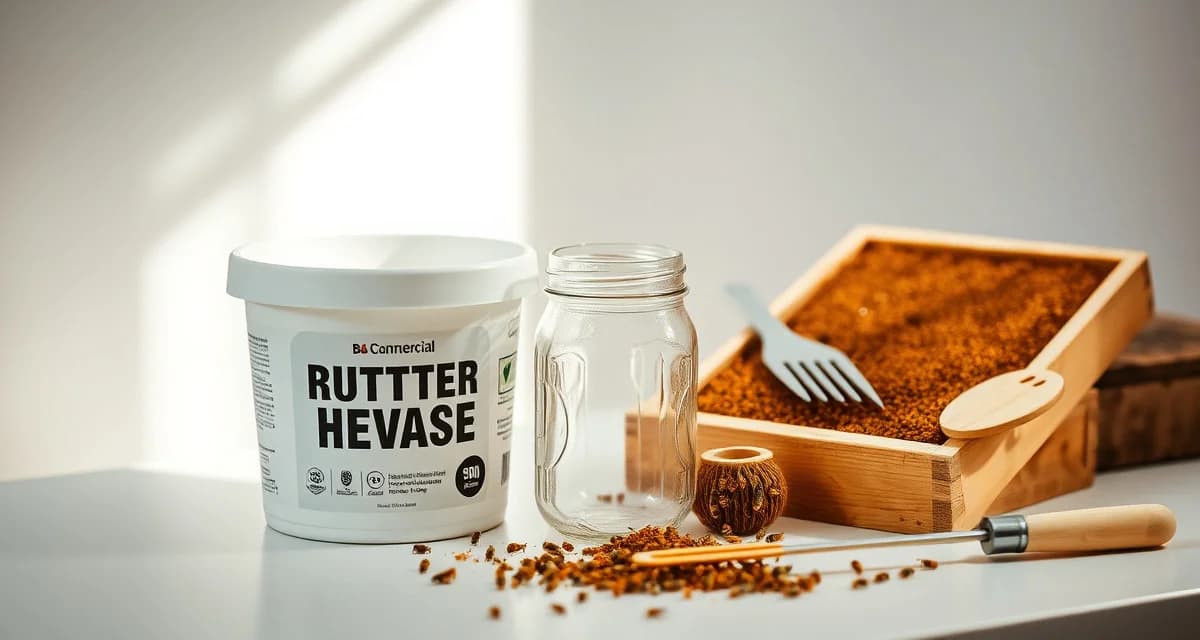
Best Mite Wash Containers for Beekeepers: Tools for Accurate Counts
Commercial mite wash containers reduce count time from 10 minutes to 3 minutes versus DIY jar methods. If you're counting 20 hives on a treatment day, that's over 2 hours of saved time at the end of the season, which is worth considering alongside accuracy.
The container you use for alcohol wash doesn't change the biology of what you're measuring, but it does affect how quickly and accurately you can do the wash, which in turn affects how consistently you actually monitor. A method that's fast and convenient gets used. A method that's fiddly and slow gets skipped.
TL;DR
- A valid mite count sample requires approximately 300 bees from the brood nest for statistically reliable results
- Alcohol wash is 15-20% more accurate than sugar roll for detecting mite infestation levels
- The calculation is: (mites counted / bees in sample) x 100 = infestation percentage
- A 2% threshold triggers treatment in spring/summer; 1% is the fall action threshold
- Count at least once per month during active season; increase to every 2 weeks if levels are near threshold
- Log every count in VarroaVault to build a trend dataset that shows whether populations are rising or stable
The DIY Mason Jar Method
The classic setup: two mason jar lids, mesh screen cut to fit between them, secured together to create a mesh-capped jar. You shake the bee sample in alcohol, pour through the mesh into a second jar or container, and count mites in the strained liquid.
Advantages:
- Cheap (under $5 in materials)
- Available immediately with household supplies
- Works fine for beekeepers with a few hives
- Familiar to most experienced beekeepers
Disadvantages:
- Mesh separation from the jar creates alcohol leakage risk during shaking
- Pouring requires a second container, adding setup
- Screen can trap mites if mesh size isn't ideal (too fine traps mites; too coarse loses bees through the screen)
- Time-consuming relative to commercial alternatives
For a beekeeper monitoring 2-5 hives a few times per year, the mason jar method is entirely adequate. For beekeepers monitoring 20+ hives multiple times per season, the time savings from commercial equipment are real.
Commercial Mite Wash Containers
Several commercial mite wash containers have been developed specifically for beekeeping. The best designs include:
Integrated mesh top: The collection cup and separation mesh are integrated into one unit. No assembly required. Invert the cup to pour the bee sample through the mesh into the collection area.
Clear walls: Visibility of the mite count process during agitation and counting. Mites are easier to see against a clear bottom.
Half-cup fill line: Pre-marked fill line at approximately 300 bees (half cup). Removes the need to estimate volume.
Easy pour spout: After washing, the strained liquid pours cleanly to see the mites.
Tight-fitting lid: Prevents splash during shaking without requiring you to hold the lid in place.
Some commercial containers use an accordion-style plunger mechanism that separates the bee sample from the wash liquid by compression rather than pouring. These are faster to use but require specific technique to avoid squeezing bees through the mesh.
DIY vs. Commercial: The Accuracy Question
For most beekeeping conditions, the accuracy difference between a well-made DIY jar and a good commercial mite wash container is minimal. Both can achieve reliable results with 300-bee samples.
The accuracy advantage of commercial containers, when it exists, comes from:
- Consistent mesh size that retains all bees while passing mites
- Better visibility during the count step
- Reduced alcohol leakage that might dilute the mite count
These are marginal improvements for occasional monitoring but matter for beekeepers counting many hives where small inconsistencies compound across the operation.
Making Your Own DIY Container
If you prefer the DIY approach, here's the setup that produces the best results:
- Wide-mouth quart mason jar with a two-piece lid
- Cut a circle of hardware cloth (8 mesh per inch, which passes mites but retains bees) to fit the jar lid ring
- Place the mesh circle in the lid ring in place of the flat center insert
- Thread the ring onto the jar
- Shake the bee sample in alcohol in the jar, then invert the jar to pour the strained liquid into a second container (a white plastic tray works well for counting)
The 8-mesh hardware cloth is the critical specification. Too fine and mites won't pass through. Too coarse and small bees or pieces of bees pass through and make counting harder.
Tracking Your Wash Method in VarroaVault
VarroaVault's mite count entry includes a method field where you can note whether you used alcohol wash, sugar roll, or sticky board for each count. It also includes a device or container field for tracking which specific mite wash container you used.
Over time, if you switch from a DIY mason jar to a commercial container, you can compare your count results across the two methods for the same colonies to see if the change in equipment affected your results.
For the full step-by-step alcohol wash procedure, see our how to do a mite wash guide. For the calculation that converts your mite count to an infestation percentage, use the mite wash calculator.
Frequently Asked Questions
What is the best container for an alcohol wash?
For most beekeepers, the best container is whichever one they'll actually use consistently. A good commercial mite wash container with an integrated mesh, clear walls, and a half-cup fill line is faster and more convenient than a DIY mason jar. For occasional monitoring of a few hives, a well-made DIY jar is entirely adequate. The most important variables are sample size (300 bees), alcohol concentration, and agitation duration, not the container itself.
Can I make my own mite wash container?
Yes. A wide-mouth mason jar with an 8-mesh-per-inch hardware cloth lid is the standard DIY approach. The mesh passes mites while retaining bees. Cost is under $5 in materials. The limitation is convenience compared to commercial containers designed for faster, neater use. For beekeepers monitoring many hives, the commercial container time savings are worth the cost.
Does VarroaVault track which mite wash method I use?
Yes. Each count entry in VarroaVault includes a method field (alcohol wash, sugar roll, sticky board) and a notes field where you can record specific equipment. Over time, the system builds a count history that includes the method used for each entry, allowing you to compare results across methods if you switch approaches, or to identify any patterns in count results by method.
How soon after treatment can I run a post-treatment mite count?
Wait 2-4 weeks after the treatment ends before running a post-treatment count. Counting too soon (within a week of treatment removal) may show mites still dying or emerging from the last brood cycle. Waiting 2-4 weeks allows emerging bees from brood that was capped during treatment to fully emerge and any surviving mites to become detectable in a new count.
What should I do if my mite count results seem unusually high or low?
If results seem surprising, repeat the count within 1-2 weeks before making a treatment decision based on a single outlier result. Confirm you sampled from the brood nest center (not outer frames), used the correct sample size (approximately 300 bees), and shook vigorously for the full 60 seconds. Consistent sampling technique is the most important factor in count accuracy.
Can I count mites from a sticky board instead of doing an alcohol wash?
Sticky board counts measure mite fall rate over 24-72 hours, which correlates with infestation level but is not a direct measure of infestation percentage. Sticky board results cannot be converted to an accurate percentage without calibration, and they are less reliable than alcohol wash for treatment decisions. Use sticky boards for general population monitoring but rely on alcohol wash counts for threshold decisions.
What is Best Mite Wash Containers for Beekeepers: Tools for Accurate Counts?
Mite wash containers are specialized tools designed to help beekeepers perform accurate varroa mite counts using the alcohol wash method. Unlike DIY mason jar setups, commercial containers feature built-in mesh screens, measurement markings, and ergonomic designs that streamline the sampling process. They allow beekeepers to quickly separate mites from bees, read results clearly, and maintain consistent technique across multiple hives — all critical factors for reliable infestation data.
How much does Best Mite Wash Containers for Beekeepers: Tools for Accurate Counts cost?
Most commercial mite wash containers range from $15 to $40 depending on materials and features. While DIY mason jar setups cost almost nothing upfront, the time savings from a purpose-built container — roughly 7 minutes per hive — add up significantly across a season. For beekeepers managing 10 or more hives, the investment typically pays for itself in recovered time within the first monitoring cycle.
How does Best Mite Wash Containers for Beekeepers: Tools for Accurate Counts work?
You collect approximately 300 bees from the brood nest, place them in the container with isopropyl alcohol, and agitate for about 60 seconds. The mesh screen retains the bees while mites fall through into a collection chamber. You then count the mites and calculate infestation percentage using the formula: (mites counted ÷ bees in sample) × 100. Commercial containers make reading and counting faster and more accurate than improvised jars.
What are the benefits of Best Mite Wash Containers for Beekeepers: Tools for Accurate Counts?
Commercial mite wash containers reduce per-hive count time from roughly 10 minutes to 3 minutes, improve count accuracy through better mite separation, and encourage more consistent monitoring by removing friction from the process. Consistent monitoring is the real benefit — beekeepers who find counting easy are far more likely to hit the recommended monthly schedule, catch rising mite levels early, and treat before populations cause colony damage.
Who needs Best Mite Wash Containers for Beekeepers: Tools for Accurate Counts?
Any beekeeper managing two or more hives benefits from a dedicated mite wash container, but they're especially valuable for hobbyists with 5–20 hives who want to monitor efficiently without hiring help. Sideliners and small-scale commercial operators managing treatment days across many colonies will see the greatest time savings. New beekeepers also benefit because commercial containers standardize technique, reducing the learning curve and improving confidence in early mite count results.
Sources
- American Beekeeping Federation (ABF)
- USDA ARS Bee Research Laboratory
- Honey Bee Health Coalition
- Penn State Extension Apiculture Program
- Project Apis m.
Get Started with VarroaVault
An alcohol wash gives you the number. VarroaVault turns that number into a decision. Log your count, get an instant threshold comparison, and build a monitoring history that shows you whether mite levels are rising or stable across your entire operation. See pricing and free tools at varroavault.com.