Varroa treatment cost comparison: what you actually pay per hive

TL;DR
- Per-hive treatment costs run from under $1 for oxalic acid dribble to roughly $16-24 for Apiguard thymol trays.
- Apivar (amitraz strips) lands at $4-7 per hive per treatment.
- Mite-Away Quick Strips (formic acid) runs $5-7.
- Oxalic acid vaporization, after a one-time vaporizer purchase, is the cheapest long-term.
- Colony count, equipment, and treatment frequency shift the math a lot.
Why does the per-hive cost vary so much between treatments?
The sticker price on a varroa product is rarely what you actually pay per hive. You're paying for the active ingredient, the delivery method, any required gear, your labor, and how many rounds a season the product needs. A bag of oxalic acid costs a few dollars and treats dozens of hives. A vaporizer costs $150-250 up front and lasts years. Apivar strips carry a per-strip price and need no tools. Formic acid pads demand ventilation and a tight temperature window. None of these compare cleanly.
The Honey Bee Health Coalition's Varroa Management Guide lists the approved active ingredients: oxalic acid, amitraz, formic acid, thymol, and fluvalinate/coumaphos (the last two increasingly limited by resistance) [1]. Each has a different cost profile, efficacy window, and resistance risk. Knowing the real per-hive math lets you pick what fits your operation instead of whatever the beekeeping store put on the shelf.
For sideliners running 50-150 hives, the gap between a $1 treatment and a $12 treatment adds up fast. For a hobbyist with 3 hives, equipment cost per hive matters more than the consumable. Both angles are below.
What does oxalic acid treatment cost per hive?
Oxalic acid is the cheapest option by consumable cost, and it's not close. Api-Bioxal is the EPA-registered oxalic acid product in the US [2]. A 35-gram packet treats roughly 87 hives by dribble or 60-70 by vaporization, depending on method. A 35g packet sells for $12-18 depending on supplier, so your per-application consumable cost is $0.13-0.30 per hive.
There's a catch. Dribble is only approved for broodless colonies, which makes it a late fall or winter treatment, or something you do during a brood break [2]. To treat through the brood cycle, you vaporize, and that needs a vaporizer. Decent electric units run $150-220 (ProVap 110 and similar). A propane torch vaporizer goes for $30-50 but heats slower and varies more. Spread a $200 vaporizer over 10 hives across 5 years and you add about $4 per hive per year in equipment. Spread it over 50 hives and it's under $1.
A 3-hive hobbyist doing one winter dribble and two spring vapor treatments spends under $5 a year on consumables for all three hives combined. The vaporizer is the real investment. Borrow one from your local club your first season if you're on the fence.
Oxalic acid has no resistance reports in North American Varroa populations as of the current Honey Bee Health Coalition guidance [1]. That's a real long-term value argument.
What does Apivar (amitraz) cost per hive, and is it worth it?
Apivar is the most-used synthetic miticide in North America, and the reasons are practical. It works during the brood cycle, needs no special equipment, and the application is dead simple: hang two strips per brood box, wait 6-8 weeks, pull them [3]. For beekeepers who don't want to track temperature windows or buy a vaporizer, it's the default.
Apivar comes in 10-strip packs (five hives) and larger boxes. Retail from major suppliers runs roughly $22-35 for a 10-strip pack, which works out to $4.40-7.00 per hive per treatment. A 50-strip box drops that to roughly $3.50-5.50 per hive. Treat twice a year and you're at $7-14 per hive annually in product alone.
Amitraz resistance in Varroa is documented and spreading. A 2020 study in PLOS ONE identified amitraz-resistant Varroa populations in multiple US states [4]. Rotating Apivar with a different mode of action (oxalic acid, formic acid, or thymol) is the standard resistance-management advice from university extension programs [5]. Once resistance takes hold in your yard, Apivar's cost advantage vanishes because the strips stop killing mites.
My honest take: Apivar is a good tool. Use it strategically, rotate it, and check with a wash or sticky board after treatment to confirm it still works. Don't lean on it as your only tool year after year.
What does Mite-Away Quick Strips (formic acid) cost per hive?
Mite-Away Quick Strips (MAQS) and the newer Formic Pro are formic acid treatments that reach mites under capped brood, which is their edge over oxalic acid dribble [6]. Formic acid kills mites beneath the cappings. That makes it one of the few organic-approved options you can run during the brood cycle.
MAQS sells in 2-strip packs (one hive) or 10-strip packs. Retail runs roughly $12-18 for a 2-strip pack and $50-70 for a 10-strip pack, putting per-hive cost at $5-7 for a single treatment. Formic Pro, the longer-release version, prices similarly. If your mite load needs a second round, double those numbers.
Formic acid has hard temperature limits. MAQS is labeled for ambient temperatures between 50°F and 85°F (10-29°C); Formic Pro runs a slightly different window [6]. Treat outside those limits and you risk queen loss or colony damage. That temperature sensitivity is a real operational constraint, not fine print.
A sideliner doing spring and fall rounds can pair formic acid in spring (when a brood break isn't realistic) with oxalic acid dribble in fall (broodless). Spring treatment runs $5-7 per hive; fall dribble under $1. Annual consumable cost lands around $6-8 per hive. That's a reasonable number for a resistance-smart protocol.
You can find vetted suppliers through our beekeeping supply companies directory, and some offer free shipping on bulk orders, listed on our free shipping honey bee supply companies page.
What does thymol treatment (Apiguard, ApiLife VAR) cost per hive?
Thymol is usually the priciest option per hive. Apiguard gel trays retail for roughly $8-12 each, and the label calls for two trays per course (one tray, wait two weeks, second tray), so a full treatment runs $16-24 per hive [7]. ApiLife VAR, a thymol-plus-essential-oils wafer, runs $10-15 per hive for a full course.
Thymol works by vapor, so it depends on temperature. Apiguard needs ambient temperatures of 59-105°F (15-40°C) and performs best above 65°F [7]. It's no winter treatment. In northern climates the effective window is roughly late summer through early fall, which overlaps the period when you most need mites down before winter bees are raised, so the timing lines up. But if temperatures drop too fast, efficacy suffers.
The upside: no resistance reported in North American Varroa, no equipment beyond the product, and approval for organic production. The downside: cost, temperature sensitivity, a multi-week window, and a strong smell that can taint honey if you treat too close to a flow.
For a hobbyist with 3 hives who wants an organic option and doesn't want to buy a vaporizer, thymol is a legitimate pick despite the price. For a sideliner with 80 hives, the gap between thymol ($16-24 per hive) and oxalic vapor ($0.20-0.30 per hive in consumables) changes the math completely.
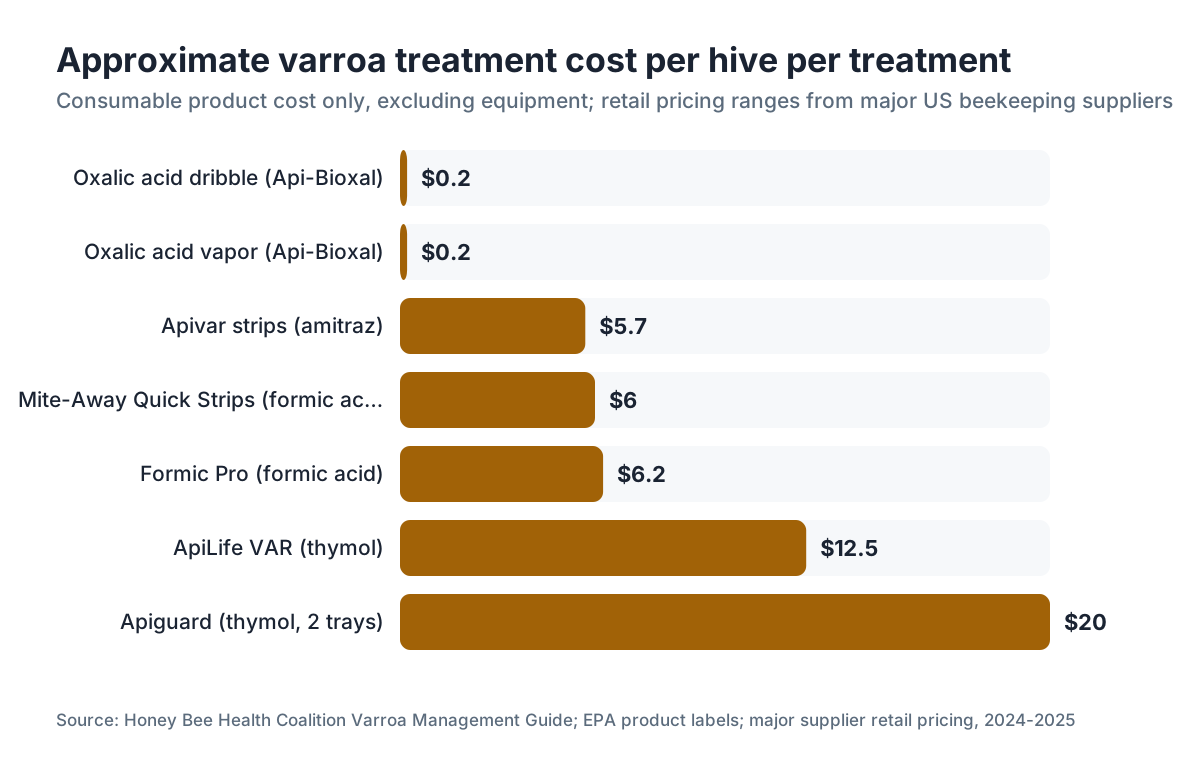
How do all the treatment costs compare in one table?
Here's the per-hive math across the main options, using current retail ranges. Equipment costs are amortized over 5 years and 20 hives for comparison. Actual costs move with colony count, purchase volume, and how many rounds you run a year.
| Treatment | Active Ingredient | Consumable Cost/Hive/Treatment | Equipment Cost (amortized/hive/yr) | Approx. Annual Cost/Hive (2 treatments) |
|---|---|---|---|---|
| Oxalic acid dribble | Oxalic acid | $0.13-0.30 | $0 (no equipment needed) | $0.26-0.60 |
| Oxalic acid vapor | Oxalic acid | $0.13-0.30 | $1-10 (vaporizer, scale-dependent) | $1.26-10.60 |
| Apivar strips | Amitraz | $4.40-7.00 | $0 | $8.80-14.00 |
| Mite-Away Quick Strips | Formic acid | $5.00-7.00 | $0 | $10.00-14.00 |
| Formic Pro | Formic acid | $5.00-7.50 | $0 | $10.00-15.00 |
| Apiguard | Thymol | $8.00-12.00/tray (2 trays needed) | $0 | $32.00-48.00 |
| ApiLife VAR | Thymol | $5.00-7.50 | $0 | $10.00-15.00 |
Note: Apiguard's annual number looks high because the label requires two trays per treatment. ApiLife VAR is also thymol but uses a different delivery at lower per-hive cost [7]. Dribble is broodless-only, so it's usually one treatment a year; if mite pressure demands a mid-season round, dribble alone won't cover you [2].
Two things this table skips: the cost of a failed treatment (requeen, package, or lost colony) and the labor per hive. Oxalic vapor takes longer per hive than hanging Apivar strips. At scale, that labor is real money.
Does treatment frequency change the cost calculation?
Yes, and it's one of the most overlooked parts of the comparison. One Apivar round a year at $7 per hive sounds fine. Two rounds because mite counts came back high after the first? Now you're at $14 per hive, which puts Apivar level with thymol on a per-year basis.
The Honey Bee Health Coalition recommends checking mite levels before and after every treatment to confirm it worked and decide whether you need another round [1]. Treatment cost isn't fixed. A colony that needs three rounds of oxalic vapor in a season costs more than one that responds to a single round. Monitor first, treat second, monitor again.
Frequency also tracks your local Varroa pressure and management style. Beekeepers near heavy feral populations or crowded apiaries see faster reinfestation. A late-summer oxalic vapor followed by a winter dribble is a common two-round protocol. Add a spring formic acid treatment and total annual consumables run roughly $8-10 per hive for a mixed-method approach, which most extension programs call best practice [5].
What's the cheapest way to treat varroa across many hives?
Running 30 or more hives? Oxalic acid vaporization is almost certainly your cheapest per-hive option once the vaporizer is paid for. Consumables cost pennies per hive. Equipment cost per hive drops fast with scale. And oxalic acid keeps working because there's no resistance.
Buying Api-Bioxal in bulk (the 275g jar treats roughly 680 hives by dribble) drops the per-gram cost further. At scale, beekeepers report consumable costs well under $0.50 per hive per treatment [2].
Run the numbers on a 100-hive operation doing two vapor treatments and one dribble a year: three rounds x $0.25 per hive x 100 hives = $75 in oxalic acid. Add the vaporizer ($200 amortized over 5 years is $40 a year) and you're at $115 for the year across 100 hives. That's $1.15 per hive annually. Set that next to Apivar at $7-14 per hive and the gap is stark.
The tradeoff: oxalic acid alone won't cover every treatment window without a brood break. Many larger operations use vapor for the bulk of their treatments and add formic acid or Apivar for a mid-season brood-cycle round when needed. That hybrid still lands well under $10 per hive annually for most operations.
Are there hidden costs beyond the treatment product itself?
Several, and they stack up.
Equipment is the obvious one. Vaporizers, respirators (required for oxalic vapor per the EPA label [2]), and protective gear are one-time costs new beekeepers forget to budget. A half-face respirator with OV/P100 cartridges runs $30-60. That's fixed whether you treat 2 hives or 200.
Monitoring supplies count too. An alcohol wash kit (or the parts to build one) costs $10-20. Sticky boards are cheaper but less accurate. The Honey Bee Health Coalition recommends a 2% mites-per-100-bees threshold as a treatment trigger for most of the season [1]. You can't manage what you don't measure, and a missed threshold means a dead colony worth $150-250 to replace.
Labor is the invisible cost hobbyists ignore and sideliners obsess over. Oxalic vapor takes 3-5 minutes per hive with an electric vaporizer if you're efficient. Apivar strips take about 2 minutes to hang. At 100 hives, that 2-3 minute difference is 3-5 hours per round. If your time has any value, it matters.
Failed treatments cost more than the treatment. A colony that crashes from untreated or undertreated Varroa costs you bees, honey, and often equipment. USDA colony loss surveys report annual managed colony losses of 30-40%, with Varroa a primary driver [8]. Cheap treatment that doesn't work is the most expensive option there is.
For tracking treatment timing, mite counts, and costs across your hives, free tools at VarroaVault help you run the numbers for your situation without spreadsheet gymnastics.
What about resistance, and how does it affect long-term cost?
Amitraz (Apivar) resistance is the biggest resistance risk in North American apiaries right now. A 2020 PLOS ONE study confirmed resistant Varroa populations in the US, especially where Apivar was used repeatedly without rotation [4]. If you run 50 hives and amitraz stops working, you've lost your cheapest brood-cycle treatment and have to move to formic acid or thymol, both of which cost more per hive.
Fluvalinate (Apistan) and coumaphos (CheckMite+) resistance has been widespread for over a decade. Most extension programs no longer recommend these as primary treatments [5]. That's what over-reliance on one miticide buys you.
Oxalic acid and thymol have no reported resistance in Varroa in the current literature. Formic acid resistance is theoretically possible but hasn't been documented in the field. Rotating modes of action is the standard recommendation, and it's also the best long-term cost move because it keeps the cheaper options like Apivar effective.
A workable rotation for a two-round annual protocol: oxalic acid vapor in the winter or broodless period, then Apivar or formic acid during the brood season, alternating Apivar and formic acid year to year. That keeps amitraz exposure low enough to slow resistance while covering your treatment windows. The University of Minnesota Bee Lab and Penn State Extension both back this kind of rotation [5][9].
How should hobbyists with only 1-5 hives think about treatment costs?
At 1-5 hives, the economics flip. Equipment cost per hive dominates everything. A $200 vaporizer amortized over 5 years and 3 hives is $13.33 per hive per year for the tool alone. That makes Apivar strips ($4-7 per hive per treatment, no equipment) look far more competitive than the raw consumable cost of oxalic acid suggests.
For a single hobbyist hive, the cheapest full annual protocol is probably one oxalic acid dribble in winter (under $1 in product, no equipment if you borrow a syringe) plus one Apivar treatment in the brood season ($5-7). Total annual cost: $6-8. That's genuinely affordable and covers both the broodless and brood-cycle windows.
Want to go all-organic, or can you share a vaporizer with a club or neighbor? Then oxalic vapor gets more accessible. Many local associations keep club-owned vaporizers members can borrow. Our varroa mite basics page shows what mite loads look like when they're getting out of hand, worth reading before you lock in a plan.
The most expensive mistake at any scale is not treating. A dead hive costs $150-250 in bees alone, plus the labor to rebuild it. One skipped season can outrun 10 years of treatment costs.
Where can I buy varroa treatments, and does supplier choice affect cost?
Yes, supplier choice matters more than most beekeepers realize. Api-Bioxal, Apivar, MAQS, and Apiguard are all stocked by major suppliers including Mann Lake, Dadant, and various regional shops. Prices swing 15-30% between suppliers on the same product.
Buying in bulk consistently lowers per-unit cost. A 10-strip Apivar pack costs more per strip than a 50-strip box. If you belong to a beekeeping club, coordinating group orders can pull per-hive costs down hard. Some state associations negotiate bulk pricing for members.
For supplies broadly, our beekeeping supplies resource is a starting point, and our beekeeping supply companies page covers who's who among suppliers. Some run free shipping honey bee supply companies deals above an order threshold, which cuts costs on heavy items like Apiguard trays.
Skip varroa treatments from unvetted sources or international sellers offering products with no EPA registration number. Using an unregistered pesticide on your hives is illegal under federal law and puts your honey and wax at risk of contamination [2]. The EPA product label is a legal document, and Api-Bioxal is the only EPA-registered oxalic acid product in the US as of this writing.
What does the Honey Bee Health Coalition recommend, and how does cost factor into their guidance?
The Honey Bee Health Coalition (HBHC) is the most-cited multi-stakeholder authority on varroa management in the US. Its Varroa Management Guide, now in its third edition, lays out approved treatments, application methods, and monitoring thresholds without endorsing brands [1]. The guide is free to download and worth reading in full.
The HBHC guidance factors in cost implicitly by pushing integrated pest management: monitor first, match the treatment to the situation, rotate active ingredients, then monitor again to confirm it worked. That framework steers you away from defaulting to whatever a store happens to stock.
The HBHC treatment threshold for most of the active season is 2 mites per 100 bees. The Coalition's Varroa Management Guide describes a treatment threshold in the range of 2 to 3 mites per 100 bees during the active brood-rearing season, with variation by region [1]. Monitoring to that threshold before you treat means you don't spend money on treatments that aren't needed yet, and you don't skip a round when the colony actually needs one.
University extension programs at Penn State, the University of Minnesota, and NC State largely align with HBHC guidance and publish their own cost-aware recommendations [5][9][10]. They're worth consulting for region-specific timing, since temperature limits on formic acid and thymol make local knowledge genuinely useful.
Frequently asked questions
What is the cheapest varroa treatment per hive?
Oxalic acid dribble is the cheapest consumable option at roughly $0.13-0.30 per hive per application, using EPA-registered Api-Bioxal. The catch: dribble is only approved for broodless colonies, so it's typically a late fall or winter treatment. Factor in a vaporizer for year-round use and the per-hive cost rises but stays lowest at scale, often under $1 per hive annually for large operations.
How much does Apivar cost per hive?
Apivar strips cost roughly $4.40-7.00 per hive per treatment in 10-strip packs, and $3.50-5.50 per hive in larger 50-strip boxes. Two strips treat one hive for 6-8 weeks. Treat twice a year and budget $7-14 per hive annually. Bulk purchasing from major beekeeping suppliers can cut the per-strip cost by 15-25%.
Is oxalic acid vaporization worth the upfront equipment cost?
For operations with 20 or more hives, yes, almost certainly. A vaporizer runs $150-250 up front. Amortized over 5 years and 20 hives, that's $1.50-2.50 per hive per year. Consumables run under $0.30 per hive per treatment. At 50-plus hives the economics are compelling. For 1-5 hives, borrowing a club vaporizer or choosing a no-equipment treatment like Apivar may make more sense.
Can I use oxalic acid on colonies with brood?
Oxalic acid dribble is only EPA-labeled for broodless colonies. Vaporization can be used when brood is present, but efficacy drops because mites under cappings survive the vapor. Extended protocols (multiple vapor treatments over several weeks) can improve brood-cycle results. Always follow the Api-Bioxal label for legal compliance and colony safety.
What's the annual varroa treatment cost for a small hobbyist with 3 hives?
A practical two-round protocol for 3 hives might pair one spring Apivar treatment ($5-7 per hive) with one winter oxalic dribble (under $1 per hive). Total annual consumable cost for 3 hives runs roughly $18-24. Add a vaporizer for year-round flexibility and tack on $150-200 as a one-time cost. After year one, annual costs drop to under $10 for all 3 hives.
Does varroa treatment resistance affect which product I should buy?
Yes. Amitraz (Apivar) resistance is documented in US Varroa populations, especially where it's been used repeatedly without rotation. Fluvalinate and coumaphos resistance has been widespread for over a decade. Oxalic acid and thymol have no reported resistance. Rotating active ingredients slows resistance and keeps cost-effective treatments like Apivar working long-term.
How much does Mite-Away Quick Strips cost per hive?
Mite-Away Quick Strips (MAQS) retail for roughly $12-18 for a 2-strip pack treating one hive, or $50-70 for a 10-strip pack. That puts per-hive cost at $5-7 per treatment. Formic Pro, a similar formic acid product with a longer release, prices comparably. Both need temperatures in the 50-85°F range and carry a queen-loss risk if used wrong.
How much do thymol treatments like Apiguard cost per hive?
Apiguard gel trays run $8-12 each, and the label requires two trays per full course (one tray, wait two weeks, apply the second). Full treatment cost is $16-24 per hive. ApiLife VAR, another thymol product, costs $10-15 per full course. Thymol treatments are among the priciest per hive but need no equipment and have no documented resistance in Varroa.
What monitoring supplies do I need, and what do they cost?
An alcohol wash kit (jar, mesh lid, isopropyl alcohol) costs $10-20 to assemble or buy ready-made. Sticky boards are less accurate but cheap, sometimes free with a hive purchase. The Honey Bee Health Coalition recommends treating when mite levels reach about 2 mites per 100 bees during the brood season. Skipping monitoring means guessing on timing, which raises both treatment cost and colony loss risk.
Is it cheaper to use a single treatment all year or rotate products?
Rotating is the right call for both efficacy and long-term cost. Single-product reliance drives resistance, which eventually makes that product useless. A mixed protocol (oxalic vapor in winter, Apivar or formic acid in season, alternating year to year) costs roughly $8-12 per hive annually in consumables and keeps cheaper options like oxalic acid and Apivar working for years.
Do I need a respirator for oxalic acid vaporization, and what does it cost?
Yes. The EPA label for Api-Bioxal requires a NIOSH-approved respirator with OV/P100 cartridges for vaporization. A half-face respirator with the right cartridges runs $30-60 at hardware or safety supply stores. It's a one-time cost, and the cartridges need periodic replacement. Don't skip it. Oxalic acid vapor is a respiratory irritant and the label requirement is enforceable.
How does buying in bulk affect varroa treatment costs?
Meaningfully. A 10-strip Apivar pack costs more per strip than a 50-strip box, sometimes by 20-30%. The 275g Api-Bioxal jar treats far more hives per dollar than the 35g packet. Coordinating group purchases through a local beekeeping association is one of the most effective ways to cut per-hive costs, especially for smaller operations that couldn't justify a large order alone.
What's the cost of not treating for varroa?
A dead colony costs $150-250 to replace in bees alone, plus equipment and labor. Varroa-associated colony loss is a primary driver of the 30-40% annual colony loss rates in USDA surveys. One skipped season can cost more than a decade of proper treatment. The cheapest varroa protocol is always the one you actually use, monitored and applied on time.
Are there any free or low-cost resources for planning a varroa treatment protocol?
Yes. The Honey Bee Health Coalition's Varroa Management Guide is free to download and covers all approved treatments, thresholds, and monitoring methods. University extension programs at Penn State, the University of Minnesota, and NC State publish free region-specific guidance. VarroaVault offers free tools for tracking mite counts and treatment timing across your hives without a spreadsheet.
Sources
- Honey Bee Health Coalition, Varroa Management Guide (3rd edition): Approved active ingredients for varroa management include oxalic acid, amitraz, formic acid, and thymol; treatment threshold in the range of 2 to 3 mites per 100 bees recommended during the brood-rearing season
- EPA, Api-Bioxal Registration and Label: Api-Bioxal is the EPA-registered oxalic acid product in the US; dribble method approved for broodless colonies only; respirator with OV/P100 cartridges required for vaporization
- Elanco Animal Health, Apivar Label: Apivar label calls for two strips per brood box, left in place for 6-8 weeks then removed
- PLOS ONE, Amitraz resistance in Varroa destructor (2020): Amitraz-resistant Varroa populations confirmed in multiple US states as of 2020
- Penn State Extension, Varroa Mite Management: Rotation of active ingredients recommended to slow resistance; fluvalinate and coumaphos no longer recommended as primary treatments due to widespread resistance
- Vita (Europe) Ltd, Apiguard Label and Product Information: Apiguard requires two full trays per treatment course applied two weeks apart; optimal temperature range 59-105 degrees F; not suitable for use during honey flow
- USDA Agricultural Research Service, Colony Loss Surveys: Annual managed honey bee colony loss rates of 30-40% reported in USDA survey data; Varroa-associated losses are a primary driver
- University of Minnesota Bee Lab, Varroa Treatment Recommendations: Integrated approach using oxalic acid, formic acid, and amitraz in rotation recommended; monitoring before and after treatment essential
- NC State Extension, Varroa Mite Management in Honey Bee Colonies: Region-specific timing guidance for thymol and formic acid treatments based on temperature windows; rotation protocols described
Last updated 2026-07-09