Acaricidal treatments to control varroa: the complete guide
TL;DR
- Six acaricide classes are registered in the U.S.
- to control Varroa destructor: oxalic acid, formic acid, thymol, amitraz, tau-fluvalinate, and coumaphos.
- Efficacy runs from roughly 50% to over 95% depending on the product, brood state, temperature, and whether resistance has set in.
- Picking the right one means matching the treatment to your season, your mite count, and your hive's brood cycle.
What is an acaricide and why does varroa need one?
An acaricide is a pesticide that kills mites. The word comes from Acari, the subclass that holds mites and ticks. Varroa destructor is the external parasitic mite that has been the leading cause of colony loss in the U.S. since it arrived in the late 1980s, and the products built to kill it are acaricides. [1]
Leave varroa untreated and the colony almost always collapses within one to three years. The mites feed on honey bee fat bodies during the pupa and adult stages, weakening bees directly and carrying a load of viruses, chief among them Deformed Wing Virus. [2] No amount of good nutrition or gentle management reverses that spiral without actually cutting the mite population.
Here's the hard part. Varroa spends most of its reproductive life inside capped brood cells, sealed off from contact acaricides. Most treatments reach only the phoretic mites riding on adult bees. That one biological fact explains nearly every line of label language you'll read: temperature windows, repeat applications, brood-break timing. Once you get it, you stop wondering why a treatment that worked for your neighbor did almost nothing in your late-August hive stuffed with capped brood.
For the biology behind all of this, the varroa mite article on this site walks through the full life cycle and why phoretic rate drives treatment timing.
Which acaricides are EPA-registered for varroa in the United States?
The EPA registers all pesticides used in the U.S., including treatments applied inside beehives. As of 2025, six active ingredients hold federal registration for varroa control. They split into two camps: organic acids and essential oil compounds (the "soft" treatments), and synthetic miticides.
| Active ingredient | Trade name(s) | Class | Application method |
|---|---|---|---|
| Oxalic acid | Api-Bioxal | Organic acid | Dribble, vaporization, extended-release glycerin strips |
| Formic acid | Mite Away Quick Strips, Api-Fume | Organic acid | Evaporating pads or gel |
| Thymol | Apiguard, ApiLifeVar | Essential oil | Gel tray or tablet |
| Amitraz | Apivar | Synthetic acaricide (formamidine) | Plastic strip |
| Tau-fluvalinate | Apistan | Synthetic pyrethroid | Plastic strip |
| Coumaphos | CheckMite+ | Synthetic organophosphate | Plastic strip |
State registrations can pile restrictions on top of the federal label. California, for one, has extra requirements for oxalic acid vaporization. Check your state department of agriculture alongside the federal EPA label before you treat. [3]
The Honey Bee Health Coalition's "Tools for Varroa Management" guide is the most practical reference for comparing these options side by side. It's free to download and gets updated periodically by researchers and extension specialists. [4]
How effective is each varroa acaricide?
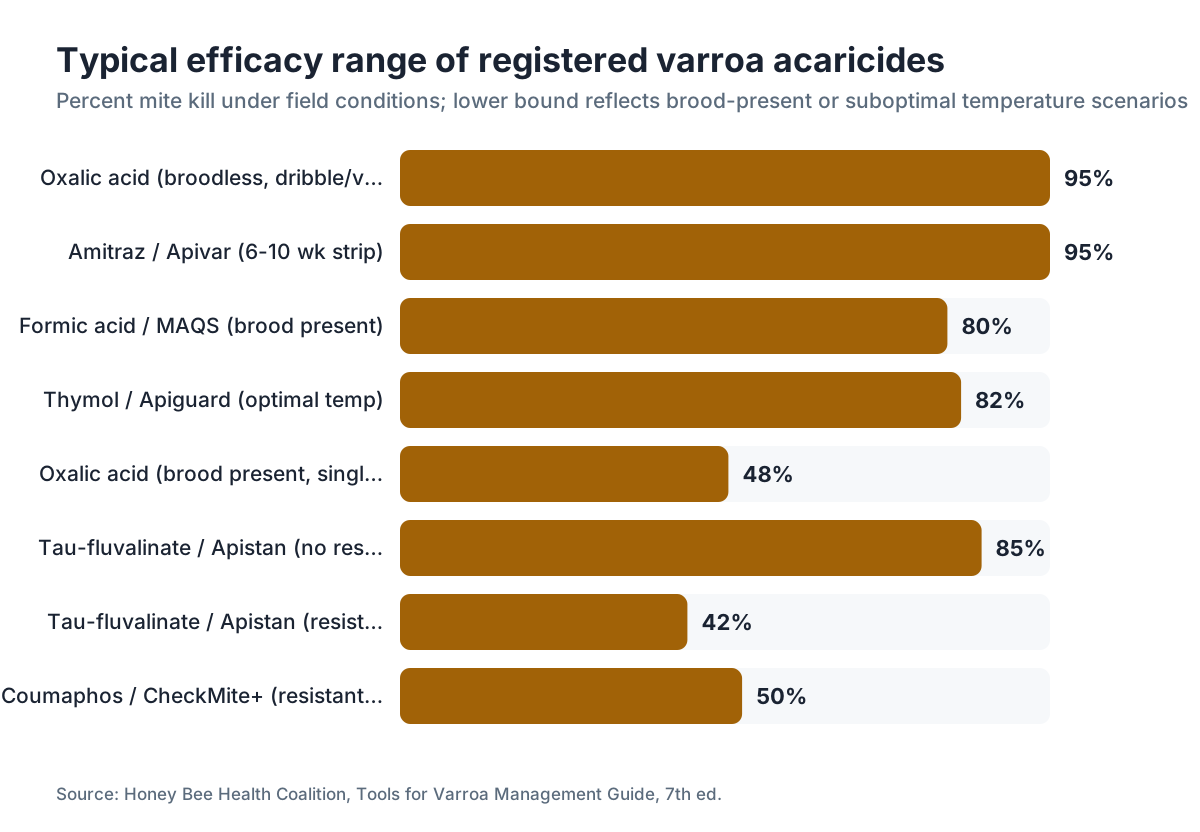
Efficacy numbers in the literature swing widely, because they hang on brood state, ambient temperature, colony strength, and resistance status. The figures below come from published field trials and product registrations. They are not marketing claims.
Oxalic acid, applied as a single dribble or vapor treatment in a broodless hive, hits 90 to 97 percent mite kill reliably. [5] That number drops off a cliff when brood is present, because oxalic acid doesn't get inside capped cells. A single dribble in a colony with a normal brood nest might kill only 40 to 50 percent of the mites.
Formic acid (Mite Away Quick Strips, or MAQS) is one of the few acaricides that reaches into capped brood at all. Published efficacy runs 68 to 93 percent in colonies with brood, depending on temperature and application conditions. [4] The 7-day treatment gets more brood penetration than shorter exposures. Api-Fume gel is the other formic acid option; it evaporates slower and works up to 29°C (84°F).
Thymol products (Apiguard, ApiLifeVar) average 74 to 90 percent in the field. Temperature is the binding constraint. Apiguard's label calls for ambient temperatures between 59°F and 105°F during treatment, with best results above 60°F. Below that, thymol barely volatilizes and the treatment does close to nothing. [4]
Amitraz strips (Apivar) stay reliably effective in resistant-mite populations where tau-fluvalinate and coumaphos have gone weak. Field trials report 91 to 99 percent efficacy when used to label (a 6 to 10 week exposure). [4] Amitraz resistance shows up in some European populations and is starting to appear in isolated U.S. apiaries, so rotating chemicals here is a real concern, not a formality. [9]
Tau-fluvalinate (Apistan) was the first synthetic miticide used widely in the U.S., and varroa resistance to it has been documented since the mid-1990s. [6] In apiaries with resistant mites, Apistan efficacy can fall below 50 percent. In apiaries with no prior pyrethroid use, it still works well. Honest advice: test before you rely on it.
Coumaphos (CheckMite+) faces documented resistance across many U.S. mite populations too, and there are real worries about residue building up in wax with repeated use. Most apiculture extension specialists now treat it as a last resort, or something to rotate in only after a multi-year break. [6]
What temperature and seasonal windows matter for each treatment?
Temperature runs the show for most acaricides, because organic acid and essential oil treatments depend on evaporation or vapor pressure to deliver the active ingredient to mites.
Oxalic acid vaporization works across a wider temperature range than the dribble and is the go-to in winter, when colonies cluster and go broodless. The EPA label for Api-Bioxal allows vaporization at 10°C (50°F) and up. The broodless window, usually late November through early January across most of the U.S., is when a single vaporization gets nearest to 95 percent efficacy, because no capped cells are sheltering mites. [5]
Formic acid has a working range of 50°F to 85°F (10°C to 29°C) for MAQS. Above 85°F it volatilizes too fast, throwing off concentrations that can hurt brood and sometimes queens. Below 50°F it evaporates too slowly to reach effective levels. That makes MAQS a spring and fall treatment in most of the country. [4]
Thymol treatments (Apiguard, ApiLifeVar) need sustained daytime temperatures above 59°F. Most beekeepers run them in late summer or early fall, after the honey supers come off, while daytime temps still hold. In the Deep South, a spring application before the main flow works too.
Synthetic strips (Apivar, Apistan, CheckMite+) care less about temperature, because the active ingredient moves off the plastic strip through bee contact rather than evaporation. Apivar (amitraz) usually goes in during fall after harvest and again in spring. Its label sets a 6 to 10 week exposure window; pull the strips too early and surviving mites rebound. [3]
Do varroa mites develop resistance to acaricides?
Yes, and it's one of the most practical worries in long-term varroa management. Varroa destructor has an uncomfortably fast generation time compared with the beekeeping treatment calendar, which means resistant phenotypes can sweep through a mite population inside a few seasons of steady exposure to one chemistry.
Resistance to tau-fluvalinate (Apistan) was first documented in Europe in the early 1990s and confirmed in the U.S. by the late 1990s. [6] Coumaphos resistance came next. Amitraz resistance is documented in at least some European apiaries and has turned up in isolated U.S. cases. [9] The U.S. monitoring data is thinner than the European data, which makes "it's fine here" a hard claim to stand behind.
The fix is rotation. Cycle between chemical classes across treatment years, and never run the same class back to back if you can help it. Pair that rotation with non-chemical suppression (drone comb removal, brood breaks, screened bottom boards) and you cut total acaricide load while slowing resistance. The Honey Bee Health Coalition frames this as Integrated Pest Management (IPM), and its guide gives specific rotation recommendations. [4]
You can't spot resistance by eye. If a treatment lands below 90 percent efficacy confirmed by alcohol wash or sticky board counts taken before and after, that's a strong signal of resistance, or a temperature or timing failure. Alcohol wash counts are the most accurate in-apiary tool for catching it. [7]
Can you use acaricides when honey supers are on?
Mostly no, and the label is law. Under FIFRA (the Federal Insecticide, Fungicide, and Rodenticide Act), using any pesticide in a manner inconsistent with its label is illegal. For most varroa acaricides, that means the supers come off before you treat.
Apivar (amitraz), Apistan (tau-fluvalinate), and CheckMite+ (coumaphos) strips all require honey supers removed. The residue risk is real. Tau-fluvalinate and coumaphos in particular build up in beeswax and can move into honey over time. [6]
MAQS (formic acid) is the exception worth knowing. Its EPA label permits use with honey supers on, making it one of the only registered options for treating during a honey flow. Some beekeepers report queen losses and brood damage in high heat even by the label, so there's a trade-off. The label is blunt about it: if ambient temperatures top 85°F, hold off. [4]
Oxalic acid, under the Api-Bioxal label, allows treatment with supers on for the vaporization method, but the label notes oxalic acid can show up in honey. The working consensus among extension specialists is to save it for the broodless winter stretch, when supers are usually off the hive anyway.
Unsure what your state allows? Your state department of agriculture pesticide office is the right call. The EPA also maintains a searchable pesticide product label database on its site. [3]
How do you monitor mite levels to know when to treat?
Acaricides are not a calendar event. They're a response to a number. The current threshold from university extension programs and the Honey Bee Health Coalition is treatment when mite loads reach 2 percent (2 mites per 100 adult bees) during the active brood-rearing season, and some specialists drop that to 1 percent in August and September, when winter bees are being reared. [4]
Alcohol wash is the most accurate method a hobbyist can run. Collect about 300 adult bees from the brood nest (roughly half a cup), add isopropyl alcohol, shake, and count the mites in the wash. Divide mites counted by bees counted, multiply by 100, and you have your percent infestation. [7]
The sugar roll is gentler and doesn't kill the sample, but it undercounts mites by 20 to 30 percent against alcohol wash. That gap matters right at the decision threshold.
Sticky boards under a screened bottom board give you a natural mite drop count, but turning that count into a percent infestation takes a formula tied to colony size, and the correlation is loose. Use sticky boards for trends, not threshold calls.
VarroaVault has free monitoring tools and a mite count calculator if you want to track counts across apiaries and treatment cycles without wrestling a spreadsheet.
Build the habit of monitoring at least four times a year: early spring, late spring or early summer, late July or August, and again after fall treatment to confirm it worked. That last check is the one most beekeepers skip. It's also the one that tells you whether the treatment actually did its job.
What is the oxalic acid extended-release method and how does it differ from dribble or vapor?
Extended-release oxalic acid is a newer delivery format. Api-Bioxal got an EPA label amendment in 2021 allowing glycerin-soaked cardboard or cellulose strips. [5] The idea is that slow release over four to six weeks gives phoretic mites repeated contact with oxalic acid, lifting efficacy in colonies with brood well above what a single dribble or vapor hit can do.
The data on extended-release efficacy is thinner than for dribble or vapor. Field trials from university extension researchers have put it in the 80 to 90 percent range in colonies with brood, a big step up from the 40 to 50 percent you'd expect from a single application in the same conditions. [4] The catch: you either make the strips yourself (following the Api-Bioxal label for the glycerin mixture) or buy commercial pre-made strips registered under a separate product label.
Dribble application (the original method) is simple and cheap. It takes a syringe and Api-Bioxal powder, and it hits near 95 percent efficacy in a broodless hive. It's a little stressful on the colony in cold weather, since you open the hive to do it. Vaporization skips the hive opening but needs a vaporizer, real PPE (the respirator is not optional), and some care about operator safety. [5]
For most hobbyists running one or two hives, a dribble or vapor treatment in December or January is the highest-return, lowest-cost move on the whole calendar.
What are the safety and residue concerns with synthetic miticide strips?
Synthetic miticide strips leave residues in beeswax. This is documented, not theoretical. Studies measuring tau-fluvalinate and coumaphos in comb wax have found detectable levels years after treatment stopped. [6] Beeswax is lipophilic (fat-soluble), so it soaks up these synthetic compounds fast and lets them go slowly over years of comb reuse. [11]
What that means for you: rotate old dark comb out of the brood nest on a schedule. It helps colony health and keeps residue loads down. Foundation made from recycled commercial wax may already carry residues, so buy from suppliers you trust or run plastic foundation to sidestep the uncertainty.
On honey, the FDA doesn't set specific action levels for tau-fluvalinate or coumaphos in honey sold domestically, but the Codex Alimentarius (the international food standards body) sets maximum residue limits for export markets. European buyers in particular test imported honey. [8]
Amitraz (Apivar) breaks down faster than tau-fluvalinate or coumaphos under normal hive conditions, and it doesn't pile up in wax at the same levels. That's a big reason it's become the preferred synthetic among many extension specialists, resistance concerns set aside.
Run any synthetic strip outside the labeled window, leaving Apivar in past 10 weeks or reusing strips, and you raise residue accumulation and resistance pressure with no gain in efficacy. Follow the label.
How do you build a year-round varroa treatment protocol?
A protocol is a planned sequence, not a scramble during a crisis. The best varroa plans have two to three treatment touchpoints a year, keyed to brood cycle biology and honey timing.
A typical temperate-climate protocol looks like this.
Spring (March to April): Monitor once brood builds up. If mite load tops 2 percent, treat before the main flow. Use a short-contact organic acid or thymol if temperatures allow, or Apivar if it's still too cold for organic acids. The goal is to enter the main flow with a low mite population.
Post-harvest, late summer (July to August): This is the most important treatment window of the year. Mite population is at or near peak, and the bees being reared now are the winter bees that have to survive six months or more. A missed or failed late-summer treatment is the single most common lead-up to a spring deadout. [9] Use whatever fits your temperature and resistance situation. MAQS or Apivar are common picks here.
Winter broodless window (November to January): One oxalic acid dribble or vapor treatment in a broodless hive is high-efficacy and low-cost, knocking the population down heading into spring. Colonies that look healthy in November can still carry enough mites to crash in March if you skip this.
After each treatment, run an alcohol wash three to five days later (or a 48-hour sticky board drop). Confirm efficacy. If you don't see at least 90 percent reduction, something failed: temperature, resistance, or application.
Tracking all this across multiple hives and years is where logging tools earn their keep. VarroaVault's free protocol tools are built for exactly this kind of multi-hive tracking.
Are organic acaricides better than synthetic ones for bees and honey?
"Better" depends on what you're measuring. Organic acids and thymol carry real advantages: they don't build up in wax at harmful levels, they break down fast, and they leave no synthetic residues in honey. Those are meaningful benefits, not a marketing gloss on the word "natural."
The trade-offs are just as real. Formic acid and thymol both bring genuine queen loss risk if temperatures spike past the labeled range mid-treatment. Oxalic acid in a colony full of brood is far weaker than in a broodless one. And all three demand tighter timing and temperature management than dropping in a plastic strip.
Synthetic strips, Apivar especially, forgive imperfect timing and temperature. They sit in the hive for weeks, giving less precise beekeepers a longer runway to reach efficacy. The cost is wax accumulation and resistance pressure over time.
Here's the practical answer for most hobbyists. Use organic acids as your backbone, especially the oxalic acid winter treatment, and hold Apivar for situations where organic acids are impractical or where monitoring shows a treatment failed. That mix gives you high efficacy while keeping long-term resistance and residue buildup low.
I wouldn't reach for Apistan or CheckMite+ first anymore, not with resistance this widespread. That said, if your mites genuinely test susceptible to tau-fluvalinate, it still works. The problem is you don't know that without testing.
What do you need for beekeeping supplies to apply these treatments correctly?
Getting the application right matters at least as much as picking the right product. A few specific items make a real difference.
For oxalic acid vaporization, you need a vaporizer (electric or propane-heated), nitrile gloves, and a half-face respirator with acid gas cartridges. The PPE is not optional. Oxalic acid vapor irritates the lungs and eyes. [5] Masking the hive entrance with a damp cloth while the vapor settles cuts drift to nearby hives.
For dribble application, a 60 mL syringe with a blunt-tip needle makes dosing accurate. Api-Bioxal solution is 35 grams of oxalic acid dihydrate per liter of 1:1 sugar syrup. The label sets 5 mL per seam of bees, 50 mL maximum per colony.
For MAQS (formic acid pads), open a top or upper entrance so the vapor can escape; a sealed hive can concentrate to levels dangerous for the bees and queen. The pads sit right on top of the brood frames.
For Apivar strips, all you need is clean gloves and the strips. Insert one strip per 5 frames of bees, placed between brood frame clusters. Leave them in for 6 to 10 weeks, then remove and dispose of them properly (don't burn them, amitraz combustion produces toxic byproducts).
Alcohol wash supplies: a mason jar with a screened lid or a commercial mite wash device, 70 percent isopropyl alcohol, and a white bowl to count mites against. Cheap gear that most beekeepers already own.
For sourcing gear, checking beekeeping supply companies is a fine starting point if you're setting up a new apiary or restocking.
Frequently asked questions
How often should I treat for varroa mites?
At minimum, treat twice a year: once in late summer after the honey harvest, and once during the winter broodless window with oxalic acid. Many beekeepers add a spring treatment if monitoring shows mite loads above 2 percent before the main flow. The trigger is always a mite count, not a calendar date. Monitor at least four times a year and let the numbers drive the call.
Can I treat varroa without removing honey supers?
Mite Away Quick Strips (formic acid) is the only EPA-registered acaricide labeled for use with honey supers on. All synthetic strip treatments and most organic acid applications require supers removed first. Using any pesticide with supers on against label directions violates FIFRA and risks honey contamination. If you're in an active flow with heavy mite pressure, MAQS is the labeled option, but watch temperatures closely.
What is the 2 percent mite threshold and where does it come from?
A 2 percent infestation rate means 2 mites per 100 adult bees on an alcohol wash. This threshold came out of field research linking mite loads to colony outcomes. The Honey Bee Health Coalition and most university extension programs cite it as the treatment trigger during brood-rearing season. In late summer, some specialists drop it to 1 percent to protect the longer-lived winter bees being reared then.
Is oxalic acid safe for bees?
Yes, at labeled rates. Oxalic acid occurs naturally in many plants and in honey in small amounts. At the concentrations used in Api-Bioxal treatments, it kills varroa through contact but doesn't significantly harm adult bees. It doesn't penetrate capped brood cells, so larvae are safe. Overdosing can hurt bees, which is why sticking to the 5 mL per seam maximum on the label matters.
How do I know if my varroa mites are resistant to a treatment?
The clearest signal is treatment failure: efficacy below 90 percent confirmed by alcohol wash counts before and after, with correct temperature and timing. There's no simple field test for resistance genetics. If Apistan or CheckMite+ fail to cut counts by at least 90 percent, resistance is the likeliest explanation given how widespread pyrethroid and organophosphate resistance is. Switch to a different chemical class and contact your state apiarist.
Can I use multiple varroa treatments at the same time?
Generally no, and some combinations are flat-out prohibited on labels. Running formic acid and oxalic acid at once can stress bees and queens beyond what either causes alone. Two synthetic strip treatments together raise residue accumulation. Pairing a late-summer synthetic strip with a winter oxalic acid treatment sequentially is sensible. Read both labels before combining anything, and when in doubt, ask your state apiarist.
How long do I leave Apivar strips in the hive?
The Apivar label sets a minimum of 6 weeks and a maximum of 10 weeks. Pull strips before 6 weeks and you risk incomplete treatment, because some mites still in capped cells won't have emerged and met the strips yet. Leave them past 10 weeks and you raise resistance pressure and residue accumulation with no gain in efficacy. Set a calendar reminder when you insert them.
Does a screened bottom board help with varroa control?
A screened bottom board lets naturally falling mites drop out of the hive instead of climbing back onto bees. Studies show a modest cut in mite buildup rate, roughly 10 to 20 percent, not enough on its own to replace treatment but useful inside an IPM approach. It also lets you run a sticky board for mite drop monitoring without opening the hive. It's not a standalone fix.
What happens if I don't treat for varroa?
Without treatment, mite populations double roughly every one to two months during brood-rearing season. Most untreated colonies in areas with established varroa collapse within one to three years, often showing up as a spring deadout with low bee numbers, deformed wing virus symptoms, or a crashed colony in late fall or winter. Feral colonies in North America have near-zero survival without some form of varroa suppression in most regions.
Is thymol-based treatment (Apiguard) as effective as Apivar?
In good temperature conditions (above 60°F sustained), Apiguard reaches 74 to 90 percent efficacy. Apivar reliably hits 91 to 99 percent. So Apivar has the edge in raw efficacy, but thymol leaves no synthetic residues in wax and poses no resistance accumulation risk with current mite populations. For a hobbyist in a temperate climate treating in early fall, Apiguard is a solid choice. Below 60°F or in swingy fall weather, Apivar is more reliable.
Can I make my own oxalic acid treatment?
No. Under U.S. law, only EPA-registered formulations may be used. Api-Bioxal is the only EPA-registered oxalic acid product for varroa in the U.S. Using homemade oxalic acid solutions or unregistered products violates FIFRA. The Api-Bioxal label instructions for dribble, vapor, and extended-release applications are specific; following them exactly is both a legal requirement and a safety measure for you and your bees.
What is the best varroa treatment for a beginner beekeeper?
For most beginners, a two-step approach works well: Apivar strips in late summer or fall for the main annual treatment (forgiving timing, reliable efficacy, simple to apply), then an oxalic acid dribble in the winter broodless window. That combination covers the active-brood season and the broodless window, uses two different chemical classes, and needs minimal equipment. Pair it with regular alcohol wash monitoring so you're treating from data, not guesses.
How much do varroa treatments cost?
Rough retail prices: Api-Bioxal (35g, roughly 5 to 10 treatments) runs about $25 to $35. A pack of 10 Apivar strips (treating two hives) costs about $15 to $20. MAQS (2 strips per hive) runs about $15 to $18 per hive. Apiguard is about $8 to $12 per hive per treatment. Prices vary by supplier and region. An oxalic acid vaporizer is a one-time buy in the $100 to $200 range for a decent electric unit.
Do I need to treat varroa in winter?
Yes, unless you've already got a low mite load heading into winter. The broodless window is the highest-efficacy chance for oxalic acid, because 100 percent of mites are phoretic (on adult bees) with no capped cells to hide in. A single vaporization in December or January can clear 90 to 97 percent of remaining mites and sharply improves spring survival. Skipping it is one of the most common reasons colonies fail to build up in March and April.
Sources
- USDA Agricultural Research Service, Bee Research Laboratory (Varroa destructor overview): Varroa destructor is the primary external parasitic mite of honey bees and the leading cause of colony loss in the U.S.
- USDA ARS, National Program 305: Crop Production (varroa-virus interactions): Varroa mites feed on honey bee fat bodies and vector Deformed Wing Virus and other pathogens.
- EPA, Pesticides program and Pesticide Product Label System (PPLS): EPA-registered acaricide labels for varroa control specify application methods, hive conditions, and honey super restrictions; using a pesticide inconsistently with its label is illegal under FIFRA.
- Honey Bee Health Coalition, Tools for Varroa Management Guide (7th edition): Efficacy ranges, temperature windows, and IPM rotation recommendations for all registered varroa acaricides; the 2 percent alcohol wash threshold is cited as the standard treatment trigger.
- EPA, Pesticides program (Api-Bioxal oxalic acid registration and label): Api-Bioxal is the only EPA-registered oxalic acid product for varroa; the label covers dribble, vaporization, and extended-release glycerin strip methods with specific dosing and PPE requirements.
- Penn State Extension, Honey Bees and Beekeeping program: Tau-fluvalinate and coumaphos resistance is documented in U.S. varroa populations; synthetic miticides accumulate in beeswax over repeated use.
- University of Minnesota Extension, Bee Squad and honey bee management resources: Alcohol wash is the most accurate field monitoring method; sugar roll consistently undercounts mites by 20 to 30 percent compared to alcohol wash.
- FAO/WHO Codex Alimentarius Commission, Maximum Residue Limits for Pesticides in Honey: International maximum residue limits for tau-fluvalinate and coumaphos in honey apply to export markets, particularly in Europe.
- Oregon State University Extension Service, bee and pollinator resources: Screened bottom boards provide a 10 to 20 percent reduction in mite buildup rate but are insufficient as a standalone control measure.
- Virginia Tech, Department of Entomology and apiculture research: Tau-fluvalinate and coumaphos residues are detectable in recycled beeswax years after treatment cessation due to lipophilic accumulation.
Last updated 2026-07-09