Brood break method for varroa control explained
TL;DR
- A brood break interrupts the queen's egg-laying for 21 to 24 days so no capped brood is present.
- Varroa reproduce only inside capped cells, so the mite population can't grow.
- Follow the break with oxalic acid and studies show reductions above 90%.
- It's one of the strongest non-chemical tools a hobbyist or sideliner can use.
What is a brood break and how does it work against varroa?
A brood break means you keep all capped brood out of the hive for at least one full varroa reproductive cycle. That cycle runs about 9 to 11 days inside a worker cell, so the hive needs to stay broodless for a minimum of 21 days to cover the oldest larvae that were already capped when you started. No capped brood, no place for varroa to hide and breed. The mites riding on adult bees (the phoretic mites) sit fully exposed.
Here's why that matters. In a normal colony, roughly 80 to 90% of the varroa population is tucked inside capped brood cells at any given moment, mostly worker brood but at much higher rates in drone brood [1]. Any treatment you apply while brood is present only reaches the phoretic fraction. The mites locked in cells wait out the treatment and emerge unharmed. A brood break flips that ratio hard: now 100% of the mites are on adult bees, exposed to whatever you apply.
Beekeepers have used the method for decades in different forms. Some cage the queen for 24 days. Some split the colony and move the queen to a nuc. Some in warm climates ride out a natural winter broodless stretch. The biology never changes. Break the queen's cycle and you break the mite's cycle.
How much can a brood break actually reduce varroa mite levels?
The numbers are genuinely good. A 2016 study in PLOS ONE found that colonies made broodless for 24 days and then treated with oxalic acid drove mite washes near zero, with efficacy above 95% in some treatment arms [2]. The Honey Bee Health Coalition's Varroa Management Guide reports that a broodless oxalic acid application "is highly effective, often achieving greater than 90% efficacy" [3]. Most acaricides can't touch that level when brood is present.
The brood break by itself, with no follow-up treatment, knocks mites down but doesn't clear them. Phoretic mites can hang on to adult bees for days. The real power shows up when you pair the broodless window with oxalic acid, which kills phoretic mites on contact. The combination does what neither half does alone.
A brood break also resets the mite-to-bee ratio. Even if a few mites survive, they restart in a colony that's now raising weeks of young, unparasitized brood. That demographic reset is why colonies often bounce back in population and temperament within a few weeks of the queen coming out of the cage.
What are the main methods for creating a brood break?
Four practical approaches, each with real tradeoffs.
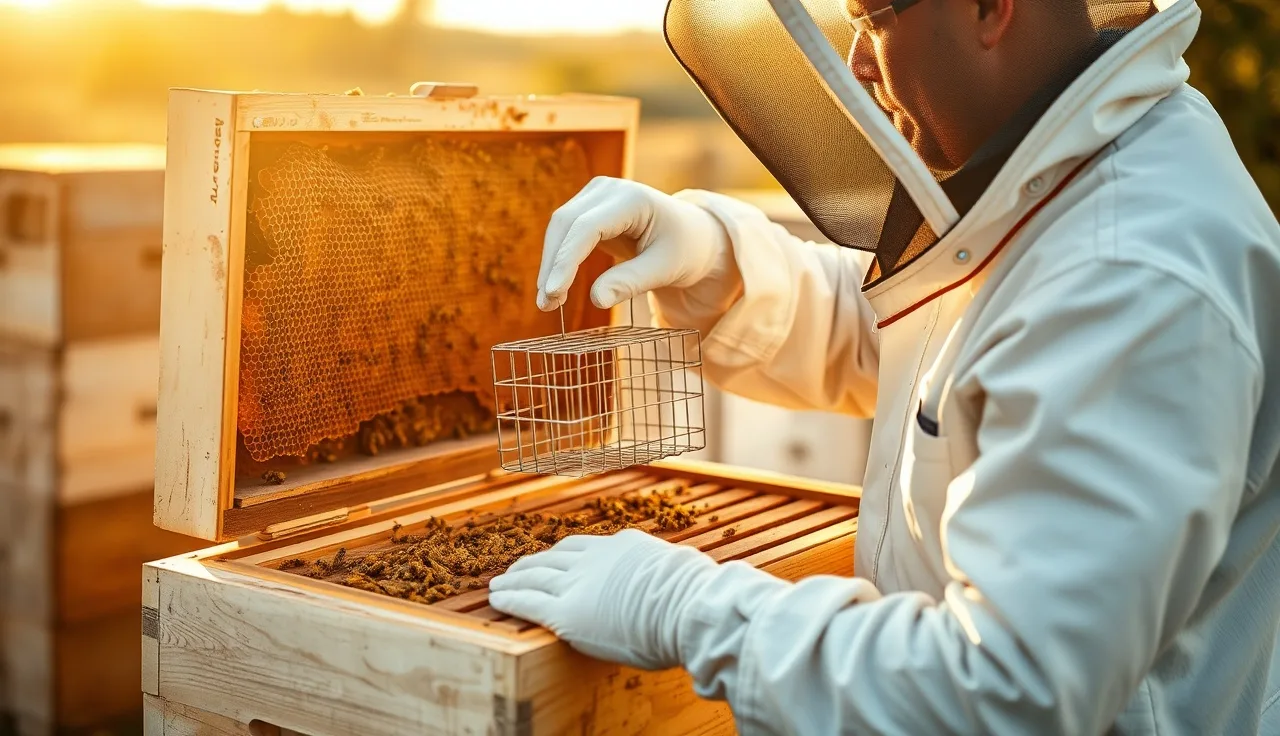
Queen caging. Find the queen, put her in a clip or hair-roller cage, and leave her in the hive. Workers feed her through the mesh. After 24 days all capped brood has emerged and no new brood was laid. Release her and apply oxalic acid within a day or two, before her fresh eggs hatch into capped cells. This is the simplest version. The catch is you have to find the queen, which isn't always fast, and caged queens can occasionally get superseded.
Queen removal (split method). Move the queen to a small nuc. The original colony goes queenless and raises emergency queens. You treat the main colony while it's broodless, then reunite or let the new queen mate. This doubles as a swarm-season tool and can leave you with an extra colony. The tradeoff is complexity and the chance the colony raises a poor queen.
Removing all capped brood. Faster, but a lot of lifting. You pull every frame of capped brood and stack it in a queenright or queenless nuc to finish hatching. The main colony has no capped brood within a day, so you treat immediately. Beekeepers reach for this when mite levels are already critical and there's no time to wait three weeks for brood to hatch on its own.
Natural winter broodless period. In temperate climates, colonies often go broodless for 4 to 8 weeks in late fall and early winter. This is the best time to apply oxalic acid anyway, and you don't touch the queen at all. The break happens by itself. The catch is timing, which shifts with location, weather, and the colony, so you have to confirm the hive is truly broodless with a full inspection or an alcohol wash before you treat.
For most hobbyists running a handful of hives, queen caging is the easiest controlled break to pull off. For sideliners with dozens of colonies, the natural winter break plus oxalic acid vaporization scales best.
When is the best time of year to do a brood break?
Do it whenever your mite count tells you to, but some windows forgive mistakes more than others.
Late summer (July through September across most of North America) is the highest-stakes stretch. Varroa usually peaks then, and it's exactly when colonies raise the long-lived winter bees that carry them to spring. A high mite load during this window produces winter bees with shortened lifespans and weakened immune function [4]. If your mite wash runs above 2% (2 mites per 100 bees) in late summer, a brood break with oxalic acid is one of the fastest ways to get ahead of it.
Early fall works too. In many northern climates the colony is already drifting toward broodlessness by October, so a late-September cage-and-treat can head off a late collapse.
Spring breaks are less common but not wrong. Some beekeepers cage queens before a major flow to suppress mites going into peak season. The cost is lost production while the queen isn't laying at full rate. Whether that trade pays off depends on your mite levels at the time.
Summer breaks carry one real risk. A large colony that goes queenless or slows its laying in the middle of nectar season can lose a lot of forager momentum and take weeks to recover. Time the break to finish well before your main honey flow if you can.
For climate-specific timing, the varroa mite article covers how mite population cycles shift by zone, which decides when natural broodless windows actually land.
How do you combine a brood break with oxalic acid treatment?
Timing decides everything. Oxalic acid kills phoretic mites on contact but does not penetrate cell cappings. Api-Bioxal is the only EPA-registered oxalic acid product labeled for US honey bee colonies, registered under EPA Reg. No. 87243-1 [5].
The sequence that works:
- Create the break by caging the queen or confirming the colony is naturally broodless.
- Wait until the last capped brood has emerged. The minimum wait is about 21 days from the last egg laid, which comes out to roughly 24 days from caging if you're careful. Inspect around day 20 to confirm no capped brood remains.
- Apply oxalic acid within 1 to 2 days of confirmed broodlessness. For vaporization, the Api-Bioxal label allows up to 3 treatments at 5-day intervals. For dribble, one treatment is the labeled rate.
- If you vaporize, some beekeepers do a single treatment the day they confirm broodlessness, then release the queen the next day. She resumes laying, but nothing gets capped for about 9 days, giving you a short second window for another vaporization if you want it.
Follow the Api-Bioxal label exactly. It specifies dosage (1 gram of oxalic acid dihydrate per brood box for dribble, 2.275 grams per hive for vaporization), application intervals, and the requirement that honey supers be off during dribble treatment. As the Honey Bee Health Coalition puts it, oxalic acid "is most effective when colonies are broodless" [3].
My opinion: vaporization beats dribble in a brood-break scenario because the vapor reaches bees in every corner of the hive, including clusters sitting away from the frames you'd drench. A decent vaporizer runs $140 to $220. If you keep more than 3 or 4 hives, that cost pays for itself fast against the per-colony labor of dribbling.
Does a brood break stress the colony or hurt production?
Yes, but rarely enough to matter if you plan it. A caged queen costs the colony three weeks of brood. In a peak-summer hive that's a real gap. Worker populations dip 4 to 6 weeks after the break ends, reflecting the missed brood cycle, then climb back as the queen ramps up.
The stress argument gets overstated. A colony wrecked by high varroa in August will crash entirely by November. A colony that takes a modest August dip from a planned break but enters winter with near-zero mites almost always survives. The math favors the intervention, and it isn't close.
Honey production takes a small hit only if the break runs during a major flow. Schedule it outside the main nectar flow and most hobbyists see no measurable production cost at all. Sideliners and commercial operators who track per-colony yields have more reason to watch the timing window.
One benefit people miss: releasing the queen into a broodless hive can trigger a burst of laying, because workers backfill cells with honey and pollen during the break and the queen has open comb waiting. The brood nest often expands quickly after release.
Can you do a brood break without finding or handling the queen?
Yes. A few methods skip finding her entirely.
The simplest no-find move: shift the whole colony to a new spot and leave an empty hive on the original stand. Field bees fly back to the old location. You add a frame of eggs or young larvae to that field-bee hive so it can raise a new queen, and you treat it while it waits for brood to emerge. The colony on the new stand keeps the queen and most nurse bees. It's really a split, reasonably effective, but it divides your colony.
Another option: find the frames with the most open brood (the queen is usually close), and pull those to a nuc without hunting for her directly. If she rides along to the nuc, your main colony is now broodless. If she stays put, the nuc is queenless and raises a new queen. Check which unit is queenright a week later by looking for queen cells.
A truly no-inspection route is the natural winter break. In USDA hardiness zones 5 and colder, most colonies carry no capped brood from November through January. One varroa wash in late October to confirm low brood activity, then an oxalic acid vaporization in early November, costs you nothing in queen-finding effort.
The apiculture programs at Penn State and the University of Minnesota both recommend the late-fall oxalic acid treatment as the baseline minimum for mite control, timed to that natural broodless period [4] [6].
How does a brood break compare to chemical acaricide treatments?
Here's the honest side-by-side.
| Method | Efficacy with brood present | Efficacy broodless | Residue risk | Resistance risk | Cost per hive |
|---|---|---|---|---|---|
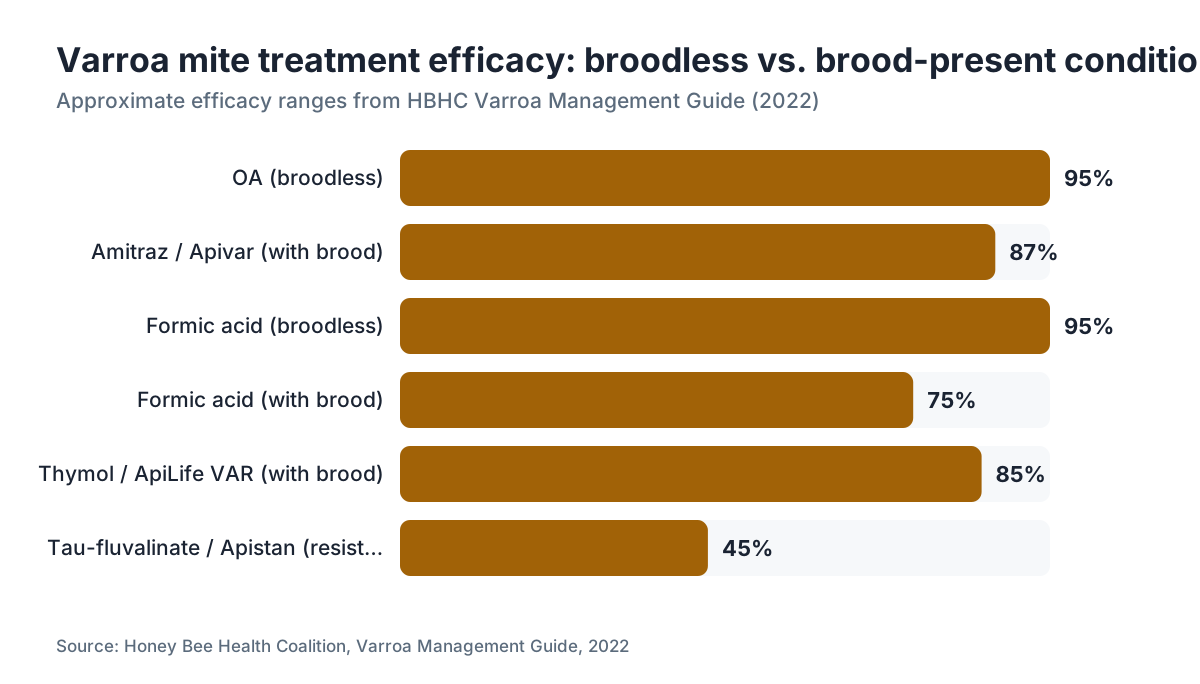
| Brood break + oxalic acid | N/A | 90-95%+ [2][3] | None at label rates [5] | Very low | $1-3 (OA cost) |
| Amitraz (Apivar strips) | 80-93% [3] | ~99% | Wax residue possible | Moderate | $7-15 |
| Formic acid (MAQS/Formic Pro) | 60-90% [3] | 95%+ | Negligible | Low | $8-14 |
| Thymol (ApiLife VAR) | 74-95% [3] | N/A | Negligible | Low | $6-12 |
| Tau-fluvalinate (Apistan) | Historically 70%+ but resistance widespread | Not applicable | Wax residue common | Very high | $5-10 |
The big advantage of synthetic acaricides is that they work with brood present. You skip the broodless window entirely. For beekeepers who can't or won't disrupt the brood cycle, a properly timed Apivar or Formic Pro treatment beats doing nothing.
The resistance picture is the problem. Tau-fluvalinate resistance has been documented in US and European varroa populations for over 20 years [7]. Amitraz resistance has turned up in US colonies in multiple studies, with a 2021 USDA survey finding reduced amitraz susceptibility in mite populations from several states [8]. Oxalic acid has no known resistance mechanism in varroa, and the brood break maximizes its contact with the whole mite population.
If you want a sustainable long-term plan, rotate the brood-break-plus-oxalic-acid method with one of the other organic options (formic acid for in-season use when brood is present). That's the most defensible strategy I know. I'd keep synthetic strips in reserve for emergency knockdown when mite levels are critical and there's no time for a break.
For a current treatment comparison with brand names and label details, tools like the ones at VarroaVault can help you map a seasonal protocol that layers these approaches.
What mite level should trigger a brood break intervention?
The standard thresholds from most extension programs and the Honey Bee Health Coalition are 2% (2 mites per 100 bees) during the brood-rearing season and 1% in late summer when winter bees are being raised [3]. These are action thresholds. You treat when you hit them, not after you blow past them.
A 300-bee alcohol wash is the most reliable way to get an accurate phoretic mite count. Sticky boards help you watch trends, but they undercount the real population badly and shouldn't be your sole basis for a treatment decision [3].
At 3 to 4% in August, a brood break with oxalic acid is the fastest route under threshold before your winter bees are produced. At that mite level a synthetic acaricide with brood present might get you to 1% over 6 to 8 weeks. A brood break plus oxalic acid can get you near zero in 3 to 4 weeks.
At 1% or below in late summer, some beekeepers run a single oxalic acid vaporization on the existing colony with no formal break, accepting that it only hits the phoretic fraction. That's a fair low-effort call if you're starting from a low baseline.
Does a brood break work as a standalone method without any chemical treatment?
It helps, but on its own it falls short. Here's why.
When you break the brood cycle, phoretic mites that can't find cells start dying off, but slowly. Phoretic varroa survive on adult bees for roughly 5 to 9 days in summer and longer in winter [1]. A 24-day break with no treatment reduces the population, but a meaningful chunk of mites simply waits it out on the bees and pours into the first brood the queen lays after release.
Studies comparing break-alone against break-plus-oxalic-acid consistently favor the combination by a wide margin. The reduction from a break alone is real but partial. The combination gets you near-total knockdown.
There's a biocontrol angle worth mentioning: some hygienic bee strains detect and remove varroa-infested brood more readily when the overall mite load is low, and a broodless period can help reset that dynamic. But for anyone trying to keep a colony from collapsing, a break without a follow-up treatment leaves most of the benefit on the table.
One practical note for beekeepers pricing out beekeeping supplies: an oxalic acid vaporization setup is a one-time buy. After that the per-treatment cost is essentially just the acid, about $1 to $3 per hive at current bulk prices.
What can go wrong with a brood break, and how do you avoid those problems?
A handful of real failure modes worth knowing.
Queen loss. A caged queen can die, especially in summer heat. Inspect every 5 to 7 days to confirm she's alive. If she dies you've got an unplanned queenless hive, so keep a backup queen or at least a frame of eggs from another colony on hand.
Premature release. If the queen escapes or you release her before 21 days, capped brood is still in the hive when you treat and you lose most of the benefit. Use a reliable cage and check that it's secure.
Missing hidden capped cells. A frame that looks mostly open can hide scattered capped brood in a quick glance. Treat before all brood has emerged and you leave a reservoir of protected mites. On day 21 to 24, do a slow frame-by-frame inspection before you apply oxalic acid.
Laying workers. A colony kept queenless too long can develop laying workers, which produce drone-only brood and make it hard to reintroduce a mated queen. This gets more likely past 4 to 5 weeks without a queen or capped queen cell. Don't stretch the broodless period without a plan.
Robbing pressure. A broodless hive in late summer holds fewer bees and gets more vulnerable to robbing from neighboring colonies. Reduce the entrance to a single bee-width during the break.
Drift and reinfestation. A cleanly treated colony can pick up mites again within weeks if nearby hives or feral colonies carry heavy loads. A brood break fixes your colony, not the mite pressure around it. Coordinate treatments across your apiary when you can.
Is a brood break practical for backyard beekeepers with just 1-3 hives?
Yes, and it's arguably easier with fewer hives. You can give each colony the individual attention a break needs. Finding and caging the queen in a single hive is a 20-minute job once you've done it a few times. You don't even need a vaporizer. The dribble method works fine in a truly broodless hive with only a few frames of bees.
For a single backyard hive, the late-fall natural broodless period is the lowest-effort entry point. Confirm broodlessness in late October or November, apply an oxalic acid dribble (50 ml of a 3.5% solution, 5 ml per seam of bees, per the Api-Bioxal label), and you're done for the year [5]. Ten minutes and under $5 in materials.
For a mid-season mite problem in summer, queen caging for 24 days followed by oxalic acid vaporization is what I'd actually do on my own hives. It's a bigger time commitment, but the results beat any treatment I've run with brood present.
Backyard beekeepers with a small number of hives can cross-reference treatment timing, mite thresholds, and record-keeping with tools like those at VarroaVault, which offers free protocol templates built for hobbyist-scale operations.
For broader context on healthy colonies and how mite pressure varies by stock, see the varroa mite overview.
Frequently asked questions
How long does a brood break need to last to be effective?
A minimum of 21 days from the point the last egg was laid, which is roughly 24 days from when you cage or remove the queen. Worker brood takes 12 days to cap after the egg is laid, then 12 more to emerge, so the last capped cell from before the break won't hatch until around day 24. Treat with oxalic acid within 1 to 2 days of confirmed broodlessness for the best result.
Can I do a brood break during a honey flow?
You can, but you'll lose some production. A caged queen means no new brood for 3 to 4 weeks, and worker numbers dip about 6 weeks later. During a major flow that can cut your harvest noticeably. Most beekeepers schedule breaks either before the main flow or after it ends in late summer, when mite pressure is often highest and lost forager momentum matters less.
What's the best queen cage for a brood break?
Hair-roller cages work well and cost about $1 to $2 each. The point is that workers can feed the queen through the cage but she can't lay. Clip-style cages also work. Avoid designs that block feeding access in summer heat. Inspect every 5 to 7 days to confirm the queen is alive and the cage is secure. Replace a dead queen right away or you'll end up with laying workers.
Does a brood break prevent varroa mite resistance to treatments?
It helps, because oxalic acid has no known resistance mechanism in varroa. Synthetic acaricides like tau-fluvalinate and amitraz have documented resistance in US mite populations. By leaning on oxalic acid during brood breaks instead of rotating synthetic strips, you cut selection pressure for resistance. It's not a guarantee, but it's a far better long-term bet than heavy synthetic acaricide use.
Can I use formic acid instead of oxalic acid during a brood break?
You can, but there's no advantage, and formic acid brings more temperature restrictions and application complexity. Formic acid's main strength is penetrating cappings to kill mites in brood cells, which only matters when brood is present. In a broodless hive every mite is phoretic, so oxalic acid kills them just as well with fewer handling risks. Use oxalic acid for a brood break and save formic acid for in-season treatments when brood is present.
How do I know when the last capped brood has emerged after a brood break?
Do a frame-by-frame inspection on day 21 to 24 after caging the queen. Look for cells with darkened, sunken, or solid cappings, which mean capped pupae. Open any you're unsure about. If every cell is empty, holds an egg, or holds an open larva, the break is complete. Don't rush this. One frame of missed capped brood is a reservoir of protected mites that survive your oxalic acid.
What mite count threshold should I use to decide if a brood break is necessary?
The Honey Bee Health Coalition recommends treating at 2% (2 mites per 100 bees) during the brood-rearing season and 1% in late summer when winter bees are being raised. Use a 300-bee alcohol wash for accurate counts. At 3% or higher in late summer, a brood break plus oxalic acid is the fastest path under threshold before your winter bee cohort takes damage.
Will a brood break cause my bees to swarm?
A caged queen lowers the swarming impulse rather than raising it, since the colony isn't building young bees fast and the queen isn't pumping out brood pheromone at full strength. There's a small chance of supersedure if workers judge her output inadequate, but actual swarming during a queen-caging break is uncommon. If you run a split-based break and the main colony goes queenless, manage the queen cells you raise to prevent afterswarms.
How many times per year can I do a brood break?
You could do two, one in summer and one using the natural fall broodless period, and some beekeepers in high-pressure areas do exactly that. Each break and treatment restarts the mite population near zero. The limit is colony health. Repeatedly interrupting the brood cycle stresses the queen and can slow her laying long-term. One intentional summer break plus one fall treatment is a reasonable maximum for most colonies.
Can I do a brood break with a package or newly installed colony?
Usually there's no need. A new package starts with near-zero mite pressure since the bees are shaken and mostly carry phoretic mites. Let the colony establish through its first full season, start monitoring mite counts 6 to 8 weeks after installation, and plan your first intervention for late summer if the counts warrant it. Forcing a break in a new colony's first weeks sets it back when it needs every brood cycle to build.
Does a brood break work for all varroa mite strains, including resistant ones?
Yes. A brood break removes the physical habitat the mite needs to reproduce, so no mite strain can become resistant to the absence of brood. The follow-up oxalic acid works through direct contact with the mite's integument, not a biological pathway the mite can evolve around. That's why the brood-break-plus-oxalic-acid combination is treated as the most future-proof approach in current varroa management literature.
Is a brood break safe for the queen's long-term productivity?
Generally yes. Queens caged for 24 days usually resume normal laying within a few days of release with no lasting drop in rate. Older queens (2+ years) may restart a bit slower than young queens, but it's not common. The bigger risk is leaving her caged too long, past 4 to 5 weeks, or in extreme summer heat where cage temperatures can harm her. Check caged queens every 5 to 7 days.
What do I do if my colony has high mites and is already showing signs of colony collapse?
Act fast. If brood is heavily infested and the adult population is already dropping, a brood break alone may not be quick enough to save the colony. Start with an emergency oxalic acid vaporization to knock down phoretic mites, then cage the queen to begin a break. Some beekeepers also pull and destroy heavily infested drone brood before the break to drop the mite load faster. Record your mite counts before and after so you know if you're winning.
Sources
- Rosenkranz, P., Aumeier, P., Ziegelmann, B. (2010). Biology and control of Varroa destructor. Journal of Invertebrate Pathology, 103(Suppl 1), S96-S119.: Roughly 80-90% of the varroa population resides inside capped brood cells under normal colony conditions; phoretic mites can survive on adult bees for 5-9 days in summer.
- Gregorc, A. et al. (2016). Comparison of integrated methods for reducing Varroa destructor populations in honey bee colonies. PLOS ONE.: Colonies made broodless and treated with oxalic acid achieved mite reductions exceeding 95% in multiple treatment arms.
- Honey Bee Health Coalition, Varroa Management Guide (2022 edition): A broodless oxalic acid treatment 'is highly effective, often achieving greater than 90% efficacy'; action thresholds of 2% during brood season and 1% in late summer are recommended; sticky boards are noted as underestimating actual mite population.
- Penn State Extension, Varroa Mite Management: High varroa load in late summer damages winter bee physiology and lifespan; late-fall oxalic acid treatment is recommended as baseline mite control timed to natural broodless period.
- EPA, Api-Bioxal Registration (EPA Reg. No. 87243-1): Api-Bioxal is the only EPA-registered oxalic acid product labeled for US honey bee colonies; label specifies 1g oxalic acid dihydrate per brood box dribble and 2.275g per hive vaporization; honey supers must be off during dribble application.
- University of Minnesota Extension, Bee Lab, Varroa Management: Late-fall oxalic acid treatment during natural broodless period is recommended as a minimum annual varroa management practice.
- Sammataro, D. et al. (2005). Resistance to acaricides in Varroa destructor. American Bee Journal.: Tau-fluvalinate resistance in varroa has been documented in US and European mite populations for over 20 years.
- USDA Agricultural Research Service, 2021 Varroa Miticide Susceptibility Monitoring Survey: Reduced amitraz susceptibility confirmed in US varroa populations from multiple states in 2021 USDA survey.
- Honey Bee Health Coalition, Varroa Management Guide (2022), Treatment Comparison Table: Efficacy ranges for Apivar (amitraz) 80-93%, Formic Pro 60-90% with brood present/95%+ broodless, ApiLife VAR (thymol) 74-95%, as published in HBHC guide treatment tables.
- Fries, I. (2010). Varroa destructor in Apis mellifera colonies: a review. Journal of Apicultural Research.: Varroa reproductive cycle runs approximately 9-11 days inside a worker cell; drone brood is parasitized at significantly higher rates than worker brood.
- Oregon State University Extension Service, Integrated Pest Management for Varroa in Oregon: The 300-bee alcohol wash is referenced as the most reliable method for phoretic mite count accuracy in hobbyist and commercial apiary contexts.
Last updated 2026-07-09