The IPM pyramid for varroa control explained
TL;DR
- The IPM pyramid for varroa organizes control tactics into tiers: monitoring first, then cultural and mechanical methods, then organic acids, then synthetic miticides as a last resort.
- The goal is keeping mite loads below 2 mites per 100 bees before brood-rearing seasons.
- Used correctly, this tiered approach reduces chemical resistance and colony losses.
What is the IPM pyramid for varroa and why does it matter?
Integrated Pest Management, or IPM, is a decision-making framework borrowed from agriculture and adapted for varroa by researchers and the Honey Bee Health Coalition [1]. The core idea is simple: you don't reach for the strongest tool first. You work up a pyramid, starting with information (monitoring), moving through low-impact cultural tactics, then escalating to treatments only when your counts say you need them.
Why a pyramid shape? The base is wide and cheap. The tip is narrow and costly. Monitoring costs almost nothing. A brood break or a mite-resistant queen costs a bit more in time or money. Oxalic acid vaporization costs more than that. A synthetic miticide like amitraz or tau-fluvalinate sits at the very top: effective, but with real resistance risk if you lean on it too hard [2].
The payoff is measurable. Colonies run on a structured IPM protocol showed lower winter losses than untreated controls in multiple university trials. The Honey Bee Health Coalition's Varroa Management Guide states that "the goal of an IPM program is to keep varroa populations below the economic threshold while minimizing the use of chemical controls" [1]. That single sentence is the whole philosophy.
For hobbyist and sideliner beekeepers running anywhere from 2 to 200 hives, the pyramid gives you a repeatable decision tree instead of a panic-and-treat cycle. It also protects your money. Resistance to fluvalinate (Apistan) is already widespread across North America and Europe [2], and resistance to amitraz (Apivar) shows up in some populations. The pyramid slows that drift.
What are the levels of the varroa IPM pyramid?
Most published frameworks, including those from the Honey Bee Health Coalition and Cornell Cooperative Extension, describe four functional tiers [1][8].
Tier 1: Monitoring. This is the base. You cannot manage what you don't measure. Alcohol wash and sugar roll are the two standard methods, and alcohol wash is more accurate. The threshold question gets its own section below, but monitoring is what feeds every decision above it.
Tier 2: Cultural and mechanical controls. These are practices that cut mite reproduction without chemicals. Drone brood removal, brood breaks, screened bottom boards, and requeening with mite-resistant stock (VSH or hygienic trait queens) all live here. None of them win the fight alone. Combined with monitoring, they slow mite population growth in a way you can actually see [8].
Tier 3: Organic acid and essential oil treatments. Oxalic acid (OA) and formic acid do most of the work at this level. Both hold EPA registration and USDA-NOP approval for certified organic operations [4][9]. Thymol (Api Life VAR, Apiguard) fits here too. These treatments carry very low resistance risk compared to synthetics, and oxalic acid leaves no detectable residue in honey at label-compliant doses [4].
Tier 4: Synthetic miticides. Amitraz (Apivar), tau-fluvalinate (Apistan), coumaphos (CheckMite+), and flumethrin (Bayvarol, not registered in the US but used in Europe) sit at the top. They knock mites down fast when loads are high. Rotate them, follow the label exactly, and never make them your first move against a low count.
The pyramid doesn't mean you crawl up the tiers during a crisis. Do an alcohol wash in September and find 8 mites per 100 bees, and you go straight to a strong treatment and sort out the cultural work afterward. This is a planning framework, not a rule that stops you from acting fast when a colony is in trouble.
| Tier | Examples | Resistance risk | Cost range |
|------|----------|----------------|------------|
| 1, Monitoring | Alcohol wash, sticky board | None | $0, $15 |
| 2, Cultural/mechanical | Drone removal, brood break, VSH queens | None | $0, $35 per queen |
| 3, Organic acids / essential oils | Oxalic acid, formic acid, thymol | Very low | $1, $20 per treatment |
| 4, Synthetic miticides | Amitraz (Apivar), tau-fluvalinate (Apistan) | Moderate, high | $5, $30 per treatment |
What varroa level triggers treatment, and how do you measure it?
The widely cited action threshold is 2 mites per 100 adult bees (2%) during honey production or before the fall brood-rearing period that produces winter bees [1]. Some researchers push for a lower threshold of 1 to 2% going into August, because the bees raised in late summer are the ones that overwinter, and high mite loads at that point mean those bees emerge with shortened lifespans and suppressed immune function [5].
The University of Minnesota Extension recommends treating "when mite levels reach or exceed 2 per 100 bees (2%) during the brood-rearing season" [3]. Internalize that number.
Alcohol wash is the most reliable monitoring method for hobbyists. You collect roughly 300 adult bees (about half a cup) from the brood nest, shake them in 70% isopropyl alcohol for 60 seconds, strain, count mites and bees, and divide. The math is: mites counted divided by bees counted, multiplied by 100. Three mites in 300 bees equals 1%, well under threshold. Twelve mites in 300 bees equals 4%, treat today.
Sugar roll is gentler on the bees (they survive) but consistently undercounts by roughly 30 to 40% compared to alcohol wash [5]. Fine for a rough check. Not the tool for a threshold call. Sticky boards count only phoretic mites that fall naturally, and the number swings with colony size, time of year, and ambient temperature, which makes threshold comparisons unreliable.
How often should you monitor? The Honey Bee Health Coalition recommends at minimum: once in early spring, once in late spring, monthly June through August, and once in early fall before you treat for winter prep [1]. That's six counts a year. Most colony losses trace back to beekeepers who monitor too rarely and miss the exponential mite growth window in summer.
You can track your counts and get protocol recommendations from tools like those at VarroaVault, which maps your count date and colony size to the relevant threshold.
How do cultural controls fit into the IPM pyramid?
Cultural controls are the second tier and the most underused layer of the whole system. They don't replace treatments. They cut how often and how urgently you need them.
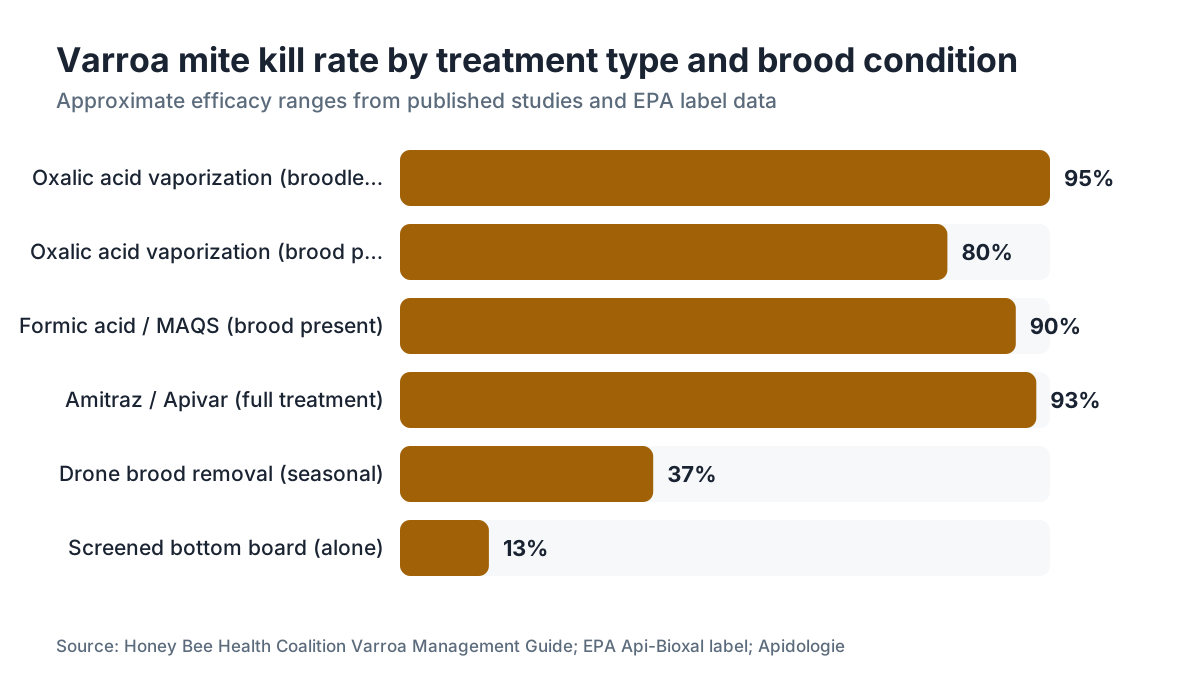
Drone brood removal. Varroa infest drone brood at a rate roughly 8 to 10 times higher than worker brood, because the longer capping period gives mites more reproductive cycles [6]. Insert a frame of foundation or drawn comb to capture a round of drone brood, then pull and freeze it before emergence, and you knock down the mite reproductive rate. One study in Apidologie found drone brood trapping cut mite populations by 33 to 40% over a season when used consistently [6]. The catch: you have to do it every 24 days. Miss a cycle and you've just raised more mites.
Brood breaks. Requeen, split a colony, or cage the queen for 24 days, and you eliminate capped brood. Varroa in phoretic phase during a brood break are fully exposed to oxalic acid, which can hit kill rates above 90% compared to roughly 60% when brood is present [4]. A planned brood break paired with an OA treatment is one of the strongest one-two punches in a non-chemical-first program.
Resistant stock. Varroa-Sensitive Hygiene (VSH) bees and those with high hygienic behavior open capped mite-infested cells and remove reproducing females before offspring mature. Colonies bred for VSH traits can hold lower mite levels without treatment, though rarely zero intervention [8]. Requeening with commercially bred VSH queens is a real option now, not an experiment. The USDA Baton Rouge lab has maintained VSH lines for over two decades [7].
Screened bottom boards. Honest read: the evidence that screened bottom boards alone reduce mite loads much is weak. Studies find they remove roughly 10 to 15% of falling mites at best [3]. They help with ventilation and with sticky board counts. Don't count on them as a control method.
Which organic acid treatments work, and when can you use them?
Oxalic acid (OA) and formic acid are the most widely used organic acid treatments in North America, and both carry EPA registration and USDA-NOP approval for certified organic operations [4][9].
Oxalic acid. Sold as Api-Bioxal (the only EPA-registered OA product in the US as of 2024). Three application methods exist: dribble, spray, and vaporization. Vaporization (sublimation) works best, though its reach against mites under cappings is limited. During a brood break or in a broodless colony (winter, swarm season), a single OA vaporization or dribble can hit 90 to 97% mite kill [4]. With brood present, three to five vaporizations spaced 5 days apart improve results by catching emerging bees. The Api-Bioxal label requires a respirator rated for acid vapors. Don't skip it.
Formic acid. Mite Away Quick Strips (MAQS) and Formic Pro are the registered products. Formic acid penetrates capped brood, which is its edge over OA. MAQS reaches roughly 90%+ efficacy in studies when applied within the labeled temperature range (50 to 85 degrees F for MAQS) [4]. Temperature is the variable that makes or breaks it: too cold and it doesn't volatilize enough to kill, too hot and you risk losing the queen. Formic acid is the one organic option that works through cappings without a brood break.
Thymol. Api Life VAR and Apiguard are the registered thymol products. They work, but they lean hard on temperature (sustained ambient temps of 60 to 105 degrees F), and some bees remove the thymol matrix through hygienic behavior, which drops efficacy. I'd reach for formic or OA over thymol in most North American climates.
Organic acids show essentially zero documented resistance after decades of use [2]. That's a big reason the IPM framework puts them ahead of synthetics.
When should you use synthetic miticides, and how do you avoid resistance?
Synthetic miticides sit at the top of the pyramid for good reason: they work well and they carry real resistance risk with overuse. They are legitimate tools, not forbidden ones.
Amitraz (Apivar) is the current go-to for severe infestations. In a colony with 6%+ mite loads going into fall, Apivar strips left in for the full 42 to 56 days per label will typically cut mite loads by 90 to 95% [2]. Tau-fluvalinate (Apistan) is still registered, but resistance runs so wide in some regions that many beekeepers get poor results with it now. Coumaphos (CheckMite+) works, but it comes with well-documented residue accumulation in wax [2].
To slow resistance:
- Rotate between chemical classes. Amitraz and fluvalinate are different classes; using both in the same season back to back is fine if indicated, but don't lean on one class year after year.
- Always treat the whole apiary, more than the affected hives. Partial treatment leaves a reservoir of resistant mites that spread via bee drift.
- Pull strips on time. Leaving Apivar strips in past 56 days does not improve efficacy and cranks up the selection pressure for resistance.
- Confirm efficacy with an alcohol wash 72 hours after treatment ends. If you're not seeing at least a 90% drop, you may have a resistance problem and need to switch classes.
The EPA requires that all miticide applications follow label instructions exactly; the label is a federal legal document [4]. Dosing more or leaving treatments in longer than directed is both illegal and counterproductive.
What does a full-year IPM varroa calendar look like?
Varroa management isn't a single event. It's a cycle that tracks the colony's brood cycle and your local season. Below is a general framework for temperate North America; adjust timing to your own first and last frost dates.
Early spring (March, April). First alcohol wash of the year. Colonies are small and brood is ramping up. Mite loads are usually low because the winter brood break diluted the phoretic mite population. Find counts at or above threshold this early, and treat before population expansion hides the problem.
Late spring swarm season (May). Natural swarms and splits create brood breaks in the original colony. This is a prime moment for an oxalic acid treatment of any broodless unit. Alcohol wash again.
Summer buildup (June, July). Mite populations grow exponentially during peak brood production. Monthly monitoring is not optional here. Varroa populations can double every 4 to 6 weeks in summer [5]. Skipping July is how you find a disaster in August.
Critical fall window (August, early September). This is the highest-stakes monitoring point of the year. The bees raised from late August through October are your winter cluster. Treat if you're at or above 2% before these bees are raised. Formic acid (Formic Pro, MAQS) is ideal here because it penetrates brood, and temperatures are still warm enough for it to work. If formic isn't an option, Apivar is the fallback.
Late fall/winter prep (October, November). One final alcohol wash after fall treatment to confirm it worked. If you're in a region with a true broodless period (temps consistently below 50 degrees F, queen stops laying), this is the window for OA dribble or vaporization at near-100% efficacy.
Winter. No treatments in most cases. Monitor with sticky boards if you want a rough trend line, but don't make threshold decisions from sticky board data alone.
How does hygienic behavior and bee genetics fit into IPM?
Bee genetics is one of the few IPM tools that keeps working while you're nowhere near the apiary. Colonies with high hygienic behavior, VSH traits, or both detect and remove varroa-infested pupae before mite reproduction finishes, cutting the mite growth rate without any beekeeper intervention.
The USDA Agricultural Research Service has documented that VSH colonies can hold mite levels below 2% through the season with reduced treatment frequency, though not zero treatments in most real-world apiaries [7]. The Louisiana-based USDA lab has selected VSH lines since the 1990s, and commercial queen producers now offer VSH-tested stock.
Hygienic behavior is separate from VSH but related. Hygienic bees remove all types of diseased or dead brood, not only varroa-infested cells. The freeze-killed brood test (pin test) is the standard field assay: a section of brood is frozen, reinserted, and watched over 24 to 48 hours. Colonies that clean out 95% or more of the killed brood within 48 hours score as highly hygienic [3].
For most hobbyists, the practical move is to buy VSH-tested or hygienic-tested queens from reputable breeders rather than trying to select and breed locally without controlled mating infrastructure. Requeening every 1 to 2 years with tested stock costs $30, $50 per queen but shifts your baseline mite trajectory in a way you can feel. That's cheap next to losing a colony.
Keep in mind that genetics interacts with local conditions. A highly hygienic queen mated naturally produces daughters mated with local drones, and the offspring genetics drift after the first generation. Instrumental insemination or closed-population breeding programs are needed for stable trait maintenance, which is generally beyond hobbyist scope.
What are the most common IPM mistakes beekeepers make with varroa?
Real talk: the pyramid fails when people grasp it in theory and skip the base. Here are the patterns that kill colonies.
Treating by calendar instead of by count. "I treat in spring and fall" is not IPM. It's guessing. Treat when your alcohol wash tells you to. Some years that means three treatments. Some years it means one.
Skipping July monitoring. Summer mite loads build quietly. A booming hive gives no visual signal of the mite population doubling under the cappings. July is when the window to act before fall brood damage is still open.
Trusting sugar rolls for threshold decisions. Sugar rolls are fine for education and rough trend-watching. They routinely undercount by 30 to 40% compared to alcohol wash [5]. Deciding whether to treat or not treat? Use alcohol wash.
Treating one hive and not the apiary. Varroa spread through robbing and bee drift. Treating 3 of 5 hives while 2 stay heavily infested means the treated colonies get re-infested within weeks. Treat the whole apiary, or at minimum all hives within robbing range.
Using the same miticide class for years. Used Apistan every year for five years? Get an efficacy wash 72 hours after treatment. Resistance is invisible until it's a crisis.
Misreading organic acid temperature windows. Formic acid products used below 50 degrees F or above 85 degrees F either fail to volatilize enough or can kill the queen. Check the label and your 10-day forecast before applying.
For a well-stocked toolkit that supports a structured IPM approach, beekeeping supply companies sell everything from alcohol wash kits to vaporizers, and comparing options before you buy saves you regret.
How does the IPM pyramid connect to the Honey Bee Health Coalition's guidance?
The Honey Bee Health Coalition (HBHC) published its Varroa Management Guide, now in its third edition, as the closest thing the industry has to a national consensus document on IPM for varroa [1]. It's free to download and it's the primary reference for extension services, state apiarists, and certification programs across the US.
The HBHC guide organizes management into monitoring, cultural controls, and treatments (both organic and synthetic), which maps directly onto the pyramid structure in this article. Its threshold recommendation of 2 mites per 100 bees is the same figure cited by Cornell, University of Minnesota, Penn State, and most state bee labs [1][3][8].
What makes the HBHC guide worth keeping on your phone is the treatment comparison tables, which list application temperatures, efficacy ranges, honey super restrictions, and resistance notes for each registered product. If you haven't read it, that's the one document to have open before your next inspection.
The guide also states an honest limitation: "No single strategy will be successful in all cases, and combinations of methods are often necessary." That's not a hedge, it's the reality. Varroa is a parasite with a reproductive cycle synced tightly to its host, and any single-tool approach eventually fails. The pyramid works because it doesn't lean on any one layer.
You can also track your monitoring history and get season-specific protocol guidance at VarroaVault, which builds its recommendations around the same HBHC thresholds.
What equipment do you actually need to run an IPM program?
The startup kit for a working IPM program is short and cheap.
For monitoring, you need a jar or container with a fine mesh lid for alcohol wash (a mason jar with hardware cloth works), 70% isopropyl alcohol (standard drug store rubbing alcohol is fine), and a white or light-colored tray to count mites. Total cost: under $10 if you source your own jar, or $12 to $20 for a commercial kit.
For organic acid treatments, an oxalic acid vaporizer runs $50 to $250 depending on whether it's a simple pan model or a battery-powered unit. Api-Bioxal OA powder costs around $20 for enough to treat 20 to 30 colonies by vaporization. You need an OA-rated respirator (minimum N95 for limited exposure, but a half-face respirator with P100 + OV cartridges is the right call if you're treating multiple hives). Formic Pro or MAQS strips cost $5 to $12 per treatment application.
For synthetic treatments, Apivar strips run roughly $5 to $8 per two-strip treatment (enough for one colony). Apistan is similar in price but, as noted, resistance issues make it a weaker choice in most areas.
For cultural controls, the main spend is queen cost. VSH or hygienic-tested queens from reputable breeders typically run $30 to $50. A queen rearing setup to produce your own tested queens is a much larger investment in time and equipment, worth it for sideliners but often unnecessary for small hobbyist operations.
If you're comparing gear across vendors, beekeeping supplies vary a lot in quality for vaporizers specifically. The cheapest electric vaporizers have reliability issues. A mid-range wand-style vaporizer from a reputable brand is worth the extra $30 to $50 for consistent dosing.
Does the IPM pyramid work for all varroa situations, or are there limits?
The pyramid is a framework, not a guarantee. There are real situations where it needs adapting.
High-mite-pressure areas. Apiaries near unmanaged feral colonies, or in densely beekept areas where neighbors don't treat, face constant reinfestation pressure through robbing and drift. Here, monitoring frequency matters more than in isolated apiaries, and organic-acid-only programs may not hold mite loads down without very frequent applications.
Late-diagnosed crises. Find a colony at 8% in early September, and you don't start at Tier 1. You treat aggressively and immediately with Apivar or formic acid, do a wash in 4 to 6 weeks to confirm the drop, and build the cultural practices into next year's plan. The pyramid describes a proactive system. Reactive situations skip tiers by necessity.
Small-cell foundation and other disproven methods. Small-cell comb as a varroa control has been studied, and the evidence doesn't support the claim [3]. Don't let it stand in for any tier of the pyramid. Essential oils outside registered products, garlic, and various other home remedies have no reliable evidence base. Stick to registered, labeled products.
Africanized colonies. Africanized honey bees in southern US states show some natural resistance to varroa through increased hygienic behavior and shorter brood cycles, but they are not immune. The same monitoring thresholds apply.
The honest bottom line: the pyramid works for the large majority of hobbyist and sideliner operations in temperate North America when followed consistently. The colonies that die from varroa despite an IPM program are usually the ones where the monitoring got skipped in the critical summer window.
Frequently asked questions
What does IPM stand for in beekeeping?
IPM stands for Integrated Pest Management. In beekeeping, it's a tiered approach to varroa control that prioritizes monitoring and low-impact cultural methods before escalating to chemical treatments. The goal is keeping mite loads below the 2% action threshold while reducing the risk of miticide resistance, as outlined by the Honey Bee Health Coalition's Varroa Management Guide.
What is the 2% varroa threshold and why does it matter?
Two mites per 100 adult bees, measured by alcohol wash, is the standard treatment threshold during brood-rearing season. Above 2%, mite populations grow fast enough to cause measurable damage to developing bees, including suppressed immune function and shortened adult lifespans. Acting at this threshold, rather than waiting for visible symptoms, is the core discipline of IPM. The Honey Bee Health Coalition and most university extension programs cite this same figure.
What is the most accurate way to count varroa mites?
Alcohol wash is the most accurate field method. You collect roughly 300 adult bees from the brood nest, agitate them in 70% isopropyl alcohol, and count mites in the wash liquid. Studies show alcohol wash counts run 30 to 40% higher than sugar rolls on the same colonies, because alcohol dislodges mites more effectively. For any threshold decision, use alcohol wash rather than sugar roll or sticky board.
Can you control varroa without chemicals?
You can significantly slow varroa with non-chemical methods: drone brood removal, brood breaks, screened bottom boards, and VSH or hygienic-trait queens. Most research and practitioner experience, though, shows that colonies in temperate North America cannot hold mite loads below the 2% threshold indefinitely without at least occasional organic acid treatments. Non-chemical methods are powerful as the base of the pyramid, not as the complete strategy for most beekeepers.
How does oxalic acid fit into the IPM pyramid?
Oxalic acid sits in Tier 3 of the IPM pyramid as an organic acid treatment. It's EPA-registered (as Api-Bioxal), USDA-NOP approved for organic operations, and has essentially zero documented resistance after decades of use. It works best during broodless periods, when a single treatment can hit 90 to 97% mite kill. When brood is present, multiple vaporizations spaced 5 days apart improve efficacy.
When should you treat for varroa in the fall?
The critical fall treatment window is August through early September for most of temperate North America. The bees raised during this period overwinter the colony, and mite damage to these bees directly determines winter survival. If an alcohol wash at this time shows 2% or higher, treat immediately. Formic acid products are preferred in this window because they penetrate capped brood while temperatures are still adequate for volatilization.
What is drone brood removal and does it actually work?
Drone brood removal involves inserting a frame to collect a round of drone brood, which varroa infest at roughly 8 to 10 times the rate of worker brood, then removing and freezing the capped frame before drones emerge. One Apidologie study found consistent drone trapping cut mite populations by 33 to 40% over a season. It works, but requires strict timing, every 24 days, or you simply rear more mites.
How do you prevent varroa miticide resistance?
Rotate between chemical classes: amitraz-based (Apivar) and pyrethroid-based (Apistan) are different classes. Don't lean on one product year after year. Treat the whole apiary, not individual hives. Remove strips on time; leaving them in longer than labeled doesn't improve results and increases resistance pressure. Confirm efficacy with a post-treatment alcohol wash. And use organic acids whenever conditions allow, since oxalic and formic acid carry essentially no resistance risk.
What is a brood break and how does it help varroa control?
A brood break is any period when the colony has no capped brood. It happens naturally during swarming, can be induced by caging the queen for 24 days, or occurs in some regions during winter. During a brood break, all varroa are in the phoretic phase on adult bees and fully exposed to oxalic acid treatments, pushing kill rates above 90%. Timing a brood break to coincide with an OA treatment is one of the most effective low-chemical strategies in the IPM toolkit.
Do screened bottom boards help with varroa?
The evidence is modest. Studies generally find screened bottom boards remove 10 to 15% of naturally falling mites at best, which is not enough to hold mite populations below threshold on its own. They're useful for ventilation and for placing sticky boards to get a rough trend count. Don't expect a screened bottom board to substitute for treatment in any tier of the IPM pyramid.
How often should you monitor for varroa?
The Honey Bee Health Coalition recommends monitoring at minimum in early spring, late spring, monthly from June through August, and once in early fall before winter prep treatments. That's six counts per year as a floor, with monthly summer counts being the most commonly skipped and most consequential. Varroa populations can double every 4 to 6 weeks during peak summer brood production, so missing a monthly count in July can mean facing an unmanageable load by September.
What is VSH and how does it help with varroa?
VSH stands for Varroa-Sensitive Hygiene. Bees with this trait detect and remove varroa-infested pupae from capped cells before mite reproduction completes, interrupting the mite life cycle without chemical intervention. The USDA Agricultural Research Service has selected VSH lines since the 1990s. In studies, VSH colonies hold lower mite levels with reduced treatment frequency compared to unselected colonies, though most real-world VSH colonies still need occasional treatment.
Is the Honey Bee Health Coalition varroa guide worth reading?
Yes. It's the most broadly cited consensus document on varroa IPM in North America, free to download, and updated periodically. It covers monitoring methods, treatment comparison tables with temperature windows and honey super restrictions, threshold recommendations, and resistance management. Most state apiarists and university extension programs match their guidance to it. If you read one varroa document, this is the one.
Can you apply IPM to a new colony in its first year?
Absolutely, and you should. First-year colonies often pick up mites from neighboring apiaries through robbing and drift before the beekeeper even notices. Start alcohol washing 4 to 6 weeks after installing the package or nuc, and again at the critical August window. First-year colonies are actually more vulnerable to varroa damage because population growth can mask mite percentage increases. The IPM protocol applies from day one.
Sources
- Honey Bee Health Coalition, Varroa Management Guide (3rd edition): IPM goal is to keep varroa populations below the economic threshold while minimizing chemical controls; 2% action threshold; monitoring schedule recommendations
- EPA, Pesticide Registration for Varroa Miticides: Fluvalinate resistance widespread in North America and Europe; amitraz resistance documented in some populations; label compliance requirements
- University of Minnesota Extension, Varroa Mite Management: Treatment threshold of 2 mites per 100 bees during brood-rearing season; hygienic behavior testing protocol; screened bottom board efficacy; small-cell comb evidence review
- EPA, Api-Bioxal (oxalic acid) Registration and Label: Api-Bioxal is the only EPA-registered oxalic acid product in the US; OA leaves no detectable residue in honey at label doses; 90 to 97% efficacy in broodless colonies; formic acid products label temperature range 50 to 85°F
- Pennsylvania State University Extension, Varroa Mite Monitoring Methods: Sugar roll undercounts mites by 30 to 40% compared to alcohol wash; varroa populations can double every 4 to 6 weeks during summer; lower August threshold recommendation of 1 to 2%
- Apidologie, Drone brood removal as varroa control (published study): Varroa infests drone brood at 8 to 10 times the rate of worker brood; consistent drone trapping reduced mite populations by 33 to 40% over a season
- USDA Agricultural Research Service, VSH Bee Research: USDA Baton Rouge lab has maintained VSH lines since the 1990s; VSH colonies maintain mite levels below 2% with reduced treatment frequency
- Cornell Cooperative Extension, Honey Bee Health and Varroa: 2% threshold consistent with HBHC; VSH and hygienic trait queen recommendations for IPM programs
- USDA National Organic Program, Allowed and Prohibited Substances: Oxalic acid and formic acid approved for use in USDA-NOP certified organic beekeeping operations
- North Carolina State University Apiculture, Varroa IPM Protocols: Alcohol wash methodology; apiary-wide treatment necessity to prevent reinfestation from untreated colonies
Last updated 2026-07-09