Shook swarm technique for varroa control explained
TL;DR
- A shook swarm shakes every bee onto fresh foundation in a clean box and leaves all capped brood behind.
- With no sealed brood to hide in, mites go fully phoretic and become easy to kill.
- Done in late spring and paired with an oxalic acid vaporization five to seven days later, it can cut mite loads by 80 to 90 percent.
What is the shook swarm technique and how does it work against varroa?
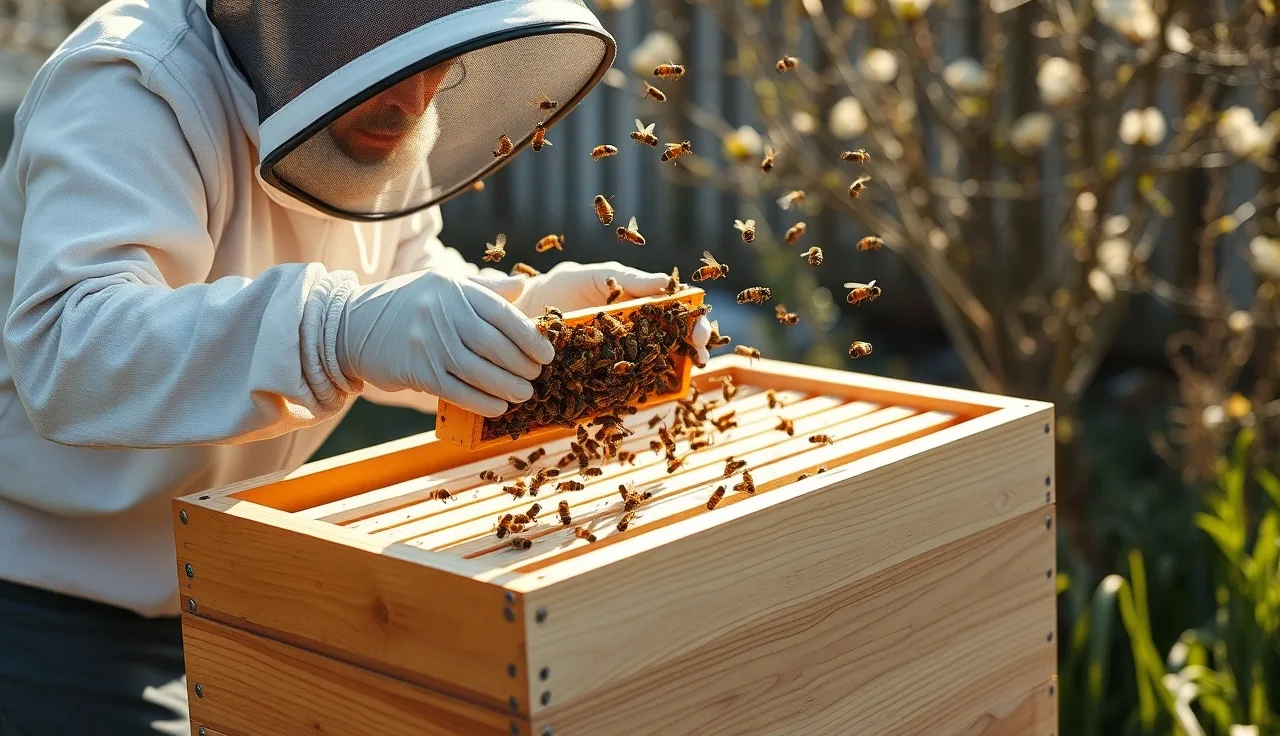
A shook swarm is a forced brood break. You shake every bee from every frame into a new hive body fitted with fresh foundation or drawn comb, then remove all the old brood frames. The colony loses its entire sealed brood population in one operation.
That matters because roughly 80 to 90 percent of the mites in a colony at any moment are hiding inside capped cells, breeding [7]. Sealed wax shields them from every miticide you can spray or vaporize. Pull the brood away and the surviving mites have nowhere to go but onto adult bees. Now they're phoretic. Now they're exposed.
The trick copies what a natural swarm does. A swarm leaves the parent hive with bees but almost no capped brood, which is why fresh swarms so often start with low mite counts. The shook swarm just puts that reset on your calendar instead of the bees'.
This is not a treatment by itself. Treat it as the setup, a way to push nearly every mite into the open so a single oxalic acid vaporization or dribble can do real damage. The Honey Bee Health Coalition calls brood interruption plus oxalic acid one of the strongest integrated approaches a beekeeper has [1].
When is the best time of year to do a shook swarm?
Late spring is the window in most of North America. You want a colony populous enough to survive losing all its brood, a nectar flow coming in (or the willingness to feed heavily), and daytime highs holding above 55 degrees F so the cluster can keep new comb warm.
A strong May colony with six or more frames of bees is a good candidate. A weak March colony is not. Losing all brood is a hard shock, and a colony that starts with fewer than four or five frames of bees often can't rebuild fast enough to dodge starvation or a laying gap.
Early summer works too, with a catch. The colony spends three to four weeks rebuilding its brood nest before it forages at full strength, so a shook swarm in late June during a heavy flow probably costs you surplus honey from that hive.
Fall shook swarms don't make sense in most climates. The colony has to raise healthy winter bees on brand new comb, and the population hit from losing all brood is hard to walk back before cold sets in. If mites are bad in fall, use oxalic acid vaporization during a natural broodless stretch or run an extended Apivar treatment instead.
What equipment do you need before you start?
The list is short. You need a clean brood box, frames with fresh foundation or drawn comb, a bottom board, an entrance reducer, and a cover. You also need a spare nuc box or second hive body for the removed brood frames, so you have somewhere to set them while you work.
Have your follow-up treatment staged before you shake a single frame. Planning to vaporize oxalic acid? Get your vaporizer and your respirator and gloves out first. The EPA-registered label for Api-Bioxal, the only EPA-approved oxalic acid product for honey bee colonies in the US, spells out application intervals and notes that broodless conditions give the best efficacy [2].
A spray bottle of 1:1 sugar syrup helps. A light spritz before and after shaking calms the bees and nudges them to start drawing comb right away. A queen excluder is optional but handy if you want to confirm the queen landed in the new box.
For a full rundown of the gear you'll want on hand for varroa season, review your beekeeping supplies before the day arrives.
One thing you don't need: money. Beyond the foundation, this technique costs almost nothing in materials. That's a big part of why sideliners running hives on a tight chemical budget keep coming back to it.
How do you perform a shook swarm step by step?
Set the new clean box next to the original hive, ideally on the original stand. Foragers home in on the familiar spot, which is exactly what you want.
Light the smoker, open the original hive, and work through every frame until you find the queen. Set her frame aside with care. Do not shake her by accident.
Now shake or brush every bee off every other brood frame into the new box. Shake firm and low over the box, never over the ground. Most bees drop in; stragglers find their way. Move each emptied brood frame into your spare box as you clear it. Never leave an emptied brood frame sitting inside the new hive.
With the bees shaken in, lower the queen's frame so it hangs over the new box and let her and her cluster walk down. Some beekeepers pick the queen off by hand and set her on the top bars to be certain she's inside. Either way works.
Close up, reduce the entrance, and feed 1:1 syrup immediately. Bees that just lost every ounce of stored food need the help. Skip the feed and colonies often abscond or stall on comb building.
The old brood frames are your next decision. More on that below.
Wait five to seven days, then apply your oxalic acid treatment. By day five, essentially every mite that was in an open cell during the shook swarm has climbed onto an adult bee [3]. Mites in cells that were freshly capped at the moment you shook may still be sealed for a few more days, but the lag is short. Some beekeepers treat on day four and again on day twelve to catch the stragglers. The Api-Bioxal label allows up to three vaporizations at five-day intervals [2].
What should you do with the removed brood frames?
You have three real options, and each trades off differently.
Destroy them. Bag the frames in heavy plastic, seal tight, and freeze for 48 hours, or let them cook in a sealed black bag in full sun. This kills every mite breeding in those cells along with the brood. Cleanest mite outcome, but it wastes bees.
Or build a nuc. Set the brood frames into a separate box and add a spare queen or a frame of young larvae so the queenless bees can raise an emergency queen. This saves the brood, but a fresh generation of mites emerges from those old cells right along with the bees. Treat that nuc separately once its brood cycles through. Don't skip that. A mite-loaded nuc parked in your yard reinfests every hive nearby.
Or run the frames as a mite trap for another week, then freeze them before the mites finish breeding. The timing is fussy: roughly 9 to 10 days after capping for worker brood, when reproduction is largely done but no new adults have emerged yet. Some commercial operations use this. It's easy to botch, and the freeze has to be complete (core temperature below 0 degrees F) to kill mites reliably.
For most hobbyists running a handful of hives, destroy the frames or build a nuc and commit to treating it. Those two are the practical picks.
How effective is a shook swarm at actually reducing varroa mite loads?
Effectiveness is high when you do it right and follow with treatment. A shook swarm on its own kills nothing. It leaves phoretic mites riding the bees, and those mites climb back into cells as soon as new comb is drawn and brood is capped. Mite levels can rebound inside three to four weeks if you never treat.
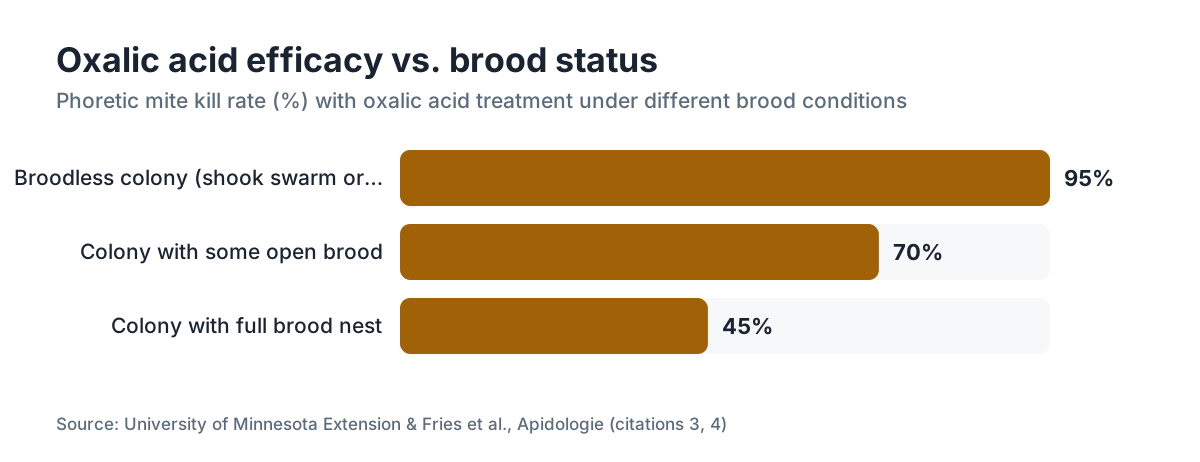
Pair it with oxalic acid vaporization during the broodless window and the numbers climb. Studies and field reports land on 80 to 95 percent reductions in phoretic mite counts [3][4]. University of Minnesota Extension reports oxalic acid on broodless colonies hits close to 95 percent efficacy against phoretic mites, far above the 40 to 70 percent you see when brood is present [4].
The Honey Bee Health Coalition's Varroa management guide states that "a brood break followed by oxalic acid treatment is one of the most effective varroa management strategies available to beekeepers" [1]. That comes straight from one of the most cited consensus documents in North American beekeeping.
Timing is the whole game. Wait two weeks after the shook swarm without treating and the queen has started laying in the new comb, with mites slipping back into cells. The broodless window runs roughly five to ten days. Use it.
For the biology behind the numbers, understanding varroa mite reproduction explains why the brood break window works at all.
What are the risks and downsides of a shook swarm?
Colony strength takes a real hit. Losing all brood means losing every bee that would have emerged over the next ten to twenty-one days. A colony shaken in late May dips in population by mid-June before new brood matures. Honey slows during that gap, and the weaker colony can invite robbing.
Absconding is a genuine risk, worst when you skip the feed and the weather turns. Bees with no brood to guard and no stores to protect have less reason to stay. An entrance reducer plus prompt 1:1 syrup cuts the odds hard, but not to zero.
The queen is exposed too. Shake or injure her during the teardown and you've dropped the colony into a hole. Find her before you shake anything.
Colonies with Africanized genetics deserve extra caution. Their defensive response during a full teardown runs hotter, so time it well and gear up. If you keep bees where those populations have spread, africanized honey bees carry their own management notes worth reading before any invasive procedure.
A shook swarm also does nothing about reinfestation from your neighbors. Mite-bombing feral colonies or untreated hives within a few miles send drifting foragers back to your clean box within weeks. That's a landscape problem the technique can't fix on its own [10].
Does a shook swarm work as a standalone varroa treatment without chemicals?
Not reliably. The shook swarm kills zero mites directly. It relocates them from sealed cells onto adult bees, where they sit exposed for a short stretch.
Untreated phoretic mites just wait for the queen to lay again, then dive back into cells. A fresh shook swarm colony usually has capped brood within ten days, so that window slams shut fast. Skip the follow-up treatment and mite counts can climb back toward pre-shook-swarm levels within four to six weeks.
There's real interest in stacking repeated brood breaks as a purely mechanical program for people who won't use chemicals. Some research and practitioner accounts suggest four to six brood breaks a season can hold mites low enough to avoid losses in low-pressure areas. The labor is heavy, the timing is exacting, and most hobbyists in high-pressure zones lose colonies before they dial the system in. Nobody has strong long-term trial data on purely mechanical brood-break programs across a range of climates; the closest evidence comes from small trials and practitioner reports, not replicated field studies.
If you're set on treatment-free, a shook swarm plus hygienic queen genetics plus frequent mite counts holds up better than a shook swarm alone.
How does a shook swarm compare to other brood-break methods for varroa?
There's more than one way to engineer a brood break, and the shook swarm is among the most aggressive. Here's how the main approaches stack up:
| Method | Brood break length | Mite exposure window | Disturbance level | Queen risk |
|---|---|---|---|---|
| Shook swarm | 10 to 14 days | Maximum (all brood gone) | Very high | Medium |
| Cage the queen | 21 to 24 days | Maximum (after last capping) | Low | Low |
| Split (walk-away) | 21 to 28 days in queenless half | High in queenless half | Medium | Low |
| Natural swarm | Variable | High in swarm itself | None (no beekeeper action) | Low |
| Apivar/amitraz strip | Not a brood break | Penetrates some capped brood | Low | None |
Caging the queen is gentler and gives you a longer break, which means a longer treatment window. The catch is handling the queen and keeping her caged three weeks without a mishap. For beekeepers who find and cage queens comfortably, this is often the lower-risk road to the same result.
The shook swarm is faster and hands you a clean restart on new comb, with its own upside: cleaner wax, less pathogen load carried in old comb. The colony stress runs higher, though.
Some integrated programs shake a colony in spring to reset it, then cage the queen in late summer to open a second oxalic acid window before winter bees build. That two-pass plan shows up in some commercial operations and among dedicated sideliners.
Track mite loads through the season and you can pick out which colonies earn the aggressive shook swarm and which just need a queen cage.
What does a shook swarm do to colony behavior and honey production?
Expect three to five weeks of reduced foraging. The colony is rebuilding its brood nest from nothing, and until new brood is capped and the first fresh bees emerge, the adult population falls daily with no replacements.
Most colonies bounce back enough to work a late-summer flow if you shook them in May. Shake in late June or early July across most of the northern US and you'll likely give up the honey crop from that hive for the season. That's a real cost to weigh.
Behavior in the weeks after tilts toward hard comb building. Bees with no brood to tend throw their energy at drawing wax, especially with syrup coming in. Colonies on fresh foundation often draw a full ten-frame deep in ten to fourteen days under good conditions with feed.
The queen usually resumes laying within one to three days, sometimes inside 24 hours if conditions are right. Watch for a solid pattern that first week. Scattered laying or no eggs by day four means you check whether she got hurt during the shake.
What follow-up monitoring should you do after a shook swarm?
Run an alcohol wash or sugar roll on day 14 and again at day 30 after your oxalic acid treatment. That's the only honest way to know if the whole thing worked.
Day 14 confirms the shook swarm plus oxalic acid drove mites low. Below 1 percent on an alcohol wash, meaning fewer than 1 mite per 100 bees, is the treatment-trigger threshold most extension programs cite [4][6]. Counts still above 2 percent mean something slipped: treatment timing was off, the oxalic acid application missed, or reinfestation from neighbors is already underway.
Day 30 checks for reinfestation. A colony that tests clean at day 14 but sits above the 1 to 2 percent line at day 30 has a reinfestation problem, not a treatment failure. Answer it with tighter monitoring and weigh a second brood-break treatment before the late-summer build.
Alcohol wash is the accurate method. Sticky board counts can supplement, but they shouldn't drive treatment decisions on their own. Penn State Extension recommends the alcohol wash over the sugar roll for accuracy in those calls [6]. The Honey Bee Health Coalition's Varroa management guide lays out a detailed protocol for both [1].
Frequently asked questions
Will the bees abscond after a shook swarm?
It happens, but it's preventable. The main triggers are no brood to anchor the bees, cold weather, and empty stores. Reduce the entrance right after the operation, feed 1:1 syrup the same day, and keep the new hive on the original stand so foragers return to the familiar spot. In warm, nectar-rich conditions the risk is low. In a cold snap or dearth, it's a real concern.
Can I do a shook swarm on a weak colony?
No. A shook swarm strips away every incoming bee that would have emerged over the next two to three weeks. A colony already down to fewer than four frames of bees will likely fail before those gaps fill. Combine a weak colony with a strong one and treat the strong hive by another method. Save the shook swarm for colonies with at least five to six good frames of adult bees.
Do I need to treat immediately after a shook swarm or can I wait?
Treat within five to seven days. Mites that were in open cells move onto adult bees fast, but mites in cells that were freshly capped may stay sealed a few more days. By day five to seven the large majority are phoretic. Wait longer and the queen starts laying into new comb while mites slip back into cells, which closes the window.
Which oxalic acid method works best after a shook swarm, vaporization or dribble?
Vaporization (sublimation) is preferred. It spreads oxalic acid vapor through the hive regardless of where the cluster sits and reaches phoretic mites across all frames. The dribble method works but needs the bees tight in a cluster and misses mites on frames away from the treated zone. The Api-Bioxal label permits both; follow the label rate for the hive size you're treating [2].
How many oxalic acid treatments do I need after a shook swarm?
One treatment is often enough if you time it well and the colony is truly broodless. Most beekeepers apply one vaporization on day five and a second on day ten as insurance, since a few mites may still sit in late-stage capped cells on day five. The Api-Bioxal label allows up to three vaporizations at five-day intervals. Two treatments five days apart is a common, defensible post-shook-swarm protocol [2].
What happens to the varroa mites on the removed brood frames?
Mites inside capped cells on those frames finish their breeding cycle and emerge with the new bees unless you destroy the frames. Freeze the frames at 0 degrees F or below for 48 hours and you kill both brood and mites. Build a nuc with them instead and the mites emerge with the new bees, so you must treat that nuc separately within three to four weeks or it turns into a reinfestation source for your whole apiary.
Can a shook swarm help control chalkbrood or other diseases too?
Yes, as a secondary benefit. Moving bees onto clean fresh foundation removes the pathogen load carried in old drawn comb, which can hold Ascosphaera apis (chalkbrood) spores, American foulbrood spores, and pesticide residues. Beekeepers sometimes use it deliberately on colonies with stubborn chalkbrood. It doesn't guarantee a clean colony, but dropping old comb is a recognized hygiene move. Burn old comb from disease-suspect colonies rather than storing it.
How do I find the queen reliably before starting a shook swarm?
Work slowly through each frame on a bright day. The queen usually rides frames with open brood and eggs and avoids the honey frames at the edges. Mark her with a paint pen (colored by year convention) if you haven't, which makes future searches quick. Can't find her after two careful passes? Wait a day and try again. Starting a shook swarm without locating her risks shaking her onto the ground.
Does a shook swarm work in a Langstroth, Warre, or top bar hive?
The technique grew up around Langstroth equipment and runs easiest there because frames are interchangeable and pull out clean. You can adapt it for top bar hives by cutting combs free and moving bees to a new bar hive, but it's much harder since natural comb can't just transfer over. Warre hives pose similar trouble. The principle works in any configuration; the mechanics get harder as frame access drops.
Is a shook swarm legal everywhere, and are there any restrictions?
The technique itself has no legal restrictions in the US or UK. But if oxalic acid is your follow-up, you must use an EPA-registered product (Api-Bioxal in the US) and follow the label exactly, since the label is the law under FIFRA. Some states require a veterinary feed directive or prescription for certain treatments; oxalic acid doesn't currently need one in most states, though rules change, so check your state department of agriculture [2][5].
How often can I do a shook swarm on the same colony?
Once per season is the practical maximum for most colonies, and plenty of beekeepers only do it every other year. Each shook swarm is a big shock to colony development. Two in one season on the same colony, say spring and late summer, is possible but stressful enough that it likely cuts winter population and survival odds. Some commercial operations run this two-pass approach well, but they watch closely and feed hard.
What mite level should trigger a shook swarm rather than a standard treatment?
A shook swarm makes the most sense when mites run very high, above 3 to 4 percent in summer, and you want to reset the colony before chemicals alone can catch up, or when you're trying to hold chemical use down. Below that, a standard Apivar, oxalic acid, or formic acid treatment per label is usually enough. Let your alcohol wash count decide; don't shake a colony off a visual inspection alone [1][4].
Can I use a shook swarm to replace drawn comb that is too old?
Yes, and this dual use is legitimate. Comb older than five to seven years builds up pesticide residues and pathogen spores. A shook swarm forces the colony onto fresh foundation, swapping out old comb while opening a varroa treatment window at the same time. If you already plan to replace old brood comb, timing that job with a spring shook swarm for varroa management makes real sense.
Sources
- Honey Bee Health Coalition, Varroa Management Guide (current edition): Brood interruption combined with oxalic acid is one of the most effective integrated varroa management approaches; the guide states that 'a brood break followed by oxalic acid treatment is one of the most effective varroa management strategies available to beekeepers.'
- EPA, Api-Bioxal (oxalic acid) Federal Registration Label: Api-Bioxal is the only EPA-registered oxalic acid product for US honey bee colonies; label permits up to three vaporizations at five-day intervals and specifies broodless conditions for maximum efficacy.
- Fries, I. et al., Apidologie, 'Oxalic acid treatment in late autumn against Varroa destructor in honey bee colonies': Oxalic acid applied during broodless periods achieves efficacy of up to 95% against phoretic mites; mites in capped cells are not affected.
- University of Minnesota Extension, Honey Bee Research and Extension Lab, Varroa management resources: Oxalic acid applied to broodless colonies achieves close to 95% efficacy against phoretic mites, compared to 40 to 70% when brood is present; 1% on alcohol wash cited as treatment threshold.
- USDA Agricultural Research Service, Bee Research Laboratory: Varroa management recommendations including mite count thresholds and brood-break protocols; oxalic acid exempted from VFD requirements under current federal guidance.
- Penn State Extension, Varroa Mite Management in Honey Bee Colonies: Brood break techniques including shook swarm described as effective mechanical varroa management; alcohol wash recommended over sugar roll for accuracy in treatment decisions.
- NC State Extension, Apiculture Program, Varroa Mite Control: Approximately 80 to 90% of varroa mites in a colony with brood are reproducing inside capped cells at any given time, making them inaccessible to most topical treatments.
- Oregon State University Extension, Master Beekeeper and apiculture resources: Shook swarm mechanics and timing relative to brood cycles; colonies typically have capped brood within ten days after shook swarm, closing the oxalic acid treatment window.
- UK National Bee Unit (Animal and Plant Health Agency), Varroa management: a practical guide: Shook swarm described as established UK beekeeping practice for varroa control with guidance on timing, process, and follow-up treatment protocols.
- Delaplane, K.S., University of Georgia Extension, Varroa destructor: Biology and Control: Brood interruption methods including shook swarm discussed in context of integrated pest management; mite reinfestation from neighboring colonies identified as key limitation of mechanical methods.
Last updated 2026-07-10