Extended release oxalic acid patty method: how it works and when to use it
TL;DR
- Extended release oxalic acid patties mix oxalic acid dihydrate with glycerin and an absorbent carrier, then sit inside the hive for 3 to 6 weeks.
- The glycerin slowly wicks oxalic acid onto bees moving across the patty, killing phoretic mites without touching capped brood.
- Efficacy in brood-right colonies runs 60 to 90 percent, depending on timing, hive population, and how well bees contact the patty.
What is the extended release oxalic acid patty method?
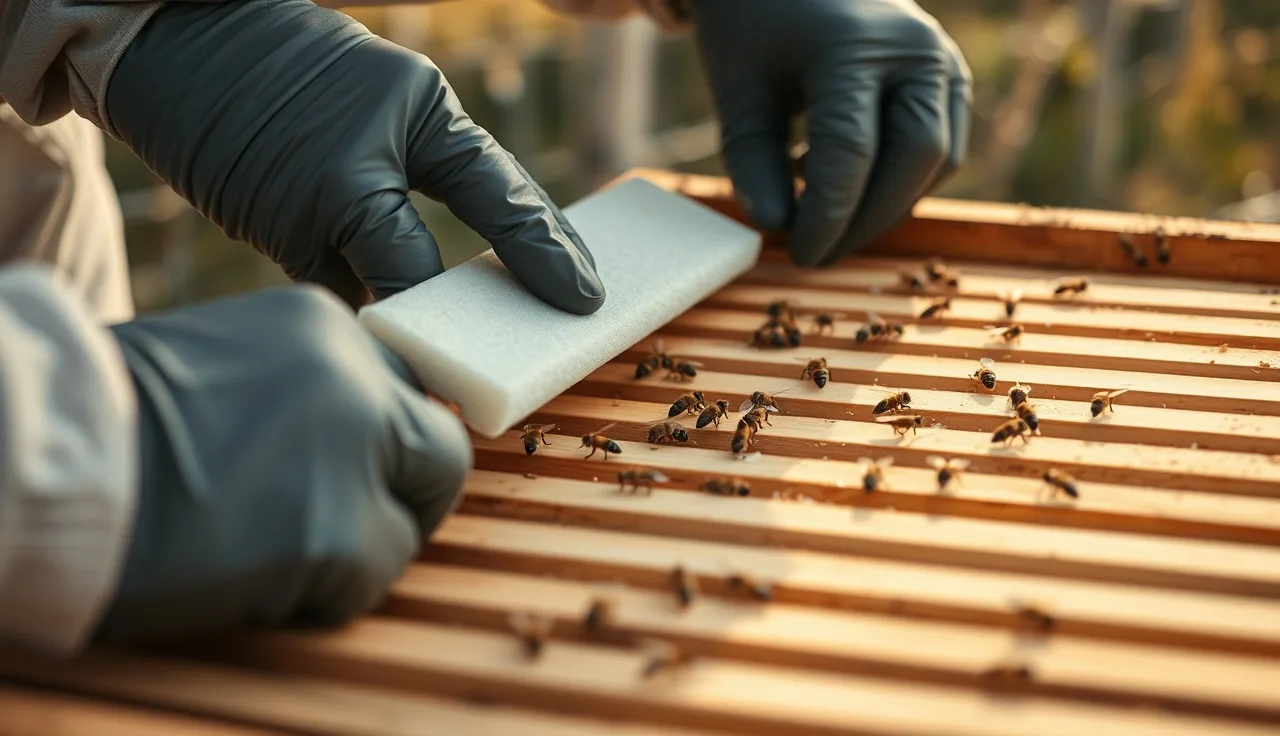
The extended release oxalic acid (OA) patty method puts oxalic acid dihydrate into a glycerin-soaked carrier, usually cellulose sponge strips or shop towels, and lays that material directly on the brood frames. A vaporizer or a dribble delivers one big dose in seconds. A patty does the opposite. It bleeds a low, steady dose over three to six weeks as bees walk across it and carry glycerin-acid residue away on their bodies and legs.
The whole idea rests on exposure time. Oxalic acid only kills phoretic varroa, the mites riding on adult bees outside capped cells. In a colony with brood, each mite is only exposed for a short window before it dives back into a cell. A single vaporization catches whatever is phoretic that one day. A patty sitting in the hive for weeks catches mites across several brood cycles, which is why some beekeepers get reasonable efficacy from one patty instead of three or four repeat vapor treatments spaced two weeks apart [1].
People call it the "shop towel method" or the "OA glycerin patty" method. Randy Oliver at Scientific Beekeeping did the most publicly documented work on it and posted his formulas and trial data, though that is one practitioner's field research, not a peer-reviewed clinical trial [2]. The Honey Bee Health Coalition lists extended-release formulations in its Varroa management guide as an emerging option with real but variable efficacy [3].
Here is the honest caveat. This method is not as tightly characterized as Apivar strips or OA vapor. The data is real but thinner, and results swing more between colonies than most beekeepers expect the first time they try it.
Is the oxalic acid patty method legal and EPA-registered?
Most people skip this question and regret it later. In the United States, oxalic acid for varroa control is registered with the EPA under EPA Reg. No. 83922-1. The registered label covers three application methods: dribble, vaporization, and an extended release method using specific commercial products [4].
The word that matters is "label." The EPA label as of recent amendments includes an extended release formulation, but it specifies EPA-registered products, not homemade batches. Mixing raw oxalic acid dihydrate at home with glycerin and cellulose sponge may fall outside the label, depending on how strictly your state reads "use inconsistent with labeling" under FIFRA [5].
Commercial products built for the extended release method carry their own label language that does authorize the patty format with specific instructions. Read the label of the exact product you buy. Label language has changed across registration amendments, and the version sold today may not match what somebody posted on a forum in 2021.
For hobbyists in most states, the real chance of an enforcement action over a home-mixed OA glycerin patty is very low. But if you sell honey commercially, get inspected, or keep bees in a state with active enforcement, use a registered product with label instructions you can hand an inspector. Check the EPA pesticides section and your state department of agriculture for current guidance [4][5].
Want to line up your options and see where a colony sits against the mite threshold? VarroaVault's free varroa management tools help you organize that data instead of guessing.
How do you make an oxalic acid glycerin patty?
The formula Randy Oliver documented most thoroughly, and the one hobbyist groups keep citing, is roughly 1 part oxalic acid dihydrate by weight dissolved into 1 part glycerin by weight (a 1:1 ratio), sometimes cut with a little water to help it dissolve, then soaked into an absorbent carrier [2]. Some beekeepers run a 1:2 ratio (OA to glycerin) for a gentler, slower release. That is kinder to the colony but can give up efficacy against a heavy infestation.
The carrier matters more than people think. Cellulose sponge strips cut to about the width of a Langstroth frame top bar work well. Blue shop towels (not paper towels) are popular because they are cheap, they soak up plenty, and bees chew them apart, which some argue improves contact. Cardboard has been tried too, but it breaks down faster and less predictably.
The mixing is simple. Heat the glycerin gently, not to a boil, and stir in the oxalic acid dihydrate until it fully dissolves. The mix goes to a slightly yellow syrup. Let it cool before you soak the strips. One standard batch of 100g OA and 100g glycerin makes roughly 10 to 15 patties, depending on how saturated you get the carriers [2].
A few notes from people who have done this many times:
- Wear nitrile gloves and eye protection. Oxalic acid is a strong organic acid and the glycerin solution can splash.
- Fully soaked strips are heavy and drip. Many beekeepers carry them in a zip-lock bag.
- Store prepared strips in a sealed container away from heat. No refrigeration needed, but sustained heat degrades the acid.
- Label the containers. Oxalic acid solution looks exactly like water.
When you place the patty, lay it right on the frame top bars over the cluster, never on the bottom board. Bees have to walk across it. If the colony ignores it or walls it off with burr comb without touching it, you are treating nothing.
What is the correct oxalic acid concentration for patties?
The most cited working concentration is 3.5 to 4.2 percent oxalic acid by weight in the final glycerin-carrier solution, the range where Oliver's field trials showed efficacy without obvious colony damage [2]. A 1:1 mix of OA dihydrate to glycerin runs around 50 percent OA by weight in the liquid, but once that liquid soaks into a carrier sitting in a humid hive where bee contact dilutes exposure further, the effective contact concentration drops far below that.
Registered products spell out the concentration in the ready-to-use product. Api-Bioxal, the most widely used registered product in the US, contains 35g of oxalic acid dihydrate per 100g of product [4]. Follow that label instead of guessing.
Over-concentration is a real risk. Too much OA damages bee cuticle, stresses the queen, and in bad cases kills brood or drops the population. If you are experimenting with home formulas, err low. The extended release format spreads acid over weeks. You do not need a heavy hit.
Under-concentration just means nothing happens. Mite counts stay flat and you burned weeks while the infestation kept building. An alcohol wash or sugar roll 7 to 10 days after you pull the patty gives you the cleanest read on whether it did anything [3].
How effective are OA patties compared to other varroa treatments?
Efficacy comparisons are where cherry-picking a single study will burn you. Here is what the data actually shows.
In broodless colonies, oxalic acid dribble and vapor both hit hard, reaching 90 to 97 percent mite kill in studies cited by the Honey Bee Health Coalition [3]. Patties do about as well in broodless colonies because every mite is phoretic and exposed. That is the easy case.
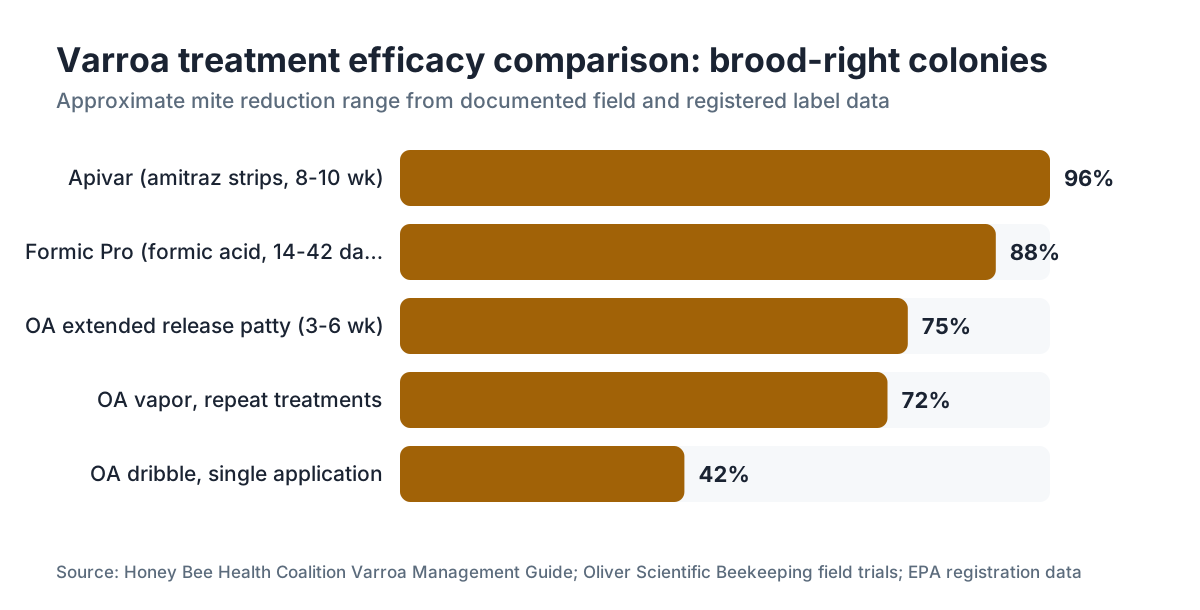
Brood-right colonies flip the story. Amitraz strips (Apivar) reach 93 to 99 percent efficacy over an 8 to 10 week treatment window in most controlled trials, mostly because the active ingredient moves through wax and contacts mites inside cells [3]. OA patties in brood-right colonies show 60 to 90 percent efficacy in field reports, with wide spread. Oliver's field data showed 60 to 85 percent reduction, depending on season and colony strength [2]. A 2020 study in the Journal of Economic Entomology found oxalic acid extended release cut mite populations significantly but less completely than some synthetic miticides under high-brood conditions [6].
What that means in practice: patties work well enough for maintenance and suppression in moderate-infestation colonies. But if your alcohol wash reads above 2 percent heading into late summer, reach for a more reliable knockdown before the winter bees get raised.
| Treatment | Application | Broodless efficacy | Brood-right efficacy | Treatment window |
|---|---|---|---|---|
| OA dribble | One-time | 90-97% | 30-50% | Minutes |
| OA vapor | One-time or repeat | 90-95% | 60-80% (repeat) | Minutes per application |
| OA extended release patty | 3-6 weeks | ~90%+ | 60-90% | Weeks |
| Apivar (amitraz) | 6-8 weeks | 93-99% | 93-99% | Weeks |
| Formic Pro (formic acid) | 14-42 days | 85-95% | 70-95% | Weeks |
Sources: Honey Bee Health Coalition Varroa Management Guide [3], Oliver Scientific Beekeeping [2], EPA registration data [4].
The patty sits in a middle ground. It costs less than Apivar, skips the respirator drama of OA vapor, and stays active far longer than a single dribble. The trade is that it is harder to confirm you did it right, and the results are less predictable.
When should you use the patty method, and when should you not?
The patty makes the most sense in a handful of specific spots.
Spring buildup, before honey supers go on. Oxalic acid is approved for use any time supers are off in the dribble and vapor formats, and the extended release label carries similar super restrictions depending on the product. Check your label. Used in early spring when brood is limited and the population is climbing, even partial extended-release efficacy can knock down a colony that overwintered at borderline levels before it explodes by July [3].
Fall, after harvest and before the winter cluster forms. This is probably the best window there is. Brood is shrinking, so a bigger share of mites are phoretic, and the patty has weeks to work as the colony drifts toward broodless. Time it so the patty is in place through the last brood cycle and you can approach broodless-colony efficacy by the time the winter cluster sets [2].
As a mid-season suppression tool in low-to-moderate infestations. If a July wash reads 0.5 to 1.5 percent and you want to hold the line instead of hitting the hive with a full synthetic treatment, a patty plus monitoring every two weeks is a fair play.
When NOT to use it:
- When infestation is already high (above 2 percent in summer, above 1 percent heading into fall) and you need fast, reliable knockdown. The patty is slow. Use Apivar or formic acid.
- When honey supers are on and your registered product label prohibits it. Read the label.
- As a substitute for monitoring. Some beekeepers drop a patty in and don't test again for two months. That is how colonies die. Test before, test after.
- When the colony is too weak to cover the patty with bees. A small cluster that mostly avoids the material treats nothing.
How do you place OA patties in the hive correctly?
Placement matters more than beginners expect. The patty goes where bees actually walk, not where it fits most conveniently.
In a Langstroth hive, lay the patty or strips lengthwise across the top bars of the brood frames, right where bees move up from below. Two-box brood nest? Put patties in both boxes. Some beekeepers cut one sponge strip to the width of the brood box and lay it across 6 to 8 frames at once. Others use two shorter strips. Either works, as long as the cluster keeps moving across the material.
Top bar and Warre hives use the same concept with different geometry. Drape or lay the strip across bars near the brood area. Bees in these hives vary more in how they treat foreign material, so watch the first visit and see if they engage.
Bees chew and rearrange the carrier. That is usually fine and may even raise contact. If they haul the whole thing out of the hive within a few days, that is a sign the colony finds it strongly aversive, which can mean the concentration is too high or the colony is too small.
Leave the patty in place three to six weeks. Under three weeks and you probably miss a full brood cycle. Over six weeks and you get diminishing returns while pushing more acid into the hive environment than you need. Some beekeepers run two patties back to back, pulling the first at three weeks and dropping a fresh one for another three. Oliver's field data suggested that sequence improved efficacy in brood-right colonies [2].
After you pull the patty, do an alcohol wash 7 to 10 days later. If the mite load barely moved, you need a different treatment for this season.
Does the oxalic acid patty method harm bees or queens?
At sane concentrations and reasonable duration, the evidence says adult bees tolerate the patty well. Oliver's trials logged no significant population decline at 1:1 OA-to-glycerin ratios [2]. At higher concentrations or very long durations, bees showed stress signs including reduced foraging and, in some cases, higher winter mortality.
The queen question comes up constantly, and the honest answer is that the data is incomplete. High-concentration OA is known to cause queen problems, especially with dribble applied wrong, meaning direct contact with the queen. The extended release format delivers lower peak doses, which should be safer for her. But no large controlled trial has tracked queen loss across a full season in patty-treated versus untreated colonies. Oliver reported no unusual queen loss in his field trials [2]. Reassuring, not definitive.
Brood damage at proper concentrations looks minimal. Oxalic acid does not move through wax caps the way formic acid can, so sealed brood stays essentially untouched. Open brood fed with treated wax, or brood near the patty, may pick up some exposure, but at 1:1 ratios that has not shown up as obvious brood damage in documented field use.
One real concern is residue in honey. Bees do not store treated glycerin solution as honey the way they would sugar syrup. Oxalic acid measured in honey from treated hives in commercial studies came in within the background levels already present in honey naturally, and honey carries 8 to 40 mg/kg oxalic acid on its own [7]. That is part of why the treatment holds FDA and EPA approval.
Can you use OA patties when honey supers are on?
Short answer: check your specific product label, because it varies.
For OA dribble and vapor using Api-Bioxal, the label says the treatment may be used any time of year, including with honey supers present, because residue studies showed oxalic acid does not build up in honey above background levels [4]. The extended release label language has historically been stricter on this point for some products, and it has kept shifting through successive amendments.
As of the most recent Api-Bioxal label amendments (check the EPA pesticides section for the current label date), extended release with supers on was under review for inclusion. Do not assume what was true two years ago still holds. Pull the current label before each treatment season [4].
If your label says no supers, comply. Take the supers off, wait the required interval, then put them back. This is more than red tape. It is the documentation that protects you if a buyer or regulator ever tests your honey.
Most beekeepers dodge the whole question with timing. Put patties in early spring before supers go on, or after the last super comes off in late summer. That sidesteps the ambiguity and matches the highest-value treatment windows anyway, so it is probably the right protocol for most hobbyists.
What do you need to buy to get started with OA patties?
Going the registered route, you need Api-Bioxal or an equivalent registered extended release product, plus the carrier the label specifies (some products come ready-to-use, others need you to soak a carrier). You can source these through beekeeping supply companies. Api-Bioxal pricing in 2024 ran roughly $25 to $35 for a 35-gram packet good for multiple treatments, and $65 to $90 for larger quantities [8].
Making your own (with the legal context above in mind), you need:
- Oxalic acid dihydrate, food grade or technical grade. Around $10 to $25 per pound from beekeeping suppliers or chemical supply companies. A pound lasts a long time.
- Vegetable glycerin, 99 percent pure. From pharmacy suppliers and online, roughly $10 to $20 per liter.
- Absorbent carrier: cellulose sponge or blue shop towels. A pack of shop towels runs $5 to $10 and treats dozens of colonies.
- Mixing containers, a scale accurate to 1 gram, and PPE (nitrile gloves, eye protection, a dust mask for handling dry OA powder).
A DIY batch treating 10 colonies runs $30 to $60 in materials, far under Apivar at roughly $20 to $30 per colony per treatment [9]. That cost gap is real, and it is why sideliners running 20 to 100 colonies keep circling back to this method.
One thing worth buying no matter what: a reliable mite test. An alcohol wash kit costs $5 to $15 in materials, under $25 as a finished kit. Without counts before and after, you are flying blind. You can grab basic supplies from beekeeping supply companies, or check whether free shipping honey bee supply companies stock OA materials if you buy in bulk.
How do OA patties fit into a full-year varroa management protocol?
Varroa management is not one treatment. It is a year-round loop of monitoring and response. The patty fits best as one of two or three tools in a layered plan, never as a solo fix.
A workable four-season framework:
Early spring (February to March): Wash for mites as soon as the cluster breaks and you can open the hive. Above 1 percent, consider a patty now before brood ramps up. Below 1 percent, watch and re-test in four weeks.
Late spring through honey flow (April to June): Supers go on. Your options narrow depending on the label. Monitor monthly. The patty may or may not be label-compliant with supers, so check. If mites are climbing, you may have to pull supers early and treat.
Post-harvest through late summer (July to September): The window that decides the year. Mites that built up over the flow are now raising winter bees. High loads now mean colony failure in December. Wash reads 2 percent or more, use Apivar or Formic Pro for reliable knockdown. Between 1 and 2 percent, a patty with close monitoring is defensible. Below 1 percent, patties or keep watching [3].
Fall and pre-winter (October to November): As brood declines, OA efficacy climbs. A patty placed while brood is winding down can approach broodless efficacy by the time the winter cluster sets. Some beekeepers follow with a single OA vapor or dribble once they confirm the colony is broodless.
The Honey Bee Health Coalition Varroa management guide is the best free reference for building a plan like this. It lays out decision thresholds, treatment timing, and resistance management in one document [3]. VarroaVault's free treatment planning tools help you track wash results and treatment dates across hives without hand-building a spreadsheet.
For the biology behind why timing matters, the varroa mite reference article covers what the mite is doing in the hive during each of these windows.
What are the known limitations and failure modes of the patty method?
Every treatment fails sometimes. Knowing why helps you catch it early.
The biggest failure mode is bees not contacting the patty. Small colony, patty placed away from the cluster, or bees simply avoiding the carrier, and nothing happens. Three weeks later you find the patty intact or barely chewed and your mite count unchanged. Fix it by checking placement during a hive visit at week one.
The second failure mode is concentration drift. Homemade batches wander depending on how carefully you weigh ingredients. A batch that runs 30 percent weak won't touch a real infestation. Use a gram scale, not volume.
The third failure mode is timing that misses the mite biology. Drop a patty in during peak spring brood rearing, when most mites are tucked inside cells, and the patty only meets a fraction of the population. Your count might fall 30 percent when you needed 80. This is exactly why the post-harvest and late-fall windows are so much stronger [2][3].
Chemical resistance to oxalic acid is not currently documented in varroa the way amitraz or pyrethroid resistance is. Oxalic acid works mechanically on the mite's cuticle rather than through a specific receptor, which makes resistance unlikely but not impossible. Nobody has documented OA-resistant varroa populations as of this writing. That does not make monitoring optional.
Last one: heat degrades stored patties. Make a big batch, leave it in a hot truck or barn, and the acid concentration drops while the glycerin separates. Store prepared patties cool, sealed, and use them within a few weeks of mixing.
Frequently asked questions
How long do you leave an oxalic acid patty in a hive?
Three to six weeks is the standard range. Shorter than three weeks likely doesn't give the acid enough contact time across a full brood cycle. Longer than six weeks delivers diminishing returns and may accumulate more acid in the hive environment than necessary. Many beekeepers run two sequential 3-week treatments back to back in fall for improved efficacy in brood-right colonies.
Can I use OA patties when there is still brood in the hive?
Yes, and that's actually one of the method's advantages over a single dribble or vapor application. Oxalic acid only kills phoretic mites (mites on adult bees), so it won't directly kill mites in capped cells. But leaving the patty in place for weeks lets it catch mites across multiple brood cycles as they emerge and re-enter cells. Efficacy in brood-right colonies is lower than in broodless ones, typically 60 to 90 percent versus 90 percent or more.
What ratio of oxalic acid to glycerin should I use for patties?
The most documented ratio is 1:1 by weight (equal parts oxalic acid dihydrate and glycerin). Randy Oliver's field trials at Scientific Beekeeping used this ratio and found acceptable efficacy without significant colony damage. A 1:2 ratio (OA to glycerin) is gentler and may suit weaker colonies or spring application, but may reduce knockdown in heavy infestations. Always use a gram-accurate scale rather than volumetric measures.
Are OA glycerin patties safe for the queen?
At 1:1 concentrations and normal treatment duration, documented field experience suggests queens are generally not harmed. The extended release format delivers lower peak acid concentrations than direct dribble contact. However, no large controlled trial has specifically tracked queen loss rates in patty-treated colonies over a full season. If you're seeing queen issues that line up with patty treatment, reduce concentration or duration as a first step.
Can I use OA patties in a top bar hive or Warre hive?
Yes. Lay the carrier strip across bars near the brood area the same way you would in a Langstroth. The key is that bees need to walk across the material regularly. Top bar colonies can be more variable in how they interact with foreign materials, so check contact at your first inspection a few days after placement. If the colony is ignoring or aggressively removing the patty, reposition it closer to the cluster.
Will oxalic acid from patties contaminate my honey?
Oxalic acid is naturally present in honey at 8 to 40 mg/kg, and studies supporting the EPA registration of oxalic acid treatments found that treated colonies do not produce honey with OA levels meaningfully above this natural background. That is part of why the EPA approved the treatment. Even so, most product labels require removing honey supers before treatment or restrict extended release use with supers on, so follow your specific product label.
How do I know if my OA patty treatment worked?
Do an alcohol wash mite count 7 to 10 days after removing the patty. Compare it to your pre-treatment count. A successful treatment should drop infestation by at least 50 to 80 percent in a brood-right colony and by 90 percent or more in a broodless colony. If your count barely moved, the patty may not have been contacted by enough bees, the concentration may have been too low, or most mites were locked in capped cells during treatment.
Do I need a license or prescription to use oxalic acid for varroa?
In the United States, oxalic acid for varroa is available over the counter without a veterinary prescription, unlike some other miticides. You must use a registered product (such as Api-Bioxal) and follow the label. FIFRA requires that any pesticide be used in accordance with its label. Some states may have additional registration or reporting requirements, so check with your state department of agriculture.
What's the difference between OA patties and Apivar strips?
Apivar uses amitraz, a synthetic miticide that moves through wax and kills mites inside capped cells as well as phoretic mites, giving it 93 to 99 percent efficacy in brood-right colonies. OA patties only affect phoretic mites, putting brood-right efficacy in the 60 to 90 percent range. Apivar is more reliable for high infestations but brings resistance concerns and a higher cost per treatment. OA patties cost less, have no documented resistance, and leave no synthetic residues.
Can I use the patty method as my only varroa treatment year-round?
Some beekeepers do, but it's higher risk than pairing patties with at least one confirmed-efficacy treatment per year. Rely on patties alone and let your mite load build to 2 percent or more during peak summer brood season, and you may not get reliable enough knockdown before winter bees are raised. Use monthly mite washes to catch any situation where the patty alone isn't holding the line, and keep a backup treatment ready.
How many patties or strips should I use per hive?
For a standard Langstroth hive with two brood boxes, most beekeepers use one or two sponge strips or shop towel sections per box, laid across the top bars of the brood frames. A single large-format strip covering 6 to 8 frame top bars works well for one brood box. The goal is broad coverage across the area the cluster moves through daily. For a nucleus colony or five-frame hive, one strip is usually enough.
Is there a risk of varroa developing resistance to oxalic acid?
As of current published research, no OA-resistant varroa populations have been documented. Oxalic acid is thought to kill mites mainly through direct contact toxicity affecting their cuticle, a non-receptor-based mechanism that is less prone to the genetic resistance pathways seen with amitraz or pyrethroids. This is one of the method's genuine long-term advantages, though continued monitoring for treatment failure is always good practice.
Where can I buy oxalic acid dihydrate for making patties?
Registered Api-Bioxal (oxalic acid dihydrate) is available from most beekeeping supply retailers in the US. Raw oxalic acid dihydrate for home formulations is sold by some beekeeping suppliers and chemical supply companies. Check beekeeping supply companies for current availability, or look for suppliers who offer free shipping honey bee supply companies if you're ordering larger quantities to cut per-colony costs.
Can OA patties be used in winter when the cluster is tight?
You can place a patty before the cluster tightens fully, but once bees are in a dense winter cluster and barely moving, they may not contact the patty enough for meaningful treatment. The better approach is to place patties in late fall when bees are still moving actively but brood is winding down. If you need to treat a genuinely broodless winter cluster, a single OA dribble or vapor treatment is more reliable and faster.
Sources
- Honey Bee Health Coalition, Varroa Management Guide (V-Mite): Extended release OA formulations provide prolonged mite exposure across brood cycles, catching phoretic mites over multiple weeks rather than a single application event.
- Oliver, Randy. Scientific Beekeeping, oxalic acid extended release field trials: 1:1 OA to glycerin ratio on cellulose carrier; 60-85% mite reduction in brood-right colonies documented in field trials; no significant queen loss or population decline at this concentration.
- Honey Bee Health Coalition, Varroa Management Guide, treatment efficacy tables: OA dribble and vapor achieve 90-97% efficacy in broodless colonies; Apivar achieves 93-99% in brood-right colonies; OA extended release listed as emerging option with variable efficacy.
- EPA, Api-Bioxal pesticide registration, EPA Reg. No. 83922-1: Api-Bioxal label covers dribble, vapor, and extended release application methods; contains 35g oxalic acid dihydrate per 100g product; approved for use in honey bee colonies.
- EPA, pesticide labels and FIFRA use-inconsistent-with-labeling guidance: FIFRA prohibits pesticide use inconsistent with the label; home-mixed OA glycerin preparations may fall outside registered product label instructions.
- Journal of Economic Entomology, oxalic acid extended release efficacy study, 2020: Oxalic acid extended release significantly reduced varroa mite populations in brood-right colonies but showed lower complete knockdown than synthetic miticides under high-brood conditions.
- USDA Agricultural Research Service, oxalic acid residues in honey: Natural background oxalic acid in honey is 8-40 mg/kg; treated colonies did not produce honey with levels meaningfully above natural background, supporting the EPA registration.
- Mann Lake Ltd, Api-Bioxal product listing (beekeeping supplier pricing reference): Api-Bioxal retail pricing in 2024 ranges approximately $25-35 for a 35g packet and $65-90 for larger quantities from major US beekeeping suppliers.
- Penn State Extension, Varroa mite management, treatment cost comparison: Apivar amitraz strips cost approximately $20-30 per colony per treatment cycle; OA-based treatments have substantially lower material cost per colony.
- University of Minnesota Extension, Bee Lab, varroa mite management resources: Post-honey harvest and pre-winter are identified as highest-priority treatment windows for varroa control because mite-to-bee ratios are rising and winter bees are being raised.
- Cornell University, Department of Entomology, honey bee varroa resources: Alcohol wash mite monitoring recommended 7-10 days after treatment completion to assess treatment efficacy; threshold of 2% infestation triggers treatment need in summer.
Last updated 2026-07-09