Extended-release formic acid vs single dose: which works better?
TL;DR
- Extended-release formic acid products like Mite Away Quick Strips deliver a lower, steadier vapor over 7 days and tolerate somewhat wider temperature windows.
- Single-dose gel products hit harder over 24-72 hours.
- Both can exceed 90% efficacy on mites in open brood, but colony safety and your local climate often matter more than peak kill rate.
What is extended-release formic acid and how does it differ from single dose?
Formic acid works by vaporizing inside the hive and moving through capped brood cells, something almost no other approved miticide can do. The question is how fast that vapor gets delivered. Speed changes everything about safety, efficacy, and the conditions you can treat in.
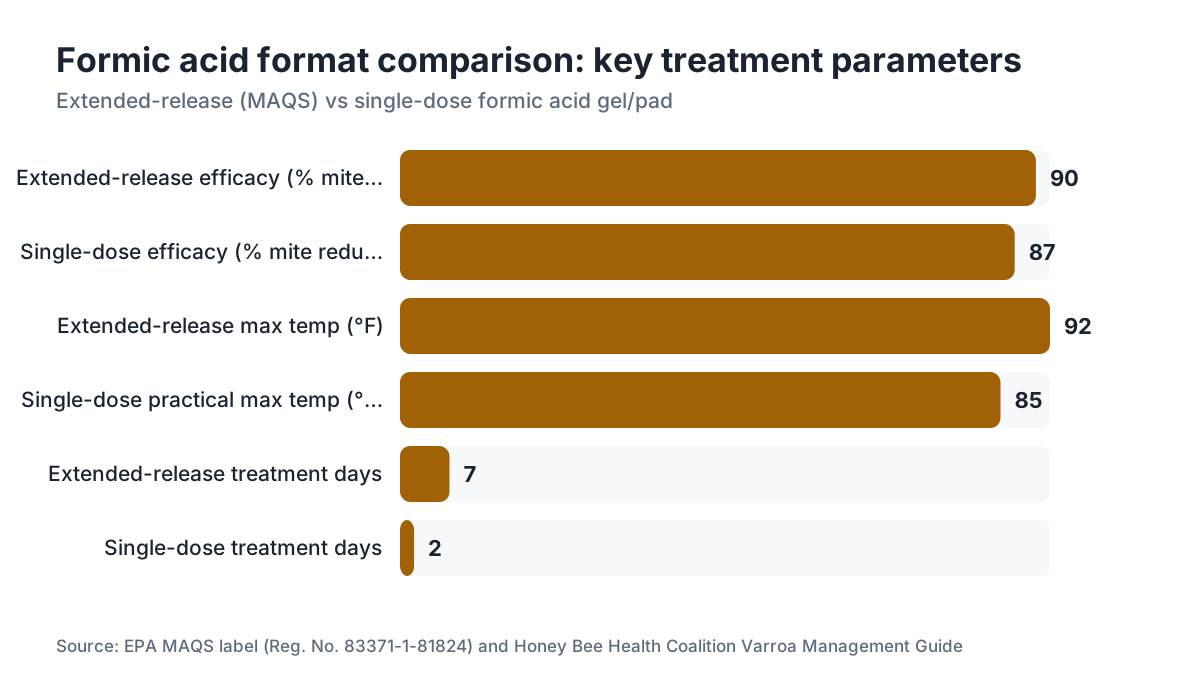
Extended-release products, the most widely used being Mite Away Quick Strips (MAQS), are pads saturated with formic acid that off-gas slowly over roughly seven days. The goal is to hold vapor high enough to kill mites but low enough that queens and workers aren't hit with a spike. The Mite Away Quick Strips EPA label specifies a 7-day treatment period and allows application when daytime temperatures fall between 50°F and 92°F [1].
Single-dose products dump the entire load much faster. In Europe and Canada, some formic acid gel and pad formats deliver their dose over 24 to 72 hours instead of a week. Formic Pro, also made by NOD Apiary Products, comes as a two-strip extended-release product with dosing that differs slightly from MAQS. The core distinction is time-to-vapor: slow and steady versus fast and concentrated.
Why does that matter? You can't swap one for the other on a hot summer afternoon and expect the same outcome. Hive biology, ambient temperature, and queen risk all shift depending on which format you pick.
How does efficacy compare between extended-release and single-dose formic acid?
Both formats can hit high efficacy numbers, but the ceiling and the floor depend heavily on conditions.
A peer-reviewed field study in the Journal of Apicultural Research found that MAQS achieved mean mite reduction above 90% in open-brood colonies under field conditions [2]. That same study noted efficacy dropped when temperatures stayed above 86°F during treatment, because the vapor off-gassed too quickly and compressed the seven-day release into a shorter, hotter burst.
Single-dose formic acid gels and pads studied in European contexts showed similar peak efficacy in the 85-95% range, but with higher variance. When the dose comes fast, a cool snap during that 24-72 hour window can drop efficacy sharply because vapor pressure falls with temperature. A heat wave does the opposite and pushes concentrations to levels that harm the bees.
The Honey Bee Health Coalition's Varroa Management Guide states that formic acid "can penetrate capped brood" and is effective against phoretic and reproductive mites, but flags that efficacy is "highly dependent on temperature and colony conditions" [3]. That caveat applies to both formats. It's the reason you can't crown a winner without knowing your local summer temperatures.
Beekeepers in the Pacific Northwest or Upper Midwest, where summers stay cool, can run single-dose formats well because temperatures don't swing enough to cause off-gassing problems. In the South or the desert Southwest, extended-release products give you more control over concentration, though even they have a hard ceiling at 92°F on the label.
| Format | Typical efficacy range | Treatment window | Temperature floor | Temperature ceiling |
|---|---|---|---|---|
| Extended-release (MAQS/Formic Pro) | 85-95% | 7 days | 50°F | 92°F (daytime) |
| Single-dose formic acid gel/pad | 80-95% | 24-72 hours | ~60°F | ~85°F |
| Oxalic acid dribble (no brood, for reference) | 90-99% | Single application | 40°F | No hard ceiling |
The oxalic acid row is there as a reference point. Formic acid's advantage is brood penetration. OA dribble has none. If you have capped brood in the hive and need to treat, formic acid in either format does something OA dribble simply cannot.
Which format is safer for queens and adult bees?
This is where the difference really bites.
High formic acid concentrations kill queens. Extended-release products were designed partly to dodge that spike, but queen loss still happens. MAQS field trials and years of beekeeper reports suggest queen loss somewhere in the range of 1-5% under normal conditions, rising when temperatures pass the label maximum or when colonies are crowded and poorly ventilated [1][2]. NOD Apiary Products, the MAQS manufacturer, recommends propping the entrance open during treatment, and that recommendation sits on the label for exactly this reason.
Single-dose formats squeeze that same risk into a shorter window. If your dose lands on a 90°F day, the vapor spike can be severe enough to cause brood mortality, supersedure attempts, or outright queen loss. The risk window is shorter, but the intensity runs higher.
For a hobbyist with a small number of hives, where losing a queen stings, extended-release usually feels like the safer bet. It gives the colony time to respond. Worker bees fan out the vapor and the colony has a week to manage it rather than 24-72 hours.
The data here is messier than the marketing suggests. Nobody has run a clean, large-sample randomized trial comparing queen loss between the two formats under identical temperatures. The closest data comes from the MAQS registration studies submitted to the EPA, which reported acceptably low queen loss at label temperatures [1]. Treat those numbers as a floor, not a guarantee.
Does extended-release formic acid penetrate capped brood better than single dose?
Both formats reach capped brood. That's formic acid's defining edge over oxalic acid, and the mechanism is the same at any release rate: formic acid vapor moves through the wax cappings and kills foundress mites inside the cells.
The real question is whether the longer exposure from a seven-day treatment catches more reproductive cycles than a 24-72 hour treatment does. In theory, yes. A mite that happens to be in a newly capped cell at hour one of a short treatment might finish her reproductive cycle and exit before the vapor drops off. A seven-day treatment gives the vapor a longer window inside the brood nest.
In practice, this difference is hard to measure cleanly because so many variables interact. The MAQS registration data submitted to the EPA showed efficacy against mites under capped brood above 90% in most trials, which suggests the extended release reaches reproductive mites at meaningful rates [1].
For colonies with heavy brood in midsummer, the extended-release format's longer window is a real advantage, not a theoretical one. Treat a colony with 15 or more frames of brood on a 72-hour dose and you'll leave a lot of mites that were tucked away in cells at the wrong time.
What temperature conditions does each format require?
Temperature is the single most important variable in formic acid treatment success, and this is where the two formats split most clearly.
MAQS labels specify 50-92°F daytime for a 7-day treatment [1]. The 50°F floor matters because below it vapor pressure is too low and efficacy tanks. The 92°F ceiling matters because above it, off-gassing accelerates and you risk queen and worker mortality.
Single-dose formic acid gels and pads generally run a tighter comfortable window, roughly 60-85°F for the duration of the short treatment. Some protocols allow up to 90°F, but the margin for error is slim. A single day over 90°F during a 48-hour treatment can cause serious colony stress.
For most North American beekeepers, extended-release products offer the more workable window. A seven-day forecast gives you a better shot at picking a stretch that stays below 92°F than hunting for a 72-hour window with the same guarantee. But in regions where summer temperatures routinely top 92°F for weeks, neither format is reliable during peak heat, and that's an honest limit worth stating plainly.
The University of Minnesota Extension recommends timing formic acid treatments for late summer or early fall when temperatures moderate, regardless of which product you use [4]. That timing fits the goal of treating before the winter bee population is produced, and it hands you better temperature windows than August often allows.
For planning your seasonal protocol, tools like the one at VarroaVault can map your local temperature patterns against treatment windows so you're not guessing at the last minute.
How do costs compare between the two formats?
As of 2024-2025, MAQS (Mite Away Quick Strips) retail pricing runs about $22-$28 for a two-strip pack treating one hive [5]. A single treatment season for one hive usually needs one or two applications, so budget $22-$56 per hive per season depending on mite pressure and whether you do a fall follow-up.
Single-dose formic acid gel products vary more by market and formulation. Formic Pro, available in Canada and some US markets, runs roughly $15-$20 per hive dose in a two-strip treatment. Generic formic acid gels in some markets come in lower, but EPA registration in the US limits what you can legally apply inside a hive, so verify registration before buying.
Api-Bioxal (oxalic acid, not formic acid) gets mentioned in the same breath and runs about $30-$35 for a 35g packet that treats 10 or more colonies, which makes it far cheaper per hive when brood is absent. But that's not a fair match against formic acid formats, since OA dribble does nothing about capped brood.
For sideliners running 10-50 hives, the per-treatment cost gap between extended-release and single-dose formic acid is modest. The bigger cost is usually your time, not the product. MAQS makes you check back at day seven and remove strips, while single-dose formats finish in one visit. At scale, that extra trip adds up.
For sourcing approved products and comparing prices, the beekeeping supply companies directory helps you find distributors that carry both formats.
Can you use formic acid with honey supers on?
Yes, with conditions, and it's format-dependent.
MAQS is the only EPA-registered miticide in the US labeled for use with honey supers on [1]. The label allows treatment during honey flow with supers present, though some beekeepers report off-flavors or residue concerns with prolonged or repeated treatments during a flow. The Honey Bee Health Coalition's guide notes that while MAQS is labeled for use with supers, beekeepers should weigh the risk of flavor impact if a major flow is underway [3].
Single-dose formic acid products generally aren't labeled for use with supers on in the US market. The shorter, more intense vapor release creates higher contamination risk for stored honey.
For honey producers, this is a decisive point in favor of extended-release. If you're fighting a mite problem in July during a blackberry or clover flow, MAQS gives you a legal and reasonably practical option. Most other treatments make you pull supers first.
Most experienced beekeepers will tell you the same thing anyway: if you can avoid treating during an active flow, do it. The flavor question is real even when the label allows it, and mite pressure in July is usually better handled by a well-timed spring treatment.
How do you apply extended-release strips vs single-dose formic acid?
Application for MAQS is straightforward. You open the foil packet, place two strips flat on top of the bottom brood box frames, and leave them for seven days. The label recommends propping the entrance board open by about an inch to improve ventilation [1]. Check back at day seven and remove any remaining strip material. Some strips dissolve significantly. Some leave a pad remnant. Either way, removal matters to avoid overexposure.
Single-dose gels apply the same way: the gel or saturated pad goes on the top bars of the brood nest. It's a one-step process, and you return in 24-72 hours to remove whatever's left.
For both formats, wear nitrile or chemical-resistant gloves. Formic acid is corrosive. Even at the concentrations in these products, repeated skin contact causes irritation, and a face shield is worth wearing when you open a fresh MAQS packet.
One practical difference: extended-release strips can be split into a half-dose for smaller colonies or nucs. The MAQS label gives guidance for this. Single-dose formats generally lack that dosing flexibility, which makes them less practical for the beekeeper juggling a mix of full and smaller colonies.
For a complete list of what you need on hand before treating, including application tools and protective gear, the beekeeping supplies checklist is a useful reference.
What does the research actually say about mite rebound after each format?
Mite rebound happens after any treatment, because no formic acid application removes 100% of mites regardless of format. The real question is how fast populations recover and whether the post-treatment level is low enough to keep the colony healthy.
The Journal of Apicultural Research study on MAQS found that mite populations rebounded to economic threshold levels (generally cited as 2-3% infestation using an alcohol wash) within 4-8 weeks in high-pressure environments, even after treatments hitting over 90% reduction [2]. That finding is format-agnostic. It's a function of how fast a varroa population rebuilds, not of which formic acid product you used.
The practical implication: a single treatment of either format in late summer, followed by a monitoring wash 3-4 weeks later, is the minimum responsible protocol. Many beekeepers run two rounds. One in late July or early August and one in September, especially in areas soaking up mites from collapsing neighboring colonies.
The Honey Bee Health Coalition recommends monitoring with an alcohol wash or sugar roll every 30 days during the active season, treating when the infestation rate reaches 2% or higher before August, and dropping to a 1% threshold in August and September when winter bees are being raised [3]. That monitoring frequency applies no matter which formic acid format you choose.
For a deeper look at varroa biology and why mite rebound happens so fast, the varroa mite overview walks through the reproductive cycle in detail.
Are there any resistance concerns with extended-release vs single-dose formic acid?
Formic acid resistance in varroa mites has been studied, and the current consensus from researchers is encouraging, though not complacent.
Formic acid is a naturally occurring compound, and its mechanism (acidic vapor disrupting cellular function) makes heritable resistance hard to develop the way mites developed resistance to tau-fluvalinate and coumaphos. A study published in Apidologie found no evidence of field-selected formic acid resistance in Varroa destructor populations after decades of use in Europe and North America [6].
Sublethal exposure is never risk-free from a resistance standpoint. Consistent use of concentrations too low to kill all mites, whether from temperature failures or under-dosing, could in theory select for tolerance over generations. Extended-release products applied in conditions that wreck their efficacy (too hot, poor ventilation) might expose mites to sublethal doses across seven days. Single-dose formats applied in a short cold snap have the same problem compressed into 24-72 hours.
The takeaway: resistance is not the main concern with formic acid right now, but good application technique still matters. Hit your temperature window, treat colonies of adequate size, and confirm post-treatment efficacy with an alcohol wash. Those are your best safeguards.
Which format should a hobbyist or sideliner beekeeper actually choose?
My honest recommendation: most beekeepers should start with extended-release strips (MAQS or Formic Pro) unless they're in a reliably cool climate where single-dose formats have a consistent temperature window.
Here's why. The seven-day release is more forgiving. You pick your week off a forecast, and even if the weather sours for a day or two, you still have the other five. The honey super compatibility is a genuine advantage for anyone still running supers in July. And the brood penetration over seven days theoretically catches more mites in longer-capped cells.
Single-dose formats make sense if you have reliable weather data showing a 48-72 hour window that will hold between 60-85°F, or if you're treating small nucs where the economics and logistics favor a one-visit protocol. They're also the right call in international markets where extended-release products simply aren't registered.
What I'd actually do: use extended-release strips for the main late-summer treatment, monitor with an alcohol wash 4 weeks later, and consider a fall oxalic acid dribble or vaporization on broodless colonies as a follow-up if counts are still high. That combination gets you formic acid's brood penetration in summer and OA's near-perfect efficacy on phoretic mites in the fall.
VarroaVault has a free protocol builder that maps this timing against your local temperature data and colony inspection records, which makes it easier to pick the right window for either format without guessing.
What do the EPA label and regulatory requirements say about formic acid products?
In the United States, any miticide applied inside a honey bee colony must be EPA-registered and used according to its label. The label is the law, as the saying goes.
MAQS (EPA Reg. No. 83371-1-81824) is registered for use in all 50 states and allows application with supers present [1]. Its label specifies a maximum temperature (92°F daytime), a colony size floor (at least 6 frames of bees), entrance ventilation requirements, and withdrawal periods.
Formic Pro is registered in Canada and available in some US markets. Its EPA registration (if applicable in your state) should be verified with your state department of agriculture before purchase. California, for one, has held different registration status for some formic acid products at different times, so don't assume national availability [7].
The EPA's Office of Pesticide Programs maintains a searchable database of registered pesticides at the EPA website [8]. Checking your product there before purchase is worth the two minutes, especially if you're ordering from an unfamiliar supplier.
One thing worth knowing: "formic acid" in non-apiary-labeled forms, including food-grade formic acid used as a preservative in some agricultural settings, is not the same as a registered miticide. Applying non-labeled formic acid inside a hive is illegal and dangerous. Stick to labeled products.
Frequently asked questions
How long do MAQS strips stay in the hive?
MAQS strips stay in the hive for exactly 7 days, then come out. The label requires removal even if the strips have partially dissolved. Leaving them longer does not improve efficacy and raises the risk of queen or brood stress from prolonged vapor exposure. Set a calendar reminder the day you apply them.
Can I use formic acid treatments when the queen is laying?
Yes, and that's the point. Formic acid's ability to move through capped brood means it kills mites inside sealed cells while the queen is actively producing brood. Extended-release formats are generally considered safer during active laying, because the lower peak concentration reduces queen loss risk compared to a fast, high-dose application.
What is the minimum colony size for formic acid treatment?
MAQS labels specify a minimum of 6 frames of bees for a full two-strip treatment, with a half-strip option for colonies with 4-6 frames of bees. Weak colonies are more sensitive to formic acid vapor stress, so treating a struggling colony can make things worse. Build the colony up before treating if you can.
Does formic acid kill varroa under all capped brood, including drone brood?
Formic acid vapor moves through both worker and drone brood cappings. Because varroa mites prefer drone brood (roughly 8 times the rate of worker brood, per Penn State Extension), treating colonies with drone comb present matters. Extended-release strips have a longer window to reach mites reproducing in drone cells, which take 24 days to cap versus 12 for workers.
Can I use formic acid in a Langstroth nuc or small hive?
Yes, with a reduced dose. MAQS labels give half-dose instructions for smaller colonies with 4-6 frames of bees. Single-dose formats are harder to split, so extended-release half-strips are often the more practical choice for nucs. Prop the entrance open even more than usual, since a smaller hive volume means vapor builds up faster.
What happens if temperatures spike above the label maximum during a 7-day treatment?
If daytime temperatures top 92°F during a MAQS treatment, the strips off-gas too fast, creating a concentration spike that can kill queens, cause brood mortality, and drive bees to beard outside the hive. If a heat spike shows up mid-treatment, some beekeepers pull strips early. Removing at day 3 or 4 isn't as effective as a full treatment, but it beats losing a queen.
Is there any difference in efficacy between MAQS and Formic Pro?
Both are extended-release formic acid products from NOD Apiary Products, and their mechanisms are essentially the same. Formic Pro comes in a two-strip format with slightly different dosing instructions than MAQS. Published head-to-head comparisons are limited. Read both labels carefully for your hive setup, since application details differ slightly between the two.
How do I know if my formic acid treatment worked?
Do an alcohol wash or sticky board count before treatment to set your baseline, then repeat the alcohol wash 3-4 weeks after treatment ends. If the infestation rate has dropped below 2% and your colony population is holding, the treatment worked. A natural mite drop count on a sticky board during treatment is encouraging but not a reliable measure of final efficacy.
Can formic acid treatments affect honey flavor?
Formic acid is naturally present in honey at low levels. MAQS is labeled for use with supers on, but some beekeepers report a slight sour or off note in honey harvested right after a treatment. The practical advice: avoid harvesting honey during or within a few days of treatment if you're sensitive to this, even though the label permits it.
How does the cost of formic acid treatments compare to Apivar or Apiguard?
MAQS costs roughly $22-$28 per hive per treatment. Apivar (amitraz strips) runs about $3-$6 per strip, or $6-$12 per hive. Apiguard (thymol gel) is about $5-$10 per hive. Formic acid products cost more per application, but they're the only options that penetrate capped brood and are labeled for use with supers, which changes the value calculation depending on your situation.
Do I need a prescription or license to buy formic acid mite treatments?
In the US, MAQS and similar EPA-registered formic acid miticides sell over the counter without a veterinary prescription, unlike some antibiotic treatments. You don't need a license to buy or apply them, though you must follow label instructions exactly. Some states may have extra requirements, so check with your state department of agriculture.
Can I use formic acid treatments in winter or early spring?
Formic acid needs minimum temperatures around 50°F (MAQS label) to vaporize well, so winter application in most North American climates isn't feasible. Early spring application, once temperatures hold above 50°F, can work, but that's also when mite populations sit lowest and brood is just ramping up. Most protocols prioritize late summer, because that's when the winter bee generation is at risk.
Sources
- EPA, MAQS (Mite Away Quick Strips) product label, Reg. No. 83371-1-81824: MAQS label specifies 50-92°F daytime temperature range, 7-day treatment period, minimum 6 frames of bees, entrance propping required, and permits use with honey supers on
- Journal of Apicultural Research, field trial on MAQS efficacy: MAQS achieved mean mite reduction rates above 90% in open-brood colonies under field conditions; efficacy dropped at sustained temperatures above 86°F
- Honey Bee Health Coalition, Varroa Management Guide: Formic acid can penetrate capped brood and is effective against phoretic and reproductive mites; efficacy is highly dependent on temperature and colony conditions; monitoring threshold is 2% infestation rate
- University of Minnesota Extension, Varroa mite management in honey bee colonies: University of Minnesota Extension recommends timing formic acid treatments for late summer or early fall when temperatures moderate
- NOD Apiary Products, Mite Away Quick Strips product information: MAQS retail pricing runs approximately $22-$28 for a two-strip pack treating one hive as of 2024-2025
- Apidologie, formic acid resistance study in Varroa destructor: No evidence of field-selected formic acid resistance in Varroa destructor populations after decades of use in Europe and North America
- University of California Agriculture and Natural Resources, Pest Management Guidelines for Bees: California and other states may have differing registration status for formic acid miticide products; beekeepers should verify state-level registration before purchase
- US EPA, Office of Pesticide Programs, registered pesticide product search: EPA maintains a searchable database of registered pesticides; all miticides applied inside honey bee colonies must be EPA-registered and used per label
- Penn State Extension, Varroa mite management: Varroa mites preferentially infest drone brood at approximately 8 times the rate of worker brood; formic acid effective against mites in both cell types
- USDA Agricultural Research Service, Bee Research Laboratory: Formic acid is naturally present in honey at low levels; registered formic acid miticide products assessed for honey residue and labeled accordingly
Last updated 2026-07-09