Brood damage from formic acid at high temperatures: what actually happens
TL;DR
- Formic acid (MAQS, Formic Pro) damages or kills open and capped brood when hive temperatures push past roughly 85 to 92°F during treatment.
- Queen loss climbs sharply above those thresholds.
- Safe use means checking the 10-day forecast, treating only in cooler windows, and respecting the label limits of 50 to 85°F for MAQS and 50 to 92°F for Formic Pro.
What does formic acid actually do to bee brood?
Formic acid works by turning to vapor inside the hive. That vapor pushes through capped cells, which is exactly why it kills varroa mites hiding under cappings. The same penetrating vapor does not tell the difference between a mite and a developing bee larva.
At low-to-moderate concentrations, adult bees and mature pupae handle the acid reasonably well. Young larvae do not. Open brood exposed to formic acid vapor can suffer direct chemical damage to tissue, or the nurse bees that would normally feed them evacuate the area around the vapor source and starve the larvae through neglect. Both mechanisms show up in the field.
Capped brood faces a different trap. Pupae in sealed cells cannot leave and cannot be pulled by workers until they emerge. If temperatures drive vapor concentrations past what the developing bee can tolerate, you get dead pupae inside their cells, a pattern beekeepers call "mummified" or "baked" brood. The cells darken and the cappings may sink slightly.
Here is the whole thing in one line: formic acid is temperature-sensitive by design, and brood pays the bill when the temperature window gets ignored.
At what temperature does formic acid start damaging brood?
The registered EPA labels give the clearest guardrails we have. MAQS (the two-strip, 7-day product) sets an application range of 50°F to 85°F (10°C to 29.4°C) for daytime highs. Formic Pro (the extended-release gel strip) allows a wider window of 50°F to 92°F (10°C to 33.3°C), reflecting its slower vapor release. [1][2]
Those ceilings exist for a reason. Work from European research groups and field reports summarized by the Honey Bee Health Coalition both show that when ambient temperatures stay above the label limit, hive interior temperatures climb enough to push formic acid vapor into brood-lethal territory. [3][4]
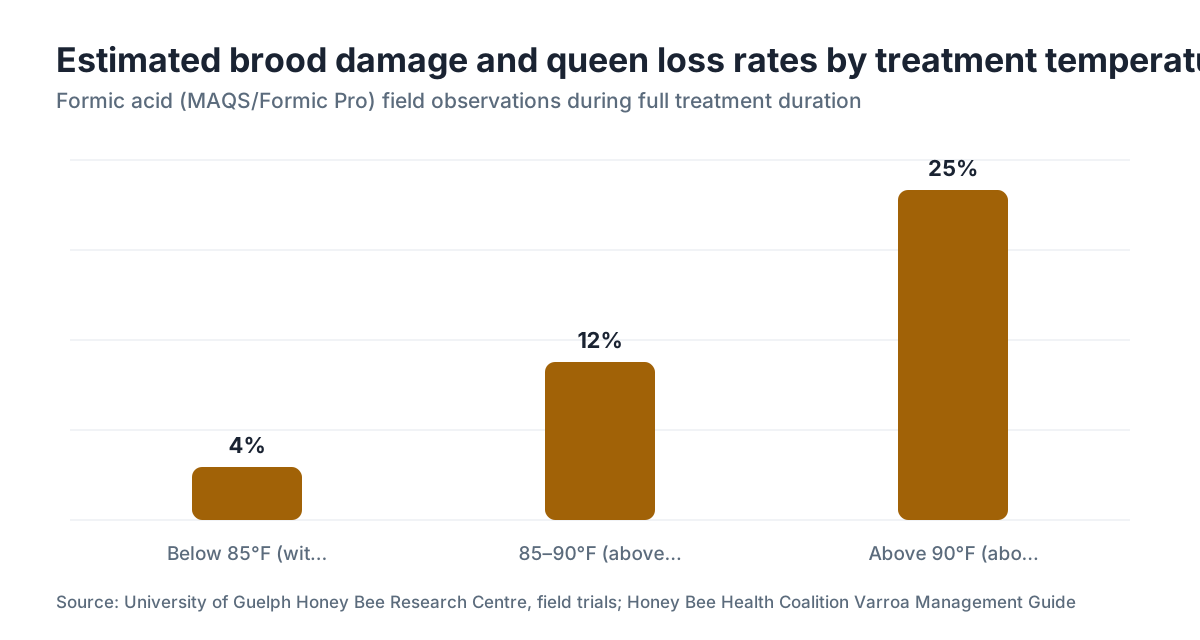
Beekeepers want one clean danger number. There isn't one that works everywhere. Actual vapor concentration inside the hive depends on ambient temperature, colony size, ventilation, and product format. In practice, though, brood damage complaints cluster around treatment periods where daytime highs hit 90°F or above. Canadian field studies found queen loss and brood damage below 5% when temperatures stayed under 85°F, climbing to 10 to 30% or higher when temperatures broke 90°F during the first few treatment days. [11]
The first 24 to 48 hours after application matter most. That window holds the highest vapor spike, and it is when most of the damage happens if conditions are wrong.
Which brood stages are most vulnerable to formic acid heat damage?
Not all brood carries the same risk. Here is the rough hierarchy from most to least vulnerable.
Eggs and young larvae (days 1 to 4 after hatching): Most sensitive. Thin cuticle, fully exposed to hive air. Even moderate excess vapor causes direct tissue damage or drives nurse bees to abandon them.
Older open larvae (days 4 to 6): Still at risk, mostly from the nurse-bee-abandonment problem. Workers hit with high vapor cluster away from the source and skip feeding duties.
Capped brood (pupae): The wax cap offers some protection, but the pupae cannot escape. Prolonged high-temperature exposure lets vapor build inside sealed cells. You end up with discolored, dead pupae that workers uncap and haul out, leaving a shotgun brood pattern.
Queen larvae and capped queen cells: A special case. Queen loss is the single most reported adverse event in formic acid temperature-exceedance incidents. Even a queen that survives may lay poorly for weeks after a heat-stress event. [3]
A laying-worker or failing-queen problem discovered three to four weeks after a summer formic treatment often traces straight back to this mechanism, even when the beekeeper never spotted immediate brood damage.
How does high heat amplify formic acid vapor inside the hive?
Formic acid vaporization follows basic chemistry: hotter air, faster evaporation. A MAQS strip at 90°F throws off meaningfully more acid per hour than the same strip at 75°F. The colony cannot fan fast enough to keep up once the ambient temperature is already driving cluster temperatures higher. [9]
A healthy colony holds the brood nest at 93 to 95°F no matter the weather outside. So when the outside air is 88°F, the bees are already working hard to keep the nest from overheating. Set a vapor-generating acid pad on top of that thermal load and the brood nest microclimate turns genuinely hostile.
There is a ventilation catch. Beekeepers open screened bottom boards or prop lids to shed heat, which does cut vapor buildup somewhat. But if the colony is already heat-stressed, more ventilation may not drop the formic acid concentration enough to save the brood, because vapor production from the pads scales faster with temperature than ventilation can clear it.
Formic Pro's slower-release gel matrix was built to blunt that initial vapor spike and behave better in warm conditions than MAQS. Even so, the 92°F upper label limit on Formic Pro is a hard ceiling, not a suggestion. [2]
What does brood damage from formic acid actually look like?
Knowing the symptoms lets you diagnose fast and decide whether the colony can recover on its own.
In open brood: larvae may look twisted, discolored (pale yellow to brown), or simply dead and dried in their cells. Workers usually clear dead open larvae within a day or two, so you often see empty cells where young larvae should be rather than obvious corpses.
In capped brood: watch for sunken or punctured cappings as workers dig out dead pupae. The removed pupae look partly cooked, mottled and dry. This is different from American foulbrood (which smells foul and ropes out on a twig) and from sacbrood (which leaves a gondola-shaped sac). Formic acid brood damage has no smell and no ropiness.
Queen damage: she may stop laying for a while, lay an erratic pattern, or shut down entirely. Find a queenright colony with a ragged, scattered brood pattern after a recent formic treatment during a heat wave, and the queen is the first thing to check.
Worker behavior: heavily exposed colonies may beard hard on the outside of the hive during treatment. Part thermoregulation, part vapor avoidance. Take it as a warning sign.
One useful check: compare brood a few frames from the treatment strip against brood near the entrance or edges. Damage is usually worst nearest the vapor source.
How do MAQS and Formic Pro label requirements differ on temperature?
| Product | EPA Reg. No. | Upper temp limit | Lower temp limit | Treatment duration | Strips per colony |
|---|---|---|---|---|---|
| MAQS (Mite Away Quick Strips) | 83923-1 | 85°F (29.4°C) | 50°F (10°C) | 7 days | 2 strips |
| Formic Pro | 83923-2 | 92°F (33.3°C) | 50°F (10°C) | 14 or 20 days | 2 strips (14d) or 1 strip (20d) |
Both products use formic acid as the active ingredient, but they differ in how fast the acid turns to vapor. MAQS releases a larger initial burst, which is why its ceiling sits lower. Formic Pro uses a polymer gel matrix to slow release and buy that extra 7°F of headroom. [1][2]
The EPA label is a federal document, not advisory text. Applying a product outside its labeled conditions breaks FIFRA (the Federal Insecticide, Fungicide, and Rodenticide Act, 7 U.S.C. § 136 et seq.). That matters in a practical way: it voids any claim you might have against the manufacturer if things go sideways, and your state department of agriculture may take an interest if colony losses follow. [5]
For most hobbyists and sideliners, Formic Pro's wider window makes it the default summer pick in climates that regularly hit the high 80s. If your region pushes past 92°F for long stretches of July and August, neither product is safe during that period and you need a different plan.
How do you check the forecast properly before applying formic acid?
The Formic Pro label tells you to check the 10-day forecast before applying, and that language is worth taking literally. [2]
Here is the practical method. Pull the 10-day hourly forecast for your apiary's actual location, not the nearest city. Microclimates matter. A north-facing yard in a hollow can run 5°F cooler than a south-facing one on a ridge. The National Weather Service page at weather.gov takes a zip code and gives you hourly data, which beats a daily high/low summary. [10]
You are hunting for sustained heat, not a single hot day. One afternoon at 87°F with a cold front behind it is a different animal from four straight days at 87°F. The product keeps releasing vapor for the whole treatment, so a heat wave landing on day three of a seven-day run is still dangerous.
If the upper limit looks uncertain, wait. You can always retreat when a cooler window opens. You cannot un-apply formic acid already in the hive.
Some beekeepers keep a min-max thermometer in the hive or run a cheap data logger near the apiary. After a season or two of that record, you learn exactly when your specific location reliably stays under 85°F (or 92°F for Formic Pro).
Can you remove the strips early if temperatures spike unexpectedly?
Yes, and you should. Both the MAQS and Formic Pro labels allow early removal if temperatures exceed the stated limit after application. [1][2]
Early removal does cut efficacy. Formic acid mite kill is vapor concentration integrated over time, so pulling strips on day three of a seven-day treatment means you never delivered the full dose. Some mites live. But losing some mite-kill beats losing your brood, your queen, or the whole colony.
After you pull strips early, wait for temperatures to drop and apply a fresh treatment in a cooler window, or switch to a miticide that doesn't care about heat (oxalic acid, Apivar). Oxalic acid dribble or vaporization has no upper temperature restriction on the label, though it only kills phoretic mites and works best in broodless or near-broodless conditions. [6]
The VarroaVault treatment planning tools can help you map the sequence if you need to pivot mid-season after an aborted formic treatment, including timing for follow-up oxalic acid rounds.
Store removed strips in a sealed plastic bag and dispose of them per the label. Don't re-apply a partial strip. The vapor delivery gets unpredictable and you can't dose it.
Does brood damage from formic acid mean the colony is ruined?
Usually not, if you catch it early and the queen survives.
Bees recover from brood-cycle disruptions remarkably well. A colony that loses a frame or two of capped brood to a heat event will redirect nurse bees to any surviving open brood, the queen typically resumes laying within a week (assuming she wasn't permanently hurt), and the population dip may vanish by six weeks out.
Queen loss or sub-lethal queen damage is the worse case. A queen under sustained high formic acid vapor can suffer spermatheca damage that cuts her ability to fertilize eggs. You may not see it for three to four weeks, when the colony still looks populated but you start finding drone brood in worker cells (laying workers) or an erratic, scattered pattern (a failing queen). [3]
Check the colony ten to fourteen days after treatment. Look for a consistent laying pattern, a sane ratio of worker to drone brood, and larvae of the right age (young curled larvae in open cells, more than eggs everywhere with nothing older). If the pattern looks wrong, requeen. A mid-summer requeen from a good source is almost always cheaper than losing the colony.
The Honey Bee Health Coalition's Varroa Management Guide lists a post-treatment brood inspection as a standard step in any formic acid protocol, not only after hot spells. [4]
What are the alternatives to formic acid when temperatures are too high?
Several good options exist, and this is a spot where flexibility beats loyalty to one product.
Apivar (amitraz strips): No temperature ceiling for efficacy, though the label warns against storage above 105°F. Works across the warm season. The downsides: a 56-day treatment and no honey supers meant for harvest on the hive during treatment. Amitraz resistance shows up in some U.S. mite populations but isn't widespread yet. [7]
Oxalic acid vaporization (Api-Bioxal): Best with low or no brood. Catch a broodless stretch (a swarm-season split, or a mid-summer break you make yourself) and three rounds of oxalic acid vapor 5 days apart deliver very high mite kill with no brood damage risk and no heat sensitivity. The label does recommend treating above 50°F for bee safety. [6]
Hop Guard 3: A potassium salt of hop beta acids, applied to frames. Moderately effective, lower mite kill than formic or oxalic acid. No temperature-based brood risk. Some beekeepers use it as a bridge while waiting for a cooler window to reapply formic acid.
Biotechnical methods: A brood break from a cage or split kills mites by taking away their reproductive substrate. More management, but it pairs with any chemical follow-up and puts zero chemical risk on the brood. [8]
For help building a seasonal treatment calendar matched to your climate's temperature windows, use the free protocol tools at VarroaVault. The varroa mite biology overview explains why timing your mite kill to the colony's brood cycle matters so much.
How do experienced beekeepers time formic acid to avoid heat damage?
Ask enough practitioners and the answers converge on a few shared tactics.
Treat in spring or fall, not peak summer. Across most of the continental U.S., May through early June and late August through October give the most reliable windows below 85°F. Mid-July through mid-August is off the table for MAQS in USDA hardiness zones 7 and warmer, and marginal for Formic Pro.
Apply in the morning on a stable-weather day. Strips set early, while temperatures still sit in the 60s, get you a few hours of lower-concentration release before the day heats up. That won't save a 90°F day, but it softens the initial spike.
Watch the 10-day forecast more than the current reading. Cumulative heat over the full treatment period is what gets you.
Consider a split in hot climates. Some beekeepers split hives in late spring on purpose, making a broodless queenright nuc they can treat with oxalic acid, then treat the parent colony with formic acid during the cooler weeks before the split population rebuilds. More work, but it holds mite loads down through summer without leaning on a heat-sensitive product in the hottest months.
Track mite washes on a schedule. Knowing your count going into summer tells you whether you actually need a mid-summer treatment or have room to wait for fall. The Honey Bee Health Coalition sets the active-season economic threshold at 2% infestation (2 mites per 100 bees on a wash). At 1% in July, you may be able to hold out for your September formic window. [4]
Are some colonies or locations more prone to formic acid brood damage?
Yes, and it pays to know which situations stack the odds against you.
High-density brood populations: a colony booming with brood in July has more tissue at risk than a smaller one. Your strongest hives are the most vulnerable to brood damage at the wrong time, because they carry the most brood and often the most heat mass.
Dark hive bodies in direct sun: black or dark-painted equipment in full sun can add 5 to 10°F to interior temperatures on a hot day. Hives sitting in direct afternoon sun have a narrower safe window than the ambient temperature suggests. Shading during treatment is genuinely worth the trouble.
Low-ventilation setups: solid bottom boards and tight-fitting covers hold higher internal vapor than screened bottoms and ventilated roofs. The MAQS label actually calls for leaving the entrance fully open during treatment. [1]
Single-brood-box colonies: one box gives bees less room to retreat from vapor and less thermal mass to buffer swings. Double-deep colonies ride out formic acid a bit better because the vapor gradient spreads over more space.
Apiary location: south-facing slopes, concrete or gravel surfaces, and urban heat-island sites all run hotter than shaded, north-facing, or rural yards. If your apiaries differ a lot in exposure, set a separate treatment calendar for each instead of treating them all the same.
Frequently asked questions
What temperature is too hot to use formic acid on bees?
For MAQS, the label upper limit is 85°F (29.4°C). For Formic Pro, it is 92°F (33.3°C). These are daytime highs across the full treatment duration, not single-day readings. Exceeding them risks brood death, queen loss, and colony damage. Both figures are EPA-registered label requirements, not recommendations.
Can high temperatures cause formic acid to kill the queen?
Yes. Queen loss is the most consistently reported serious side effect of applying formic acid above labeled temperature limits. The queen may die outright or suffer sub-lethal spermatheca damage that degrades laying over the following weeks. Check for a healthy brood pattern 10 to 14 days after any formic acid treatment, especially if the temperature window was marginal.
How quickly does formic acid brood damage show up after application?
Signs appear within 1 to 4 days. Dead open larvae get removed by workers within 24 to 48 hours, so you may see empty cells rather than obvious corpses. Dead pupae in capped cells take longer to clear; you'll see sunken or perforated cappings and a scattered pattern. The full picture is usually visible by day 5 to 7.
Is Formic Pro safer than MAQS for brood in warm weather?
Yes, meaningfully. Formic Pro's polymer gel matrix releases acid more slowly, softening the initial vapor spike that causes most brood damage. Its EPA label allows use up to 92°F versus 85°F for MAQS. That said, 92°F is still a hard ceiling, and Formic Pro is not safe during heat waves in hot-climate apiaries.
Should I remove the entrance reducer when using formic acid in summer?
Yes. The MAQS label specifically calls for a fully open entrance during treatment. More ventilation cuts vapor buildup inside the hive and helps bees thermoregulate. A screened bottom board left open also helps. These steps lower brood damage risk but do not replace the temperature limits on the label.
Can I use formic acid with honey supers on?
MAQS has a 0-day pre-harvest interval and is labeled for use with honey supers in place, though the label notes some honey may absorb trace formic acid. Formic Pro's label requires removing honey supers before treatment. Always read the current label for the product in your hand; label language has changed over time and supersedes older guidance.
Does formic acid brood damage look like American foulbrood?
No, and a couple of checks separate them fast. American foulbrood (AFB) produces a brown, ropy, foul-smelling mass when you insert a twig and pull it out. Formic acid damage has no smell, stays dry and discolored rather than ropy, and comes with a recent formic treatment in the history. If you're unsure, contact your state apiarist; AFB is a reportable disease in most U.S. states.
Will a colony recover from formic acid brood damage on its own?
Often yes, if the queen is intact. Bees clean out dead brood efficiently and the queen resumes laying within a week under good conditions. Recovery depends on the severity, the season (summer recovery beats fall), and queen health. Inspect 10 to 14 days after treatment. If the laying pattern looks scattered or sparse, the queen may need replacing.
What is the Honey Bee Health Coalition's guidance on formic acid temperatures?
The Honey Bee Health Coalition's Varroa Management Guide tells beekeepers to follow all label instructions including temperature restrictions and lists formic acid as appropriate for colonies with brood, stressing that it should not be applied when temperatures exceed the product-specific limits. The guide also recommends a post-treatment brood inspection as standard. It's free to download at honeybeehealthcoalition.org.
How do I treat varroa mites in summer if it is too hot for formic acid?
The two most practical summer alternatives are Apivar (amitraz strips, no temperature ceiling for efficacy, 56-day treatment) and oxalic acid vaporization timed to a broodless or low-brood period. A brood break from a queen cage or a split is a non-chemical method that works well mid-summer. Hop Guard 3 is a lower-efficacy option if the others aren't available.
Can I split the formic acid treatment into shorter applications in hot weather?
The current EPA labels don't support this as a defined method, so doing it puts you outside the labeled use pattern. Some researchers have explored split-dose approaches, but no commercially registered protocol exists. If heat makes a full treatment unsafe, remove the strips early and wait for a cooler window rather than improvising a split dose.
Does shading the hive help prevent formic acid brood damage in summer?
It helps at the margins. Shading can drop hive exterior temperatures by 5 to 10°F in direct sun, which indirectly lowers interior vapor concentrations. It won't reliably bring an 88°F day under the 85°F MAQS limit. Treat shading as a useful adjunct, not a workaround for treating outside the labeled range.
How do I monitor mite loads to know if I can wait for a cooler formic acid window?
Use an alcohol wash (or a sugar roll as a less-lethal alternative) of about 300 bees from the brood nest. The Honey Bee Health Coalition threshold for treatment during the active season is 2% infestation (2 mites per 100 bees). Below that in July, you may have time to wait for a September window. Above 2%, waiting risks a population collapse before fall.
Sources
- EPA - MAQS (Mite Away Quick Strips) Pesticide Label (Reg. No. 83923-1): MAQS label specifies an application temperature range of 50°F to 85°F (10°C to 29.4°C) and recommends a fully open entrance during treatment.
- EPA - Formic Pro Pesticide Label (Reg. No. 83923-2): Formic Pro label specifies an application temperature range of 50°F to 92°F (10°C to 33.3°C) and instructs beekeepers to check the 10-day forecast before applying.
- Rosenkranz et al., Apidologie (published by Springer) - review of formic acid effects on queens and brood: Queen loss and sub-lethal queen damage including reduced laying performance have been documented following high-temperature formic acid exposures.
- Honey Bee Health Coalition - Varroa Management Guide: The HBHC Varroa Management Guide sets the active-season economic threshold at 2% mite infestation (2 mites per 100 bees) and recommends post-treatment brood inspections as standard protocol for formic acid use.
- U.S. EPA - Federal Insecticide, Fungicide, and Rodenticide Act (FIFRA), 7 U.S.C. § 136 et seq.: Applying a pesticide outside its labeled conditions constitutes a violation of FIFRA.
- EPA - Api-Bioxal (Oxalic Acid) Pesticide Label: Api-Bioxal label contains no upper ambient temperature restriction for efficacy and recommends treating at temperatures above 50°F for bee safety.
- USDA Agricultural Marketing Service - National Honey Bee Survey: Amitraz resistance in Varroa destructor has been documented in some U.S. mite populations but is not yet widespread.
- Pennsylvania State University Extension - Varroa Mite Management: Biotechnical brood-break methods (queen caging or splits) remove the reproductive substrate for varroa and combine effectively with chemical follow-up treatments.
- Cornell University College of Agriculture and Life Sciences - Honey Bee Extension: High ambient temperatures raise formic acid vaporization rates substantially, elevating hive vapor concentrations toward brood-lethal levels above the labeled temperature ceilings.
- National Weather Service - weather.gov hourly forecast tool: Hourly forecast data by zip code is available from NWS for determining 10-day temperature windows before formic acid application.
- University of Guelph Honey Bee Research Centre - formic acid field trials: Canadian field studies found brood damage and queen loss rates below 5% when temperatures stayed under 85°F during formic acid treatment, rising to 10 to 30% or higher when temperatures exceeded 90°F.
- Honey Bee Health Coalition - Tools for Varroa Management (full guide PDF): HBHC recommends formic acid for colonies with brood and lists following label temperature restrictions as a core requirement for safe use.
Last updated 2026-07-09