Should you test honey bees after removing formic acid strips?
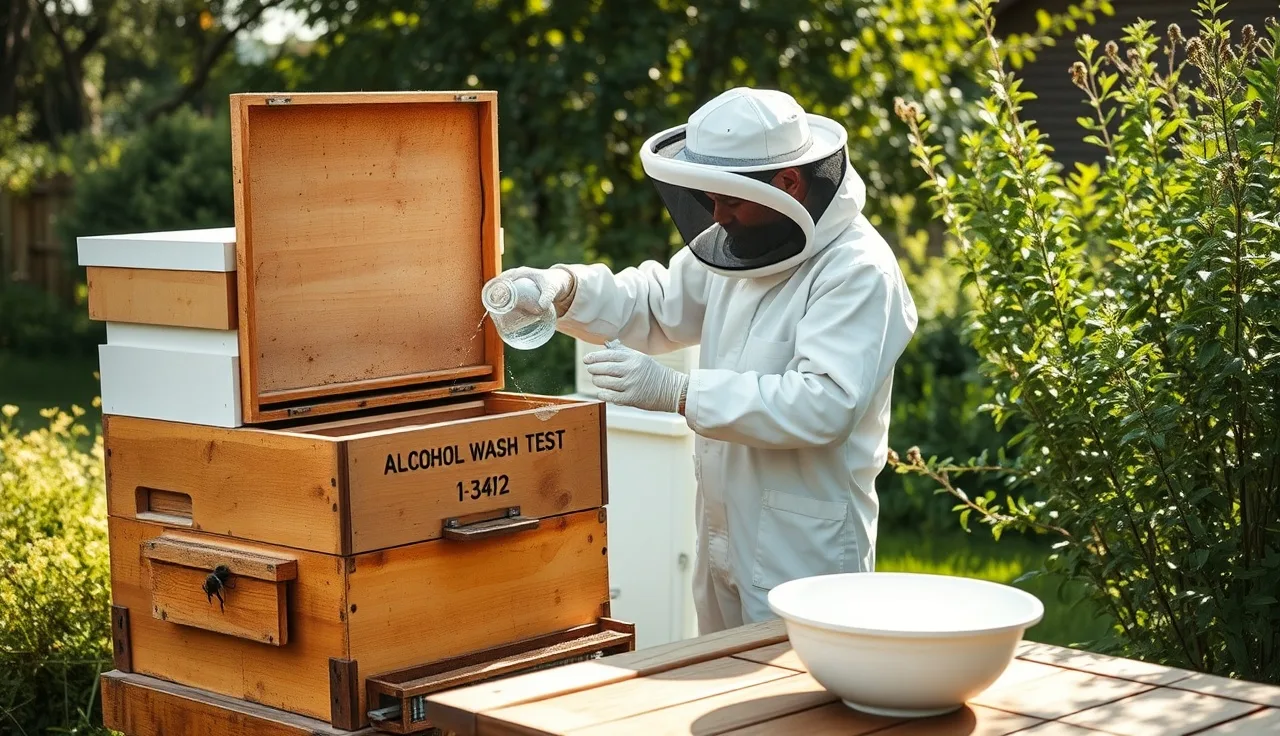
TL;DR
- Yes.
- Do a post-treatment mite wash 3 to 5 days after removing formic acid strips.
- In a healthy colony, a working treatment drops your alcohol wash or sugar roll count below 2 mites per 100 bees.
- If counts hold above 3, treat again before the next brood cycle seals mite numbers back up and puts you past threshold in three weeks.
Why you need to test after formic acid treatment, more than before
Most beekeepers test before they treat. Fewer test after. That's backwards, and it kills colonies that looked fine the day the strips came out.
Formic acid, whether you run Mite Away Quick Strips (MAQS) or Formic Pro, works by volatilizing through capped brood cells and killing phoretic mites on adult bees. It's one of the only treatments cleared for use during a honey flow, and one of the few that reaches mites under the cappings. But "reaches" is not the same as "kills every time." Field efficacy swings hard with temperature, hive setup, colony size, and whether the strips went in right. The Honey Bee Health Coalition's Varroa Management Guide puts field efficacy for formic acid products at 60 to 93 percent mite reduction [1]. That's a huge spread. In a bad run you leave 40 percent of the mites alive and breeding.
That's the whole case for a post-treatment wash. It's the only way to know whether the treatment worked well enough to carry your colony through the next brood cycle.
There's a second reason, and it's about biology. Formic acid only touches mites that are phoretic or sitting in open brood cells. Any mite sealed inside a pupating cell during treatment survives and rides out with the new bee. In a colony with a laying queen, those survivors start reproducing almost the moment the strips leave. Your mite load climbs again. The wash tells you whether that rebound starts from a safe number or from one that puts you back over threshold in three weeks.
When exactly should you do the post-treatment mite wash?
Test 3 to 5 days after pulling the strips, not three weeks after. The window is narrow, and missing it wastes the test.
Here's the logic. In those first few days, you're measuring the treatment's actual kill. The mite load riding on adult bees reflects what survived the formic acid. Wait too long and mites from the next batch of emerging brood start re-infesting adults, so your count creeps up and you can no longer tell treatment failure from ordinary rebound.
Most extension apiculturists want a second wash at 3 weeks post-treatment as well, to catch that rebound and decide on a follow-up before the population gets ahead of you again [2]. Think of the immediate wash as an efficacy check and the 3-week wash as a trend check.
For Formic Pro, the label sets a 14-day application period for the double-strip dose and allows a second treatment 14 days after the first application comes out. Penn State Extension recommends testing before you commit to a second round [2]. If your 3-to-5-day wash already reads above 3 mites per 100 bees, you don't need to wait out 14 days to know another treatment is coming. You already know.
What mite count is acceptable after formic acid treatment?
The threshold used across North America is 2 mites per 100 adult bees by alcohol wash [1]. Stay below that from late spring through late summer and the colony sits at low risk. Cross above 2 and the odds of colony damage climb fast.
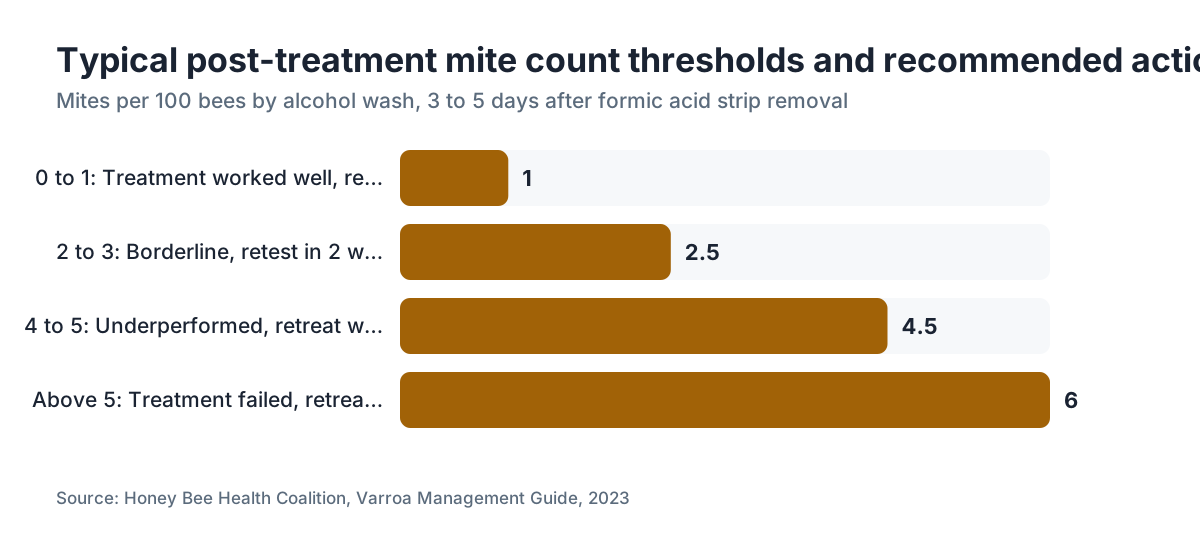
Here's how to read your post-treatment count:
| Post-treatment count (per 100 bees) | What it likely means | Recommended action |
|---|---|---|
| 0 to 1 | Treatment worked well | Retest in 3 to 4 weeks, monitor normally |
| 2 to 3 | Marginal, borderline range | Retest in 2 weeks, watch for rebound |
| 4 to 5 | Treatment underperformed | Plan a follow-up treatment within 2 to 3 weeks |
| Above 5 | Treatment failed or colony has very high baseline load | Retreat promptly, consider oxalic acid dribble or vaporization if broodless or nearly so |
These numbers come from the Honey Bee Health Coalition guide and cover the late-spring-through-late-summer window [1]. Fall is stricter. The HBHC recommends treating in fall if counts top 2 per 100 in August or September, because every mite feeding then is parasitizing a winter bee.
Here's something people skip over: a count of zero right after pulling strips is not automatically good news. It can mean your sample was too small because the colony population is low, or that mites have pulled back into capped brood where the wash can't reach them. Sample at least 300 bees, and aim for 300 to 400, straight from the brood nest [3].
How to do an alcohol wash correctly after treatment
An alcohol wash is the most accurate field test you have. Sugar rolls undercount by 30 to 40 percent on average [3]. Sticky boards give you a rough trend and nothing more. When you've just run a treatment and you're deciding whether to retreat, you want the sharpest number you can get.
Here's the procedure:
- Find a frame of open brood near the center of the brood nest. The nurse bees clustered there carry the most phoretic mites.
- Shake or brush about 300 bees (roughly half a cup) into a wide-mouth jar or your wash kit. Check fast for a marked queen so she doesn't go in.
- Add 70 percent isopropyl alcohol until the bees are fully covered. Shake hard for 30 to 60 seconds.
- Pour through a mesh strainer or your kit's screen into a white bowl. Rinse once more with alcohol.
- Count the mites in the liquid. Count the bees in the strainer.
- Divide mites by bees, multiply by 100. That's your infestation rate per 100 bees.
Want to estimate instead of counting every bee? A half-cup measure holds roughly 300 workers, but the count varies enough that an actual bee count wins for borderline results [3].
The free tracking tools at VarroaVault let you log pre- and post-treatment counts in one place, so you can see over time whether a given formic acid application actually did its job.
What if your count is still high after formic acid? When should you retreat?
If your wash 3 to 5 days out reads more than 3 mites per 100 bees, the treatment didn't get adequate control. Act before the next round of brood seals mites back in and the population climbs.
Your move depends on the season and whether the colony still has open brood.
With a full brood nest, another round of formic acid is your best shot at killing mites under the cappings. Formic Pro allows a second 14-day treatment after the first strips come out [4]. MAQS allows a second 7-day application after the first 7-day round finishes, per the product label [5]. Read the label for temperature limits before you retreat. Formic acid above 92 to 95 degrees Fahrenheit can cost you queens and brood [4][5].
Late summer or fall, with the colony heading toward broodless, switch to oxalic acid. OA runs 95 to 99 percent efficacy against phoretic mites and works best when there's little or no capped brood [6]. The EPA registered oxalic acid (Api-Bioxal) for U.S. use. The label allows one dribble treatment per year in a broodless colony, and up to three vaporization applications (one per week for three weeks) [6].
Don't just reload formic acid without asking why the first round underperformed. Usual suspects: strips not touching the cluster, nights below 50 degrees Fahrenheit during treatment, a colony bigger than you figured, or old strips that lost potency.
Does temperature affect formic acid efficacy and should you adjust your test timing?
Yes, and it matters more than most beekeepers think.
Formic acid efficacy tracks temperature directly, because the active ingredient works by volatilizing off the strip and spreading through the hive as a gas. Cool it down and the vapor rate drops, so mites that would have died in warmer air survive. Both the MAQS and Formic Pro labels set minimum and maximum temperature ranges for application [4][5].
The MAQS label recommends applying when temperatures stay between 50 and 92 degrees Fahrenheit across the 7-day treatment [5]. Formic Pro's extended 14-day application is built for slightly lower ranges, with the slower release covering for cooler conditions [4].
Applied strips during a cool stretch, say a week of highs in the low 60s? Expect reduced efficacy, and your post-treatment wash matters even more. Don't assume a cold-weather application worked. Test, then decide.
Temperature also nudges your test timing. If the week after treatment ran cold and bees stayed clustered, fewer mites were on adult bees during treatment (more stayed in cells), so a wash done 3 days out can undercount the survivors. A 5-to-7-day wash reads more truly in that case. Nobody has clean controlled data on exactly how far this shifts the count. Extension apiculturists still land on the 3-to-5-day window, with cooler conditions pushing you toward the longer end.
How do formic acid treatments affect the rest of the hive, and what should you watch for after removing strips?
Formic acid is one of the harder treatments on a colony, and the days right after you pull the strips deserve a close inspection.
Brood pattern comes first. Formic acid can kill or damage developing larvae when the dose runs too high or the hive runs too hot. Open the box on strip-removal day and see large patches of sunken, discolored, or missing larvae? The treatment was probably too intense. That looks different from mite-related bald brood or chilled brood, so look carefully.
Queen survival is the second worry. University studies put queen loss at roughly 3 to 15 percent with full-dose formic acid, worse in small colonies and during heat spikes [7]. After pulling strips, check for eggs and young larvae at your next inspection 5 to 7 days out. No eggs by 10 days after removal usually means a queenless colony.
Adult bee numbers should hold steady or improve. A real die-off of adults after treatment points to either too much formic concentration (an overheated hive, strips crammed too close on a small cluster) or a separate health problem that has nothing to do with the treatment.
The population on your wash frame also tells you something. A strong mid-summer colony covers 8 to 10 frames of brood and bees. Only 4 to 5 frames of coverage? That colony may struggle to bounce back no matter what the mite count says, and you should build that into your plan. Learning varroa mite biology makes it clear why timing rules everything here.
Can you use other tests besides alcohol wash after formic acid strips?
You can, but the alcohol wash is the right tool for this specific call.
Sugar rolls are gentler and send the bees back home, which many hobbyists like. The catch is accuracy. Studies comparing sugar rolls to alcohol washes on the same colonies find the sugar roll misses 30 to 60 percent of mites under some conditions [3]. When you're deciding whether a treatment worked well enough to protect the colony, a method that can miss half the mites is not reliable enough. Keep sugar rolls for rough in-season monitoring if you'd rather not sacrifice bees. For a post-treatment efficacy call, use alcohol.
Sticky board counts (natural mite fall on a bottom board insert over 24 or 48 hours) are worse for this job. They tell you how many mites are dropping, not what percentage of your bees carry mites. After formic acid there's often a spike in mite fall as dying mites drop off, which reads like great news even when the real infestation rate still looks bad.
DNA and commercial PCR mite services exist, but they're expensive, slow, and tuned for disease detection, not a fast retreat decision. Skip them here.
What works: alcohol wash, 300 bees minimum, from the brood nest, 3 to 5 days after strip removal.
What does the research say about post-treatment mite rebound with formic acid?
Rebound after treatment is real and well documented, and understanding it changes how you schedule testing.
Work published in PLOS ONE tracking mite populations found that colonies carrying pre-treatment infestation above 5 percent (5 per 100 bees) tended to rebound past threshold within 4 to 6 weeks of treatment, even after a successful round, driven by mites that survived under the cappings during the treatment window [8]. Colonies under 3 percent going in held their suppression longer.
That's exactly why the 3-week follow-up test carries as much weight as the immediate check. The immediate wash gives you efficacy. The 3-week wash tells you whether you need another round before the population climbs past the action threshold.
The Honey Bee Health Coalition recommends at least two post-treatment washes: one shortly after removal and one 3 to 4 weeks later [1]. Most hobbyists skip the 3-week check because the colony looks fine. But mite damage to developing bees happens weeks before adult numbers collapse. Judge colony health by adult bee counts alone and you're always reading a lagging indicator.
One more fact worth carrying: formic acid's kill under the cappings varies by cell type. Worker brood cells take meaningful vapor. Drone brood, with its longer capping period and different cell geometry, may not take the same lethal dose. Some research treats drone brood as a mite refuge during formic acid treatments [9]. Pulling drone comb before you treat, or at least knowing it's there, improves your overall knockdown.
How to build a simple post-treatment testing protocol you'll actually follow
Beekeepers don't skip post-treatment testing because they don't know they should. They skip it because they never wrote down a schedule before treatment started.
Here's a protocol you can run on any formic acid treatment:
Day 0: Apply strips. Record the date, temperature forecast, colony strength (frames of bees), and pre-treatment mite count.
Day 7 (MAQS) or Day 14 (Formic Pro): Remove strips. Note the condition of the strips (fully dissolved vs. partly remaining), brood pattern, and any signs of queen stress.
Day 10 to 19 (3 to 5 days after removal): Alcohol wash from the brood nest, 300 bees minimum. Record the count. Above 3, plan a follow-up. Below 2, move to the 3-week recheck.
Day 28 to 35 from treatment start (about 3 weeks post-removal): Second alcohol wash. This is your rebound check. If the load is climbing back toward threshold, plan your next treatment now, not when the bees start looking sick.
Four data points (pre-treatment, strip-removal observation, immediate wash, 3-week recheck), maybe two hours of work spread across a month. Losses from unchecked mite rebound take the rest of the season to recover from, if you recover at all.
VarroaVault's free tracking tools log exactly these points and flag when a recheck is due, so you're not carrying it in your head across a dozen hives. For wash supplies and replacement strips, check reviews of beekeeping supply companies and look for bundles that include wash kits.
Does brood status at the time of testing affect what your mite count means?
Yes, and it's one of the most underrated variables in reading a post-treatment count.
An alcohol wash only catches phoretic mites on adult bees. Mites in capped brood never show up. So in a colony with a big active brood nest, a large share of the mite population is invisible to the wash at any moment. Research estimates that in a typical summer colony, roughly 70 to 80 percent of the total mite population sits in capped brood at any given time [9]. Your wash samples the other 20 to 30 percent.
That doesn't make washes useless. They're the best field tool going. It means you should read a low post-treatment count with some caution when the brood nest is large. A count of 1.5 per 100 bees in a colony with 8 frames of capped brood still hides mites that will emerge over the next 12 days.
Flip it around. Test a colony that just went through a queen interruption (swarm, supersedure, or an artificial broodbreak) and your wash may catch a bigger slice of the true load, because more mites are phoretic. Post-broodbreak washes on colonies that got oxalic acid during that broodless window often read near zero, precisely because the mites had nowhere to hide during treatment.
The practical part: always note brood status when you record a count. "1.5 mites per 100 bees, 7 frames of capped brood" is a different risk than "1.5 mites per 100 bees, 2 frames of capped brood after a recent queen issue."
Are there situations where you should skip formic acid and use something else?
Formic acid is a good tool with real limits, and knowing them tells you when to reach for something else from the start.
Temperature is the big one. If your summer highs sit above 90 to 92 degrees Fahrenheit on the regular, formic acid carries serious brood and queen mortality risk. In the Deep South and parts of the Southwest, many beekeepers skip it and lean on thymol products (Apiguard, ApiLifeVar) or move to oxalic acid vaporization with broodbreaks in late summer [10].
Hive setup matters too. MAQS and Formic Pro are labeled for standard Langstroth equipment. Multi-queen colonies or odd configurations can spread the vapor unevenly and cut efficacy. Keep bees in non-standard gear? Read up on beekeeping species and hive type before you pick a treatment.
Varroa resistance is a growing question. No confirmed reports exist of varroa developing genetic resistance to formic acid the way they've beaten synthetic pyrethroids like tau-fluvalinate (Apistan) or coumaphos (CheckMite+), because formic acid is a natural organic acid, not a targeted neurotoxin [10]. But poor outcomes get mistaken for resistance when the real cause is application error, bad temperatures, or a pre-treatment load so high that even a 90 percent kill can't drop it below threshold.
If a colony has taken multiple formic acid rounds in a season and counts stay stubbornly high despite good technique and good temperatures, look at a different mode of action (oxalic acid, thymol, or a combination). Rotating chemistry is smart practice regardless.
Frequently asked questions
How long after removing formic acid strips should I wait before testing?
Test 3 to 5 days after pulling the strips. This window catches the mites that survived treatment while keeping out the noise from new mites emerging from brood. Wait longer than a week and you start mixing treatment survivors with freshly phoretic mites from the next brood cycle, which makes it hard to judge whether the treatment itself worked.
What mite count means my formic acid treatment was successful?
A post-treatment alcohol wash under 2 mites per 100 bees counts as a success during the summer treatment window, per the Honey Bee Health Coalition. Counts of 2 to 3 sit in a marginal zone worth a retest in 2 weeks. Counts above 3 mean the treatment didn't get adequate control and a follow-up is needed.
Can I use a sugar roll instead of an alcohol wash to test after formic acid?
You can, but it's not the right call here. Sugar rolls undercount mites versus alcohol washes by an estimated 30 to 60 percent across various studies. For a routine mid-season monitoring visit, sugar rolls are fine. For a post-treatment efficacy decision where you need to know whether to retreat, use an alcohol wash. The accuracy gap matters too much when a retreatment call is on the line.
What happens if I don't test after removing formic acid strips?
You're guessing on one of the season's biggest decisions. Formic acid field efficacy runs 60 to 93 percent, so a failed treatment leaves anywhere from 7 to 40 percent of mites alive. Without a post-treatment wash you have no idea which end you landed on, and a colony that looks fine today can collapse from mite-vectored viruses 6 to 8 weeks later.
Should I test again 3 weeks after removing formic acid strips?
Yes. The 3-to-5-day wash tells you how well the treatment worked. The 3-week wash tells you whether mite numbers are rebounding toward threshold as new brood emerges. Research on post-treatment dynamics shows many colonies with high pre-treatment loads return to threshold within 4 to 6 weeks even after a successful round. The 3-week recheck catches that before it turns into a crisis.
Can I treat again with formic acid if my mite count is still high?
Yes. Formic Pro's label allows a second 14-day treatment after the first application is removed. MAQS allows a second 7-day application after the first period ends. Both products require you to stay inside their labeled temperature ranges. Check the forecast before applying, and make sure you're not exceeding the labeled maximum temperature for the product you're using.
Does temperature during the formic acid treatment affect how I should interpret my post-treatment mite count?
Yes. Formic acid volatilizes more slowly in cool conditions, which drops efficacy. If your treatment period ran below the product's labeled minimum, expect lower mite kill and read the post-treatment results with that in mind. A borderline result after a cool treatment week is a stronger signal to retreat than the same number after ideal temperatures.
My hive looks healthy after formic acid treatment. Do I still need to test?
Absolutely. Visual colony health is a lagging indicator. Mites damage developing bees inside capped cells, and the hit to adult populations shows up 3 to 6 weeks after the damage happens. A colony can look vigorous while its mite load climbs toward disaster. By the time you see obvious decline, you've often already lost the winter bees that would have carried the colony through.
How many bees do I need to sample for an accurate post-treatment alcohol wash?
Sample at least 300 worker bees. Penn State Extension and the Honey Bee Health Coalition both recommend 300 to 400 bees, roughly half a cup by volume. Smaller samples widen the statistical error. A 100-bee sample with 2 mites could mean anything from 0.5 to 3.5 percent infestation at 95 percent confidence, which is far too wide for a retreatment decision.
What's the difference between testing after MAQS versus testing after Formic Pro?
The principle holds, but the timelines differ. MAQS is a 7-day treatment, so strips come out at day 7 and you test around day 10 to 12. Formic Pro is a 14-day treatment, so strips come out at day 14 and you test around day 17 to 19. Both call for a second recheck near 3 weeks post-removal. The efficacy thresholds for reading results are the same for both.
Can high mite counts after formic acid treatment mean the mites are resistant?
Varroa has not been documented to develop resistance to formic acid the way it has to synthetic miticides like tau-fluvalinate or coumaphos. High post-treatment counts are far more likely caused by application error, bad temperatures, or a very high pre-treatment load. If counts stay high across multiple well-applied treatments, switch to a different mode of action like oxalic acid, and report the pattern to your state apiarist.
Should I worry about queen loss when testing after formic acid strips come out?
It's worth checking. Formic acid treatment carries queen loss of roughly 3 to 15 percent depending on conditions and colony size, higher during heat spikes. When you do your post-treatment wash inspection, look for eggs in worker cells too. No eggs 10 days after strip removal points to a possible queen issue that needs attention before it turns into a laying-worker or queenless situation.
Is there a best time of year to do formic acid treatment and post-treatment testing?
Late summer, roughly mid-July through August in most North American climates, is the treatment window that matters most. That's when you still have enough warm-weather bees to raise the winter bees that carry the colony to spring. Treating and confirming success with a post-treatment wash before late August leaves you time to retreat if needed, before temperatures drop too low for formic acid to work reliably.
Sources
- Honey Bee Health Coalition, Varroa Management Guide (2023 edition): Field efficacy for formic acid products is typically 60 to 93 percent mite reduction; action threshold is 2 mites per 100 bees during summer; fall threshold triggers at 2 per 100 in August or September.
- Penn State Extension, Varroa Mite Management page: Recommends testing before deciding whether to apply a second round of formic acid; advocates 3-week post-treatment recheck for rebound assessment.
- University of Minnesota Extension, Bee Lab: Varroa Sampling Methods: Alcohol wash is the most accurate field method; sugar rolls undercount mites by 30 to 60 percent versus alcohol wash; recommends 300-bee minimum sample from brood nest.
- EPA Pesticide Registration, Formic Pro product label (EPA Reg. No. 87243-1): Formic Pro is labeled for 14-day application period; a second treatment allowed after first strips removed; temperature range specifications for safe use.
- EPA Pesticide Registration, MAQS product label (EPA Reg. No. 81268-4): MAQS application period is 7 days; second 7-day application allowed after first period; label specifies 50 to 92 degrees Fahrenheit temperature range.
- EPA Pesticide Registration, Api-Bioxal Oxalic Acid label (EPA Reg. No. 68539-7): OA dribble method limited to one treatment per year in broodless colonies; vaporization method allows up to three applications one per week; efficacy 95 to 99 percent against phoretic mites.
- NC State University Apiculture, Formic Acid Treatment Notes: Queen loss rates of approximately 3 to 15 percent documented with full-dose formic acid treatments; higher in small colonies and during heat spikes.
- PLOS ONE, Traynor et al. (2016): Multifaceted effects of varroa parasitism on honey bee colony health: Colonies with pre-treatment infestation rates above 5 percent typically rebounded to above-threshold levels within 4 to 6 weeks post-treatment driven by mites surviving in capped brood.
- Rosenkranz, Aumeier, and Ziegelmann (2010), Biology and control of Varroa destructor, Journal of Invertebrate Pathology: Approximately 70 to 80 percent of the total mite population resides in capped brood at any given time in an active summer colony; drone brood acts as a mite refuge during treatments.
- USDA AMS National Organic Program / Apimondia position on organic acid treatments: No confirmed genetic resistance to formic acid documented in varroa; synthetic pyrethroids like tau-fluvalinate show confirmed resistance patterns; thymol and OA recommended for high-heat regions.
- University of California ANR, UC IPM Bee Pests: Varroa Mite: Post-treatment mite washes recommended 3 to 5 days after strip removal; second wash at 3 to 4 weeks post-removal to assess rebound.
Last updated 2026-07-09