Formic acid for varroa mites: how to apply it safely and effectively
TL;DR
- Formic acid kills varroa mites, including mites under capped brood, by vapor penetration.
- The two EPA-registered products are Mite Away Quick Strips (MAQS) and Formic Pro/FormiVar.
- Application works between 50°F and 85°F ambient air.
- Below that, vapor generation drops and mites survive.
- Above it, queen loss and bee die-off climb sharply.
What is formic acid and how does it kill varroa mites?
Formic acid (HCOOH) is an organic acid that occurs naturally in small amounts in honey. At treatment concentrations it vaporizes slowly inside the hive and penetrates capped brood cells, which most other treatments cannot do. That sub-cap reach is the main reason beekeepers put up with the handling hassle.
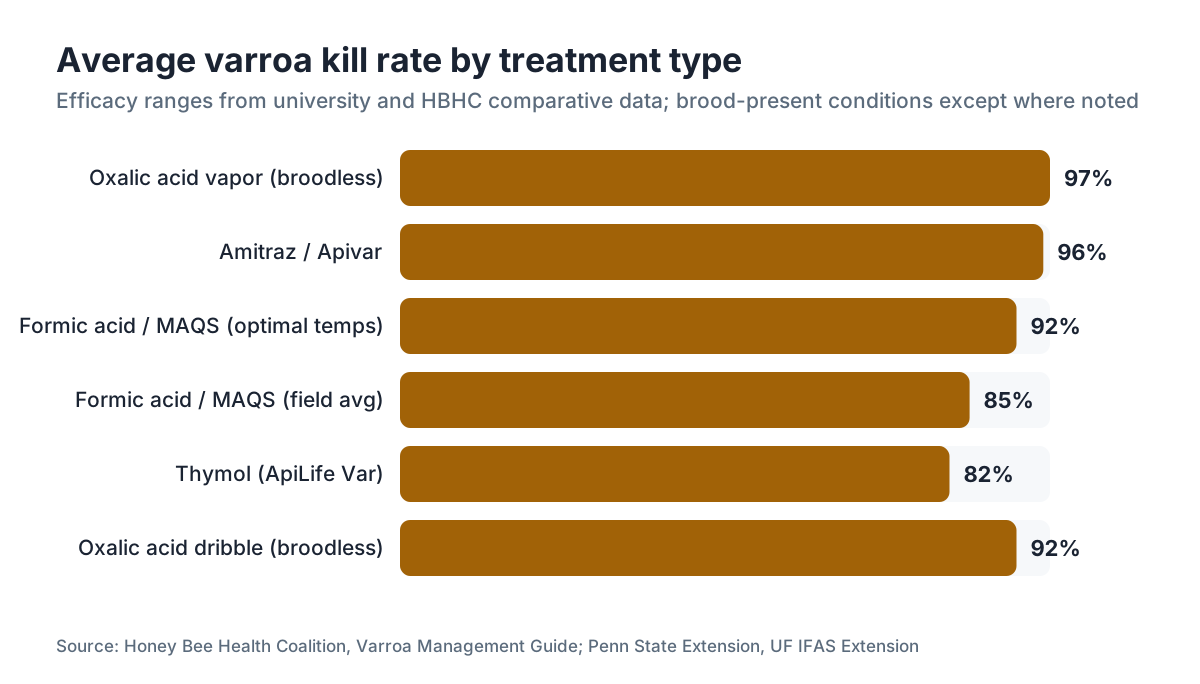
Varroa mites breathe through small openings called spiracles. Formic acid vapor disrupts their respiration and kills them. The Honey Bee Health Coalition reports that formic acid can achieve 90 to 95 percent mite kill under the right temperature conditions, roughly on par with extended-release oxalic acid when brood is present [1].
Here is the part that matters most. Formic acid kills the reproducing female mite and her offspring inside sealed cells, the exact stage that lets an infestation bounce back after other treatments. That is why you reach for it when a colony is loaded with capped brood and you need to knock mites down fast.
Formic acid is not residue-free in the strict technical sense, but it metabolizes and does not build up in wax or honey at levels of concern. The EPA does not require a pre-harvest interval for it the way synthetic miticides demand one [2].
Which formic acid products are EPA-registered for beehives?
Two products carry EPA registration for varroa control in honey bee colonies in the United States as of 2025.
Mite Away Quick Strips (MAQS), made by NOD Apiary Products, is a gel-matrix strip you lay directly on top of the brood frames. Each strip holds 68.2 grams of formic acid. The label calls for two strips per colony, placed at the same time on the top bars, for a seven-day treatment [3]. MAQS is registered in all 50 states and most Canadian provinces.
Formic Pro (also sold as FormiVar after a reformulation) is a pad-based system that also releases formic acid. It uses a two-pad protocol, with an option for a slower single-pad run when temperatures are cooler or you want a gentler release curve. Read the current label every time, because this product line has changed names more than once.
Api-Bioxal is oxalic acid, not formic. Do not confuse the two.
Neither formic acid product needs a veterinarian's prescription, which matters for small-scale beekeepers. A two-strip MAQS pack that treats one colony runs roughly $25 to $35. A Formic Pro/FormiVar pack runs about $30 to $45, depending on the supplier. Buy in bulk for a yard and the per-colony cost drops a lot. You can compare vendors at beekeeping supply companies.
| Product | Active ingredient | Application | Duration | Temp. window |
|---|---|---|---|---|
| MAQS | Formic acid 68.2 g/strip | 2 strips, top bars | 7 days | 50°F to 85°F |
| Formic Pro / FormiVar | Formic acid (pad) | 2 pads or 1 pad extended | 10 to 14 days | 50°F to 92°F (varies by label version) |
Pull the current label from the manufacturer before you apply. The label is the law. [2][3]
What temperature range does formic acid need to work on varroa?
Temperature is the one variable that sinks most formic acid treatments. The acid only vaporizes at a useful rate inside a narrow thermal band, and missing it in either direction costs you mites or bees.
The MAQS label sets the treatment range at 50°F to 85°F (10°C to 29.5°C), measured as daytime ambient air temperature [3]. Formic Pro and FormiVar labels have drifted a little across versions, so check your own, but the working window is close.
Below 50°F, vapor generation crawls. The strips off-gas too slowly to build lethal concentrations, mites survive, and you walk away thinking you fixed the problem when you did not. Is formic acid fatal to bees in the cold? Not especially. It just does almost nothing to mites down there. The treatment is mostly wasted.
Above 85°F, off-gassing speeds up and internal concentrations climb into a range that hurts bees and hits queens hardest. Penn State Extension puts queen loss during MAQS applications at 5 to 15 percent under good conditions, rising higher when daytime highs top 85°F [4]. That is a real cost. In a hot-summer region, apply in early morning on a day forecast to stay under 85°F, or use the Formic Pro two-pad approach to spread the release out.
Most experienced beekeepers aim for daytime highs of 60°F to 80°F with nights above 50°F so the cluster does not chill. A week in mid-April or early September usually lands there across temperate North America.
How do you actually apply formic acid strips to a beehive?
Gear up before you open the package. Formic acid at treatment strength is corrosive. Nitrile gloves, safety glasses, and a respirator rated for organic acid vapors (not a dust mask) are mandatory. Read the label's personal protective equipment section. It is specific [3].
For MAQS, here is the procedure:
- Open both strip packages outdoors or somewhere well ventilated. Not inside a vehicle or shed.
- Score the top surface of each strip with a knife to raise the surface area and off-gas rate. Some beekeepers skip this on hot days to slow the release.
- Lay the strips flat on top of the brood frames, one per side of the cluster, paper side down if your version has a paper backing.
- Open the entrance fully, at least four inches. The vapor needs an exit, and choking off ventilation causes both acid buildup and dead bees at the entrance.
- Pull any entrance reducer during treatment.
- Remove the strips after seven days. No longer.
Formic Pro pads work much the same way, but they release slower, so the two-pad option runs 10 days and the single-pad option runs up to 14, depending on the label version.
Peek at the hive on day two or three. A small pile of dead bees at the entrance, up to a cup or so, is normal. A large die-off, bees washboarding in an agitated way, or a queen you cannot find afterward signals trouble. Write down the temperature on application day and match it against your result. That feedback loop over a few seasons teaches you more than any single study.
After treatment, wash your gear. Store unused strips in a sealed bag in the freezer if you plan to use them next year. Never leave open strips at room temperature.
Can you treat with formic acid when honey supers are on?
Yes, and this is one of formic acid's genuine advantages over other miticides.
Both the MAQS and Formic Pro labels state the product can be applied with honey supers in place, honey intended for human consumption [3]. That helps a lot if you need to treat during a nectar flow or cannot easily pull supers.
Formic acid does not build up in honey the way synthetic chemicals do. It is a normal honey component and metabolizes without leaving detectable residue above natural background at registered doses.
Some beekeepers report a temporary off-flavor in honey pulled within the first few days after application, worst in hot weather when off-gassing runs heaviest. The anecdotes are common. Controlled blind taste tests are less clear on whether anyone can actually detect it. If you are worried, wait until the strips come out and give the colony a week before pulling honey for market.
How effective is formic acid against varroa, and how do you measure it?
University trials generally put MAQS at 90 to 95 percent mite kill under well-controlled conditions [1][4]. In the field, with swinging temperatures and operator error, real-world efficacy runs 80 to 90 percent. That is still good, and the sub-cap kill genuinely breaks the mite reproduction cycle.
To know your own result, do an alcohol wash or sugar roll before and after treatment. The Honey Bee Health Coalition's Varroa Management Guide calls the alcohol wash the most accurate method: 300 bees in 70 percent isopropyl alcohol, agitated and poured through a mesh, with mites counted in the wash liquid [1].
Check your pre-treatment mite load. Recheck 7 to 10 days after the strips come out, not immediately, since dead mites in brood may take a few days to drop. A good treatment on a colony sitting at 3 percent before treatment should leave you at 0.3 percent or below.
Still above 2 mites per 100 bees afterward? A few things could explain it. Temperatures fell outside the window during treatment. Mites are pouring in from a collapsing colony nearby. Or resistance is emerging, which is far less documented for formic acid than for synthetic pyrethroids but cannot be ruled out.
You can track alcohol wash results and treatment timing with the varroa mite management tools on this site. VarroaVault's free protocol tracker logs counts by colony across a season and flags when a hive trends toward the economic threshold.
What are the risks of formic acid to bees and queens?
Formic acid carries the highest risk of collateral colony damage of any registered varroa treatment. That is not a reason to skip it. It is a reason to go in with clear eyes.
Queen loss is the main worry. University and field reports put queen loss from MAQS at 5 to 15 percent under label-compliant conditions [4]. Some beekeepers see higher. Others see none across many seasons. What moves the number: temperature on treatment days, colony size, whether the queen is actively laying, and whether the strips sat flat on the frames like they should versus propped up or half-buried.
Bee death at the entrance during the first two to three days is normal and expected. The bees are reacting to the vapor. A die-off that tapers by day four is fine. One that keeps going or gets worse, paired with bees clustered and fanning at the entrance in a stressed way, means the internal concentration is too high, usually from choked ventilation or a heat spike.
Is formic acid fatal to bees in cold weather? Not directly. But the bees break cluster to get away from the vapor, and if it is genuinely cold out, that broken cluster can chill and kill more bees than the acid ever would. Do not apply below 50°F, this being one reason among several.
Nucs and small colonies (fewer than six frames of bees) take more of a beating because the acid-to-bee-mass ratio runs higher. Some experienced beekeepers halve the dose for nucs or skip formic acid for very small colonies and reach for an oxalic acid dribble instead.
When in the season should you use formic acid instead of other treatments?
Formic acid fits two windows best: late summer after the main honey flow, and early spring before it.
Late summer (August across most of the U.S.) is the high-priority window. Varroa populations peak here after building all season. The bees that carry a colony through winter, the so-called winter bees, are raised August through October, and if mites damage them, the colony likely dies before March. Treating in August drops mite loads before those bees are made.
The reason to pick formic acid over oxalic acid here is the sub-cap kill. A healthy late-summer colony still holds a lot of capped brood, and oxalic acid dribble or vapor does not get through caps. Formic acid does.
Spring is the second window. A colony coming out of winter with a rising mite load can crash before the summer flow. Apply once temperatures hold above 50°F and the first brood nest expansion is underway.
Formic acid is a weak choice in deep winter (cluster break-up risk, temperatures too low) and in midsummer heat (queen loss, bee die-off). During broodless winter, oxalic acid is simpler and cheaper. This is not a one-treatment-fits-all call. Your calendar, your local climate, and your current mite counts drive it. The Honey Bee Health Coalition's Varroa Management Guide lays out the full decision framework and is free online [1].
How does formic acid compare to other varroa treatments?
| Treatment | Sub-cap efficacy | Brood presence required? | Safe with supers? | Temp. sensitive? | Avg. efficacy |
|---|---|---|---|---|---|
| Formic acid (MAQS) | Yes | No | Yes | Yes, 50-85°F | 90-95% [1][4] |
| Oxalic acid (vapor) | No | Better broodless | No | Mild | 95-99% broodless [1] |
| Oxalic acid (dribble) | No | Better broodless | No | Mild | 90-95% broodless [1] |
| Amitraz (Apivar) | Yes | No | No | Minimal | 93-99% [1] |
| Thymol (ApiLife Var) | Partial | No | No | Yes, 59-105°F | 74-90% [5] |
Amitraz (Apivar) matches or beats formic acid on efficacy with less colony disruption, but it is a synthetic miticide and needs a 56-day removal before you add honey supers. Run a treatment-free or organic operation and formic acid is your best brood-present option.
Thymol products are organic-approved too, but they need a narrower effective temperature range and post lower average efficacy in most head-to-head trials.
Oxalic acid owns the winter broodless slot. Efficacy is very high when no capped brood hides the mites. The plan most beekeepers land on: oxalic acid in broodless winter, formic acid in brood-heavy seasons when temperatures cooperate, and amitraz held in reserve if an infestation gets away from you. Adjust that sequence for your local temperature calendar and it covers most situations.
What safety precautions do you need when handling formic acid?
Formic acid at treatment strength is a corrosive liquid and vapor. The MAQS Safety Data Sheet lists it as a hazardous material. Not a reason to avoid it. A reason to take the PPE seriously.
Minimum required gear:
- Nitrile or chemical-resistant gloves. Latex is not adequate.
- Safety glasses or a face shield.
- Respiratory protection: a NIOSH-approved respirator with organic vapor cartridges. A dust mask does nothing against acid vapor.
- Long sleeves and closed-toe shoes.
Get formic acid on your skin and rinse right away with large amounts of water for 15 to 20 minutes. It burns on contact. In the eyes, rinse at least 15 minutes and get medical help.
Do not run formic acid strips or pads alongside another treatment at the same time. Stacking formic acid with oxalic acid or thymol in one hive at once appears on no registered label, and the combined effect on colonies has not been studied well enough to trust.
Store unused product cool and dry, away from children and pets. NOD recommends freezer storage of unused strips to hold efficacy for the next season [3].
Dispose of used strips per your county or state pesticide waste rules. Many states hold pesticide collection events. Do not toss used strips in a field or a compost pile.
Does formic acid work for other bee pests beyond varroa?
The registered label use is varroa control, period. That is what it does well and what the efficacy data backs.
There is some evidence formic acid has activity against American foulbrood spores, and older European work looked at it against chalkbrood. None of that is enough to use formic acid as a foulbrood treatment, and doing so off-label is illegal under FIFRA. American foulbrood is a reportable disease in most states and calls for specific management, often including burning infected equipment.
Small hive beetles and wax moths shrug off formic acid at the concentrations registered treatments produce.
Dealing with several stressors at once? Treat each with the right tool. Stretching formic acid past its labeled use is both a legal problem and unlikely to work.
How do you know if your formic acid treatment actually worked?
Do an alcohol wash before you treat. Write the number down. Then wait seven to ten days after removing the strips and wash again. The math is simple: start at 4 percent, end at 0.3 percent, and that is a 92.5 percent kill rate with your colony in good shape.
No pre-treatment count? A post-treatment count below 2 mites per 100 bees (2 percent) generally sits below the economic threshold during the active season, though some extension programs set the threshold at 3 percent for early summer and lower for late summer [4].
A sticky board (petroleum-jelly-coated, slid under a screened bottom board) gives you a mite drop count but not an infestation rate. Drop rates during formic acid treatment are hard to read anyway, because the acid also gets bees grooming. The alcohol wash is the reliable efficacy check.
Treat a formic acid application as one move in an ongoing monitoring loop, not a one-and-done fix. Mite loads rebuild from survivors and from drifting bees hauling mites in from nearby colonies. A colony that looked clean in September can be in danger by November if you sit in a high-density bee area. VarroaVault's free varroa tracking tools set a reminder schedule so those post-treatment counts do not slip.
For mite biology and why reinfestation happens even after an effective treatment, the varroa mite article on this site walks through the reproductive cycle in detail.
Frequently asked questions
At what temperature does formic acid stop working on varroa mites?
Below 50°F (10°C), formic acid off-gases too slowly to build effective concentrations inside the hive. Mites in capped cells survive. The MAQS label sets a minimum of 50°F during treatment, and efficacy data consistently shows poor results below that threshold. If your forecast shows nights dropping under 50°F, wait for a warmer window.
Is formic acid dangerous to bees?
Yes, at high concentrations or outside the recommended temperature window. Normal application causes some bee death at the entrance in the first few days, which is expected. The bigger risk is queen loss, which runs 5 to 15 percent under good conditions and higher when temperatures top 85°F. Proper ventilation and staying inside the temperature window keeps the risk manageable.
Can I use formic acid when honey supers are on the hive?
Yes. Both MAQS and Formic Pro are labeled for use with honey supers in place. Formic acid does not build up in honey at detectable levels above natural background. This is one of its advantages over synthetic miticides. Some beekeepers avoid pulling market honey in the first few days due to anecdotal off-flavor reports, but no regulatory restriction requires a waiting period.
How many MAQS strips do I use per hive?
Two strips per colony for a full-size hive, applied at the same time on top of the brood frames. The label does not offer a one-strip option for a smaller colony. Instead, some experienced beekeepers skip MAQS for very small colonies (fewer than six frames of bees) and use oxalic acid. Always follow the current label. Formic Pro has more guidance for nucs.
How long do I leave formic acid strips in the hive?
MAQS strips stay in for exactly seven days. Formic Pro pads run 10 to 14 days depending on the protocol you choose. Remove them on schedule. Leaving them longer does not improve efficacy and adds stress to the colony. After removal, dispose of used strips per your state's pesticide disposal guidelines.
Can formic acid treat mites under capped brood?
Yes. This is formic acid's main advantage over oxalic acid. The vapor penetrates capped cells and kills the reproducing female mite and her offspring inside. The evidence for sub-cap efficacy is the primary reason beekeepers choose formic acid over other organic options during the brood-rearing season, when most mites are protected inside cells.
What should I do if I lose a queen after a formic acid treatment?
Check for eggs and young larvae 10 to 14 days after treatment. If you find none and no queen, you have options: introduce a mated queen from a local breeder, merge with a queenright nuc, or let the colony raise an emergency queen if you have capped brood or very young larvae present. Queen loss is a real risk, so keep a backup queen on hand during formic acid season.
Do I need a prescription to buy formic acid strips for beehives?
No. MAQS and Formic Pro are EPA-registered for over-the-counter sale to beekeepers without a veterinarian's prescription. That contrasts with some antibiotic treatments for American foulbrood, which do require a Veterinary Feed Directive. You still have to use the product according to the label, which is legally binding under FIFRA.
How does formic acid compare to oxalic acid for varroa control?
Formic acid works when brood is present because it penetrates capped cells. Oxalic acid does not. Oxalic acid hits 95 to 99 percent efficacy during broodless winter periods and is cheaper and easier to apply. The two work together: formic acid in active brood season, oxalic acid during winter broodlessness. Using both in the right windows beats either one alone over a full year.
Is formic acid fatal to bees in cold temperatures?
Not directly from the acid, but cold applications cause real problems. Below 50°F, bees break cluster to move away from the vapor source, which can chill and kill the cluster. The acid also fails to kill mites at those temperatures, so you harm bees with no payoff. Below 50°F, use oxalic acid vapor for a broodless treatment or wait for warmer weather.
How often can I apply formic acid in one season?
Most labels allow two consecutive MAQS applications (two seven-day rounds back to back) if mite loads run very high. Formic Pro has similar guidance. Back-to-back rounds raise queen loss risk. More than two rounds in a single season is not on any registered label and is hard on colonies. If mite levels stay high after two rounds, switch treatment class to spare the colony further stress.
What entrance opening do I need during formic acid treatment?
Leave the entrance fully open, at least four inches wide. Never use an entrance reducer during treatment. The vapor must have a path out of the hive. Restricted ventilation traps the vapor, raises internal concentration, and kills more bees. Screened bottom boards help but do not replace a wide-open entrance.
Can I apply formic acid to a nucleus colony?
With caution. Small colonies have a worse acid-to-bee-mass ratio and take more stress per strip. Some beekeepers use a single strip or switch to Formic Pro's single-pad reduced-dose guidance for nucs. Others skip formic acid entirely for nucs with fewer than six frames of bees and use an oxalic acid dribble, which is gentler and still works on the adult mites present.
Sources
- Honey Bee Health Coalition, Varroa Management Guide (latest edition): Formic acid treatments can achieve 90 to 95 percent mite kill under the right temperature conditions; alcohol wash recommended as most accurate mite monitoring method
- U.S. EPA, Pesticide Registration and Pollinator Protection: EPA registration confirms formic acid does not require a pre-harvest interval restriction in honey supers; FIFRA governs label compliance
- Penn State Extension, Varroa Mite Management in Honey Bee Colonies: Queen loss rates from MAQS applications run 5 to 15 percent under label-compliant conditions; post-treatment mite threshold guidance
- University of Florida IFAS Extension, Varroa Mite Treatment Options: Thymol products show 74 to 90 percent efficacy in comparative trials, lower than formic acid under optimal conditions
- USDA Agricultural Research Service, Varroa Mite Control Research: Sub-cap kill by formic acid vapor disrupts varroa reproduction inside capped brood cells
- Cornell University College of Agriculture and Life Sciences, Pollinator Program: Formic acid vapor acts on varroa spiracles; back-to-back MAQS applications increase queen loss risk
- University of Minnesota Extension, Varroa Mite Treatment Guide: Late-summer treatment timing is highest priority for protecting winter bees; alcohol wash method for mite load measurement
- Michigan State University Extension, Honey Bee Pest Management: Oxalic acid achieves 95 to 99 percent efficacy during broodless winter periods, complementary to formic acid in active season
- U.S. EPA, Federal Insecticide, Fungicide, and Rodenticide Act (FIFRA) Summary: FIFRA makes the product label legally binding; off-label use of formic acid for foulbrood is prohibited
Last updated 2026-07-09