Does formic acid give bees dysentery? What the evidence shows

TL;DR
- Formic acid does not typically cause dysentery in honey bees when used correctly.
- At very high concentrations or during hot weather, it can irritate the digestive tract and cause loose stools, but clinical dysentery (Nosema-style fecal spotting on combs) is not a documented outcome of proper formic acid treatment.
- The risk rises sharply above 65°F ambient temperature and with extended-release pads left too long.
What is formic acid and how do bees encounter it inside the hive?
Formic acid (HCOOH) is a short-chain organic acid that occurs naturally in bee venom, in many plant nectars, and in the bodies of ants, which is where the name comes from (Latin formica, meaning ant). Honey bees produce small amounts themselves, so it is not a foreign chemical to the colony. What makes it useful against varroa mites is also what makes it worth understanding carefully: it volatilizes at room temperature, and the vapor penetrates capped brood cells where most varroa are hiding.
When a beekeeper applies a commercial formic acid product, bees encounter the vapor primarily through their spiracles (breathing pores) and through direct contact with evaporating liquid or gel on the pad or tray surface. They also ingest trace amounts when they groom each other or consume stored nectar that the vapor has drifted through. This is the pathway most relevant to gut health.
Two EPA-registered products dominate the North American market. Mite Away Quick Strips (MAQS) release formic acid over roughly seven days. Do not confuse formic acid with ApiLife Var, which is thymol, a different chemistry entirely. The MAQS label specifies 68.4 g formic acid per strip, and the standard treatment uses two strips at once [1]. A newer option, Formic Pro, uses a similar gel-matrix approach with a two-strip dose and a longer optional treatment window of 10 or 14 days [2].
Does formic acid actually cause dysentery in honey bees?
Not in the way Nosema or chalkbrood do. True dysentery in bees means fecal spotting on combs, frames, and hive entrances caused by gut pathogens, or by bees confined so long over winter that their rectum overloads. Formic acid does not set off that specific disease process.
What formic acid can do, at high vapor concentrations, is irritate the epithelial lining of the midgut and hindgut. Studies on contact toxicity and vapor exposure in Apis mellifera workers show dose-dependent effects on the ventriculus (the main digestive stomach). A 2020 study published in PLOS ONE examining oxalic and formic acid residues in bee tissues found that formic acid metabolizes quickly in the bee hemolymph, with tissue half-lives measured in hours rather than days [3]. That rapid clearance is why gut damage bad enough to look like dysentery is uncommon at label-rate doses.
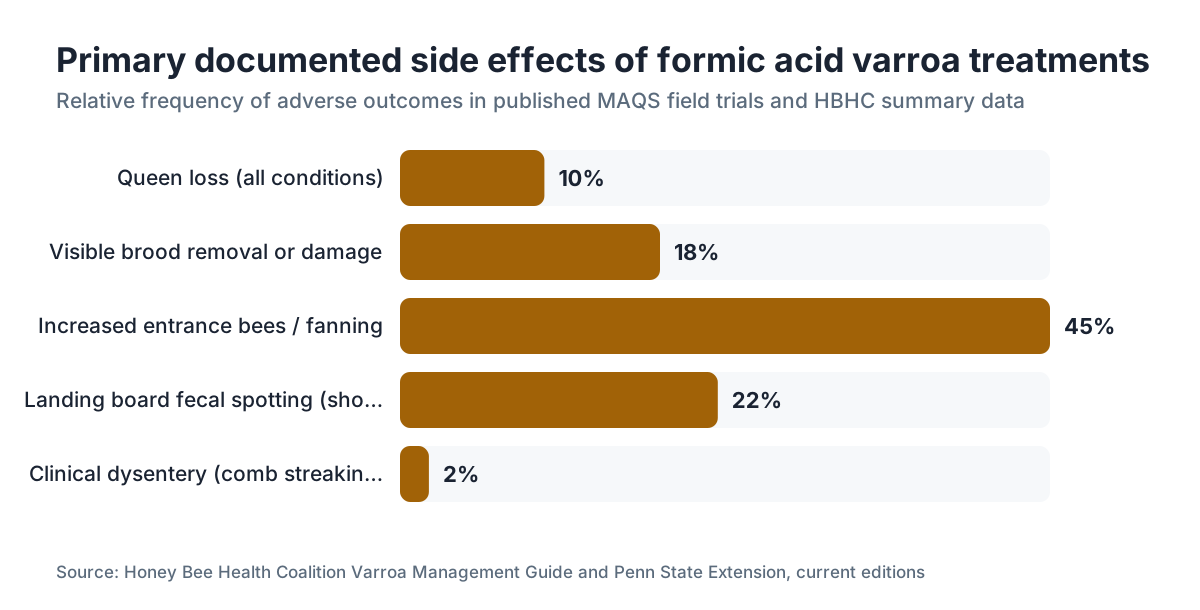
Beekeepers do sometimes see loose, watery feces near the hive entrance or on the landing board in the first 24 to 48 hours of a MAQS or Formic Pro treatment. That's a stress response, not a disease. The distinction changes what you do next. Dysentery from Nosema ceranae demands Fumagilin-B (where still available) or requeening. Stress stools from formic acid clear on their own once the treatment window ends or temperatures drop.
The Honey Bee Health Coalition's Varroa Management Guide states that "queen loss and brood damage are the primary side effects of formic acid treatments" and does not list dysentery among the documented adverse outcomes [4]. That's a meaningful signal from a group that includes academic researchers and major beekeeping organizations.
What symptoms do bees show when formic acid exposure is too high?
Several visible signs tell you formic acid vapor has pushed past what the colony can tolerate. Recognizing them matters because some overlap with dysentery symptoms and some do not.
The most common high-dose symptom is crawling and disoriented bees near the entrance. Bees unable to fly, walking in circles, or dying on the landing board in the first two or three days of treatment usually reflect neurological and respiratory irritation from vapor, not gut disease. You may also see bees fanning hard at the entrance as they try to push the vapor out of the hive.
Loose or discolored feces on the landing board can appear, and this is the symptom most often mistaken for dysentery. In a true formic acid irritation case, the feces tend to be yellowish and watery for a day or two, then stop. In Nosema-driven dysentery, spotting continues, often gets worse, and shows up inside on the frames too. If you open the hive mid-treatment and see fecal streaking on the combs themselves, that's worth investigating beyond just the formic acid application.
Brood removal is another sign of excess vapor. Worker bees will uncap and eject larvae when conditions inside feel uninhabitable. This shows up in multiple MAQS field trials, especially when two strips go into a single-story hive during warm weather [5]. The brood removal is not dysentery, but it is real colony damage, and it matters for your end-of-season population heading into winter.
Queen loss, which MAQS labels warn about at a rate of roughly 5 to 10% in some trials, is a separate issue from gut health entirely [1].
How does temperature affect formic acid's impact on bee gut health?
Temperature is the single most important variable in formic acid safety. Formic acid's vapor pressure roughly doubles for every 10°C increase in temperature. At 85°F (29°C) inside the hive, vapor output from a MAQS strip is far higher than at 65°F (18°C), and that difference can push colony exposure from tolerable into damaging territory.
Both MAQS and Formic Pro labels set an upper temperature threshold for treatment. The MAQS label restricts use to periods when the high temperature does not exceed 92°F (33°C) [1]. Formic Pro's label for the 14-day treatment recommends applying when ambient temperatures sit between 50°F and 79°F (10°C to 26°C) [2]. These are not arbitrary numbers. They come out of field efficacy and safety trials.
When temperatures spike above label guidelines mid-treatment, a few things happen at once. Vapor output from the pad climbs, the colony's ability to ventilate the hive gets taxed, and individual bees take a higher per-breath dose. The cumulative irritation to the gut epithelium goes up. Some beekeepers in the mid-Atlantic and southeastern United States have reported serious brood and adult bee losses from applying MAQS during late summer heat waves before the varroa crisis hits critical levels. If you're in a climate where August regularly hits 90°F, formic acid is probably not your best late-summer option.
Nobody has a clean controlled dataset on exactly what gut formic acid concentration causes pathological diarrhea in Apis mellifera workers. The closest published work describes tissue concentrations, not clinical thresholds. What we can say is that the label temperature ranges were designed to keep colony-level exposure below the damage zone of the dose-response curve.
Does formic acid affect the bees' digestive microbiome?
This is a newer research question and the data are still thin. The honey bee gut microbiome is simple compared to vertebrates, dominated by a handful of core species including Snodgrassella alvi, Gilliamella apicola, Lactobacillus Firm-4 and Firm-5, and Bifidobacterium asteroides. These core bacteria matter for nutrient processing and immune function.
A 2021 paper in Applied and Environmental Microbiology examining formic and oxalic acid effects on the bee gut microbiome found that formic acid at field-relevant doses caused transient shifts in the relative abundance of core microbiome members, with Lactobacillus populations showing the most sensitivity [6]. The researchers noted that the community generally recovered within two to three weeks post-treatment. That fits the acid's short tissue half-life: the disturbance is real but probably not lasting in healthy colonies.
Whether that short-lived microbiome disruption contributes to loose stools or digestive upset during treatment is plausible but unproven. The practical takeaway is that colonies already microbiome-stressed (from antibiotic exposure, Nosema infection, or poor nutrition) may carry a higher risk of gut side effects than strong colonies in full flow. Common sense, but worth naming out loud.
Is the gut disturbance different between MAQS and Formic Pro?
MAQS and Formic Pro both use formic acid as the active ingredient, but the release profile differs. MAQS releases most of its acid load in the first 24 to 72 hours, creating a steep vapor concentration curve early in the treatment window. Formic Pro's gel matrix is built for a slower, more sustained release over the full 10 or 14 days [2].
In practice, MAQS creates a higher peak vapor concentration in the first few days, which lines up with more acute stress symptoms (bees at the entrance, fanning, short-term fecal changes). Formic Pro's lower peak may cut acute irritation while still working, though the longer duration keeps the colony under lower-level vapor exposure for more days total. Field-level comparisons are limited, and I haven't seen a controlled trial specifically comparing gut outcomes between the two products.
For beekeepers who have had bad experiences with MAQS in warm weather, Formic Pro's lower-peak release profile is often the better choice, with the caveat that you need a longer treatment window available before a nectar flow or before very cold nights arrive.
How do you tell formic acid side effects apart from Nosema or other dysentery causes?
Getting this differential right saves you from treating the wrong thing. Here's a practical framework.
Timing is your first clue. If loose feces or unusual fecal spotting begins within 24 to 72 hours of applying a formic acid treatment, the treatment is the likely trigger. If it predates the treatment or continues more than a week after the treatment ends, look elsewhere.
Location of spotting matters a lot. Formic acid gut irritation usually shows as landing board or entrance spotting, not extensive comb streaking. Nosema-driven dysentery often shows inside the hive on frames, top bars, and even the inner cover. Pull a few frames and look. If the combs are clean, the colony is probably just handling treatment stress.
Microscopy is definitive for Nosema. Crush 30 to 60 worker bees (use foragers, not nurses) in a small volume of water, smear on a slide, and look for Nosema spores at 400x magnification. A count above roughly 1 million spores per bee is considered clinically significant, though the research threshold varies by study [7]. This test costs almost nothing and is worth doing if you see comb spotting that doesn't clear after the formic acid treatment ends.
Seasonal context helps too. Nosema ceranae, now the dominant species in North America, can occur year-round but tends to build in late winter and spring when pollen is limited and bees have been confined. If you're seeing fecal problems in September during a treatment application, formic acid irritation is far more likely than Nosema. If it's March and the colony looks weak with spotting on the frames, check for Nosema regardless of what varroa treatment you used.
What does the Honey Bee Health Coalition say about formic acid side effects?
The Honey Bee Health Coalition's Varroa Management Guide is probably the most useful consensus document available to North American beekeepers. It covers every registered treatment option with information on efficacy, timing, temperature ranges, and side effects.
On formic acid specifically, the guide notes that "products containing formic acid may cause queen loss, particularly if used at temperatures above 90°F" and recommends watching the colony closely in the 48 hours after application [4]. The guide frames queen loss and brood damage as the primary risks, with no mention of persistent dysentery as an expected outcome of correct use.
The guide also tells beekeepers planning to use formic acid to check the product label carefully for current temperature thresholds, because label amendments can change those requirements. That's good advice. EPA label changes are not always widely publicized, and following an outdated label is a real regulatory and safety risk. The current label is always the legal document.
You can download the Honey Bee Health Coalition's full guide at no cost. If you want structured tools for timing your treatments around temperature windows and calculating your mite load, VarroaVault's free protocol resources can help you plan the full season around those constraints.
Are there bee strains or colony conditions that make gut reactions more likely?
There's not a lot of published breed-specific data here, but practical experience and a few extension reports suggest some patterns.
Carniolans (Apis mellifera carnica) are often described by beekeepers as more sensitive to formic acid than Italians, with more pronounced entrance balling and fanning during MAQS application. Whether this reflects a genuine physiological difference or simply the fact that Carniolans tend to be raised by beekeepers who watch more closely is hard to say. No controlled trial has compared gut outcomes by subspecies.
Colony size and configuration matter more than genetics, probably. A single-story colony during a two-strip MAQS application has a much smaller air volume to dilute vapor than a two-story colony with a full super. Vapor concentration inside a nucleus colony or a small winter cluster runs substantially higher per bee than in a populous summer hive. Some extension services, including Penn State's apiculture program, recommend removing one strip or folding the strips to cut vapor output in small colonies [5].
Colonies already under stress from poor nutrition, high mite loads, or other diseases are more vulnerable to any treatment's side effects. A colony at 5% mite infestation that is also nutritionally depleted will not handle formic acid as well as a well-fed colony at the same mite level. Common sense, but it matters when you're choosing between treatment options in a hard summer.
What are the safe application practices that reduce the risk of gut irritation?
Following the label is the legal baseline. Beyond that, a few practices consistently cut adverse outcomes in field reports and extension guidance.
Check the five-day forecast before you apply. If temperatures are going to spike above 85°F (label thresholds for MAQS are 92°F, but bee physiologists generally treat 85°F as an internal-hive threshold for elevated vapor stress), wait for a cooler window [1]. This is the highest-leverage decision you make.
Give the colony adequate ventilation. A screened bottom board left open during treatment helps push out excess vapor. Do not close the entrance so far that airflow drops. Some beekeepers reflexively reduce entrances during treatments to prevent robbing, and with formic acid that works against you.
For MAQS specifically, place the strips on top of the bottom brood box's frames, not between boxes, per label instructions. Placement affects vapor distribution.
Do not leave strips in longer than the label allows, and pull them promptly when the treatment period ends. Strips that overstay in a warm late-summer hive keep releasing acid at low levels and drag out any gut irritation that's developed.
Check the colony 24 and 48 hours after application. If you see more than a small handful of crawling bees or obvious distress, remove one strip (for MAQS) or recheck the temperature forecast. The label for MAQS explicitly notes that one strip can be used in smaller colonies or under marginal conditions [1].
For beekeepers building out their broader varroa toolkit, the resources at beekeeping supplies and beekeeping supply companies can help you source thermometers, screened boards, and application gear that make proper protocol easier to run.
Does formic acid leave residues that affect bees or honey over time?
Formic acid residue in honey is one of the better-studied parts of its use, partly because regulators and consumers care about it. Honey naturally contains formic acid at low concentrations (typically 10 to 180 mg/kg depending on floral source) [8]. Treatment with MAQS or Formic Pro can temporarily raise honey formic acid levels, but multiple European and North American studies have found that levels return to or near baseline within weeks of treatment, and the final honey typically does not exceed natural variability in untreated hives.
The EPA registration for MAQS includes a zero-day honey harvest interval, meaning treated hives can legally produce honey for harvest without a waiting period, provided the colony is not in a honey flow during active treatment (foraging bees can move vapor into supers, and honey stored during treatment may show temporary elevation) [1]. Formic Pro also carries a zero pre-harvest interval [2].
Residues in beeswax last longer. Formic acid binds to wax to some degree. A study from the Julius Kühn-Institut found measurable formic acid in comb wax for several weeks post-treatment, though concentrations were low enough to be considered within natural background [9]. This is not a gut-health issue for adult bees, but it's worth knowing if you're trying to track every acid input your colony sees over a season.
For brood, the short-term fecal changes seen in adult workers during high-vapor episodes don't translate into documented larval gut pathology at label-rate doses. Larvae exposed to excess vapor do die, but from vapor toxicity, not from dysentery.
When should you choose a different varroa treatment instead of formic acid?
Formic acid is good stuff. It penetrates capped brood cells (something oxalic acid cannot do in a single dribble or vaporization), it leaves no persistent residues, and it works in a single treatment window. But it's not the right tool for every situation.
Skip formic acid when ambient temperatures are going to exceed label maximums during the full treatment window. In most of the southeastern United States, that rules out treatments from roughly June through September. Oxalic acid vaporization on a brood-interrupted colony, or a synthetic miticide like Apivar, may fit better.
Skip it if the colony has a failing or newly mated queen. The queen loss rate under MAQS, while only 5 to 10% in trials, is enough to make you cautious when the queen situation is already fragile [1].
Skip it in nucleus colonies smaller than four to five frames of bees. Vapor concentration in a small space is hard to control, and even a single strip can overwhelm a small cluster.
If you're seeing actual dysentery symptoms (frame spotting, weak bees, brown streaks on the inner cover) before you've applied anything, test for Nosema first. Treating varroa with formic acid in a Nosema-sick colony will not fix the dysentery, and the extra stress may not help.
The varroa mite overview on this site covers the full range of treatment options with efficacy data so you can make an honest comparison between formic acid, oxalic acid, thymol, and synthetic choices before you commit to a seasonal protocol.
What do university extension programs say about formic acid and bee health?
Penn State Extension's apiculture resources describe formic acid as "effective against mites in capped brood" and list queen loss, brood removal, and bee mortality during extreme heat as the primary risks, with no mention of dysentery as a distinct outcome [5]. Their guidance emphasizes temperature monitoring and the option to use a single strip in smaller or more vulnerable colonies.
The University of Minnesota Bee Lab's treatment recommendations line up with the Honey Bee Health Coalition framing: formic acid is most safely applied in spring and fall when temperatures are moderate, and the decision to treat should rest on a mite wash or sticky board count above the action threshold of roughly 2% in summer or 1% in fall [10].
Cornell's honey bee extension work notes that applicators should expect some observable colony distress in the first two to three days of a MAQS treatment and that this is not cause for alarm unless it persists or the queen goes missing. They specifically note that confusing normal treatment stress with disease is a common beginner error [11].
Across these programs, the consensus holds: formic acid's real risks are queen loss and brood damage from heat or overdose, not dysentery in the clinical sense. If your colony looks sick during a formic acid treatment, heat and vapor concentration are the first hypothesis, not gut disease.
Frequently asked questions
Can formic acid cause diarrhea in honey bees?
High-concentration formic acid vapor can irritate the bee gut lining and cause loose, watery feces on the landing board in the first 24 to 48 hours of a treatment. This is acute stress irritation, not disease. It typically clears on its own when the vapor load drops or the treatment ends. If fecal spotting continues beyond a week after treatment, check for Nosema with a microscopy exam, not for a formic acid reaction.
What does bee dysentery actually look like and how is it different from formic acid side effects?
True dysentery shows as brown or yellowish fecal streaks inside the hive on frames, top bars, and the inner cover, usually paired with a weakening, dwindling colony and bees that look bloated or lethargic. Formic acid irritation produces landing board spotting that clears within days and does not come with the inside-comb streaking or colony decline that dysentery causes. Location and duration are the key distinguishing factors.
Is formic acid safe for bees at the doses used in MAQS or Formic Pro?
At label rates and within the prescribed temperature windows, both MAQS and Formic Pro are considered acceptably safe for adult bees. There is always some risk of queen loss (roughly 5 to 10% in field trials) and brood removal during the first days of treatment. Serious adult bee mortality is largely a temperature problem: exposures above label maximums push vapor concentrations into a damage range the colony cannot clear. Follow the label temperature guidelines and you cut risk dramatically.
Does formic acid kill Nosema or make it worse?
Formic acid has no known therapeutic effect on Nosema ceranae or Nosema apis. It is not an antiparasitic for microsporidia. It probably does not dramatically worsen Nosema either, but applying any stressor to a Nosema-sick colony is unlikely to help. If you suspect Nosema, confirm it with microscopy and address that separately from your varroa treatment plan.
How long after a formic acid treatment do side effects last?
Most observable side effects (bees at the entrance, fanning, loose feces on the landing board) peak in the first 24 to 72 hours of a MAQS application and diminish substantially by day four or five. Formic Pro's slower release profile may spread symptoms over more days at lower intensity. If any symptom lasts beyond one to two weeks after treatment ends, it is not a formic acid effect and needs further investigation.
What temperature is too hot to use formic acid without hurting bees?
The MAQS label sets an upper ambient temperature limit of 92°F (33°C). Formic Pro's 14-day label recommends no higher than 79°F (26°C) ambient during treatment. In practice, many experienced beekeepers use 85°F as their personal cutoff because internal hive temperatures run several degrees above ambient. The critical variable is the sustained high during the full treatment window, not a single spike.
Can formic acid residues in honey make bees sick if they eat stored honey from a treated hive?
This is unlikely at label-rate treatments. Formic acid in honey returns to near-baseline levels within weeks of treatment, and honey naturally contains formic acid in the range of 10 to 180 mg/kg. Bees consuming stored honey from a treated hive are not shown to experience measurable gut effects from residue at those concentrations. Persistent gut problems from eating treated-hive honey would require concentrations far above what field treatments produce.
Does formic acid affect the bee gut microbiome?
A 2021 study in Applied and Environmental Microbiology found that formic acid causes transient shifts in the bee gut microbiome, particularly in Lactobacillus populations, at field-relevant doses. The community largely recovered within two to three weeks post-treatment. Whether this short-lived shift causes clinically observable symptoms in otherwise healthy colonies is not well established, but it's a real effect worth knowing about if you're treating colonies already stressed by poor nutrition or other pathogens.
Why do some beekeepers think formic acid causes dysentery if the evidence doesn't support it?
The confusion usually comes from spotting loose feces near the hive entrance in the first days after applying MAQS or Formic Pro, which can coincidentally overlap with a period when Nosema is present. The temporal association is easy to misread as causation. Both issues can exist at once in a colony, making the formic acid look guilty. Good diagnostic practice (microscopy for Nosema, attention to timing and location of fecal spotting) usually clears up the confusion.
Can I treat a colony with formic acid if it already has dysentery?
It depends on the cause and the colony's current strength. If varroa loads are at or above the action threshold and the colony is functional, you probably need to treat varroa regardless of mild gut issues. But formic acid is not the gentlest option for a colony already under stress. Oxalic acid vaporization on a broodless or nearly broodless colony, or a slow-release synthetic like Apivar, may add less stress. Confirm the dysentery cause before deciding.
Do formic acid treatments harm nurse bees' ability to feed larvae?
During very high vapor episodes, nurse bees may temporarily reduce their time on the brood and some uncapping and ejection of larvae occurs. This is not primarily a gut effect on the nurses; it's a behavioral response to an inhospitable environment. If vapor concentrations stay within label parameters, nurse bee function returns to normal within days. The risk is mainly to brood survival during heat-stressed treatments, not to nurse bees' long-term feeding physiology.
Is formic acid registered by the EPA and is it legal to use in the United States?
Yes. MAQS (EPA Reg. No. 83041-1) and Formic Pro (EPA Reg. No. 83041-2) are both EPA-registered products for use on honey bee colonies for varroa mite control. They are legal to use by beekeepers in the United States following current label directions. The label is the legal document, and using either product in a manner inconsistent with the label is a federal violation under FIFRA.
What mite count threshold should trigger a formic acid treatment?
The most widely cited thresholds in North American extension guidance come from the Honey Bee Health Coalition and University of Minnesota: roughly 2% mite infestation (2 mites per 100 bees on an alcohol wash) during the summer brood-rearing season, dropping to about 1% in fall before cluster formation. These thresholds are treatment decision points regardless of which product you choose, including formic acid.
Sources
- EPA, MAQS (Mite Away Quick Strips) Pesticide Label, Reg. No. 83041-1: MAQS contains 68.4 g formic acid per strip; two-strip standard dose; upper temperature limit of 92°F; queen loss risk documented; zero pre-harvest interval for honey.
- EPA, Formic Pro Pesticide Label, Reg. No. 83041-2: Formic Pro 14-day treatment recommended when ambient temperatures are between 50°F and 79°F; zero pre-harvest interval for honey.
- PLOS ONE, 'Residues of oxalic and formic acid in honey bee tissues following treatment' (2020): Formic acid metabolizes quickly in bee hemolymph with tissue half-lives measured in hours rather than days.
- Honey Bee Health Coalition, Varroa Management Guide (current edition): HBHC states queen loss and brood damage are the primary side effects of formic acid treatments; dysentery is not listed as a documented adverse outcome.
- Penn State Extension, Varroa Management in Honey Bee Colonies: Penn State recommends removing one strip or folding strips to reduce vapor output in small colonies; lists queen loss, brood removal, and bee mortality during extreme heat as primary risks.
- Applied and Environmental Microbiology, 'Effects of organic acid treatments on the honey bee gut microbiome' (2021): Formic acid at field-relevant doses caused transient shifts in bee gut microbiome, particularly in Lactobacillus populations; community recovered within two to three weeks post-treatment.
- USDA AMS National Honey Board, Nosema Diagnostic Protocol: Nosema spore count above approximately 1 million spores per bee is considered clinically significant in worker bees.
- Food and Agriculture Organization of the United Nations, Codex Alimentarius Standard for Honey (CXS 12-1981): Honey naturally contains formic acid at concentrations typically in the range of 10 to 180 mg/kg depending on floral source.
- Julius Kühn-Institut (JKI), Beeswax Residue Study, formic acid persistence in comb wax: Measurable formic acid found in comb wax for several weeks post-treatment; concentrations considered within natural background range.
- University of Minnesota Bee Lab, Varroa Treatment Thresholds and Recommendations: Action threshold of roughly 2% mite infestation in summer and 1% in fall recommended before initiating varroa treatment including formic acid products.
- Cornell University Honey Bee Extension Program, Varroa Treatment Guidelines: Some colony distress in first two to three days of MAQS treatment is expected and not cause for alarm unless it persists; confusion of treatment stress with disease is a common beginner error.
Last updated 2026-07-09