Why bees changed color after formic acid treatment
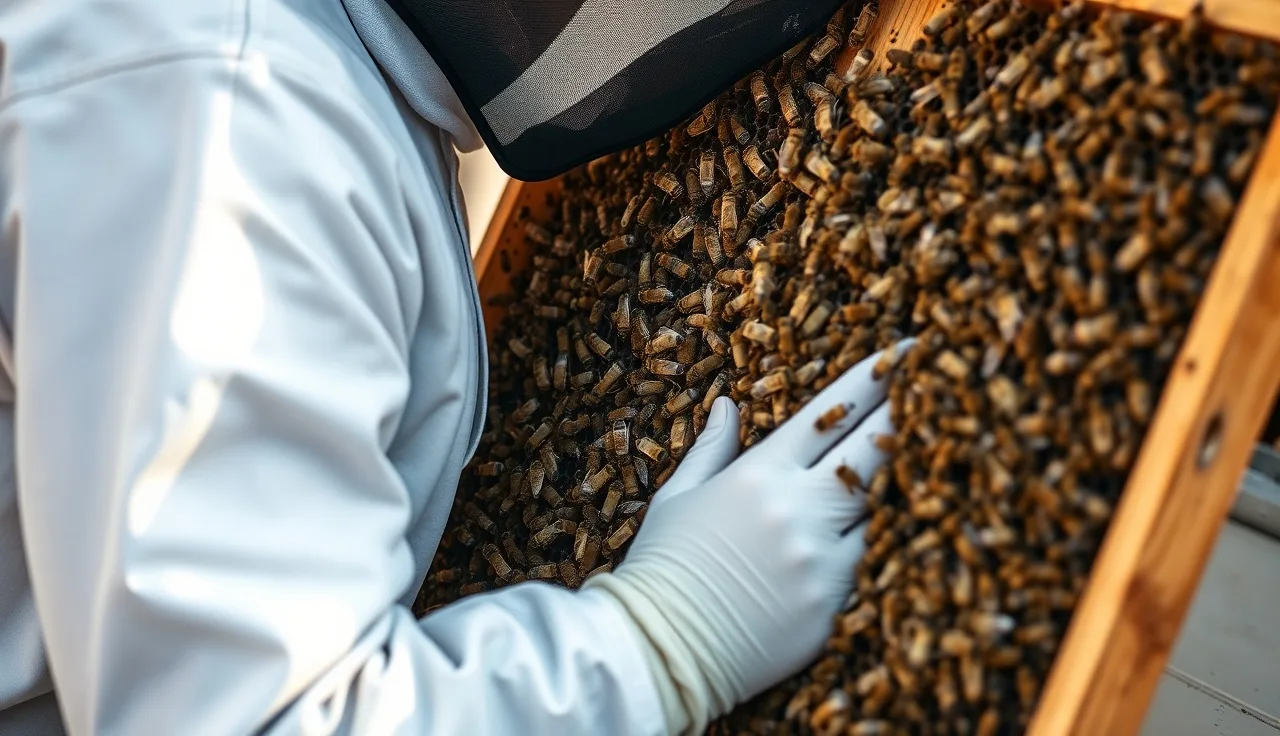
TL;DR
- Formic acid treatments (Mite Away Quick Strips, Formic Pro) can bleach or discolor adult bees and brood, turning them yellow, orange, tan, or pale white.
- The cause is direct acid contact, and it's mostly cosmetic.
- Severe discoloration paired with dead brood or a sudden population crash points to too high a dose or dangerous heat during treatment.
What does formic acid actually do inside a hive?
Formic acid is an organic acid that occurs naturally, including in honey itself. At the concentrations in registered varroa treatments, it evaporates off a strip or gel pad and fills the hive with enough vapor to reach into capped brood cells and kill Varroa destructor on contact. [1] That vapor goes everywhere. It touches bees, comb, pollen, wax, and any larva sitting in an open cell when vapor levels spike.
The EPA-registered label for Formic Pro (a 68.2% formic acid gel strip) says the active ingredient works by "direct contact and fumigant action." [2] That fumigant action is the whole reason to use it for varroa, since it's one of the few treatments that reaches mites hiding under brood cappings. The catch: the same contact chemistry that kills mites can alter the proteins and pigments in bee cuticle and larval tissue when exposure runs long or heat pushes vapor higher than intended.
Formic acid is an acid. Acids denature proteins and bleach organic pigment. The color change on your bees is a direct physical result of that chemistry. It's not a disease, not a pesticide residue, and not a warning that your colony is about to collapse.
Why do bees turn yellow, orange, or pale after formic acid?
Acid vapor bleaches pigment. That's the whole answer, and the rest is detail. The most common change beekeepers report is a yellow or orange tint on bees that are usually dark brown or banded amber. Some see pale, almost chalky bees. A few see a washed-out look across the whole thorax and abdomen.
Adult bee color comes from two things: the melanin and other pigments laid down in the cuticle during pupal development, and the setae (hairs) covering the body. Formic acid vapor at high concentration oxidizes or denatures those surface pigments. Bees that emerge during treatment, or young bees with soft cuticles, take the hit hardest because their cuticle hasn't finished hardening (sclerotizing) yet. [3]
Brood discoloration works a little differently. Formic acid penetrates capped cells and reaches larval hemolymph and tissue proteins. Affected larvae or pupae that are still alive may look yellowed or tan instead of pearly white. Dead larvae from acid overexposure usually look collapsed and discolored, not the ropy, stringing-out mess of American foulbrood. [4]
Heat amplifies all of it. Formic acid vapor pressure climbs sharply with temperature. A 2014 study in the Journal of Apicultural Research found the formic acid volatilization rate nearly doubles between 15°C and 25°C (59°F to 77°F). [5] If you applied MAQS or Formic Pro during a heat wave and your bees came out pale or orange, temperature is almost certainly why the dose landed harder than you expected.
Is the color change harmful to the bees?
Usually, no. Adult bees with mild discoloration, a yellow tint, or slightly bleached bands keep foraging, nursing, and working like nothing happened. The color itself is not a functional problem. Beekeepers who've run formic acid across thousands of colonies see this every season, and it clears as the treated cohort ages out and gets replaced by fresh workers over four to six weeks.
Here are the cases where color change flags a real problem.
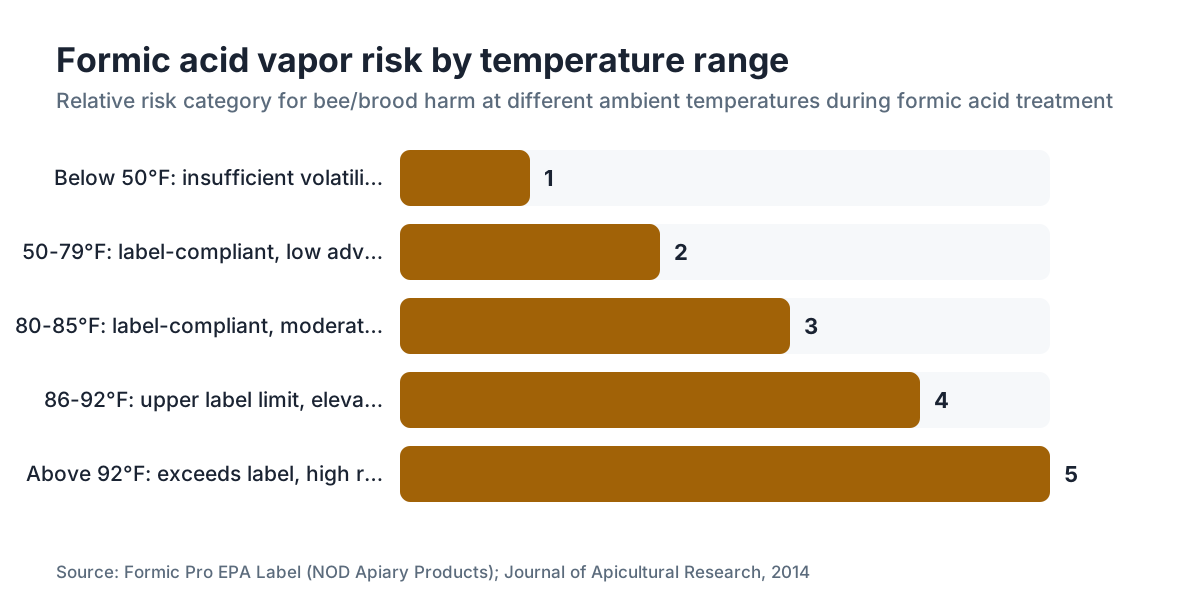
Brood discoloration plus spotty or sunken cappings. Yellow-brown larvae next to chewed-down or perforated cappings can mean brood damage from overexposure. Pull your temperature records for the treatment window. If the high broke 92°F (33°C), the label ceiling for most formic acid products, that's your likely cause. [2]
Dead bees piling up during treatment or within 48 hours after. Some drift and a small kill of weak bees is normal. Hundreds a day, especially discolored and freshly dead, means the acid load ran too high.
Queen loss. A spotty brood pattern a week out could mean the queen stopped laying, either harmed by the treatment or superseded. This is a documented risk in heat and in small colonies where vapor concentration per bee runs higher. The Honey Bee Health Coalition's varroa management guide names queen loss as the most significant side effect of formic acid and notes it's more likely in small colonies and above label temperatures. [6]
If your bees are discolored but foraging, the cluster looks right, and the brood pattern is solid, you can watch and wait. The discoloration isn't contagious. It won't spread to healthy bees that never saw the acid.
What does normal versus concerning color change look like?
Concrete beats vague here. Normal after formic acid means a minority of bees look off but behave fine. Concerning means most of the brood-nest population looks bleached at once, or the brood is discolored alongside bad cappings.
Normal range after formic acid treatment:
- Adult bees with a yellow or orange tint on normally dark bands
- Pale or faded setae (the hairs look lighter than usual)
- Bees that look slightly washed out but move normally and respond to disturbance
- A minority of bees affected, not the whole population
Concerning range:
- Most adult bees in the brood nest look bleached or discolored at the same time
- Larvae in open cells are yellow-brown or tan instead of pearly white
- Capped brood with sunken, punctured, or discolored cappings alongside the color change
- Heavy adult mortality (dead bees covering the landing board for more than two days)
- Queen absent or laying inconsistently one week after treatment
One thing trips people up. Formic acid knocks down mites, and those reddish-brown mite bodies pile up on the bottom board where they're suddenly easy to see. On a crowded board they can mess with your read on bee color. The mites aren't discoloring the bees. They're just more visible now.
| Observation | Likely Meaning | Action |
|---|---|---|
| Yellowish adult bees, normal behavior | Cosmetic pigment change | Monitor, no treatment needed |
| Pale/bleached adults, still foraging | Cosmetic, possible high-temp exposure | Note temp at application, monitor |
| Yellow-brown open larvae, no bad odor | Mild brood damage from acid | Verify temp log, recheck brood in 7 days |
| Yellow-brown larvae + sunken cappings | Significant brood damage | Remove strip if still in place, reassess |
| Dead bees piling up + discoloration | Overexposure, possible queen risk | Remove strip, inspect for queen |
| Discolored bees + ropy larvae | Rule out AFB (separate issue) | Send sample to state lab |
Does formic acid affect bee brood color differently than adult bees?
Yes, and the difference comes down to the cuticle. Adult bees have a hardened shell that limits how far acid gets in, so their color change is mostly surface chemistry: oxidation or denaturation of external pigment and setae. Larvae have no such shell. They're soft-bodied, and vapor passing through a capped cell reaches larval tissue and hemolymph directly.
Affected brood shows a yellowing or browning of what should be white larvae. It's worst in larvae in the early capped stage, since they've been sealed in with the vapor longest. Pupae that have started forming adult features may show disrupted pigment in the developing cuticle, which reads as an odd brown or tan cast on bodies that should be white or lightly colored.
The thing that separates acid damage from disease is smell. Brood damaged by formic acid overexposure generally doesn't stink. American foulbrood, the disease that looks most like yellow-brown larval discoloration, has a sour, rotting odor and produces a ropy string when you draw out a matchstick from an affected cell. [4] Acid-damaged brood may smell acidic but never putrid. Any doubt at all, call your state apiarist. The University of Minnesota Extension keeps diagnostic resources and can point you to state labs. [7]
A queen that was in the hive during treatment may lay at reduced egg viability for a short stretch afterward. That doesn't always show as color change, but it can look like a patchy brood pattern about a week after treatment ends.
Which formic acid products cause the most color change?
MAQS causes visible color change more often than Formic Pro, mostly because it hits harder up front. Both products use formic acid, and both are EPA-registered for use in the US. The difference is the release curve.
Mite Away Quick Strips (MAQS) deliver a fast, concentrated burst of formic acid over a 7-day window. [8] Formic Pro releases more slowly across a two-strip, 14-day protocol at lower single-strip doses. [2] Because MAQS spikes the initial vapor higher, reports of color change and short-term queen loss run slightly more common with it, especially in heat. Formic Pro's slower release was built partly to soften those effects, and some beekeepers report fewer discolored bees. Both can discolor bees once heat pushes vapor past label limits.
Neither is safer in every situation. If your hives sit in full afternoon sun where July highs regularly top 85 to 90°F, Formic Pro's lower single-dose rate is the better bet. If you're treating in September in a northern state with temperatures reliably under 85°F, either one works fine.
Temperature windows matter more than which box you buy. The Formic Pro label sets treatment temperatures between 50°F and 92°F (10°C to 33°C), with no more than three straight days above 85°F during treatment. [2] MAQS carries a similar window. Stay inside those bounds and you cut your risk of heavy color change and brood damage sharply.
Before you commit to formic acid, know your mite load going in. The free protocol calculators at VarroaVault help you decide whether formic acid fits a given treatment window or whether another approach makes more sense for your conditions.
Can formic acid affect bee color after the strips are removed?
Yes, for a day or two. Formic acid doesn't build up in beeswax or honey at meaningful levels under normal treatment. The EPA-registered label notes formic acid is naturally present in honey and requires no honey withdrawal period when used as directed. [2] But the vapor lingers in the hive for a day or two after you pull the strips, and bees emerging in that window can still show mild pigment changes.
So you might see a second small batch of slightly yellowed bees emerge in the 3 to 5 days after removal. That's normal. It doesn't mean ongoing harm. By two weeks out, new bees from eggs laid before, during, and after treatment steadily replace the discolored cohort, and normal color returns to the population.
One edge case is worth flagging. If a queen was in the pupal stage during peak vapor (which only applies if you'd introduced a queen cell right before treatment, an uncommon setup), the emerging queen may show some cuticle discoloration. Rare, but documented. In most established colonies the queen is well past that vulnerable stage, and the real queen risk from formic acid is direct vapor on her as an adult, which can disrupt mating behavior or trigger supersedure.
How do I know if my queen is okay after bees changed color?
Wait seven days after treatment ends, then do a full queen check. Opening the hive over and over during treatment scrambles vapor distribution and stresses the bees for nothing.
At seven days post-treatment, look for these three things:
- Eggs in cells (tiny upright white grains at the cell bottom). Eggs mean a laying queen was present two to three days ago at the least.
- Young larvae in a solid, consistent pattern, not spotty or scattered.
- The queen herself if you can find her, moving normally, with bees attending her rather than biting or ignoring her.
Eggs and solid brood mean your queen made it. Some discolored adults around healthy brood is not a problem.
No eggs and no young larvae? Wait another four to five days before you call her gone. Some colonies raise a replacement fast, and you don't want to drop in a frame of eggs if supersedure is already underway. If you're 12 days out with still no eggs and no queen cells, the colony is queenless and you need to act. The Honey Bee Health Coalition varroa guide has a decision tree for post-treatment assessment. [6]
If you run several hives, keep a simple log: treatment date, daily high temperature during treatment, and notes from the 7-day check. That beats trying to remember across six or eight colonies, and it shows you whether color change tracks with temperature spikes.
Could the color change be something other than formic acid?
Maybe. Rule out a few things before you pin all of it on the treatment.
Sacbrood. This virus turns larvae yellow to dark brown in a characteristic sac shape, and it's easy to blame on a recent treatment. [4] It's a virus, not the acid.
Chalkbrood. Dead brood from chalkbrood goes white and chalky, sometimes with a yellow cast early on, so it gets confused with acid damage. Tell them apart by touch: chalkbrood mummies are hard and granular, while acid-damaged larvae are soft and wet.
Pollen color. Bees hauling bright yellow or orange pollen in their corbiculae can look strikingly yellow, especially during a good flow of canola or dandelion. Check this before you assume the treatment recolored your returning foragers. Look at the beehive pollen patterns for your area and season.
Genetics. If you recently requeened with a different line, the new queen's daughters can look plainly different from the old workers. Carniolan bees run much darker than Italians. Drop an Italian queen into a colony that was Carniolan stock and the population shift can read like a sudden color change over four to six weeks.
Pesticide exposure. Some ag pesticides and miticides can throw off adult or brood coloration. If your area had a spray event, chase that down. Your state department of agriculture may be able to test a bee sample. [9]
What should I do right now if my bees look discolored?
Start with the temperature log. Check every day since you set the strips. No log? Pull your local weather station data by zip code. Free sites keep hourly records. If your highs crept past 90 to 92°F during the treatment window, that's almost certainly your cause.
Next, watch the entrance. Normal forager traffic, even if the bees look odd, is a good sign. A pile of dead bees is a bad one.
If the strips are still in on day three or four of a seven or fourteen day treatment, and you're seeing heavy mortality or bees clearly struggling (crawling, unable to fly), pulling the strips early is a fair call. The Formic Pro label acknowledges early removal as an option when adverse effects show up. [2] You lose some efficacy and keep the colony.
Then wait. Seven days after treatment ends, run the full queen check from the section above.
And write it all down. Treatment outcomes, adverse effects included, make your next decision sharper. If you run a structured protocol like the free mite management planner at VarroaVault, log the treatment date, temps, and observations in one place so the patterns show up across seasons.
For gear that isn't an emergency, the major beekeeping supply companies carry both Formic Pro and MAQS, and most list the label temperature requirements right on the product page.
How long until bees look normal again after formic acid treatment?
Figure four to five weeks for the hive to look normal again, which is about one worker-bee generation. Worker bees live roughly 15 to 38 days in summer (shorter during hard foraging, longer heading into fall and winter). [3] The acid-exposed cohort ages out and gets replaced.
In practice, most beekeepers report the share of visibly discolored bees drops noticeably by two weeks after treatment ends, and the hive looks largely normal by four to five weeks. In colonies with a healthy laying queen, the first fully unaffected cohort is the post-treatment brood, and those bees emerge about 21 days after treatment ends.
Still seeing widespread discoloration at six weeks? Something else is going on. That's the point to call your local extension apiarist or state bee inspector. Extension programs at Penn State, NC State, and the University of Minnesota run colony health diagnostics and can rule out disease. [7][10][11]
The color change doesn't touch the colony's genetics. Formic acid causes no mutations. New bees from untreated eggs and larvae come out with perfectly normal color for their line.
Frequently asked questions
Is it normal for bees to turn yellow after MAQS treatment?
Yes. It's one of the most common things beekeepers see after using Mite Away Quick Strips. MAQS releases formic acid at a higher initial concentration than Formic Pro, and the vapor oxidizes or bleaches the surface pigment of adult bees. If the bees stay active and the brood pattern looks normal, the yellowing is cosmetic and clears as those bees age out over three to five weeks.
Can formic acid kill bees or is the color change just cosmetic?
At label-compliant temperatures and doses, formic acid causes cosmetic color changes in most cases, not real mortality. The risk of actual bee death or brood damage climbs sharply when application temperatures pass the labeled ceiling (around 92°F / 33°C for both MAQS and Formic Pro). High-temperature overexposure can kill brood and, at worst, cost you the queen. Color change alone, without raised mortality or brood damage, is generally not a sign of harm.
Why did only some of my bees change color, not all of them?
Newly emerged bees with soft, not-yet-hardened cuticles are more susceptible to acid-driven pigment change than older workers. Bees near the strip get higher exposure. Bees out foraging during peak vapor may show no change at all. A patchy pattern of discoloration across the colony fits normal formic acid exposure exactly.
Did formic acid hurt my queen?
Possibly, but don't assume it. A healthy laying queen in an established colony is far more likely to survive formic acid than to be lost to it. The main risk factors are high temperatures during treatment, small colony size (higher acid concentration per bee), and queens late in their productive life. Check for eggs seven days after treatment. Eggs mean your queen is fine.
My brood looks yellow and the cappings are sunken. Is that formic acid damage or American foulbrood?
Run the ropy test. Insert a clean toothpick or matchstick into a suspect cell and pull it out slowly. If the larval mass strings out in a thread, that's American foulbrood and you contact your state apiarist immediately. Formic acid-damaged larvae are soft and discolored but never string out. AFB also has a sour odor that acid-damaged brood lacks. When in doubt, send a sample to your state lab.
Can I apply formic acid when it's hot outside to get better mite kill?
No. Higher temperatures do speed formic acid volatilization, which sounds helpful, but the increase is nonlinear and quickly blows past safe concentrations for the colony. Both MAQS and Formic Pro cap treatment temperature around 92°F (33°C), with guidance to avoid applications when more than three straight days during treatment will top 85°F. Break those limits and you risk brood damage, queen loss, and heavy adult mortality.
How long does it take for bees to recover normal color after formic acid?
In most colonies, the share of discolored bees drops noticeably within two weeks of treatment ending as new bees emerge and older ones die off naturally. Full return to normal takes four to five weeks, roughly one worker-bee generation. Colonies with a healthy queen and strong population recover faster because the new brood replaces the acid-exposed cohort more quickly.
Will the honey taste different or be unsafe if my bees changed color after formic acid?
No. Formic acid is naturally present in honey at low levels and doesn't build up to unsafe concentrations from label-compliant treatment. Both MAQS and Formic Pro require no honey withdrawal period when used as directed, per their EPA-registered labels. Bee discoloration is surface chemistry on the bees themselves, not a sign that honey quality or safety changed.
Should I remove the formic acid strips early if my bees look bad?
If you're seeing heavy adult mortality (large piles of dead bees at the entrance over multiple days), crawling or disoriented bees, or clear colony distress, early strip removal is reasonable. The Formic Pro label acknowledges early removal as an option when adverse reactions show up. You sacrifice some mite-kill efficacy, but keeping the colony alive comes first. The MAQS label carries similar guidance.
Does formic acid change color permanently or just temporarily?
For the individual bees alive during treatment, the change is permanent, since the pigment shift is chemical and a bee doesn't molt or regrow its cuticle. For the colony as a whole it's temporary, because those bees age out and get replaced by normally colored bees emerging from unaffected pupae over the next three to five weeks.
Can bees' color change indicate a formic acid overdose even if no bees are dying?
Widespread, severe bleaching across most adult bees, combined with any yellowing of brood, can mean the colony took a higher dose than intended even without heavy adult mortality. The usual culprit is applying above the label temperature ceiling. If your notes show the treatment window stayed within label parameters and you see only mild yellowing in a minority of bees, that's normal and not an overdose.
What is the difference between Formic Pro and MAQS in terms of bee color change?
MAQS releases formic acid faster, producing a higher initial vapor spike that more often causes visible color change and occasional adverse effects, especially in heat. Formic Pro uses a slower extended-release formulation built to lower peak vapor concentration, and some beekeepers report less noticeable color change with it. Both can discolor bees if ambient temperatures push volatilization above intended levels.
My bees turned orange after formic acid. Is orange different from yellow?
Not really. Orange and yellow discoloration in normally dark-banded bees come from the same chemistry: acid-driven pigment alteration in the cuticle and setae. Orange tones tend to show up in bees that started with more saturated amber pigment, while lighter bees go more yellow. Both are cosmetic unless they come with the mortality or brood damage described in the signs of a real problem.
Sources
- EPA, Pesticides program (formic acid registration overview): Formic acid works by direct contact and fumigant action to kill Varroa mites including those under capped brood
- Formic Pro EPA-Registered Label (NOD Apiary Products), product label text: Formic Pro label specifies treatment temperature window of 50°F to 92°F, no more than 3 days above 85°F, no honey withdrawal period required
- University of Florida IFAS Entomology and Nematology, Honey Bee Biology: Worker bees live approximately 15-38 days in summer; newly emerged bees have soft cuticles susceptible to chemical alteration
- USDA Agricultural Research Service, Bee Research Laboratory (honey bee diseases and pests): American foulbrood produces a distinctive ropy string test and sour odor; sacbrood larvae turn yellow to dark brown in a sac shape; these differ visually from chemical brood damage
- Journal of Apicultural Research (formic acid volatilization and temperature, 2014): Formic acid volatilization rate nearly doubles between 15°C and 25°C, explaining why high ambient temperatures dramatically increase in-hive acid concentration
- Honey Bee Health Coalition, Tools for Varroa Management guide: Queen loss is the most significant side effect of formic acid treatment and is more likely in small colonies and at temperatures above label limits
- University of Minnesota Extension, Bee Lab diagnostic resources: University extension programs offer colony health diagnostics and can rule out disease in suspect brood discoloration cases
- MAQS (Mite Away Quick Strips) EPA-Registered Label, NOD Apiary Products: MAQS delivers formic acid over a 7-day treatment window with a higher initial vapor concentration compared to Formic Pro's 14-day extended-release protocol
- USDA National Agricultural Library (bee and pesticide research resources): State departments of agriculture can test bee samples for pesticide exposure when abnormal coloration or mortality follows a suspected spray event
- Penn State Extension, Varroa mite management in honey bee colonies: University extension apiarists are available for colony health consultation and post-treatment assessment guidance
- NC State Extension, Apiculture program (honey bee health resources): Extension bee programs provide diagnostic support and best-practice guidance for varroa treatment adverse effects
Last updated 2026-07-09