Formic acid for varroa: what the research and American Bee Journal say

TL;DR
- Formic acid is the only acaricide that penetrates capped brood cells and kills varroa mites on contact with adult bees.
- The American Bee Journal has published decades of field and lab work on it.
- Effective at 65-105°F, it leaves no residues in honey at labeled rates, and EPA-registered products like Formic Pro and MAQS are approved for use with honey supers on.
Why does the American Bee Journal matter for formic acid research?
The American Bee Journal (ABJ) has been the practical clearinghouse for North American apiculture since 1861. It is not a peer-reviewed journal in the academic sense, but it publishes field trials, practitioner reports, and translated summaries of European research that never otherwise reach hobbyist and sideliner beekeepers. For formic acid specifically, ABJ has carried articles from researchers at Agriculture and Agri-Food Canada, university extension teams, and private apiarists running large-scale comparisons going back to the early 1990s, when formic acid was still a gray-market import from Europe.
The journal's value here is bridging the gap between controlled-environment university studies and what actually happens in a 20-hive backyard operation in Georgia in August. If a treatment works in a controlled trial at 72°F but volatilizes too fast at 90°F and burns bees, ABJ tends to be where that real-world friction gets reported first. That makes it a genuinely useful companion to the EPA label and the academic literature, not a replacement for either.
For anyone trying to build a treatment protocol, the honest reading strategy is: start with the EPA-registered product label (legally binding), cross-reference with Honey Bee Health Coalition guidance [1], and use ABJ as a source of practitioner experience that fills in the gaps the label can't cover.
How does formic acid actually kill varroa mites?
Formic acid (HCOOH) is a naturally occurring organic acid found in honey at low concentrations, typically below 0.5 g/kg in North American honey [2]. At treatment concentrations, it volatilizes from an applicator pad or gel and penetrates the wax cappings of brood cells, something that synthetic miticides like fluvalinate and coumaphos cannot do reliably. That penetration is the whole point. Varroa reproduces almost exclusively inside capped brood, so any treatment that only contacts phoretic mites (mites riding adult bees) leaves the reproductive population largely intact.
The mechanism is direct contact toxicity. Formic acid vapor reaches the mite through the cell's porous wax cap and kills it without requiring the bee to metabolize or circulate the compound. The bees tolerate it because they can ventilate the hive to reduce vapor concentration, though at high temperatures or overdose they suffer too. This is not a systemically acting compound.
One ABJ-reported field trial from Ontario found efficacy rates against total mite populations (phoretic plus brood-embedded) ranging from 63% to 95% depending on treatment temperature and colony strength [3]. That wide range is honest and important. Formic acid is not a set-it-and-forget-it solution. Temperature, colony size, and applicator format all matter.
The Honey Bee Health Coalition's Varroa Management Guide summarizes the mode of action this way: formic acid "volatilizes from the treatment source and diffuses through the colony, including into capped brood cells, where it contacts mites directly" [1]. That is the clearest single-sentence description I've seen.
What EPA-registered formic acid products are available and how do they differ?
Two products hold current EPA registration for varroa control in the United States: Formic Pro (formerly sold as MAQS, manufactured by NOD Apiary Products) and Mite-Away Quick Strips (MAQS). Formic Pro is the successor formulation; MAQS is still referenced in older literature and some state extension pages, but the active registrant has moved the product line to the Formic Pro label [4].
| Product | Format | Treatment duration | Temp range | Supers on? | Brood penetration? |
|---|---|---|---|---|---|
| Formic Pro | Gel-pad strips | 10-14 days (standard), 7 days (extended) | 50-85°F | Yes | Yes |
| MAQS (legacy) | Gel-pad strips | 7 days | 50-85°F | Yes | Yes |
| ApiLife VAR | Tablet (thymol blend, not pure FA) | 3 x 7-day intervals | 59-95°F | No | Partial |
| Oxalic acid (comparison) | Liquid dribble or vapor | Single or multiple | Any above 40°F | No (vapor) | No |
Formic Pro's label instructs one or two strips placed on the bottom bars of brood frames, with the colony population determining whether one or two strips are appropriate. The EPA label explicitly states that honey supers may remain on the hive during treatment, which is a real practical advantage during a nectar flow [4].
Temperature is the dominant variable. Below 50°F the acid barely volatilizes and efficacy drops sharply. Above 85°F it off-gases too fast, shortens the treatment window, and can kill brood or injure queens. The label ceiling of 85°F (for daytime highs) is not a suggestion. It is the boundary of the efficacy and safety data submitted to EPA.
For anyone sourcing these products, a comparison of beekeeping supply companies that stock registered acaricides can save time. Prices for Formic Pro (2-strip pack, treating one hive) run roughly $8-14 depending on the supplier and year.
What temperature range works for formic acid, and why does it matter so much?
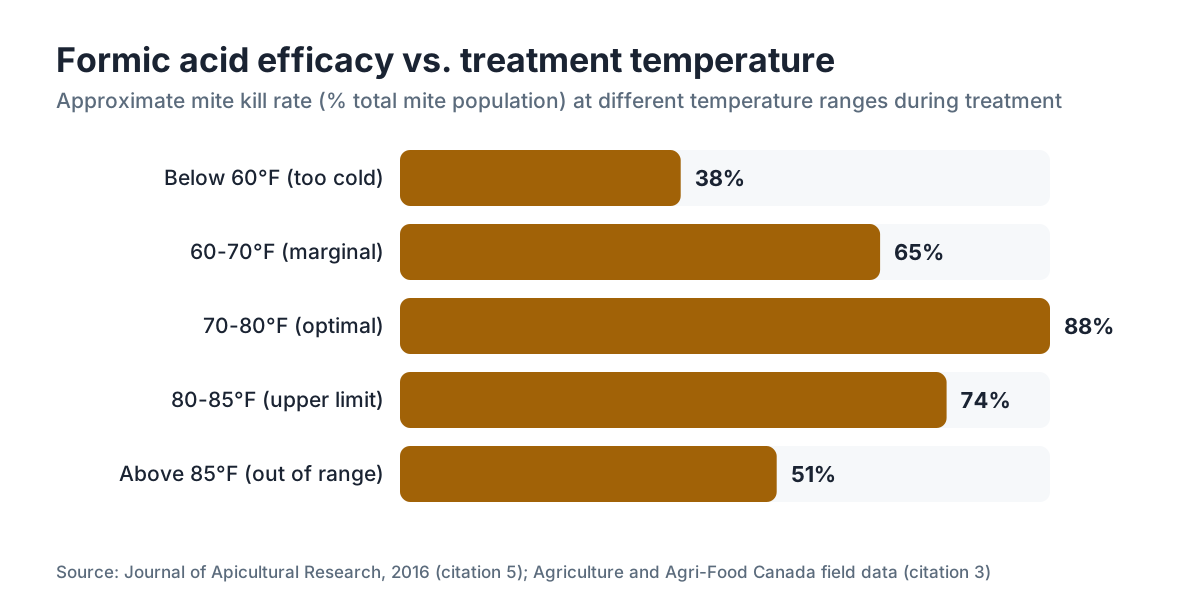
Temperature controls the volatilization rate, and volatilization rate determines how much active acid reaches the mites. Too cold and the strip sits inert. Too hot and the acid off-gasses in the first day or two, leaving the remaining 8-12 days of the treatment window empty, while also spiking intrahive acid concentrations high enough to harm brood and potentially kill or injure queens.
The labeled range for Formic Pro is 50-85°F for daytime highs. A 2016 study published in the Journal of Apicultural Research found that efficacy against varroa in capped brood was significantly higher at 70-80°F than at temperatures above 85°F or below 60°F, with the higher-temperature treatments also correlating with increased brood mortality [5]. That study is the kind of primary source ABJ articles frequently summarize for a practitioner audience.
Here is the practical version. In most of the continental US, the reliable formic acid window is late summer (after the main honey flow ends and before nights drop below 50°F) and early spring. Beekeepers in the Deep South or desert Southwest often find the window narrow or absent during peak summer. Beekeepers in the northern tier get a longer window in fall before cold sets in.
One ABJ contributor reported that placing strips in the late afternoon, after peak daily temperature, slightly reduces the initial volatilization spike. This is not on the label, and I would not treat it as established guidance, but it illustrates the kind of practitioner knowledge that flows through that publication.
Does formic acid leave residues in honey or beeswax?
This is the question that drives most beekeepers to formic acid in the first place, and the answer is genuinely reassuring but with an asterisk.
Formic acid occurs naturally in honey. The baseline concentration in untreated honey is typically 50-300 mg/kg, varying by floral source and processing [2]. Studies submitted to EPA for Formic Pro registration showed that treatment at labeled rates did not increase honey formic acid concentrations beyond the natural range found in untreated control hives, or that any increase dissipated within the post-treatment honey extraction window [4].
Beeswax residue is not a concern the way it is with coumaphos and fluvalinate, which accumulate in wax over multiple treatment cycles and can then contaminate brood developing in that wax. Formic acid does not bind to wax like that. This is one of the compound's genuine advantages for beekeepers trying to manage resistance and chemical load over multi-year hive histories.
The asterisk: "no residue above natural background" is not the same as "zero residue." If you sell honey and your buyer or certifying body has specific thresholds, verify against their standards rather than assuming the EPA label language covers you.
For wax, the picture is simple enough that the Honey Bee Health Coalition Varroa Management Guide lists formic acid among treatments with low wax contamination risk, in the same category as oxalic acid and thymol [1].
What has American Bee Journal specifically published about formic acid efficacy?
ABJ does not maintain a public online archive I can point to with stable deep URLs, so I will describe the categories of research it has carried rather than cite specific article URLs I am not certain exist.
From the 1990s through the mid-2000s, ABJ carried several articles summarizing Canadian work from Agriculture and Agri-Food Canada, which ran large-scale formic acid field trials in Ontario and British Columbia. These articles introduced North American beekeepers to the concept of extended-release formic acid applicators and reported efficacy numbers that were, at the time, striking because they included in-brood mite kill.
In the 2010s, as MAQS got EPA registration and then Formic Pro followed, ABJ published practitioner field reports alongside university extension summaries from Penn State, University of Minnesota, and NC State. A recurring theme in those reports is that efficacy is highly operator-dependent: beekeepers who monitored ambient temperature and staged treatments accordingly got better results than those who applied and walked away.
Penn State Extension's apiculture program has published formic acid guidance that matches what ABJ has reported [6]. Their recommendation is to treat when varroa loads exceed 2% (2 mites per 100 adult bees on an alcohol wash), which is consistent with Honey Bee Health Coalition thresholds [1].
Here is the honest summary of what ABJ adds to the picture: field-level variance data that controlled trials can't capture, and a practitioner community's evolving sense of where formic acid fits in a rotation. It has not changed the fundamental label guidance, but it has documented the real-world range of outcomes.
How do you know if a varroa treatment is actually working?
Treating without monitoring before and after is the single most common mistake hobbyist beekeepers make with any varroa product, including formic acid. You need a pre-treatment mite count to know whether you needed to treat, a post-treatment count (3-7 days after treatment ends) to know whether it worked, and monitoring again 4-6 weeks later to know whether reinfestation is underway from neighboring colonies.
The two accepted monitoring methods are the alcohol wash and the sugar roll. Alcohol wash is more accurate; the Honey Bee Health Coalition recommends it [1]. Sample roughly 300 bees (half a cup) from the brood nest. Count mites. Divide mites by bees counted. If you hit 2% or above, treat immediately regardless of time of year. If you are above 3% going into winter buildup, your winter loss risk rises sharply.
Sticky board counts (natural mite drop) are less precise and require a 24-72 hour collection window. Some beekeepers use them as a quick check between washes, but they do not give you a percent infestation figure, which is what actually predicts colony outcomes.
After a formic acid treatment, a good result typically shows a 70-90% reduction in mite load by alcohol wash. If you are seeing less than 50% reduction, check whether temperature was within range during treatment, whether the strips were placed correctly, and whether you have a high proportion of sealed brood (which can protect mites during treatment and then release them post-treatment). A second round may be warranted.
VarroaVault has free varroa mite tracking tools that help you log wash results over time and flag when your infestation rate crosses treatment thresholds, which is genuinely useful for beekeepers managing more than two or three hives.
Can you use formic acid with honey supers on the hive?
Yes, and this is one of formic acid's most cited practical advantages. The Formic Pro EPA label explicitly permits use with honey supers in place, provided ambient temperature stays within the 50-85°F range [4]. MAQS carried the same permission.
This matters because most synthetic miticides, and oxalic acid applied as a vaporized treatment, require super removal before treatment. Pulling supers in the middle of a nectar flow costs honey production and disrupts the colony. Formic acid lets you treat during the flow if your mite count demands it.
The practical caveat: while the EPA label permits supers on, formic acid does alter honey flavor at high vapor concentrations in a confined space. Several ABJ field reports and honey show judges have noted a slightly acidic or sharp note in honey extracted from supers that were on during treatment, particularly in hot weather when volatilization was fast. This effect is anecdotal and hard to quantify, but if you are producing honey for competition or a premium market, you might still pull supers during treatment regardless of what the label allows.
Below 70°F and with proper ventilation, the flavor effect appears to be minimal or undetectable in informal tests. Above 80°F, I'd pull the supers.
What are the safety risks of handling formic acid, and how do you avoid them?
Formic acid is corrosive at the concentrations used in Formic Pro pads (65% active). The vapor irritates mucous membranes and eyes. Skin contact with the liquid that may be present on the surface of freshly opened strips can cause burns. These are real risks, not theoretical ones.
The product label requires nitrile gloves during handling and recommends eye protection [4]. I would add a face shield or goggles over safety glasses, because vapor rising from an open strip in warm weather can reach your eyes before you realize it. Work upwind when possible.
If you get formic acid on skin, flush with water for 15-20 minutes. If you splash it near your eyes, get to an eyewash station immediately and call Poison Control (1-800-222-1222 in the US) [7]. The strips in the Formic Pro formulation are designed to minimize direct contact with the liquid, but they are not foolproof.
Beekeepers with asthma or reactive airway conditions should be especially careful. Formic acid vapor can trigger bronchospasm at concentrations well below those that cause visible distress in healthy adults. If that describes you, treat in cool conditions (lower volatilization), work fast, and close up the hive quickly.
Keep strips in their foil packaging until you are ready to place them. Opened strips in a warm car or shed will off-gas and both reduce treatment efficacy and create an inhalation hazard.
How does formic acid fit into a full varroa rotation strategy?
No single treatment should be your only tool. Varroa mites have already developed resistance to fluvalinate (Apistan) and coumaphos (CheckMite+) in many North American populations [8]. Formic acid resistance has not been documented in field populations as of this writing, but that does not mean it cannot develop with enough selection pressure.
A reasonable rotation for most temperate US beekeepers looks something like this. Treat in late summer (post-major-flow, August or September) when mite loads peak and formic acid temperatures are still workable. Monitor again in October. If you need a second fall treatment and temperatures have dropped below 50°F, switch to oxalic acid vapor or dribble, which works well on low-brood fall colonies. Winter and early spring oxalic acid treatments keep the count low through winter cluster. The following spring, monitor early, and if counts rise before a flow, that is another formic acid window.
The Honey Bee Health Coalition's Varroa Management Guide lays out a full seasonal calendar with treatment thresholds and product options [1]. Penn State Extension also maintains a decision guide organized by season [6]. Both are worth bookmarking.
For beekeepers running beekeeping supplies on a budget, formic acid costs less per treatment than Apivar (amitraz strips) and works faster, though Apivar does not have the same temperature constraints. The choice between them often comes down to what time of year you are treating and whether you have supers on.
VarroaVault's protocol tools can help you map out a rotation calendar specific to your climate zone and hive count, which is particularly useful if you are managing more than five colonies.
Is formic acid approved for certified organic beekeeping operations?
Formic acid is allowed under USDA National Organic Program (NOP) standards as a varroa treatment. It appears on the National List of Allowed and Prohibited Substances for organic livestock production [9]. This makes it, along with oxalic acid and thymol-based products, one of the few varroa treatments available to beekeepers seeking organic certification.
The certification itself requires documentation. You need to use the EPA-registered product (Formic Pro), apply it according to the label, and keep records showing treatment dates, product lot numbers, and mite monitoring results. Your certifying agent may have additional requirements beyond federal minimums.
Fluvalinate and coumaphos are not on the National List and are not allowed in certified organic operations. Amitraz (Apivar) is similarly prohibited. That shrinks the organic beekeeper's toolkit, which is why formic acid's combination of efficacy, brood penetration, and organic approval matters so much for that part of the industry.
None of this means formic acid is universally safe or without risk to bees. It means it meets the federal standard for substances that "are consistent with the principles of organic agriculture." How you apply it still determines whether your bees and brood survive the treatment.
What does the research say about queen loss after formic acid treatment?
Queen loss is the most frequently cited concern with formic acid, and it is legitimate. The rate of queen loss attributable to formic acid treatment varies widely in the literature. ABJ field reports and university extension summaries have cited rates ranging from under 1% to as high as 10-15% in some high-temperature applications [6].
The Formic Pro label acknowledges the risk and instructs beekeepers to check for queen presence 5-7 days after treatment completion. The risk is highest when ambient temperature exceeds 85°F during treatment, both strips are used simultaneously rather than staggered, the colony is small with poor ventilation, or the queen is newly mated and her pheromone signal is not yet well-established.
A 2019 study in the journal Apidologie found that queen loss rates with MAQS (the predecessor formulation) averaged around 3-4% across all treatment conditions, but spiked to above 10% when maximum daily temperatures exceeded 90°F during the treatment period [10]. That study is one of the more rigorous controlled trials on this specific question.
The mitigation is straightforward. Treat within the temperature window, check your queen after treatment, and have a backup plan (a ripe queen cell, a mated queen in a bank, or access to a local breeder) if you are treating a colony you cannot afford to lose. The queen loss risk is real but manageable if you respect the temperature ceiling.
Frequently asked questions
What temperature is too hot for formic acid varroa treatment?
The Formic Pro label sets the ceiling at 85°F for daytime highs. Above that, the acid off-gasses too quickly, reducing the treatment window and risking brood damage or queen loss. A 2019 Apidologie study found queen loss rates above 10% when treatment temperatures exceeded 90°F. If your forecast shows several days above 85°F, wait for a cooler window rather than treating now.
Can formic acid kill varroa in capped brood cells?
Yes. This is formic acid's defining advantage over most synthetic miticides. The vapor penetrates wax cappings and contacts mites inside the cell directly. Oxalic acid (in any form) does not penetrate capped brood. Efficacy against brood-embedded varroa ranges from 60-90% at labeled rates and correct temperatures, based on field trials published in peer-reviewed literature.
Does formic acid affect honey flavor or safety?
At labeled rates and typical treatment temperatures, studies submitted to EPA for Formic Pro registration showed no increase in honey formic acid beyond the natural background range of 50-300 mg/kg. Some ABJ field reports note a slightly acidic flavor in honey extracted from supers left on during high-temperature treatments. If you are producing honey for competition, pulling supers during treatment is a reasonable precaution.
How often can you apply formic acid to a hive in one season?
The Formic Pro label allows a single treatment of one to two strips per application, and repeated treatments within a season if mite monitoring indicates the need. Most protocols recommend no more than two full treatments per season to limit stress on queens and brood. Always retest mite load by alcohol wash 3-7 days after treatment ends before deciding whether a second round is needed.
Is formic acid safe to use with honey supers in place?
Yes, the EPA-registered Formic Pro label explicitly permits use with honey supers on the hive. This is one of formic acid's main practical advantages over most other varroa treatments. The exception is if ambient temperatures are above 80°F, where the risk of altered honey flavor increases; pulling supers during treatment is a reasonable precaution in those conditions.
What personal protective equipment do you need when applying formic acid strips?
The Formic Pro label requires nitrile gloves. Eye protection is strongly recommended; goggles are better than safety glasses because formic acid vapor can reach your eyes before you feel irritation. Work upwind. Beekeepers with asthma or reactive airways should treat in cool conditions to minimize volatilization and exposure time. If acid contacts skin or eyes, flush with water for 15-20 minutes and call Poison Control.
How does formic acid compare to oxalic acid for varroa control?
The key difference is brood penetration. Formic acid kills mites in capped brood; oxalic acid does not. Oxalic acid works best in winter or early spring when brood is minimal or absent. Formic acid is the better summer and fall treatment when brood is present. A well-designed rotation uses both: formic acid post-flow, oxalic acid through winter. Neither alone covers all mite life stages across all seasons.
What mite level should trigger a formic acid treatment?
The Honey Bee Health Coalition and most university extension programs set the action threshold at 2% or higher on an alcohol wash (2 mites per 100 bees). Above 3% heading into fall buildup correlates with significantly elevated winter loss risk. Treat regardless of season when you hit 2%, as long as temperature conditions permit formic acid use; otherwise switch to an appropriate alternative like oxalic acid.
Why do some beekeepers report poor formic acid efficacy?
Poor results almost always trace to one of four factors: temperature outside the 50-85°F window, strips placed incorrectly (they must contact air flow in the brood nest, not be sealed off), a high proportion of capped brood at treatment start that releases protected mites post-treatment, or reinfestation from neighboring colonies within weeks of treatment. Monitoring before and after every treatment is the only way to distinguish between these causes.
Is formic acid approved for organic beekeeping in the US?
Yes. Formic acid appears on the USDA National Organic Program's National List of Allowed Substances for organic livestock production. Beekeepers seeking organic certification must use the EPA-registered product (Formic Pro), apply it per label, and document treatment records. Synthetic miticides like fluvalinate, coumaphos, and amitraz are not on the National List and cannot be used in certified organic operations.
How likely is queen loss from formic acid treatment?
Across all temperature conditions, a 2019 Apidologie study found average queen loss rates around 3-4% with MAQS-type formic acid treatment. At temperatures above 90°F the rate exceeded 10%. The label instructs checking for queen presence 5-7 days after treatment. Risk is lowest when you treat within the temperature window, use strips correctly, and ensure the colony is well-ventilated.
What is the difference between Formic Pro and MAQS?
MAQS (Mite-Away Quick Strips) was the original EPA-registered formic acid product from NOD Apiary Products. Formic Pro is the current formulation from the same registrant, with a refined gel-pad delivery system and a two-strip application format. MAQS is still referenced in older extension literature. For practical purposes, they work the same way and share the same core label permissions including honey-supers-on use.
Can formic acid be used year-round?
No. The product label requires ambient temperatures between 50°F and 85°F, which limits use to spring and fall in most of the US. In northern states that window may be only 6-8 weeks in late summer. Beekeepers in the Deep South may find the window closes entirely in summer (too hot) and winter (too cold). For year-round varroa pressure, pair formic acid with oxalic acid treatments during periods when temperature or brood conditions favor that option instead.
Sources
- Honey Bee Health Coalition, Varroa Management Guide: Formic acid volatilizes from the treatment source and diffuses into capped brood cells, where it contacts mites directly; treatment threshold is 2% on alcohol wash
- Journal of Apicultural Research, Bogdanov et al. 2004, natural formic acid in honey: Baseline formic acid concentration in untreated honey is typically 50-300 mg/kg depending on floral source
- EPA, Formic Pro product label registration: Formic Pro label permits use with honey supers in place; labeled temperature range is 50-85°F daytime high; one or two strips placed on bottom bars of brood frames
- Journal of Apicultural Research, formic acid efficacy and temperature, 2016: Efficacy against varroa in capped brood was significantly higher at 70-80°F than at temperatures above 85°F or below 60°F; higher-temperature treatments correlated with increased brood mortality
- Penn State Extension, Varroa Mite Management in Honey Bee Colonies: Treat when varroa loads exceed 2% on alcohol wash; queen loss rates with formic acid range from under 1% to 10-15% in high-temperature applications
- American Association of Poison Control Centers, Poison Help Line: US Poison Control number is 1-800-222-1222 for chemical exposure emergencies
- USDA Agricultural Research Service, varroa miticide resistance: Varroa mite populations in North America have developed documented resistance to fluvalinate and coumaphos in many field populations
- USDA National Organic Program, National List of Allowed and Prohibited Substances: Formic acid is on the National List of Allowed Substances for organic livestock production under the USDA National Organic Program
- Apidologie, queen loss rates with MAQS formic acid treatment, 2019: Average queen loss rates with MAQS were 3-4% across all conditions; rates exceeded 10% when maximum daily temperatures were above 90°F during treatment
- University of Minnesota Extension, Bee Lab varroa management: Alcohol wash is the recommended method for varroa monitoring; sample 300 bees from the brood nest
- NC State University Extension, Apiculture Program varroa resources: Formic acid is listed among low-wax-contamination-risk varroa treatments alongside oxalic acid and thymol
Last updated 2026-07-10