How to treat hives in remote locations for varroa
TL;DR
- Treating varroa in remote hives means picking products that survive the trip, work without electricity, and don't force a return in three days.
- Battery-powered oxalic acid vaporizers, formic acid pads, and extended-release oxalic acid glycerin strips are your best tools.
- Treat at mite washes above 2 percent, aim for broodless windows, and pack the whole course before you leave.
Why is treating remote hives for varroa harder than treating hives at home?
Distance is the whole problem. A backyard hive lets you check mite counts weekly, dose on day one, come back on day three, and adjust. A remote hive might sit two hours down a dirt road, an hour up a trail, and across a creek. Forget one thing, or watch the first treatment fall short, and you're not running back tomorrow.
The challenges stack up fast. You need treatments stable enough to survive heat, cold, and rough transport. You need application methods that work without a wall outlet. You need doses calculated before you leave, because re-weighing oxalic acid crystals in the back of a truck in the dark is a bad plan. And you need to know your mite situation well enough to decide whether the trip is even worth making.
Varroa destructor can kill a colony in a few months when populations run unchecked. The Honey Bee Health Coalition's Varroa Management Guide puts the economic injury threshold near 2 percent mites per hundred bees during the brood-rearing season, and lower in fall when the colony builds its winter bees [1]. Miss a treatment window at a remote site and you might arrive next time to a dead-out or a mite bomb that's already seeded the neighbors.
Remote hives aren't hopeless. The planning just has to be better.
What varroa treatments work best in remote or off-grid locations?
Three tools carry most of the load: oxalic acid in several forms, formic acid pads, and Apivar under the right conditions. Each has tradeoffs that bite harder when the nearest supply store is a hundred miles away.
Oxalic acid vaporization (sublimation)
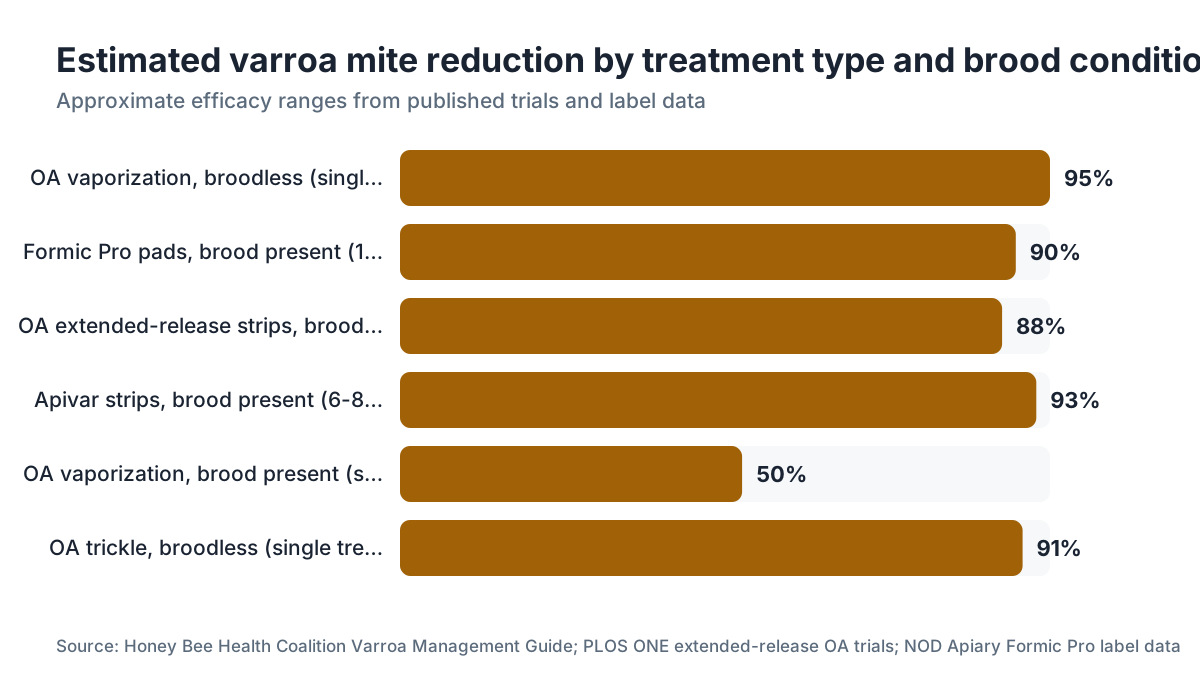
A battery-powered wand is the workhorse for off-grid beekeeping. Units like the Varromor or Varrox run off a 12-volt battery you can charge from a vehicle or a small solar panel. One charge covers many hives. Each treatment takes about two minutes, hits phoretic mites (the ones riding adult bees) hard, and the active ingredient shrugs off transport [2]. The catch is real: vaporization alone kills phoretic mites only, not the mites sealed inside capped brood. A single visit during brood rearing won't fix a high-mite hive. You either return three to five times over several weeks, or you pair the wand with a broodless window.
Oxalic acid is EPA-registered in the U.S. under labels including OA Pro and Api-Bioxal [2]. Follow the label. Using a pesticide against its labeling is a federal violation.
Extended-release oxalic acid glycerin strips
This is the remote beekeeper's best friend right now. Products like Api-Bioxal extended release deposit oxalic acid slowly over several weeks as bees walk across the strips. Because the dose keeps working, it catches mites emerging from capped cells along with phoretic mites, so it stays effective even with brood present [3]. Place the strips and leave. One application, one visit. Trials have reported 83 to 93 percent mite reduction depending on brood levels and temperature [3].
The limit is heat. Strips need warm-enough conditions for bees to move across them. Below about 50 degrees Fahrenheit, cluster activity drops and contact rates fall with it.
Formic acid pads (Formic Pro, Mite Away Quick Strips)
Formic acid penetrates capped brood cells. That's the whole point of it. Formic Pro (two pads, 14-day release) and Mite Away Quick Strips (one 7-day release) are both EPA-registered [4]. Place the pads and walk away. No return visit needed inside the window. Efficacy against total mite load, phoretic plus brood, runs 90 percent or better under good conditions.
The temperature rules are strict. Formic Pro calls for ambient temperatures between 50 and 85 degrees Fahrenheit during treatment; MAQS calls for 50 to 92 degrees Fahrenheit [4]. Go above the ceiling and you risk the queen and the brood. Drop below the floor and the acid won't volatilize enough. For mountain sites or shoulder-season swings, check the forecast for the whole treatment window, more than the day you arrive.
Amitraz strips (Apivar)
Apivar strips hang in the hive for 6 to 8 weeks with no equipment and no return visit inside that window [5]. Efficacy runs high and it works through the brood cycle. The problem for remote work is removal. You have to pull the strips after the treatment period. Miss the return trip and prolonged exposure feeds amitraz resistance [5]. Amitraz residues also build up in wax, which matters if you sell comb honey. These are documented concerns, not theory.
For most remote setups I'd reach for extended-release OA strips or formic pads first, and keep a battery vaporizer in reserve for a broodless mop-up. Learn more about the full varroa mite lifecycle to understand why brood coverage matters so much.
What equipment do you need to treat hives in remote locations?
Keep the kit lean but complete. Every extra item is more weight on the trail and one more thing to forget.
For vaporization: a battery-powered oxalic acid vaporizer, a 12-volt sealed lead-acid or lithium battery rated at least 7 amp-hours (enough for 10 to 15 hives per charge), the correct OA-labeled product, a respirator rated for organic vapors and particulates (a half-face respirator with OV/P100 cartridges beats a bare N95), safety glasses, and nitrile gloves [6]. Duct tape helps for sealing hive entrances during vaporization.
For strip or pad treatments: the product (sealed in a bag inside a cooler on a warm day), gloves, a hive tool, and something to record what you placed and when. That's the whole list.
For monitoring, which starts every remote visit: a mite wash kit. That means a jar with a fine-mesh lid or a Varroa EasyCheck, 70 percent isopropyl alcohol (more accurate than powdered sugar), and roughly 300 bees (about a half-cup) from the brood nest [1]. The Honey Bee Health Coalition's sampling protocol is the field standard.
For power: a 100-watt portable solar panel recharges a 12-volt battery during the day. Add a small charge controller. That combination treats a full yard of hives across a long field day without the battery quitting on you.
Many of these items show up at beekeeping supply companies that stock field-ready kits, though I'd build my own remote bag rather than trust a pre-packaged bundle.
How do you monitor varroa mite levels when you can't visit often?
This is where remote beekeeping gets genuinely hard. The standard advice is to monitor every 4 to 6 weeks during brood rearing [1]. Visit every 8 to 12 weeks instead and you're flying partly blind.
A few things help.
Do an alcohol wash every visit. No exceptions. It takes ten minutes and hands you real data instead of a guess. A 2 percent result (2 mites per 100 bees) in June is a warning. A 3 percent result in August means treat now. The Honey Bee Health Coalition's guide states that "a mite wash or alcohol wash is the most accurate method for monitoring Varroa levels in a colony" [1]. Sticky boards and eyeballing don't come close.
Time treatments to hit predictable broodless windows: late fall when the queen stops laying, or an induced broodless period through queen confinement. A broodless hive treated with oxalic acid vaporization once, or three times over eight days to catch late-emerging brood, can hit 95 percent or better mite reduction [12]. When a visit lines up with natural broodlessness, one vaporization session does the work of a whole summer's monitoring cycle.
Think about a set of eyes on the ground. A neighboring beekeeper, a landowner, or a land manager who can do a rough visual check won't replace a mite wash, but they can tell you a hive looks light, dead, or robbed out before you burn a day driving to it.
I can't honestly recommend any sensor that gives reliable remote mite counts today. Acoustic monitors and hive scales tell you a colony is alive and foraging. They don't tell you mite load. Anyone selling a field-ready remote mite counter is ahead of the published research.
How do you time varroa treatment visits for remote hives?
Timing is where remote beekeeping earns its efficiency. The two best windows are late summer (August across most of the U.S.) and the late fall broodless period.
The August visit matters because the colony is rearing the long-lived winter bees that have to carry it from September to March. Mites that parasitize those winter bees shorten their lives and gut the colony's odds of surviving winter. Treating in late July or August, before the winter cohort is fully formed, is probably the highest-leverage timing for annual survival. University of Minnesota Extension recommends treating before September 1 in northern states to protect the winter bee population [7].
The late fall or winter visit works best with oxalic acid, vaporized or trickled, when brood is gone. The EPA-registered trickle method (dribbling an oxalic acid syrup directly onto bees between frames) needs no electricity at all, works down to about 40 degrees Fahrenheit while bees still cluster and move, and hits hard in a broodless colony [2]. For a hive you reach once in November, trickle plus a mite wash is a complete fall protocol.
| Treatment timing window | Best product(s) | Visits needed | Brood penetration |
|---|---|---|---|
| Summer, brood present | Formic acid pads, OA extended-release strips | 1 | Yes |
| Summer, high mite load | Apivar strips | 1 placement + 1 removal | Yes |
| Fall, broodless | OA vaporization (3x over 8 days) or OA trickle (once) | 1-2 | N/A |
| Any season, broodless | OA trickle | 1 | N/A |
| Spring buildup | OA extended-release strips | 1 | Yes (limited) |
Build your calendar around two anchor visits: one in late July or August, one in October or November. Add a spring check in April and you're in good shape for most temperate climates.
What are the safety considerations for treating hives alone in remote areas?
Oxalic acid vapor is a fine acid mist that badly irritates the eyes and lungs. A respirator that fails while you're alone in the backcountry is not a theoretical risk. Check your cartridges before every trip. OV/P100 cartridges have a service life and they don't last forever, especially in humid air [6].
Formic acid fumes irritate too, and they can trigger asthma in susceptible people. If you have reactive airway disease, formic acid is genuinely risky even with PPE. Some beekeepers use a long-handled placement tool so they never lean over an open hive while setting MAQS or Formic Pro.
The non-chemical hazards are the ones people skip. Stings far from medical care. Heat and dehydration on a long hike in. A vehicle breakdown on an empty rural road. None of it is exotic, but all of it deserves a plan. Carry an epinephrine auto-injector if you have any history of systemic sting reactions. Tell someone your route and your expected return. Carry water for twice as long as you think you'll be out.
On the hive side, never leave an incomplete treatment. If you start formic acid, confirm the pads are seated right before you leave. A badly placed pad can kill the queen and the brood without knocking down mites, which is the worst outcome available.
How do you transport varroa treatments to remote hive sites?
Temperature and physical stability are the two things to worry about.
Oxalic acid crystals or pre-mixed solution travel well. Keep solution out of direct sun and don't let it freeze. Crystals go in a sealed, labeled container (label it properly, it's a pesticide) and stay stable more or less indefinitely in dry storage.
Formic acid pads are fussier. MAQS and Formic Pro are formic acid on a substrate, and too much heat in transit causes premature volatilization, which wastes the product and fills your vehicle with fumes. Keep them in a cool bag or small cooler on hot days. Never leave them baking in a parked car. The Formic Pro label calls for storage below 86 degrees Fahrenheit [4].
Apivar strips are plastic impregnated with amitraz. They're stable and pack easily. The main worry is cross-contaminating other gear or food with the insecticide, so keep them sealed and separate.
A battery-powered vaporizer fits in a backpack. A 7-amp-hour sealed lead-acid battery weighs about 5 to 6 pounds and rides in the same pack. Bring both and you're set for a hike-in site. If weight is a real constraint, a lithium iron phosphate (LiFePO4) battery of the same capacity weighs about 1.5 to 2 pounds.
For sites that need real hiking, I'd pick extended-release OA strips or formic pads over vaporization gear on weight and simplicity alone. The strips are flat, light, and need no power. The treatment starts when you set them and you hike back out.
Can you treat remote hives less frequently without losing efficacy?
Sometimes yes, with the right product and the right timing. Efficacy hangs on three things: product choice, mite load when you treat, and whether brood is present.
A single application of extended-release oxalic acid strips during peak brood season achieved 83 to 93 percent mite reduction in trials published in PLOS ONE [3]. That's a real result from one visit. Compare it to a single oxalic acid vaporization in a hive full of brood, which might manage only 40 to 60 percent because most mites sit protected inside cells [2].
Formic acid pads across a 14-day window (Formic Pro) can reach 90 percent or better total mite reduction in one treatment period [4]. One visit, one complete course.
The practical rule: for infrequent visits, pick treatments that work over time (strips, pads) over treatments that work instantly but incompletely (a single summer vaporization). Save the wand for your fall broodless visit, where one application runs close to 100 percent effective with no brood left to shelter mites.
Running more than a few remote hives? VarroaVault's free protocol tools help you build a visit schedule that matches treatment type to seasonal brood patterns, so every trip does as much work as it can.
What do you do if a remote hive has a very high mite load when you arrive?
Don't panic and don't stack treatments. Applying formic pads and Apivar at once is unapproved, potentially harmful to the bees, and a label violation.
An alcohol wash above 3 percent in summer means a serious infestation. Your options at that visit come down to brood.
Brood present: place formic acid pads or extended-release OA strips right away and plan to return in 6 to 8 weeks for a follow-up wash. Formic pads start working within hours.
Naturally broodless, or broodless because you found and caged the queen for 24 days: vaporize oxalic acid once, or three times over eight days. That's the most thorough single-visit intervention you have.
Above 5 percent in late summer forces a hard question about whether the colony has time to recover before winter. A colony at 5 percent mites in August will almost certainly clear 10 percent by October in northern climates [7]. That's a collapse risk. Treat aggressively and plan to judge winter readiness on the next visit.
One thing people underrate: a high-mite colony that survives treatment still needs a recheck. Bees born to parasitized brood live short lives even after the mites are gone. Don't read "treated" as "recovered."
Are there legal or regulatory issues with treating hives on remote or public land?
Yes, and they change by jurisdiction. A few points carry weight.
Every EPA-registered varroa treatment has to be used according to its label, backyard hive or remote forest allotment alike. The label is the law under FIFRA, the Federal Insecticide, Fungicide, and Rodenticide Act [8].
Hives on federal land (Bureau of Land Management, U.S. Forest Service) usually need a special use permit, and pesticide application there can carry extra requirements. Call the local ranger district before you place hives or apply anything.
State registration varies. Api-Bioxal (oxalic acid) and Formic Pro are registered across all 50 states in recent EPA records, but confirm with your state department of agriculture. Some states set separate rules for commercial applicators.
Prescription status changed for amitraz. Apivar moved to veterinary prescription in the U.S. in late 2023 under updated FDA guidance [9]. Check current requirements with a veterinarian or your state apiarist, because this area has shifted and may keep shifting.
Placing hives near Africanized honey bee territory in the Southwest brings its own wrinkle: some states set reporting and management rules for remote colonies. Ask your state apiarist.
How do you prepare for a remote varroa treatment visit so nothing goes wrong?
The prep list is short, and every line on it earns its place.
Before you leave: read your mite records from the last visit and decide which treatment you're bringing and how much. Calculate doses for your worst-case hive count. Pack 20 percent more product than you think you need. Check the forecast for the full treatment window (7 to 14 days), more than arrival day. Charge every battery. Check the respirator cartridges.
Keep the treatment kit in a dedicated bag that stays packed between trips. Mine holds a vaporizer, battery, OA product, PPE, a mite wash kit, alcohol, a jar with a mesh lid, a field notebook, a permanent marker, several pairs of nitrile gloves, duct tape, and a small first aid kit. The notebook sounds old-fashioned, and it's the most reliable field data system I've used. Phones die. Paper doesn't.
At the site: wash for mites before treating, never after. You want a pre-treatment count so the next visit can measure efficacy. Record the date, the count, the hive, and the treatment applied. Photograph the setup if hive numbering might get muddled next time.
After the visit: update the treatment calendar. Set a reminder to remove strips or pads if the product needs it. If any count topped 3 percent, schedule the follow-up inside 6 to 8 weeks, not "eventually."
Comparing options across beekeeping supply companies before the season starts keeps you from scrambling for formic pads the week before your August trip.
Frequently asked questions
Can I use oxalic acid trickle method on a hive with brood in a remote location?
The OA trickle (dribble) method is far less effective with brood present, because mites inside capped cells never touch the treatment. The Api-Bioxal label specifies use when brood is absent. In a remote setting where you visit once, choose extended-release OA strips or formic acid pads if brood is present. Save the trickle for your broodless fall visit.
How long do varroa treatment strips last after I place them?
Extended-release oxalic acid glycerin strips work for 4 to 8 weeks depending on temperature and colony size. Apivar amitraz strips work for 6 to 8 weeks and must come out by 56 days per label. Formic Pro pads fully volatilize in 14 days. Record placement dates so you know when to remove or replace, especially for hives you won't see weekly.
What battery setup do I need to run a varroa vaporizer in the field?
A 12-volt sealed lead-acid battery at 7 to 12 amp-hours handles 10 to 20 hive treatments per charge, depending on the vaporizer. Lithium iron phosphate batteries of the same capacity weigh about 70 percent less, which matters on a hike-in. A 100-watt portable solar panel with a basic PWM charge controller recharges a drained battery during a long field day.
Is it safe to treat hives alone in a remote area with formic acid?
Formic acid fumes irritate the eyes, nose, and lungs, and working alone means no help if something goes wrong. Wear chemical splash goggles and nitrile gloves, apply pads quickly with minimal hive opening, and stay upwind. If you have asthma or reactive airway disease, formic acid is a higher-risk choice for solo work. Extended-release OA strips carry far lower acute fume exposure and make a safer solo option.
How often should I visit remote hives to keep varroa under control?
Twice a year is the realistic minimum for most temperate climates: once in late July or August, once in October or November. Two well-timed visits with the right products can carry a colony through summer and into the next spring. Three visits, adding an April check, is meaningfully better for catching climbing spring mite levels before the main honey flow.
Do I need a veterinary prescription to treat varroa in remote hives with Apivar?
As of late 2023, amitraz products including Apivar require a veterinary prescription in the U.S. under updated FDA guidance. You need a licensed veterinarian who can establish a valid veterinarian-client-patient relationship. Requirements vary by state. Check with your state department of agriculture or a vet familiar with apiculture for current rules before buying.
What mite count threshold should trigger treatment in a remote hive I can't check for weeks?
The Honey Bee Health Coalition recommends treating at 2 percent or more mites per hundred bees during brood rearing. For remote hives where the next visit is 6 to 8 weeks out, I'd treat at 1.5 percent in July or August, because counts can double or triple in four to six weeks during peak mite reproduction. Err toward treating rather than waiting.
Can extreme temperatures damage varroa treatments during transport or application?
Yes. Formic acid pads (MAQS, Formic Pro) can lose efficacy above 86 degrees Fahrenheit in storage or transport, so keep them cool. OA vaporization should happen only between roughly 40 and 100 degrees Fahrenheit for safe bee handling. Extended-release OA strips travel better but work poorly in hives below 50 degrees Fahrenheit, because bee contact with the strips drops off sharply in cold.
What happens if I can't return to remove Apivar strips on time from a remote hive?
Amitraz strips left past 56 days raise the risk of varroa developing amitraz resistance, and residues keep building in the wax. That's a real problem, not a minor one. If you can't guarantee removal inside the label window, Apivar is the wrong choice for a remote hive. Pick a product with no removal step, such as oxalic acid extended-release strips or formic acid pads that volatilize on their own.
Can I combine varroa treatment with a hive inspection on the same remote visit?
Yes, and you should. Do the mite wash first, then the full inspection, then apply treatment as the last step before closing up. Treating and immediately disturbing the hive scatters bees and cuts treatment contact. After formic pad placement especially, close the hive promptly and let the bees settle. Record the inspection and mite count in your field notes before you start the return hike.
Are there varroa treatment options that work without any equipment at all?
The OA trickle method needs only a syringe or squeeze bottle and pre-mixed oxalic acid solution. Low-tech, light, no battery. It works only in broodless colonies, but for a late fall or early winter visit to a remote site it's hard to beat for simplicity. Formic acid pads and OA extended-release strips also need nothing beyond a hive tool and the product itself.
How do I know if my remote hive treatment actually worked?
Do a mite wash on your next visit, ideally 4 to 6 weeks after treatment, and compare it to your pre-treatment baseline. Efficacy above 80 percent (a drop from, say, 4 percent to under 1 percent) is a good result. If counts stay above 2 percent after a full course, ask whether the product was applied right, whether brood levels undercut it, or whether resistance is at work in your local mites.
Do remote hives need any different approach in mountainous or high-altitude locations?
Temperature swings at elevation matter most. Formic acid pads have strict windows (50 to 85 degrees Fahrenheit for Formic Pro) that are hard to guarantee in mountains where nights drop fast. Extended-release OA strips forgive temperature variation better. The brood season also runs shorter at altitude, which compresses your treatment window. Time the summer visit carefully, because you may have only a 6 to 8 week window before fall nectar flows end.
Sources
- Honey Bee Health Coalition, Varroa Management Guide (Tools for Varroa Management): Economic injury threshold of approximately 2 percent mites per hundred bees during brood-rearing season; alcohol wash is the most accurate monitoring method
- EPA, Oxalic Acid (Api-Bioxal) Pesticide Registration: Oxalic acid is EPA-registered for varroa control; trickle method specified for broodless colonies; vaporization effective against phoretic mites
- PLOS ONE, Oxalic Acid Extended-Release Strips Efficacy Trial: Extended-release oxalic acid glycerin strips achieved 83 to 93 percent mite reduction in colonies with brood present in published trials
- NOD Apiary Products, Formic Pro and Mite Away Quick Strips Label Information: Formic Pro requires 50 to 85 degrees Fahrenheit and Mite Away Quick Strips 50 to 92 degrees Fahrenheit; Formic Pro storage below 86 degrees Fahrenheit; total mite reduction typically 90 percent or better
- Véto-pharma, Apivar Technical Information: Apivar strips effective for 6 to 8 weeks; removal required after 56 days; prolonged exposure linked to amitraz resistance risk
- National Institute for Occupational Safety and Health (NIOSH), Respirator Selection: OV/P100 respirator cartridges required for oxalic acid vapor exposure; cartridges have limited service life especially in humid conditions
- University of Minnesota Extension, Varroa Mite Management: Treating before September 1 in northern states recommended to protect winter bee population; colonies at 5 percent mites in August likely to exceed 10 percent by October
- EPA, FIFRA Federal Insecticide Fungicide and Rodenticide Act Overview: Under FIFRA, pesticide labels are legally binding and use inconsistent with labeling is a federal violation
- FDA, Veterinary Feed Directive and Amitraz Regulatory Guidance: Amitraz-containing products including Apivar moved to veterinary prescription requirement in the U.S. under updated FDA regulatory guidance as of late 2023
- Penn State Extension, Varroa Mite Monitoring and Management: Alcohol wash (mite wash) protocol details; pre-treatment count baseline recommended for evaluating treatment efficacy
- USDA Agricultural Research Service, Varroa destructor Biology and Control: Varroa destructor can collapse a colony within months without management; mite populations can double or triple in four to six weeks during peak reproduction
- Oregon State University Extension, Oxalic Acid Treatment Methods for Honey Bees: Single oxalic acid vaporization in broodless colony achieves 95 percent or better mite reduction; three applications over eight days recommended for complete coverage
Last updated 2026-07-10