How varroa mites suppress the honey bee immune system
TL;DR
- Varroa destructor weakens bee immunity two ways at once.
- It feeds on the fat body, the organ that makes immune proteins, and it injects viruses like Deformed Wing Virus that shut down immune gene expression.
- A mite-parasitized bee can lose 50% or more of its immune function, leaving the whole colony open to secondary pathogens even when mite counts still look manageable.
What exactly does varroa do to a bee's body?
Varroa eats the organ bees use to fight disease, then injects pathogens into the wound. That is the whole story in one sentence.
For decades, textbooks said varroa fed on hemolymph, the bee equivalent of blood. A 2019 study by Samuel Ramsey and colleagues at the University of Maryland, published in the Proceedings of the National Academy of Sciences, overturned that. Using dye tracers and dissection, they showed varroa feeds mostly on the fat body, a tissue that wraps the bee's abdomen and does much of what the liver does in vertebrates [1]. The fat body makes vitellogenin, antimicrobial peptides, detoxification enzymes, and immune signaling proteins. Losing chunks of it to a feeding mite is like a pathogen eating your liver.
The wound matters too. Varroa bites through the soft cuticle between abdominal segments. That opening is a direct route for secondary bacteria and viruses. Every feeding event is a nutritional drain and a puncture in the bee's physical barrier at the same time.
One mite does measurable damage. A colony at a 3% mite load, which most extension services treat as an action threshold, means thousands of feeding events happening at once across tens of thousands of bees. The cumulative immune suppression is not linear. It compounds.
How does varroa suppress specific immune genes?
Varroa disrupts several bee immune pathways at once, and the clearest signal is antimicrobial peptide genes shutting down. Studies measuring gene expression in infested bees keep finding the same pattern: the bee's chemical weapons against bacteria and fungi get turned down while a mite feeds.
Honey bees run a working innate immune system with recognizable pathways: Toll, Imd, JAK-STAT, and RNAi among them. These are the same ancient defenses insects have used for hundreds of millions of years.
Abaecin, apidaecin, defensin-1, and hymenoptaecin are antimicrobial peptides whose genes show reduced expression in mite-parasitized bees [2]. When their production drops, the bee gets susceptible to pathogens a healthy bee would suppress without any detectable infection.
Vitellogenin deserves its own paragraph. It is more than a yolk protein. In adult bees, vitellogenin works as an antioxidant and an immune modulator. Varroa feeding cuts fat body mass, which cuts vitellogenin output. Lower vitellogenin tracks with shorter lifespan, weaker foraging, and blunted immune response [2]. The mite is not only stealing food. It is dismantling the factory that makes the food and the defenses.
RNAi, the RNA interference pathway, is one way bees fight viruses at the molecular level. Some research suggests varroa actively suppresses RNAi in host cells, which would explain why viral titers spike so hard in infested bees compared to mite-free controls. Nobody has the mechanism fully mapped, but the pattern holds across studies.
Which viruses does varroa carry and inject?
Varroa is not only a parasite. It is a vector, and an efficient one. The headline virus is Deformed Wing Virus, and varroa is the reason it went from a background infection to a colony killer.
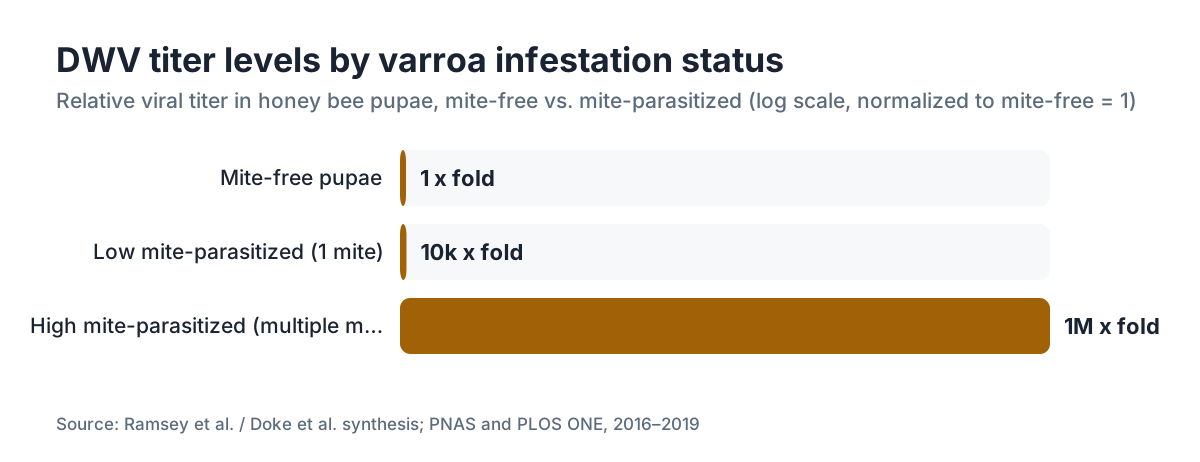
Before varroa spread globally, DWV lived in bee populations at low, mostly harmless titers. Varroa changed that. By injecting DWV straight into developing pupae during the capped brood stage, the mite skips the gut-based immune filtering that would normally hold viral load down. Titers in mite-parasitized pupae can run 10,000 to 1,000,000 times higher than in mite-free bees from the same colony [3]. The Honey Bee Health Coalition's Tools for Varroa Management guide calls DWV one of the primary contributors to colony loss globally [4].
Other viruses varroa vectors include:
- Sacbrood virus
- Black Queen Cell Virus (BQCV)
- Acute Bee Paralysis Virus (ABPV)
- Israeli Acute Paralysis Virus (IAPV)
- Chronic Bee Paralysis Virus (CBPV)
Not every mite carries every virus, and infection rates shift by region and season. The mechanism is the same across all of them. Varroa's mouthpart delivers viral particles straight into the bee's hemocoel, skipping external defenses entirely.
DWV also suppresses immune gene expression on its own, apart from the mite. So the mite causes immune suppression, which allows more viral replication, which causes more immune suppression. It is a cycle, not a single hit.
Does varroa affect nurse bees and foragers differently?
Yes, and the difference shapes how a colony falls apart. Nurse bees parasitized during pupal development emerge with fat body deficits they never recover from, while foragers that developed under mites age out of the hive too fast.
Fat body tissue does not regenerate the way muscle does. A bee that loses 20-30% of her fat body to a feeding mite during development is permanently compromised. She produces less royal jelly, transfers fewer immune compounds to the larvae she feeds, and likely lives a shorter life [2].
Foragers that developed under mite parasitism show disrupted hypopharyngeal gland function, worse navigation, and earlier onset of foraging. Bees normally switch from nursing to foraging around three weeks old. Mite-damaged bees make that switch at ten days or younger, burning through the colony's brood-rearing workforce faster than reproduction can replace it. This is why a varroa-loaded colony can look fine in May and collapse by August.
At the colony level, immune suppression cascades. Nurse bees with reduced peptide production feed larvae less immune protection in their food. Compromised foragers bring in less pollen, which cuts the protein the fat body needs to rebuild. The whole system degrades together.
What is the 'mite bomb' effect and why does immune suppression drive it?
A mite bomb is a collapsing, mite-infested colony dumping its varroa and viral load into neighboring hives through drifting robber bees and absconding swarms. Immune suppression is what makes the transfer so lethal.
The bees leaving the dying colony are not only carrying mites. They carry astronomical viral titers, DWV especially, and their immune systems are too wrecked to contain those viruses. When they enter a healthy hive, they seed it with virus levels well past what the receiving colony can handle.
The Honey Bee Health Coalition flags mite bomb scenarios as a reason to watch neighbor colonies, not only your own [4]. If your hive sits two miles from an unmanaged feral population or a neglected backyard hive, you are managing their varroa problem whether you like it or not.
Here is the practical tell. For beekeepers tracking varroa mite loads with alcohol wash or sugar roll, a sudden spike after a run of normal counts is often a mite bomb, not a failed treatment. The mites walked in on somebody else's bees.
How much does varroa immune suppression shorten a bee's lifespan?
A lot, and the numbers are well documented. Summer worker bees normally live 30-45 days. Bees that develop under varroa parasitism in heavily infested colonies can lose 20-50% of that lifespan [3].
Winter bees are the ones you should worry about. They need to survive 4-6 months to carry the colony through cold weather, and they run on high vitellogenin reserves to do it. Varroa-damaged fat body means lower vitellogenin, which means winter bees that die in December instead of March, often before the cluster can reach spring pollen.
A 2016 analysis by Doke, Flenniken, and colleagues estimated that lifespan reductions from varroa-vectored viruses alone, separate from direct feeding damage, could cut adult worker populations by 20% or more in heavily infested colonies [3].
That number compounds fast. A 20% cut in adult workers means less brood care, less thermoregulation, less foraging, and a smaller colony going into winter. Small colonies entering winter in the Northern Hemisphere fail at much higher rates. The University of Minnesota Extension sets the late-summer treatment threshold at 2% precisely because catching mites before they damage winter bees is the whole game [5].
So the treatment threshold conversation is really an immune suppression conversation. By the time your colony looks sick, the immune damage happened weeks or months ago.
Does treating for varroa actually restore immune function?
Partly, and timing decides how much you get back. Successful treatment stops the ongoing feeding damage and removes the main vector injecting viral particles into brood. Treated colonies show immune gene expression recovering toward normal within one to two brood cycles, roughly six weeks, after mite loads drop below threshold [2]. Treat in August, get recovered immune function by October, right when winter bees are being made.
Here is the catch. The viruses varroa introduced do not leave when the mites do. Once DWV is established at high titers, it can persist and replicate through bee-to-bee contact and contaminated comb. Some researchers describe colonies as holding a viral reservoir that treatment reduces but does not always clear [3]. This is why beekeepers sometimes see poor winter survival after a clean autumn mite count. The mites are gone. The viral burden stayed.
So treating early beats treating hard. A colony at 1% in August has a far better shot at full immune recovery than one treated at 6% in October.
If you want a structured protocol for timing treatments around the brood cycle to maximize immune recovery, the free tools at VarroaVault are built around that logic, including threshold calculators and treatment window calendars that account for your local climate.
Can bees develop any natural resistance to varroa immune suppression?
Some can, though 'resistance' is the wrong word. 'Tolerance' and 'behavioral suppression' describe it better. The traits that help do not stop immune suppression in an infested individual. They keep the mite population low enough that fewer bees get parasitized in the first place.
Varroa Sensitive Hygiene (VSH) is a behavioral trait where workers detect and uncap cells holding mite-parasitized pupae, interrupting the mite's reproductive cycle. VSH keeps the mite population from building, which keeps immune damage manageable. The USDA ARS Baton Rouge Bee Lab has done long-running work breeding and evaluating VSH-selected lines [6].
Mite-biting behavior, where workers physically damage mites they meet, is another documented trait that trims the mite population inside the colony. Russian honey bee stocks, originally from Primorsky Krai in Russia where Varroa destructor co-evolved with Apis cerana before jumping to Apis mellifera, show higher rates of mite-biting and hygienic behavior than standard European lines [6].
Feral colonies in the Arnot Forest in New York and similar sites have survived decades of varroa without management. Work by Thomas Seeley and colleagues at Cornell documented these colonies and found they tend to be smaller and swarm more often, which creates brood breaks that interrupt varroa reproduction [7]. Infested individuals in those colonies still get immune suppression. At the population level, frequent swarming keeps viral loads lower than in managed colonies that rear brood nonstop.
Most commercial and hobbyist stock does not carry strong VSH. Buying VSH or mite-resistant queens from reputable breeders is one of the few decisions that lowers immune suppression pressure over years, more than at treatment time.
How does varroa immune suppression interact with pesticide exposure?
The two stressors gang up, and the reason is anatomical. The fat body is also the main site of pesticide detoxification in honey bees. Cytochrome P450 enzymes, glutathione S-transferases, and esterases all get made or activated in fat body tissue. When varroa feeding cuts fat body mass, it cuts the bee's capacity to metabolize sublethal pesticide exposures at the same time [8].
A bee with a healthy fat body might take a field-level imidacloprid dose, forage a little clumsy, and survive. The same bee with a mite-depleted fat body may not metabolize the compound fast enough and dies. Laboratory studies show mite-parasitized bees have lower LD50 values for several common pesticides, meaning they die at lower doses [8].
So colonies with high varroa loads in landscapes with routine pesticide use face a two-way squeeze. The mites cut detoxification capacity, and the pesticides add stress a compromised system cannot handle. Losses that look like pesticide kills may actually need both stressors to turn lethal, which makes pinning colony loss on any single cause genuinely hard.
This is one reason EPA registration reviews for neonicotinoids now include language about combined pesticide and pathogen stressors, though the regulatory response to the data has been slow [9].
What do your mite count numbers actually mean for immune health?
An alcohol wash or sugar roll gives you a mite-per-100-bees percentage. The honest translation to immune damage is: the count is a proxy, and it undercounts. It tells you how many adult mites are on adult bees in one sample at one moment. It does not count mites in capped cells, which can run 3-5 times the phoretic count depending on the brood-to-adult ratio and the mites' reproductive stage [10]. It does not measure viral load or fat body depletion directly.
Here is what the studies line up to:
- At 2% (2 mites per 100 bees), measurable immune gene suppression is already happening [2]
- At 3%, most extension services flag for treatment, based on historical colony loss correlations rather than a specific immune threshold [5]
- At 5% and up, colonies show visible DWV symptoms (deformed wings, crawling bees) in a real fraction of the adult population [3]
- Above 10%, colonies are collapsing and immune function is shot across the population
The threshold exists because beekeepers need one actionable number, not because 3% is a magic inflection point in the immune response. Immune damage starts at the first mite, just slowly. Treating early is not overcautious. It is the biologically correct call.
For beekeepers running several hives, the free varroa mite monitoring tools help you log counts over time and flag when you are approaching threshold. Trend matters as much as the number.
How should this biology change the way you manage varroa?
The immune suppression research changed a few things about how I run varroa management. Five in particular.
The treatment threshold is a floor, not a target. The USDA and most extension services say treat at 2-3% [5]. That does not make it fine to park at 2.5% all season. It means treat before you hit 2% if you can, because the immune damage is already real at 2%.
Late-summer treatment is not optional. Winter bees get produced in August. If your colony carries a high mite load in August and you wait until October because 'the season is almost over,' you are letting varroa cripple the exact bees the colony needs to survive winter. The University of Minnesota, Penn State Extension, and the Honey Bee Health Coalition all say the same thing: late summer is the most important treatment window of the year [4][5].
Comb management matters more than people admit. Old dark comb harbors viral particles and pesticide residues. Rotating out comb every three to five years is a low-tech way to shrink the viral reservoir that persists after mite treatment. It is not glamorous and most of the industry undersells it.
If you are buying packages or nucs, ask about mite history and the stock's hygienic behavior ratings. A VSH-selected queen costs more upfront. She costs less over three years once you price in treatment materials, colony losses, and your time. There are more mite-resistant queen options now than a decade ago. Check what your beekeeping supply companies actually stock.
Think about your neighbors. In areas with high beekeeper density or feral colony pressure, your mite management is partly a community problem. Talking with nearby beekeepers about coordinated treatment timing is not only neighborly. It cuts the mite bomb risk the immune suppression research shows is a real transmission pathway.
VarroaVault has free treatment timing calculators and seasonal protocol guides built around this biology, if you want a structured way to apply these principles to your own operation.
Frequently asked questions
Does varroa kill bees directly or only through disease?
Both. Varroa feeding on the fat body causes direct physiological damage, cutting lifespan and immune function even without any viral infection. But viral transmission, Deformed Wing Virus especially, drives a large share of the collapse tied to high mite loads. In a real colony it is nearly impossible to separate the two effects because mite-vectored viruses are basically universal in managed honey bee populations worldwide.
Can a colony recover full immune function after varroa treatment?
Largely, yes. Studies show immune gene expression recovering toward normal within one to two brood cycles, roughly six weeks, after mite loads drop below threshold. The caveat is viral reservoirs. DWV and other viruses can persist in comb and through bee-to-bee contact after the mites are gone, so recovery is not always complete. Early treatment gives the colony its best shot at full recovery before winter bees are produced.
How does varroa immune suppression differ between worker bees and queens?
Queens develop in uncapped queen cells for only part of their development, and the mite's reproductive cycle is timed to capped worker and drone cells. Queens get parasitized as pupae far less often than workers. They are not immune, though. A queen developing in a high-mite colony can still take on viral particles from contaminated nurse bees and royal jelly. Poor queen quality in mite-infested colonies is well documented clinically, though the mechanism is less studied than worker immune suppression.
What is Deformed Wing Virus and how does varroa spread it?
Deformed Wing Virus (DWV) is an RNA virus that causes wing deformities, shortened abdomens, and neurological impairment in adult bees at high titers. Varroa spreads it by feeding inside capped brood cells, injecting viral particles straight into the developing pupa's hemocoel. That bypasses the gut immune barrier and produces titers up to a million times higher than in unparasitized bees. DWV now shows up in honey bee populations on every continent where varroa exists.
At what mite percentage should I treat to protect bee immune function?
The USDA and most university extension services recommend treating at 2% (2 mites per 100 bees) in late summer and 3% other times of year. These thresholds come from colony loss correlations. The immune biology says damage begins below 2%, so treating earlier is biologically sound. Waiting until you see symptoms like deformed wings means immune suppression is already severe and has been building for weeks or months.
Is the fat body the only tissue varroa damages?
The fat body is the primary feeding target based on Ramsey et al. (2019), which overturned the older hemolymph-feeding hypothesis. Varroa feeding also causes cuticle wounds that let in secondary bacterial infections and expose the hemocoel to pathogens. Hypopharyngeal glands, which make royal jelly and brood food, show reduced function in mite-parasitized nurse bees too, though whether that is a direct feeding effect or a downstream result of fat body damage is not fully resolved.
Do natural treatments like oxalic acid affect bee immune function?
Oxalic acid at labeled rates does not appear to impair bee immune function. It kills phoretic mites by contact and has a good safety profile for bees when applied correctly per EPA-registered product labels. It does not penetrate capped cells, so it works best during a brood break or applied repeatedly to catch emerging mites. Unlike some synthetic miticides, there is no documented interaction between oxalic acid and bee immune gene expression at normal use concentrations.
Why do bees get sick faster in autumn even with low mite counts?
Autumn colonies have smaller populations, less brood, and are producing the long-lived winter bees that need high vitellogenin reserves. Even a modest mite load a summer colony could shrug off hits a smaller autumn colony harder in absolute terms. The viral reservoir built up over summer also means autumn bees may carry high DWV titers regardless of current mite counts. Late-season immune suppression compounds with reduced colony mass to make autumn the most dangerous window.
Can you detect varroa immune suppression without mite counting?
Not reliably with field methods hobbyists have. Crawling bees with deformed wings and shortened abdomens are visible signs of DWV, but they mean immune suppression is already severe. There are no simple field tests for fat body mass, vitellogenin levels, or immune gene expression. Alcohol wash mite counts stay the practical early warning system. Some researchers are developing viral titer tests that could eventually be field-accessible, but none are commercially available as of 2026.
Does feeding bees protein supplements help offset varroa immune damage?
It may help partly. Fat body mass and vitellogenin production depend on protein intake, pollen especially. Pollen or protein supplement feeding during low-pollen periods can support fat body maintenance in bees under mite pressure. No supplement fully replaces the tissue lost to mite feeding, though. Protein feeding is a support measure, not a substitute for mite treatment. It helps most in early spring and late summer when natural pollen is thin and mite pressure is often rising.
How does varroa immune suppression contribute to Colony Collapse Disorder?
CCD has no single confirmed cause, but varroa-vectored viral loads and the resulting immune suppression are considered major contributing factors by the USDA and the Honey Bee Health Coalition. The signature CCD pattern, adult bees abandoning the hive while brood remains, fits severe neurological impairment from high DWV titers combined with sublethal pesticide exposure a mite-compromised system cannot detoxify. Most researchers now see CCD as a multi-stressor syndrome rather than a single-agent disease.
Are drone bees affected differently by varroa than worker bees?
Yes. Varroa strongly prefers drone brood for reproduction, entering drone cells at 7-10 times the rate of worker cells. Drones developing under heavy parasitism show severe DWV symptoms and impaired flight and fertility. Beekeepers sometimes use drone comb trapping, inserting a frame of drone-sized foundation to draw reproducing mites, then freezing or removing it before the capped drone brood emerges. This trims the mite population without chemicals but demands consistent management.
Sources
- Ramsey et al., PNAS 2019, 'Varroa destructor feeds primarily on honey bee fat body tissue and not hemolymph': Varroa destructor primarily feeds on the fat body, not hemolymph, based on dye tracer and dissection experiments in 2019.
- Erban et al. / multiple studies, fat body immune gene expression changes in varroa-infested bees; vitellogenin reduction: Antimicrobial peptide genes (abaecin, defensin-1, hymenoptaecin) are downregulated in varroa-parasitized bees; vitellogenin production decreases with fat body mass loss.
- Doke, Flenniken et al., bee lifespan and viral titer data in varroa-infested colonies; DWV titer elevation: DWV titers can be 10,000 to 1,000,000 times higher in mite-parasitized pupae than in mite-free controls; adult worker lifespan can be reduced 20-50% in heavily infested colonies.
- Honey Bee Health Coalition, Tools for Varroa Management Guide (current edition): DWV is identified as one of the primary contributors to colony loss globally; late summer is emphasized as the most critical treatment window; mite bomb scenarios are flagged as a transmission risk.
- University of Minnesota Extension, Varroa mite monitoring and treatment thresholds: Treatment threshold of 2% in late summer and 3% at other times is recommended; late-summer treatment is described as critical to protect winter bees.
- USDA ARS Baton Rouge Bee Lab, Varroa Sensitive Hygiene (VSH) and Russian honey bee research: VSH trait interrupts mite reproduction by detecting and uncapping mite-parasitized cells; Russian honey bee stocks show higher rates of mite-biting and hygienic behavior.
- Cornell University / Thomas Seeley, Arnot Forest feral honey bee survival research: Feral colonies in the Arnot Forest have survived decades of varroa without management; they tend to be smaller and swarm more often, creating brood breaks that interrupt varroa reproduction.
- Aufauvre et al. / peer-reviewed literature, varroa parasitism reduces pesticide detoxification capacity in honey bees: Mite-parasitized bees have reduced fat body mass and lower cytochrome P450 activity, lowering LD50 values for common pesticides.
- U.S. EPA, Pollinator Risk Assessment Framework and neonicotinoid registration review: EPA registration reviews for neonicotinoids now include language addressing combined pesticide and pathogen stressor interactions in honey bees.
- Penn State Extension, Varroa mite biology and monitoring methods: Mites in capped cells can be 3-5 times the phoretic count depending on brood-to-adult ratio and mite reproductive stage; late summer is identified as a critical treatment window.
Last updated 2026-07-09