How to treat varroa in a two queen hive system
TL;DR
- Treat each half of a two-queen hive as its own colony.
- Each chamber can carry a different mite load, a different brood state, and its own queen, so a single blended count lies to you.
- Wash bees from each chamber, treat both at once, and time it around a shared brood break.
- Standard treatments all work, but dose and application points have to match the two-chamber layout.
What makes varroa treatment harder in a two-queen hive?
A two-queen hive doubles every variable that already makes mite control tricky. Two laying queens. Two brood nests. Two mite populations that can be reproducing at completely different rates depending on how each queen is cycling.
The core problem is isolation, or the lack of it. In most two-queen setups a screen or excluder divides the upper and lower chambers, but worker bees drift freely between them. Mites hitchhike on those same workers. So even after you knock one chamber down hard, reinfection from the untreated chamber can erase your progress within weeks [1].
Then there's brood. Two queens usually mean two brood nests running at once. Oxalic acid, the strongest tool for a spiking mite load, only kills phoretic mites (the ones riding adult bees). It does nothing to mites sealed inside capped cells [2]. If both queens are laying hard, 80 percent or more of your mites can be hiding under cappings at any moment, and one oxalic hit won't reach them.
Queen safety is the last piece, and it's real. Some vaporizing miticides are hard to keep in one chamber. Losing a queen mid-treatment is an expensive mistake here. You need to know exactly where each queen is and what the treatment does when it reaches her.
What types of two-queen hive systems are most common?
Figure out which configuration you're running before you plan anything, because they behave differently under treatment.
The vertical two-queen system stacks one full colony over another with a double-screen board between them. Each colony gets its own entrance, usually facing opposite directions. Workers communicate through the screen and share warmth, but the queens stay physically apart. This is probably the most common setup in North America for overwintering and spring honey production.
The side-by-side system puts two colonies in a modified hive body or a purpose-built box split by a divider board. It's less common, but beekeepers still use it to share winter heat without combining the colonies.
The Snelgrove board system uses a multi-entrance board with sliding doors to move bees between chambers on purpose, sometimes to build brood breaks. This one is more a management tool than a permanent two-queen home.
Configuration matters for treatment because airflow, chamber access, and brood nest position all shift with how the hive is built. Oxalic acid vapor behaves one way in a tight vertical stack and another way in a wide side-by-side box [2].
For a broader look at hive structures and the species that can be managed this way, see our guide to beekeeping species.
Should you treat both chambers at the same time?
Yes, almost always. Treating one chamber and skipping the other is the single most common two-queen mistake, and it fails again and again.
Here's why. Worker bees in most two-queen configurations move between chambers, and mites ride along. The Honey Bee Health Coalition's Varroa Management Guide warns that mite transfer between adjacent colonies, even across physical barriers, can rebuild an infestation after treatment [1]. Inside one hive box that transfer runs faster, because the bees share airspace and drift between populations all day.
The rule is simple: treat both chambers at once, at the correct per-chamber dose, and monitor them separately afterward. With vaporized oxalic acid you have to apply it to each chamber independently. A single vaporization point at the bottom board will not push enough vapor through a double-screen board into the upper chamber [2].
There's one narrow exception. If you've physically split the two colonies into independent hive bodies for at least two weeks with zero worker movement, and your washes confirm only one has a problem, you can treat selectively. But that's a temporary split, not a two-queen hive anymore. In any true two-queen setup with bees moving between chambers, treat both.
Which varroa treatments are safe to use in a two-queen hive?
Every EPA-registered varroa treatment can be used in a two-queen system. What changes is the application method, the dose, and how much queen exposure you're willing to risk.
Oxalic acid (OA): The most widely used option, and the most forgiving for queens. Oxalic acid does not harm queens at label doses and leaves no residue in honey [2]. The registered OA product in the U.S. is Api-Bioxal, which covers vaporization, dribble, and extended-release sponge methods [3]. In a two-queen hive, vaporize each chamber separately when the chambers are screen-divided. For dribble, reach each chamber's bees directly. The extended-release shop towel method (glycerin-soaked towels) fits two-queen hives well, because you drop one towel in each brood nest and let them work over 10 to 12 weeks [4].
Amitraz (Apivar): Strip-based amitraz works across the brood cycle as a contact miticide over a 6 to 8 week period [5]. Place strips in each chamber at the label rate (typically 2 strips per chamber with brood). Don't assume one chamber's strips cover the other. Keep the double-screen board in place to limit queen exposure to the neighboring strips, though queen risk at label doses is low.
Formic acid (Mite Away Quick Strips, Formic Pro): Formic acid reaches mites under capped brood, which makes it genuinely useful here since both nests are active [6]. The catch is queen loss. In hot weather (above 85 degrees F) formic acid can kill queens even at label doses, and losing one in a two-queen hive leaves you scrambling. Use it in spring or fall when temperatures sit reliably in the label range (50 to 85 degrees F), and confirm both queens are laying well before you start.
Thymol (Apiguard, ApiLifeVar): Thymol gel needs temperatures above 60 degrees F to volatilize, and it can pause queen laying at brood-nest doses [7]. Same concern as formic acid: you're exposing two queens to a compound that can interrupt laying. Plenty of beekeepers use it successfully anyway. Apply to each chamber per label and watch queen performance afterward.
The table below lays out the differences for two-queen use.
| Treatment | Kills mites in brood? | Queen-safe? | Apply to each chamber? | Key constraint |
|---|---|---|---|---|
| Oxalic acid (vapor or dribble) | No | Yes | Yes, separately | Brood break ideal |
| Oxalic acid (extended release) | Partial (over weeks) | Yes | One towel per chamber | Slow, 10-12 weeks |
| Amitraz (Apivar strips) | Partial (contact over weeks) | Generally yes | Yes, 2 strips per chamber | 6-8 week minimum |
| Formic acid (MAQS, Formic Pro) | Yes | Risk in heat | Yes, per label | Temp must be 50-85°F |
| Thymol (Apiguard) | Partial | Minor disruption risk | Yes, per chamber | Temp must be above 60°F |
How do brood breaks work in a two-queen hive?
A brood break is the strongest lever you have against varroa, because it forces mites out of the shelter of capped brood and onto adult bees where treatments reach them. In a single-queen hive you make one by caging or pulling the queen. In a two-queen hive it gets harder, because both queens have to stop laying for the strategy to cover the whole hive.
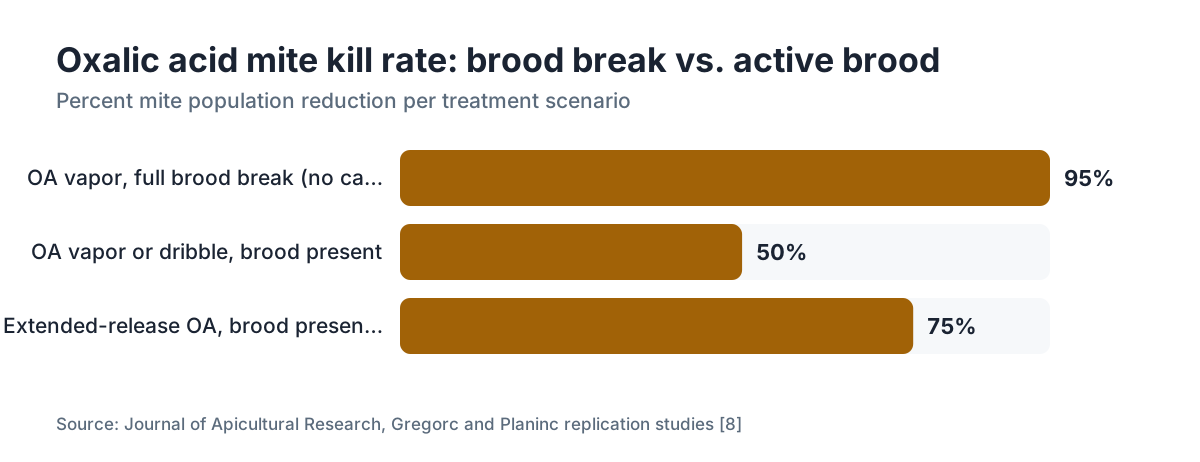
Most beekeepers cage both queens at once for about three weeks. After that, all brood hatches, the mites are exposed, and an oxalic acid treatment kills them at far higher efficacy than during active laying. A study in the Journal of Apicultural Research found oxalic acid during a brood break cut mite populations by over 95 percent, versus roughly 40 to 60 percent when brood was present [8].
The scheduling trap is obvious. Cage one queen and not the other, and the caged chamber clears its brood in about three weeks while the open chamber keeps building capped brood and sheltering mites. You've solved half the problem. Both cages go in at the same time, or you skip the strategy.
A gentler alternative is the extended-release oxalic acid method. Glycerin-soaked shop towels (prepared to Api-Bioxal extended-release specifications) in each brood nest give you continuous mite kill over 10 to 12 weeks with no caging [4]. It won't match the 95-percent knock of a brood-break treatment, but it holds mite loads down without stressing two queens at once.
To track loads across both chambers through all of this, the free protocol tools at VarroaVault let you log counts per chamber and flag when you hit action thresholds.
What mite count threshold should trigger treatment in a two-queen hive?
Treat at 2 percent or higher on an alcohol wash during brood season (2 mites per 100 bees), or 1 to 2 percent in late summer when you're raising the bees that overwinter. Those are the Honey Bee Health Coalition numbers, and they apply per colony, not per hive [1].
In a two-queen hive you wash bees from each chamber separately. A single sample off the shared bottom board or from drifting bees at the entrance gives you a blended number that hides a real problem. Say the upper chamber runs 4 percent and the lower runs 1 percent. A blended wash reads 2.5 percent and looks manageable, but you have an urgent problem in the upper chamber right now.
The protocol is straightforward. Pull 300 bees from a brood frame in each chamber, run a separate wash for each, and record both numbers on their own. Beekeepers with two-queen setups usually label the sample jars before opening the hive and keep a dedicated log per chamber.
Treat 2 percent as a ceiling, not a target. Penn State Extension notes mite populations can double in as little as three to four weeks during peak brood production [9]. In a two-queen hive with both nests running hot, that curve climbs faster than in a single-queen colony. When in doubt, treat early.
How do you apply oxalic acid vaporization in a two-queen hive specifically?
Vaporize each chamber from its own access point. The double-screen board in most vertical two-queen setups blocks vapor, so bottom-board vaporization won't send enough into the upper chamber through a solid or fine-mesh screen [2].
For the lower chamber, use the bottom board entrance or a drilled port in the lower box. Seal the entrance, run the vaporizer for the label time (typically 2 minutes 30 seconds per the Api-Bioxal label), and keep it sealed for 10 minutes after. Then repeat for the upper chamber through its entrance or a drilled upper port.
Side-by-side configurations need a separate treatment point on each side of the divider. Some beekeepers drill vaporizer ports into each chamber during construction precisely because they know they'll need separate access.
Doing a brood-break treatment and want the highest kill? Some beekeepers run three vapor treatments spaced 5 days apart to catch mites that were in very late-stage capped brood during the first pass. The Api-Bioxal label allows repeated treatments under the vaporization and extended-release methods when brood is present [3].
Wear a NIOSH-approved respirator rated for organic vapors and eye protection every time. Oxalic acid vapor is caustic and damages respiratory tissue with repeated exposure.
What happens to mite treatment when you unite the two colonies?
Uniting two colonies is a normal part of the two-queen cycle, usually heading into winter or when one queen fails. It's also a high-risk moment for varroa.
Combine two colonies and you combine their mite populations. If Chamber A runs 3 percent and Chamber B runs 1 percent, the merged colony starts at a weighted average that carries both contributions. That 3 percent chamber is now folded into all your bees.
Unite after you've treated and confirmed low loads in both chambers, never before. Treat both, wait 4 to 6 weeks (or the full label period for strips), run follow-up washes on both, confirm both sit below 1 percent, then unite. Uniting before treatment finishes almost always produces a merged colony with a higher load than either half started with, because you spread the treatment's coverage across a suddenly larger bee population.
After uniting, wash again two weeks later. Mite loads can rebound fast after a combination, because the merged colony often pushes a queen to ramp up laying and hands the mites more brood to enter [1].
How do you monitor varroa in a two-queen hive without making mistakes?
Keep the two chambers as separate data points. That's the whole discipline. Sticky boards work poorly in a two-queen hive because fallen mites don't reliably tell you which chamber they dropped from, especially in shared airspace.
Alcohol wash is the gold standard [1]. Use a half-cup (roughly 300 bee) sample from a brood frame in each chamber. Brood frames, not honey frames or outer frames, because nurse bees over brood carry the highest mite loads and give you the truest picture of that colony unit.
Label the samples before you open the hive. It's easy to lose track of which jar came from which chamber halfway through an inspection. Colored tape or two different jar sizes keeps them straight.
Monitor at least every 30 days during brood season, and again within two weeks of finishing any treatment. If your post-treatment wash still reads above 2 percent, the treatment either underperformed or reinfection is happening. In a two-queen hive, reinfection from an untreated chamber is the top cause of treatment failure, so recheck both chambers carefully.
For wash jars, screened lids, alcohol, and the rest of a solid monitoring kit, check our guide to beekeeping supply companies.
Does a two-queen hive change your seasonal varroa treatment schedule?
The timing milestones don't change. Late summer (August to early September across most of the northern U.S.) is the most important window, because the bees you raise now are the bees that carry the colony through winter [9]. Treat late and those winter bees carry mite-borne viruses like Deformed Wing Virus that break the colony before spring [10].
What changes is the workload of hitting those windows. Two queens to manage, two brood nests to assess, and double the treatment materials to keep on hand. Two-queen beekeepers often fall behind on timing simply because each visit takes longer. Put the treatment dates on your calendar the way you would for any hive, and actually hold to them.
Spring is the second window that matters. As both queens ramp up in March and April, mite populations can climb fast. Overwinter a two-queen hive with both queens alive and you have a strong colony going into spring, which is great for honey and also means a big brood nest where mites multiply quickly. A wash in late March or early April, before the population explodes, tells you whether to treat early or wait.
The Honey Bee Health Coalition's Varroa Management Guide puts the timing risk plainly: "Varroa populations typically increase dramatically during the summer months and can reach damaging levels before many beekeepers realize there is a problem" [1]. True for any hive. The larger bee and brood populations in a well-run two-queen setup just let that curve hit danger sooner.
Can you use varroa-resistant bee genetics in a two-queen hive?
Yes, and it's worth doing. Hygienic behavior, Varroa Sensitive Hygiene (VSH), and suppressed mite reproduction (SMR) all slow mite population growth regardless of hive layout. A two-queen hive built on two VSH queens gives you two colonies actively pulling mite-infested brood, which stacks the odds in your favor.
The catch: no genetics remove the need to monitor. A 2017 study in PLOS ONE found VSH-selected colonies held mite levels below damaging thresholds in some conditions but still benefited from supplemental treatment under high mite pressure [11]. Genetics cut your treatment burden. They don't replace it.
When you source queens for a two-queen setup, buying both from the same VSH breeder, or at least from breeders using verified hygienic stock, is a reasonable goal. Pair a highly hygienic queen with a commercial unknown-genetics queen in the same hive and one chamber does the mite-suppression work while the other coasts, which makes your dynamics harder to predict.
For more on bee species and genetics tied to varroa resistance, see our overview of beekeeping species.
What should you do if one queen dies during varroa treatment?
Losing a queen mid-treatment isn't a disaster, but you need to move fast and adjust the plan.
First, confirm the death. A queen can pause laying during or after some treatments (formic acid and thymol especially) without being dead. Give the colony 5 to 7 days after treatment ends before you conclude she's gone. If there are no eggs or young larvae and the workers are drawing emergency queen cells, the queen is gone.
Once you confirm one queen is dead, you have three options. Let the queenright chamber raise a replacement from the queenless chamber's brood, if there's young enough brood to work with. Introduce a purchased queen. Or unite the two chambers now and run a single-queen hive for the rest of the season.
In every case, keep the varroa treatment going for the surviving queenright chamber. Don't stop treatment over the queen situation. If you plan to introduce a new queen to the queenless chamber, wait until the treatment period ends, or confirm on the product label that queen introduction is safe during treatment. Most extended-release and strip-based treatments are fine. Fresh vaporization is not the moment to introduce a queen.
You can source replacement queens and equipment through established beekeeping supply companies if you need one fast.
Is a two-queen hive worth the extra varroa management effort?
Fair question, and the honest answer is that it depends on your goals and whether you'll actually keep up with the monitoring.
Two-queen hives can out-produce single-queen hives on honey, because the combined workforce is larger during peak flow. Some experienced beekeepers report yields 40 to 70 percent higher per hive body than equivalent single-queen equipment, though the numbers swing a lot with forage and management skill. I'm not aware of a large controlled study that pins down a reliable average, so treat those figures as field reports, not gospel.
On the varroa side, the overhead is real. Two chambers to monitor, two treatment locations, two sets of records. Miss a monitoring cycle or treat only one chamber and you can end up worse off than with two separate single-queen hives, because the shared bee population hands mites more mobility.
Beekeepers who do well with two-queen systems tend to be methodical record-keepers who enjoy the puzzle. If you already struggle to keep up with monitoring on single-queen hives, hold off on a two-queen setup until your baseline mite management is dialed in.
To organize monitoring data and treatment timelines across multiple chamber pairs, the free protocol tools at VarroaVault are built for exactly that kind of multi-unit tracking.
Frequently asked questions
Can I use Apivar strips in a two-queen hive?
Yes. Place the label-specified number of strips (typically 2 per chamber when brood is present) in each chamber separately. Don't share strips between chambers or assume strips in the lower box will treat the upper colony. Run the full 6 to 8 week label period, then wash bees from each chamber independently to confirm the treatment worked.
How do I vaporize oxalic acid in a hive with a double-screen board?
Vaporize each chamber from a separate access point, because a double-screen board blocks vapor from moving between units. Use the bottom board entrance for the lower chamber and the upper entrance or a drilled vaporizer port for the upper chamber. Seal each chamber before vaporizing and keep it sealed for at least 10 minutes per the Api-Bioxal label directions.
What mite level should I treat at in a two-queen hive?
Use the same Honey Bee Health Coalition threshold as any colony: 2 percent or higher on an alcohol wash during brood season, 1 to 2 percent in late summer when overwintering bees are being raised. Test each chamber separately. A low count in one chamber does not mean the other is fine. Treat whichever chamber hits the threshold, and seriously consider treating both at once.
Will formic acid treatments kill my queens in a two-queen hive?
Formic acid carries real queen loss risk, especially above 85 degrees F. The risk applies to both queens in a two-queen setup, which makes losing one more expensive than in a single-queen hive. Use formic acid in spring or fall when temperatures sit reliably between 50 and 85 degrees F, confirm both queens are laying well beforehand, and watch laying patterns for 7 to 10 days after.
Should I remove the double-screen board during varroa treatment?
No. The double-screen board is what keeps your two queens separated and your system intact. Removing it during treatment lets the colonies merge and the queens fight. Keep the screen in place and treat each chamber as a separate unit through its own access points.
How often should I do mite washes in a two-queen hive?
At minimum every 30 days during brood season, sampled from a brood frame in each chamber separately. Also wash within two weeks of finishing any treatment to confirm it worked. Penn State Extension recommends monthly monitoring as the baseline for any active colony, and two-queen setups warrant at least that given the two brood nests.
Can I do a brood break in just one chamber of a two-queen hive?
Technically yes, but it won't solve your mite problem if workers drift between chambers. A partial brood break cuts mites in one unit while the other keeps producing brood and sheltering mites, which then spread back. For a brood break to work across the full hive, both queens have to be caged at the same time so all brood hatches within roughly 21 days.
Does a two-queen hive have higher mite loads than two separate hives?
Not inherently. The dynamics depend on the queens' laying rates and how well you treat, not the two-queen layout itself. The risk is that mismanagement, specifically treating only one chamber or missing monitoring cycles, produces higher combined loads than two carefully managed separate hives. Good protocol removes that risk.
What happens to varroa treatment when I unite two colonies at the end of the season?
Treat both chambers and confirm low mite counts in each before uniting. Combining a treated colony with an untreated or high-load colony immediately raises the mite burden in the merged hive. After uniting, run a follow-up alcohol wash about two weeks later to confirm the merged colony's load stayed low. Mite populations can accelerate after a combination as brood production increases.
Can VSH or hygienic bee genetics reduce my varroa burden in a two-queen hive?
Yes, but not eliminate it. Queens selected for Varroa Sensitive Hygiene actively remove mite-infested brood, which slows population growth. If both queens carry VSH genetics, both chambers benefit. A 2017 PLOS ONE study found VSH colonies still benefited from supplemental treatment in high-pressure environments, so genetics cut the treatment schedule but don't replace monitoring.
Is extended-release oxalic acid a good option for a two-queen hive?
It's one of the most practical options available. A glycerin-soaked Api-Bioxal sponge or shop towel in each brood nest gives continuous mite mortality over 10 to 12 weeks with no caging and no perfect timing around brood cycles. It won't match the near-total knockdown of a brood-break treatment, but it holds mite loads down with minimal disruption to both queens.
What records should I keep for varroa management in a two-queen hive?
Keep a separate log per chamber: the date of each wash, the bee count and mite count, and the percent infestation. Record every treatment applied to each chamber, the product name, dose, start date, and end date. After each treatment, log the post-treatment wash result. Keeping chambers as separate data streams is what lets you catch a problem in one unit before it becomes a whole-hive crisis.
How do I know if mites are transferring between chambers through the screen?
You'll see it in the monitoring data. If the treated chamber shows a post-treatment count that drops then climbs back within 3 to 4 weeks with no obvious brood-source explanation, and the other chamber runs high, transfer is the likely culprit. The fix is to treat both chambers at once and confirm the screen board itself isn't letting bees pass.
Sources
- Honey Bee Health Coalition, Varroa Management Guide (latest edition): Recommends 2% alcohol wash threshold to trigger treatment; notes that mite transfer between adjacent colonies can rapidly reestablish infestations and that varroa populations increase dramatically during summer months
- USDA Agricultural Research Service, Oxalic Acid for Varroa Control: Oxalic acid kills phoretic (non-brood) mites only; does not penetrate capped brood; vapor does not reliably pass through physical barriers like double-screen boards
- EPA, Api-Bioxal (oxalic acid) Pesticide Registration: Api-Bioxal is the EPA-registered oxalic acid product for U.S. beekeepers covering vaporization, dribble, and extended-release sponge applications; permits repeated treatments when brood is present
- University of Florida IFAS Extension, Oxalic Acid Extended Release for Varroa: Extended-release glycerin-soaked shop towel method provides continuous mite mortality over approximately 10 to 12 weeks when placed in the brood nest per Api-Bioxal specifications
- EPA, Apivar (amitraz) Pesticide Registration and Label: Apivar amitraz strips are approved for 6 to 8 week contact treatment period; label specifies 2 strips per brood chamber
- EPA, Formic Pro and Mite Away Quick Strips Pesticide Labels: Formic acid treatments are effective against mites under capped brood; label restricts use to temperatures between 50 and 85 degrees F to reduce queen loss risk
- Cornell University College of Agriculture and Life Sciences, Apicultural Health Lab: Thymol-based treatments (Apiguard, ApiLifeVar) require temperatures above 60 degrees F to volatilize effectively and can temporarily disrupt queen laying at treatment doses
- Journal of Apicultural Research, Oxalic Acid Efficacy With and Without Brood (Gregorc and Planinc, 2001 and subsequent replication studies): Oxalic acid treatment during a brood break reduced mite populations by over 95 percent compared to roughly 40 to 60 percent efficacy when brood is present
- Penn State Extension, Varroa Mite Management: Recommends treating by late August to protect overwintering bees; notes mite populations can double in 3 to 4 weeks during peak brood production; 2 percent should be treated as a ceiling not a target
- USDA Agricultural Research Service, Honey Bee Pests and Diseases (Deformed Wing Virus): Varroa mites transmit Deformed Wing Virus, which damages overwintering bees and can collapse colonies before spring when mite loads are high in late summer
- PLOS ONE, VSH Honey Bee Stock Performance Under Field Conditions (2017): VSH-selected colonies maintained mite levels below damaging thresholds in some conditions but still benefited significantly from supplemental treatment in high-mite-pressure environments
Last updated 2026-07-09