How to treat varroa in a hive with a laying queen
TL;DR
- With a laying queen in the hive, capped brood shields mites from most treatments.
- Your best options are oxalic acid vapor (repeated every 5 days over 3 to 5 cycles), formic acid products like Mite-Away Quick Strips, or Apivar strips.
- Treatment choice depends on temperature, colony strength, and whether honey supers are on.
- A single treatment rarely works when brood is present.
Why does a laying queen make varroa treatment harder?
A laying queen means capped brood, and capped brood is the problem. Varroa mites reproduce inside sealed cells, and most treatments cannot get through the wax cap to reach them. The Honey Bee Health Coalition puts it plainly in their Varroa management guide: roughly 70-80% of mites in an actively brooding colony sit inside sealed cells at any given moment, out of reach of contact and vapor treatments [1].
Treat once and walk away, and you've hit maybe 20-30% of your mite population. The rest hatch out with the next wave of bees, re-infest, and your mite count bounces back within weeks. This is why every serious protocol for full-brood colonies uses either a treatment that works over multiple weeks (miticide strips) or repeated short applications timed to the brood cycle.
The worker brood cycle runs 21 days from egg to emergence. A female mite slips into a cell just before capping, lays eggs, and her daughters emerge with the bee. That roughly 12-day sealed period is the window when chemical treatments simply can't reach her. Your protocol has to account for it.
Which varroa treatments actually work with a laying queen present?
Here's the honest breakdown. Not everything on the shelf works when brood is present, and a few things work but with real caveats.
| Treatment | Works with brood? | Honey supers allowed? | Temperature range | Application method |
|---|---|---|---|---|
| Oxalic acid vapor (OAV) | Yes, with repeated doses | No [2] | Above 32°F (0°C) | 3-5 treatments, 5 days apart |
| Formic acid (MAQS) | Yes, single course | No during treatment [3] | 50-85°F (10-29°C) | 2 pads, 7-day treatment |
| Formic acid (FormiVar 6.8%) | Yes | No during treatment | 50-86°F | 10-day single application |
| Apivar (amitraz strips) | Yes, stays active 6-8 weeks | No [4] | Above 50°F | 2 strips per box, 6-8 weeks |
| Hopguard 3 (hops beta acids) | Partial | Yes [5] | No restriction stated | 3-4 strips, 30 days |
| Oxalic acid dribble | No (brood present cuts efficacy hard) | No | Above 40°F | Single application only |
| Apistan/Check-Mite (synthetic pyrethroids) | Yes, but resistance is widespread | No during honey flow [4] | Varied | 6-8 weeks |
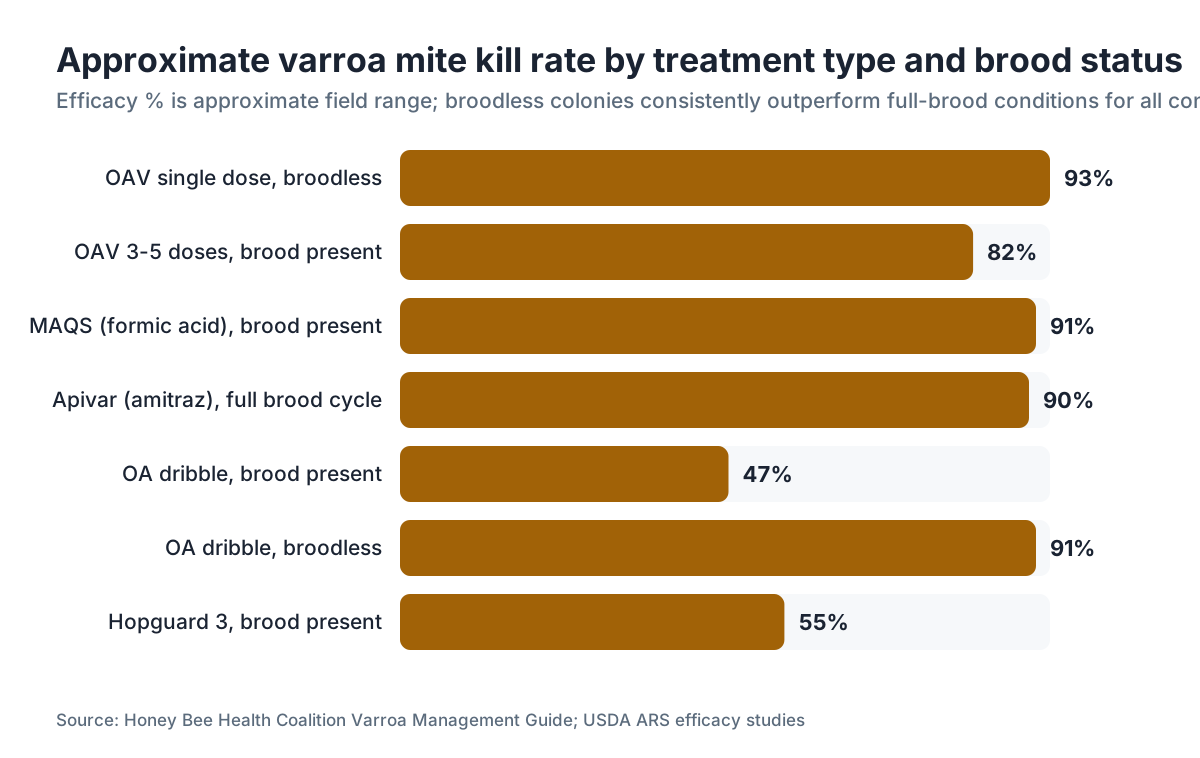
The dribble method deserves a call-out because it trips up a lot of beekeepers. The EPA label for oxalic acid dribble approves it as a single application, and studies consistently show efficacy drops below 50% when capped brood is present, versus 90%+ in broodless colonies [6]. If your queen is laying, dribble isn't your tool. Vapor is.
Apivar strips (amitraz) are the workhorse for full-brood colonies, and for good reason. Amitraz is a contact miticide that stays active across the entire 6-8 week treatment window, long enough to cover two full brood cycles. Mites emerging from cells walk across the treated strips and pick up a lethal dose. The catch: resistance to amitraz is documented and growing in some regions, so rotation with other modes of action matters [4].
Mite-Away Quick Strips (formic acid) work because formic acid vapor penetrates capped cells to some degree, making it one of the only treatments that reaches mites during the sealed brood phase. A University of Guelph field trial found MAQS achieved over 90% mite reduction in full-brood colonies under proper conditions [7]. The temperature restriction is real though. Above 85°F (29°C), queen mortality risk climbs noticeably.
How do you use oxalic acid vapor when a queen is laying?
Oxalic acid vapor with a laying queen needs a multi-treatment schedule, not a single shot. The standard protocol most extension services and the Honey Bee Health Coalition recommend is three to five vaporizations spaced five days apart [1]. The logic: OAV kills mites riding on adult bees but not those sealed in brood. Space treatments every five days and you catch mites as they emerge, before they slip into new brood.
The five-day interval isn't arbitrary. Worker brood stays sealed for about 12 days, and you want to hit mites in the gap between emerging and finding a new cell. Five days gives you a safety margin on each side.
In practice, you're in your apiary five to six times over about 20 days. For a hobbyist with a few hives, that's manageable. For a sideliner with 50+ colonies, it gets labor-intensive fast. An OAV vaporizer like the Varrox, or any EPA-compliant unit, turns the acid into vapor. You seal the hive entrance for about 10 minutes and let the vapor diffuse through the cluster.
Safety matters here. Oxalic acid vapor is corrosive to lungs and eyes. Wear a proper respirator rated for acid gases (a P100/OV combination), not a dust mask. Gloves and eye protection too. The EPA registrant label spells this out and it isn't optional [2].
Temperature works in your favor with vapor. OAV performs at temperatures as low as 32°F (0°C), which makes it viable in early spring and late fall when formic acid wouldn't be appropriate. That's a real advantage.
One more note on timing. If you can interrupt brood rearing temporarily (by caging the queen for 24 days or making a split), a single OAV treatment becomes far more effective. But that's a separate decision from treating a normal laying queen hive.
Can you use formic acid treatments like MAQS with a laying queen?
Yes, and formic acid is one of the stronger tools for a full-brood hive precisely because it penetrates capped cells. Mite-Away Quick Strips (MAQS) release formic acid over seven days. The label requires two pads placed on the top bars of the lower brood box, with no honey supers present during treatment [3].
The temperature window is strict. The label says 50-85°F (10-29°C). Treat outside that range and you risk either weak treatment (too cold, not enough vapor) or queen loss (too hot, vapor concentration spikes). In a hot July in the Southeast, mid-summer MAQS is a gamble. In a mild May in the Midwest or Pacific Northwest, it's often the first choice.
Queen loss with MAQS is a documented risk even inside the labeled temperature range, running somewhere around 5-15% based on field reports and label warnings, though numbers swing by condition and operator [3]. That's not a reason to skip it. It's a reason to keep a backup plan and inspect queen status about two weeks after treatment.
FormiVar 6.8% is a newer formic acid formulation with a 10-day extended release. Same active ingredient, slightly different application mechanics, same honey super restriction. Some beekeepers say it feels gentler on queens, but head-to-head data in peer-reviewed form is thin right now.
Using formic acid with honey supers on? Remove them first. Full stop. Formic acid taints honey if it's present during treatment.
How long do Apivar strips take to work in a brooded colony?
Apivar strips need the full 6-8 weeks. Pull them early and you leave the job half done. The active ingredient, amitraz, works by contact: bees walk across the strip, pick up amitraz residue, and spread it through the colony by grooming and body contact. Mites get exposed as they move between bees or while riding adults.
The long window comes straight from the brood problem. Mites sealed inside cells during week one emerge in week three, cross the strips, and pick up a lethal dose. Then the next cohort does the same. The treatment has to outlast at least two full brood cycles to work.
Apivar is approved for use without honey supers only. The label is explicit: remove supers before application and don't put them back until the strips come out [4]. Amitraz has a relatively short half-life in beeswax under normal conditions, but the honey contamination risk makes the restriction non-negotiable, legally and for food safety.
Placement matters. Hang strips in the brood area where bees travel, not in empty boxes or corners. Two strips per brood chamber, hung between frames in the busiest lanes. A double-deep brood nest gets four strips total.
Watch for resistance with amitraz. If you treated with Apivar last year and your mite counts aren't dropping after three weeks, resistance may be a factor. Rotate to a different mode of action. The Honey Bee Health Coalition recommends alternating chemical classes to slow resistance [1].
What mite count is too high and when do you need to treat immediately?
The most widely cited threshold comes from the Honey Bee Health Coalition's Varroa management guide: treat when your alcohol wash or sticky board count hits 2% (2 mites per 100 bees on a 300-bee alcohol wash) during the honey production or active season, and 1% or lower in late summer and fall when you're raising the winter bees that carry the colony through [1].
A few state extension programs use slightly different numbers. Ohio State University Extension recommends action at 2 mites per 100 bees during the brood-rearing season [8]. Michigan State Extension and others land in the same range. The consensus is real even if the exact cutoff shifts a little by source.
Season matters as much as the raw count. Two percent in April is serious. Two percent in late August is a crisis, because the bees hatching in September and October are the ones that need to survive five to six months of winter. High mite loads in fall produce short-lived winter bees with wing and abdominal deformities from Deformed Wing Virus, and those colonies die before February [1].
For monitoring, a 300-bee alcohol wash is the gold standard for accuracy. Sticky boards are fine for trend-watching but can undercount by 50% or more. Making a treatment decision? Use an alcohol wash. The supplies cost almost nothing and the data is far more reliable. You can find a primer on varroa mites and their lifecycle that explains why sample timing within the day also matters.
Should you remove honey supers before treating for varroa?
For most approved treatments, yes. The label is the law under FIFRA, and nearly every varroa miticide label prohibits honey supers during application. Apivar, MAQS, FormiVar, and oxalic acid products all carry this restriction [2][3][4].
Hopguard 3 is the exception worth knowing. Its label permits use with honey supers in place [5]. During an active honey flow, if your mite count hits the treatment threshold, Hopguard 3 is one of your only legal options. Efficacy with brood present runs lower than the other treatments above, but some reduction beats none during a flow.
If you pull supers to treat mid-flow, have somewhere robbing-proof and ventilated to store them. A sealed vehicle gets too hot. An empty garage works. Re-install supers only after the treatment window on the label has passed.
For oxalic acid vapor specifically, some label versions allow one application per year with honey supers present (for the vaporization method) under certain product registrations, and this varies by state. Check your specific product's current label before assuming anything. Don't rely on what someone told you at the bee club. The label on the box you bought is the controlling document.
Does a queen break or brood interruption make varroa treatment more effective?
Yes, dramatically. A broodless period is the single biggest lever you can pull on mite population. With no capped brood, every mite in the colony rides an adult bee, fully exposed to treatment. A single OAV application in a broodless colony hits 90-95%+ efficacy. With brood present, repeated applications might get you to 80-85% at best [6].
A queen break means temporarily removing or caging the queen so all current brood hatches out and no new brood gets capped. Full broodlessness takes about 24 days from the time the queen stops laying (the last eggs cap on day 8-9 and emerge around day 21). In practice, most beekeepers target 15-20 days of no open brood before treating.
Methods vary. You can cage the queen on a frame (she keeps laying in a restricted area, so you don't get full broodlessness, but you concentrate mites), remove the queen and wait 24 days then do a single OAV treatment before reintroducing her, or make a split (the queenright half raises a new queen during the gap, creating a near-broodless period).
For hobbyists with a handful of hives, this is worth doing once or twice a year. The midsummer brood break is a well-established technique in parts of Europe where rules on certain chemicals are stricter, and it works.
That said, not every beekeeper can manage a brood break comfortably. Lose the queen during reintroduction and you're in trouble. Manage more than 20-30 hives and doing this colony by colony gets complicated fast. In those cases, multi-application OAV or Apivar strips are the practical backbone of treatment.
How do you monitor mite levels after treatment to know if it worked?
Treat and walk away and you're flying blind. The only way to know if a treatment worked is to count mites before and after, with the same method.
Do a baseline alcohol wash before you apply anything. Record the number. Then do a follow-up wash three to four weeks after treatment ends. The Honey Bee Health Coalition recommends checking efficacy after the full treatment window is complete, not mid-treatment [1].
What counts as success? The post-treatment goal is under 1% (fewer than 1 mite per 100 bees) heading into fall, and lower is better. If your count is still 2% or above after a full Apivar course, something went wrong: possible resistance, application error, or reinfestation from neighboring colonies. That last one is real. Mites drift and rob into your hive from collapsing colonies nearby, and a treated hive can re-infest within weeks in apiaries with heavy mite pressure in the neighborhood.
For the numbers-minded beekeeper, the VarroaVault protocol builder (at varroavault.com) generates treatment schedules and tracking logs based on your colony count, season, and current mite level. It's free and takes about two minutes to set up. Even a paper notebook with dates and counts beats nothing.
Alcohol wash materials are simple: a jar, a lid with fine mesh, 70% isopropyl alcohol, and about half a cup of bees from the brood nest (300 bees roughly equals half a cup by volume). Most state extension apiculture pages walk through the method. Oregon State Extension has a clean protocol online [9].
Are there any treatment mistakes that are especially common with laying queen hives?
A few come up constantly.
Treating once and stopping. A single oxalic acid vaporization in a full-brood colony is not a treatment. It's a partial knockdown. Do the full course.
Using the dribble method with a laying queen. Dribble is for broodless colonies. The efficacy data is clear on this. If your queen is laying, use vapor.
Leaving Apivar strips in too long or too short. Less than six weeks and mites from late-emerging brood never touch the strips. More than eight weeks and you pile unnecessary amitraz pressure on the colony and raise resistance risk. Six to eight weeks, then strips out.
Treating during honey flow with a product that prohibits supers. This is a label violation under federal pesticide law (FIFRA), and it puts miticide residues in honey that could end up in food. It's also bad for the bees. Read the label before applying anything.
Skipping the queen check after formic acid. MAQS in particular carries enough queen-loss risk that a post-treatment inspection two weeks later is worth doing. Find the queen or find eggs. If she's gone, you have time to requeen rather than discovering it when the colony is hopelessly queenless six weeks later.
Ignoring temperature. Both formic acid and oxalic acid have real temperature dependencies. Treating with MAQS in August in a hot climate is asking for queen problems. Treating with OAV during a cold snap when bees cluster tightly means poor vapor distribution. Match your treatment to your actual weather, not the calendar.
What's the seasonal treatment calendar for a hive with a laying queen?
Timing matters almost as much as the product. Here's a practical approach for most temperate North American climates.
Spring (April-May, after buildup begins): Monitor with an alcohol wash once the colony has 5+ frames of brood. If mites are above 2%, treat before the first nectar flow if you can. Repeated OAV applications or formic acid both work here, depending on temperature. Below threshold, monitor monthly.
Summer (June-July, active flow): Avoid treating during the main honey flow unless mites are spiking. Honey supers block most treatments. If you must treat mid-flow, Hopguard 3 is your only realistic option with supers on. Otherwise pull supers, treat with Apivar or OAV, then reinstall.
Late summer (August, critical window): This is the most important treatment timing of the year. Mites in August damage the winter bees developing in September and October. Miss this window and you may lose the colony by January no matter what you do in the fall. Treat by mid-August across most of North America. OAV, formic acid, or Apivar all fit if temperatures allow.
Fall (September-October, post-honey harvest): A mite wash after summer honey comes off tells you where you stand. Still above 1%? Run another treatment before the winter cluster forms. OAV works well in fall even into cooler temperatures. This is also a good season for a combined vapor plus dribble approach: vapor during the main cluster and dribble if a broodless period happens naturally as queen laying slows.
Winter (cluster, broodless or nearly so): If you get a true broodless period in winter (common in colder climates), a single OAV application or oxalic acid dribble is effective and safe. Many beekeepers run this as a cleanup treatment in December or January.
You can set yourself up for year-round monitoring with the right beekeeping supplies from any major retailer, including alcohol wash kits, vaporizers, and strip treatments.
How do you protect the queen during varroa treatment?
The queen is always the biggest concern during treatment because she's hard to replace on short notice. Here's how to cut risk for each major treatment type.
With formic acid (MAQS/FormiVar): treat inside the temperature window. Period. Don't treat in a heat wave. If temperatures are forecast to hit 90°F (32°C) or above during a MAQS treatment, delay if you possibly can. Some beekeepers briefly open the top of the hive on hot days to lower vapor concentration, though that's off-label. The better answer is to pick a cooler week. Inspect for the queen two weeks after treatment.
With Apivar: queen safety is generally good with amitraz. The main risk is beekeeper error, like strips placed directly on the queen or amitraz exposure in a confined space. Hang strips between frames, not lying on the bottom board where the queen might walk across them repeatedly.
With OAV: queen mortality from oxalic acid vapor is low in properly done treatments. The risk rises if you treat more often than every five days or use an excessive dose. Stick to the labeled dose (typically 1 gram of oxalic acid per application per brood chamber) and five-day intervals.
One underrated move: if you're worried about queen survival during an aggressive treatment, find and cage her for the treatment duration. She's protected in the cage, and you release her 24-48 hours after the vapor clears. It adds a step but gives peace of mind with a valuable or hard-to-replace queen.
Frequently asked questions
Can I treat for varroa mites while the queen is actively laying?
Yes, but you need a treatment that works through the brood cycle. Apivar strips (amitraz), formic acid products like MAQS, and repeated oxalic acid vaporizations spaced five days apart are your main options. A single oxalic acid dribble is not effective with capped brood present. Expect to commit to a full 6-8 week course with strips, or 3-5 OAV applications over 20 days, to actually knock mite populations down.
How many times should I use oxalic acid vapor if the queen is laying?
The standard recommendation is three to five vaporizations spaced five days apart. This timing catches mites as they emerge from sealed brood cells before they can re-enter new brood. One application alone in a full-brood colony typically kills only 20-30% of the mite population, since the rest sit sealed inside cells and protected from the vapor.
What's the best varroa treatment in summer with honey supers on?
Hopguard 3 (hops beta acids) is the only EPA-registered varroa treatment labeled for use with honey supers in place. Its efficacy with brood present runs lower than formic acid or amitraz products, but it's your legal option during an active flow. The alternative is to pull supers, treat with a more effective product, and reinstall supers after the treatment window ends per the label.
Will MAQS (Mite-Away Quick Strips) kill my queen?
Queen loss with MAQS is a real risk, running roughly 5-15% depending on conditions and temperature. The risk increases at temperatures above 85°F. Treat inside the labeled 50-85°F window and inspect your queen status about two weeks after treatment ends. If she's gone, you'll catch it early enough to requeen rather than losing the whole colony.
How do I know if my varroa treatment worked?
Do a 300-bee alcohol wash before treatment and repeat three to four weeks after treatment ends. You're looking for under 2% during the active season and ideally under 1% going into fall. If counts stay high after a full treatment course, consider amitraz resistance, reinfestation from neighboring colonies, or application error. Don't assume treatment worked without checking.
Can I treat for varroa with honey supers on if I'm using oxalic acid?
The answer depends on the specific OAV product and its label. Some label versions allow a single vaporization with supers on; others do not. Oxalic acid dribble prohibits supers in all registrations. Always read the current label for the specific product you purchased. The label is a legal document and the controlling instruction.
What temperature do I need for varroa treatment to be safe and effective?
Formic acid (MAQS) requires 50-85°F. Oxalic acid vapor works down to about 32°F. Apivar strips have no stated lower limit but are most effective above 50°F when bees move actively. Treating outside these ranges either weakens efficacy, raises queen mortality risk, or both. Match the product to your actual forecast, not your ideal calendar date.
How long do I leave Apivar strips in the hive?
Leave Apivar strips in for the full 6-8 weeks specified on the label. Pulling them early leaves mites from late-stage brood cells unexposed. Leaving them in beyond 8 weeks piles unnecessary amitraz pressure on the colony and raises resistance concerns. Six to eight weeks, then remove and record the treatment date for your rotation planning.
Should I do a brood break before treating for varroa?
A brood break dramatically improves treatment efficacy. With no capped brood, a single OAV treatment can hit 90-95% mite kill versus roughly 80-85% at best with repeated treatments in a full-brood colony. If you can cage or temporarily remove the queen for 24 days, the follow-up treatment is far more effective. For hobbyists with a few hives, it's worth the effort. Sideliners managing many colonies often find it impractical and rely on strip treatments instead.
How often should I check for varroa mites in a hive with a laying queen?
The Honey Bee Health Coalition recommends monthly monitoring during the active season using an alcohol wash of 300 bees. At minimum, check in early spring as the colony builds, again before major honey flows, in August before winter bees develop, and again in late September or October. Check more often in high-mite-pressure apiaries or after a nearby colony collapses.
Can varroa mites reinfest a treated hive?
Yes, reinfestation from collapsing neighboring colonies is a well-documented problem. Robber bees and drifting foragers carry mites into a treated hive, sometimes pushing counts back up within weeks of a successful treatment. Keeping colonies strong, reducing robbing during dearth, and coordinating with nearby beekeepers on treatment timing reduces this risk but doesn't eliminate it entirely.
Is oxalic acid safe to use around the queen?
Yes, at labeled doses and intervals, OAV has a low queen mortality rate compared to formic acid. The risk rises if you vaporize more often than every five days or use higher-than-labeled doses. Stick to 1 gram of oxalic acid per application per brood box, space treatments at least five days apart, and queen loss is uncommon. Some beekeepers cage the queen as a precaution with a particularly valuable line.
What varroa treatments are organic or approved for certified organic operations?
Oxalic acid and formic acid are both allowed in certified organic beekeeping in the US under NOP guidelines. Apivar (amitraz) and synthetic pyrethroids like Apistan are not allowed. Hopguard 3 is also permitted. Always confirm with your organic certifier before applying any product, as documentation requirements vary. The USDA National Organic Program standards govern what's allowed.
What's the mite count threshold that requires immediate treatment?
The Honey Bee Health Coalition sets the action threshold at 2% (2 mites per 100 bees on an alcohol wash) during the active season, and 1% or lower in late summer and fall when winter bees are developing. Ohio State University Extension uses the same 2% summer threshold. Late-summer treatment timing is the single most important decision of the year for winter survival.
Sources
- Honey Bee Health Coalition, Tools for Varroa Management Guide (8th edition): 70-80% of mites in an actively brooding colony are inside sealed cells; action threshold is 2% during brood-rearing season and 1% in late summer/fall; recommends alternating chemical classes to slow resistance
- EPA, Oxalic Acid Product Registrations and Labels: Oxalic acid vaporizer label specifies respirator and PPE requirements; honey super restrictions apply to dribble formulations; one vaporization per year with supers present may be permitted on some label versions
- MITE-AWAY QUICK STRIPS Product Label (NOD Apiary Products): MAQS label requires temperature range of 50-85°F, prohibits honey supers during treatment, and notes queen loss risk
- EPA, Apivar (Amitraz) Product Registration and Label: Apivar label prohibits honey supers during application; treatment window is 6-8 weeks; resistance to amitraz is documented in some regions
- EPA, Hopguard 3 Product Label (BetaTec Hop Products): Hopguard 3 is labeled for use with honey supers present, making it one of the only varroa treatments allowed during active honey flow
- USDA ARS, Rademacher et al. studies on oxalic acid efficacy with and without brood: Oxalic acid dribble efficacy drops below 50% when capped brood is present versus 90%+ in broodless colonies; vapor with repeated applications achieves 80-85% in full-brood colonies
- University of Guelph Honey Bee Research Centre: MAQS achieved over 90% mite reduction in full-brood colonies under proper temperature and application conditions in University of Guelph field trials
- Ohio State University Extension, Varroa Mite Management in Honey Bee Colonies: Ohio State Extension recommends treating at 2 mites per 100 bees (2%) during the active brood-rearing season
- Oregon State University Extension, Varroa Mite Monitoring and Management: OSU Extension provides alcohol wash protocol for 300-bee sample from brood nest as standard mite monitoring method
- USDA National Organic Program, Organic Livestock and Poultry Standards: Oxalic acid and formic acid are permitted in certified organic beekeeping under NOP standards; amitraz and synthetic pyrethroids are not
- Michigan State University Extension, Managing Varroa Mites in Honey Bee Colonies: Michigan State Extension uses the 2% action threshold during active season and emphasizes late-summer treatment as critical for winter bee health
Last updated 2026-07-09