How to treat varroa in a top bar hive
TL;DR
- Top bar hives make varroa harder because they lack removable frames that fit standard gear.
- The same core treatments still work: oxalic acid vapor, oxalic acid dribble, formic acid (with caveats), and thymol.
- Adapt your monitoring and application to the horizontal layout.
- Set a threshold, and treat when you hit it.
- Colonies in top bar hives die from mites just as fast as any other hive.
Why do top bar hives make varroa management harder?
Top bar hives were never designed with varroa in mind. They got popular in the 1970s and 1980s partly because they cost almost nothing to build and partly because they drew beekeepers who wanted a more "natural" setup. Varroa destructor reached the US in 1987 and changed the whole game [1]. The top bar community was slow to accept that its hives had the exact same mite problem as every other hive.
The practical difficulties are real. Most sticky board inserts do not fit the sloped or angled floor of a traditional top bar hive, so your baseline monitoring takes improvisation. Treatments built for Langstroth boxes, like Apivar strips that hang between frames, need adapting because top bar combs hang free and cannot be pushed together to make the tight bee space the label assumes. There's no excluder either, so the queen can lay anywhere across the horizontal brood nest, which muddies any brood-based math.
None of this makes a top bar hive untreatable. It just means you have to be more deliberate.
Beekeepers who assume their top bar colony is "treatment-free" because it looks natural lose colonies to varroa at the same rate as any other neglected hive. The mite does not care about your hive philosophy.
What is a safe varroa mite threshold for a top bar hive?
Treat at 2 to 3 mites per 100 bees (2-3%) for most of the year, and at 2% in late summer when the colony is raising winter bees. The Honey Bee Health Coalition sets this action threshold, and it applies to every hive style [2]. A top bar colony at 4% mite load sits in exactly the same danger as a Langstroth at 4%.
The Honey Bee Health Coalition's "Tools for Varroa Management" guide states: "Colonies with mite levels at or above the action threshold should be treated as soon as possible." [2] Keep that sentence in your head when you're second-guessing whether it's time.
An alcohol wash is your most reliable monitor in a top bar hive. Collect roughly 300 bees (about half a cup) from the brood area, wash them in 70% isopropyl alcohol, and count the mites in the liquid. Divide mites by bees and multiply by 100. A powdered sugar roll is gentler on the bees but undercounts mites by 30 to 40% compared to alcohol wash, so if you go with sugar, shift your mental threshold down to about 1.5% to compensate [3]. Sticky boards give you a rough trend line, not a population percentage. Use them to track direction, not to decide on treatment.
Check at minimum in early spring (before the population explodes), mid-summer (when brood is dense and mites reproduce fastest), and late summer (before your winter bees are reared). Three times a year is the floor. Monthly is better if you've had mite trouble before.
Which varroa treatments actually work in a top bar hive?
Here's a straight comparison of the main options, with notes on how each fits the top bar format.
| Treatment | Active ingredient | Works in top bar? | Brood needed? | Temp range | Notes |
|---|---|---|---|---|---|
| Oxalic acid vapor (OAV) | Oxalic acid | Yes, excellent | No (works best broodless) | Above 50°F | Best single tool for top bar hives |
| Oxalic acid dribble | Oxalic acid | Yes | No (broodless only) | Above 40°F | Cheap, no vaporizer; weak with brood |
| Formic acid (Mite Away Quick Strips) | Formic acid | Possible, with difficulty | Works with brood | 50-85°F | Hive geometry makes dose control tricky |
| ApiLife VAR / Apiguard | Thymol | Possible | Works with brood | 59-105°F | Needs placement adjustment for the layout |
| Apivar strips | Amitraz | Difficult | Works with brood | Above 50°F | Strip placement is awkward; not ideal |
| HopGuard | Hops beta acids | Possible | Works with brood | None listed | Strips hang on comb; adapts to top bar |
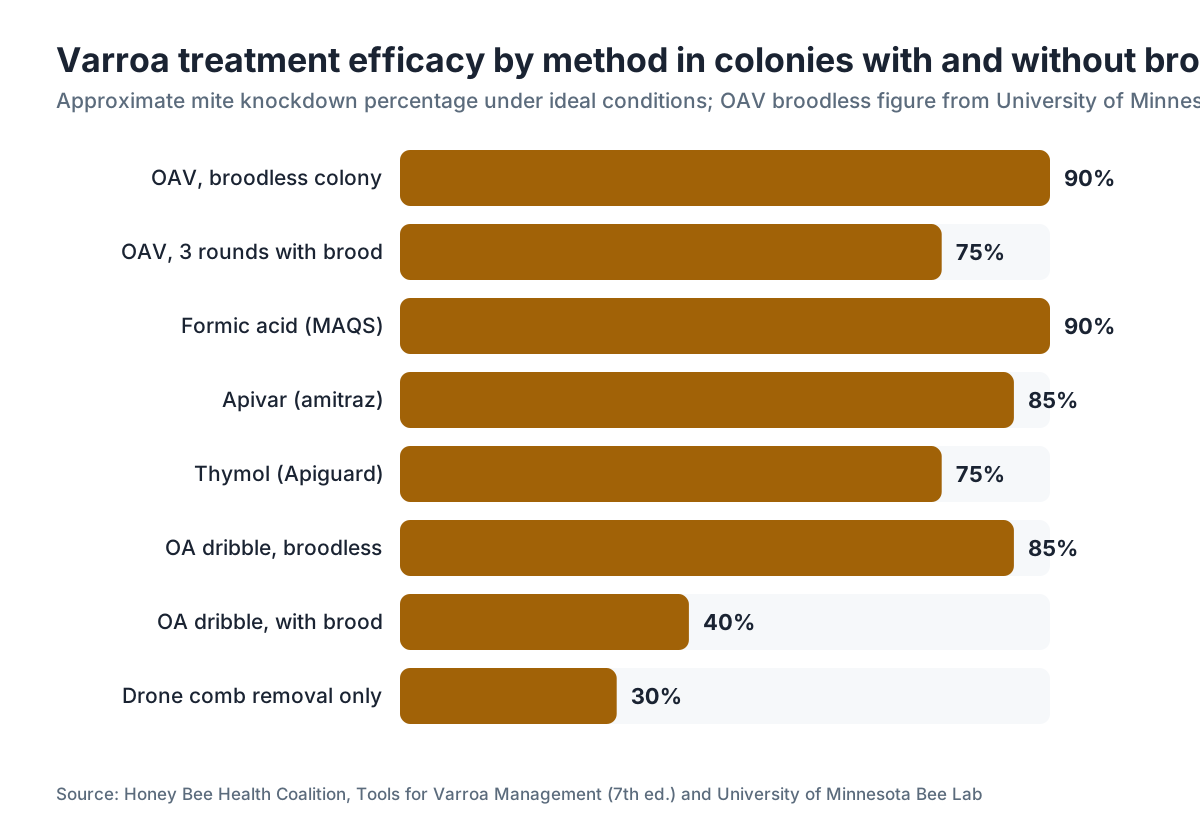
Oxalic acid vaporization is the best tool you have. The vapor fills the cavity regardless of shape, mites pick it up off bees moving through the space, and you don't have to fit any hardware to standard frame dimensions [4]. EPA registered the vaporization method in 2015, and the current label allows multiple treatments in a season under certain conditions [4]. Read your specific product label, because language varies by brand (Api-Bioxal is the most common registered product).
The dribble method (5 mL of oxalic acid solution dripped between each occupied comb space) works too, but most current labels limit you to one treatment per year, and it only kills phoretic mites, not mites under capped brood. In a top bar hive with a long, sprawling brood nest, covering every comb space evenly takes patience. It's doable.
Formic acid via Mite Away Quick Strips (MAQS) kills mites under capped brood, which is worth a lot. The problem in a top bar hive: the strip instructions assume a Langstroth box with a set internal volume and a set distance from the brood nest to the upper entrance. Use MAQS in a top bar hive and you're operating outside the label's tested conditions. Some beekeepers pull it off by placing strips at the front edge of the brood nest and adjusting entrance size to control formic acid buildup, but queen loss is a real risk when temperatures run high or ventilation is poor. I would not make MAQS my first choice here.
Thymol treatments like ApiLife VAR and Apiguard release vapor at warm temperatures. In a horizontal hive, where you place the tray or tablet matters. Put it directly above the brood area, not at the far end. These products need sustained temperatures above 59°F to volatilize properly, so timing counts.
Amitraz strips (Apivar) are the odd one out. They work by contact: bees walk over the strip and spread the chemical. In a Langstroth you set two strips between frames in the brood area. In a top bar hive you can staple or pin a strip to a top bar so it hangs in the comb space, but getting bees to move past it consistently is harder across a wide, horizontal brood nest. It can work. It takes more improvisation than OAV.
How do you do an oxalic acid vapor treatment in a top bar hive?
Oxalic acid vaporization is simple in a top bar hive once you solve the sealing problem. The standard process:
- Find a broodless period or treat when brood is minimal (late fall, winter cluster, or after splitting). OAV still helps with brood present, but its kill rate against mites under caps is low.
- Seal every entrance except one small opening where you'll insert the vaporizer wand.
- Place the wand through that opening so the pan sits inside the cavity.
- Seal around the wand with a folded towel or foam strip.
- Heat the vaporizer per the manufacturer's instructions (most run 2 to 2.5 minutes to fully sublimate the oxalic acid load).
- Wait 10 minutes after the heating cycle before opening any entrances.
- Wear a properly rated respirator (N95 at minimum; a P100 half-face respirator is better). Oxalic acid vapor is a lung irritant and a real hazard [4].
Sealing is the big adaptation for top bar hives. A Langstroth box is a rectangle with predictable gaps. A top bar hive often has a front entrance slot, a back entrance, follower boards with gaps, and top bars that may not sit perfectly flush. Before your first treatment, spend 10 minutes walking the hive, hunting for gaps bigger than a few millimeters, and plugging them with foam, folded cloth, or tape. The goal is to hold vapor in the cavity long enough for bees to pick it up, not to build a perfect seal.
The current Api-Bioxal label allows up to three treatments 5 days apart in a single-season cycle when treating colonies with sealed brood, under an extended use registration [4]. Confirm this against the label on your own package. The label is the legal authority, not this article or anything else you read online.
For a broodless colony, one properly done OAV treatment can drop mite levels by 90% or more [5]. That figure comes from controlled trials. Real-world results shift with colony size and how well you seal the hive.
Can you use the oxalic acid dribble method in a top bar hive?
Yes, and it's easier to picture in a top bar hive than in a Langstroth because you're looking straight down at each comb space. Mix a standard oxalic acid solution (3.5 g of oxalic acid per 100 mL of 1:1 sugar syrup, the formulation on the Api-Bioxal label) and dribble 5 mL per occupied bee space, up to 50 mL total per colony [4].
In a top bar hive, an "occupied bee space" is any gap between two combs where you see bees clustering. Work from one end of the brood area to the other, adding your 5 mL to each space. The bees groom the solution off each other, and the oxalic acid does the work.
The dribble's real limit is that it only kills phoretic mites, the ones riding adult bees, not the ones sealed inside capped cells. If your colony has heavy sealed brood, most of your mites are hiding and this method leaves them alone. Dribble works best in a broodless colony: mid-winter when the queen has stopped laying, or a package or swarm with no brood at all.
One more thing. The current label allows dribble once per year. Use it in winter and watch mite levels rebound by summer, and you'll need a different method for the summer round. OAV carries no such annual-use limit, which is one more reason it's the more flexible tool.
How do you monitor varroa mites without standard Langstroth equipment?
You don't need Langstroth-sized gear to monitor. Cut a piece of cardboard, coat it with petroleum jelly, and slide it into the screened bottom or lay it on the hive floor below the cluster. Leave it 24 to 72 hours, count the fallen mites, and divide by the number of days for a daily mite drop. That gives you a trend, not a true infestation percentage.
For an actual percentage, do an alcohol wash. Nothing about it is hive-specific. You're just scooping bees. In a top bar hive, pull the top bar nearest the center of the brood nest and shake or brush bees into a wide-mouth jar. Aim for 300 bees (roughly 100 mL of bees, about half a cup). Add 70% isopropyl alcohol, shake for 60 seconds, and strain through hardware cloth into a white container. Count the mites in the alcohol. More than 3 mites per 100 bees means treat immediately [2].
A resource like VarroaVault has free alcohol wash calculators and threshold charts that work no matter the hive type. The math is identical whether you run one top bar or a ten-box Langstroth tower.
One genuine advantage of a top bar hive: because you can see the whole brood nest by lifting consecutive top bars from above, you often get a clearer read on brood pattern and colony health than you would digging through a Langstroth stack. Use that. A spotty, sunken, or discolored brood pattern next to high mite counts points to mite-vectored viruses, and that means act fast.
What is the best timing for treating varroa in a top bar hive?
Late summer is your single most important window, roughly July to August across most of the US. This is where most top bar beekeepers who mean to treat well fall behind. The three windows that matter most:
Late summer (July to August). The colony is rearing the long-lived bees that carry it through winter, and those bees have to be healthy. Mite-damaged winter bees have shorter lifespans and impaired fat bodies, so the colony enters winter already depleted [6]. A mite load above 2% in late summer should trigger treatment now, not next week.
Winter or late fall broodless period. This is the second big window, especially for OAV. When a colony goes broodless (common in cold climates, less so in the South), treating during that gap catches every phoretic mite with no cells to hide in. Even one well-timed OAV round during a broodless stretch can reset the mite population heading into spring.
Spring buildup. People overlook this one. A colony that comes out of winter with a low mite load can still hit dangerous levels by July if it builds fast and you aren't watching. Check in April or early May, and treat at 2% or above.
Top bar hives in warm climates (southern US, California, Hawaii) may rarely or never go broodless, so you can't lean on a winter broodless treatment. In that case, OAV in multiple cycles or formic acid become your main routes to mites under brood.
Can you split a top bar hive to reduce mites naturally?
Yes, and it's one of the more practical mite techniques that fits the top bar format well. A split creates a temporary broodless period in the queenless half, and during that gap every mite is phoretic and open to a hard hit from OAV or dribble.
The basic mechanic: divide your top bar colony into two halves. Put the queen in one half with eggs and young brood. Leave the other half queenless with the older capped brood. The queenless half rears a new queen from the eggs or young larvae, and meanwhile it goes largely broodless as the existing capped brood hatches. Treat the queenless split with OAV once the last cells cap (roughly 9 days after the split), then again 5 days later. Mite knockdown in that split can run very high.
This doesn't touch the queen-right half, which still has active brood. Treat that half with a product that works through brood (formic acid, thymol, Apivar) and you get decent coverage across both.
Splitting also hands you a second colony. In a top bar hive you split by moving top bars and follower boards and giving the new half its own entrance. No special equipment. This is probably the single most underused mite technique among top bar beekeepers who prefer minimal intervention, because it works with the bees' biology instead of against it.
Are there any varroa treatments that do not work well in a top bar hive?
Apivar (amitraz) is the one I'd steer away from as a primary treatment in a top bar hive. The label calls for hanging strips between frames where bees cluster, with specific placement guidance in the brood area. In a top bar hive you can improvise by pinning or stapling strips, but the horizontal brood nest and the variable comb spacing mean bee contact stays inconsistent. The treatment window also runs 6 to 8 weeks, a long time to have a synthetic acaricide sitting in comb that may become honey storage later in the season. That said, if OAV isn't an option for you (no vaporizer, none to borrow) and a colony is in crisis, improvised Apivar beats doing nothing.
Formic acid via MAQS carries a similar warning. The treatment is excellent in Langstroth hives and kills mites under brood, which OAV does not do well. But the dosing geometry assumes a Langstroth-type enclosed space. In a top bar hive, the sloped roof and open volume above the combs can produce either too little vapor concentration (strips too far from brood) or too much buildup (poor ventilation). Both cause problems. Queen loss from formic acid in top bar hives shows up regularly in beekeeper forums, though I haven't seen a controlled study putting a number on the rate.
Drone brood removal works as a supplement in any hive: varroa invades drone cells at 7 to 10 times the rate of worker cells [7]. In a top bar hive, drones tend to get raised on the outermost combs. Cut and freeze that capped drone comb before the drones emerge and you pull out a concentrated batch of mites. This doesn't replace chemical treatment at high mite loads, but it slows mite reproduction as part of an integrated program.
What does an integrated varroa management plan look like for a top bar hive?
Here's a practical year-round plan for a single top bar colony in a temperate US climate. Four decision points, actual treatments at two or three of them depending on your numbers.
April (spring check). Alcohol wash 300 bees from the brood area. At or above 2%, treat with OAV (multiple applications 5 days apart if brood is present) or thymol if temperatures allow. Under 2%, record the number and recheck in 6 weeks.
June (early summer check). Wash again. Mite levels often climb fast in June as the brood nest peaks. At 2% or above, treat immediately. Multiple rounds of OAV is your most practical route here.
July to August (late summer treatment). Your most important intervention. At or above 2%, treat with OAV, formic acid (with the caveats above), or thymol before the colony starts rearing winter bees. Missing this window is the single most common reason top bar colonies die by February.
October to November (winter or near-broodless treatment). Once the colony has cut back or stopped brood rearing, run a final OAV round. One or two treatments during a broodless cluster can clear almost all remaining phoretic mites and set the colony up for spring.
Year-round. Remove drone comb as a supplement. Consider one split per season to open a broodless window you can exploit with OAV or dribble.
That's not more intensive than what a good Langstroth beekeeper does. Same biology, same math, different box shape.
For tracking mite data across seasons, the free tools at VarroaVault let you log alcohol wash results and get threshold alerts. Any consistent system helps you see whether your colony, or your local bee population, is getting better or worse over time.
Do "treatment-free" or natural methods actually protect a top bar hive from varroa?
This question generates the most heat in top bar circles, so here's an honest answer.
Some colonies do carry traits that slow varroa reproduction: hygienic behavior (bees uncapping and pulling out infested pupae), varroa sensitive hygiene (VSH, where bees interrupt mite reproduction inside cells), and, per small-cell advocates, shorter post-capping periods. These traits are real. VSH and hygienic behavior are heritable and get actively selected in some breeding programs [8].
But. "Treatment-free" as practiced by most hobbyist top bar beekeepers does not mean keeping bees with verified VSH genetics. It usually means not treating and hoping the colony pulls through. The data on that approach isn't encouraging. A study tracking unmanaged feral colonies found most died within one to three years of initial infestation [9]. Survivors existed. They weren't the majority.
Small-cell foundation and foundationless comb (common in top bar hives) have been studied as mite deterrents, and the evidence for a real mite-reducing effect is weak. The most rigorous review of small-cell studies found no consistent reduction in varroa reproduction rates [10].
So, the honest position. If you have top bar bees that have survived multiple winters without treatment in your specific local climate, that's genuinely interesting and may point to locally adapted genetics worth preserving. If you're in your first few years and betting on treatment-free, you're running a real risk of colony loss. Monitor. Set a threshold. Treat if you hit it. You can still keep bees in a top bar hive. You can still skip synthetic chemicals entirely (OAV and thymol are both non-synthetic options approved for organic production in many contexts [4]). That's not the same as doing nothing.
For more on bee biology and why every managed colony faces these pressures, see our overview of beekeeping species and the background on the varroa mite itself.
What supplies and equipment do you need for varroa treatment in a top bar hive?
You need less specialized gear than a Langstroth keeper, but a few things are genuinely necessary.
For monitoring: a wide-mouth jar or alcohol wash kit (buy a commercial one or use a mason jar and hardware cloth), a white container to count mites in, 70% isopropyl alcohol, and a way to measure 300 bees (a half-cup measuring cup does it). That's the whole list. Under $20 if you improvise.
For OAV: an oxalic acid vaporizer (entry-level models run $60 to $150, commercial-grade around $300 and up), an Api-Bioxal registered oxalic acid product, a P100 half-face respirator, and nitrile gloves. You also need something to seal entrances temporarily, usually just cloth or foam you already have. Some top bar keepers share a vaporizer with a local club or extension service when the upfront cost is a barrier.
For dribble: a 60 mL syringe or squeeze bottle, Api-Bioxal, sugar, and a scale to measure the oxalic acid precisely. Under $15 if you already own a vaporizer (the OA itself is cheap; the vaporizer is the investment).
For thymol: ApiLife VAR or Apiguard are stocked by most beekeeping supply companies. You may need to cut tablets or trays to size for the top bar format, which the label allows as long as you don't exceed the total dose per hive.
A screened bottom board or screened insert can be retrofitted into many top bar hives and helps with both monitoring and ventilation. Not strictly necessary, but it makes sticky board monitoring practical. Plans for DIY screened inserts are available from several university extension services.
One resource worth bookmarking for comparing prices across suppliers is the free shipping honey bee supply companies comparison, especially if you're buying OA products in quantity.
Frequently asked questions
Can I use Apivar strips in a top bar hive?
You can improvise Apivar (amitraz) strips by pinning or stapling them to top bars so they hang in bee space near the brood nest. The catch is that bee contact stays inconsistent in a horizontal layout compared to a Langstroth. It's a workable backup if you can't run OAV, but it isn't the ideal first choice for this hive style.
How often should I check mite levels in a top bar hive?
At minimum three times a year: early spring before buildup, mid to late summer before winter bees are reared, and late fall before the cluster forms. If you've had mite trouble before or your colony is building fast, check monthly from April through September. An alcohol wash gives you the most accurate reading for treatment decisions.
Does oxalic acid vaporization harm the bees in a top bar hive?
At labeled doses, OAV causes minimal harm to adult bees. A little brood mortality can happen when vaporizing into a colony with sealed brood, but adult bee mortality at proper doses is low. The real risk is to you, not the bees: always wear a P100 respirator and nitrile gloves, and never vaporize in an enclosed space without ventilation for yourself.
What mite level is too high to save a top bar colony?
There's no firm ceiling where treatment stops working, but colonies above 5 to 6% mite load in late summer are in serious trouble. At that level, mite-vectored viruses (especially deformed wing virus) may already have caused hidden damage. Treat immediately with the most effective method you have, reassess in two weeks, and consider combining with a healthier colony if mites stay high and the population is crashing.
Can I treat varroa in a top bar hive without chemicals?
The most effective non-synthetic options are oxalic acid (classified as natural and organic-eligible by the EPA) and thymol-based products. Beyond those, brood breaks from splitting open windows to knock down phoretic mites, and steady drone comb removal slows mite reproduction. True no-product treatment-free management has a poor track record in most US climates unless you have verified VSH genetics.
Will splitting my top bar hive help with varroa?
Yes. A split creates a broodless period in the queenless half, which makes mites accessible to OAV or dribble. Most mites that were under capped brood emerge and turn phoretic over 9 to 12 days as the last brood hatches. Treating during that window can produce 90% or better mite knockdown in the split. The queen-right half still needs its own treatment that works through brood.
How do I seal a top bar hive for oxalic acid vaporization?
Close every entrance except one small opening for the vaporizer wand. Use folded cloth, foam weatherstripping, or tape to seal gaps around top bars, follower boards, and any other openings. A perfect seal isn't possible or necessary, but holding vapor in the cavity for at least 10 minutes after the heating cycle is the goal. Check for large gaps by shining a light inside with the hive closed on a sunny day.
Do top bar bees build more drone comb, and does that change mite load?
Top bar colonies, especially foundationless ones, tend to build more drone comb than foundation-based Langstroth colonies. Since varroa reproduces at 7 to 10 times the rate in drone cells versus worker cells, a colony with lots of drone comb can sustain faster mite growth. Regular removal and freezing of capped drone comb is especially worthwhile in top bar hives for exactly this reason.
Can I use formic acid (MAQS) in a top bar hive?
Mite Away Quick Strips can go into top bar hives with care, but the label was built for Langstroth boxes and the dose assumes a set hive volume and ventilation. Real risks include queen loss from formic acid buildup when the hive is poorly ventilated or temperatures top 85 degrees F. If you try it, place strips at the front edge of the brood nest, monitor closely, and keep a backup queen or queen cell ready.
Is a top bar hive more or less susceptible to varroa than a Langstroth?
The colony biology is identical: same bees, same mites, same reproductive cycle. Some argue natural comb drawing in top bar hives leads to more drone comb (which can raise mite loads), while others say lower honey production means smaller colonies that are easier to monitor. The honest answer is that hive style doesn't meaningfully change susceptibility. Monitoring and treatment discipline decide the outcome.
What is the best varroa treatment for a beginner with a top bar hive?
Start with alcohol wash monitoring so you know your actual mite level. For treatment, oxalic acid vaporization is the most beginner-friendly option: cheap to run, leaves no residue in honey comb at label doses, and works regardless of frame configuration. Buy or borrow a vaporizer, get Api-Bioxal, get a respirator, and follow the label. That combination covers about 90% of the situations you'll face.
When is the worst time to treat varroa in a top bar hive?
The worst spot to be is in crisis mode in late fall or early winter with a high mite load and a shrinking population. Treatments can still help then, but the winter bees already coming out are mite-damaged and may not carry the colony to spring. The timing that does the most damage is missing the late summer (July to August) window entirely, which is the most common mistake among top bar beekeepers.
How do I know if my top bar colony died from varroa?
Post-mortem signs of a varroa collapse: very few or no adult bees with brood and honey still in the comb (abandoned brood), bees with deformed or crumpled wings (deformed wing virus), a spotty brood pattern before collapse, and visible mites on bees or in uncapped cells when you inspected the colony while it was alive. Finding more than 2 to 3 mites per 100 bees in any wash in the months before collapse confirms varroa as at least a contributing cause.
Sources
- Honey Bee Health Coalition, Tools for Varroa Management Guide (7th edition): Action threshold is 2-3 mites per 100 bees; colonies at or above the threshold should be treated as soon as possible
- Pennsylvania State University Extension, Varroa Mite Monitoring Methods: Powdered sugar roll undercounts mites by 30-40% compared to alcohol wash
- EPA, Oxalic Acid (Api-Bioxal) pesticide registration and label: EPA registered oxalic acid vaporization for varroa control in 2015; Api-Bioxal label specifies dribble dose of 5 mL per bee space, up to 50 mL per colony, once per year; OAV allows multiple treatments; personal protective equipment requirements
- University of Minnesota Bee Lab, Oxalic Acid Efficacy Research: Single properly conducted OAV treatment during broodless period can reduce mite levels by 90% or more in controlled trials
- Honey Bee Health Coalition, Tools for Varroa Management Guide, winter bee section: Mite-damaged winter bees have shortened lifespans and impaired fat bodies, reducing colony winter survival
- Rosenkranz P, Aumeier P, Ziegelmann B. Biology and control of Varroa destructor. Journal of Invertebrate Pathology. 2010: Varroa reproduces at 7 to 10 times higher rates in drone cells compared to worker cells
- USDA Agricultural Research Service, Honey Bee Breeding and Genetics (VSH research): VSH and hygienic behavior are heritable traits actively selected in honey bee breeding programs
- Seeley TD. Honey bee colonies surviving in the wild; natural colony survival studies. PLoS ONE / related Seeley research: Unmanaged feral colonies tracked in research died within one to three years of initial varroa infestation in most cases; some survivors existed
- Berry JA, Owens WB, Delaplane KS. Small-cell comb foundation does not decrease Varroa mite populations in honey bee colonies. Apidologie. 2010: Rigorous review found no consistent reduction in varroa reproduction rates with small-cell foundation
- NC State University Apiculture Program, Varroa Management Resources: University extension guidance on alcohol wash methodology and seasonal treatment timing
- USDA Agricultural Research Service, history of Varroa destructor introduction to the US: Varroa destructor was first detected in the United States in 1987
Last updated 2026-07-09