How to treat varroa in a queenless hive

TL;DR
- A queenless hive stops making capped brood after about 9 days.
- Once that last brood emerges, every mite is riding an adult bee, exposed, with nowhere to hide.
- That's the best treatment window you'll ever get.
- Oxalic acid vapor or dribble hits 90 percent plus in a broodless colony.
- Skip formic acid on stressed bees.
- Confirm no capped brood, then treat now.
Why does being queenless matter for varroa treatment?
Varroa wins by hiding. A big share of the mites in any colony sit inside capped brood cells, sealed away from anything you spray, dribble, or vaporize. Most treatments can't get through the cappings. On a normal day in a queenright hive, roughly 70 to 90 percent of the colony's mites are tucked inside those cells, untouched. [12]
A queenless hive changes that. The queen is gone, so no new eggs get laid. Whatever brood she already started develops on schedule, so you keep capped brood for a stretch. But about 9 to 10 days after the last egg, that final brood emerges and the colony goes "broodless." Every surviving mite is now phoretic, riding an adult bee, fully exposed. [2]
That's the window you want. One well-timed treatment in a broodless queenless colony can match what would take two or three rounds in a brood-filled hive. The Honey Bee Health Coalition's Varroa Management Guide calls broodless periods the single best condition for oxalic acid, pointing to much higher kill rates than treating over active brood. [1]
So if your hive goes queenless, don't panic about mites first. Check your load. If it's above threshold (about 2 percent or more on a wash), you're holding a real opportunity, not a crisis.
How long after a hive goes queenless is it actually broodless?
The calendar does the work here. A queen lays up to 1,500 to 2,000 eggs a day right up until she's gone. Worker brood spends about 9 days open before capping, then another 12 days capped. So the last eggs laid before she left cap around day 9 and emerge around day 21. [3]
You need to guess when she stopped. Pull frames and read the brood. Tiny larvae but no eggs? She's probably been gone 3 to 4 days. Only capped brood, no larvae? Seven to 10 days. Empty cells where bees already chewed out, no eggs, no larvae, no fresh cappings? You're broodless or a day or two from it.
Treat when you can confirm zero capped brood. Not "mostly." Zero. Pull a couple of frames and look hard. If every capped cell holds honey, holds pollen, or sits empty, you're there. Treat while capped brood is still around and you throw away most of the treatment's punch, because that's exactly where the mites are hiding.
Which varroa treatments work best in a queenless hive?
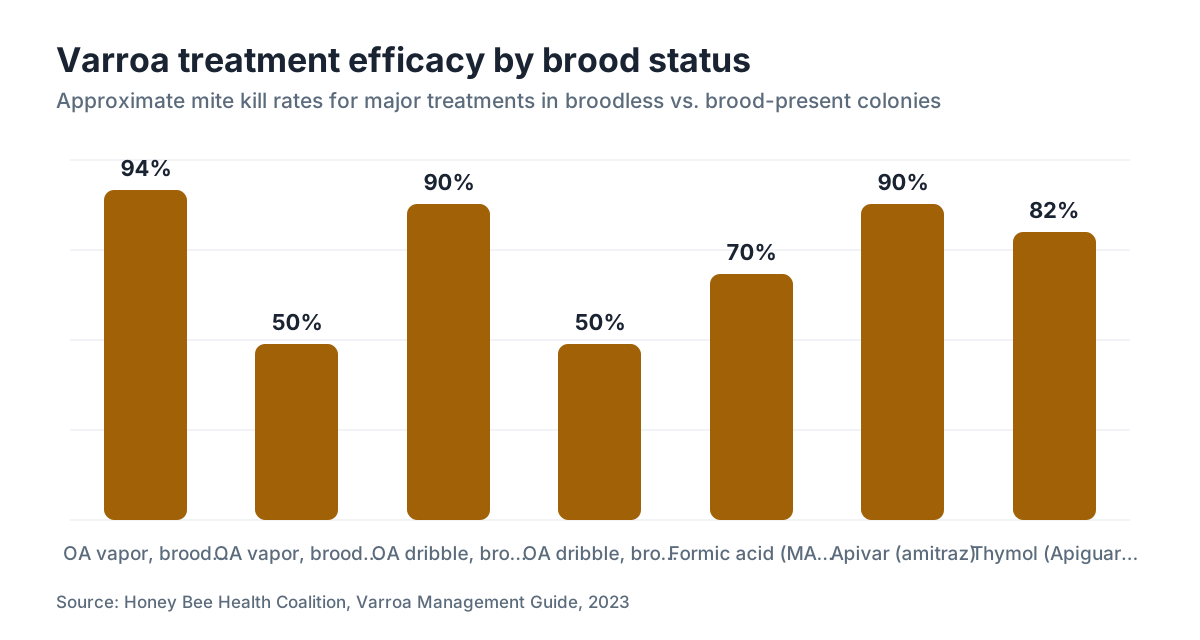
Oxalic acid, applied to a broodless colony. That's the answer. It's cheap, it's EPA-registered in the US, and the efficacy data is strong. The Honey Bee Health Coalition reports 90 to 97 percent mite kill when oxalic acid hits a fully broodless colony in research settings. [1] That number falls off a cliff when brood is present, which is the whole reason the broodless window is worth so much.
You have three EPA-registered ways to apply oxalic acid in the US.
Vaporization (sublimation). A vaporizer heats oxalic acid crystals until they turn to gas that coats every bee inside. One application in a broodless colony usually does it. Wear a respirator rated for acid vapors and eye protection, and seal the entrance for about 10 minutes after. The Api-Bioxal label (the most common registered product) sets the vapor limit at up to three applications per broodless period. [4]
Extended release (oxalic acid in glycerin strips). Now registered too, and they work for broodless colonies. Some folks like them because there's no vapor to breathe.
Dribble. Effective but slow. You trickle a 3.2 percent oxalic acid syrup right over the bees between frames. Good for small colonies and nucs. The label allows one dribble per broodless period, so plan any follow-up around that. [4]
| Treatment | Broodless Efficacy | Brood Present Efficacy | Notes |
|---|---|---|---|
| Oxalic acid vapor (Api-Bioxal) | 90-97% [1] | 40-60% (variable) | Best option; requires respirator |
| Oxalic acid dribble | 85-95% [1] | 40-60% | 1 application/broodless period |
| Formic acid (MAQS, Formic Pro) | 60-80% | 60-80% | Brood penetrating but hard on stressed bees |
| Amitraz (Apivar) | 85-95% over 6-8 weeks | 85-95% | 6-8 week contact time; works with or without brood |
| Apiguard/ApiLife Var (thymol) | 75-90% | 75-90% | Temperature dependent; poor below 60°F |
Efficacy figures move around by study, colony condition, and how well you apply the stuff. The ranges here come from the Honey Bee Health Coalition's 2023 guide and its cited research. [1]
Can you use formic acid in a queenless hive?
You can, but I'd think twice. Formic acid (MAQS or Formic Pro) has one real edge: it gets through cappings and kills mites inside brood. That matters in a queenright hive full of brood. In a queenless colony heading broodless, that edge is gone. Oxalic acid is the better call.
The real worry is stress. A queenless colony is already rattled. Formic acid is hard on bees even when everything's fine. It can kill a queen (no loss if you're already queenless, sure) and it bumps up bee mortality in heat. A small, hot, low-store, thinning queenless colony treated with formic acid can tip toward collapse. [1]
If you're set on formic acid anyway, follow the temperature limits on the label to the letter. Formic Pro says not to apply when temperatures will run above 85 degrees Fahrenheit (29 Celsius) for more than a brief period during treatment. [5]
My honest take: broodless or nearly broodless, reach for oxalic acid vapor. Gentler on the bees, more effective in that window, easier to get right.
What about amitraz (Apivar) strips in a queenless hive?
Apivar works fine with no queen present. Amitraz strips need 6 to 8 weeks of contact to hit full efficacy, but they don't care whether the colony is broodless. [6] The strips kill mites that touch the treated surface or touch bees that have brushed against it.
The catch is timing, not safety. If you're queenless and plan to requeen soon, an 8-week Apivar course means you're running strips through the new queen's first weeks of laying. The EPA label says strips must stay in for the full treatment period to work. [6]
If the hive is going to sit queenless for a while, say you're waiting weeks for a mated queen to ship, Apivar makes sense. Pull the strips around when the new queen starts laying and you've had steady mite control across the whole gap. If you want the queen in immediately and the colony holding, oxalic acid vapor is faster and cleaner.
Is there a risk of re-infestation after treating a queenless hive?
Yes, and people forget it constantly. You can hit 95 percent kill in a queenless broodless colony and watch mite counts climb right back inside a few weeks. The source is almost always robbing and drifting bees hauling mites in from neighboring hives. [7]
High-density apiaries make this worse. Pack a lot of hives within a mile or two and varroa hitchhikes from colony to colony. A PLOS ONE study by Frey and colleagues (2011) found that reinfestation from neighboring colonies can drive large mite increases even weeks after an effective treatment. [7]
What to do about it:
- Shrink the entrance while the colony is queenless and dwindling. A small opening is easier to defend and cuts down on robbing, the main way mites walk in.
- Treat your other hives at the same time. Coordinated apiary-wide treatment beats treating one hive in isolation, every time.
- Recheck mite levels 2 to 4 weeks after treatment, especially before you introduce a queen. If they're already rising, treat again before she's established.
VarroaVault's protocol tracker lets you log alcohol wash or sugar roll counts across every colony and watch the trend lines, so a reinfestation shows up before it's a disaster.
Should you treat before or after introducing a new queen?
Before, whenever you can. Once a new queen is accepted and laying, you're back in brood-present territory within a week. The window slams shut. Every phoretic mite you didn't kill gets fresh cells to disappear into.
The order I'd follow:
- Confirm the hive is queenless.
- Confirm or wait for broodless status (no capped worker brood).
- Do an alcohol wash. Above 2 percent, treat right away with oxalic acid vapor.
- Wait 24 to 48 hours after treatment.
- Introduce the new queen, caged.
- Check acceptance at 5 to 7 days.
- Recheck mites 3 to 4 weeks after she starts laying.
Oxalic acid vapor is safe to use with a caged queen in the box. The evidence that it hurts caged queens is thin and inconsistent, and the HBHC doesn't tell you to hold off on treatment just for that reason. Some beekeepers still treat, wait 48 hours, then introduce, purely as a belt-and-suspenders move. [1]
Dribbling is messier, so keep the solution off the queen cage. Vapor is cleaner around a cage.
How do you measure mite levels in a queenless hive?
The alcohol wash is the standard, and it works the same with or without a queen. Grab about 300 adult bees (roughly half a cup) from a brood-adjacent frame if brood remains, or from any frame thick with bees if it doesn't. Shake them in about 70 percent isopropyl alcohol for 60 seconds. Count the mites that drop out. Mites divided by bees times 100 gives you the percent. [8]
One queenless wrinkle: don't scoop up a running virgin queen by accident. Unmarked virgins hide easily. Sample away from where she's likely to be. Minor risk, worth a thought.
The sugar roll is the gentler alternative, but it's less accurate. Method comparisons keep showing the alcohol wash catches more mites. For a treatment decision, accuracy wins. [8]
If a queenless colony is clearly in trouble, bees crawling with deformed wings, don't bother washing first. Deformed wings mean Deformed Wing Virus, which tracks with high mite loads, and it's a late-stage sign. Treat now. That colony is already deep in it. [2]
Before you lock in your timing, the varroa mite overview walks through the biology you're fighting.
What mite level should trigger treatment in a queenless hive?
Extension services and the HBHC use 2 percent during brood-rearing season and 1 percent in fall, when colonies raise their winter bees. [1] Those thresholds came out of queenright colonies, but they hold up as a practical guide when you're queenless too.
In a broodless queenless colony, I'd drop my own trigger lower. At 1 percent or above with no brood, treat. The kill is so good in that window there's almost no reason to sit on your hands. Treating when you maybe didn't have to costs you a little bee stress and a small dose of oxalic acid. Not treating and letting mites detonate once new brood arrives costs you the colony.
Bee Informed Partnership survey data shows colonies carrying mite loads above 2 percent in late summer die over winter at much higher rates. [9] Knocking that down before a new queen goes in is one of the better hours you'll spend all season.
Does treatment hurt the remaining bees in a queenless hive?
Oxalic acid at label rates is easy on adult bees. Research doesn't show meaningful adult mortality at recommended doses applied correctly. [4] The real risk is you, the applicator: too much acid, or vaporizing in heat with dead air, can raise bee mortality. Follow the label.
A queenless colony usually shrinks because no new brood is replacing the old bees dying off. That's normal. It's not the treatment. Don't read ordinary queenless shrinkage as poisoning.
Formic acid is rougher on bees than oxalic, especially in heat. Treat a small, stressed queenless colony with formic acid in summer and you can push it right to the edge. That's why I keep landing on oxalic acid vapor for queenless hives.
Amitraz (Apivar) is also well-tolerated at label rates. Its main downside is residue building up in wax over repeated use, a long-term hive-health issue, not a threat to the bees in front of you right now. [6]
What if the hive is queenless because you intentionally removed the queen for a broodbreak?
That's a real strategy, and a good one. Some beekeepers pull the queen on purpose to force a broodless period, treat with oxalic acid, then return the original queen or add a new one. A 2020 study by Gregorc and colleagues in the Journal of Apicultural Research found that queen removal paired with oxalic acid dropped mite loads much further than oxalic acid alone in queenright colonies, with the broodless colonies responding especially well. [10]
A deliberate broodbreak, step by step:
- Pull the queen into a small nuc with a few frames of bees and brood.
- Wait 24 days for all brood in the main hive to emerge (the full lifecycle of the last egg).
- Treat the main hive with oxalic acid vapor.
- Treat the nuc separately. It has brood, so treat it when its own brood finishes.
- Return the original queen or introduce a new one after treatment.
The technique is common in parts of Europe and picking up among US sideliners. More labor than a single treatment, but the mite knockdown is hard to beat. Penn State and University of Minnesota extension programs both list broodbreaks as part of integrated pest management for varroa. [11]
For the tools and protective gear this kind of work needs, see options through beekeeping supply companies.
Can a queenless colony with high varroa levels be saved?
Sometimes. It depends how far gone it is. A queenless colony showing hard signs of varroa (deformed wings everywhere, a collapsing population, spotty or absent brood from before queenloss) is a harder rebuild, but not hopeless.
Step one: treat, even if it looks rough. Get mites down first. A small cluster of healthy bees rebuilds better than a bigger cluster of virus-loaded, mite-chewed ones.
Step two: count the bees and be honest. Can't cover two or three frames? The colony may not hold enough bees to keep warm, fend off robbers, and raise brood even with a new queen dropped in. At that point, merging the survivors into a healthy colony (after treatment) beats nursing an almost empty box.
Step three, if the population can carry it: introduce a queen. A mated laying queen going into a treated, broodless colony has a real shot at rebuilding, especially during a nectar flow or with feeding.
If you merge, treat the survivors first. Dumping untreated, mite-heavy bees into a healthy hive can swamp its defenses in short order. Paper-combine only after treatment and after the mite count is acceptable.
Frequently asked questions
Can I treat a queenless hive with oxalic acid if there's still some capped brood?
Yes, but efficacy drops sharply. Oxalic acid can't get through cappings, so mites inside brood are safe. If a lot of capped brood remains, wait for it to emerge before treating. If you can't wait because mite levels are very high, treat now and plan a follow-up after the brood emerges. One treatment on a partially broodless colony still beats no treatment.
How long after treatment can I introduce a new queen?
With oxalic acid vapor, introduce a caged queen 24 to 48 hours after treatment. The Honey Bee Health Coalition and most experienced beekeepers don't treat vapor as a serious risk to caged queens, but a short wait is a reasonable precaution. With Apivar strips, you can introduce the queen while strips are present, though some beekeepers prefer to wait until the strips are set and the bees have settled.
Will treating a queenless hive stress the bees enough to cause them to reject a new queen?
Oxalic acid at label rates doesn't appear to raise queen rejection in research or broad beekeeper experience. The bigger drivers of rejection are laying workers, a colony queenless too long, or sloppy introduction technique. Treat first, then introduce the queen correctly: caged, with a candy plug. Give the bees 5 to 7 days before you check for acceptance.
What if my queenless hive has laying workers? Does that change treatment?
Laying workers mean the colony has been queenless for several weeks. By then it's likely fully broodless, though the drone brood workers lay does cap and later emerges. Oxalic acid vapor still works. The real problem is that a laying-worker colony is very hard to requeen. Treatment doesn't fix that. Handle varroa first, then decide whether to attempt requeening or merge.
How many times can I treat a queenless hive with oxalic acid?
The Api-Bioxal label allows one dribble per broodless period and up to three vapor applications per broodless period in the US. For most queenless situations, a single vapor treatment in a fully broodless colony drops mites dramatically. Multiple treatments make sense if you suspect reinfestation from neighboring colonies. Always follow the current EPA-registered label for the product you're using.
Is it safe to use Apivar strips if I'm about to introduce a new queen?
Apivar is generally safe around queens and won't block acceptance. The strips need 6 to 8 weeks of contact for full efficacy, so starting them right before requeening means strips are in during early brood establishment. That's fine on safety. Some beekeepers use oxalic acid vapor instead for a fast knockdown before requeening rather than commit to a long strip course in a fragile colony.
Do I need to feed a queenless colony after varroa treatment?
Feeding depends on stores, not on treatment. If the colony is low on honey (less than a few full frames), feed 1:1 sugar syrup to support the remaining bees and prepare for a new queen. Feeding doesn't change oxalic acid efficacy. Don't feed if stores are adequate, since unnecessary sugar feeding can throw off the colony's read on forage and stir up swarming urges once a queen is laying.
Can high varroa levels cause a hive to become queenless?
Yes, indirectly. High varroa loads spread viruses like Deformed Wing Virus and Black Queen Cell Virus. Black Queen Cell Virus can kill queen pupae and larvae, raising the odds of failed queen cells and queenlessness. In heavily infested colonies, even newly hatched queens can be parasitized early and left less fit. It's one reason treating before mites climb protects more than the workers. It protects the queen herself.
How do I know if a varroa treatment worked in a queenless hive?
Do an alcohol wash 3 to 4 weeks after treatment. Below 2 percent means good control. A sticky board count right after vapor treatment shows dead mites dropping and gives a rough read on the kill. If you're still above 2 percent three weeks after vaporizing what you thought was a broodless colony, suspect either leftover capped brood or reinfestation from neighboring hives.
Should I treat for varroa if my queenless hive is very small (fewer than two frames of bees)?
Treat, then seriously weigh merging. A colony that can't cover two frames is at high risk of collapse no matter the mite count. Treating is still the right first move, because you don't want to merge mite-laden bees into a healthy colony. After treatment, wait 24 hours, then combine using the newspaper method with a healthy colony. The merged colony survives far better than either one alone.
Does the time of year change how I should treat a queenless hive?
It changes which products are practical. Thymol treatments (Apiguard, ApiLife Var) need temperatures above 59 to 65 degrees Fahrenheit and work poorly in late fall or early spring cold. Formic acid has an upper limit (below 85 degrees Fahrenheit). Oxalic acid vapor works in any temperature the bees can tolerate, including winter clusters. In late fall or winter, vapor in a broodless queenless colony is often the only reliable option.
Can I use oxalic acid vapor in cold weather on a queenless colony?
Yes. Oxalic acid vapor is one of the few treatments that works in cold. Bees don't need to be flying or even moving much. Seal the entrance, vaporize for the label time, and the gas circulates through the cluster. It's been used successfully in winter clusters of queenright colonies and works the same in queenless ones. Wear proper PPE regardless of temperature; the vapor is still hazardous to you in the cold.
How quickly do mite levels drop after oxalic acid treatment in a broodless queenless hive?
Most mite death happens within 24 to 72 hours of vapor treatment. Studies show the bulk of the kill lands in the first few days as oxalic acid residue on the bees contacts and kills phoretic mites. You'll often see large numbers of dead mites on the bottom board or sticky board in the days right after. By the end of one week, mites in a properly treated broodless colony are usually down 90 percent or more.
Sources
- Honey Bee Health Coalition, Varroa Management Guide (2023 edition): Oxalic acid applied to a fully broodless colony achieves 90 to 97 percent mite kill; broodless periods described as single most favorable condition for oxalic acid treatment; treatment efficacy comparison table for major registered treatments; standard 2% mite threshold during brood-rearing season.
- University of Minnesota Extension, Varroa Mite Management: Varroa reproductive cycle; phoretic mites fully exposed when no capped brood present; deformed wings as late-stage symptom of high mite loads.
- Penn State Extension, Honey Bee Biology: Worker brood development timeline: approximately 21 days egg to emergence; queen lays up to 1,500-2,000 eggs per day; last eggs cap around day 9 after laying.
- EPA, Api-Bioxal Oxalic Acid Product Label (Reg. No. 81127-2): Api-Bioxal registered by EPA; label specifies maximum of one dribble application per broodless period; up to three vapor applications per broodless period; oxalic acid at label rates well-tolerated by adult bees.
- EPA, Formic Pro Product Label (Reg. No. 84638-3): Formic Pro label states not to apply when temperatures will exceed 85°F for more than a brief period during treatment; temperature restrictions for formic acid application.
- EPA, Apivar (Amitraz) Product Label (Reg. No. 64771-2): Apivar strips require 6 to 8 weeks of contact for full efficacy; strips must remain for full treatment period; amitraz residue concerns in wax with repeated use.
- Frey E, Odemer R, Blum T, Rosenkranz P. Interactions of varroa infestation level and reinfestation in honey bee colonies. PLOS ONE, 2011: Varroa reinfestation from neighboring colonies can account for substantial mite load increases weeks after effective treatment in an apiary setting; robbing and drifting bees as vectors for mite transfer.
- USDA AMS, Honey Bee Pests, Diseases, and Conditions: Varroa Monitoring Methods: Alcohol wash described as gold standard for mite monitoring; sample of approximately 300 bees; sugar roll less accurate than alcohol wash for mite counts.
- Bee Informed Partnership, National Management Survey Annual Reports: Colonies with mite loads above 2 percent in late summer have significantly higher winter mortality rates in national survey data.
- Gregorc A, et al. Oxalic acid treatment combined with queen removal reduces varroa in honey bee colonies. Journal of Apicultural Research, 2020: Queen removal combined with oxalic acid treatment reduced mite loads significantly more than oxalic acid alone; deliberate broodbreak with oxalic acid treatment produces exceptional mite knockdown.
- Penn State Extension, Integrated Pest Management for Varroa Mites: Broodbreaks mentioned as part of integrated pest management approach for varroa in honey bee colonies.
- University of Florida IFAS Extension, Varroa Mite Biology and Management: Between 70 and 90 percent of mites in a queenright colony are inside capped brood cells and not exposed to most treatments at any given time during brood-rearing season.
Last updated 2026-07-09