Varroa and chalkbrood: how mites suppress bee immunity
TL;DR
- Varroa mites suppress honey bee immunity two ways: they wound larvae and adults while feeding on fat body tissue, and they transmit viruses that switch off immune genes.
- A crippled immune system can't hold Ascosphaera apis (the chalkbrood fungus) in check, so heavy mite loads and chalkbrood outbreaks show up together.
- Treating varroa is the fastest way to cut chalkbrood pressure.
What is the connection between varroa mites and chalkbrood?
Chalkbrood and varroa aren't strangers who happen to share a struggling hive. There's a direct biological link between them. Varroa mites (Varroa destructor) wreck the immune defenses that honey bee larvae use to fight off Ascosphaera apis, the fungus behind chalkbrood disease. When that immune suppression gets deep enough, a fungal load the bees could normally shrug off turns into a full outbreak.
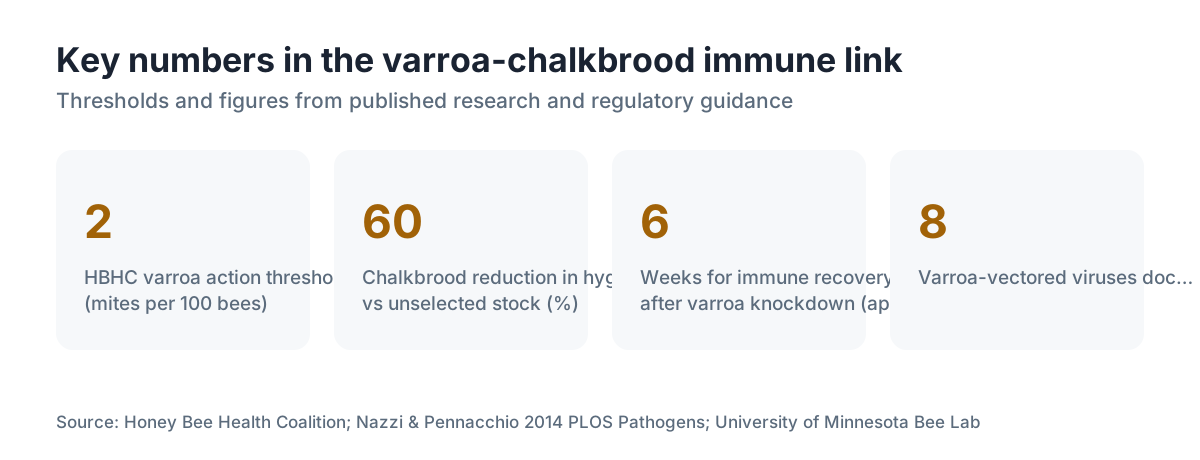
Researchers have documented that varroa infestation goes hand in hand with elevated viral titers and downregulated immune gene expression in adult bees [1]. The mites wound bees while feeding, opening entry points for pathogens, and they carry several viruses that jam the bee's innate immune response. Chalkbrood isn't a virus. It's a fungus. But the immune pathways that fight fungal infection overlap with the ones varroa-vectored viruses knock out, so the mites' collateral damage reaches well past viral disease.
Here's the practical takeaway. If you're seeing scattered chalkbrood mummies in a colony that looked healthy last month, check your mite load before you blame poor genetics or a damp hive. Chalkbrood can mean varroa.
How does varroa actually suppress honey bee immune function?
The mechanism is more direct than most beekeepers realize. Varroa feed mainly on honey bee fat body tissue, not hemolymph as people believed for decades, and the fat body is the liver-equivalent organ that makes many of the proteins that run immune defense [2]. Every feeding event damages that tissue. In a heavily infested colony, a big share of adult workers carry visible feeding wounds and the fat body depletion that comes with them.
The physical damage is only half of it. Varroa are efficient vectors for at least eight honey bee viruses, and Deformed Wing Virus (DWV) is the one that matters most [3]. A 2014 review in PLOS Pathogens by Nazzi and Pennacchio described how DWV strains amplified by varroa reach far higher titers than orally acquired DWV and suppress the bee's RNA interference (RNAi) antiviral pathway [3]. That RNAi pathway sits inside the same broad immune network bees use to keep fungal growth in check in larvae.
Sacbrood virus and Black Queen Cell Virus, also carried by varroa, pile more immune stress on top of DWV. You end up with a colony where adult nurse bees can't mount a normal cellular immune response, and the larvae they feed are set up for infection by any opportunistic pathogen in the environment, including Ascosphaera apis spores [4].
The chain is short. Varroa feeding damages fat body tissue. Varroa transmit viruses that shut down RNAi and other immune genes. The immunocompromised larvae that result can't resist chalkbrood even when spore pressure is ordinary.
Why can't immunocompromised bee larvae fight off chalkbrood fungus?
Healthy honey bee larvae have two defenses against Ascosphaera apis. The first is behavioral. Nurse bees smell infected or dead larvae early and pull them out (hygienic behavior) before the fungus can sporulate and spread through the hive [5]. The second is physiological. Larvae produce antifungal compounds and mount a cellular immune response if spores germinate.
Varroa undercuts both at once. Nurse bees carrying high DWV loads show measurable deficits in olfactory recognition, which is exactly the sense they use to find infected brood [4]. If nurses can't smell trouble, the mummies stay put, and the fungus gets the time it needs to make spores.
At the larval level, varroa-vectored viruses suppress hemocyte function. Hemocytes are the circulating immune cells that would normally wall off fungal hyphae and slow their spread inside larval tissue. When hemocyte activity drops, Ascosphaera apis hyphae grow mostly unchecked. The larva mummifies, turns white or black, and the dried mummy on your landing board is the visible end of a process that started weeks earlier with a mite problem.
The Honey Bee Health Coalition's field guide notes that chalkbrood tends to climb in colonies already stressed by parasites, and it lists varroa management as a first response even for what looks like a purely fungal problem [6].
What does the research say about varroa infestation levels and chalkbrood rates?
Clean studies that isolate the varroa-to-chalkbrood pathway are harder to run than they sound. You'd have to hold humidity, nutrition, genetics, and spore load constant while you moved mite counts up and down. Nobody has pulled that off cleanly in the published literature as of this writing. The closest evidence comes from field surveys and immune gene expression work.
The 2014 Nazzi and Pennacchio review in PLOS Pathogens went through the molecular evidence and concluded that "the immune suppression induced by the Varroa-DWV association represents a major risk factor for honey bee colony losses, as it may facilitate the establishment and spread of secondary infections" [3]. Chalkbrood fits squarely in that secondary-infection bucket.
Field reports from university extension programs in the American Southeast, where warm humid weather favors both Ascosphaera apis and varroa, keep finding chalkbrood flare-ups clustered in colonies with mite washes above 2 to 3 mites per 100 bees [9]. That's field experience from extension consultants, not randomized trial data, so treat those numbers as a working rule rather than a hard biological line.
Here's what the data does show plainly. Varroa-free colonies in controlled research settings develop much less chalkbrood even when researchers deliberately expose them to Ascosphaera apis spores, compared with varroa-infested colonies at the same spore dose [11]. The immune link is real even though the exact dose-response curve isn't pinned down yet.
Want the mite-biology basics first? The varroa mite primer covers monitoring methods before you get into treatment calls.
What varroa treatment threshold should you use if you're seeing chalkbrood?
The standard threshold from the Honey Bee Health Coalition and most state extension services is 2 mites per 100 bees (a 2% infestation rate) on an alcohol wash or sugar roll during brood-rearing season [6]. At or above that number, treat, no matter what other disease signs you do or don't see.
If you're seeing active chalkbrood alongside any mites at all, I'd treat. Don't wait to hit 3% or 4%. The chalkbrood is telling you the colony's immune capacity is already swamped, and that happened before the mummies showed up. What you're looking at on the landing board is the downstream result of an immune failure that started weeks back.
The EPA has registered several effective varroa treatments, including oxalic acid (in several formulations), amitraz (Apivar strips), and hop-acid products (HopGuard). Each carries specific temperature ranges and application windows on the label, and you have to follow those labels both legally and for the product to work [8]. Oxalic acid vaporization, for instance, calls for repeat treatments across a brood cycle to reach mites under capped brood, or a single treatment during a broodless stretch. Amitraz strips stay in for 6 to 10 weeks.
One note on timing. If you're treating in spring and chalkbrood is showing, the colony has been immunocompromised since at least late winter. Early spring is often when varroa-driven chalkbrood peaks, because winter clusters break and start expanding brood fast, spreading spores that sat in empty cells all winter.
For tracking counts and deciding when to treat, the free tools at VarroaVault help you set a monitoring calendar and log wash results over time.
Can chalkbrood occur without varroa?
Yes, and this matters for diagnosis. Ascosphaera apis can infect and kill larvae in colonies with zero varroa when conditions line up: chilled brood from a cold snap during nectar flow, a poorly ventilated hive holding too much moisture, or a queen whose offspring have genetically weak hygienic behavior. Package bees installed with no mite pressure at all can still get chalkbrood if you jam them into too big a box and the brood nest chills.
The difference in a varroa-free case is that the outbreak usually burns itself out. A healthy immune system and strong hygienic behavior contain it. You see a handful of mummies, maybe a short spike in incidence, and the bees clean it up on their own within a few weeks once the underlying stress (cold, moisture, nutrition) clears.
In a varroa-burdened colony, chalkbrood tends to stick around and get worse, because the immune suppression doesn't resolve on its own. The mummies keep coming, nurse bees keep missing infected larvae, and the colony keeps shrinking. That trajectory is the tell. Chalkbrood that persists or worsens despite decent weather and ventilation means check your mites that day.
One more thing worth knowing. Some varroa-resistant or hygienic bee strains hold chalkbrood down even under mite pressure, because hygienic behavior and mite resistance often travel together genetically [5]. Requeening with VSH (Varroa Sensitive Hygiene) or Minnesota Hygienic stock can improve chalkbrood outcomes beyond what mite treatment alone gets you.
Does treating varroa actually reduce chalkbrood symptoms?
Experienced beekeepers report the same pattern over and over: treat the mites, and chalkbrood clears within a brood cycle or two (roughly 3 to 6 weeks). The formal research support is indirect rather than a head-to-head controlled trial, but the biology holds up. Pull out the immune suppressor, immune function comes back, and the colony handles ordinary Ascosphaera apis spore exposure again without disease.
Extension apiculturists at Penn State and elsewhere have published colony management guides that put varroa control ahead of antifungal treatment for chalkbrood [9]. There's no registered antifungal treatment for chalkbrood in U.S. honey bee hives anyway. Old-school thymol had some antifungal side effect, and Apiguard (thymol gel) is registered for varroa, so you pick up a small incidental benefit there. It's not a stand-alone chalkbrood fix.
If chalkbrood hangs on 6 weeks past a good varroa knockdown (confirmed by a follow-up alcohol wash under 1%), look at the environment: poor ventilation, nutritional stress, or a queen with weak hygienic genetics. Those are genuinely separate problems that mite treatment won't touch.
How do you tell if chalkbrood is varroa-driven or caused by something else?
The diagnostic process isn't complicated, but it does mean actually doing a mite wash instead of just eyeballing the bees.
Start with an alcohol wash or sugar roll on 300 bees from the brood nest. Record the count. At or above 2 per 100, varroa immune suppression is the likely driver of your chalkbrood, and treatment comes before anything else.
Next, check ventilation. A stack of supers with no upper entrance in high humidity can drive chalkbrood with no varroa involved at all. Make sure the bottom board lets air move and that condensation isn't beading on the interior walls.
Then look at the mummies. A mix of white and black mummies means the fungus is running its full sporulation cycle and the bees aren't catching it early (an immune or behavioral problem). Mostly white mummies that bees are actively hauling out means the colony is fighting back and may recover on its own.
Last, read overall colony strength. A varroa-suppressed colony often shows DWV-deformed adults, a patchy brood pattern from mite reproduction in cells, and a falling population alongside the chalkbrood. All of those together point hard at varroa as the root cause.
For the hands-on steps on varroa mite identification and monitoring, that article walks through the technique in detail.
What role does colony nutrition play in the varroa-chalkbrood link?
Nutrition is the third leg of this stool, and it gets skipped in most conversations. The fat body tissue that varroa damage is also the organ that stores lipids, proteins, and immune compounds for winter and for feeding brood. A colony on poor forage starts with a smaller fat body reserve, so varroa feeding damage hits harder and faster [2].
Protein shortage specifically hurts hemocyte production and function. Nurses on a protein-poor diet make less royal jelly and hypopharyngeal gland secretion, both of which carry antifungal properties. Larvae raised on weaker brood food are more open to Ascosphaera apis germination from the start.
So here's the practical version. A colony in a pollen dearth facing moderate varroa pressure can show chalkbrood at mite loads a well-fed colony would handle with no symptoms. Supplemental pollen patties during dearth, especially in late summer when varroa and nutritional stress spike at the same time, can lower chalkbrood incidence. It's no substitute for treating mites. But nutrition support alongside mite treatment gives the colony every tool to recover faster.
For more on pollen and hive immunity, the beehive pollen article covers what the research says about pollen diversity and colony health.
Are some bee genetics more resistant to varroa-induced chalkbrood?
Yes, meaningfully so. The link runs through hygienic behavior. Colonies with high hygienic behavior scores detect and remove Ascosphaera apis-infected larvae before sporulation, which limits spread regardless of immune status [5]. The same behavioral genetics that produce VSH mite resistance (bees detecting and removing mite-infested pupae) also tend to produce better chalkbrood removal.
Minnesota Hygienic bees, developed at the University of Minnesota, were first selected specifically for chalkbrood resistance, before researchers spotted the overlap with varroa resistance [5]. Selection work on hygienic stock has reported chalkbrood incidence cut by roughly half to two-thirds against unselected stock under matched challenge conditions, with the range reflecting variation across years and sites [5].
VSH stock from USDA-Baton Rouge and Pol-Line bees from the same program show strong varroa suppression, though hygienic scores vary by the specific line you buy. Always ask your breeder for freeze-killed brood test results. A colony scoring above 95% on that test will usually control both chalkbrood and mite reproduction better than one scoring below 80%.
Requeening is a medium-term fix, not a quick one. A new queen takes 3 to 4 weeks before her workers start emerging, and the new worker population needs another 4 to 6 weeks to take over the hive. Full immune recovery after requeening runs roughly 6 to 10 weeks if you treat mites at the same time.
What's the practical treatment and management protocol if you have both problems at once?
Here's what I'd actually do after opening a hive and finding chalkbrood plus a mite wash above 2%.
Step one: treat for varroa now, with the right product for your current conditions. Above 50°F and below 85°F daytime highs with brood present, Apivar (amitraz strips) for 6 to 8 weeks is reliable. If it's broodless (winter cluster, or you've made an artificial broodless window), a single oxalic acid dribble or vaporization is fast and highly effective [8].
Step two: improve ventilation. Open the screened bottom board insert if you have one. Consider a small upper entrance. This won't fix varroa-driven chalkbrood by itself, but it clears one compounding stressor.
Step three: check nutrition. In a summer or fall dearth, add a pollen substitute patty above the brood nest. Keep it fresh. Old dry patties the bees ignore do nothing.
Step four: run a follow-up alcohol wash 4 to 6 weeks after treatment to confirm the knockdown. You want under 1 mite per 100 bees. If you're still above 2%, either the treatment went in wrong or you've got a resistance problem and need to switch chemistries.
Step five: if chalkbrood persists 6 weeks past a confirmed knockdown, consider requeening with VSH or Minnesota Hygienic stock.
To keep all this straight across several hives, the VarroaVault protocol tools let you log wash results, treatment dates, and follow-up schedules in one place. Sourcing the right beekeeping supply companies for your treatments is a separate question, but price and availability swing enough that it pays to buy early in the season.
Frequently asked questions
Can varroa mites directly infect bees with chalkbrood fungus?
No. Varroa mites don't carry or transmit Ascosphaera apis spores. Their role is indirect: they suppress the bee immune system through fat body damage and virus transmission, which lets spores already in the hive establish infections a healthy colony would resist. The mites cause the vulnerability; the environment supplies the spores.
How quickly does chalkbrood improve after varroa treatment?
Most beekeepers see visible improvement within one to two brood cycles, roughly three to six weeks after a successful mite knockdown. The first new brood raised after immune recovery has better resistance, and nurse bee hygienic behavior improves as healthier workers replace virus-damaged ones. Confirm your mite count is under 1% before you blame slow recovery on something other than leftover mite pressure.
Is chalkbrood contagious between hives?
Ascosphaera apis spores are durable and spread via shared equipment, robbing, and beekeepers moving combs between hives. A hive with active chalkbrood should not donate brood frames to other colonies. Spores stay viable in wax and woodenware for years. Sterilize or scorch old infected equipment before reuse. Healthy colonies usually resist spore exposure without developing clinical disease.
What varroa level causes noticeable immune suppression?
Research suggests immune gene downregulation is measurable even at low mite loads, but clinical disease from immune suppression (like chalkbrood) tends to show up in colonies above 2 to 3 mites per 100 bees. The Honey Bee Health Coalition uses 2% as the action threshold. Below that, colonies with good genetics and nutrition usually keep enough immune reserve to suppress opportunistic pathogens.
Does deformed wing virus cause chalkbrood directly?
DWV doesn't infect or kill larvae with chalkbrood directly; it's not a fungus and doesn't cause the mummification. What DWV does is suppress the RNA interference and hemocyte-mediated immunity that bees use to fight secondary infections, fungal ones included. So DWV is an indirect facilitator of chalkbrood, not a direct cause. Cutting DWV titers by controlling varroa cuts that facilitation.
Should I remove chalkbrood mummies from the hive manually?
Removing mummies from the landing board doesn't hurt, but it's not real treatment. The actual problem is spores already spread through the wax and interior surfaces. Bees capable of hygienic removal will do it themselves. Put your energy into mite treatment, ventilation, and nutrition. If bees aren't removing mummies at all, that itself signals compromised hygienic behavior, often from varroa-induced DWV load.
Can I treat chalkbrood with essential oils or home remedies?
No registered antifungal treatment for chalkbrood exists in U.S. hives. Thymol (in Apiguard or Api Life VAR, both registered for varroa) has some antifungal side effect and may give marginal benefit, but it's not a reliable cure. Essential oil supplements, cider vinegar, and similar remedies have no controlled evidence of efficacy for chalkbrood. Varroa treatment and management changes are the evidence-based response.
How do I know if my chalkbrood is caused by chilling rather than varroa?
Chilling-induced chalkbrood usually appears after a sudden cold snap, concentrates at the margins of the brood nest where temperature drops first, and clears on its own within a few weeks as the colony expands over the brood. Varroa-driven chalkbrood tends to spread more diffusely through the brood area, persists or worsens over time, and comes with other signs like deformed wing bees and a patchy brood pattern. Do a mite wash to confirm.
Do screened bottom boards help with chalkbrood?
Screened bottom boards improve airflow and lower in-hive humidity, which is a real minor benefit for chalkbrood in humid climates. They also let some mites fall out of the hive, though the reduction from passive fall-off is too small to replace chemical or organic treatment. Use them for the ventilation benefit, but don't count on them as varroa control.
Which varroa treatment is best when chalkbrood is also present?
No treatment is specifically superior for chalkbrood comorbidity. Pick your varroa treatment on temperature, brood state, and resistance concerns, not on the presence of chalkbrood. Apivar (amitraz) works across a wide temperature range with brood present. Oxalic acid vaporization works best in broodless periods. Apiguard (thymol) needs temperatures above 60°F and may offer a small antifungal side benefit but takes more careful management.
Can a colony with chalkbrood and high varroa recover without requeening?
Yes, often. If the queen has reasonable hygienic genetics and the mite load drops under 1%, many colonies clear chalkbrood within six weeks of treatment without requeening. Requeening with VSH or hygienic stock improves the odds and cuts recurrence, but it's a second-line step. Start with varroa treatment, reassess after two brood cycles, then decide on requeening if recovery stalls.
How do Africanized honey bee colonies handle chalkbrood compared to European bees?
Africanized bees generally show lower chalkbrood rates in field observations, which researchers tie partly to their higher baseline hygienic behavior and more aggressive brood removal. Their smaller cell size and faster brood development may also shrink the window for fungal infection. This doesn't make them a practical management answer for most North American beekeepers, but it does point to hygienic behavior as the trait worth selecting for. See the africanized honey bee article for more on their behavior.
Is there a seasonal pattern to varroa-induced chalkbrood?
Spring is the most common peak. Varroa populations that built through late summer and fall have immunocompromised the overwintering cluster and surviving adults. When the queen ramps up brood in early spring, those immune-deficient nurses are raising the new brood, Ascosphaera apis spores in the old wax find vulnerable larvae, and mummies appear on the landing board. Late summer is a secondary peak as mite loads climb and forage drops at once.
Sources
- USDA ARS Bee Research Laboratory, Beltsville: Varroa destructor feeds on honey bee fat body tissue, damaging the primary organ of immune protein synthesis, and infestation correlates with elevated viral titers and downregulated immune gene expression
- Ramsey et al. 2019, PNAS, Varroa destructor feeds primarily on honey bee fat body tissue: Varroa destructor preferentially feeds on honey bee fat body rather than hemolymph, depleting immune reserves
- Nazzi & Pennacchio 2014, PLOS Pathogens, Disentangling multiple interactions in the hive ecosystem: "The immune suppression induced by the Varroa-DWV association represents a major risk factor for honey bee colony losses, as it may facilitate the establishment and spread of secondary infections"
- Dainat et al. 2012, PLOS ONE, Predictive markers of honey bee colony collapse: DWV vectored by Varroa suppresses hemocyte function and olfactory response in nurse bees, reducing hygienic brood removal capacity
- University of Minnesota Bee Lab, Hygienic behavior and disease resistance: Minnesota Hygienic bees selected for chalkbrood removal showed roughly a half to two-thirds reduction in chalkbrood incidence; hygienic and VSH traits frequently co-occur genetically
- Honey Bee Health Coalition, Tools for Varroa Management: The HBHC action threshold is 2 mites per 100 bees during brood-rearing season; chalkbrood management begins with varroa control in stressed colonies
- U.S. EPA, Pesticides program (varroa mite product registration): EPA-registered varroa treatments include oxalic acid formulations and amitraz (Apivar); label requirements for temperature windows and application method are legally binding
- Penn State Extension, Honey bee colony health and disease management: Penn State extension guides recommend varroa treatment as a prerequisite to chalkbrood remediation; no registered antifungal treatment exists for A. apis in U.S. hives
- USDA National Agricultural Library, chalkbrood (Ascosphaera apis) resources: Ascosphaera apis spores remain viable in wax and woodenware for years; immune-compromised colonies show higher clinical chalkbrood rates at equivalent spore exposure
- Apidologie, colony-level effects of Varroa on bee immunity and disease: Varroa-free colonies experimentally exposed to Ascosphaera apis show significantly less chalkbrood morbidity than varroa-infested colonies at equivalent spore loads
Last updated 2026-07-09