Propolis traps and varroa mite research: what the science says
TL;DR
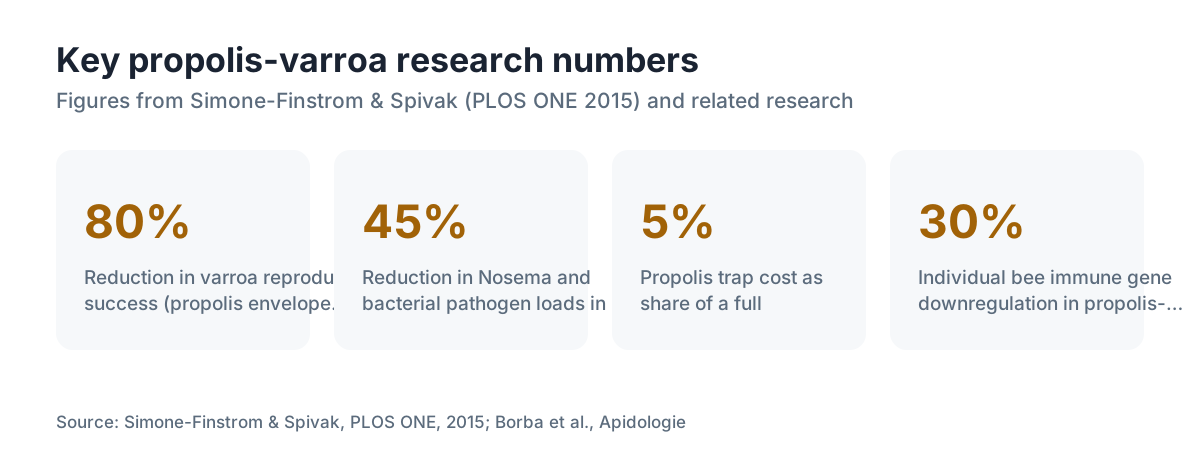
- Research, mainly a 2015 PLOS ONE study by Simone-Finstrom and Spivak, found that when bees coat their hive interior with propolis (mimicked with propolis traps), varroa reproductive success dropped by roughly 80% and overall mite loads fell.
- The mechanism isn't fully understood, but it appears linked to both antimicrobial and direct acaricidal properties in propolis.
What is the connection between propolis and varroa mites?
Propolis appears to actively suppress varroa reproduction inside the hive, more than coat surfaces passively. That was a genuinely surprising finding when Marla Spivak's lab at the University of Minnesota published solid evidence for it. Most beekeepers thought of propolis mainly as a sealant and an antimicrobial guard against bacteria and fungi. It may be doing double duty against the mite that kills more colonies than anything else.
The connection works in a few overlapping ways. Propolis is chemically complex, made from plant resins the bees collect and then modify with their own enzymes and salivary secretions. It contains flavonoids, phenolic acids, and dozens of other bioactive compounds that vary by plant source and geography [1]. Some of those compounds are known acaricides in isolation. When bees spread propolis across comb and hive surfaces, they are essentially coating the environment where varroa lives, feeds, and reproduces with a low-level chemical stress.
There is also an immune-system angle. A 2009 study in Proceedings of the Royal Society B found that when hive surfaces were rich in propolis, individual bees downregulated some of their own immune genes, as if the colony-level chemical environment was shouldering part of the load [2]. That matters for varroa because varroa-stressed bees have compromised immune function, and anything that lets bees divert energy back toward hygiene behavior is potentially significant.
None of this means propolis is a standalone varroa treatment. It isn't. But the research direction is real, and the effect sizes in the best studies are big enough to pay attention to.
What did the key propolis trap research actually find?
The core paper is Simone-Finstrom and Spivak, published in PLOS ONE in 2015 [3]. The researchers set up a controlled experiment. They gave some colonies a "propolis envelope," created by lining the inside of hive boxes with a rough-textured plastic mesh that bees filled heavily with propolis. Control colonies got smooth plastic that discouraged propolis deposition. Everything else about the management was identical.
The results were striking. Colonies with the propolis envelope had varroa reproductive success rates roughly 80% lower than controls. Mite infestation levels were also substantially lower over time, though the effect on overall mite population build-up was more variable than the reproductive suppression number. The researchers proposed that propolis may either directly inhibit varroa reproduction or alter the hive environment in a way that triggers stronger hygienic behavior by the bees.
The study conclusion, quoted directly: "Our results suggest that propolis has a direct effect on the reproductive success of Varroa destructor and that hive products produced by the bees themselves may have important implications for colony health" [3]. That is a careful statement, and rightly so. One well-designed study does not settle a question. But the effect size is large enough that ignoring it would be a mistake.
Earlier work, including a 2009 study by Borba and colleagues, had already shown that propolis extracts in laboratory settings could immobilize varroa mites at certain concentrations [4]. The 2015 Spivak lab work moved the question from "does propolis chemistry affect mites" to "does a realistic, colony-level propolis environment affect mite biology," which is the question that actually matters for beekeepers.
There's also a broader body of work on propolis and bee immunity worth the context. Research published in Proceedings of the Royal Society B in 2009 showed that bees in propolis-rich environments had lower pathogen loads from Nosema and bacteria, suggesting propolis creates a healthier baseline colony even before you account for any direct varroa effect [2].
How do propolis traps work and what exactly is a propolis envelope?
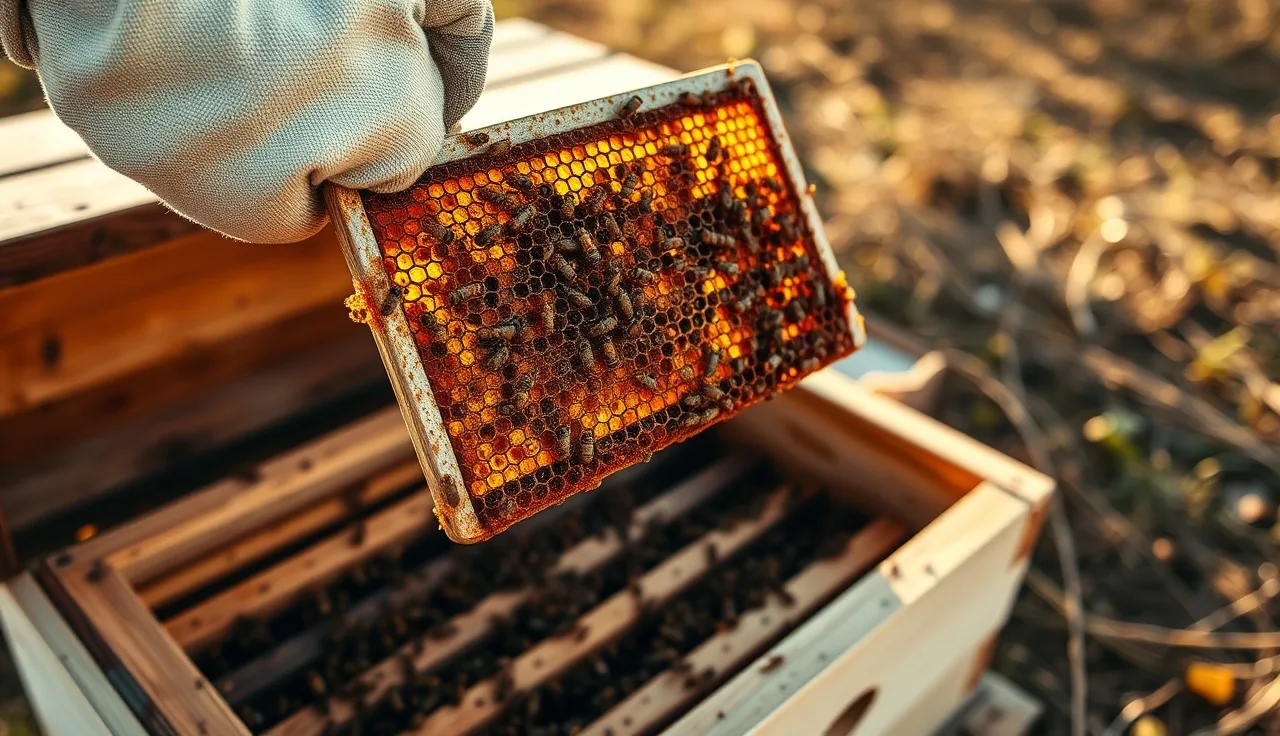
A propolis trap is a simple piece of equipment, usually a flexible plastic grid or mesh mat that fits across the top of your brood box frames, under the inner cover. The rough surface gives bees something to propolize aggressively. Left in place for a few weeks or a season, the grid fills up with propolis. You can then freeze it, flex it to crack the propolis loose, and collect the propolis as a raw product. Then you put the empty trap back and the bees fill it again.
A propolis envelope, as used in the Spivak lab research, is slightly different. Instead of just a top mat, it means lining the interior walls of the hive box with rough material the bees will fill. In practice, most beekeepers approximate this with a commercial propolis trap plus allowing bees to naturally propolize hive joints rather than scraping everything clean.
For the varroa connection, the key is not collecting the propolis but leaving it in place. If you are harvesting propolis as a product and removing it frequently, you are probably not getting the colony-environment benefit the research describes. The research setup was about maintaining a sustained propolis-rich interior, not cycling it out every few weeks.
Propolis traps are cheap, usually $8 to $20 from most beekeeping supply companies, and they are one of the few hive accessories with actual peer-reviewed data behind a hive health benefit rather than just beekeeper tradition. That said, they are not a substitute for monitoring and treating varroa mites with proven acaricides when mite loads exceed action thresholds.
Does using a propolis trap actually reduce varroa loads in a real apiary?
Honestly, the field data here is thinner than the controlled laboratory and observation-colony data. The Spivak lab experiment used observation hive setups and controlled colony populations. Real apiary conditions add variables: mite immigration from neighboring colonies, variation in propolis plant sources by region, different bee genetics, and treatment histories.
No large-scale, replicated field trial with commercial or sideliner operations has published the kind of data that would let you say "use a propolis trap and expect a 40% reduction in mite load." That study may be in progress somewhere. Nobody has good public data on it yet.
What we do have: the mechanism is plausible, the controlled study numbers are large in effect size, and there is no known downside to letting bees keep a propolis-rich hive beyond the beekeeper inconvenience of working through propolis. Propolis-heavy hives are stickier to inspect. Frames glue to boxes more. Some beekeepers skip propolis traps for purely practical reasons.
The Honey Bee Health Coalition's varroa management guide, the most widely used practitioner reference in the U.S., treats propolis envelope research as a promising area but does not currently list propolis traps as a recommended varroa control at the same tier as approved acaricides [5]. That's the right call given the current evidence. It's a complement to a real integrated pest management program, not a replacement.
My honest take: put a propolis trap in, leave the propolis in place through the active season, and count it as one layer of a multi-layered approach. Don't scrape your hive bodies obsessively clean. Let the bees do what they evolved to do. But still run your alcohol washes or sticky boards every 30 days and treat when you hit your threshold.
What compounds in propolis might affect varroa mites?
Propolis is not a single substance. Temperate-zone propolis (the kind North American and European bees typically make) is dominated by flavonoids like pinocembrin, galangin, and chrysin, along with caffeic acid esters, particularly caffeic acid phenethyl ester (CAPE) [1]. Tropical propolis can look chemically quite different depending on local plant sources.
Several flavonoids in propolis have shown acaricidal activity in vitro. CAPE and galangin in particular have shown activity against parasitic mites in laboratory assays. The concentrations needed to kill mites outright in a lab dish are higher than what bees deposit on hive surfaces, which is why the "direct kill" explanation for the Spivak lab findings is probably incomplete. A low-level chemical stress that reduces varroa reproductive success without killing adult mites outright is a more plausible mechanism for what was seen.
There is also the possibility that propolis compounds shift bee behavior. Bees in propolis-rich environments may groom more or perform more hygienic behavior because some propolis volatiles act as cues. This is speculative. The behavioral studies haven't been done rigorously enough to state it confidently.
One thing worth flagging: propolis composition varies enormously by region. A study using propolis from Brazilian hives, or Mediterranean hives, may not translate directly to hives in the upper Midwest or the Pacific Northwest. If propolis-based varroa resistance ever becomes a formal management tool, regional chemistry standardization will be a real obstacle [1].
Are some bee breeds or lines better at producing propolis that fights varroa?
Yes, and this is where the research gets genuinely exciting rather than just interesting. Bee populations vary enormously in how much they collect and deposit propolis. European honey bee lines selected for low propolis production (common in commercial beekeeping because they're easier to work) may be giving up a real colony health benefit.
Wild-type and feral colonies in temperate climates often carry a thick propolis envelope as a natural condition. Africanized honey bees, a topic covered in more depth at africanized honey bee, tend to deposit more propolis than European-type bees and also show somewhat better varroa tolerance, though the causal direction of that relationship is unclear.
Researchers at the Baton Rouge USDA-ARS bee lab have looked at selecting for high propolis deposition as one trait in a broader varroa-resistant breeding program. The idea is that propolis deposition is heritable and can be selected for, and that colonies bred this way might show better mite suppression without breeders having to select directly on varroa resistance, which is harder to measure at scale.
For the average hobbyist, this comes down to one practical nudge: don't select against propolis collectors. If you're requeening, propolis production is not a reason to reject a breeder queen, and hive designs that allow propolis deposition (natural wood, rough surfaces) may have a slight health edge over painted smooth boxes. The research isn't definitive enough to make stronger claims than that.
Can you use propolis extracts directly as a varroa treatment?
Researchers have looked at this, and the short answer is: not yet, and not in any form that's EPA-registered for use in the U.S.
Lab studies show propolis extracts at high enough concentrations can immobilize or kill varroa mites [4]. The problem is delivery. Getting a propolis extract to stay at effective concentrations on capped brood cells, where most mites reproduce, without harming bees or contaminating honey, is an unsolved engineering problem. Propolis is sticky, hydrophobic, and variable in chemistry. Standardizing it for a product label claim that would satisfy EPA registration is a large hurdle.
Some European research projects have looked at propolis-based mite treatments, but as of 2025, no propolis extract product is EPA-registered as a varroa miticide in the U.S. [6]. If you see a product making that claim without an EPA registration number, that's a red flag. Unregistered pesticide claims on hive products are a regulatory violation, and the efficacy claims are unverified.
The legitimate use case right now is the passive propolis envelope approach: letting bees build and keep the propolis environment themselves. That requires no product purchase, no application, and carries no residue concerns.
How does propolis fit into an integrated varroa management program?
Integrated pest management for varroa means layering suppression methods so no single point of failure sinks the whole system. The Honey Bee Health Coalition's varroa guide organizes this around four pillars: monitoring, mechanical controls, cultural practices, and chemical treatments [5].
Propolis traps and propolis envelope maintenance sit in the cultural practices pillar. They don't count as monitoring, and they don't replace chemical treatment when mite loads hit the 2-3% threshold that most extension programs recommend as the action point. What they may do is raise the baseline mite suppression, so you need fewer treatment cycles per year, or hit thresholds later in the season.
Other cultural practices that stack well with propolis envelope maintenance: using locally adapted genetics with proven hygiene behavior, maintaining brood breaks through queen replacement or caging, and screened bottom boards for some passive mite-drop data (though screened bottom boards alone do little to reduce mite loads, despite older beekeeper lore).
If you're building a full seasonal protocol, the free resources at VarroaVault help you track mite counts and time your treatment windows, so you're deciding on real data from your own hives rather than a calendar.
The main point: propolis traps are cheap, low-effort, and backed by real research. They belong in the hive. They don't replace oxalic acid, ApiGuard, Apistan, Mite Away Quick Strips, or any other EPA-registered treatment when mite pressure demands it. Think of it as improving your hive's immune environment, not as a treatment.
What do extension programs and the Honey Bee Health Coalition say about propolis research?
The Honey Bee Health Coalition's varroa management guide (now in its third edition) treats the Spivak lab propolis envelope research as scientifically credible and noteworthy, but files it under promising supplementary practice rather than a validated control method [5]. That's a fair read of the evidence as it stands.
Several university extension programs have written about propolis and bee health more broadly. The University of Minnesota, through Marla Spivak's lab and the Bee Lab outreach materials, is the most direct source of practitioner-facing information about the propolis envelope concept, which makes sense since they generated much of the underlying research [7].
Penn State Extension, which runs one of the more thorough public varroa management resources, discusses hive environment and bee health but does not currently list propolis traps as a varroa control in its treatment recommendations [8]. The framing usually reads more like "bees in naturally propolized environments may have better health outcomes" than a specific management recommendation with a dosing protocol.
The honest summary: the research community finds this credible and interesting. The extension and practitioner community is rightly waiting for field-scale evidence before adding it to official treatment lists. Both positions are reasonable.
What does propolis research tell us about natural bee defenses against varroa?
The propolis-varroa connection is one thread in a bigger scientific story about what wild and feral bee populations do differently from managed colonies. Varroa destructor coexisted with Apis cerana in Asia for much of its evolutionary history, and those bees have behavioral and physiological adaptations the parasite hasn't overwhelmed. European honey bees, Apis mellifera, have had far less time to adapt.
But some Apis mellifera populations show natural varroa resistance even without selective breeding. Gotland Island bees in Sweden, Arnot Forest feral bees in New York studied by Tom Seeley's lab at Cornell, and some survivor-population lines in the American South all show lower mite growth rates than managed colonies with equivalent starting mite loads [9]. Propolis envelope maintenance is one of several traits these populations share. Others include smaller colony size, more frequent swarming (which creates brood breaks), and in some cases measurably higher hygienic behavior.
The implication for beekeepers: propolis traps are one practical way to give your managed colonies a small piece of what feral survivor bees have. It's not the whole answer. It's a real piece of the puzzle that costs essentially nothing once you have a trap in place.
For anyone who wants to go deeper on bee biology and species-level variation in varroa tolerance, the beekeeping species topic covers some of this ground across the broader Apis genus.
How do you set up a propolis trap and what should you expect?
Setup is genuinely simple. Buy a propolis mat or grid trap (widely available from beekeeping supply companies, usually $8 to $20). Place it flat across the top bars of your upper brood box, directly under the inner cover. Make sure the mesh surface faces down so bees can reach it and work it from below.
Leave it in place. The bees will start packing propolis into the grid holes, usually within a few weeks if they lean toward propolis collection. Over a season, a busy colony can fill a trap substantially. In autumn, you'll see peak propolis deposition because bees are sealing the hive for winter.
For the varroa benefit, resist the urge to harvest and clear the trap often. Letting the propolis build up and stay is the point. If you want to collect propolis for other uses (personal use, sale), run a second trap and cycle that one while leaving the first in place.
Don't expect a dramatic mite-count drop within one season of adding a trap to a hive with no other changes. The research points to a biologically meaningful effect on varroa reproduction, but a colony starting with high mite loads will still need chemical treatment. The trap is a long-term environmental improvement, not an emergency fix.
One more thing: accept that your hive will be propolized. Frames will stick. The inner cover will glue down. Work gently with your hive tool and stop scraping every bit of propolis off every surface during inspections. That propolis is doing something useful.
Are there any risks or downsides to using propolis traps?
The risks are minimal. There are no known toxicity concerns from propolis in the hive environment. Bees have lived with propolis for millions of years. There's no evidence that propolis traps stress colonies, block ventilation, or hurt honey quality.
The practical downsides are real but minor. Heavy propolis use makes inspections more work. Frames stick harder. Boxes are tougher to separate. If you have a bad back or run a lot of hives, that's not nothing. Commercial beekeepers who move hundreds of hives routinely scrape everything clean for exactly this reason, which probably costs them something in hive health.
One thing to watch: don't confuse propolis trap use with a treatment. A beekeeper who puts in a trap in May and skips their July alcohol wash because "the bees are managing the mites naturally now" is setting up a winter collapse. The mite load data from your own hive is always the authority. Check it.
Propolis can cause allergic reactions in some people who handle it directly. If you're harvesting propolis from traps, wear gloves and know that propolis contact allergy is real, though not common [10]. That matters if you're processing propolis for tinctures or selling it, not so much if you just have a trap in the hive.
For a full picture of beekeeping supplies that genuinely earn their place in the hive, propolis traps rank well: low cost, real scientific support, no downside for the bees.
Frequently asked questions
Do propolis traps actually lower varroa mite counts in a hive?
Controlled research from Spivak's lab (PLOS ONE, 2015) found varroa reproductive success dropped roughly 80% in colonies with propolis-rich interiors compared to controls. Large-scale field trials in real apiaries haven't been published yet. The effect on overall mite population build-up is less certain than the reproductive suppression number. Use a trap as part of a broader IPM program, not as a standalone treatment.
How long does it take for a propolis trap to fill up?
It depends on the colony and the time of year. A strong, propolis-inclined colony can partially fill a trap in four to six weeks during peak propolis season, usually late summer into fall. Colonies that aren't genetically inclined to collect much propolis may barely touch the trap. There's real genetic variation in propolis deposition between colonies.
Can I use a propolis trap instead of oxalic acid or other varroa treatments?
No. Propolis traps are not a registered varroa treatment and should not replace chemical controls when mite loads exceed action thresholds (typically 2-3% on an alcohol wash). The research shows a suppressive effect on varroa reproduction, not elimination. You still need to monitor mite levels and treat with EPA-registered acaricides when warranted. Think of the trap as one helpful layer, not the whole approach.
What is a propolis envelope and how is it different from a propolis trap?
A propolis envelope, as used in Simone-Finstrom and Spivak's 2015 research, is a resin-rich coating across the entire interior hive wall created when bees fill rough-textured surfaces. A commercial propolis trap is a mat or grid placed across the top bars that bees propolize. The trap approximates the propolis envelope concept but covers a smaller surface area. Both work by giving bees a surface to propolize rather than smooth wood.
Does the type of propolis matter for varroa suppression?
Propolis chemistry varies substantially by geographic region and plant sources. North American and European propolis is typically dominated by flavonoids from poplar buds. Tropical propolis can look quite different. The Spivak lab research used propolis from Minnesota hives. Whether the effect generalizes identically to propolis produced in Florida or California is not yet established. Regionally produced propolis is probably most relevant for your local bees.
Will using a propolis trap make my honey taste different?
No credible evidence suggests propolis traps affect honey flavor or quality. Propolis is deposited on hive surfaces and comb, not incorporated into honey in significant amounts. Propolis and honey are both hive products but bees keep them largely separate. The propolis trap sits above the brood box, away from honey supers. Standard honey quality standards (USDA, Codex Alimentarius) do not restrict propolis trap use.
Which bee breeds collect the most propolis and does that help with varroa?
Caucasian bees are well-known heavy propolis collectors among European lines. Carniolan bees collect moderate amounts. Many commercial Italian lines have been selected toward low propolis deposition for ease of management. There is suggestive evidence that higher propolis use correlates with better varroa resistance in some natural populations, but direct causality hasn't been proven. Selecting for propolis deposition is being explored in some breeding programs.
Is there an EPA-registered propolis-based varroa treatment?
As of 2025, no propolis extract product is EPA-registered as a varroa miticide in the United States. Lab studies show propolis compounds can affect mites in vitro, but no product has completed the EPA registration process for use against Varroa destructor in managed hives. Any product claiming to be a registered propolis miticide should display a valid EPA registration number on the label.
How should I harvest propolis from a propolis trap without losing the varroa-suppression benefit?
The conflict is real: harvesting requires removing propolis, but the varroa-related benefit comes from keeping it in place. A practical solution is running two traps: one dedicated to harvest that you cycle regularly, and a second left in the hive long-term. Place the harvest trap closer to the inner cover and the permanent trap on the top bars of the brood box. This way you collect propolis commercially while maintaining the enriched hive environment.
Does allowing bees to propolize the hive naturally (without a trap) have the same effect?
Possibly, though it depends on how much propolis your bees naturally deposit. Wild and feral colonies in hollow trees often have very thick propolis envelopes across all interior surfaces. Managed colonies in smooth painted boxes deposit far less. A propolis trap speeds deposition by giving bees a textured surface to work. Stopping aggressive propolis scraping during inspections and using natural wood interiors both help create a more propolis-rich environment without a formal trap.
What is the Honey Bee Health Coalition's position on propolis traps for varroa?
The Honey Bee Health Coalition's varroa management guide acknowledges the Spivak lab propolis envelope research as credible but does not list propolis traps among its recommended varroa control methods. It sits in the category of promising supplementary practice. The Coalition recommends monitoring-based decisions and EPA-registered treatments as the core of any varroa program. Their guide is freely available and worth reading alongside propolis research.
Can propolis research help develop new varroa treatments in the future?
It's a real research direction. Identifying the specific propolis compounds that suppress varroa reproduction, standardizing them, and finding a delivery mechanism that reaches mites in capped brood are the main hurdles. Several European research groups are working on this. A standardized propolis-derived acaricide would be attractive because it's a natural compound bees already tolerate. Progress has been slow, mostly because propolis chemistry varies so much between regions and seasons.
Where can I find free tools to monitor varroa alongside using a propolis trap?
VarroaVault offers free varroa management tools including alcohol wash calculators and treatment timing protocols you can use alongside any passive management approach like propolis traps. University extension services from Penn State, University of Minnesota, and others also publish free monitoring guides. The Honey Bee Health Coalition's downloadable varroa guide covers monitoring methods, thresholds, and treatment options in practical detail.
Sources
- Bankova V. et al., 'Propolis: A Review of its Chemical Composition and its Pharmaceutical Activity,' Asian Pacific Journal of Tropical Biomedicine: Propolis chemical composition varies by geographic region and plant source; contains flavonoids, phenolic acids, and caffeic acid esters as primary bioactive components
- Simone M. et al., 'A simple migratory bee provides evidence for a trade-off between immune function and life history,' Proceedings of the Royal Society B, 2009: Bees in propolis-rich hive environments downregulated some individual immune genes and had lower pathogen loads from Nosema and bacteria
- Simone-Finstrom M. and Spivak M., 'Propolis and bee health: the natural history and significance of resin use by honey bees,' PLOS ONE, 2015: Colonies with propolis envelope had varroa reproductive success roughly 80% lower than controls; authors concluded propolis has direct effect on Varroa destructor reproductive success
- Borba R.S. et al., 'The effects of propolis on Varroa destructor mites in vitro,' Apidologie: Propolis extracts at sufficient concentrations can immobilize varroa mites in laboratory assays
- Honey Bee Health Coalition, Varroa Management Guide (3rd edition): HBHC acknowledges propolis envelope research as credible but does not list propolis traps as a recommended varroa control at the same tier as approved acaricides
- EPA, Pesticide Registration: Registered Pesticides: No propolis extract product is EPA-registered as a varroa miticide in the United States as of 2025
- University of Minnesota Bee Lab, Propolis Research: Marla Spivak's lab at University of Minnesota generated key propolis envelope and varroa research and publishes practitioner-facing materials on propolis colony health
- Penn State Extension, Honey Bee and Varroa Management resources: Penn State Extension discusses hive environment and bee health but does not currently list propolis traps as a varroa control in its treatment recommendations
- Seeley T.D. et al., 'A survivor population of wild colonies of European honeybees in the northeastern United States,' PLOS ONE, 2015: Arnot Forest feral bee population in New York shows lower mite growth rates than managed colonies; feral survivors share traits including natural propolis deposition in tree cavities
- Walgrave L. et al., 'Contact allergy to propolis,' Dermatology: Propolis contact allergy is real but not common; relevant for people directly handling harvested propolis
- Imdorf A. et al., 'Use of Oxalic Acid Against Varroa destructor,' Swiss Bee Research Centre (Agroscope): Oxalic acid and other acaricides remain the primary chemical tools for varroa control; action thresholds of 2-3% mite infestation are widely recommended by extension programs
Last updated 2026-07-09