Bald brood appearance and the varroa connection explained
TL;DR
- Bald brood means you can see uncapped or partially capped brood where the wax cappings should be intact.
- Varroa mites are a common driver: they chew through cappings to reach developing pupae.
- But sacbrood virus, wax moth tunneling, and hygienic bee behavior all produce the same look.
- Confirming varroa takes a mite wash, not a glance at the comb.
What does bald brood actually look like?
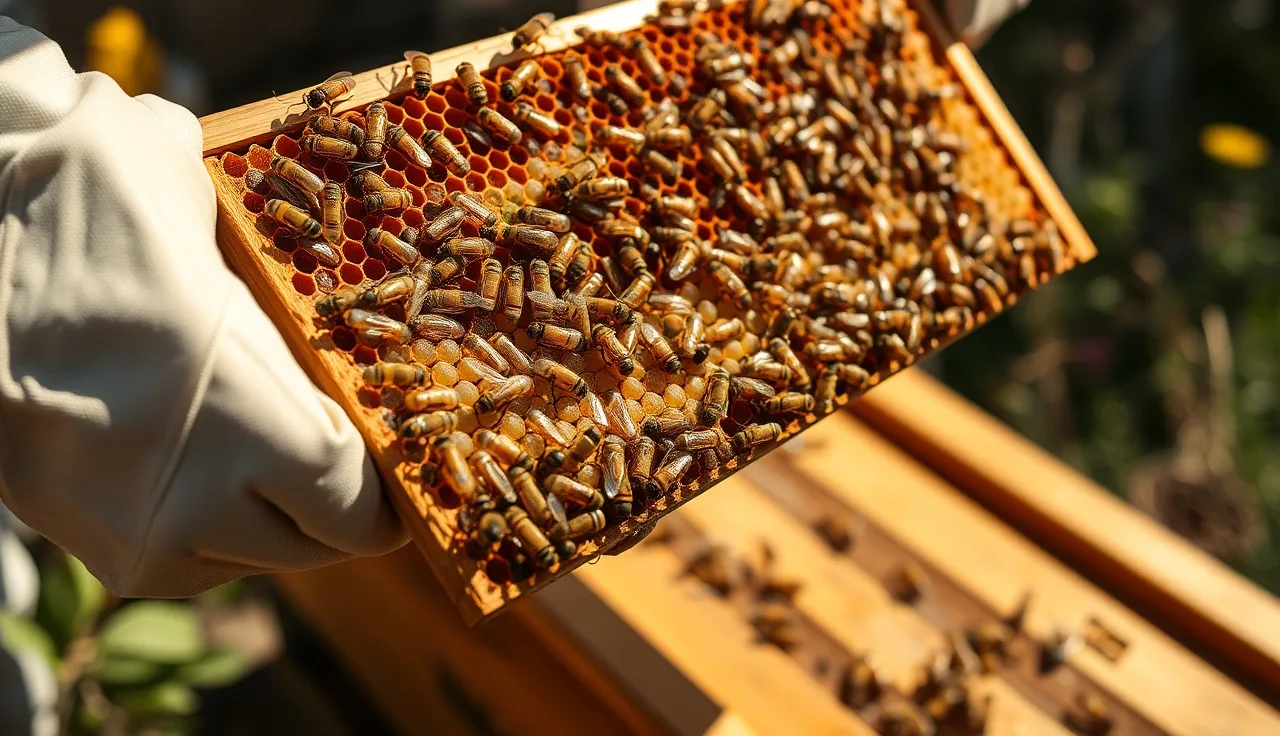
The name is literal. You pull a frame, and instead of a uniform field of tan, slightly domed cappings, you find cells where the wax is missing entirely, partly eaten away, or sunken in. The pupae underneath are often clearly visible: pale, sometimes glistening, at various stages of development. Some cells look like someone scraped a thin window into the wax. Others sit wide open, the pupa exposed to the air.
Distribution tells you a lot. Bald brood from wax moth larvae runs in tunneling tracks across the comb, because the larvae bore along the midrib and strip cappings in a rough line [1]. Hygienic-behavior bald brood, where bees actively uncap and haul out diseased or mite-infested pupae, shows up scattered and spotty across the brood nest. Varroa-linked bald brood looks random too, but it clusters near patches of high mite density.
Color is another clue. Pupae pulled during routine hygienic removal are white to cream and look intact. Pupae from sacbrood virus turn yellow, and the skin becomes a tough sac holding liquid [2]. Pupae hit by varroa or varroa-vectored viruses may look deformed or discolored, sometimes with mites plainly sitting in the cell if you look closely.
How does varroa cause bald brood?
Varroa destructor mites finish their reproductive cycle inside capped brood cells. A mated female (the foundress) slips into a cell just before capping, hides in the brood food below the larva, then starts reproducing once the cell is sealed [3]. During feeding and movement, the mite and her offspring can physically wear at the wax from inside. Bees also detect infested cells and chew at the cappings themselves, either partly uncapping to remove the occupant or thinning the wax to a translucent window.
The deeper mechanism is viral. Varroa mites carry deformed wing virus (DWV) and other pathogens straight into developing pupae. A pupa loaded with virus may develop abnormally, and hygienic bees pick up that abnormality through chemical cues. They uncap and try to remove it, and that produces bald brood [4]. So some of the bald brood you see is the colony's own defense against varroa-vectored disease, not the mites chewing caps.
That is why bald brood in a high-mite colony is a real alarm, not a cosmetic quirk. You're seeing the visible edge of a viral disease process running at scale inside the hive.
Is bald brood always a varroa problem?
No. Conflating the two causes real diagnostic mistakes. Here are the main causes side by side.
| Cause | Pattern | Other signs | Mite wash result |
|---|---|---|---|
| Varroa + DWV | Scattered, spotty | Deformed-wing bees, mites visible in cells | Usually >2% |
| Wax moth larvae | Linear tracks across comb | Silken tunnels, frass, webbing | Normal |
| Sacbrood virus | Scattered | Yellowed sac-shaped pupae, "Chinese slipper" look | Variable |
| Hygienic behavior (healthy) | Scattered | No sick brood, clean removal | Often low |
| Small hive beetle damage | Patchy, slimy | Slimed comb, beetle larvae | Normal |
Wax moth is the most common misread. Greater wax moth (Galleria mellonella) larvae tunnel through comb and strip cappings as they go [1]. A weak colony or stored comb left unprotected is at high risk. That tunneling line is the giveaway.
Sacbrood is the next. It comes from sacbrood virus (SBV), not varroa, though varroa spreads it. The sac-like larva with its yellowed skin is diagnostic. Most colonies clear a light sacbrood infection on their own in late spring as the adult population rebuilds.
Hygienic bees are the interesting case. Highly hygienic strains uncap and remove freeze-killed or diseased brood fast. In a healthy, high-hygiene colony, sporadic bald cells mean the bees are doing exactly what you want. That's not a problem. It's a trait worth selecting for in a varroa mite management program.
How do you confirm varroa is the cause?
A visual inspection cannot confirm varroa. You need a mite wash. The two standard methods are an alcohol wash and a sugar roll, and the alcohol wash gives more accurate counts [5].
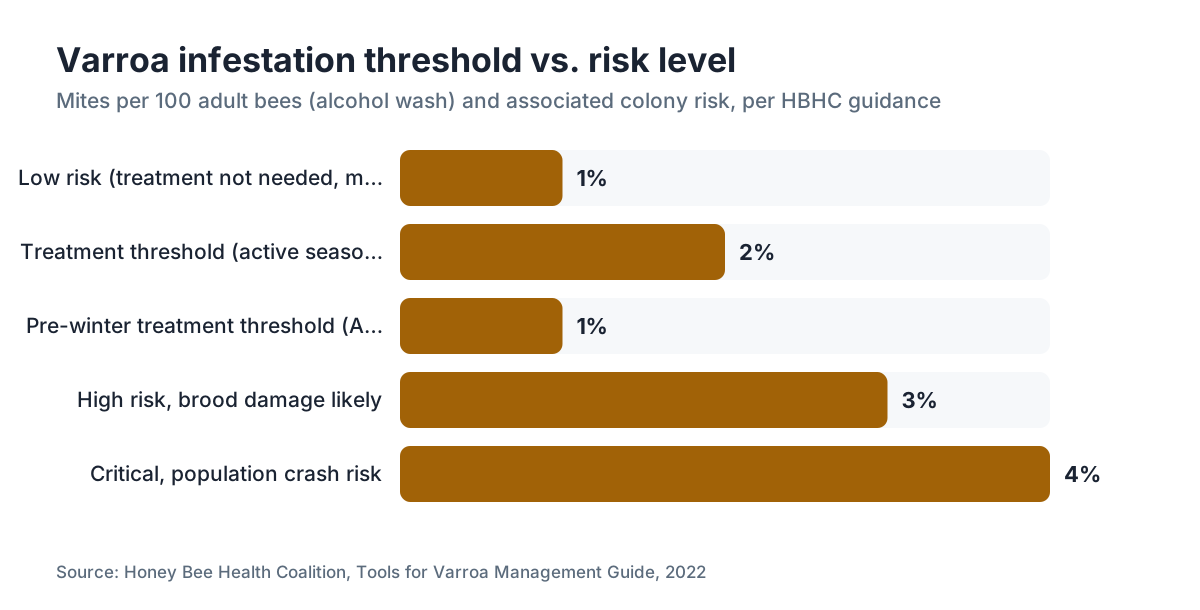
The Honey Bee Health Coalition's "Tools for Varroa Management" guide, updated in 2022, treats the alcohol wash as the standard for mite counting [5]. Most U.S. extension guidance uses a 2% infestation rate (2 mites per 100 bees) as the point that triggers treatment during the active season.
Here's the alcohol wash. Collect about 300 adult bees (roughly half a cup) from a brood frame, keeping the queen out of the sample. Shake them into a jar with 70% isopropyl alcohol, cap it, and shake for 30 to 60 seconds. Pour through a strainer into a light-colored bowl and count the mites. Divide mite count by bee count, multiply by 100, and that's your percent infestation.
Bald brood plus a wash at 2% or higher gives you your answer. A wash under 1% means you should look harder at wax moth, sacbrood, or plain hygienic behavior as the real cause. The wash is the decision tool. Reading brood patterns alone will steer you wrong.
To track mite levels across several colonies and time treatments, a structured protocol beats guessing from memory. VarroaVault's free management tools let you log wash results and flag colonies creeping toward the treatment threshold without a separate spreadsheet.
What mite infestation level produces visible bald brood?
No published number says "bald brood appears at X% mite load," because the visible effect swings with the colony's hygienic behavior, the virus strains circulating, and the season. In practice, and across most extension guidance, colonies showing real bald brood from varroa causes are usually well above 2% infestation.
A 2019 study in Apidologie found colonies infested above 3 to 4% showed measurable brood mortality and visible signs of disease, including abnormal capping [6]. The Honey Bee Health Coalition guide notes that colonies reaching 3% or higher face serious population crashes, especially going into winter [5].
By the time you can walk up, pull a frame, and say "that brood looks wrong," you're often already at a mite level that needs treatment. Don't wait for symptoms to start monitoring. Monitor on a calendar, roughly every 30 days during the active season, and treat on the numbers.
What viruses does varroa spread that affect brood appearance?
Varroa does more than chew brood. It's an efficient vector for at least five bee viruses, and several of them change how brood looks and how well the bees cap or remove it [4].
Deformed wing virus (DWV) is the most studied. It shrivels the wings of adult bees, but in heavily infected pupae it drives abnormal development that triggers hygienic removal and leaves bald cells. According to research published in Science, DWV titers in varroa-infested colonies can run 1,000 to 10,000 times higher than in varroa-free colonies [4].
Acute bee paralysis virus (ABPV), sacbrood virus, and black queen cell virus (BQCV) also get amplified by varroa. BQCV targets queen larvae and pupae specifically, producing blackened, sunken queen cells that look nothing like worker bald brood.
The practical point: a high-mite colony isn't fighting one problem, it's fighting several viral infections at once. Treating varroa cuts the viral load across the colony, not only the mite count. University extension programs including Penn State and NC State have documented that viral load drop after acaricide treatment [7].
What treatments work when varroa is confirmed?
Once your wash confirms a problem, you have several EPA-registered options. The right pick depends on your local temperature, whether supers are on, and your preference for organic versus synthetic chemistry.
Oxalic acid (OA): EPA-registered (OA products carry reg numbers such as 87243-1 for Api-Bioxal) and approved in the U.S. for dribble, sublimation (vaporization), and extended-release sponge application [8]. Vaporization hits mites on bees throughout the hive. Dribble works well only when brood is absent. OA does not penetrate capped cells, so it does its best work in a broodless period or across repeated sublimations over several weeks.
Formic acid: MAQS (Mite Away Quick Strips) and FormicPro are EPA-registered formic acid products that do penetrate cappings and reach mites inside brood cells [8]. That makes them the natural choice when bald brood signals an active infestation in capped brood. Temperature limits are strict: MAQS requires 10 to 29.5 degrees C (50 to 85 degrees F) during treatment, which rules it out in summer heat or cold snaps.
Amitraz (Apivar): A synthetic acaricide in strip form. Apivar (EPA Reg. No. 64771-2) is highly effective with a long treatment window (6 to 8 weeks), but you cannot use it with honey supers on [8]. Resistance is a real worry in some regions.
Thymol (Apiguard, ApiLifeVar): Temperature-dependent, best above 15 degrees C. Works well in fall in mild climates.
The Honey Bee Health Coalition's treatment guide runs a full side-by-side of every registered option with temperature windows and costs [5]. That's the reference I'd hand a new beekeeper before they buy anything.
Can bald brood indicate a resistant or hygienic colony?
Yes, and this is where beekeepers sometimes panic for no reason. Hygienic behavior is a heritable trait: workers detect, uncap, and remove diseased or parasitized brood faster than other strains [9]. The freeze-killed brood assay and the pin test score it. Colonies that clear 95% or more of freeze-killed brood within 24 to 48 hours count as highly hygienic [9].
A colony with strong hygienic expression and a modest varroa load shows more bald cells than a low-hygiene colony at the same mite level, because the bees catch and pull infested pupae before the mites finish their cycle. That's a feature. It actually cuts mite reproduction in the colony.
The caveat: hygiene doesn't replace treatment when loads are high. It slows mite growth, but it can't beat a 4% or 5% infestation on its own. Let your wash decide. Low loads with bees cleaning up infested brood aggressively? You may be watching natural resistance at work. High loads? Treat, no matter how tidy the brood looks.
How does bald brood differ from European foulbrood and American foulbrood?
This comes up a lot, because all three involve brood that looks wrong. The differences are clear once you know the tells.
American foulbrood (AFB), from Paenibacillus larvae, produces a ropy, brown-black decay with a glue-like stretch when you poke a matchstick in and pull it back out. The smell is sour and sharp. Cells have sunken, perforated cappings rather than cleanly bald ones [10]. AFB is a regulated disease in most U.S. states, with mandatory reporting and, in most cases, destruction of the equipment. It has nothing to do with varroa.
European foulbrood (EFB), from Melissococcus plutonius, kills larvae before capping, so you see twisted, melted-looking dead larvae in open cells. The brood is never capped, so it isn't technically bald brood (bald brood means cappings removed from cells that should have been capped). EFB smells sour but less acrid than AFB [10].
Bald brood from varroa: cappings removed, live or recently dead pupae visible, no ropy stretch, mites sometimes in view. The smell is the hive's normal beeswax smell.
If you're ever unsure about AFB, use a field test kit (the Vita ELISA-based test strips, for example) or call your state apiarist. Don't guess. AFB is catastrophic.
What should you do when you first spot bald brood?
Sequence matters. Don't reach for a treatment before you've done a diagnosis.
First, look at the pattern and note every other symptom: wax moth webbing, sacbrood sacs, deformed-wing bees crawling on the landing board, a foulbrood smell. Take photos. That record is worth keeping.
Second, run a mite wash within a day or two. The comb won't tell you the mite load. The wash will.
Third, check colony strength. A weak colony buckles under every stress, and weakness alone lets wax moth and other pests cause brood damage that mimics bald brood.
Fourth, act on the numbers. If mites are at or above 2%, pick a treatment that fits your season and temperature. If mites are low and you see wax moth signs, protect the comb and rebuild colony strength. If you suspect foulbrood, contact your state apiarist before you do anything else [10].
You can find state apiarist contacts through the USDA APHIS apiary program resources [11]. Many states run free hive inspections when you report suspected disease.
If you're building out a monitoring kit or sourcing treatments, checking beekeeping supply companies that carry alcohol wash gear and EPA-registered acaricides is a reasonable next step, once you've confirmed the diagnosis.
How do you prevent bald brood caused by varroa?
Prevention is steady monitoring plus timely treatment. No mystery. Most colony losses from varroa happen because the beekeeper wasn't monitoring or waited too long after the numbers crossed a threshold.
Three things prevent varroa-driven brood damage.
Monitor every 30 days during the active season. Small-apiary keepers often go more often. Some go every 45 days and get away with it most years. Every 30 days is the standard from the Honey Bee Health Coalition [5].
Know your thresholds by season. The 2% active-season threshold is widely accepted. Many extension programs drop pre-winter guidance to 1% in August and September, because mite-vectored viruses in fall land hardest on the long-lived winter bees that have to survive to spring [7].
Use a broodless period. An oxalic acid dribble or vaporization during a natural or induced broodless window gets near 95% to 100% efficacy, because there are no capped cells for mites to hide in [8]. Northern beekeepers often time an oxalic treatment to the midwinter broodless stretch. In warmer climates, splitting a colony to force a short broodless gap does the same job.
Requeening with hygienic or VSH (varroa-sensitive hygiene) queens is a longer game that pays off. Colonies from VSH-selected stock show much lower mite reproductive success, and the bald brood in those colonies tends to be genuine cleaning rather than disease spread [9]. The USDA Baton Rouge Bee Lab has been the main U.S. source for VSH research and bee stock development [12].
Want a calendar-based protocol keyed to your region and colony count? VarroaVault's free monitoring OS is built for that, tying treatment windows to mite threshold alerts so you're not relying on memory.
Frequently asked questions
Can bald brood kill a colony on its own?
Bald brood is a symptom, not a disease, so it won't kill a colony directly. But if varroa is the cause and mite loads keep climbing, the virus buildup and brood loss will. A colony with unchecked varroa can collapse within one to two seasons. The bald brood is a warning sign, not the actual threat.
Do I need to remove frames with bald brood?
Not automatically. If the bald brood is varroa-linked, treat the mite load and leave the comb. The bees will clean and refill the cells. If wax moth tunneling or heavy mechanical damage has wrecked the comb midrib, that frame may be structurally shot and worth replacing. Frames with confirmed AFB must be destroyed under your state's regulations.
What do varroa mites look like inside a capped cell?
Adult female varroa mites are reddish-brown, oval, and about 1.1 mm wide by 1.5 mm long. Inside a cell you may see the foundress plus up to two to four offspring at various stages. They cling to the pupa, feeding on its fat body tissue. You can spot them with the naked eye if you uncap a suspect cell and look carefully, but a hand lens makes it far easier.
How common is wax moth mistaken for varroa bald brood?
Very common, especially among newer beekeepers. The key difference is pattern. Wax moth damage runs in roughly linear tracks across the comb, because larvae tunnel along the midrib and strip cappings as they go. You'll also find silken webbing and dark granular frass. Varroa-linked bald brood is scattered, never track-shaped, and there's no webbing.
Can sacbrood virus cause bald brood?
Yes. Sacbrood kills larvae before or shortly after capping, and bees uncap and remove them, leaving open or partly capped cells. The telltale sign is the yellowed, fluid-filled sac-like skin of the dead larva, often described as a Chinese slipper shape when dried. Sacbrood is usually self-limiting in strong colonies and needs no chemical treatment, though managing varroa slows its spread.
Should I treat for varroa if I only see a few bald cells?
Base the call on a mite wash, not on brood symptoms alone. A few bald cells with a 1% wash is a different situation than a few bald cells with a 3% wash. If the wash puts you at or above 2% during the active season, treat. Below threshold, monitor more often and re-check in 30 days.
Is bald brood contagious to other hives?
Bald brood itself is not contagious. But varroa mites move between colonies through drifting bees and robbing. If one hive has high mite loads and visible brood symptoms, neighboring hives risk reinfestation even after treatment. Monitor all your colonies, not only the symptomatic one, and treat based on each hive's own wash results.
What time of year is bald brood from varroa most common?
Late summer and fall, because mite populations have built all season and peak then. The bees raised in August and September under high varroa pressure are your winter cluster bees, so damage now hits winter survival hard. Pre-winter treatment in late summer is the most important intervention of the year.
Can I use a drone brood check to assess varroa along with looking at bald brood?
Yes. Varroa prefer drone brood because the longer development period (24 days capped versus 12 for workers) allows more mite reproduction. Uncapping a section of drone brood and counting mites on the pupae gives a rough infestation estimate. It isn't as reliable as an alcohol wash, but it's a handy quick check when you're already in the hive and see bald brood.
Do hygienic bees produce more bald brood than other strains?
They can. Highly hygienic bees uncap and remove infested or diseased brood faster than standard strains, so you may see more open cells at any moment. That's usually good news: those bees are breaking the varroa reproductive cycle. Still run a mite wash to confirm loads are actually being suppressed before you conclude the bald brood is just healthy hygiene at work.
How long does it take for bees to repair bald brood comb after varroa treatment?
If you treat the cause and the colony is reasonably strong, bees refill and recap emptied cells within one to two brood cycles (roughly 21 days for workers). You should see an improving brood pattern within 30 days of a successful treatment. If bald brood persists or worsens, re-check your mite counts and look for other causes like queen failure or ongoing viral disease.
Are there natural varroa treatments that work on mites in capped brood?
Formic acid (as MAQS or FormicPro) is the main organic-approved treatment that penetrates cappings and reaches mites inside brood cells. Oxalic acid in any form does not penetrate cappings and only kills phoretic mites on adult bees. Thymol has limited penetration into capped cells. For colonies with active brood and high mite loads, formic acid or a synthetic acaricide like Apivar tends to beat oxalic acid alone.
Sources
- University of Florida IFAS Extension, Wax Moth Management in Honey Bee Colonies: Greater wax moth larvae tunnel along comb midribs, stripping cappings in roughly linear tracks and leaving silken webbing and frass
- Penn State Extension, Sacbrood Disease of Honey Bees: Sacbrood virus causes larvae to form a yellowed, fluid-filled sac with a Chinese slipper appearance when dried; most colonies clear light infections in late spring
- USDA Agricultural Research Service, Biology of Varroa destructor: Varroa foundress mites enter cells just before capping, hide in brood food, and begin reproducing once the cell is sealed; reproductive cycle completes inside the capped cell
- Ryabov et al., Science 2014, Varroa destructor and deformed wing virus: DWV titers in varroa-infested colonies are 1,000 to 10,000 times higher than in varroa-free colonies; varroa acts as an efficient viral vector directly injecting DWV into pupae during feeding
- Honey Bee Health Coalition, Tools for Varroa Management Guide (2022 edition): Alcohol wash recommended as standard for mite counting; 2% infestation rate triggers treatment during the active season; colonies above 3% face serious winter survival risk; monthly monitoring recommended
- Apidologie, Honey bee colony losses and mite infestation rates, 2019: Colonies infested at rates above 3 to 4% showed measurable brood mortality and visible signs of disease including abnormal capping patterns
- NC State Extension Apiculture, Varroa Management and Winter Bee Health: Pre-winter mite treatment threshold drops to 1% in August and September because mite-vectored viruses in fall have outsized effects on long-lived winter bees; viral load reduction documented following acaricide treatment
- EPA, Registered Honey Bee Pesticides and Product List: Api-Bioxal (EPA Reg. 87243-1), MAQS and FormicPro (formic acid), and Apivar (amitraz, EPA Reg. 64771-2) are EPA-registered varroa treatments; formic acid penetrates cappings; oxalic acid does not; Apivar cannot be used with honey supers
- USDA ARS, Hygienic Behavior in Honey Bees and Varroa Resistance: Colonies removing 95% or more of freeze-killed brood within 24 to 48 hours are scored as highly hygienic; VSH-selected stock shows significantly lower mite reproductive success
- USDA ARS Baton Rouge Bee Lab, VSH Research and Bee Stock: USDA Baton Rouge Bee Lab is the primary U.S. source for varroa-sensitive hygiene (VSH) research and bee stock development
Last updated 2026-07-09