Mite away quick strip removal timing: when and how to pull them
TL;DR
- Mite Away Quick Strips (MAQS) have a fixed 7-day treatment window.
- Leave both strips in the hive for the full 7 days, then pull them.
- Don't leave them longer.
- The EPA label requires ambient temperatures between 50°F and 93°F for the whole treatment.
- Removing early cuts efficacy.
- Leaving them past day 7 risks queen loss and extra formic acid exposure for no benefit.
What is the correct removal time for Mite Away Quick Strips?
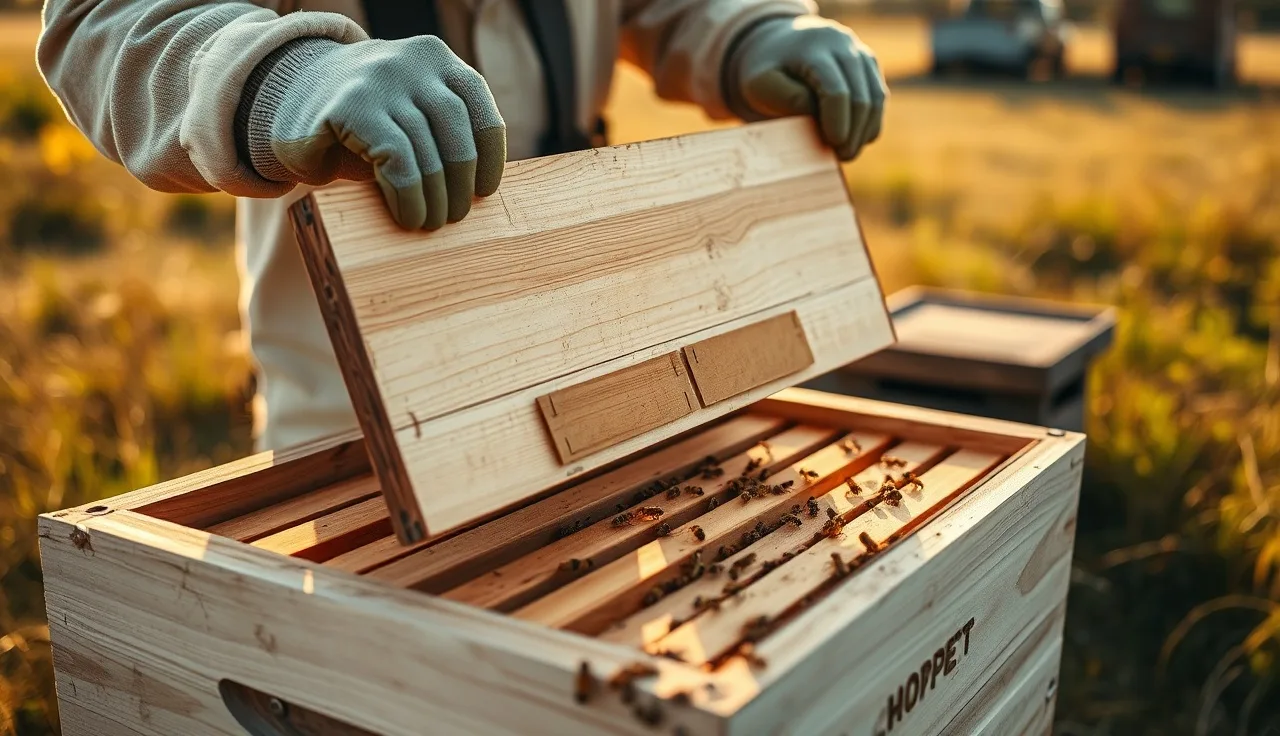
Seven days. Full stop. The EPA-registered label for Mite Away Quick Strips (made by NOD Apiary Products) specifies one 7-day treatment period. You place both strips across the top bars of the brood nest on day one, and you pull them on day seven [1].
There's no extended-release option, no partial treatment, and no approved reason to leave them in longer. The formic acid in each strip is built to volatilize at a controlled rate across that 7-day window. By the end, most of the active ingredient has already off-gassed. The cardboard matrix sitting in the brood area after day seven adds zero mite-killing benefit.
Here's a thing that surprises first-timers. If the strips still look like they have substance left on day seven, pull them anyway. Visual appearance tells you almost nothing about how much formic acid remains. The 7-day clock governs the treatment, not how the strips look.
What temperature range is required for MAQS to work safely?
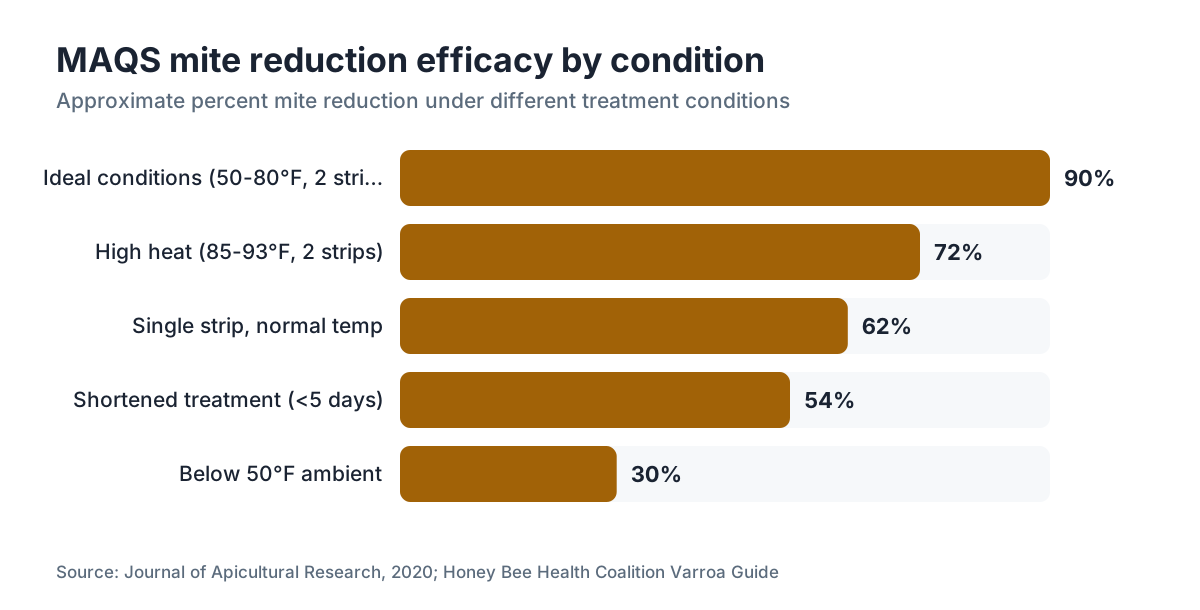
The label requires ambient (outdoor air) temperatures between 50°F and 93°F for the entire 7-day treatment window [1]. Both ends matter. This is the rule that trips up more beekeepers than the timing does.
Below 50°F, formic acid volatilizes too slowly. The acid stays trapped in the strip matrix instead of moving into the hive air, and mite mortality drops off hard. You're spending money and stressing the colony for nothing.
Above 93°F, the acid volatilizes too fast. Concentration inside the hive spikes, and queen loss and brood damage climb with it. The Honey Bee Health Coalition's Varroa management guide puts queen loss at roughly 5 to 10 percent under normal labeled conditions, and that number rises when temperatures spike mid-treatment [2]. A heat wave landing in your treatment week is a real problem.
The fix is simple. Read the full 7-day forecast before you open the strips, more than the day you apply them. If there's a 95°F day sitting in the middle of the week, wait. Late summer treatments in hot climates often mean early morning application or a delay until overnight lows cool things down. A min-max thermometer near the hive entrance during treatment is cheap insurance.
For beekeepers tracking a full varroa protocol across the season, the varroa mite overview covers where MAQS fits alongside other treatment choices.
Can you leave MAQS in the hive longer than 7 days?
No. The label is explicit: remove after 7 days [1]. This is not a conservative suggestion you can stretch.
Here's the practical side. Most of the formic acid is gone by day seven, but the wet cardboard matrix on the top bars can grow mold and pull in moisture. Bees also start building burr comb around the strips, which makes removal harder the longer you wait. Beekeepers regularly report strips anchored down by wax after 10 or 12 days.
There's a legal side too. Using a pesticide outside its labeled instructions is a federal violation under FIFRA (the Federal Insecticide, Fungicide, and Rodenticide Act, 7 U.S.C. § 136 et seq.) [3]. That matters if you're a sideliner selling honey, where residue liability is real.
If you can't get back to your hives on exactly day seven, day six is fine. Day eight is technically off-label but almost certainly harmless in practice. Day twelve is not fine.
What happens if you remove MAQS too early?
Efficacy drops. Part of what makes MAQS work against varroa is its ability to reach mites developing inside capped brood cells, hitting phoretic and reproductive stages together. That reach depends on sustained formic acid vapor over several days. Cut the treatment short and you lose that full cycle of exposure [2].
A 2020 field study in the Journal of Apicultural Research found that formic acid treatments show meaningfully lower mite knockdown when exposure times are shortened, even by 20 to 30 percent of the recommended duration [4]. For MAQS, that means pulling at day five or earlier.
The label acknowledges one reasonable exception. If you see severe queen loss or significant brood pattern disruption early in treatment, pull the strips as an emergency measure. The colony's survival comes first. Then treat again with a different product once the queen situation is stable.
Does the 7-day removal rule change if you use a single strip instead of two?
No. The removal timing is 7 days whether you use one strip or two. The single-strip option is a real label provision, not beekeeper folklore. For colonies with fewer than 5 frames of brood, or when temperatures sit at the high end of the range, NOD's label allows a single-strip application as a reduced-dose approach [1].
Beekeepers in hot climates use the single strip to cut the formic acid load and protect the queen when temperatures are marginal. It's a sensible risk-management call. A living queen and a partly treated colony beats a queenless hive after a double-strip treatment in 90°F heat.
The Honey Bee Health Coalition's guide names this single-strip strategy as a way to balance efficacy against queen safety [2].
Nobody has clean comparative data on exactly how much efficacy you give up with one strip versus two under identical conditions. The closest published figures put mite reduction around 70 to 85 percent with two strips and 50 to 70 percent with one, but those numbers come from field trials with variable colony strengths and temperatures. Treat them as ballpark.
How do you actually remove the strips after 7 days?
Use your hive tool and gloves. Formic acid is a skin and respiratory irritant, so don't handle spent strips bare-handed and don't hold them near your face [1]. Residual acid after 7 days is low, but it's not zero.
The strips peel off the top bars pretty cleanly if you treated on schedule. If wax or propolis has crept over the edges, work a hive tool under them gently. Try not to tear the matrix, because torn pieces are a pain to collect and you don't want acid-soaked cardboard scattered around the hive.
Toss used strips in household trash. The label doesn't require hazardous waste disposal, but don't compost them and don't leave them lying in the beeyard where pets or other insects can reach them [1]. A zip-lock bag works for transport.
After removal, check for the queen within a few days. Eggs and young larvae in a good pattern mean you're clear. If the brood pattern looks disrupted, or you can't find eggs five to seven days after treatment, start looking for queen cells or plan to requeen.
How soon after MAQS can you apply another treatment?
The MAQS label sets no mandatory waiting period before switching to a different active ingredient [1]. Practical experience says give the colony a week or two to stabilize before hitting it with another chemical treatment, especially if there was any queen stress during the MAQS run.
If your mite wash after MAQS still shows counts above 2 mites per 100 bees (the action threshold the Honey Bee Health Coalition and most university extension programs cite) [2][5], you need to treat again. Oxalic acid dribble or vaporization is the usual follow-up. Oxalic acid works only on phoretic mites, the ones not sealed in capped cells, so it pairs well with MAQS once MAQS has done its work through the capped brood cycle.
The University of Minnesota Extension recommends counting mites before and after any treatment to confirm efficacy, rather than assuming the treatment worked [5]. Do an alcohol wash or sugar roll 48 hours after strip removal, then again at 10 to 14 days, to see where you stand.
For a structured way to sequence treatments across the season, VarroaVault's free varroa protocol tools let you map treatment windows against your local temperature calendar.
When in the season should you use MAQS?
MAQS works in any season where the temperature window holds, including during a honey flow. That's the main reason beekeepers reach for it over other formic acid products. The label allows treatment while honey supers are in place, unlike many other treatments [1]. Big practical advantage in mid-season, when mite loads are building but you don't want to pull supers.
Extension recommendations cluster around two windows: late summer (July to early August in most of the northern US), when colonies are raising winter bees and temperatures are still in range, and early fall (late August through September), before the mite load runs away ahead of overwintering [2][5][10].
Spring treatments are possible and sometimes necessary, but the temperature window is less predictable. A cold snap during a spring MAQS run is a real risk in northern climates.
Don't use MAQS in the fall once overnight lows drop below 50°F consistently. At that point, oxalic acid dribble on a broodless or low-brood colony is the better fit.
| Season | Temperature reliability | Can supers stay on? | Notes |
|---|---|---|---|
| Spring (Apr-May) | Variable, cold snap risk | Yes | Watch forecasts closely |
| Early summer (Jun) | Generally good | Yes | Good if flow is on |
| Late summer (Jul-Aug) | Hot extremes possible | Yes | Single strip in high heat |
| Early fall (Sep) | Usually ideal | Remove if harvest done | Best balance of temp and mite pressure |
| Late fall (Oct+) | Too cold in most regions | N/A | Switch to oxalic acid |
What mite reduction should you expect from MAQS?
Peer-reviewed efficacy figures for MAQS run from about 54 percent to 93 percent mite reduction, with the wide spread driven by differences in temperature, colony strength, and application precision [4][6]. The Honey Bee Health Coalition cites roughly 90 percent efficacy under ideal conditions [2].
The University of Florida IFAS extension program notes that formic acid products perform best in warm but not extreme weather, with strong colonies, and when the beekeeper follows the label exactly [6]. Cut any of those corners and you'll land toward the bottom of that range.
Alcohol wash your bees 48 hours after strip removal, then again at 14 days. Still above 2 mites per 100 bees? Retreat. Don't assume one MAQS treatment carries you through a heavy mite year. Nothing in varroa management works perfectly every time.
Is MAQS safe to use with honey supers on?
Yes. This is what sets MAQS apart from most other varroa treatments. The EPA-registered label explicitly permits use while honey supers meant for human consumption are on the hive [1]. Formic acid occurs naturally in honey at low levels, and the treatment doesn't create a residue problem at labeled application rates.
That said, "safe to use" isn't the same as "no effect on honey quality." Some beekeepers notice a temporary formic acid taste in honey harvested right after treatment. Most wait a few weeks after strip removal before pulling supers, just to let any residual volatility clear. Personal preference, not a label requirement.
If you sell honey and a buyer or inspector asks about treatments, formic acid used per the MAQS label is compliant with US regulations. The National Organic Program lists formic acid as a permitted substance for organic livestock, though you'll need to confirm your specific certifier's requirements [7].
For beekeepers sourcing beekeeping supplies and comparing treatment options, MAQS is one of the few products that doesn't force a choice between treating and harvesting.
What are the most common MAQS mistakes beekeepers make?
The biggest one is treating in the wrong temperature window. A beekeeper checks the weather on application day, sees 75°F, drops the strips in, then gets slammed by 95°F two days later mid-treatment. Read the full 7-day forecast, more than today.
Second most common: not leaving the strips in for the full 7 days. Bees sometimes chew or shift the strips in the first day or two, which panics newer beekeepers into thinking something's wrong. Unless you see actual queen loss or severe clustering, leave the strips alone for the whole window.
Third: not confirming the queen is alive after treatment. MAQS has a real, label-acknowledged queen loss rate. The Honey Bee Health Coalition puts it at roughly 5 to 10 percent of treatments [2]. That's too common to ignore. Check for eggs 5 to 7 days after strip removal, every time.
Fourth: skipping the post-treatment mite count. Plenty of beekeepers treat and assume success. Do the alcohol wash. Know your real mite load. The treatment may have dropped counts without getting below threshold, and waiting a month to figure that out costs you bees.
Fifth: using MAQS in a nuc or a small package. Very small colonies (fewer than 4 to 5 frames of bees) have less thermal mass and less capacity to buffer the formic acid concentration. The label has provisions for smaller colonies. Read them before you treat anything under 4 frames.
Frequently asked questions
Can I leave Mite Away Quick Strips in for 14 days instead of 7?
No. The MAQS label specifies exactly 7 days. Most of the formic acid off-gasses within that window, so keeping strips in longer adds no mite-killing benefit. It does add the risk of mold growth and bees building wax over the strips, and it puts you outside the EPA-registered label instructions, which is a violation of federal pesticide law.
What temperature is too hot for MAQS?
The MAQS label sets the upper limit at 93°F ambient air temperature. Above that, formic acid volatilizes too fast, spiking the concentration inside the hive and raising the risk of queen loss and brood damage. Check the full 7-day forecast before applying. If any day in the treatment window may exceed 93°F, wait for a cooler stretch.
Do I need to remove honey supers before using MAQS?
No. The MAQS EPA label specifically allows treatment with honey supers in place, making it one of the very few varroa treatments approved during a honey flow. Some beekeepers wait a week or two after strip removal before pulling supers for harvest to let any residual volatility clear, but that's personal preference, not a label requirement.
How long after removing MAQS strips can I add a new queen?
Wait at least 5 to 7 days after strip removal before introducing a new queen, to confirm residual acid has cleared. If you're requeening because of MAQS-related queen loss, first verify the colony doesn't already have a virgin queen or queen cells present before introducing your purchased queen, or the bees will likely kill her.
How many MAQS treatments can I do in one season?
The MAQS label allows two complete treatments per season. Back-to-back treatments need a break between them to let the colony recover. Given the 7-day treatment window plus a recovery period, most beekeepers space them at least 4 to 6 weeks apart. Do a mite wash before the second treatment to confirm it's actually needed.
Why are my bees clustering at the hive entrance during MAQS treatment?
Bearding or clustering at the entrance during MAQS treatment is common and usually not a serious problem. Formic acid vapor irritates bees at high concentrations, and they sometimes move outside to escape it, especially on warmer days. As long as the queen is alive and the colony returns to normal behavior within a day or two of strip removal, this is expected.
Can I use MAQS in the fall when temperatures are dropping?
Only if you can confirm ambient temperatures will stay above 50°F for the entire 7-day treatment window. In most northern US climates that means MAQS needs to be done by late September at the latest. Once nighttime lows sit consistently below 50°F, switch to oxalic acid, which works at cooler temperatures and hits broodless or low-brood fall colonies hard.
What is the queen loss rate with MAQS?
The Honey Bee Health Coalition cites queen loss at roughly 5 to 10 percent of MAQS treatments under normal conditions. That rate rises when temperatures exceed 93°F during treatment or when the colony is very small. Always check for eggs and a healthy brood pattern 5 to 7 days after strip removal. If you're treating colonies with older queens, keep a backup queen on hand.
Can I use one MAQS strip instead of two?
Yes. The label allows a single-strip application for colonies with fewer than 5 frames of brood or when temperatures are near the upper limit of the range. Efficacy is lower with one strip than two, but it's a reasonable tradeoff when the colony is small or heat is a concern. Removal timing is the same: 7 days, whether you used one strip or two.
How do I know if MAQS worked?
Do an alcohol wash 48 hours after strip removal, then again at 10 to 14 days. If counts are below 2 mites per 100 bees, the treatment was effective. If counts are still above threshold, retreat with a different product. Never assume a treatment worked without checking. Mite loads can rebound fast in late summer from reinfestation by neighboring colonies.
Are MAQS strips safe for use in a Langstroth hive with a screened bottom board?
Yes. MAQS works in standard Langstroth hives with either screened or solid bottom boards. Some research suggests screened bottom boards may slightly lower formic acid concentration because vapor escapes downward, but the effect is modest and the treatment still works within labeled parameters. The label doesn't distinguish between bottom board types.
What should I do if I can't get back to my hives on exactly day 7?
Day 6 is fine and still on-label. Day 8 is slightly off-label but the practical impact is minimal, since most of the acid has already off-gassed by then. What you want to avoid is leaving strips in past 10 days, where wax buildup makes removal harder and more disruptive. If access is genuinely difficult, plan treatments around a realistic removal window.
Sources
- EPA, Mite Away Quick Strips (MAQS) Registered Label, Reg. No. 83874-1: 7-day treatment window, 50-93°F temperature requirement, two strips per colony, removal instructions, honey super use allowed
- Honey Bee Health Coalition, Varroa Management Guide (current edition): Queen loss rate approximately 5-10%, single-strip option for small colonies or high heat, 2 mites per 100 bees action threshold, seasonal timing recommendations, approximately 90% efficacy under ideal conditions
- US EPA, Federal Insecticide, Fungicide, and Rodenticide Act (FIFRA), 7 U.S.C. § 136: Using a pesticide outside its registered label instructions is a federal violation
- Journal of Apicultural Research, 'Efficacy of formic acid treatments against Varroa destructor' (2020): Formic acid treatments show significantly lower mite knockdown when exposure times are shortened; MAQS efficacy range approximately 54-93% depending on conditions
- University of Minnesota Extension, Varroa Mite Management: 2 mites per 100 bees action threshold; recommendation to count mites before and after treatment to confirm efficacy
- University of Florida IFAS Extension, Varroa Mite Control in Honey Bee Colonies: Formic acid products perform best in warm but not extreme weather, with strong colonies, and with precise label adherence
- USDA National Organic Program, Permitted Substances List (7 CFR Part 205): Formic acid is a permitted substance for organic livestock management under NOP regulations
- Penn State Extension, Varroa Mite Management for Honey Bee Colonies: Seasonal timing guidance for formic acid treatments; late summer and early fall recommended windows in the northeastern US
Last updated 2026-07-09