Apivar mite strip: the complete treatment guide for beekeepers
TL;DR
- Apivar is an amitraz plastic strip registered by the EPA for varroa control in honey bee colonies.
- Two strips hang between brood frames for 6 to 10 weeks, working across a wide temperature range.
- It kills mites feeding on adult bees but does not reach capped brood.
- Efficacy runs 85 to 97% when applied right and rotated with other chemical classes to slow resistance.
What is Apivar and how does it work against varroa mites?
Apivar is a plastic polymer strip loaded with 3.2% amitraz, an acaricide in the formamidine chemical class. Each strip holds roughly 800 mg of amitraz that leaches out slowly over the treatment period, coating bees as they walk across it and groom each other. Amitraz acts as an octopamine receptor agonist. It overstimulates the mite's nervous system until the mite dies [10].
The slow-release design is on purpose. You want steady, low-level exposure over weeks, not one big knockdown dose. Bees pick up amitraz on their cuticles, pass it to nestmates, and by the time a varroa mite finishes a phoretic feeding run on an adult bee, it has taken up a lethal amount.
Here is the limitation every beekeeper has to understand. Apivar does not penetrate capped brood cells. Mites reproducing under the cappings are shielded during that phase of their life cycle. That is why the label calls for 6 to 10 weeks. The point is to expose every mite through several phoretic cycles, hitting each one as it rides an adult bee past a strip [2].
Amitraz sits in a different chemical class than oxalic acid (an organic acid) and the pyrethroids like tau-fluvalinate (Apistan). That difference is the whole basis for resistance rotation, which comes later in this guide.
What does the EPA label say about how to use Apivar strips?
The EPA-registered label for Apivar (EPA Reg. No. 86014-4) is the legal document that governs every part of use in the United States. It is not optional reading. Here is what it requires [1]:
Dose. Two strips per brood chamber for colonies with 5 or more frames of bees. One strip for packages or nucs. Never more than two strips per brood box.
Placement. Hang strips in the brood nest between frames where bee traffic is heaviest, usually frames 3 to 4 and 6 to 7 in a standard 10-frame box. Bee contact with the strip surface is what drives the kill.
Treatment duration. Minimum 6 weeks, maximum 10 weeks. Pull the strips at 10 weeks. Leaving them longer than the label allows is a federal violation, and it speeds up resistance.
Temperature. Apivar works across a wider temperature window than most alternatives. The label does not set a hard lower cutoff the way formic acid products do, and published field data shows meaningful efficacy down to around 50°F (10°C). That is why beekeepers reach for it in late fall as the colony tightens up [3].
Honey supers. Take off all honey supers before you treat. Do not apply while supers meant for human consumption sit on the hive. Amitraz residues can build up in wax and honey, so super removal is both a legal line and a food-safety one [1].
Treatments per year. The label allows two full treatments per year. Most beekeepers run one in late summer after the main flow and, if the counts call for it, a second in late winter before buildup.
One verbatim line from the Apivar label: "Do not use in the presence of honey supers." No gray area there.
How effective is Apivar at actually killing varroa mites?
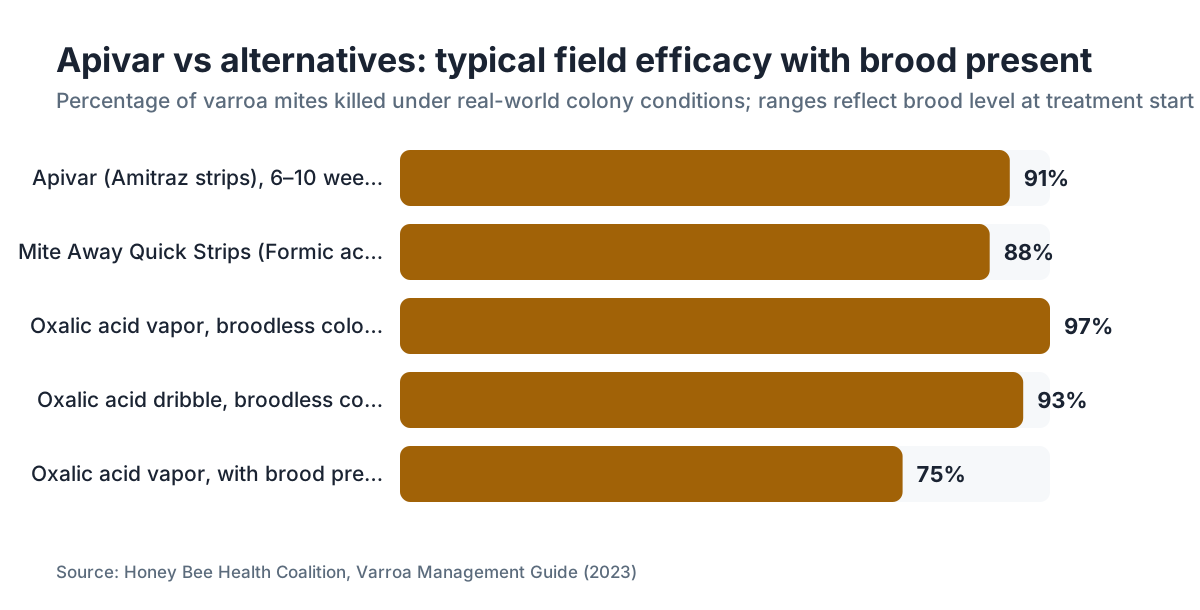
Apivar kills 85 to 97% of varroa when it is applied correctly, and where you land in that range depends almost entirely on how much brood the colony holds when you start. Efficacy data comes from company trials, university research, and field surveys, and the numbers hold up well.
The Honey Bee Health Coalition's Varroa Management Guide reports treatment efficacies for amitraz strips in the range of 85 to 97% under real colony conditions [3]. The low end tracks colonies with heavy brood at the start, because capped brood hides mites from any exposure. The high end comes from colonies treated in late fall when brood is thin or gone.
Timing against the brood cycle matters more than most beekeepers think. Treat during peak summer brood and you may see only 80 to 85% kill, because a big slice of the mite population is always under cappings at any given moment. The same product used when brood is low, or after an induced brood break, can push past 95%.
The Honey Bee Health Coalition's Varroa Management Guide calls amitraz-based treatments "among the most effective options available" for managing varroa in colonies with brood present [3]. That is fair. Oxalic acid beats it on phoretic mites, near 100% kill, but oxalic acid needs a broodless window to work that well. Apivar does not.
Resistance is the long-term threat to these numbers. Amitraz resistance has been confirmed in varroa populations in Europe and, to a lesser extent, in North America [4]. The mechanism is metabolic detoxification: resistant mites break the amitraz down before it can kill them. Use Apivar every treatment cycle without rotating to oxalic acid or formic acid, and you select for those mites. So rotate.
Apivar strips vs Mite Away Quick Strips: which one should you use?
Use Apivar for fall and cold-spring treatments when temperatures swing too much for formic acid. Use Mite Away Quick Strips (MAQS) when you need brood-cell penetration in summer or want to leave no synthetic residue in wax. They are not really rivals for the same slot. They work differently, in different seasons, with different risks.
| Feature | Apivar (Amitraz) | Mite Away Quick Strips (Formic Acid) |
|---|---|---|
| Active ingredient | Amitraz 3.2% | Formic acid 68.2% |
| Chemical class | Formamidine | Organic acid |
| Penetrates capped brood | No | Yes |
| Min. temperature | ~50°F (10°C) | 50°F (10°C) |
| Max. temperature | No hard ceiling | 85°F (29°C) [5] |
| Treatment duration | 6 to 10 weeks | 7 days (1 pad) or 14 days (2 pads) |
| Honey supers allowed | No | No |
| Queen risk | Low | Moderate (queen loss at high temps) |
| Beekeeper exposure | Low (avoid skin contact) | Moderate (vapors; use gloves/eye protection) |
| Resistance class | Formamidine | Organic acid (no resistance reported) |
| Typical cost per treatment | $3.60 to $5.60 (2 strips/hive) | $9 to $14 (2 pads/hive) |
Apivar wins on simplicity and temperature range. You hang the strips and come back in 6 weeks. That suits anyone running several hives who wants low intervention, and it handles fall and early spring when temperatures are too unpredictable for formic acid.
MAQS wins on two things. It penetrates capped brood, so it drops a mite population faster, and it leaves no synthetic chemical residue in wax [5]. For beekeepers who want to stay close to organic standards, or who hit a sudden mite crisis in mid-summer and need fast action, MAQS makes more sense.
The queen loss risk with MAQS is real and worth naming. University extension reports note queen loss rates of 3 to 10% with formic acid under high heat [6]. Apivar's queen risk is far lower, though you should still confirm the queen is laying normally before you treat.
Beekeepers searching "apivar strips vs mite away" usually want to know which to buy right now for one specific problem. My honest call: Apivar for fall and cold-spring treatments, MAQS if you need to treat with supers off and temperatures are moderate (60 to 85°F) or you want brood-cell penetration during summer.
One thing both products share. Neither should be your only tool year after year. Rotate chemical classes.
When is the best time of year to apply Apivar strips?
Late summer is the single best Apivar window, after your main flow ends and before your winter bees emerge. Across most of the continental U.S. that runs from mid-July through mid-September, shifting by region. Miss it and you risk the whole winter cluster.
Here is why that window carries so much weight. The bees that emerge in August and September become your winter cluster. If they spend their first weeks as hosts for varroa, their fat bodies run down and they will not survive the cold. A mite load above roughly 2 to 3% (2 to 3 mites per 100 adult bees) during this stretch tracks with poor winter survival [3]. Treat before those bees emerge and you protect them when it counts.
The sequence most experienced beekeepers use:
- Pull honey supers when the main flow ends.
- Run an alcohol wash or sugar roll to confirm mite levels.
- If mites are at or above 2%, install Apivar right away.
- Leave strips in for the full 6 to 8 weeks.
- Remove strips, wait 2 weeks, do a follow-up count.
A second Apivar window works well in late winter or very early spring, once daytime temperatures sit reliably above 50°F but before the colony explodes in size. This catches any mites that made it through the fall and are now riding a smaller adult population.
Summer treatments are possible but need super removal, which usually means cutting into your honey harvest. Many beekeepers get around this by treating right after pulling the last super in late July.
What mite levels require Apivar treatment?
Treat at 2 or more mites per 100 bees during spring and summer buildup, and at 1 to 2 per 100 during the late-summer window. Thresholds shift by season because the same mite load does different amounts of damage at different times of year [3].
Spring and summer buildup (March through June in most regions): treat if you find 2 or more mites per 100 bees (2% infestation).
The late-summer window (July through September): treat at 1 to 2 mites per 100 bees. Some advisors hold a flat 2% year-round, but given the hit to winter bees, erring toward 1% in August is defensible.
Fall (October and beyond): treat if mites run above 2%. Some beekeepers skip this if they caught the late-summer window and got good knockdown.
Alcohol wash is the most accurate field method. Take a sample of roughly 300 adult bees (about half a cup) from a brood frame, wash them in 70% isopropyl alcohol, and count the mites that drop out. Divide mites by bees and multiply by 100 for your percentage. A sticky board count is less accurate but beats nothing [9].
If you are not counting mites at all, you are flying blind. Calendar treatment without monitoring is the second most common reason beekeepers lose colonies to varroa, right behind treating too late. Track your counts, record the dates, and use a tool like the VarroaVault mite tracking calculator to flag when you cross a threshold.
For the varroa mite biology and life cycle behind these numbers, the linked article breaks down phoretic versus reproductive phases in detail.
Can you use Apivar strips with honey supers on?
No. The EPA label bans use while honey supers meant for human consumption sit on the hive [1]. There is no approved workaround, and no version of the question where the answer changes.
Amitraz and its breakdown products, including 2,4-dimethylaniline and DMPF, can build up in beeswax and, to a smaller degree, in honey. Studies of commercial honey in Europe have found amitraz metabolite residues when strips were left in too long or used wrong [7]. The U.S. tolerance for amitraz in honey is very low, and that is why the label demands super removal.
In practice this means planning your treatment around the harvest. Pull supers first, then treat. If you sit in a region with a strong fall flow (goldenrod, aster), you face a real choice: treat now and give up the fall honey, or wait and let mites climb through July and August. Most experienced beekeepers treat and sacrifice the fall surplus when mite levels are high, because losing the colony to varroa costs far more than a lost box of honey.
Some beekeepers ask about running Apivar in a lower brood box while supers sit on top. The label does not allow it. Do not try to engineer around the rule.
How do you install and remove Apivar strips correctly?
Installation is simple, but a few details decide whether you get full efficacy or a half-measure.
Wear gloves. Amitraz absorbs through skin. Nitrile gloves are standard. Do not inhale the strips.
Open the foil packaging just before use. Amitraz starts volatilizing once it hits air. Strips left open for hours before install have already lost active ingredient.
Hang strips vertically between frames. Each strip has a tab that hooks over the top bar. Let it hang down between two frames in the brood nest. Bee contact with the surface is what drives the treatment. Place a strip away from brood where bees rarely cross it, and efficacy falls off.
For a two-box colony with brood in both boxes, the label allows two strips total. Put one in each box if brood is in both. If brood sits in only one box, both strips go there.
Mark the calendar the day you install. Six weeks is the floor, 10 weeks the ceiling. Set a reminder.
Removal. Gloves again. Pull the strips and bag them for household trash. Do not burn them. Count both strips before you close the hive. A strip left inside past 10 weeks is a label violation and a resistance risk in one.
After removal, run a mite wash 2 to 3 weeks later to confirm it worked. If you still find more than 2 mites per 100 bees, look at three things: possible resistance, poor bee contact with strips, or an unusually high starting load in a big brood nest.
Does amitraz resistance happen, and how do you prevent it?
Yes, amitraz resistance in varroa is real, and you prevent it by rotating chemical classes. Resistance has been confirmed at a population level in parts of Europe, especially Italy and France, with field evidence of reduced susceptibility in parts of North America [4]. The mechanism is enzymatic: resistant mites carry higher levels of certain monooxygenases that break amitraz down before it reaches a toxic dose.
Resistance builds faster under constant selection pressure. Give every colony in your apiary Apivar every spring and every fall, year after year, and you will eventually breed mites that shrug it off. Speed depends partly on the genetic diversity of the local mite population and partly on how many beekeepers around you are doing the exact same thing.
Prevention is rotation. Use a different chemical class for at least one treatment a year. Oxalic acid (dribble, foam, or vapor) uses a completely different mode of action and works best during broodless periods. Formic acid (MAQS or Formic Pro) is another option. Alternating amitraz with one of these organic acids is the most practical resistance strategy a hobbyist has right now.
The Honey Bee Health Coalition's guide recommends rotating among chemical classes "to delay resistance development" [3]. That is standard resistance logic, the same used in crop protection and human medicine.
Treat with Apivar and see poor knockdown (still above 2% on a post-treatment wash)? Put resistance on the list of suspects, right alongside application errors.
How much do Apivar strips cost, and where do you buy them?
Apivar sells in packs of 10 strips in the U.S. Ten strips treat five colonies (two strips each). Typical retail at major beekeeping suppliers runs $18 to $28 per 10-pack, though prices move by supplier and have shifted since 2020.
Per colony, that works out to roughly $3.60 to $5.60 per treatment, before your time. That is one of the lowest per-colony costs of any registered varroa treatment.
You can find Apivar through most beekeeping supply companies and some farm supply stores. Buying in bulk, say a 50-strip pack if you run 10 or more colonies, drops the unit cost further. Check shelf life before you stock up: amitraz degrades over time, and strips stored in heat lose potency faster.
Store unused strips cool and dry in their sealed foil. Do not freeze them. The manufacturer's stated shelf life is usually two years from the manufacture date under proper storage.
For sourcing, the free shipping honey bee supply companies article covers which vendors waive shipping above a threshold, which matters when you are ordering 50-strip packs.
What happens if Apivar doesn't work, or if you suspect resistance?
Rule out application errors before you blame resistance. The usual reasons Apivar underperforms:
- Strips placed away from the brood nest where bees rarely cross them.
- Strips left in for less than 6 weeks.
- Very high brood volume at the start, so a big share of mites stayed under cappings the whole time.
- Strips from a degraded or old batch.
If you have cleared all of those and still see mite levels above 2% after a full 10-week treatment, that points toward resistance. At that point, switch to oxalic acid vapor during a natural or induced broodless period. Oxalic acid has no known resistance mechanism in varroa, and a clean vaporization on a broodless colony kills 95% or more of phoretic mites [3].
You can also call your state department of agriculture or a local apiculture extension specialist. Some university programs collect field data on amitraz efficacy and can give region-specific guidance. The University of Maryland Extension and the University of Florida IFAS Extension both publish varroa management resources with current regional data [6][9].
Do not double the dose or add extra strips. That is illegal, it raises residue risk, and it will not fix a resistance problem.
How do Apivar strips fit into a full-year varroa management plan?
Apivar works best as one piece of a year-round protocol, not the whole plan. Here is what a practical annual schedule looks like for someone running 5 to 20 colonies in a temperate climate.
January, February: Monitor during a broodless or low-brood window. If mites show up, this is the ideal time for oxalic acid dribble or vapor.
March, April: As brood builds, run your first mite wash of the season. Treat with Apivar if levels top 2% and brood is present, which lets you act fast without losing early spring honey.
June, July: Mid-season wash. If levels are creeping up, treat before the summer peak. Decide whether to pull supers early for a summer Apivar treatment or use an organic option instead.
July, September: The late-summer window, and the one treatment that decides winter survival. Pull supers after the main flow. Run an alcohol wash. If mites top 1 to 2%, install Apivar immediately.
October, November: Follow-up wash. If the late-summer treatment landed, mites should be very low. If not, run an oxalic acid treatment as brood winds down.
VarroaVault's free mite tracking tools let you log wash results by date and colony, so you watch trends instead of reacting to one lonely data point. Tracking across seasons is what separates beekeepers who winter colonies well from those who lose 30 to 40% every year.
Check your beekeeping supplies list before late summer. Apivar sells out at some suppliers in August when demand spikes. Do not wait for a mite emergency to order.
Frequently asked questions
How many Apivar strips do I need per hive?
The label specifies two strips per brood chamber for a colony covering 5 or more frames. Use one strip for packages or nucleus colonies. If you run a double-brood-box setup with brood in both boxes, put one strip in each box, but the total stays two strips per colony. More than two is not allowed and does not improve the kill.
Can I use Apivar in the winter when bees are clustered?
You can use Apivar when temperatures sit around 50°F or above, which fits late fall and early spring in most regions. Deep winter, when clusters stay tight and bees rarely break, is a poor fit because movement across the strips drops off. Oxalic acid dribble is the better choice for mid-winter broodless treatment. Apivar works best when bees are actively moving through the brood nest.
Does Apivar kill varroa mites inside capped brood?
No. Amitraz does not penetrate wax cappings, so mites in capped cells stay protected during the reproductive phase. That is why the label calls for 6 to 10 weeks, long enough for every mite to cycle through the phoretic phase at least once and touch the treated bees. Formic acid products like Mite Away Quick Strips do penetrate cappings, which is their main edge for fast knockdown.
How long after removing Apivar strips can I put honey supers back on?
The label sets no exact waiting period between strip removal and adding supers. Common practice recommended by extension apiculturists is to wait at least one brood cycle, roughly 21 days, before adding supers meant for sale. Residues in wax decline over time, but comb holds amitraz metabolites longer than honey does. When in doubt, ask your state apiarist.
Are Apivar strips safe for the queen?
Queen risk from Apivar is low compared with formic acid products. Amitraz at label rates does not usually cause queen loss. Still, verify your queen is laying a normal pattern before and after treatment. If you notice odd queen behavior or brood pattern changes after installing strips, check placement: a strip resting against brood frames at a bad angle can occasionally disrupt normal colony activity.
Can I use Apivar and oxalic acid at the same time?
No label prohibits concurrent use, and some beekeepers do pair Apivar strips with an oxalic acid vapor treatment at the start, specifically to drop phoretic mites fast while the amitraz builds up. But combined efficacy data is thin, and it muddies which product did the work. Most extension guidance favors sequential rather than simultaneous treatments unless you have a specific protocol from a credible source.
What are the signs that varroa mites are resistant to Apivar?
The main sign is a post-treatment mite wash still above 2% after a full 6 to 10 week treatment with strips properly placed in an active brood nest. You might also see higher mite drop early on that then plateaus instead of declining. Before you conclude resistance, rule out placement errors, degraded strips, or very high brood volume at the start, all of which produce similar results.
How do I dispose of used Apivar strips safely?
Used strips go into household trash in a sealed bag. Do not burn them; amitraz combustion products include 2,4-dimethylaniline, which is toxic. Do not compost or bury them. A used strip still holds residual amitraz, so keep them away from pets and out of reach of children. The EPA label and most state agriculture departments treat used strips as standard solid waste, not hazardous waste needing special disposal.
Is Apivar approved for use in all U.S. states?
Apivar holds a federal EPA registration (EPA Reg. No. 86014-4), so it is legal to use across all U.S. states. Some states add registration requirements or restrictions, so checking with your state department of agriculture is good practice, especially for commercial operations. The product is also registered in Canada and several European countries under different regulatory frameworks.
Can I split a 10-pack of Apivar strips between multiple beekeepers?
Legally, pesticide products must be used by or under the direct supervision of the person named on the purchase. Splitting a pack with a friend is common in hobby beekeeping circles, but strictly speaking, each user should buy their own registered product. Whatever you arrange, every user needs to have read and agreed to follow the EPA label, because the label is the law.
What is the difference between Apivar and Apistan?
Both are synthetic acaricide strips, but the active ingredients differ completely. Apivar uses amitraz (formamidine class). Apistan uses tau-fluvalinate (pyrethroid class). Varroa developed widespread resistance to tau-fluvalinate starting in the late 1990s, and Apistan is now largely ineffective in many North American populations. Apivar has not hit that level of resistance yet, though it is emerging. They are not interchangeable, and going Apistan then Apivar is not a true rotation in resistance terms.
How do I know if my Apivar strips are still good?
Check the expiration date on the foil package before use. Strips stored in heat, or opened and resealed, lose amitraz faster than the stated shelf life suggests. Fresh strips carry a faint chemical odor. Strips stored badly or past expiration may look normal but deliver a subtherapeutic dose. If you have doubts, buy new strips and record the lot number and expiration at purchase. Efficacy failures from degraded product are underreported.
Sources
- EPA, Apivar Pesticide Label (EPA Reg. No. 86014-4): Apivar label requirements: two strips per brood chamber, 6 to 10 week treatment duration, prohibition on use with honey supers present
- Penn State Extension, Varroa Mite Management: Amitraz does not penetrate capped brood cells; mites under cappings are protected during treatment
- Honey Bee Health Coalition, Varroa Management Guide (latest edition): Amitraz-based treatments among most effective for colonies with brood; treatment thresholds of 2% during spring/summer and 1 to 2% during late-summer critical window; rotation among chemical classes recommended to delay resistance
- Mitton, G.A. et al. (2020). Amitraz resistance in Varroa destructor. Ecotoxicology and Environmental Safety.: Amitraz resistance confirmed in varroa populations in Europe; metabolic detoxification as the primary mechanism
- EPA, Mite Away Quick Strips Pesticide Label (Formic Acid 68.2%): MAQS maximum temperature limit of 85°F (29°C); approved treatment duration of 7 or 14 days depending on application
- University of Florida IFAS Extension, Honey Bee Varroa Mite Management: Formic acid treatments associated with 3 to 10% queen loss rates under high temperature conditions; regional varroa management data
- Bogdanov, S. (2006). Contaminants of bee products. Apidologie, 37(1), 1 to 18.: Amitraz and its metabolites (including 2,4-dimethylaniline and DMPF) found to accumulate in beeswax and honey when strips are used improperly or left in too long
- USDA Agricultural Research Service, Bee Research Laboratory: Field monitoring data on varroa mite infestation rates and treatment efficacy across U.S. apiaries
- University of Maryland Extension, Bee Informed Partnership Varroa Management: Alcohol wash methodology as standard field diagnostic; treatment thresholds and seasonal mite management protocols
- National Pesticide Information Center (NPIC), Amitraz General Fact Sheet: Amitraz mechanism of action as octopamine receptor agonist; toxicity data and safety handling information
- EPA, Pesticide Tolerance for Amitraz in Honey (40 CFR Part 180): Federal tolerance levels for amitraz residues in honey; regulatory basis for prohibiting super use during Apivar treatment
Last updated 2026-07-09