Mite bomb collapse: what it is and how to avoid it

TL;DR
- A mite bomb happens when a collapsing, mite-saturated colony drifts, absconds, or gets robbed out, and foragers carrying hundreds of varroa flood into neighboring hives.
- Infestation can spike from below 2 percent to above 8 percent in three to four weeks.
- Test every 28 days, treat before collapse, and manage apiary spacing.
- Those three habits are your defense.
What is a mite bomb, exactly?
A mite bomb is the wave of varroa-laden bees that pours out of a dying colony and into healthy ones nearby. The term sounds dramatic. The mechanism is plain and well-documented. When a colony's mite load climbs past roughly 3 percent infestation on adult bees, the hive weakens fast. Foragers from that hive start drifting into stronger neighbors. Robber bees from healthy colonies invade the weakening one. Both events move mites.
So a hive you treated in May, tested clean in June, and felt good about in July can read 8 or 9 percent on an August mite wash, because a neighbor crashed and nobody caught it. That's the mite bomb. Your clean hive becomes collateral damage in another colony's collapse.
The Honey Bee Health Coalition's Varroa Management Guide describes reinfestation from nearby collapsing colonies as one of the leading reasons treatments fail even when applied correctly [1]. This is not a fringe worry. It is probably the most common answer beekeepers get when they ask why a treated hive died anyway.
You don't have to be careless to get hit. You just have to have neighbors. Those neighbors might be your own untreated splits, a hobbyist three properties over, or a feral colony in a tree that finally crashes in August.
How does a mite bomb spread varroa between hives?
Three routes do the work, and they usually run at the same time.
Drift comes first. Bees returning from foraging sometimes enter the wrong hive, especially in apiaries where boxes sit close together in a straight row. A study in Apidologie found drift rates between adjacent hives can run 5 to 30 percent of returning foragers under some conditions [2]. Those drifting bees carry phoretic mites on their bodies.
Robbing is the second route, and usually the faster one. A weakening colony can no longer guard its entrance. Strong colonies rob out the honey stores. Robber bees walk across comb crawling with mites, pick them up, and carry them home. A single robbing event can transfer thousands of mites in one afternoon.
Absconding and last-ditch swarms are the third. A collapsing colony sometimes throws a final swarm, or the remaining cluster absconds. Those bees haul every mite they carry into whatever cavity they find next, which might be a bait hive or a neighbor's spare box.
All three routes share one ugly feature. The source colony is usually past saving by the time the explosion into nearby hives is well underway. That's what makes this so punishing. You're often reacting to a hive that no longer exists.
What mite levels trigger a mite bomb event?
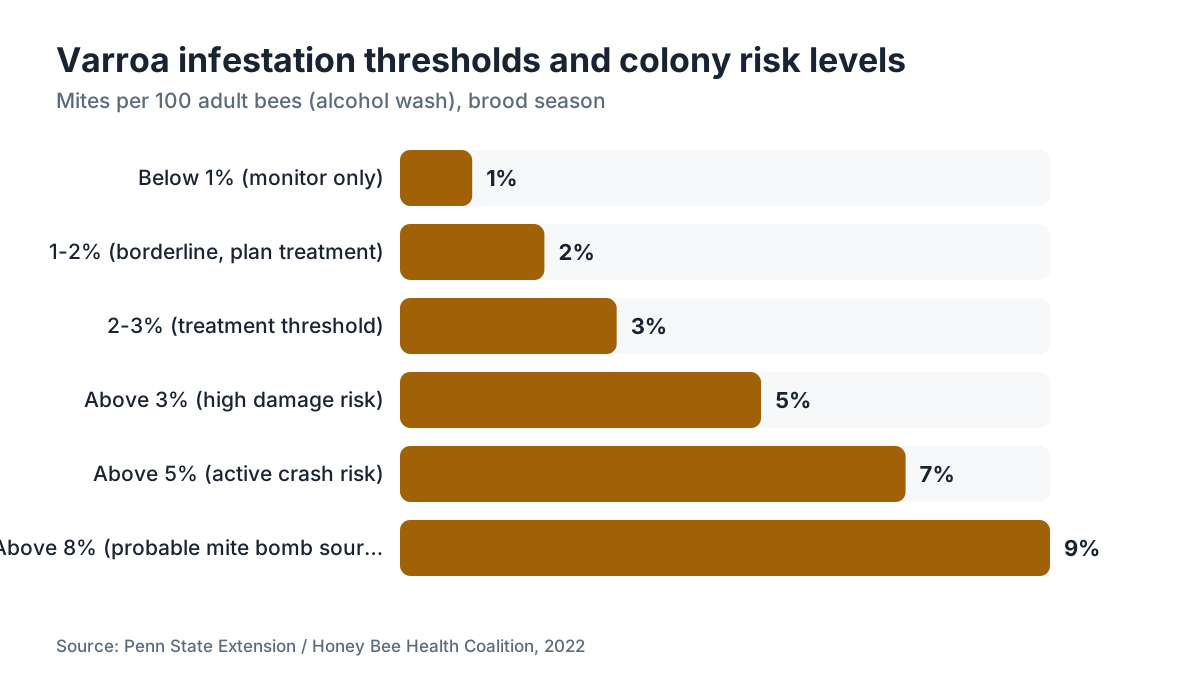
The mite levels that turn a hive into a source of reinfestation are no mystery. Research and extension consensus point to roughly 2 to 3 percent infestation (mites per 100 adult bees, by alcohol wash or sugar roll) as the point where population damage accelerates [3]. Once a colony crosses that line and keeps climbing, viral loads climb with it. Deformed wing virus disables immune function, shortens worker lifespan, and wrecks the colony's ability to raise healthy winter bees.
By the time a hive hits 5 to 6 percent in summer, it is making more mites than new bees can absorb. At 8 to 10 percent, the colony is in active crash. That crash is exactly when drift and robbing from neighbors intensify, because the failing hive is both a source of mites and a target for robbing at the same moment.
Penn State Extension recommends treating when mite levels reach 2 percent or higher during the brood-rearing season, and reports that levels above 3 percent in late summer strongly predict winter colony failure [3]. Waiting for obvious bee symptoms (crawling bees, deformed wings, a shrinking cluster) means you are already two to four weeks behind the real infestation curve.
| Mite infestation level | Colony status | Action |
|---|---|---|
| Below 1% | Acceptable, monitor | Retest in 28 days |
| 1-2% | Borderline, plan treatment | Treat soon, especially in summer |
| 2-3% | Treatment threshold | Treat now |
| Above 3% | High risk of damage | Treat immediately |
| Above 5% | Active crash risk | Treat immediately, check neighbors |
| Above 8% | Probable mite bomb source | Treatment may not save colony; protect neighbors |
Why does late summer create the worst mite bomb conditions?
Late July through September is when most mite bomb events hit in temperate North America. The timing is no accident.
Colonies build to peak population in spring and early summer, and mite populations build right alongside them. Varroa reproduces only in capped brood cells, so every round of brood the colony raises also raises another generation of mites. By mid-summer, a colony that started spring at a manageable mite level can be running 3 to 5 percent or higher.
Summer dearth arrives at the same time in many regions. When natural forage dries up, robbing pressure across the apiary spikes. A weakening high-mite hive becomes a target right when every other colony is at its most aggressive. Peak mite populations stacked on top of peak robbing pressure is what makes August and September the highest-risk window.
There's a second problem unique to late summer: the winter bees. Bees born in late summer and early fall are the ones that carry the colony to the following spring. If varroa parasitize them while they develop, they emerge with shrunken fat bodies, reduced vitellogenin, and weakened immune systems [4]. A colony hit by a mite bomb in August can look alive through October and then crash hard in December or January with no mites visible, because the damage was already done to the bees meant to survive winter.
This delayed-collapse pattern explains all those hives that "just died over winter for no reason." The reason almost always traces back to a high-mite August.
How do you know if your hive has been mite-bombed?
Honest answer: you often don't know until you test. Heavy infestation symptoms (crawling bees with shriveled wings, spotty brood, a cluster that shrank overnight) look like half a dozen other problems. Testing is the only way to separate a mite bomb from a queen failure, a disease, or pesticide exposure.
Still, patterns are worth watching. If you test clean in early summer and then test high six to eight weeks later with no other obvious cause, and especially if you know of other colonies nearby that crashed or were abandoned, reinfestation is the likely culprit.
A few field signals point to mite bomb exposure rather than slow internal buildup.
A sudden jump in mite counts between tests, 3 percentage points or more in a month, is hard to explain from internal reproduction alone. Varroa populations double roughly every four to six weeks under normal brood conditions, so a jump from 1 percent to 5 percent in 28 days almost always means outside input.
A burst of robbing at your entrance, especially when you can't identify the source colonies, is a red flag. So is a sudden appearance of deformed wing virus in large numbers when it was absent at your last inspection.
Feral colonies or non-treating hobbyists nearby are your most likely sources. A 2018 paper in PLOS ONE estimated that varroa dispersal between colonies via forager drift can reach 1.5 kilometers under field conditions, which means you don't have to share a fence line with the problem hive to catch its mites [5].
For a closer look at what varroa does to a colony at the cellular level, the varroa mite article covers the biology in detail.
What monitoring schedule actually prevents mite bomb damage?
Test every 28 days during the brood-rearing season. That's the standard from the Honey Bee Health Coalition, and it's the right cadence for a reason [1]. Varroa populations roughly double every four to six weeks when brood is present, so a 28-day interval gives you at most one doubling between tests. A 60-day interval can let a colony go from borderline to crash-level with no warning. North Carolina State University's apiculture program sets the same 28-day interval [11].
The alcohol wash beats the sugar roll on accuracy. Validation work from the University of Minnesota Bee Lab found sugar rolls undercount mites by 30 to 40 percent compared to alcohol wash on the same sample [6]. That gap matters when you're deciding whether a hive at 1.5 percent needs treatment. Use the alcohol wash. The roughly 300 bees you sacrifice are a fair price for a number you can trust.
A workable schedule for a hobbyist:
Test every hive at winter break (when broodless or near it), then again in early spring before buildup. Test every 28 days from first significant brood through September. Test in October after any fall treatment to confirm it worked. That's 5 to 7 tests per hive per year. It sounds like a lot until you lose a hive in January and realize your last data point was July.
Keep records. The single most useful thing in diagnosing a mite bomb is the trajectory of your counts over time. A spreadsheet with date, colony ID, and mite percent takes three minutes to update and can save a season.
VarroaVault's free monitoring tools let you log these counts and flag when a colony's trajectory heads toward treatment threshold, which takes the guesswork out of the calendar math.
Which treatments work after a mite bomb hits?
Treatment after a mite bomb is reactive, and reactive treatments do less than preventive ones. They're still worth doing.
Oxalic acid is the fastest option against phoretic mites. The EPA-registered dribble and vaporization methods kill mites on adult bees but do nothing to mites inside capped brood cells [7]. If the colony still holds substantial brood, one OA treatment won't clear it, because new mites keep emerging from sealed cells over the next 12 days.
For a colony with brood that just took a hard hit, a longer-acting miticide is the better call. Apiguard (thymol gel), Api Life Var (thymol-based), Formic Pro or MAQS (formic acid), and amitraz products like Apivar each carry different temperature requirements and brood-penetration profiles. Read the EPA product label before use, because application method, temperature range, and honey super restrictions vary a lot from one product to the next [7].
For a confirmed mite bomb that has pushed infestation above 5 or 6 percent in summer:
Treat right away with whatever product fits the current temperature. Pull the colony slightly away from the main apiary cluster if you can, to cut its drift contribution. Reduce the entrance to slow further robbing in both directions. Test again 28 days after treatment ends to confirm knockdown.
One approach that doesn't work: waiting to see if they bounce back on their own. High-mite colonies don't recover without help. The virus loads keep climbing even while adult mite counts bounce around.
How do you protect your apiary from other people's mite bombs?
You can't control what your neighbor does with their hives. You can control your response to that reality.
The strongest structural defense is keeping your own colonies below treatment threshold at all times, and especially through August and September. A colony at 1 percent will absorb some incoming mites from a robbing event without immediate crisis. A colony at 2.5 percent that then takes a surge of robber bees from a crashing hive can jump to 6 percent in a hurry.
Apiary layout matters more than most hobbyists think. Hives lined up in a row facing the same way have far higher drift rates than hives with varied orientations or barriers between entrances. Stagger hive positions. Use different-colored equipment. Put small visual markers at each entrance. None of it eliminates drift, but it all helps.
Entrance reducers during dearth cut robbing pressure by a real margin. A wide-open entrance during August dearth is an invitation. Reducing to a 1-inch opening funnels robbers into a bottleneck the guard bees can actually defend.
If you can know your neighbors, reach out. The beekeeper three streets over who just lost a hive may have no idea their dead colony is bombing yours. This is about information, not blame. Many areas have local beekeeping associations that track colony health, and that network is genuinely useful data.
If you're bringing in new bees or equipment, the beekeeping supply companies you buy from matter too, because packages and nucs from high-pressure apiaries can arrive already loaded.
Should you combine or requeen a mite-bombed colony?
It depends on how bad the hit was and how late the season is.
If a colony took a mite bomb in July or August and still holds 60 percent or more of its normal population, treat it, test it in 28 days, and if it drops below 2 percent it may make it to spring. If it's thin, the queen is failing, and you're already into September, the math shifts. A weak colony trying to raise winter bees while carrying a high mite load is spending resources it doesn't have.
Combining a mite-bombed colony into a healthy one, without treating first, is the wrong move. You'd import the problem straight into your good colony. Treat the affected colony, confirm a low count, then consider combining if it's still too thin for winter.
Requeening with locally adapted or mite-resistant stock is worth considering after a mite bomb, especially if the original queen's colony showed poor hygienic behavior. Some breeding programs select for VSH (Varroa Sensitive Hygiene) traits, and colonies with strong VSH hold lower mite loads even under reinfestation. The USDA-ARS Baton Rouge lab did the foundational work on VSH genetics [8].
No one should promise you that VSH queens solve the whole problem. They're a real tool. Even VSH colonies need monitoring and the occasional treatment in high-reinfestation settings.
What about feral colonies and abandoned hives as mite bomb sources?
Feral colonies and abandoned equipment are a real and underrated mite bomb risk. A feral colony in a hollow tree usually goes untreated for its whole existence. If it sits within a kilometer of your apiary, it's a live mite source through both drift and robbing.
The PLOS ONE research cited earlier found mite-carrying foragers moving up to 1.5 kilometers between colonies [5]. That's almost a mile. In suburban or semi-rural areas, that means you may have no practical way to find or control every nearby mite source.
Abandoned beekeeping equipment is the more immediate problem. Old boxes left in a barn or field with residual comb attract swarms. Those swarms often come from feral or untreated managed colonies, arrive with high mite loads, and then sit on your property as a mite reservoir. Store old equipment in sealed bags, or stack it with para-dichlorobenzene moth crystals between boxes. Never leave drawn comb exposed outdoors during swarm season.
Find an abandoned hive on your property or a neighbor's? Report it to your local extension service or state apiarist. Most state departments of agriculture have programs for handling abandoned equipment, and getting it secured or destroyed removes a mite bomb source from your immediate area.
What's the most common mistake beekeepers make that leads to mite bomb collapse?
Testing too rarely is the single biggest driver. Treating without confirming it worked is the second.
Plenty of beekeepers treat in August, decide the problem is handled, and don't test again until spring. Treatment failure is real. A field evaluation in the Journal of Apicultural Research found oxalic acid efficacy against phoretic mites topped 90 percent in broodless colonies but dropped sharply when sealed brood was present [9]. If your OA treatment landed on a colony full of brood, your count may not have fallen as far as you assume.
The third mistake is treating one hive in a shared apiary and leaving the others alone. If you treat your strongest hive but the weak split beside it still sits at 5 percent, the split's mites drift into the treated hive and refill it within weeks. The Honey Bee Health Coalition specifically recommends treating all colonies in an apiary on the same schedule to break this cycle [1].
The fourth mistake gets less airtime: not accounting for the beekeeper down the road. You can run a flawless monitoring and treatment program and still get bombed by an untreated neighborhood hive in August. Frustrating, but real. Your only defense is staying below threshold yourself, so your colonies have some resilience when the bomb lands.
To keep treatment options on the shelf instead of waiting on a slow box when counts spike, the free shipping honey bee supply companies article can help you stock ahead.
How do you rebuild after a mite bomb collapse?
When a colony fully collapses from mite bomb damage, you face two problems at once: the equipment may still be contaminated, and the crash will pull robber bees from the rest of your apiary.
Close the dead hive right away. A dead colony with exposed honey and comb is a strong robbing stimulus that funnels mites from any surviving bees straight into your healthy colonies. Seal the entrance, wrap the hive if you need to, and move it away from the main apiary until you can process the equipment.
Don't introduce new bees into equipment from a crashed high-mite hive without treating it first. Mites survive on comb for a short window without bees, and phoretic mites clinging to dead or dying bees in the cluster can move onto bees you introduce. Freeze drawn comb for 24 to 48 hours at 0 degrees F (minus 18 C) to kill any survivors before reuse [10]. Or render the comb for wax and start on fresh foundation.
For the rest of your apiary, test every surviving hive immediately. You want a baseline after the contamination event and before you treat, so you can tell whether treatment actually worked. Treat any colony above 2 percent. Write it all down.
Rebuilding from scratch, whether from a nuc, a package, or a split off a healthy hive, is often smarter than nursing a badly depleted remnant. A healthy nuc in May will usually outrun a mite-bombed remnant that limps through summer.
Frequently asked questions
How fast can a mite bomb raise infestation levels in a healthy hive?
Under heavy robbing or drift pressure from a collapsing colony, a hive can go from below 2 percent to above 8 percent infestation in three to four weeks. The varroa on incoming bees are phoretic, so they're immediately ready to enter brood cells in the receiving hive, and reinfestation accelerates once it starts. This is why monthly testing is the minimum, not the maximum, recommended frequency.
Can a mite bomb come from my own hives, more than neighbors?
Absolutely. Your own untreated splits, nucs you never tested, or colonies you fell behind on are among the most common internal sources. In an apiary of six hives, one high-mite colony can steadily raise mite levels in all the others through drift alone. Treating every colony on the same schedule, instead of only the ones that tested high, is the fix.
What is the treatment threshold for varroa before a mite bomb risk becomes serious?
Penn State Extension and the Honey Bee Health Coalition both set the treatment threshold at 2 percent infestation (mites per 100 bees) during the brood season. Above 3 percent in late summer, winter failure risk rises sharply. Above 5 percent, the colony is at active crash risk and can become a mite bomb source. At 8 percent or higher, neighboring colonies are almost certainly already affected.
Does oxalic acid stop a mite bomb?
Oxalic acid kills phoretic mites on adult bees with efficacy above 90 percent in broodless colonies. It does nothing to mites inside capped brood. If your colony has brood, one OA treatment won't break the cycle, because mites keep emerging from sealed cells for up to 12 days afterward. For colonies with brood, use a longer-acting miticide or multiple OA treatments timed to the brood cycle.
How far away does a collapsing hive have to be to pose a mite bomb risk?
Field research in PLOS ONE found varroa dispersal between colonies via drifting foragers at distances up to 1.5 kilometers (about 0.9 miles). In practice the risk peaks within a few hundred meters, but suburban and rural apiaries with feral colonies or neighboring hobbyist hives within a kilometer are meaningfully exposed. Physical distance alone won't protect you.
How do I tell the difference between internal mite buildup and external mite bomb reinfestation?
Watch the rate of increase. Varroa populations double roughly every four to six weeks from internal reproduction. If your count jumps more than 3 percentage points in 28 days, especially right after a clean test, that outpaces normal internal reproduction and points to outside input. A sudden flood of deformed wing virus symptoms is another sign of rapid recent infestation.
Is it safe to reuse comb from a mite-collapsed hive?
Yes, but only after treating the comb. Freeze drawn comb for 24 to 48 hours at 0 degrees F (minus 18 C) to kill any surviving mites. Old dark comb from a repeatedly mite-bombed colony is probably worth melting down anyway, both to clear disease risk and because old comb builds up chemical residues over time. Fresh foundation in reused boxes is the safer rebuild.
Should I tell my neighbor their hive might be a mite bomb?
Yes, and do it without blame. Most hobbyists with a mite bomb situation have no idea. A simple conversation about shared varroa pressure helps both of you. Offer to show them an alcohol wash if they've never tested. Local beekeeping associations sometimes run group monitoring and treatment programs built around exactly this shared-apiary risk. The conversation is worth having.
Can entrance reducers prevent mite bomb reinfestation?
Entrance reducers cut robbing pressure, one of the two main transfer routes (the other is drift). They won't stop drift, but narrowing a full entrance to a 1-inch opening during late summer dearth sharply limits how many robber bees can get in, which limits mite transfer. Pair entrance reduction with hive spacing and varied entrance orientation for the best combined effect.
Do VSH or hygienic queens prevent mite bomb collapse?
VSH (Varroa Sensitive Hygiene) queens produce colonies that remove mite-infested pupae more efficiently, which helps suppress internal buildup. They don't stop incoming mites from drifting bees. A VSH colony in a high-reinfestation setting still needs monitoring and occasional treatment. The advantage is that mite populations have a harder time exploding internally, which buys you time to catch reinfestation before it turns critical.
How do I monitor for mite bombs if I have only a few hives?
Alcohol wash every 28 days per hive during the brood season, regardless of apiary size. With two or three hives, a round takes under an hour. The key is not skipping tests from June through September, when both mite reproduction and robbing pressure peak. One missed August test is often where the story of a January collapse begins. Keep a simple log of date, hive ID, and mite percent.
Can a mite bomb cause colony collapse even after I've already treated?
Yes, and it's one of the most frustrating scenarios in varroa management. You treat in July, confirm efficacy in August, then in September a neighbor's colony crashes and floods yours through robbing. The treatment's residual effect may have expired, or the incoming mite load may swamp whatever active ingredient is left. Post-treatment monitoring every 28 days is non-negotiable for exactly this reason.
What time of year is the highest risk for mite bomb events?
Late July through September in temperate North America. This window stacks peak cumulative mite populations (after a full summer of reproduction in brood), summer dearth that drives robbing, and the start of winter bee production, which makes any mite damage now especially costly to survival. Most unexplained winter losses trace back to a high-mite August or September that testing missed.
Sources
- Honey Bee Health Coalition, Varroa Management Guide (2022 edition): Reinfestation from nearby collapsing colonies is one of the leading reasons treatments fail; treating all colonies in an apiary on the same schedule is recommended to break the reinfestation cycle.
- Apidologie (Springer), research on drifting and robbing as sources of varroa reinfestation: Drift rates between adjacent hives can run 5 to 30 percent of returning foragers under some conditions, transferring phoretic mites between colonies.
- Penn State Extension, Varroa Management in Honey Bee Colonies: Treating when mite levels reach 2 percent or higher during the brood-rearing season is recommended; levels above 3 percent in late summer strongly predict winter colony failure.
- Journal of Insect Physiology (Elsevier), research on varroa effects on vitellogenin and fat body reserves in winter bees: Bees parasitized by varroa during late summer development emerge with reduced vitellogenin and compromised immune systems, threatening winter survival even after mites are no longer measurable.
- PLOS ONE (2018), field study on dispersal of Varroa destructor between honey bee colonies: Varroa dispersal between colonies via forager drift can extend up to 1.5 kilometers under field conditions.
- University of Minnesota Extension, Bee Lab varroa monitoring method comparison: Sugar rolls undercount mites by 30 to 40 percent compared to alcohol wash on the same sample, making alcohol wash the more accurate monitoring method.
- U.S. EPA, Pesticide Registration and product label resources for oxalic acid and other varroacides: Oxalic acid dribble or vaporization is EPA-registered for varroa but has no effect on mites inside capped brood cells; temperature ranges and honey super restrictions vary by product.
- USDA-ARS Honey Bee Breeding, Genetics, and Physiology Research Unit, Baton Rouge (VSH program): USDA-ARS Baton Rouge did foundational work on Varroa Sensitive Hygiene (VSH) genetics in honey bee breeding programs.
- Journal of Apicultural Research (Taylor & Francis), oxalic acid efficacy field evaluation with and without brood: Oxalic acid efficacy against phoretic mites exceeded 90 percent in broodless colonies but dropped significantly in colonies with sealed brood present.
- University of Florida IFAS Extension (EDIS), Varroa Mite Management in Honey Bee Colonies: Freezing drawn comb at 0 degrees F (minus 18 C) for 24 to 48 hours kills varroa mites remaining in equipment from collapsed colonies.
- North Carolina State University Extension, apiculture and varroa mite resources: Monitoring every 28 days during the brood-rearing season is the recommended cadence to stay within one mite-population doubling between tests.
Last updated 2026-07-09