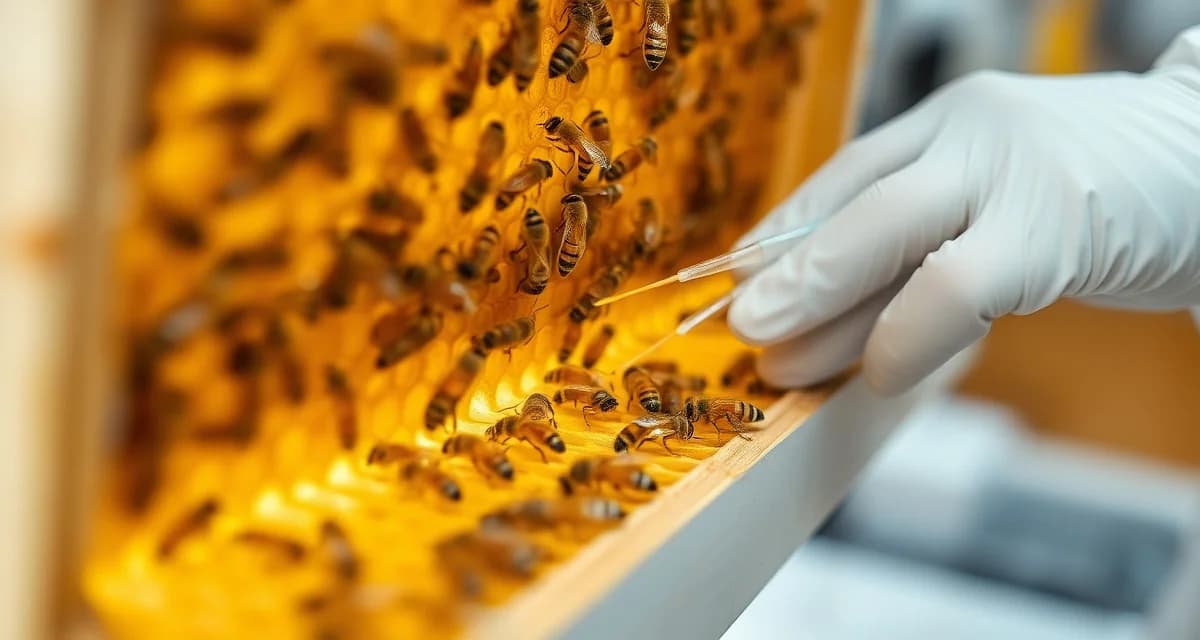
What Varroa Treatments Actually Work in 2026: Evidence-Based Rankings
oxalic acid vaporization ranks highest for overall safety, resistance profile, and efficacy when applied correctly. That's the 2026 picture from published research and resistance monitoring data. But "highest overall" doesn't mean "best for every situation," and every other treatment has a role in a well-designed rotation.
Here's the honest ranking with the context that makes it useful.
TL;DR
- Treatment decisions should always be triggered by a mite count result, not a fixed calendar date
- Different treatments have different temperature requirements, PHI restrictions, and brood penetration capabilities
- Always run a post-treatment count 2-4 weeks after treatment ends to calculate efficacy
- Efficacy below 80% warrants investigation -- possible resistance, application error, or reinfestation
- Rotate treatment chemistry to prevent resistance buildup across successive cycles
- VarroaVault logs treatment events, calculates efficacy, and flags when rotation is recommended
How We're Defining "Works"
Four dimensions matter for treatment decisions:
- Efficacy: The percentage mite reduction achievable under proper application conditions.
- Safety: Risk to bees, brood, and honey quality.
- Resistance profile: Current resistance prevalence in US varroa populations.
- Practical usability: Temperature requirements, application complexity, time requirements.
No single product scores highest in every dimension. The right treatment for your situation depends on which factors matter most right now.
Ranking the Seven Registered US Varroa Treatments
1. Oxalic Acid Vaporization (Api-Bioxal)
Efficacy: 90-97% when applied as extended protocol (3-5 applications, 5-7 days apart). This is achievable whether brood is present or not.
Safety: Lowest safety concern of any registered product. Minimal wax residue. Minimal honey residue when used per label. No honey super restrictions per current label (verify with current label).
Resistance profile: No documented resistance in US varroa populations. The mechanism of action (contact toxicity, essentially burning the mite) makes genetic resistance much more difficult to develop than receptor-based mechanisms.
Practical notes: Requires an OA vaporizer and appropriate PPE (N100 respirator, goggles). Extended protocol requires multiple visits 5-7 days apart.
2026 ranking: Best overall choice where equipment is available.
2. Amitraz - Apivar
Efficacy: 95%+ in amitraz-susceptible populations. Best single-treatment efficacy of any registered product when mites are susceptible.
Safety: Amitraz accumulates in beeswax at detectable levels. Supers must be removed during treatment. Used correctly per label, residue in honey stays within tolerance levels.
Resistance profile: Resistance documented in parts of New England, New York, Southeast. Still susceptible in most US regions. Efficacy monitoring is essential; declining efficacy from 95% to 75-80% is a resistance signal in your area.
Practical notes: No temperature restriction. Easy application (two strips per hive). 42-56 day treatment period requires strip removal follow-up.
2026 ranking: Best choice for operations without resistance concerns and where temperature conditions limit organic treatments.
3. Formic Acid - Formic Pro
Efficacy: 85-95% when applied within temperature range. Unique advantage: penetrates capped brood, killing mites in the reproductive phase.
Safety: Moderate concern. Can cause brood loss if temperatures exceed 85°F or if queen is laying on few frames. Requires supers-on management per label.
Resistance profile: No documented resistance. Mode of action makes resistance development unlikely.
Practical notes: Temperature window 50-85°F. 14-day treatment. Can be used with supers on per label.
2026 ranking: Best choice for late summer post-harvest treatment when temperatures are appropriate.
4. Formic Acid - MAQS
Efficacy: 90-95% when applied correctly in temperature range. Same brood-penetrating advantage as Formic Pro.
Safety: Slightly higher bee stress risk than Formic Pro due to faster release rate. Same restrictions.
Resistance profile: No documented resistance.
Practical notes: 7-day treatment. Can be used with supers on per label. Temperature window 50-85°F.
2026 ranking: Best choice for operations preferring 7-day treatment completion over Formic Pro's 14-day period.
5. Oxalic Acid Dribble (Api-Bioxal)
Efficacy: 95-97% in confirmed broodless colony. As low as 40-50% when brood is present. The most condition-dependent of all registered treatments.
Safety: Lowest safety concern. No wax accumulation. No honey residue concerns.
Resistance profile: No documented resistance.
Practical notes: No special equipment required. Single application per broodless period. Best winter treatment tool.
2026 ranking: Best choice for winter broodless period treatment. Not recommended as primary treatment when brood is present.
6. Thymol - Apiguard
Efficacy: 74-87% with complete two-dose protocol. Lower than OA and formic treatments but meaningful.
Safety: No wax accumulation. Approved under USDA NOP. Must have supers removed. Can cause bee agitation.
Resistance profile: No documented resistance.
Practical notes: 28-day treatment (two doses 14 days apart). Requires above 59°F. Must complete before cold weather.
2026 ranking: Best choice for organic certification operations rotating away from OA. Useful where amitraz resistance is present.
7. Hop Beta Acids - HopGuard III
Efficacy: 50-80% depending on application conditions and brood status. Most variable of the registered treatments.
Safety: Very low. Can be used with supers on. USDA NOP approved.
Resistance profile: No documented resistance.
Practical notes: Can be used with supers on. Lower efficacy and higher variability than other options.
2026 ranking: Best used as a supplemental treatment during honey flow when options are limited. Not recommended as a primary control treatment.
Building a Rotation From the Rankings
The most effective rotation uses:
- OA vaporization or dribble as the year-round backbone (no resistance, excellent safety)
- Formic acid (MAQS or Formic Pro) for penetrating brood during the critical late-summer window
- Apivar strategically (every 2-3 years) for its high single-treatment efficacy
- Thymol in organic operations as the synthetic alternative
Frequently Asked Questions
Which varroa treatment has the highest efficacy?
Amitraz (Apivar) achieves the highest single-treatment efficacy at 95%+ in susceptible populations. OA extended vaporization achieves 90-97% with multiple applications. The practical difference is minimal when both are applied correctly; Apivar does it in one step and OA does it in 3-5 steps.
Which treatment is safest for bees and honey?
Oxalic acid (both dribble and vaporization) has the lowest safety concern for bees and the lowest honey residue concern. No wax accumulation, minimal honey residue when used per label, and no documented resistance make it the top choice for beekeepers prioritizing safety and long-term efficacy.
Which varroa treatments are becoming less effective due to resistance?
Tau-fluvalinate (Apistan) has widespread resistance and is largely ineffective in most US regions. Amitraz (Apivar) resistance is emerging in New England, New York, and parts of the Southeast. Oxalic acid, formic acid, and thymol have no documented resistance as of 2026.
How do I know if my varroa treatment is working?
Run a mite count 2-4 weeks after the treatment ends and compare it to your pre-treatment count. The efficacy formula is: ((pre-count - post-count) / pre-count) x 100. A result above 90% indicates effective treatment. Results below 80% should trigger investigation for possible resistance, application error, or reinfestation. Log both counts in VarroaVault to track efficacy trends across treatment cycles.
How often should I check mite levels in my hives?
At minimum, once per month (every 3-4 weeks) during the active season. Increase to every 2 weeks when counts are near threshold or after a treatment to verify it worked. In fall, monitoring frequency matters most because the window to treat before winter bees are raised is narrow. VarroaVault's monitoring reminders can be set to your preferred interval for each apiary.
What records should I keep for varroa management?
Each record should include: date of count or treatment, hive identifier, monitoring method used, number of bees sampled, mites counted, infestation percentage, treatment product name and EPA registration number, dose applied, treatment start and end dates, and PHI end date. State apiarists typically expect this level of detail during inspections. VarroaVault captures all of these fields in a single log entry.
What is What Varroa Treatments Actually Work in 2026: Evidence-Based Rankings?
"What Varroa Treatments Actually Work in 2026: Evidence-Based Rankings" is a research-backed guide that evaluates and ranks the most common varroa mite treatments available to beekeepers. It scores each option across four dimensions—efficacy, safety, resistance profile, and application practicality—drawing on published research and current resistance monitoring data. Oxalic acid vaporization ranks highest overall, though the guide explains why no single treatment is best for every situation and why rotation matters.
How much does What Varroa Treatments Actually Work in 2026: Evidence-Based Rankings cost?
The article is free to read on VarroaVault. There is no cost to access the rankings or the supporting treatment guides. VarroaVault does offer tools to log treatment events, calculate post-treatment efficacy, and flag when chemistry rotation is recommended—features available through the platform. The evidence-based rankings themselves are publicly accessible as an educational resource for beekeepers at any experience level.
How does What Varroa Treatments Actually Work in 2026: Evidence-Based Rankings work?
The guide works by evaluating each varroa treatment against a consistent four-part framework: how well it reduces mite loads under proper conditions, how safe it is for bees and brood, whether resistance has been documented, and how practical it is to apply correctly. Treatments are then ranked with context—temperature requirements, pre-harvest intervals, and brood penetration differences—so beekeepers can match the right option to their specific situation rather than defaulting to a one-size-fits-all choice.
What are the benefits of What Varroa Treatments Actually Work in 2026: Evidence-Based Rankings?
The guide helps beekeepers make faster, better-informed treatment decisions grounded in current evidence rather than habit or marketing claims. It clarifies which treatments carry resistance risk, which require specific temperature windows, and why rotating chemistry matters across successive treatment cycles. It also establishes a clear efficacy threshold—80% mite reduction—so beekeepers know when a result warrants investigation for resistance, application error, or reinfestation rather than assuming the treatment worked.
Who needs What Varroa Treatments Actually Work in 2026: Evidence-Based Rankings?
Any beekeeper who manages varroa will benefit from this guide, from backyard hobbyists to commercial operators. It is especially useful for those who have experienced treatment failures, are seeing efficacy decline, or want to build a defensible rotation plan. Beekeepers entering a new season, mentors teaching new apiarists, and anyone whose current treatment protocol was set years ago without revisiting the evidence will find the 2026 rankings particularly relevant.
Related Articles
- EPA Registration for Varroa Treatments: How It Works and Why It Matters
- National Varroa Management Program Recommendations: USDA 2026 Update
Sources
- American Beekeeping Federation (ABF)
- USDA ARS Bee Research Laboratory
- Honey Bee Health Coalition
- Penn State Extension Apiculture Program
- Project Apis m.
Get Started with VarroaVault
The information in this guide is most useful when you have your own mite count data to apply it to. VarroaVault stores every count, flags threshold crossings automatically, and builds the treatment history you need for state inspections and effective management decisions. See pricing and free tools at varroavault.com.