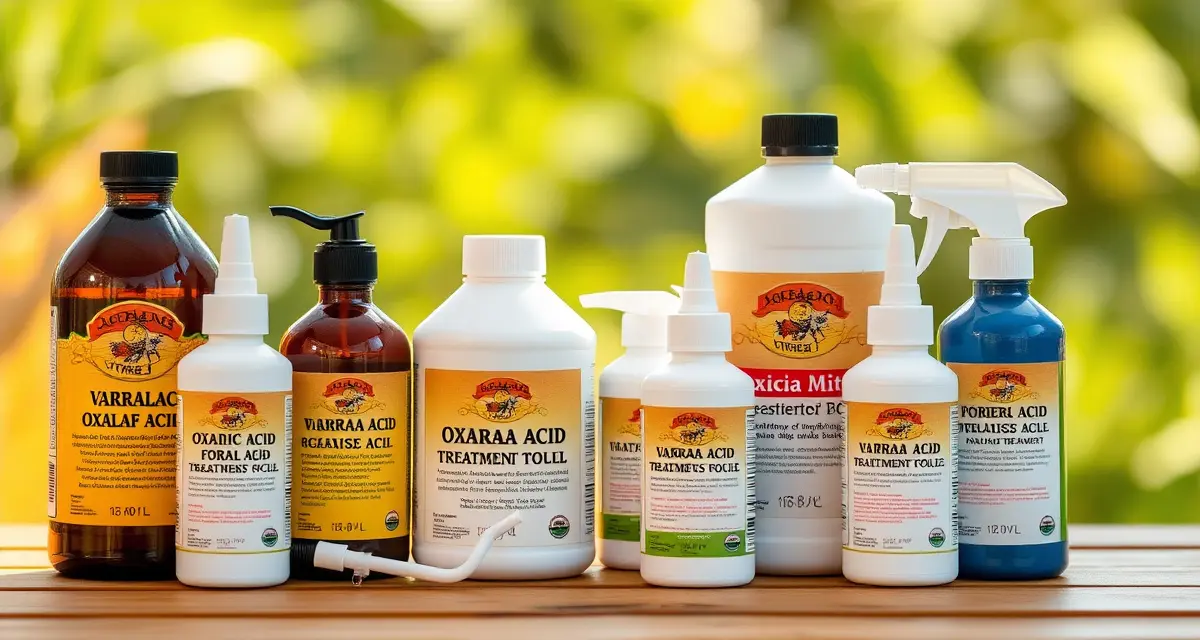
Varroa Treatment Glossary: Every Product Name, Active Ingredient, and Mode of Action
If you've ever stood in a beekeeping supply store confused about whether MAQS and Formic Pro are the same thing, or wondered what the difference is between Api-Bioxal and generic oxalic acid, this glossary is for you. There are currently 9 EPA-registered products for varroa mite control in the United States across 5 active ingredient classes. Knowing what each one does, how it works, and where its limitations lie makes you a better decision-maker at every treatment event.
The product glossary in VarroaVault's treatment log ensures you always select the correct registered product for your records -- which matters because state inspectors check product names and EPA registration numbers against their compliance databases.
TL;DR
- Varroa management involves specific terminology: PHI, efficacy rate, phoretic mites, VSH, IPM, and more
- Efficacy rate is calculated as: ((pre-treatment count - post-treatment count) / pre-treatment count) x 100
- Phoretic mites are those on adult bees (not in brood); only phoretic mites are killed by most treatments
- PHI (pre-harvest interval) is the required gap between treatment end and honey super addition
- VSH (varroa-sensitive hygiene) is a heritable bee trait that suppresses mite reproduction in brood cells
- VarroaVault uses standard industry terminology aligned with HBHC and USDA guidelines
The 5 Active Ingredient Classes
Understanding the active ingredients helps you plan rotation and recognize when resistance may be developing. Products within the same class share cross-resistance risk, so rotating between classes -- not just between product names -- is what resistance management actually requires.
Oxalic Acid (OA) -- Kills phoretic mites on adult bees through direct contact. Does not penetrate capped brood. Effective 90%+ on broodless colonies. Available as dribble or vaporization methods.
Formic Acid -- Kills both phoretic mites and mites inside capped brood cells. The only treatment that penetrates capped brood. Requires specific temperature windows (50-85°F). Strong fumigant action.
Amitraz -- Synthetic acaricide. Disrupts the octopamine nervous system in mites. Active for 42-56 days via slow-release strips. Most effective on brood-present colonies during active season.
Coumaphos -- Synthetic organophosphate. Highly effective but carries significant resistance risk due to widespread historical use. Limited use cases in modern integrated management.
Thymol -- Essential oil derived from thyme. Fumigant action. Effective in moderate temperatures (59-69°F optimal). Two commercial formulations available.
Complete Product Listing
Api-Bioxal (Oxalic Acid Dihydrate)
Active ingredient: Oxalic acid dihydrate (5.7% concentrate)
EPA registration number: 87806-1
Manufacturer: Véto-pharma / distributed by multiple suppliers
Mode of action: Contact toxicity to phoretic mites via direct acid exposure
PHI: 0 days (no withholding period)
Application methods: Dribble (broodless colonies only), vaporization (brood or broodless)
Key limitation: Dribble method ineffective when brood is present; vaporization protocol requires repeated treatments 5 days apart when brood is present
Api-Bioxal received full EPA label approval in 2015, making it the first new organic varroa treatment registered in the US in a decade. It's the only oxalic acid product with a full EPA label for use in the US.
Apivar (Amitraz)
Active ingredient: Amitraz 3.3%
EPA registration number: 64771-2
Manufacturer: Véto-pharma
Mode of action: Synthetic acaricide; disrupts octopamine receptors in mites causing detachment and death
PHI: 14 days after strip removal (strips must be removed before supers go on)
Application: Two strips per brood box for 42-56 days
Key limitation: Must be removed before honey supers; resistance documented in some regions
Apivar is the gold standard synthetic treatment and the most forgiving to apply correctly. The 42-56 day treatment period covers multiple mite reproductive cycles and achieves 90%+ efficacy when timing is correct. The amitraz treatment guide has full application details.
Apistan (Tau-Fluvalinate)
Active ingredient: Tau-fluvalinate 10%
EPA registration number: 11556-101
Manufacturer: Elanco Animal Health
Mode of action: Synthetic pyrethroid; disrupts sodium channels in mite nervous system
PHI: 30 days after strip removal
Application: Two strips per colony for 42-56 days
Key limitation: Widespread resistance documented across the US; efficacy has declined significantly in many regions. Only recommended in areas with confirmed low resistance levels.
CheckMite+ (Coumaphos)
Active ingredient: Coumaphos 10%
EPA registration number: 432-1362
Manufacturer: Bayer Animal Health
Mode of action: Organophosphate; inhibits acetylcholinesterase in mites
PHI: Must be removed before supers; follow label carefully
Application: Two strips per colony for 42 days
Key limitation: Coumaphos residue persists in wax for years. Resistance well-documented. Not recommended as a primary treatment in most integrated management programs. Use is restricted in some states.
MAQS (Mite Away Quick Strips -- Formic Acid)
Active ingredient: Formic acid 68.2%
EPA registration number: 83923-1
Manufacturer: NOD Apiary Products
Mode of action: Fumigant; penetrates capped brood cells to kill mites in reproductive stage
PHI: 0 days (can be used with supers on if temperature conditions are met)
Temperature range: 50-85°F; do not apply above 85°F
Application: 2 strips placed on top bars; 7-day treatment
Key limitation: Can cause brood loss and queen injury at higher temperatures; strong odor; 7-day treatment period
Formic Pro (Formic Acid)
Active ingredient: Formic acid 46.7% (lower concentration than MAQS)
EPA registration number: 83923-4
Manufacturer: NOD Apiary Products
Mode of action: Same as MAQS; fumigant with brood penetration
PHI: 0 days with supers on
Temperature range: 50-79°F
Application: 2 pads on top bars; 10-day treatment (lower temperature allows longer application)
Key limitation: Temperature restrictions are strict; slower release reduces brood damage risk compared to MAQS but extends treatment duration
Formic Pro and MAQS use the same active ingredient at different concentrations and release rates. Formic Pro's lower concentration makes it safer for use in moderate temperatures but extends the treatment window. The formic acid varroa treatment guide covers when to choose one over the other.
Apiguard (Thymol)
Active ingredient: Thymol 25% in slow-release gel
EPA registration number: 67517-5
Manufacturer: Vita (Europe)
Mode of action: Essential oil fumigant; disrupts mite nervous system through vapor contact
PHI: 2 weeks after second tray removed, or follow label for honey super timing
Temperature range: 59-69°F optimal; reduced efficacy below 59°F
Application: Two 25g gel trays, applied 2 weeks apart
Key limitation: Temperature dependent; ineffective in cold weather. Strong odor. Can repel bees from hive if applied incorrectly.
ApiLife VAR (Thymol Blend)
Active ingredient: Thymol 74.1%, eucalyptol, L-menthol, camphor
EPA registration number: 67517-9
Manufacturer: Vita (Europe)
Mode of action: Multi-component essential oil fumigant
PHI: Follow label; remove before honey flow
Temperature range: 64-69°F optimal
Application: Wafer tabs placed in corners of hive over multiple applications
Key limitation: Stricter temperature requirements than Apiguard; variable efficacy at temperature extremes
HopGuard 3 (Hop Beta Acids)
Active ingredient: Potassium salts of hop beta acids
EPA registration number: 84449-3
Manufacturer: BetaTec Hop Products
Mode of action: Contact irritant; causes mites to detach from bees
PHI: 0 days (approved for use with supers)
Application: Strips on top bars; can be used during honey flow
Key limitation: Lower efficacy than most other treatments; typically achieves 50-70% reduction. Most useful as a supplemental or broodless-period treatment. Some states have restrictions on use with supers.
Using This Glossary in VarroaVault
When you log a treatment in VarroaVault, the product glossary is embedded in the treatment entry form. Selecting a product name auto-fills the EPA registration number, active ingredient class, and standard dose. This prevents the most common compliance error -- logging a treatment without the registration number -- and helps you track which active ingredient class you've used each season for rotation planning.
For a full analysis of which products work best under different conditions, see the complete varroa treatment comparison.
Frequently Asked Questions
What is the active ingredient in Apivar?
Apivar contains amitraz at 3.3% concentration, delivered via slow-release plastic strips. Amitraz is a synthetic acaricide that works by disrupting octopamine receptors in varroa mites, causing them to detach from their host bees and die. It's in the formamidine class of acaricides and is distinct from the pyrethroids (Apistan), organophosphates (CheckMite+), and organic acids (MAQS, Formic Pro, Api-Bioxal) used in other treatment classes.
What is the difference between MAQS and Formic Pro?
Both MAQS and Formic Pro use formic acid as their active ingredient and work by the same mechanism -- they're fumigants that penetrate capped brood cells to kill mites in the reproductive stage. The key differences are concentration and temperature range. MAQS contains 68.2% formic acid and is applied over 7 days; Formic Pro contains 46.7% and is applied over 10 days. Formic Pro's lower concentration means a stricter upper temperature limit (79°F versus 85°F for MAQS) but reduces brood and queen injury risk. Most beekeepers prefer Formic Pro in moderate climates and MAQS when the treatment window is short.
Does VarroaVault include all registered varroa treatment products?
Yes. VarroaVault's treatment log includes all 9 currently EPA-registered varroa treatment products across the 5 active ingredient classes. The product list is updated when new registrations or label amendments are issued by the EPA. Each product entry includes the EPA registration number, active ingredient, and standard dose, which pre-fills when you select the product during log entry.
How do I know if my varroa treatment is working?
Run a mite count 2-4 weeks after the treatment ends and compare it to your pre-treatment count. The efficacy formula is: ((pre-count - post-count) / pre-count) x 100. A result above 90% indicates effective treatment. Results below 80% should trigger investigation for possible resistance, application error, or reinfestation. Log both counts in VarroaVault to track efficacy trends across treatment cycles.
How often should I check mite levels in my hives?
At minimum, once per month (every 3-4 weeks) during the active season. Increase to every 2 weeks when counts are near threshold or after a treatment to verify it worked. In fall, monitoring frequency matters most because the window to treat before winter bees are raised is narrow. VarroaVault's monitoring reminders can be set to your preferred interval for each apiary.
What records should I keep for varroa management?
Each record should include: date of count or treatment, hive identifier, monitoring method used, number of bees sampled, mites counted, infestation percentage, treatment product name and EPA registration number, dose applied, treatment start and end dates, and PHI end date. State apiarists typically expect this level of detail during inspections. VarroaVault captures all of these fields in a single log entry.
What is Varroa Treatment Glossary: Every Product Name, Active Ingredient, and Mode of Action?
This glossary is a comprehensive reference covering all 9 EPA-registered varroa mite treatments available in the United States, organized by product name, active ingredient, and mode of action. It explains key terminology including PHI, efficacy rate, phoretic mites, VSH, and IPM. Whether you're distinguishing MAQS from Formic Pro or comparing Api-Bioxal to generic oxalic acid, this resource clarifies what each product contains, how it kills mites, and where its limitations apply in a real hive management context.
How much does Varroa Treatment Glossary: Every Product Name, Active Ingredient, and Mode of Action cost?
This glossary is free educational content published on VarroaVault. There is no cost to read or reference it. VarroaVault also offers a treatment log tool that integrates product names and EPA registration numbers to help beekeepers maintain compliance records — that software may have its own pricing — but the glossary itself is freely accessible to anyone managing varroa in their colonies.
How does Varroa Treatment Glossary: Every Product Name, Active Ingredient, and Mode of Action work?
The glossary works by organizing varroa treatments into five active ingredient classes and mapping each registered product name to its chemistry and biological mechanism. For each treatment, it explains how the active ingredient interacts with mites, what life stages it targets, and what conditions affect performance. It also defines the core metrics beekeepers use to evaluate results, including the efficacy rate formula: ((pre-treatment count minus post-treatment count) divided by pre-treatment count) multiplied by 100.
What are the benefits of Varroa Treatment Glossary: Every Product Name, Active Ingredient, and Mode of Action?
Using this glossary helps beekeepers make faster, more informed treatment decisions instead of relying on guesswork at the supply store. It supports regulatory compliance by clarifying which product names and EPA registration numbers state inspectors verify against compliance databases. It also reduces application errors by explaining mode of action and limitations for each treatment class, so beekeepers understand why timing, temperature, and brood state affect whether a given product will actually work.
Who needs Varroa Treatment Glossary: Every Product Name, Active Ingredient, and Mode of Action?
Any beekeeper managing colonies with varroa mite pressure will benefit from this glossary, from hobbyists confused by brand name overlap to experienced beekeepers who want a reliable compliance reference. It is especially useful for those keeping treatment records, preparing for state inspections, or making IPM decisions across multiple hives. Beekeeping instructors and club educators will also find it useful as a structured teaching reference when introducing new beekeepers to integrated pest management.
Sources
- American Beekeeping Federation (ABF)
- USDA ARS Bee Research Laboratory
- Honey Bee Health Coalition
- Penn State Extension Apiculture Program
- Project Apis m.
Get Started with VarroaVault
The information in this guide is most useful when you have your own mite count data to apply it to. VarroaVault stores every count, flags threshold crossings automatically, and builds the treatment history you need for state inspections and effective management decisions. See pricing and free tools at varroavault.com.