Natural varroa mite control: what actually works in your hive
TL;DR
- Natural varroa control includes oxalic acid (up to 99% efficacy in broodless colonies), formic acid, thymol products, physical methods like drone comb removal, and breeding for mite-resistant stock.
- None of it requires synthetic acaricides.
- Each option works best when matched to the season, your colony's brood status, and your measured mite load.
What counts as 'natural' varroa control, and does the label matter?
Natural and organic varroa control mean treatments made from naturally occurring compounds instead of synthetic pesticides. That covers oxalic acid, formic acid, thymol, hop beta acids, and physical or genetic methods like drone comb removal and mite-tolerant breeding. Several of these are still registered pesticides with EPA labels you have to follow by law. Natural does not mean unregulated. It does not mean gentle on bees if you misapply it.
The distinction matters for two reasons. Synthetic acaricides like fluvalinate and coumaphos leave residues in wax that build up over years and show sublethal effects on queens and drones [1]. And varroa has developed resistance to both of those synthetics across many North American apiaries [2]. Natural acids and thymol work through physical or biochemical mechanisms a mite has a much harder time evolving around.
Still, natural is not a magic word. An oxalic acid vaporizer pointed at a packed colony on a hot day can kill bees. Formic acid applied above 85F can push a queen to stop laying or kill her outright. The question was never whether a product is natural. It's whether you're using it correctly, at the right time, for your actual mite load.
How bad is your mite problem, and how do you know?
You can't manage what you haven't measured. The Honey Bee Health Coalition's Varroa Management Guide, now in its third edition, sets an action threshold of 2 mites per 100 bees (2%) for most of the year, dropping to 1% in late summer when colonies raise the winter bees that have to survive until spring [3]. Cross the threshold and you treat. Below it, you keep watching.
Alcohol wash is the most accurate field method. Take a roughly 300-bee sample from the brood nest, wash with isopropyl alcohol or soapy water, count the mites, divide by bees, multiply by 100. A sugar roll gives similar results and returns live bees, though some studies show it undercounts by 20 to 30% compared to alcohol wash [9]. Sticky boards under a screened bottom board tell you relative trends, not actual infestation rates, and researchers don't recommend them as your primary tool.
Monitor at least every 30 days during the active season. Always monitor before you decide a natural treatment worked. A count that dropped from 4% to 0.8% was a success. A count that dropped from 4% to 2.2% was a failure, and you owe that colony a follow-up.
Does oxalic acid work, and how do you apply it correctly?
Oxalic acid is an organic acid found in rhubarb, spinach, and dozens of other plants. Since 2015 it has been EPA-registered for honey bee colonies under the product name Api-Bioxal [4]. That registration matters. Using raw oxalic acid crystals from a hardware store is an unregistered pesticide application and can create legal problems, so stick with Api-Bioxal and follow the label.
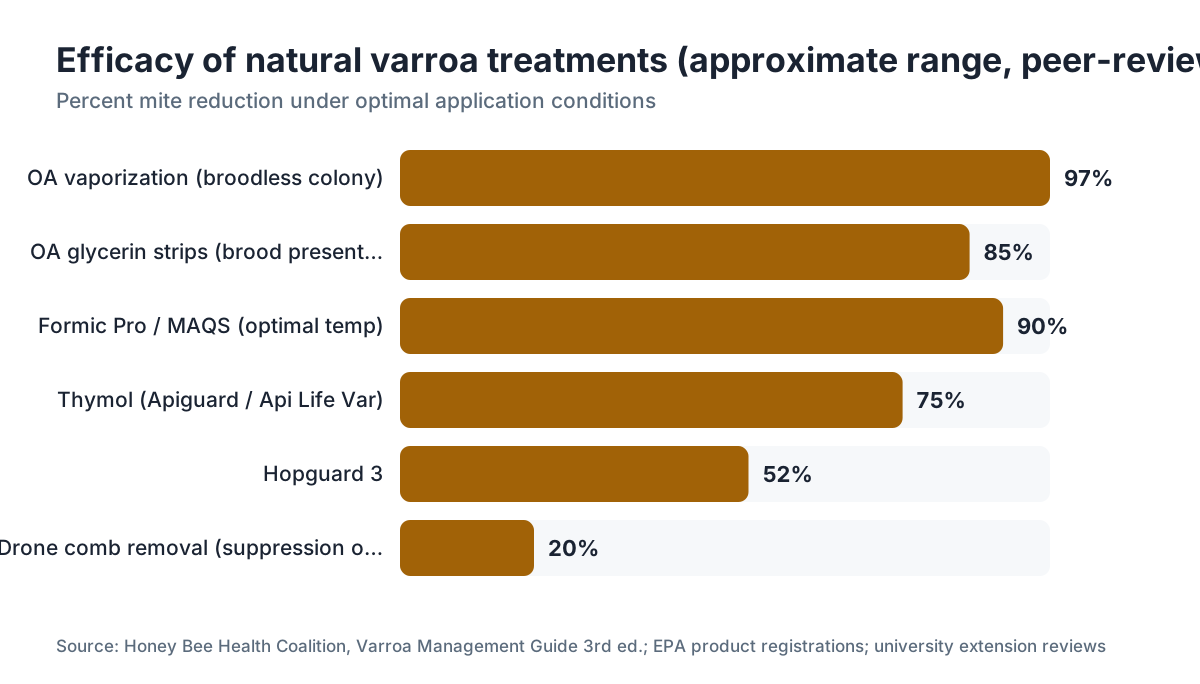
Oxalic acid kills phoretic mites (the ones riding on adult bees) but does not reach mites under capped brood. That single fact governs how you use it. In a broodless colony, nearly every mite is phoretic, and one oxalic acid treatment can hit 90 to 99% efficacy [4]. In a colony with capped brood, efficacy falls off a cliff, because 70 to 80% of the mites may be sealed under caps at any moment [3].
You have three delivery methods. Dribble (trickle) means dissolving oxalic acid in sugar syrup and dripping it over the bees on each seam. Vaporization uses a heated wand or pan to turn the crystals into a vapor that coats the bees. Extended-release glycerin strips (oxalic acid shop towels, or Api-Bioxal extended-release formulations) off-gas slowly over several weeks, so they keep working through a brood cycle. The glycerin strip is the most practical option for hobbyists who want natural control during the main season without forcing a brood break.
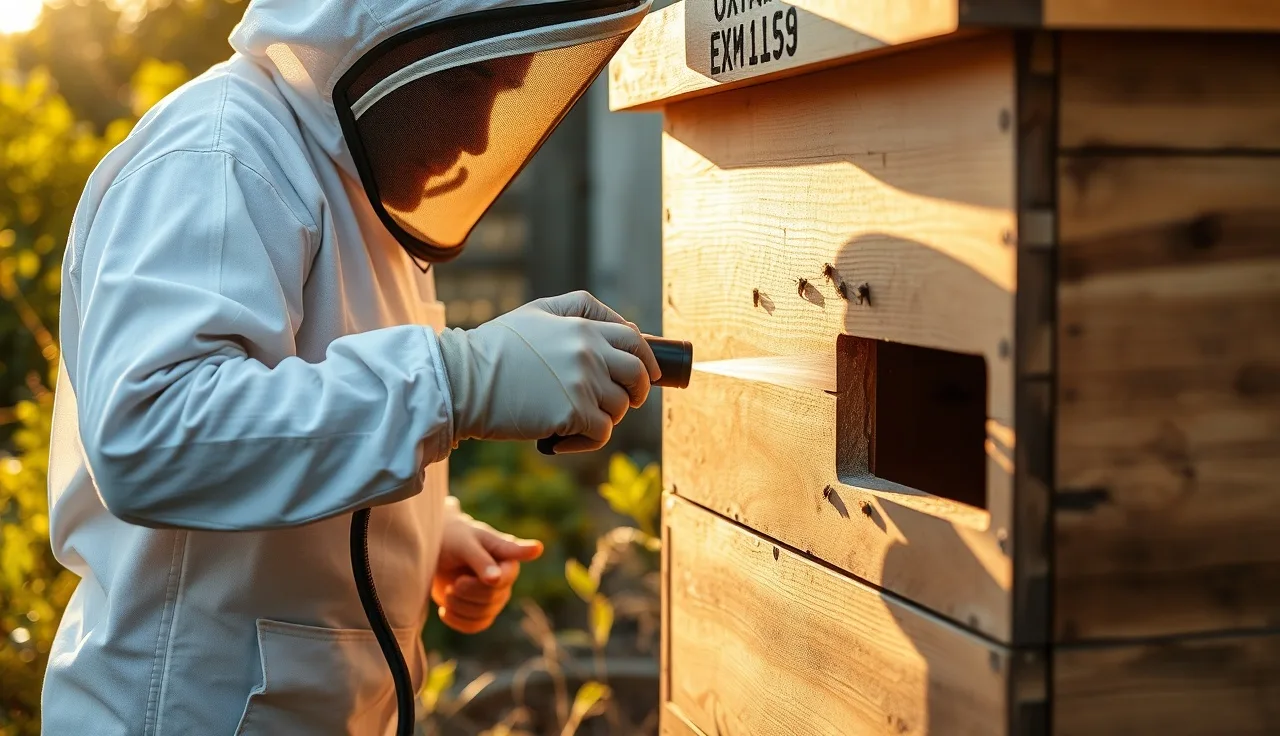
Vaporization is faster, and many beekeepers find it easier across multiple hives, but it demands a respirator rated for acid vapors, eye protection, and keeping people and pets clear of the entrance during treatment. The Api-Bioxal label sets the dose at 1 gram of oxalic acid per brood box for vaporization [4]. Don't eyeball it.
How effective is formic acid for varroa, and when should you use it?
Formic acid is the one treatment that kills varroa inside capped brood. That makes it worth its weight during the active brood-rearing season, when oxalic acid alone can't finish the job. The vapor passes through the cappings and reaches mites in their reproductive stage. Two products are registered in the US: Mite-Away Quick Strips (MAQS) and Formic Pro [5].
Efficacy in peer-reviewed trials runs from about 63% to 95%, depending on temperature, colony strength, and brood pattern [5]. The application window is 50 to 85F ambient. Push past 85 and formic acid volatilizes too fast, builds toxic concentrations inside the hive, and you risk losing the queen. Below 50 it evaporates too slowly and you get weak results. That window is why formic acid is a spring and fall tool across most of North America, not a midsummer one.
Formic Pro (a two-strip treatment) has mostly replaced MAQS for many beekeepers thanks to a gentler release profile and lower queen loss in independent trials, though both work when temperatures cooperate. You don't have to pull honey supers to use formic acid, which is a real practical edge over some synthetic options.
One honest limitation: formic acid is hard on the beekeeper. It irritates your lungs and burns skin. Wear nitrile gloves and work upwind. The label is not being dramatic about the PPE.
Does thymol work, and what products use it?
Thymol is a natural phenol from thyme oil. Api Life Var and Apiguard are the two registered thymol products in the US, and both see heavier use in Europe, where their temperature windows show up more reliably [6]. Efficacy runs 60% to 90% in studies, roughly even with formic acid but keyed to a different temperature band: thymol works best between about 59 and 69F, warm enough to volatilize but not so hot that bees chew it out or abscond [6].
In much of the continental US that band lands in early spring and early fall. High summer heat drives volatilization too fast and can make bees beard hard or leave. Beekeepers in mountain regions sometimes find thymol more practical than formic acid because their summers stay cool.
Apiguard is a slow-release gel you set on the top bars. Api Life Var is a wafer you break into pieces and place around the brood nest. Both need two or three treatments about two weeks apart to cover a full brood cycle. Keep thymol off any colony with honey supers on, because the thyme flavor migrates into capped honey.
Thymol earns its place in an organic varroa toolkit. It just isn't for every climate or every month.
What are hop beta acids, and is Hopguard worth using?
Hopguard 3 is an EPA-registered product made from beta acids extracted from hops (Humulus lupulus). It's approved for use with honey supers present, which is a practical advantage [7]. You apply it as strips slipped between frames in the brood nest.
The efficacy data is thinner than oxalic or formic acid, landing around 40 to 65% depending on brood status and timing [7]. Some university extension evaluations found it less reliable than oxalic or formic acid as a standalone treatment. Where it fits is a rotation slot, or a treatment during the honey flow when you can't pull supers and don't want to wait. Nobody has strong long-term resistance data on hop beta acids yet, but the mode of action differs enough from the acids that it's a reasonable addition to a rotation.
Do physical methods like brood breaks and drone comb removal actually reduce mite loads?
A brood break is exactly what it sounds like: a stretch when the colony has no capped worker brood. Once all the brood hatches and you hold the queen off restarting, every mite in the colony becomes phoretic, which makes them all vulnerable to oxalic acid. You can force a brood break by caging the queen for about 24 days (one full brood cycle plus a buffer) or by splitting the colony and moving the queen to a nucleus. Pair that with an oxalic acid vaporization and you get the highest natural efficacy on the board, often 95 to 99% [3].
Drone comb removal works a different angle. Varroa infest drone brood at roughly 8 to 10 times the rate of worker brood, because drone cells stay capped longer and mites reproduce more successfully in them [3]. Add a frame of foundationless or drone-sized foundation to the brood nest, and the bees draw drone comb, the queen fills it, the mites pile in, and you pull the frame right around capping, freeze it, and take those mites out of the system. One well-timed pull can slow mite population growth noticeably, but it won't replace treatment when infestation is high. Treat it as a suppression tool and a monitoring aid, not a cure.
Both methods have zero chemical input and zero resistance risk. They also demand skill and attention. A queen cage left in too long can set a colony back hard, and a drone frame pulled at the wrong moment catches no mites at all.
Can genetics solve the varroa problem, and what mite-resistant bees are available?
The most durable long-term answer is bees that suppress mite reproduction on their own. Three heritable traits are best documented: Varroa Sensitive Hygiene (VSH), broader hygienic behavior, and Suppression of Mite Reproduction (SMR). VSH bees detect and pull mite-infested pupae before the mite offspring can mature, and colonies with high VSH scores can hold mite levels under treatment thresholds with little or no chemical input [8].
Several commercial breeders sell VSH-selected queens. The USDA Baton Rouge Bee Lab has been the main research institution behind VSH genetics and still keeps selected lines [8]. Local mite-resistant breeding programs run in several states, and your state apiarist or state beekeeping association can point you to them.
Real talk: pure VSH genetics are hard to hold in open-mated populations, because queens mate with dozens of drones and VSH is partially recessive. In a hobbyist apiary ringed by conventional colonies, the behavior erodes over a few generations. That's not a reason to quit. Requeening from mite-resistant stock every one to two years still gives you a better baseline than commodity Italian queens, even as the trait dilutes. VSH is no free pass on monitoring, but it genuinely lowers your baseline mite growth rate.
Some southern beekeepers report success with Africanized genetics, partly because Africanized honey bees show higher hygienic behavior in some studies, but the stinging behavior and state legal restrictions make this a bad fit for most hobbyists.
For a wider look at the parasite itself, our varroa mite overview covers its full biology, and our beekeeping species article covers what genetic options sit on the market.
How do you sequence natural treatments across a full year?
No single natural treatment handles every season. The table below lays out a working annual sequence for a temperate US climate (USDA hardiness zones 5 to 7), timed to brood cycles and temperature windows.
| Season | Condition | Recommended approach |
|---|---|---|
| Late winter (Feb-Mar) | Broodless or near-broodless | OA vaporization or dribble; 1-3 treatments |
| Early spring (Mar-Apr) | Brood expanding | Monitor; OA glycerin strips if >2% |
| Late spring (May-Jun) | Full brood; flow starting | Formic Pro if >2% and temp <85F; supers can stay on |
| Midsummer (Jul-Aug) | Peak brood; honey flow | OA glycerin strips or Hopguard 3; drone comb removal; monitor weekly |
| Late summer (Aug-Sep) | Winter bees being raised | Priority treatment window; formic acid or OA plus brood break; threshold drops to 1% |
| Fall (Sep-Oct) | Brood declining | OA vaporization series (3 treatments, 5-7 days apart) as brood tapers |
| Winter (Nov-Jan) | Broodless | Single OA vaporization or dribble if mites detected |
The late summer window carries the most weight. Winter bees raised under high mite loads live shortened lives because of the viral loads mites pass to them during development [3]. Getting mite levels below 1% in August and September is the single biggest thing you can do to keep a colony from collapsing before March.
VarroaVault has free monitoring logs and a protocol calendar that walks this sequence through your specific climate zone, if you want a structure to track it against.
What are the risks of relying only on natural treatments?
The main risk is undertreatment. Beekeepers who commit to natural methods sometimes hold back from treating hard, because they read natural as gentle or minimal. Varroa doesn't share the philosophy. A colony at 5% infestation in August is likely dead or collapsed by November, no matter how pure your approach.
A second risk is the temperature constraint. Every natural acid has a window, and if weather or scheduling makes you miss it, your program opens a gap. That's especially true with formic acid. Plan ahead and keep a backup ready.
Then there's reinfestation. Your bees forage up to three miles out, and if neighboring apiaries or feral colonies are collapsing with high mite loads, your clean colony picks up hitchhiking mites through robbing and drifting. Treatment without ongoing monitoring breeds false confidence. Treat, then verify with another wash two weeks later.
None of this argues for defaulting to synthetic acaricides. The wax contamination and resistance problems with fluvalinate and coumaphos are real and documented [1][2]. But natural treatment without monitoring isn't a responsible program. It's just a different way to lose bees.
Where can you buy natural varroa treatments, and what do they cost?
Api-Bioxal (oxalic acid) runs roughly $25 to $35 for a 35-gram packet, which treats many colonies if you're vaporizing. Formic Pro is usually $18 to $25 for a two-strip single-colony treatment. Apiguard gel runs about $10 to $15 per two-treatment pack. Hopguard 3 strips cost roughly $10 to $20 per treatment. Prices shift with supplier and season, so check before you build a budget.
Beekeeping supply retailers stock all the registered natural treatments, and a few offer free shipping above certain order thresholds (see free shipping honey bee supply companies for current options). You can also compare beekeeping supply companies if you're setting up a new apiary and want to consolidate orders.
The equipment that matters most for natural treatment is a good oxalic acid vaporizer. Cheap units heat unevenly and sublimate poorly. A ProVap, Varomorus, or similar unit with verified temperature control runs $150 to $250. It pays for itself fast once you manage more than five hives.
You don't need specialty hive equipment for natural treatments, though screened bottom boards with sticky inserts help with monitoring. Standard beekeeping supplies cover the rest.
What does the research actually say about combining natural methods?
The Honey Bee Health Coalition's guide flatly recommends an Integrated Pest Management (IPM) approach: combine monitoring, mechanical controls, and chemical treatments instead of leaning on any single method [3]. Research backs it. Colonies managed under an IPM program that included oxalic acid and brood manipulation held lower mite loads over a season than colonies treated with any one method alone.
The combination with the strongest evidence is a brood break paired with oxalic acid vaporization. The Honey Bee Health Coalition states that oxalic acid treatment of broodless colonies achieves "greater than 90 percent efficacy" [3]. Add a formic acid treatment in early fall to catch the transition when some brood is still present, and you've covered both the reproductive and the phoretic mite populations across most of the year.
On genetics, a 2012 paper in PLOS ONE by Harbo and Harris found that colonies selected for VSH held mite levels below 2% without treatment through a full season under controlled conditions [8]. Real-world results in open-mated populations run lower, but the principle holds: genetics that suppress mite reproduction cut the treatment burden you carry.
Nobody has clean long-term data on resistance to natural treatments. The closest evidence suggests oxalic acid and formic acid are low-resistance-risk, because they act through physical and acidic mechanisms rather than hitting a single protein target. That's a real advantage over synthetic pyrethroids and organophosphates.
Frequently asked questions
Can I treat varroa without any chemicals at all?
In theory, yes. Brood breaks, drone comb removal, and VSH-selected queens can suppress mite populations with no chemical input. In practice, pure mechanical and genetic control only holds if your bees have very high VSH expression and you manage the colony intensively. Most beekeepers using natural methods still apply oxalic acid at least once or twice a year, especially in late summer. Going fully chemical-free while mite loads climb is one of the fastest ways to lose a colony.
Is oxalic acid safe for bees and for honey?
Oxalic acid occurs naturally in honey at low levels (around 12 mg/kg in untreated honey). Api-Bioxal treatments don't meaningfully raise residues in capped honey when used as directed, and studies have found no significant increase in honey after treatment. It's toxic to varroa at concentrations far below those harmful to adult bees, though repeated dribble applications in one season can stress adults. Follow the label's limits on treatment frequency.
How many oxalic acid treatments do I need for it to work?
For a broodless colony, one vaporization can top 90% efficacy. With brood present, a single treatment isn't enough. Extended-release OA glycerin strips work continuously over 4 to 6 weeks and cover one brood cycle. If you're vaporizing into a colony with brood, repeat every 5 to 7 days for three or four treatments, catching mites as capped brood hatches. The brood break plus a single OA vaporization is the most efficient route.
What temperature is too hot to use formic acid?
The Formic Pro label sets an upper limit of 85F (29C) for the 14-day two-strip application. Above that, formic acid volatilizes too fast, reaches toxic vapor concentrations inside the hive, and queen loss risk climbs. Some beekeepers run the single-strip 7-day MAQS application up near 85F with closer watching, but past that limit you should postpone formic acid and switch to oxalic acid glycerin strips or Hopguard 3 until it cools.
Does drone comb removal work well enough to replace chemical treatment?
Not as a standalone once mite loads pass the 2% threshold. Drone comb removal slows mite population growth by trapping mites that prefer drone cells, but it won't pull a 4% infestation down to a safe level alone. It works best as a suppression tool from early spring on, paired with monitoring and chemical treatment when thresholds break. It adds real value and it's free. Just don't lean on it exclusively.
What is VSH and where can I buy VSH queens?
VSH stands for Varroa Sensitive Hygiene, a heritable behavior where workers detect and remove mite-infested pupae before the mite offspring mature. The USDA Baton Rouge Bee Lab developed the trait and maintains selected lines. Several commercial queen breeders sell VSH or VSH-influenced queens; check USDA ARS Baton Rouge or your state beekeeping association's breeder lists for current sources. Prices usually run $35 to $60 per queen, higher for certified VSH lines.
Can I use natural varroa treatments with honey supers on?
Formic acid (Formic Pro, MAQS) and Hopguard 3 are both labeled for use with honey supers present. Oxalic acid dribble and vaporization are not labeled for supers-on use in the US. Thymol products (Apiguard, Api Life Var) must stay off supered hives, because the volatile compound taints honey flavor. During the honey flow, Formic Pro below 85F or Hopguard 3 are your practical options.
How do I know if a natural treatment actually worked?
Run an alcohol wash or sugar roll two to three weeks after finishing treatment, once newly emerged brood has been out long enough to pick up mites. If your count sits below the action threshold (2% outside late summer, 1% in August and September), the treatment worked. If it's still above threshold, you need a follow-up or a different method. Never assume it worked just because you applied it right.
Is it legal to use raw oxalic acid instead of Api-Bioxal?
In the US, applying any pesticide off-label violates FIFRA (the Federal Insecticide, Fungicide, and Rodenticide Act). Raw oxalic acid crystals bought outside the registered Api-Bioxal product aren't labeled for bee colonies. Other countries have different rules. In the US, use Api-Bioxal and follow its label. The product is widely available and cheap; the legal and wax-residue risks of unlabeled material aren't worth it.
Do small cell foundation or screen bottom boards eliminate varroa?
No. Small cell foundation has been studied directly and doesn't reduce varroa infestation rates in controlled trials. Screened bottom boards alone drop mite loads slightly (some studies estimate a 10 to 15% increase in natural mite fall), nowhere near enough to control a growing infestation. They're useful monitoring tools with sticky inserts but shouldn't count as treatment. Both are approaches with appealing logic that the data hasn't supported.
How often should I monitor mite levels if I'm using natural treatments?
At minimum every 30 days during the active season (roughly March through October in most of the US), and always two to three weeks after any treatment to confirm it worked. In August and September, when the stakes peak because winter bees are being raised, monitor every two weeks. A check takes about 15 minutes per hive and is the highest-value activity in your apiary. No protocol substitutes for knowing your actual numbers.
Can natural treatments cause queen loss?
Yes, and formic acid is the main offender. Queen loss in studies of MAQS and Formic Pro runs from about 3% to over 15% depending on conditions, with heat the biggest risk factor. Oxalic acid dribble can stress queens when applied to a winter cluster, though loss from properly dosed OA is uncommon. Thymol at high temperatures can trigger absconding. Following the label's temperature guidance is the single best thing you can do to protect your queen.
What is the best natural varroa treatment for a beginner?
Oxalic acid vaporization or extended-release glycerin strips are the best starting point for most hobbyists. The vaporizer is a one-time equipment cost but it's fast, effective, and works at low temperatures. Glycerin strips need no special gear and hold efficacy through a brood cycle. Pair either with monthly alcohol wash monitoring and a basic annual schedule and you have a sound, fully natural program. Don't skip the monitoring; it's what keeps the rest honest.
Sources
- Mullin et al., PLOS ONE 2010, 'High Levels of Miticides and Agrochemicals in North American Apiaries': Synthetic acaricides fluvalinate and coumaphos accumulate as residues in beeswax and have been linked to sublethal effects on queens and drones.
- EPA, Pollinator Protection: Varroa has developed resistance to fluvalinate and coumaphos in many apiaries across North America.
- Honey Bee Health Coalition, Varroa Management Guide (3rd ed.): Action threshold of 2 mites per 100 bees for most of the season, dropping to 1% in late summer; oxalic acid treatment of broodless colonies achieves greater than 90 percent efficacy; drone brood is infested at 8-10 times the rate of worker brood.
- EPA, Pesticide Registration (Api-Bioxal, EPA Reg. No. 84322-1): Api-Bioxal is the EPA-registered oxalic acid product for use in honey bee colonies; label specifies 1 gram per brood box for vaporization; approved since 2015.
- University of Minnesota Extension, Varroa Mite Management: Formic acid (Formic Pro, MAQS) efficacy in peer-reviewed trials runs from about 63% to 95%; upper temperature limit for application is 85F.
- UC Agriculture and Natural Resources, Honey Bee Health: Thymol products work best between 59-69F; efficacy ranges from 60% to 90% in studies; do not use with honey supers.
- Penn State Extension, Varroa Management: Hopguard 3 is approved for use with honey supers present; efficacy typically 40-65% depending on brood status and application timing.
- Harbo and Harris, PLOS ONE 2005/2012 research on Suppression of Mite Reproduction; USDA ARS Baton Rouge Bee Lab: Colonies selected for VSH maintained mite levels below 2% without treatment through a full season in controlled conditions.
- Cornell University Department of Entomology: Alcohol wash is the most accurate field monitoring method; sugar roll may undercount by 20-30% compared to alcohol wash.
- EPA, FIFRA and Federal Facilities: Using a pesticide in a manner not consistent with its label is a FIFRA violation; raw oxalic acid is not labeled for use in bee colonies in the US.
- Ohio State University Extension, Honey Bee Varroa Mite Management: Screened bottom boards alone reduce mite loads by approximately 10-15% natural mite fall increase, insufficient as standalone treatment.
Last updated 2026-07-09