Pollen patties and varroa treatment: how to time them right
TL;DR
- Pollen patties push brood production up, and more brood means more cells where varroa hides from treatment.
- Finish any brood-dependent varroa treatment (oxalic acid, Apivar, MAQS) before adding patties, or wait until a mite wash confirms the load is low.
- Get the order wrong and a colony can slide from manageable to crashing in four to six weeks.
Why does the order of pollen patties and varroa treatment matter so much?
Varroa destructor reproduces only inside capped brood cells. A mite slips into a cell just before it is capped, lays eggs on the developing larva, and her daughters emerge already mated when the bee hatches. Every patch of capped brood in your hive is a nursery that shields mites from most treatments. [1]
Pollen patties speed up brood rearing. A colony that gets a good protein boost often expands its brood nest within a week or two, especially in late winter or early spring when the queen is just ramping up. That is genuinely useful for building population ahead of a nectar flow. But if you add patties while varroa is already a problem, you are handing the mites more hiding space at the exact moment you want them exposed.
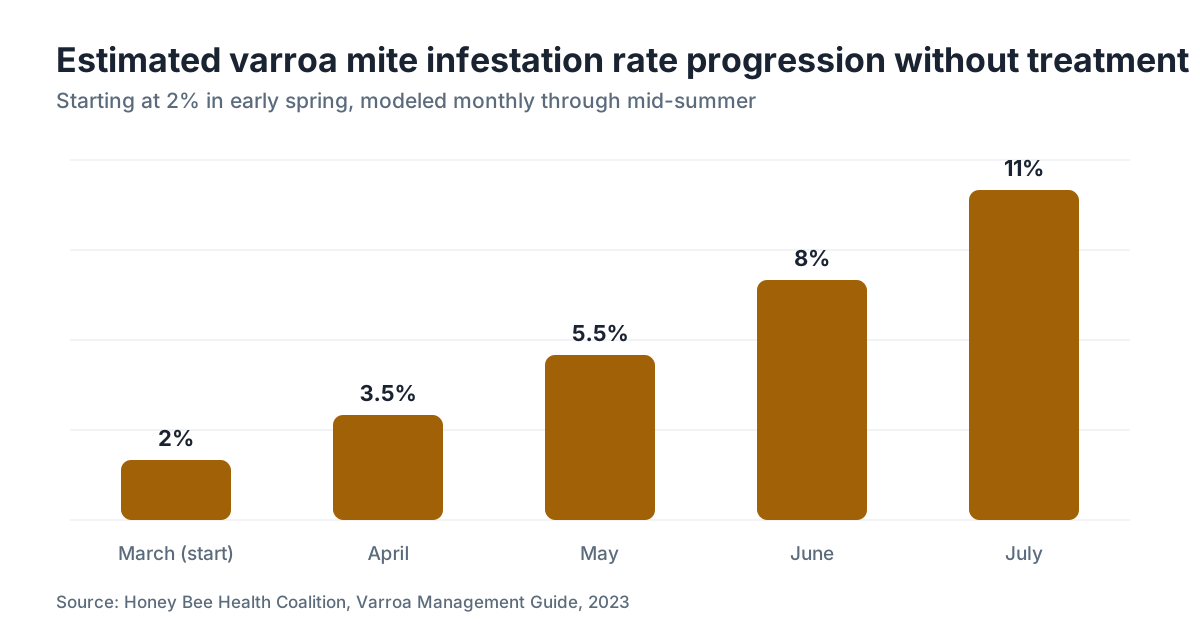
The math turns on you fast. Under a population model from the Honey Bee Health Coalition, a colony sitting at 2 percent mite infestation in early spring can pass 10 percent by mid-summer if nothing intervenes. [2] Add supplemental pollen and you pull that timeline forward. Most beekeepers who lose colonies to varroa in spring started the season with mites they underestimated and protein they added too early.
The rule is simple even if the execution takes judgment. Treat mites first, confirm the load is low, then feed protein to grow bees. Doing it backward is one of the most common ways sideliner operations lose hives without ever understanding why.
Which varroa treatments are most affected by brood levels?
Not all treatments react to brood the same way, and knowing the difference changes your patty timing a lot.
Oxalic acid (dribble or vaporization). Oxalic acid kills phoretic mites, the ones riding on adult bees. It does almost nothing to mites tucked inside capped cells. The Api-Bioxal label states that efficacy is highest during broodless or near-broodless conditions. [3] The University of Minnesota Bee Lab recommends treating in midwinter or during a broodless split for exactly this reason. [4] Add pollen patties in late January and the queen answers by building brood fast, and you have narrowed your oxalic acid window. Treat first, then patty.
Formic acid (MAQS, Formic Pro). Formic acid vapor does penetrate capped cells, which is why it works during the brood-rearing season. It still works better when the brood footprint is smaller, because penetration into deep brood nests is uneven. Temperature limits its use too. The MAQS label calls for 50 to 85 degrees F for the 7-day strip, so the windows when formic acid is practical often overlap with early spring feeding season. [5] The fewer frames of brood you have when you apply strips, the more thorough the knockdown.
Amitraz (Apivar strips). Apivar works on contact over a 6 to 8 week period and is less brood-sensitive than oxalic acid, because mites keep meeting the strips as they emerge and move around. But heavily stimulated colonies with wall-to-wall brood dilute strip contact, since bees cluster away from the strips. Apivar also requires a 14-day wait between removal and honey supers, so if you are feeding patties to build for a spring flow, map that treatment timeline against your flow dates. [6]
Hop beta acids (HopGuard 3). HopGuard works on phoretic mites and has limited cell penetration. It is most effective when brood is minimal, much like oxalic acid. Feeding patties while using HopGuard makes about as much sense as doing it with an OA dribble. [7]
See the comparison table below for a quick reference.
Timing comparison: pollen patties vs. common varroa treatments
| Treatment | Brood penetration | Ideal brood condition | Safe to add patties? | Notes |
|---|---|---|---|---|
| Oxalic acid dribble | None | Broodless | After treatment + mite check | Wait for confirmed low load |
| Oxalic acid vaporization | None | Broodless or low brood | After treatment + mite check | Multiple treatments possible |
| Formic acid (MAQS / Formic Pro) | Partial | Low to moderate brood, 50-85°F | After 7-day treatment ends | Temperature window often overlaps spring feed season |
| Amitraz (Apivar) | Moderate (contact over 6-8 weeks) | Any brood level | During treatment is riskier; after is safer | Patties during Apivar extend brood, extend mite cycle |
| HopGuard 3 | Minimal | Low brood preferred | After treatment | Label allows spring use but efficacy drops with heavy brood |
Sources: EPA product labels [3][5][6][7], Honey Bee Health Coalition Varroa Management Guide [2]
The table above is a guide, not gospel. Colony conditions, regional timing, and your specific mite counts all shift these recommendations. A mite wash before you decide is always worth 15 minutes.
When is it actually safe to add pollen patties after a varroa treatment?
The answer rides on two things: what treatment you used and what your post-treatment mite count says.
After an oxalic acid treatment during a broodless window, wait at least one full brood cycle (about 21 days for workers) before adding patties, then do a mite wash. If your infestation rate is under 2 percent (the Honey Bee Health Coalition's spring action threshold), adding patties is reasonable. [2] If you are still at 2 percent or above, treat again before stimulating the colony. Oxalic acid vaporization repeated every 5 days over 3 treatments during a broodless period is one of the most effective protocols available, and patties should wait until that full sequence is done.
After Apivar, the strips stay in for 42 to 56 days. You can add patties during that window, but understand that you are extending the productive brood period and possibly letting late-season mites survive into the next brood cycle. Plenty of experienced beekeepers hold off on patties until the last two weeks of an Apivar treatment, when most mites should already be knocked back.
After formic acid, the 7-day MAQS treatment is short enough that adding patties right after removal is generally fine, as long as your mite count confirms the treatment worked. Do a wash 72 hours after strip removal.
Here is the honest answer nobody gives you in short articles. No single timeline fits every situation. A colony that came out of winter at 0.5 percent infestation can get patties earlier than one at 3 percent. Count your mites. The Honey Bee Health Coalition's free Varroa Management Guide has a downloadable decision guide that lays this out by season. [2]
Can pollen patties actually increase varroa mite populations on their own?
Yes. This is probably the most underrated piece of the whole puzzle.
Varroa reproduction is tied directly to the amount of capped brood available. A review in Apidologie found that mite population growth correlates strongly with brood area, and colonies with expanded brood nests in spring show faster mite buildup than those with restricted brood. [8] Pollen patties reliably expand brood area. They do not introduce mites. They accelerate the ones you already have.
Practically, a colony at 1.5 percent infestation in February could hit 4 or 5 percent by April if you fed patties through late winter without treating. That 1.5 percent felt safe. The 4 percent in April is borderline for colony survival heading into swarm season.
There is a second, indirect effect. Heavily fed colonies build bees faster than the winter cluster can warm and defend all the brood. Chilled or poorly guarded brood cells are harder for bees to keep hygienic. Whether that meaningfully moves mite levels is debated, but it is one more reason not to overfeed patties in shoulder seasons without a mite plan.
For more on what varroa mites do inside a colony and why their population math is so aggressive, see the varroa mite overview on this site.
What about feeding pollen patties in fall before a varroa treatment?
Fall is where timing mistakes really cost you. The bees you raise in August and September are your winter bees. They need to be fat-bodied (high vitellogenin reserves) and, above all, low in mite loads. A mite-infected winter bee is a compromised winter bee.
Adding pollen patties in August to boost colony size seems logical, but if mites are high, you are breeding more mite-infested bees right before the generation that matters most. The standard recommendation from most university extension programs, including Penn State Extension, is to treat for varroa in late summer (typically late July to mid-August depending on your latitude) before or as soon as fall brood-rearing ramps up for winter bees. [9] Patties here should come after that treatment, not before.
Some beekeepers use a brief broodless break in fall (a split, a caged queen, or a shook swarm) to get the most out of oxalic acid right before winter bees are raised. Feeding patties into a deliberately broodless colony defeats the purpose. Hold the protein until after the OA treatment, then let the colony rear winter bees on natural or supplemental pollen with the mite load already knocked down.
If your fall flow is solid and natural pollen is available, you often do not need patties at all between August and October. Patties earn their keep when natural pollen is genuinely absent and the colony needs protein to sustain brood or build winter bees.
Does the type of pollen substitute affect how quickly brood expands?
This matters more than most guides admit.
High-quality pollen substitutes (those built on real pollen, like Global Patties or Mann Lake's MegaBee) tend to push brood harder than lower-quality soy-based products. That is generally a feature, not a bug, but it means the timing risk runs higher with the better products. A colony given a 1-pound patty of a quality product can widen its brood footprint noticeably within 10 to 14 days. [10]
If you want to build the colony gently without spiking brood (say, you are mid-Apivar and want some growth but not an explosion), smaller, less frequent patties of a lower-stimulation product give you more control. Half-patty applications every 10 days beat a full pound every week.
For a broader look at how beehive pollen works in colony nutrition, that resource covers the nutritional science in more depth.
Product packaging rarely tells you how stimulating one substitute is against another. Your own records are the better guide. Note the product, the amount, and how fast brood expanded. After two or three seasons, you will have calibrated data specific to your operation.
What is the right mite threshold before adding pollen patties in spring?
The Honey Bee Health Coalition Varroa Management Guide sets the spring action threshold at 2 percent infestation rate (2 mites per 100 bees in an alcohol wash or sticky board equivalent). [2] That is the point at which treatment is recommended. So if you are at or above 2 percent, do not stimulate brood growth with patties until you have treated and confirmed the load has dropped.
Below 2 percent in spring is no guarantee of safety either. A colony that starts March at 1.8 percent without treatment or patties may be fine. Add aggressive patties and that 1.8 percent could reach 4 percent before your bees even start foraging. Even below threshold, a patty-heavy spring feeding plan should come with a mid-March mite check built in.
The wash itself is straightforward. Take roughly 300 bees from a frame of brood (nurse bees carry mites more often than foragers), add 70 percent rubbing alcohol or windshield washer fluid, shake for 60 seconds, count mites against total bees. Penn State Extension has a good step-by-step. [9] It takes 10 minutes and it is the only honest way to know what you are actually dealing with.
The Honey Bee Health Coalition's Varroa Management Guide states that "infestations can quickly surpass the economic injury level if left untreated," which is about the closest to an understatement you will find in official apiculture literature. [2]
Are there situations where feeding patties and treating simultaneously makes sense?
There are a few edge cases where parallel timing is defensible, but they call for honest accounting of the tradeoffs.
A severely protein-starved colony in early spring may not survive long enough to benefit from a varroa treatment if you do not feed it. In that case, a small patty alongside an Apivar treatment is the lesser harm. The mite population keeps expanding, but so does the bee population, and the colony at least has a chance. This is triage, not best practice.
For Apivar specifically, some commercial operations run strips continuously with patties during the treatment window, because the 6-to-8-week contact period is long enough to catch mites as they emerge from cells. The data on how much patties cut Apivar efficacy in practice is thin. Nobody has a clean controlled trial on this specific interaction that I can point you to.
Formic acid during a brief 7-day MAQS treatment with a small patty on a weak colony probably will not move the needle either way. The formic vapor period is short, the colony stress from formic is real, and a starving colony handles that stress worse. A modest patty during MAQS on a hungry colony is probably fine.
The cases where simultaneous feeding and treatment make the least sense: oxalic acid vaporization in a broodless colony (patties will end your broodless window fast), and HopGuard on a colony you are trying to keep brood-light.
If you want a structured way to map your treatment windows against feeding seasons across all your hives, VarroaVault's free protocol tools let you set colony-specific timelines and flag conflicts before they happen.
How does geographic location and seasonal timing change the calculation?
A beekeeper in Georgia runs a fundamentally different calendar than one in Minnesota, and the patty-treatment timing question shifts with it.
In the deep South, colonies may never go fully broodless in winter. That makes the oxalic acid broodless-window strategy harder to execute, and managing patties around treatment becomes a year-round consideration rather than a two-month spring event. Texas A&M AgriLife Extension notes that varroa management in southern climates needs more frequent monitoring and often more treatment cycles, precisely because the brood cycle never fully pauses. [11]
Up north, the natural broodless window in January and February is your best friend. Oxalic acid during that window, with mite loads verified low, then patties added in late February or early March as queens ramp up, is about as clean a protocol as you can run. The University of Minnesota Bee Lab's research on oxalic acid efficacy is built largely around that northern winter broodless window. [4]
Mid-latitude beekeepers in the mid-Atlantic or Pacific Northwest face the hardest calls, because their winters are inconsistent. Broodless periods may be partial or vary by year. Monitor in November and again in January, then decide treatment and patty timing on actual mite counts rather than a fixed calendar date. That is the most defensible approach.
For beekeepers running nucleus colonies or packages, the timing resets. A new package has no brood for the first few days, which is a usable OA window if mites came with the package. Patties should wait until after that initial treatment.
What do experienced beekeepers actually do, and what does the research say?
The honest answer is that there is more survey data on beekeeper practices than there is controlled experimental data on the specific interaction between pollen supplement timing and varroa outcomes. The studies that exist look at individual pieces (patty effects on brood, OA efficacy at different brood levels) rather than the combined protocol.
A 2019 survey of managed honey bee colony losses in the Journal of Economic Entomology found that inadequate varroa management remains the leading factor in colony mortality, and poor timing of interventions is part of that picture. [12] It does not single out patty timing, but the broader message matches what practitioners report. Colonies fail because people underestimate mites during periods of active feeding and brood stimulation.
Among sideliners and small commercial beekeepers who have shared practices in extension workshops and bee club surveys, the most common reported routine goes like this. Treat in late summer (July to August), treat again if needed in fall, then hold protein supplements until late winter or early spring after confirming mite loads are low. That matches the Honey Bee Health Coalition's seasonal management recommendations. [2]
What experienced beekeepers tend not to do is add pollen patties in February just because the calendar says so, without knowing their mite situation. A January mite count is the single most useful thing a beekeeper can do to set up a good spring. A $5 mite wash in January is worth more than $50 in patties added at the wrong time.
Practical protocol: a timeline for common beekeeping scenarios
Here is how the timing shakes out in three common situations. These are practical starting points, not rigid rules.
Scenario 1: Northern beekeeper, winter broodless period
December to January: alcohol wash to check mite load. If above 1 percent, vaporize with oxalic acid every 5 days for 3 treatments during the broodless window. Early February: re-wash. If below 1 percent, begin small pollen patties (half-pound) in late February as days lengthen. Increase patty weight as brood expands through March.
Scenario 2: Mid-latitude beekeeper, uncertain winter brood
November: alcohol wash. If above 2 percent, apply Apivar strips for 42 to 56 days. February: remove strips, do a wash 2 weeks after removal. If below 2 percent, begin patties. If still elevated, treat with oxalic acid before patties.
Scenario 3: Southern beekeeper, year-round brood
Monitor every 4 to 6 weeks. If mites exceed 2 percent, treat with a brood-appropriate treatment (Apivar or MAQS). Hold patties until two weeks into the Apivar treatment when mite loads are dropping. Adjust patty weight to colony strength, not season.
In all three scenarios, the mite count drives the decision. The calendar is a rough guide. Your wash results are the actual answer.
For the tools to track these timelines across multiple hives, including treatment dates and mite count history, the beekeeping supplies and management resources at VarroaVault can help you build a system without spreadsheet chaos.
Frequently asked questions
Can I put pollen patties on right after an oxalic acid treatment?
Generally no. Oxalic acid works best in broodless or near-broodless conditions, and patties trigger brood expansion fast. Adding them right after OA treatment, especially during a winter broodless window, shortens your effective treatment window. Wait at least 21 days, do a mite wash, and confirm the load is below 2 percent before adding patties.
Do pollen patties make varroa worse?
They do not introduce mites, but they accelerate the mites already in your colony. Pollen patties expand brood area, and more capped brood means more reproduction sites for varroa. A colony at 1.5 percent infestation fed heavily through late winter can reach 4 to 5 percent by April. Treat first, confirm low mite loads, then feed.
How long should I wait to add pollen patties after Apivar treatment?
Apivar strips run 42 to 56 days. You can technically add patties during treatment since Apivar tolerates some brood, but many experienced beekeepers wait until the last two weeks of the window when mite loads are substantially reduced. After strip removal, do a mite wash before going heavy on patties.
What mite level is safe before I start spring pollen patty feeding?
The Honey Bee Health Coalition sets the spring action threshold at 2 percent infestation rate (2 mites per 100 bees via alcohol wash). Below 2 percent, adding patties is reasonable with a follow-up check planned in three to four weeks. At 2 percent or above, treat first. Do not assume last fall's low count still holds in spring without re-checking.
Can I feed pollen patties while using MAQS (formic acid strips)?
It is not ideal but less problematic than with oxalic acid. MAQS runs only 7 days and has some brood-penetrating ability. If the colony is genuinely protein-stressed, a modest patty during treatment is defensible. After the 7-day treatment, do a mite wash before returning to normal patty feeding to confirm efficacy.
Is there a pollen substitute that stimulates brood less, for use near treatment time?
Lower-protein, soy-heavy substitutes stimulate brood less aggressively than pollen-based patties like Global Patties or MegaBee. If you need to feed during a treatment window, a smaller amount of a lower-quality substitute gives you some nutritional support with less brood stimulation risk. Half-pound applications every 10 to 14 days are more controllable than full-pound weekly feeds.
When should I start pollen patties in fall relative to varroa treatment?
Treat first. The bees raised in August through September are your winter bees, and mite-infected winter bees have shorter lifespans and weaker immune function. Most extension programs recommend treating in late July to mid-August, then letting the colony rear clean winter bees on available or supplemental pollen after treatment. Patties before fall treatment accelerate mite reproduction in exactly the bees that need to survive winter.
What happens if I accidentally add pollen patties before treating for varroa?
It depends on your starting mite load. At low infestation rates (under 1 percent), the extra brood expansion may not be catastrophic if you treat promptly. At 2 percent or above, you have accelerated the mite population during a key window. Remove the patty, do an alcohol wash to assess current load, treat immediately with the most appropriate treatment for your brood level, and recheck in three weeks.
Do I need to do a mite wash before every time I add pollen patties?
Not every single time, but at minimum at the start of spring feeding season and at the start of fall feeding season. Those are the two moments when a high mite load combined with protein stimulation can seriously damage your colony's trajectory. If you feed year-round in a southern climate, a mite wash every 6 to 8 weeks is a reasonable baseline.
Do pollen patties help colonies recover faster after a varroa treatment?
Yes, and this is one of the legitimate reasons to add patties after treatment. Post-treatment colonies, especially those that were heavily mite-loaded, often have a depressed bee population. Adding quality protein after mite loads are confirmed low helps them rear replacement bees faster and rebuild strength before a nectar flow or before winter preparation begins.
Can I use pollen patties to strengthen a colony too weak for varroa treatment?
This is a real dilemma. A colony too weak to treat is also too weak to survive a high mite load. A small patty to prevent starvation may be necessary, but consider whether combining that colony with a stronger one (after quarantine) is a better option. Feeding a weak, mite-heavy colony with patties without treating usually just prolongs a failing situation.
How do I know if my colony expanded brood after adding a pollen patty?
Open the hive 10 to 14 days after adding the patty and count frames of capped brood. Compare to your inspection notes from before the patty. A noticeable increase (one to two full frames or more) means the colony responded strongly. This is useful data for calibrating how much lead time you need between patties and any brood-sensitive treatment.
Is there a time of year when it is safe to feed pollen patties without worrying about varroa?
In practice, no. Varroa is a year-round consideration in most managed colonies, and the seasons where patties are most useful (late winter, early spring, fall) are exactly when mite management decisions carry the most weight. A confirmed mite count below 1 percent gives you reasonable confidence, but even that warrants a follow-up check 3 to 4 weeks after heavy patty feeding begins.
What is the best overall spring protocol for pollen patties and varroa together?
Alcohol wash in January. If mite load is under 1 percent and the colony is broodless, treat with oxalic acid vaporization (3 rounds over 15 days). Re-wash in February. If below 1 percent, begin small pollen patties in late February as the queen ramps up. Monitor monthly through spring. If mites climb above 2 percent before your main flow, treat with Apivar or formic before adding more patties.
Sources
- Honey Bee Health Coalition, Varroa Management Guide (2023): Varroa destructor reproduces exclusively inside capped brood cells, entering just before capping and producing offspring that emerge with the adult bee
- Honey Bee Health Coalition, Varroa Management Guide (2023): The spring action threshold for varroa is 2 percent infestation rate (2 mites per 100 bees); infestations can quickly surpass the economic injury level if left untreated
- EPA, Api-Bioxal (oxalic acid) Federal Product Label: Oxalic acid efficacy is highest during broodless or near-broodless conditions; the label specifies treatment during broodless periods for best results
- University of Minnesota Bee Lab, Oxalic Acid for Varroa Control: University of Minnesota Bee Lab recommends oxalic acid treatment during the midwinter broodless period or during a broodless split for highest efficacy
- EPA, MAQS (Formic Pro) Federal Product Label: MAQS label specifies a temperature window of 50 to 85 degrees F for the 7-day strip treatment; formic acid vapor partially penetrates capped cells
- EPA, Apivar (amitraz) Federal Product Label: Apivar strips are applied for 42 to 56 days; a 14-day wait is required between strip removal and placement of honey supers
- EPA, HopGuard 3 Federal Product Label: HopGuard 3 acts on phoretic mites with limited cell-penetration; label allows spring use but efficacy is reduced under heavy brood conditions
- Apidologie, Rosenkranz et al. (2010), Biology and control of Varroa destructor: Mite population growth correlates strongly with brood area; colonies with expanded brood nests show faster varroa buildup
- Penn State Extension, Varroa Mite Management for Honey Bees: Penn State Extension recommends late summer varroa treatment (late July to mid-August) to protect winter bees; provides step-by-step alcohol wash protocol
- UC Davis Department of Entomology, Honey Bee Research (extension publications): High-quality pollen substitutes with real pollen base stimulate brood expansion noticeably within 10 to 14 days of application
- Texas A&M AgriLife Extension, Honey Bee Disease and Pest Management: Southern climates without consistent broodless periods require more frequent varroa monitoring and more treatment cycles annually
- Journal of Economic Entomology, Seitz et al. (2019), Colony loss and management practices survey: Inadequate varroa management remains the leading identifiable factor in managed honey bee colony mortality; improper timing of interventions contributes to this outcome
Last updated 2026-07-10