Candy board installation timing relative to varroa treatment

TL;DR
- Install a candy board only after your varroa treatment is done and any withdrawal period has passed.
- For oxalic acid in a broodless colony, wait until mite loads test low, usually 3 to 7 days after the last application.
- Feeding during active treatment dilutes the miticide and adds sugar moisture that fights the cluster's own heat control.
Why does the order of candy board and varroa treatment matter?
Getting the sequence wrong is one of the most common late-season mistakes hobbyists make, and it kills colonies. A candy board sits on top of the cluster to supply winter carbohydrates. A varroa treatment needs specific temperature ranges, brood conditions, and colony access to work, and those needs vary by product. Install the board at the same time as an active treatment, or just before it, and several things go wrong at once.
First, the board changes hive moisture. Bees work the sugar at night and release water vapor. Some miticides, amitraz strips (Apivar) and oxalic acid dribble in particular, are sensitive to moisture. Oxalic acid depends on bees grooming each other and moving the compound across the cluster. Extra humidity from a wet candy board can interfere with that transfer and cut how much active ingredient reaches each bee [1].
Second, a candy board blocks top ventilation in most standard setups. Vapor treatments, including Api-Life VAR (thymol) and Mite-Away Quick Strips (formic acid), rely on volatile compounds moving through the hive. A board sitting on the upper box rim chokes that movement.
Third, and most practical of all: if you're running an oxalic acid vaporization series in a broodless colony, you need repeated access over 5 to 7 days without breaking the cluster or catching a lungful of sugar dust while you're in a respirator. A candy board in the way just adds work and the chance of chilling the cluster every time you open up.
Finish the mite treatment first. Confirm it worked with an alcohol wash or sugar roll. Then install the candy board as its own winterization step.
What varroa treatments are used in late fall, and what are their timing requirements?
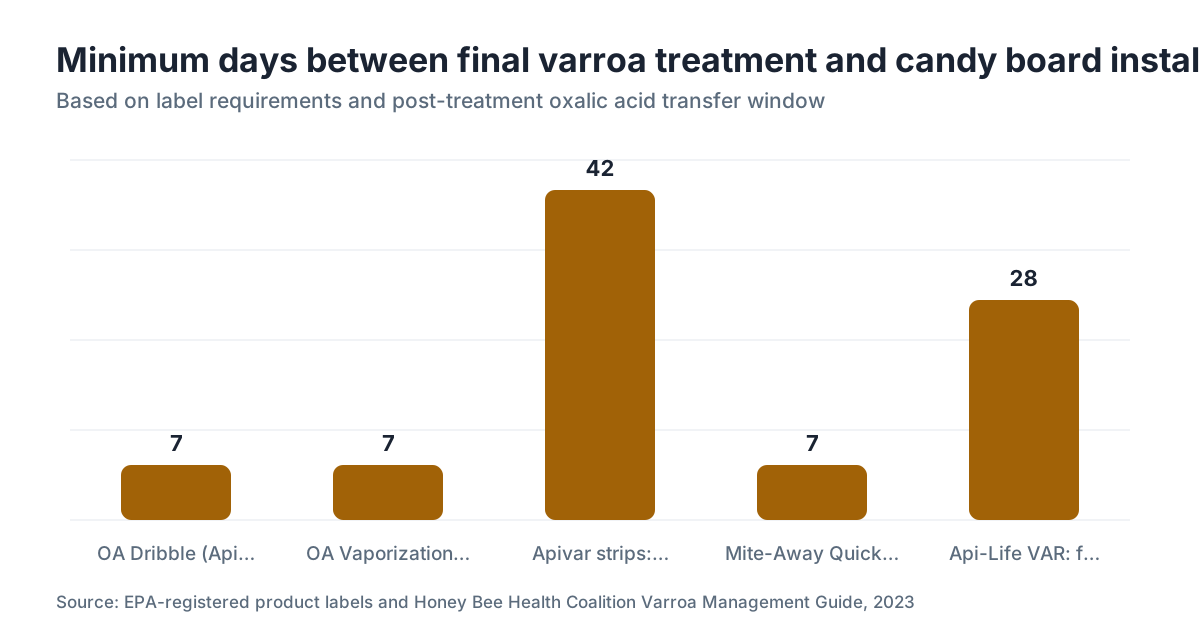
Each approved late-season treatment in the United States carries label conditions that decide when you can safely install a candy board afterward. Here's how the major ones stack up [2][3].
| Treatment | Active Ingredient | Temperature Window | Brood Required? | Minimum Treatment Duration | Honey Withdrawal Before Harvest |
|---|---|---|---|---|---|
| Oxalic Acid Dribble (Api-Bioxal) | Oxalic acid dihydrate | Above 50°F at application | No (most effective broodless) | Single application | None listed for OA |
| Oxalic Acid Vaporization (Api-Bioxal) | Oxalic acid dihydrate | Above 32°F | No (most effective broodless) | 1-3 vaporizations, 5-day intervals | None listed for OA |
| Apivar Strips | Amitraz | 59-105°F | Yes (works on mites emerging from capped brood) | 42-56 days | Remove before supers go on |
| Mite-Away Quick Strips | Formic acid | 50-79°F | Not required | 7 days | 0 days |
| Api-Life VAR | Thymol blend | 59-95°F | Not required | 4 applications, 7-day intervals | Remove before harvest |
The EPA product label is the legal document for each of these. The Honey Bee Health Coalition's Varroa Management Guide restates the same data in plain terms and says that "application timing and temperature are the most commonly cited factors in treatment failure" [4].
For most hobbyists in USDA hardiness zones 5 to 7, the practical late-season window runs from mid-September through early November. Colonies are going or have gone broodless, temperatures still work for oxalic acid, and you have time to check mite drop before the cluster tightens for winter.
One thing worth saying flat out: if you're running Apivar, you can't install a candy board and call the treatment done just because the board is on. Apivar needs 42 to 56 days of contact with bees to reach mites across multiple brood cycles. Bolting on sugar feeding gear does nothing to shorten or replace that window [3].
How long after oxalic acid treatment should you wait to install a candy board?
Wait 5 to 7 days after your final oxalic acid dribble or your last vaporization, then install the candy board. Oxalic acid is the go-to fall treatment for broodless colonies, so this is the question most beekeepers actually need answered.
A single dribble (the Api-Bioxal label allows one dribble per broodless period) takes about 5 minutes to apply. The oxalic acid stays active on the bees for roughly 3 to 5 days afterward, killing phoretic mites as bees groom each other [5]. You don't need to wait weeks. You do want that transfer window to finish before you drop a sugar moisture source on the top of the cluster.
The 5-to-7-day buffer gives you three things:
- The oxalic acid time to move through the cluster by bee-to-bee contact.
- Mite drop time to largely finish, so a sticky board count means something if you want confirmation.
- Treatment moisture time to dry off before candy board humidity arrives.
For a vaporization series (one treatment every 5 days for 3 treatments is common, though the label allows more), count your buffer from the last vaporization, not the first. Vaporize October 1, again October 6, and again October 11, and your candy board goes on around October 16 to 18 at the earliest.
Nobody has clean controlled-trial data on the candy-board-then-OA question. The closest published guidance is the Api-Bioxal EPA-registered label, which requires a broodless colony and gives application steps without addressing concurrent feeding hardware [2]. The 5-to-7-day buffer comes from practitioner consensus and the known half-life of oxalic acid on bees, not from a randomized study you can cite. That's the honest version.
If your colony has already clustered tight and nights sit below 40°F, some beekeepers skip the buffer and install the board right after the last vaporization, on the logic that the cluster won't touch the candy until a warm spell anyway. That's defensible in the coldest zones. It's still a compromise.
Can you install a candy board while Apivar strips are still in the hive?
Technically yes, and plenty of northern beekeepers do it when fall arrives fast. Just understand the trade-off before you commit.
Apivar strips need 42 to 56 days in the hive per the label [3]. They release amitraz, which bees pick up and pass to mites during normal contact. The strips have to stay dry and reachable by the cluster. A candy board on the top box doesn't touch the strips, which sit between frames down in the brood box.
The real concern is temperature. Apivar loses effectiveness once temperatures drop below 59°F consistently, because cold bees cluster tight and stop walking over the strips. If you're installing a candy board, you're probably late in the season, which means you may be hitting that floor anyway. That's not a candy board problem. It's a late-fall Apivar problem.
Install Apivar in August, pull the strips in mid-October, and you can set the candy board on right after removal. The 56-day window is done. Scramble to install Apivar late (October across most of zones 5 and 6) and you have a problem no candy board fixes: the mite load won't drop enough before the winter cluster forms. In that spot, reach for an oxalic acid vaporization series instead.
Does a candy board affect mite treatment efficacy directly?
Yes, and the mechanism decides how badly. Different treatments fail for different reasons when feeding gear is in the way.
Oxalic acid dribble is mixed into sugar syrup at a set strength (2.275 grams OA per 100 mL of 1:1 sucrose solution, per the Api-Bioxal label) [2]. Bees consume and groom the mixture and spread it through the cluster. Add a candy board releasing sugar vapors and moisture above them and you may dilute the relative concentration of oxalic acid in what bees are eating and grooming. No published study I know of measures that effect directly, so treat it as a reasonable concern rather than a proven one.
Formic acid (Mite-Away Quick Strips) is more clearly hurt. The label notes that ventilation conditions affect vapor distribution, and extra moisture can condense the acid before it reaches the top of the cluster, where mites in capped brood concentrate [6]. A wet candy board piles onto that moisture load.
Thymol products (Api-Life VAR, Apiguard) work by volatile release, and they need airflow. A solid candy board on top of a hive acts like a lid clamped over a pot: the active compound pools below the board instead of moving through the hive. These products also need temperatures above 59°F to volatilize, so you're usually applying them in early fall, before candy board season. If your calendar overlaps, the board is a problem.
Apivar's amitraz is a contact compound. A candy board doesn't block strip-to-bee contact, but if it introduces moisture that swells wooden frame parts or shifts cluster movement, it can cut how often bees walk over the strips.
What mite load should you confirm before installing a candy board?
Confirm your colony is below 2 percent mites on an alcohol wash before the candy board goes anywhere near the hive. This is the step a lot of hobbyists skip, and skipping it turns winterizing into a coin flip.
The Honey Bee Health Coalition recommends treating when mite loads hit 2 percent or higher during the summer brood season, and again at 2 percent or higher in late summer and early fall heading into winter [4]. That threshold comes from research linking fall loads above 2 percent to much higher winter mortality. A colony sitting at 4 percent in October is unlikely to see April no matter how much candy it has.
The standard test is an alcohol wash: 300 bees (about half a cup) from the brood nest, shaken in 70 percent isopropyl alcohol for 60 seconds, then counted against the total bee count [7]. Six mites per 300 bees equals 2 percent. At or above that number, treat before you winterize.
A sticky board count (mite drop over 24 to 72 hours on a greased board under a screened bottom) is a weaker threshold test but gives you direction. More than 1 mite per 24 hours in fall says test harder with an alcohol wash.
The VarroaVault free protocol tools track wash results across inspections and flag when you cross the treatment threshold, which helps when you're running several colonies through a narrow fall window.
Here's the practical rhythm. Check mite load in late August. Above 2 percent, treat in September. Retest after treatment. Below 2 percent in mid-October with a broodless or nearly broodless colony, a single oxalic acid treatment plus a 5-day buffer gives you a clean path to the candy board before the cluster fully tightens.
What temperature and colony conditions need to be right before installing a candy board?
A candy board is a winter feeding tool, not a fall one. Bees can take syrup until temperatures settle below about 50°F. Below that, they can't break the cluster to reach liquid feed and may starve with full frames of honey nearby if those frames sit outside the cluster's reach [8].
Candy boards (solid fondant or dry sugar on a board over the upper box) work because bees can reach them even at 30°F by moving a few inches up within the cluster. The board also adds a thin insulation layer and soaks up some moisture. That's exactly why treatment timing matters: you want the cluster in its final winter shape before the board goes on.
Watch for these install conditions:
- Daytime temperatures consistently below 55°F and nights below 40°F.
- No brood, or minimal capped brood, remaining (for colonies you've treated with OA).
- Stores at 60 to 80 pounds of honey equivalent for a full-size colony in a cold-winter zone. A Langstroth double-deep should have most frames at least 80 percent capped [8].
- Mite load confirmed below 2 percent by alcohol wash after your last treatment.
Hit all four and let your post-treatment buffer elapse, then install the candy board. That's the whole checklist.
Can you use a candy board as a winter moisture absorber if you didn't treat for varroa?
You can, but the question hiding underneath is whether you should be skipping varroa treatment at all. The answer is almost always no, unless you have documented hygienic-behavior genetics or you're running a research protocol.
Colonies that go untreated in areas without genuine Varroa-resistant stock face near-certain collapse within 1 to 3 years [9]. The Honey Bee Health Coalition's 2023 Varroa Management Guide says it plainly: "untreated colonies in most of North America will reach economically and biologically damaging mite levels within one to three seasons" [4]. A candy board does nothing to change that path.
The moisture-absorption benefit is real. Condensation dripping onto a winter cluster kills bees, and a candy board soaks some of it up. But that benefit stands whether or not you treat, and it never substitutes for treatment.
Missed your window and it's December in zone 6? You can still vaporize oxalic acid into a clustered colony without the brood-free requirement (the Api-Bioxal extended-release label covers clustered colonies) and install the candy board right after. The label allows oxalic acid vaporization in clustered winter colonies [2]. That's your best recovery play at that point.
For the biology behind all of this, the varroa mite overview covers the lifecycle and why broodless periods matter so much for treatment timing.
How do you physically sequence the steps for a late-fall varroa treatment and candy board installation?
Here's a concrete protocol. It assumes a standard Langstroth two-deep, a broodless or nearly broodless colony in mid-October, and oxalic acid vaporization as the treatment.
Step 1: Late August alcohol wash. Count mites. At or above 2 percent, treat in September with your preferred method. Below 2 percent, schedule a follow-up wash in late September.
Step 2: Late September alcohol wash (or a post-treatment retest if you treated in September). Below 2 percent and largely broodless means oxalic acid vaporization is appropriate. Still above 2 percent means treat again and retest.
Step 3: Run the oxalic acid vaporization series. Wear the PPE the label requires (NIOSH-approved respirator rated for OA vapor, chemical-splash goggles, gloves) [2]. Vaporize once every 5 days for 3 treatments. Seal entrances during treatment and for at least 15 minutes after.
Step 4: Wait 5 to 7 days after the final vaporization.
Step 5: Quick sticky board check. Not strictly required, but 24 hours on a greased board gives you directional confirmation the treatment knocked mites down.
Step 6: Assess stores. If the colony is light (frames under 80 percent capped in the upper box), your emergency feeding options are already thin. A candy board supplements. It shouldn't be the only food source for a starving colony.
Step 7: Install the candy board. Set it on the top box rim, sugar-side down toward the cluster. Add a moisture quilt or ventilation shim if your setup needs one. Close up.
Step 8: Leave them alone through winter. Heft the hive from the back monthly to check weight. Open only if you hear silence or see zero activity on warm days above 50°F.
Start to finish, first wash to candy board runs roughly 6 to 8 weeks. Begin in late August and the board is on by mid-October in most zones. That's the window.
Are there cases where installing a candy board before completing varroa treatment is acceptable?
Not many. But here are the edge cases where experienced beekeepers make the call.
Case 1: Apivar strips in a colony heading into early winter in a zone with early hard freezes. Install strips August 1 in a zone getting consistent hard frost by October 1 and you may only have 60 days, which just barely clears the label minimum. Installing the candy board at day 56 when you pull the strips is fine. The strips are done, the board goes on, no real conflict.
Case 2: An emergency winter food situation. A colony facing starvation in December with no active treatment running: install the candy board and do an oxalic acid vaporization the same day or the next. Starving kills bees faster than mites do in that immediate window, and vaporization doesn't require you to remove the board. A propolis-sealed rim may need a brief pry, but a small gap for the vaporizer wand and a reseal after is manageable.
Case 3: Extended-release oxalic acid products. OA extended-release strips (Api-Bioxal extended, sold as ProVarroa in some markets) are built to sit in the hive for several weeks. A candy board can coexist with these when the strips are seated in the brood nest and the board rides on top. The OA releases slowly at brood level while the sugar sits above the cluster. Many commercial operations run late-fall supplemental feeding alongside strip-based treatments this way. Check the specific extended-release label for your product [2].
Outside these cases, the default holds: finish the treatment, wait the buffer, confirm the mite load, then install the candy board.
What supplies do you need to install a candy board correctly?
The candy board is the obvious item. The rest of the setup decides whether it works through winter. If you're sourcing gear, good beekeeping supply companies carry most of these year-round, though candy boards and moisture quilts sell out fast in October.
Core items:
- Candy board or mountain camp sugar board (food-grade sugar, never powdered sugar cut with cornstarch, which can cause dysentery in clustered bees).
- Entrance reducer set to its smallest opening to cut cold air and robbing by late-season yellowjackets.
- Upper entrance or ventilation shim so moisture escapes without flooding the cluster with cold air from above.
- Hive wrap or windbreak if you're in zone 5 or colder (not required, but it lowers the cluster's fuel cost).
For the varroa treatment phase before installation:
- Api-Bioxal or an equivalent OA-registered product.
- Oxalic acid vaporizer (electric or propane; the electric wand type is simpler for occasional use).
- NIOSH-approved half-face respirator with OV/P100 cartridges (required by label).
- Chemical-splash goggles.
- Nitrile or rubber gloves.
- Sticky board for post-treatment mite drop monitoring.
Total cost for the oxalic acid side runs roughly $80 to $150 for a beginner buying a vaporizer for the first time, plus $20 to $30 per season for Api-Bioxal [10]. The candy board itself runs $10 to $25, depending on whether you buy premade or mold your own from granulated sugar and water.
VarroaVault's free tools include a seasonal treatment calendar that flags your candy board window against your logged treatment dates, which helps once you're past two or three hives.
How do you know if your varroa treatment worked before installing the candy board?
Retest with an alcohol wash 5 to 10 days after your final treatment. Post-treatment confirmation is the step most hobbyists skip, and it's the one that would save the most colonies if people actually did it.
Two methods do the job.
- Alcohol wash retest. Run it 5 to 10 days after your final application. Same protocol as your baseline: 300 bees from the brood nest or cluster edge, shaken in 70 percent isopropyl for 60 seconds, count mites against total bees. Below 2 percent (fewer than 6 mites per 300 bees) is the target heading into winter [4][7].
- Sticky board count. Place a greased board under a screened bottom for 24 to 72 hours after treatment. High mite drop (dozens to hundreds on days 1 and 2, tapering to near zero by day 5) says the treatment worked. No drop after an OA treatment could mean the colony already ran very low, or it could mean the treatment never reached the cluster. The alcohol wash is more reliable for absolute numbers.
Still above 2 percent on the post-treatment wash? You have a problem. Likely causes: a late brood frame that stayed capped during treatment (oxalic acid can't reach mites in capped brood), poor application, or a rebound as brood uncapped afterward. Do a second treatment and retest before the candy board goes near the hive.
USDA-AMS National Honey Bee Survey data consistently shows that late-summer and fall mite loads above 2 percent rank among the strongest predictors of winter colony loss [11]. Confirming efficacy is not optional if you want your colony alive in April.
Frequently asked questions
Can I put a candy board on at the same time as an oxalic acid dribble treatment?
It's not recommended. The oxalic acid dribble needs 5 to 7 days to transfer through the cluster by grooming and contact. A board installed at the same time adds moisture from above and may dilute the grooming concentration of OA. Apply the dribble, wait at least 5 to 7 days, then install the board once the treatment window has closed.
What is the ideal outside temperature for installing a candy board?
Candy boards earn their keep once daytime temperatures hold below 55°F and nights drop below 40°F. At that point bees can no longer take syrup reliably and the cluster is tightening. Installing earlier wastes nothing, but the bees won't use it until the cluster forms, and opening the hive in warm fall weather disturbs a colony that's already prepping for winter.
Does a candy board replace winter honey stores?
No. A candy board is emergency supplemental nutrition, not a stand-in for stored honey. A standard two-deep Langstroth colony in a cold-winter zone needs 60 to 80 pounds of honey equivalent going into winter. A typical candy board holds 8 to 15 pounds of sugar. If your colony is badly light on stores, a candy board buys time but doesn't close the food deficit.
How many oxalic acid vaporizations should I do before installing a candy board?
The standard protocol for a broodless fall colony is 3 vaporizations spaced 5 days apart, with the candy board installed 5 to 7 days after the third. The Api-Bioxal label allows flexibility in the number of applications during a broodless period. If any capped brood remains, extra vaporizations spaced 5 to 7 days apart help catch mites emerging from that last brood.
Will a candy board interfere with Apivar strip performance?
A candy board doesn't directly block amitraz transfer from Apivar strips, which sit between brood frames. The real risk is that a candy board means you're in late fall, when temperatures may fall below Apivar's effective range of 59 to 105°F. If strips are still in the hive and temperatures are dropping, the treatment may underperform regardless of the board. Remove strips only after the full 42 to 56 day label period.
Can I vaporize oxalic acid with a candy board already installed?
Yes, in an emergency. Briefly unseal the board, insert the vaporizer wand through a lower entrance, seal it during the 2.5-minute vaporization, and reseal the board after. It's not ideal, since some vapor may escape through the board seam and cut exposure time inside the hive. For a planned treatment, install the candy board after treatment, not before.
How do I test mite loads after treatment before installing the candy board?
Run an alcohol wash: collect 300 bees from the brood nest or cluster edge into a jar with 70 percent isopropyl alcohol, shake for 60 seconds, pour through a mesh screen, count mites against total bees. Below 2 percent (fewer than 6 mites per 300 bees) is the target before winterizing. Do this 5 to 10 days after your final treatment application.
What type of sugar should I use in a candy board?
Use plain granulated cane or beet sugar. Avoid powdered sugar, which usually contains cornstarch as an anti-caking agent. Cornstarch isn't digestible by bees and can drive dysentery in a clustered colony that can't fly to defecate. Skip brown sugar too, which has higher mineral content and increases waste. Plain white granulated sugar, bound with a little water, is the standard.
Can I install a candy board if my colony still has brood in October?
Yes, but a colony with brood in October in a cold-winter zone likely still has active mites reproducing in that brood. The board itself is fine. Just don't skip treatment because the board is on. Oxalic acid works poorly on mites in capped brood, so you'd need Apivar or formic acid to reach them there. Address the mite load first, then use an OA vaporization series after brood ceases.
How long does a candy board last through winter?
Depending on colony size and winter length, a well-made board holding 10 to 15 pounds of sugar can last 6 to 12 weeks. In a long, cold winter (zones 4 to 5), plan to heft the hive every 3 to 4 weeks and be ready to add a second board or emergency patty in late February, when brood rearing often restarts and stores run critically low.
Should I treat for varroa in the fall even if my summer mite counts were low?
If your summer counts stayed below 2 percent and you confirmed that through August, you have some room. But mite populations can double every 3 to 4 weeks during the brood season, so a 1 percent count in July can hit 4 percent by September [12]. The Honey Bee Health Coalition recommends late-summer testing regardless of earlier results, and treating at or above 2 percent. A single oxalic acid treatment in a broodless fall colony is cheap and low-risk. Skipping it when counts climb is not worth the gamble.
Is a mountain camp sugar board the same as a candy board?
Functionally similar, technically different. A mountain camp board uses dry granulated sugar laid on a paper towel or newspaper over the upper box frames. A candy board is hardened sugar (fondant-style) molded into a board with a wooden or cardboard frame. Both work. The mountain camp method is cheaper and easier to make, but it can produce more humidity as bees moisten the dry sugar to eat it.
What happens if I install a candy board before varroa treatment in fall?
The main risk is reduced treatment efficacy, especially for volatile treatments like thymol or formic acid. For oxalic acid dribble, you're adding a competing moisture source at the cluster top. For Apivar, the functional hit is minimal, but you may complicate inspection access and hive airflow. Worse, the colony enters winter carrying an active mite load if treatment isn't finished, which is by far the larger risk.
Sources
- EPA - Api-Bioxal Registration Label (Reg. No. 91530-3): Api-Bioxal oxalic acid label specifying application as dribble or vaporization for Varroa destructor control, including solution preparation and application instructions
- EPA - Api-Bioxal Label (Reg. No. 91530-3), oxalic acid dihydrate concentration and PPE requirements: Api-Bioxal label specifies 2.275 grams OA per 100 mL 1:1 sucrose solution for dribble, PPE requirements including NIOSH-approved respirator and chemical-splash goggles
- EPA - Apivar (Amitraz) Label (Reg. No. 89459-51): Apivar label requires strips remain in hive 42 to 56 days and specifies temperature range of 59 to 105°F for efficacy
- Honey Bee Health Coalition - Varroa Management Guide (2023 edition): Coalition recommends treating when mite loads reach 2% or higher, and states application timing and temperature are the most commonly cited factors in treatment failure
- USDA ARS Carl Hayden Bee Research Center - Oxalic Acid Mode of Action: Oxalic acid remains active on bees for approximately 3 to 5 days post-application through grooming and contact transfer
- EPA - Mite-Away Quick Strips (Formic Acid) Label: Mite-Away Quick Strips label specifies temperature range 50 to 79°F and notes that ventilation conditions affect vapor distribution and efficacy
- University of Minnesota Extension - Varroa Mite Sampling Methods: Alcohol wash protocol uses 300 bees agitated in 70% isopropyl alcohol for 60 seconds; 6 mites per 300 bees equals 2% infestation rate
- Pennsylvania State University Extension - Preparing Honey Bee Colonies for Winter: Full-size Langstroth colony needs 60 to 80 pounds honey equivalent for cold-winter zones; bees cannot reliably access liquid feed below approximately 50°F
- Honey Bee Health Coalition - Varroa Management Guide (2023 edition): Untreated colonies in most of North America will reach economically and biologically damaging mite levels within one to three seasons
- Mann Lake Ltd - Api-Bioxal retail pricing: Api-Bioxal retail cost approximately $20 to $30 per season for hobbyist quantities; electric oxalic acid vaporizers retail $80 to $150 for first-time buyers
- USDA AMS - National Honey Bee Survey: USDA National Honey Bee Survey data shows late-summer and fall mite loads above 2% are among the strongest predictors of winter colony loss
- North Carolina State University Extension - Varroa Management in Honey Bee Colonies: Mite populations can double every 3 to 4 weeks during brood season; early fall monitoring is recommended regardless of summer counts
Last updated 2026-07-09