Requeen after combining to reset the varroa mite cycle
TL;DR
- Combine two mite-heavy colonies, kill both queens, and you create a brood break that starves varroa of the capped cells they need to reproduce.
- Treat with oxalic acid while the colony is brood-free, then introduce a new mated queen.
- She restarts a clean egg-laying cycle.
- Done right, mite counts drop below 1 percent and the merged colony goes into winter strong.
Why does requeening after combining reduce varroa mite loads?
Varroa reproduces almost nowhere except inside capped brood cells. A mated female mite slips into a cell just before capping, lays eggs on the developing larva, and her daughters mate with their brothers inside that sealed cell before riding out on the emerging bee. No capped brood, no reproduction. That single fact is the whole logic of a brood break.
Combining two colonies doesn't pause brood on its own. You have to remove the queens to make that happen. Kill both queens before you combine, or merge a queenless donor into a queen-right hive and pull that queen too, and you end up with a large adult population and zero new eggs. The existing capped brood hatches out over roughly 12 days. During that window, any mite looking to reproduce has no cell to enter. It waits on adult bees, exposed.
Requeening at the right moment exploits that gap. You wait until all capped brood has emerged, then introduce a new mated queen. She starts laying, and her first three to four weeks of brood come out nearly clean, because the adult mite population was stuck riding on bees with no way to breed [1]. The Honey Bee Health Coalition's Varroa Management Guide lists brood breaks among the most effective non-chemical tools available, capable of cutting mite populations by half or more when paired with a single oxalic acid treatment [2].
Sequence is everything. Combine to pool bees and stores, enforce the brood break on purpose, then introduce a good queen. Treating with oxalic acid inside that brood-free window is what turns a decent strategy into a strong one.
When should you combine colonies before requeening?
Combine before requeening when you have two colonies that are each too small and too mite-burdened to recover on their own before the season ends. A single weak colony that you treat and requeen often fails anyway. It doesn't have enough nurse bees to raise a solid brood set before winter or before the flow shuts off.
A few situations make combining the clear call. Mite counts in both colonies sit above the economic threshold (generally 2 percent or higher on an alcohol wash, though some extension guides use 3 percent as the late-summer action point [3]). One colony is queenless or running a failing queen. Or you're heading into a dearth or pre-winter consolidation and one strong colony beats two weak ones.
Season drives the payoff. Across most of North America, the window is late summer, roughly August through early September. Varroa peaks then. The winter bee generation is about to be raised. A brood break timed to this stretch does the most damage to mite reproduction you'll get all year. A queen introduced in mid-September still has time to build a healthy cluster before the cold. Wait until October in the northern states and you're gambling.
Spring combining works too, but the urgency is lower. Mite populations hit their annual low in early spring, so the brood break buys you less. Use it in spring mainly to merge a failing overwintered colony into a healthy one and salvage the bees and stores.
How do you actually combine two colonies without losing the brood break?
The newspaper method is the standard, and it works fine here. Stack the donor colony's boxes on top of the receiving colony with a single sheet of newspaper between them, a few slits cut in the paper. The bees chew through over two to three days and mix gradually without a fight.
But the brood break lives or dies on how you handle the queens. Here's the workflow:
- Kill or cage both queens at least 24 hours before combining. Some beekeepers confirm queenlessness in both colonies before stacking.
- Combine using newspaper. Let the bees fully merge over 48 to 72 hours.
- Confirm no unplanned queen cells are going up. Emergency cells that succeed will end your brood break early.
- Wait for all existing capped brood to emerge. Depending on the brood stage at combining, this takes 9 to 12 days.
- Treat with oxalic acid (dribble or vaporization) while the colony is brood-free. This is the moment the treatment hits hardest, because every mite is phoretic on an adult bee [4].
- Introduce your new mated queen two to five days after the oxalic acid treatment.
The queens have to be gone before you stack. Combine a queenless colony onto a queen-right one and the workers usually find and kill the weaker queen, but that's slow and unreliable. Run the process yourself and you get a predictable brood-free window instead of a guess.
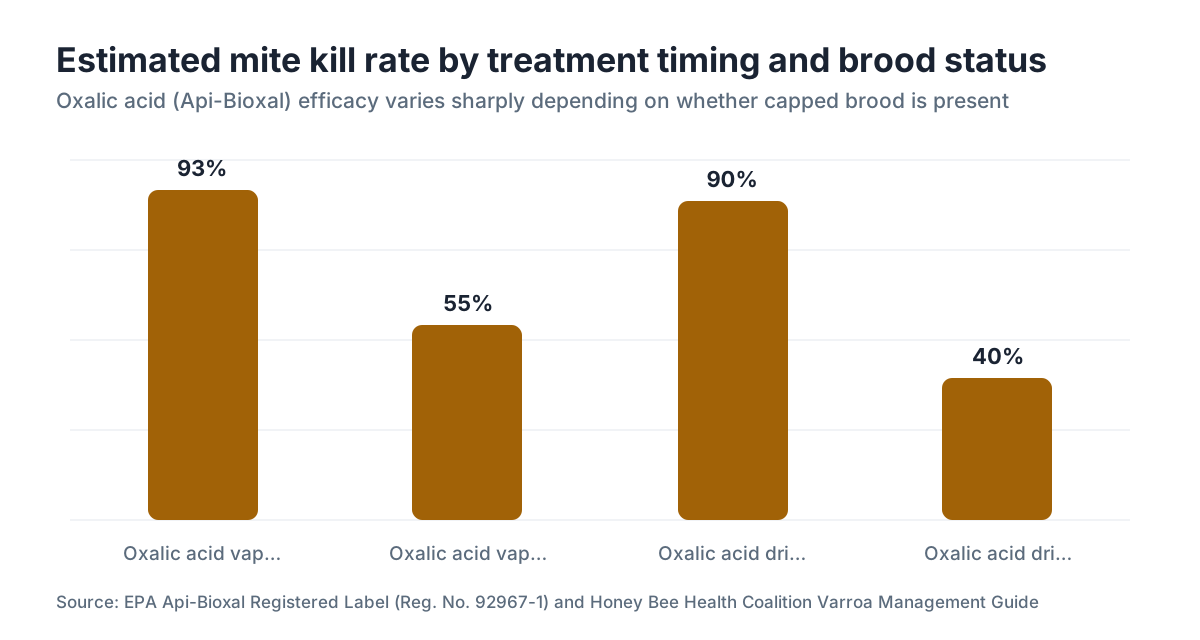
One honest caveat. Big colonies carrying a lot of capped brood at combining take longer to go brood-free. Merge two strong colonies at peak summer and you might have a full 12 days of emerging brood ahead of you. Check with a flashlight before you treat. Oxalic acid barely touches mites hidden under wax cappings, so treating over capped brood wastes the application [4].
What mite level triggers the decision to combine and requeen?
The alcohol wash treatment threshold sits at roughly 2 to 3 percent mites per 100 bees, depending on season and source [3]. But deciding to combine rather than just treat brings in a second variable: bee population. A colony with a 4 percent load and 40,000 bees can recover. The same 4 percent load on 8,000 bees in August almost certainly can't.
The rule most experienced beekeepers work by runs like this. If a colony fails the 2 percent threshold in late summer and doesn't cover at least five frames of bees, it's a candidate for combining rather than solo treatment. No official guideline writes this out as a formula, but it lines up with what university extension apiarists say when you ask them directly.
The Honey Bee Health Coalition recommends monitoring every colony at least three times a year: late winter or early spring, late spring to early summer, and late summer before the winter bee generation is raised [2]. The late-summer count is the one that most often triggers a combine-and-requeen decision. A high August mite load turns straight into short-lived, immunocompromised winter bees.
If you want one number to anchor the call: an alcohol wash above 3 percent in August or September, plus a population below five frame-sides of bees, is a reasonable line for combining instead of treating separately. Below that, treat the colony on its own and re-check in three weeks.
What kind of queen should you introduce, and where do you get her?
This is where a lot of the benefit gets thrown away. Force a brood break, then drop in a poorly mated or mediocre queen, and you've wasted the window you built.
The traits that matter most for varroa are hygienic behavior and, ideally, varroa-sensitive hygiene (VSH) or suppressed mite reproduction (SMR) genetics. Queens from breeders who select for these produce colonies where workers detect and uncap mite-infested cells at higher rates, breaking up varroa reproduction mechanically and slowing mite buildup over successive generations [5].
You have a few realistic options. Commercially bred VSH or hygienic queens from reputable suppliers run $30 to $50 each, sometimes more for highly selected stock. Local queens from a beekeeper who selects for hygienic behavior often cost less and may suit your forage and disease pressure better, though local selection for VSH specifically is rare. General-supplier package queens cost the least and carry no varroa-resistance traits.
Raising your own queens from a colony with good hygienic behavior takes planning around the break. You'd need grafts ready or starter colonies prepared about 30 days before you want a laying queen. Most hobbyists find it simpler to buy a mated queen and plan the combine-and-requeen sequence around her arrival date.
For queen sources and gear, the beekeeping supply companies page covers vendors worth a look.
One thing to avoid. Don't introduce a queen from the same breeder or genetic line that produced your failing queens. If poor hygienic genetics drove the mite buildup, reintroducing that line drops you right back at the starting problem.
How do you introduce the new queen safely after the brood break?
Queen introduction after a brood break is usually easier than introducing into an established, queen-right colony. The workers have been queenless for 12 days or more and they want a laying queen badly. Easier doesn't mean careless.
Use a standard two-stage introduction. The queen arrives in a mailing cage with a candy plug. You pull the cork from the candy end and let the workers chew through over three to five days. In that stretch they get used to her pheromone signature and acceptance climbs.
Check acceptance on day five or six. You want calm bees grooming the cage, not biting or pulling at it. If workers are balling the cage hard, the colony may have accepted an emergency queen cell you missed. Find the cells, remove them, and try again.
Place the cage between two frames of cured honey or pollen, away from the brood nest (empty during the break anyway). Tip the candy end slightly upward so dead attendants don't block the exit tunnel.
Once she's released and confirmed laying, give her two full weeks before you judge her egg pattern and rebuild. A new queen in a big queenless colony can lay her way to a solid pattern fast. A spotty pattern three weeks after introduction usually means supersedure pressure or a poorly mated queen. Deal with that before the population slides again.
Should you treat with oxalic acid during the brood break?
Yes. Emphatically yes. The brood break is the best moment you'll ever get to apply oxalic acid, because every mite is riding on an adult bee. Oxalic acid kills phoretic mites at over 90 percent efficacy in a brood-free colony [4]. Once brood returns, that number drops hard, because mites tucked inside capped cells never get touched.
Api-Bioxal is the only EPA-registered oxalic acid product legal for US honey bee colonies, and its label allows vaporization or dribble. Vaporization reaches deeper in a large combined colony because it spreads to bees in every box, more than the cluster surface a dribble contacts [4]. One vaporization treatment during the brood-free window is the standard recommendation. The Honey Bee Health Coalition's Varroa Management Guide specifically pairs brood breaks with a single oxalic acid treatment as the strongest non-pyrethroid option available [2].
Timing. Confirm no capped worker brood remains, then run one more check the day before you plan to treat. Treat, wait two to five days so residues settle and the queen isn't stressed on arrival, then introduce her.
Don't treat with oxalic acid after the queen is in and laying capped brood, unless you run the extended multi-week vaporization protocol. Some research supports that, but label requirements make it complicated. Keep it clean: brood break, single oxalic acid vaporization, queen introduction.
Temperature matters. Vaporization works best when bees are clustered or at least not flying hard. In late-summer heat, treat at dawn or dusk when the bees are home. Most labels note that efficacy falls off below about 50 degrees Fahrenheit, because bees cluster tight and the vapor can't reach all of them [4].
How long does the whole process take from combining to a laying queen?
Plan on roughly three to four weeks from the day you pull both queens to the day your new queen is laying steadily. Here's a realistic timeline:
- Day 0: Remove or kill both queens. Combine colonies with the newspaper method.
- Day 2 to 3: Bees have chewed through the paper and merged. Confirm no emergency queen cells started.
- Day 10 to 14: All capped worker brood has emerged. Verify brood-free status.
- Day 12 to 15: Apply oxalic acid vaporization.
- Day 15 to 18: Introduce new mated queen in cage.
- Day 20 to 23: Confirm queen released and walking freely on comb.
- Day 30 to 35: New queen has a solid laying pattern; first capped brood visible.
Total elapsed time runs 30 to 35 days in a typical late-summer scenario. That's longer than just running Apivar (42 to 56 days of contact time, but no brood break required) [6]. The trade is real, though. Combine-and-requeen sends a colony out the far end genuinely stronger, with better genetics, a big population, and mite counts near zero.
If you use VarroaVault's free treatment scheduler, plugging in your combine date auto-calculates your brood-free window and your oxalic acid treatment date against your local season data.
The main threat to the timeline is emergency queen cells. If workers raise a queen from existing larvae before the brood-free window opens, you lose the break and the whole plan unravels. Inspect every five to seven days across days 3 through 14 and knock down any cells you find, unless you've decided to let the colony raise its own queen (a different strategy that doesn't pair as cleanly with the brood break).
What are the risks and failure modes of this strategy?
Executed cleanly, this works well. It also has real failure modes worth knowing before you start.
Failed queen introduction is the most common one. If the new queen dies or gets rejected during introduction, the colony is queenless again after a long brood break. A big queenless colony in late summer often starts raising laying workers within a few weeks, and a laying worker colony is one of the hardest problems in beekeeping to reverse. Have a backup queen on hand, or at least a source lined up before you begin.
Missing a queen cell is second. One emergency cell you overlooked, hatching during the break, ends the brood break early. Now you've got a virgin queen who needs 10 to 14 days to mate and start laying, and your treatment window collides with a new queen and an unpredictable laying start. Inspect carefully.
Robbing and drift become factors too. A large combined colony that's suddenly queenless with a lot of honey is a magnet for robbers. Reduce the entrance to a width the guard bees can hold.
Then there's the genetics bet. You're staking the whole colony on one new queen. If she's poorly mated (more common in late summer as drone numbers drop) or carries a defect you didn't catch, you've got a big population and a slow-failing queen going into winter. Read her egg pattern honestly two weeks after she starts laying and don't hesitate to replace her again if it stays spotty.
One underappreciated risk: disease amplification during combining. If a donor colony carries European or American foulbrood, merging it into a healthy colony spreads the disease. Run a basic health check on both colonies first. Combining healthy bees with a diseased colony to "save the bees" usually just spreads the problem. For the underlying biology and where mite management sits in the larger hive-health picture, the varroa mite article covers the foundational science.
Does requeening alone (without combining) also reset the mite cycle?
It can. It's just less reliable and less dramatic than pairing it with a brood break from combining.
Requeen a colony by pulling the old queen, waiting for all existing brood to emerge (a natural brood break), then introducing a new queen, and you get the same brood-free window combining creates. The difference is population. A single struggling colony, especially one in late summer with a failing queen, often can't hold enough bees to keep warmth and function through a 12-day break. Combined colonies carry the numbers to coast through without losing cluster integrity.
For a healthy, strong colony with an average mite load, simple requeening during a deliberate brood break is a perfectly sound play. Penn State Extension's varroa management guidance notes that requeening with hygienic stock, timed to create a brood break, reduces mite populations substantially compared to requeening without a break [3]. The colony size below which you'd rather combine first sits at roughly five to six frames of bees, though that's a field rule of thumb, not a published standard.
Short version: requeening alone resets the mite cycle if the colony is strong enough to survive the break. Combining before requeening opens the strategy to colonies that would otherwise be too weak to make it through the brood-free stretch on their own.
How do you monitor mite loads after requeening to confirm the strategy worked?
Run an alcohol wash on the combined, requeened colony 30 days after the new queen settles into a solid brood pattern. By then she's laid two to three rounds of capped brood, and you get a real read on how mites are rebuilding.
A clean combine-and-requeen sequence with an oxalic acid treatment should land well below 1 percent at the 30-day check. Plenty of beekeepers report counts near zero. See 2 percent or higher at 30 days and one of two things happened: the oxalic acid went in while residual capped brood was still present, or mites immigrated from nearby collapsing colonies (a real and often underestimated source of late-season reinfestation [7]).
Schedule follow-up washes every four to six weeks through the end of the active season. The new queen's first full brood cycle is often the cleanest your colony looks all year. It won't stay that way without monitoring. Mite populations can double every three to four weeks in a colony with a young, productive queen when nobody's watching [1].
Keep records. Write down the combine date, treatment date, queen introduction date, and every alcohol wash result. Without that log, you can't tell whether a high count six weeks out is regrowth from a small surviving population or reinfestation from outside. The two problems want different fixes. Regrowth calls for another treatment. Reinfestation calls for entrance management and possibly treating neighboring colonies in your apiary.
Is this approach recognized in official varroa management guidelines?
Yes. The Honey Bee Health Coalition's Varroa Management Guide, distributed widely to extension agents and state apiarists, explicitly recommends brood breaks combined with oxalic acid treatment as a high-efficacy, low-resistance-risk approach [2]. The guide files brood manipulation as an Integrated Pest Management (IPM) category alongside chemical treatments.
The USDA Agricultural Research Service honey bee research program has published on VSH queen genetics and their effect on mite population suppression [5]. Several land-grant extension programs, including Penn State and the University of Minnesota, build combine-and-requeen sequences into their varroa IPM protocols [3].
The EPA regulates the chemical component (oxalic acid as Api-Bioxal) under FIFRA, and the registered label specifies use in brood-free colonies for maximum efficacy [4]. The EPA registration number for Api-Bioxal is 92967-1.
What official guidelines don't nail down is exactly when to combine versus treat separately. That judgment stays with the individual beekeeper. The guidelines hand you the tools and the biology. You supply the read on your specific colonies and your regional season.
For beekeepers tracking all of this across multiple colonies and seasons, VarroaVault's free varroa management tools handle the scheduling and threshold tracking so you're not doing it in your head across a dozen hives.
Frequently asked questions
Can I combine two mite-burdened colonies if they both have disease?
No. Combining colonies with American or European foulbrood spreads the disease to the healthy bees. Check both colonies for disease signs before combining. Varroa alone is not a barrier to combining, but active foulbrood is. Treat or euthanize a diseased colony rather than merging it with a healthier one. High mite loads suppress immune function and can make foulbrood harder to diagnose, so look carefully.
What is the newspaper method for combining colonies?
Place a single sheet of newspaper over the top box of the bottom colony. Cut a few small slits in the paper. Stack the donor colony's boxes on top. Bees chew through the paper over 48 to 72 hours, mixing gradually. The slow merge allows pheromone blending and reduces fighting. Remove both queens before stacking if you want a deliberate brood break as part of a mite management strategy.
How long does the brood-free window last after combining?
If you remove both queens on the day you combine, the youngest capped worker brood will emerge in about 9 to 12 days. Brood that was just capped when you removed the queen takes the full 12 days; brood already close to emergence exits sooner. Inspect on day 10 and day 12 to confirm no capped cells remain before treating with oxalic acid.
Does combining colonies increase the mite count in the surviving colony?
Temporarily, yes. You're adding mite-carrying bees from the donor colony to the receiving colony. That's why treating during the subsequent brood break is essential. Without the oxalic acid step, combining simply pools two mite populations into one larger one. With the treatment during the brood-free window, you eliminate most of the merged mite population in a single application.
Can I use Apivar instead of oxalic acid during the brood break?
You can, but it wastes the brood break advantage. Apivar (amitraz strips) works in colonies with brood present and needs 42 to 56 days of contact time. Using it during a brood-free period doesn't raise its efficacy meaningfully and ties up the colony for nearly two months. Oxalic acid suits brood-free conditions and kills 90-plus percent of phoretic mites in a single application. Use oxalic acid during the break.
What VSH or hygienic queen sources are considered reputable?
USDA Baton Rouge ARS-selected VSH stock, Koppert Biological Systems, and various certified-breeder programs through state apiarist associations are commonly cited. No single source is universally best. Look for breeders who test for hygienic behavior using the freeze-killed brood assay or standardized VSH screening. University extension programs in your state often maintain lists of recommended local queen producers.
How often should I monitor mite levels after requeening?
Run an alcohol wash 30 days after your new queen has established a laying pattern, then every four to six weeks through the end of the active season. Mite populations can double every three to four weeks under good brood conditions. Monthly monitoring lets you catch regrowth or reinfestation from neighboring colonies early enough to treat before the winter bee generation is compromised.
Does combining and requeening work as well in spring as in late summer?
It works, but the urgency and payoff are lower in spring. Mite populations sit at their seasonal minimum after winter, so a brood break yields smaller absolute reductions. The late-summer window matters most because that's when mites peak and when the winter bee generation is raised. Spring combining is most useful when you're merging a failing overwintered colony into a healthy one to salvage bees and resources.
Will a new queen help if my colony has chalkbrood or sacbrood?
Sometimes, yes. Chalkbrood and sacbrood are stress diseases often worsened by high varroa loads and compromised adult populations. A new queen with better hygienic genetics, in a colony with reduced mite loads, often clears mild fungal or viral brood disease without extra treatment. Severe chalkbrood in a large colony with low mites is more likely a ventilation or genetics problem that requeening addresses directly.
Is it legal to use oxalic acid in a honey super?
The Api-Bioxal label in the United States does not permit application when honey supers intended for human consumption are in place. Remove supers before treating. The EPA registration (number 92967-1) specifies this restriction. Oxalic acid does not leave detectable residues in beeswax or honey at the label-recommended dose, but the label restriction on supers is a legal requirement regardless of residue levels.
What mite count percentage is the threshold for treating in late summer?
Most extension guidelines place the action threshold at 2 to 3 percent mites per 100 bees on an alcohol wash in late summer and early fall. Penn State Extension and the Honey Bee Health Coalition both use 2 percent as the threshold during the period when winter bees are being raised, roughly August through September in most northern states. Above 2 percent in August is a clear signal to act.
Can I introduce a virgin queen instead of a mated queen after combining?
You can, but it extends your timeline by 10 to 14 days and adds risk. A virgin queen needs time to take mating flights, and late-season drone populations decline sharply after midsummer, reducing mating quality. A poorly mated queen is almost as bad as no queen heading into fall. A purchased, mated queen is the lower-risk option for late-summer requeening after a combine-and-brood-break sequence.
How do I prevent robbing during the queenless period after combining?
Reduce the entrance to about 2 to 3 inches wide immediately after combining, or use an entrance reducer to a single-bee-width opening. A large queenless colony with full honey stores is a prime robbing target. Check for robbing signs (fighting at the entrance, bees chewing wax at seams) daily during the brood break. If robbing starts, close the entrance to a single hole and let it settle for 24 hours.
Will mites from nearby collapsing colonies re-infest my newly requeened hive?
Yes, and this is a real and common problem. Mite dispersal via drifting and robbing from collapsing colonies can raise mite counts by 1 to 2 percent within weeks of a clean treatment. Keep entrances reduced in late summer to limit robbing. Monitor your requeened colony at 30 days and again at 60 days. If counts spike despite a successful brood break and treatment, neighboring colony collapse is the likely cause.
Sources
- Honey Bee Health Coalition, Varroa Management Guide (4th ed.): Varroa reproduces exclusively in capped brood; brood breaks prevent mite reproduction and force all mites to phoretic stage on adult bees
- Honey Bee Health Coalition, Varroa Management Guide (4th ed.): Brood breaks combined with a single oxalic acid treatment can reduce mite populations by 50 percent or more and are listed as a high-efficacy IPM approach
- Penn State Extension, Varroa Mite Management in Honey Bee Colonies: Action threshold of 2 percent mites per 100 bees on alcohol wash during late summer; requeening with hygienic stock timed to a brood break reduces mite populations substantially
- EPA, Api-Bioxal (Oxalic Acid) Registered Label, EPA Reg. No. 92967-1: Api-Bioxal is the only EPA-registered oxalic acid product for honey bee colonies; label specifies use in brood-free colonies for maximum efficacy and prohibits application with honey supers present; efficacy above 90 percent phoretic mite kill when brood-free
- USDA Agricultural Research Service, Honey Bee Research (Baton Rouge): VSH (Varroa Sensitive Hygiene) queen genetics cause worker bees to detect and uncap mite-infested cells at higher rates, suppressing mite reproduction across successive brood cycles
- EPA, Apivar (Amitraz) Registered Label, EPA Reg. No. 64771-5: Apivar strips require 42 to 56 days of contact time in the colony; effective in the presence of brood unlike oxalic acid
- University of Minnesota Extension, Bee Lab Varroa Resources: Mite reinfestation via drifting and robbing from collapsing neighboring colonies is a significant and underappreciated source of late-season mite load increase
- University of California Agriculture and Natural Resources, Bee Health Program: Combining weak colonies before requeening is recommended when individual colony populations are insufficient to sustain a productive brood break or survive winter independently
- NC State Extension, Bees and Beekeeping Program: The newspaper combining method takes 48 to 72 hours for full colony merger; both queens should be removed before combining when the goal is a deliberate brood break for mite management
Last updated 2026-07-09