Requeening as a varroa management tool: does it actually work?
TL;DR
- Requeening interrupts the brood cycle varroa need to reproduce, and swapping a queen for a mite-resistant (VSH or hygienic) strain can cut mite loads 20 to 90% depending on genetics and timing.
- It works best paired with a brood break, not as a solo fix.
- Late summer, before your winter bees are raised, is the highest-return moment of the year to do it.
Why does requeening affect varroa mite levels at all?
Varroa destructor reproduces in one place only: inside capped brood cells. The mite needs capped worker brood to finish its reproductive cycle, and the queen is the only source of that brood. Change or remove her and you control the brood cycle directly. That is the entire lever.
When a colony goes queenless, workers stop getting fertilized eggs and the existing open brood caps at a predictable rate. Within about 8 to 9 days all open brood is capped, and within 12 more days (the normal worker development period) the last cells have emerged. That window, roughly 21 to 24 days of broodlessness after the last egg is laid, forces every reproducing mite out of the cells and onto adult bees in the phoretic phase, where treatments like oxalic acid hit them with nothing to hide behind [1].
A new queen adds a second lever: genetics. If she carries Varroa Sensitive Hygiene (VSH) or Suppressed Mite Reproduction (SMR), her workers detect and uncap infested cells, pulling mites or infected pupae before the mites finish reproducing. That behavior can hold mite build-up down across a whole season, more than for one dip [2].
So requeening is two tools in one act. A temporary brood break, and a genetic upgrade. Whether you get both depends entirely on what queen you introduce and when.
How much does requeening actually reduce varroa mite counts?
The honest answer: it depends on the queen's genetics and whether you paired the requeen with a brood break and a treatment. There is no single number.
A brood break by itself, no chemicals, usually drops phoretic mite loads 30 to 50%. Reproducing mites emerge on adult bees during broodlessness, then age and fall off without another reproductive cycle [3]. That is not enough to rescue a heavily loaded colony on its own.
VSH queens are a different animal. The Honey Bee Health Coalition's Varroa management guide reports that colonies headed by commercial VSH or VSH-hybrid queens can hold mite levels below the economic treatment threshold of roughly 2 to 3% infestation, while colonies with unselected queens regularly blow past 5 to 10% by late summer [2]. The USDA Baton Rouge lab, which developed VSH stock, has documented mite population suppression up to 90% in high-VSH colonies against controls. Commercial hybrid VSH queens usually land between 50 and 80% because the trait dilutes with open mating [4].
Combine a brood break, a mite-resistant queen, and one oxalic acid treatment during the broodless window. For most hobbyists, that stack is the most effective requeening protocol going. Run it right and mite loads can drop below detectable before the new queen's first brood emerges.
What varroa-resistant queen traits should you look for?
Three genetic traits have real evidence behind them. VSH (Varroa Sensitive Hygiene) is the most studied. VSH bees find mites in capped cells and uncap them, cutting reproduction short. High-VSH colonies pull mite reproductive success from a normal 70 to 80% down below 10 to 15% in well-selected stock [4]. The catch: VSH queens must be instrumentally inseminated or mated to VSH drones to stay highly expressive. Open-mated queens sold as "VSH" or "VSH hybrid" are variable.
Hygienic behavior is broader. Hygienic bees remove diseased or dead brood in general, which overlaps with VSH but is not the same thing. Certified hygienic queens (the Minnesota Hygienic line and others) reduce chalkbrood and American Foulbrood risk and contribute modestly to mite suppression [5].
SMR (Suppressed Mite Reproduction) works much like VSH and gets used interchangeably in the literature, though some researchers treat it as a separate mechanism. For a working beekeeper, queens sold as VSH, SMR, or Pol-line come from similar USDA-derived stock and perform about the same.
Russian honey bees came from Primorsky territory in far-eastern Russia, where they lived alongside Varroa jacobsoni for over a century. They show strong grooming behavior and a smaller winter brood nest, both of which cut mite reproduction opportunities. Extension programs have recorded Russian colonies holding lower mite levels than Italian controls in side-by-side trials, though they carry management quirks that annoy beekeepers used to Italian stock [5].
Here is my practical ranking for a hobbyist buying a mite-resistant queen. High-VSH instrumentally inseminated queens give the best suppression but cost more, roughly $50 to $80. Commercial VSH hybrid open-mated queens give good suppression and are easier to find, $35 to $50. Certified hygienic-line queens give modest suppression and are widely available, $30 to $45. Prices swing by region and year; these ranges come from typical commercial breeder listings as of 2024 [6].
When is the best time of year to requeen for varroa control?
Late summer is the single best requeening window for beekeepers in temperate North America. Here is the reasoning.
The bees raised in August and September are your winter bees. They live 4 to 6 months instead of the usual 6 weeks, and their health decides whether the colony sees spring. Varroa peaks in late summer for a simple reason: the brood nest ran flat out all season, giving mites compounding reproductive cycles since April. Let that population ride into the winter bee rearing window and your winter bees hatch from heavily infested cells with shortened lifespans and shot fat bodies. The colony often collapses between December and February [2].
Requeening in late July or early August across most of North America (earlier in the deep south, later in the Pacific Northwest) does three jobs at once. The brood break from pulling the old queen and waiting for the new one to lay drops mite loads during the year's worst reproductive surge. The new queen, if she carries resistant genetics, rears winter bees with a structurally lower mite load. And the broodless period hands you a clean window for an oxalic acid treatment before her first brood caps.
Spring requeening has its place too, mostly for replacing failing or drone-laying queens and getting a genetic upgrade before the first mite buildup. The varroa impact is smaller because mite populations sit low in spring. Worth doing. It just does not carry the same urgency as late summer.
Mid-season requeening (May through July) is the hardest to time and the most disruptive to honey production. Plenty of hobbyists wait for the late summer window rather than split their season in half.
How do you perform a brood-break requeening to maximize the varroa effect?
Sequence is everything. Here is what actually works.
Day 0: Find and kill the existing queen. Do not park her in a cage; every day she lays is another day mites enter cells. If you are introducing a purchased queen, killing the old queen 24 hours before you introduce the new one (still caged) lowers rejection risk.
Days 1 to 3: The colony is queenless. Workers start building emergency queen cells from young larvae if you left any frames with eggs. For a true brood break, remove every frame with eggs and larvae under 3 days old, or knock down every emergency queen cell every 3 days until the new queen begins laying. This is the step most beekeepers skip, and skipping it throws away most of the brood-break benefit.
Day 8 to 9: All remaining open brood is capped. No new mite reproduction is possible. Mites from those capped cells will emerge with adult bees over the next 12 days.
Day 21 to 24 after pulling the old queen (give or take, depending on latitude and colony size): The last of the old brood has emerged. If the new mated queen is laying, you have a short 3 to 5 day window before her first brood caps. That is your oxalic acid window. A single dribble or vaporization here kills phoretic mites at near-100% efficacy under broodless or near-broodless conditions [7]. The EPA-registered Api-Bioxal label spells out this use: oxalic acid dihydrate at 3.5g per 10 mL of 1:1 sugar syrup per cluster space by dribble, or 1 gram per brood box by vaporization, as a single application during broodlessness [7].
The whole sequence runs roughly 3 to 4 weeks of active management. It is not a set-and-forget. But it is the most effective non-synthetic varroa move a hobbyist can pull off short of a full colony split.
Can requeening replace chemical varroa treatments entirely?
Probably not for most hobbyists. Not yet, anyway.
High-VSH stock can hold mite populations low enough that some colonies go seasons without a chemical intervention crossing a threshold. The USDA Baton Rouge lab has shown this in controlled settings [4]. But those results come from purpose-bred, instrumentally inseminated VSH lines. Commercial open-mated VSH hybrids express the trait at all over the map, and even the best queen still operates inside your local drone pool. If your neighbors' unmanaged colonies are pumping out non-VSH drones and your VSH queen's daughters mate locally, the trait thins out in the next generation.
The Honey Bee Health Coalition recommends treating VSH colonies if mite levels top 2% infestation during the brood-rearing season, the same threshold they apply to every colony [2]. Requeening with resistant stock pushes the threshold breach later in the season, cuts how often you breach it, and softens the severity when you do. That is real value. It is an upgrade to your treatment strategy, not a replacement for monitoring and treating when needed.
The beekeepers who genuinely skip chemical treatments with resistant queens tend to run isolated apiaries, use instrumentally inseminated VSH queens every time, and do alcohol wash monitoring every three to four weeks. That is a serious operation. A hobbyist with 2 to 10 hives in a suburban or rural setting, surrounded by feral and managed colonies, will likely need at least one oxalic acid treatment a year even with VSH queens.
Want the mechanics behind why these traits work and why suppression percentages jump around so much? The varroa mite biology explains it.
How does requeening compare to other varroa management methods?
Here is a straight comparison across the main approaches hobbyists use:
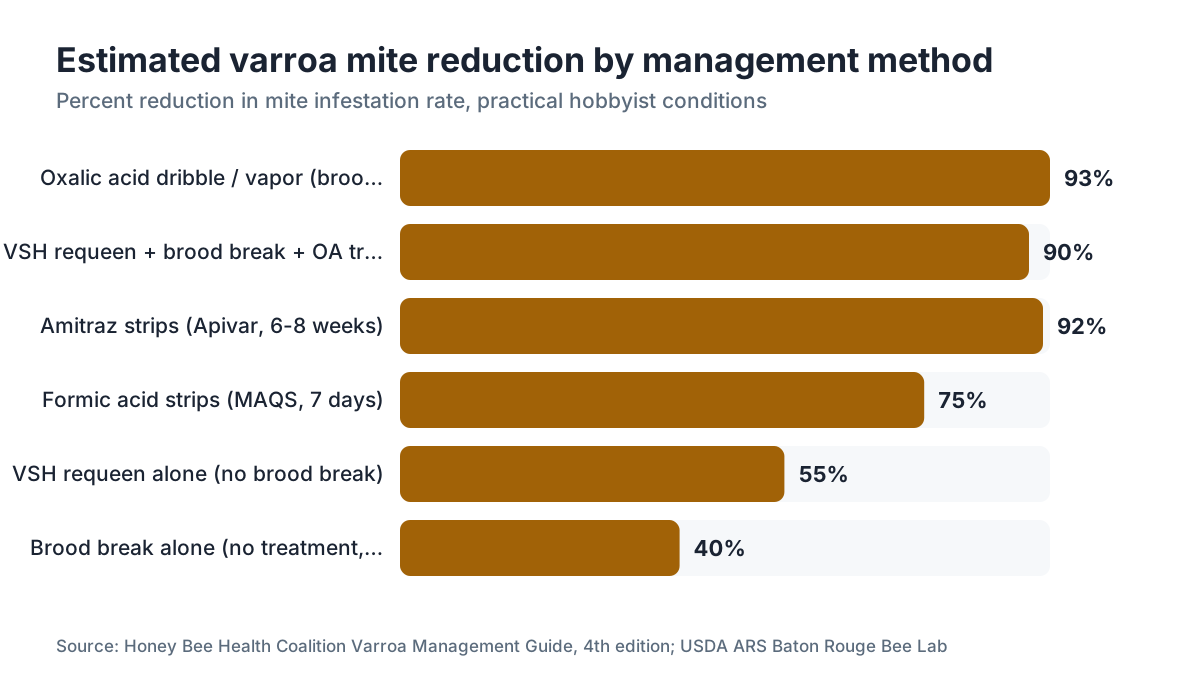
| Method | Mite reduction | Cost per hive | Brood-safe? | Duration of effect |
|---|---|---|---|---|
| Oxalic acid (broodless) | 90-95% phoretic mites | $1-3 | Yes (no brood) | Single event |
| Oxalic acid (with brood) | 60-80% over multiple treatments | $3-10 | Yes | Weeks |
| Formic acid (Mite Away Quick Strips) | 60-90% including in-cell mites | $12-20 | Partial risk to brood/queen | 7 days |
| Amitraz strips (Apivar) | 90-95% over 6-8 weeks | $15-25 | Yes | Season-long |
| Requeening (VSH hybrid) + brood break + OA | Up to 90%+ combined | $40-60 (queen cost) | Yes | Ongoing genetic effect |
| Brood break alone (no treatment) | 30-50% | $0-5 | Yes | Single event |
Amitraz and formic acid hit harder and faster in an acute high-mite emergency. Requeening with VSH stock is the only intervention that keeps working after the treatment event ends, because genetics stick around. Building a varroa protocol for the long haul? Requeening with resistant stock is the highest-return single action you can take. It just works on a 12 to 24 month timescale as the worker population turns over, not the 7-day timescale of a formic acid strip [2][3].
Running 3 to 15 hives, I would do both. Treat when the mite count demands it, and use every requeening chance to upgrade genetics. A $45 VSH queen costs less than a dead colony.
Where do you buy mite-resistant queens, and what should they cost?
You have several dependable sources. The USDA ARS Baton Rouge Honey Bee Lab does not sell to hobbyists directly, but it supplies stock to commercial queen breeders. Breeders tied to the Bee Informed Partnership, the American Honey Producers Association, and state apiarist programs often produce queens from VSH or hygienic lines. Land-grant university extension programs sometimes run local mite-resistant breeding worth checking.
To find specific sellers, start with your state apiarist's office, reachable through your state department of agriculture, which usually keeps a list of certified queen producers. USDA APHIS runs a honey bee health page that links to state apiculture programs [8]. Extension apiculture programs at NC State, Penn State, and University of Minnesota publish queen buyer guides from time to time [5].
Prices in 2024 generally ran $35 to $55 for a mated VSH or hygienic queen from a commercial breeder, and $75 to $100 for instrumentally inseminated VSH stock. Package queens from large suppliers tend to sit at the low end with less certain genetics. Locally produced VSH-hybrid queens from a state breeding program often give the best value: they are locally adapted, and the breeder can actually answer questions about the queen's parentage.
Skip any queen sold as "mite-resistant" with no named genetic line (VSH, hygienic, Russian, Pol-line, or similar). That labeling is unregulated. If a seller cannot tell you what stock the queen comes from, treat the trait claim as noise.
For equipment and vendor comparison as you build out your varroa supplies, beekeeping supply companies is a solid place to start.
What are the risks and failure modes of requeening for varroa control?
Requeening has real failure modes, and beekeepers routinely underestimate them.
Queen rejection tops the list. Acceptance rates for introduced mated queens run roughly 70 to 85% under good conditions, lower if the colony is stressed, has laying workers, or the introduction is rushed [9]. A rejected queen costs you her price and the lost time. Always use a candy-plug cage and leave it in at least 5 days; some experienced hands wait 7 to 10 days before checking.
Incomplete brood breaks come next. Leave frames with eggs in the colony, or fail to destroy emergency queen cells every 72 hours, and the colony raises its own queen from existing brood. That queen is untested, likely non-VSH, and the mite population never went through a real brood break. You lose the varroa benefit completely, and you may not even notice, because the colony still reads as queenright.
Open mating dilution is the slow one. Even a VSH queen produces workers with watered-down VSH traits if she mated with non-VSH drones locally. After 6 to 8 weeks, once her first workers make up the majority, you should see some expression, but it can run well below the breeder's test numbers. The only real fix is running mite-resistant drones in your area, which means coordinating with other beekeepers or working an isolated apiary.
Timing failures are common too. Requeen too late in summer, after your winter bees already came up in high-mite conditions, and you cannot undo the damage. The new queen's genetics help the colony next spring, but the winter bees carrying it through until then are already compromised.
One hard rule: requeening does not rescue a colony already above 5% infestation without a concurrent treatment. Never treat requeening as a substitute for treating a colony in acute mite distress. Treat first, then requeen.
How do you monitor mite levels after requeening to know if it's working?
Alcohol wash is the gold standard. The Honey Bee Health Coalition protocol calls for washing roughly 300 bees (about half a cup) in 70% isopropyl alcohol, agitating, and counting the mites in the wash [2]. Divide mite count by bee count for your infestation percentage. Do it before requeening for a baseline, again 4 to 6 weeks after the new queen's workers make up the majority, then every 4 to 6 weeks through the active season.
If your VSH hybrid requeen is working, the infestation rate should hold steady or fall through summer instead of climbing the exponential curve unmanaged colonies show. A VSH-hybrid colony that crosses the 2 to 3% treatment threshold in July still beats a non-VSH colony hitting 5% in June.
Sugar roll is the non-lethal alternative to alcohol wash. It is a bit less accurate, tending to undercount mites by 10 to 30%, but useful if you would rather not sacrifice bees for monitoring [10]. The method and its limits are laid out in the Honey Bee Health Coalition Varroa guide.
Do not lean on sticky board counts as your main tool for judging requeening success. Natural mite fall is too variable to give a reliable infestation rate, and it cannot separate reproducing mites (in cells) from phoretic mites (on bees), which matters a lot for timing.
VarroaVault's free monitoring tools include a protocol calculator that schedules alcohol wash timing around a requeening event, so you are not sampling during the brood break when the results mean nothing.
Does requeening work differently in splits or walk-away splits?
Splits and walk-away splits build a brood break into the queenless portion automatically, which is why experienced beekeepers run them as a varroa tool even when they are not trying to make more colonies.
In a walk-away split, you divide a colony and let each half either raise its own queen from existing eggs or go queenright with the original queen. The queenless half goes 24 to 35 days without a laying queen while it raises a new one from egg to mated adult. That stretch runs longer than a purchased-queen brood break because you are waiting on emergency cell development plus mating time. Through that window, mite reproduction in the queenless portion drops substantially [3].
The problem with walk-away splits for varroa is genetics. The emergency queens come from whatever eggs sat in the frames, meaning unselected stock. You get the brood break benefit and none of the genetic upgrade. Hand the queenless split a VSH queen instead of letting them raise their own, and you get both.
A good spring play: split colonies in April or May (populations high, mite loads low), introduce VSH queens to each split, treat the broodless period with oxalic acid, and roll into summer with two well-headed VSH colonies instead of one overloaded non-VSH colony. The total mite population entering summer is lower and the genetics are better. The cost is the queen and a short honey production interruption.
For how genetic diversity feeds into hive resilience, the beekeeping species article covers why Apis mellifera subspecies differ in defensiveness, productivity, and mite tolerance.
What does the research actually say about VSH queens in hobbyist apiaries?
Honest summary: the research is mostly good, but most studies run in controlled conditions that do not match a hobbyist's open-mating reality.
The foundational VSH work from the USDA Baton Rouge Bee Lab, led by John Harbo and Jeff Harris, showed that colonies with high-VSH queens held below 2% infestation in side-by-side trials against unselected controls, and that mite reproduction rates in VSH colonies ran as low as 8 to 14% versus 70 to 80% in controls [4]. The Bee Informed Partnership's multi-year colony loss surveys consistently show hobbyists who report using mite-resistant queens report lower colony loss, though self-reporting drags selection bias along with it.
A 2019 study in the Journal of Economic Entomology (Delaney et al.) found that commercial VSH-hybrid queens showed far more variable mite suppression than instrumentally inseminated VSH queens, with some commercial queens performing no better than unselected controls. The paper's conclusion put it plainly: "Mite infestation levels in colonies headed by commercial VSH-hybrid queens ranged from equivalent to unselected controls to substantially suppressed, suggesting that trait expression is highly variable in open-mated commercial stock" [4].
That variability is real and it matters. It does not mean VSH queens are a bad buy. It means you keep monitoring and never assume the genetic label alone protects your colony. Some commercial VSH queens perform beautifully. Some flop. Monitoring after requeening is the only way to learn which one you got.
Nobody has strong large-scale randomized controlled trial data on VSH queens in hobbyist apiaries across varied geography. The closest we have is Bee Informed Partnership annual survey data, which is observational, plus the Honey Bee Health Coalition's synthesis of the literature, which is the best starting point for a practical read of the evidence [2].
Frequently asked questions
How long after requeening before varroa mite levels drop noticeably?
Combine requeening with a brood break and oxalic acid treatment and mite loads can drop within 3 to 4 weeks. The genetic benefit from a VSH queen takes longer: figure 6 to 8 weeks before the new queen's workers make up the majority and you can actually measure a genetic effect. Alcohol wash your colony 6 to 8 weeks post-requeening to judge real progress.
Can I requeen mid-summer during a nectar flow to control varroa?
You can, but it is disruptive. The brood break interrupts forager cohort development and cuts honey production in the short term. Mid-summer requeening is generally worth it if your mite load already sits above 2 to 3% and climbing fast. If levels are acceptable and you just want a genetic upgrade, wait for the post-main-flow period (late July to early August across most of temperate North America). It costs you less.
Is a brood break always necessary when requeening for varroa control?
Not always necessary, but it sharply improves the outcome. Swapping queens without a brood break gives you the genetic benefit alone. Pair it with a deliberate brood break (removing all eggs and young larvae, then destroying emergency queen cells) and you add a 30 to 50% immediate mite load reduction on top of the long-term genetic benefit. If you are requeening anyway, managing a brood break is almost always worth the extra work.
What mite infestation level should trigger requeening versus just treating?
Requeening is not an acute rescue tool. If your alcohol wash reads 4% or higher, treat first with an appropriate registered miticide and requeen after the colony stabilizes. Requeening works as a forward-looking decision, ideally when mite loads still sit below 2 to 3%. Treatment is the fire extinguisher. Requeening with resistant genetics is the fire-resistant building material.
Will a VSH queen's workers eventually lose the trait through open mating?
The VSH queen keeps the trait in her egg genetics; she is diploid and was selected for VSH. But her daughters, if they become new queens through swarming or supersedure and mate with non-VSH drones, produce workers with diluted trait expression. The colony you manage stays VSH as long as that original queen is laying. Managing for VSH means requeening with VSH stock every 1 to 2 years rather than letting natural replacement thin the genetics.
Can I raise my own VSH queens from VSH stock?
Yes, but the mating environment decides the outcome. VSH queens raised from a VSH mother but open-mated in a non-VSH drone environment express the trait at reduced levels. Hobbyists who want reliable VSH queens should consider instrumental insemination, or work with nearby beekeepers to saturate the local drone pool with VSH drones. That means setting up multiple VSH colonies at once to shift the mating ratio.
Do Russian honey bees actually perform better for varroa control than Italian bees?
In controlled studies, Russian bees show measurably lower mite levels than Italian controls, credited to grooming behavior and a smaller winter cluster. But Russian bees run more defensive, swarm more readily, and demand management adjustments that frustrate beekeepers used to Italian or Carniolan stock. For a hobbyist willing to adapt, they are a legitimate mite-tolerant option. For most, VSH-hybrid stock on an Italian or Carniolan background is easier to keep.
How do I introduce a new queen to minimize rejection risk?
Always use a candy-plug cage, never a direct release. Leave the caged queen in the colony at least 5 days, preferably 7 to 10 if the colony was recently queenless or stressed. Set the cage between two frames in the center of the brood nest with the candy plug facing up. Check for rejection signs (bees balling the cage) after 24 hours without pulling the hive apart. Do not rush the release; most introductions fail because the beekeeper opened up too soon.
Is requeening cheaper than repeated oxalic acid or formic acid treatments?
Over a 2 to 3 year horizon, a $45 VSH queen that cuts your treatment frequency from 3 per year to 1 is almost always cheaper in money and time both. A single Api-Bioxal treatment costs $1 to $3 in materials but takes an hour of labor. Three treatments a year across two years exceeds most queen prices. The economic case for mite-resistant queens is solid; it just asks you to accept an upfront cost for future savings.
Can requeening help with other diseases besides varroa?
Yes. Hygienic queens (which overlap heavily with VSH stock) remove diseased larvae and pupae, lowering American Foulbrood and European Foulbrood infection rates in affected colonies. Hygienic behavior also reduces chalkbrood. The University of Minnesota's hygienic bee breeding program started around AFB resistance and later got recognized for varroa benefits. Mite-resistant queens often deliver a package deal for overall brood disease resistance.
How does requeening interact with the colony's ability to raise healthy winter bees?
This is the core argument for late-summer requeening. Varroa-parasitized pupae become adult bees with reduced fat bodies, shorter lifespans, and weakened immune function. Those are your winter bees if mite loads peak during winter bee rearing in August and September. A late-summer brood break plus VSH requeen means your winter bees come up in a lower-mite environment, raised by workers with active mite-suppression behavior, which directly improves winter survival odds.
What happens if my colony kills the new VSH queen and raises its own?
You lose the genetic upgrade and the controlled brood break. The colony raises an emergency queen from whatever eggs were present, meaning unselected genetics and an unmanaged timeline. Check acceptance at 7 to 10 days. If the queen was rejected, you will find the candy plug eaten but the queen gone, plus likely one or more emergency queen cells. Destroy those cells and try again with a new queen, or accept a locally raised queen and plan a re-introduction next season.
Do I need to treat with oxalic acid every time I requeen, or just when mite loads are high?
Treat during broodlessness whenever you are already in that window, regardless of mite count. The cost is negligible, the efficacy against phoretic mites runs near 100%, and you are already doing the brood break labor. Skipping the treatment because counts seem low is a missed opportunity. One exception: if the colony is already under a long-acting miticide like Apivar, adding oxalic acid during that period is not recommended on the current EPA label.
Sources
- Honey Bee Health Coalition, Varroa management guide (4th edition): Varroa can only reproduce inside capped brood cells; a broodless period of 21 to 24 days forces all mites into the phoretic phase.
- Honey Bee Health Coalition, Varroa management guide (4th edition): VSH or VSH-hybrid colonies can maintain mite levels below 2 to 3% infestation rate; the coalition recommends treating any colony exceeding 2% during brood-rearing season.
- Penn State Extension, Bee Health: Varroa mite management: Brood breaks alone reduce phoretic mite loads by 30 to 50%; the combination with oxalic acid during broodlessness is substantially more effective.
- USDA ARS Honey Bee Research Unit, Baton Rouge; Delaney et al. Journal of Economic Entomology (2019): High-VSH instrumentally inseminated queens suppressed mite reproduction to 8 to 14% vs 70 to 80% in controls; commercial VSH-hybrid queens showed highly variable trait expression.
- University of Minnesota Extension, Honey bee diseases and pests: Hygienic bee lines including Minnesota Hygienic and Russian bees show measurably reduced mite levels and improved resistance to brood diseases compared to unselected Italian stock.
- American Honey Producers Association, queen price guidance and breeder listings: Commercially available VSH and hygienic mated queens ranged from approximately $35 to $80 per queen in 2024 depending on breeder and insemination method.
- EPA, Api-Bioxal (oxalic acid) federal label: Api-Bioxal label specifies 3.5g oxalic acid per 10 mL of 1:1 sugar syrup per cluster space by dribble, or 1g per brood box by vaporization, as a single application during broodless conditions.
- NC State Extension Apiculture, Queen introduction techniques: Queen acceptance rates under standard candy-plug cage introduction run approximately 70 to 85% under normal colony conditions; stressed or laying-worker colonies show lower acceptance.
- Honey Bee Health Coalition, Varroa management guide: monitoring methods: Sugar roll tends to undercount mites by 10 to 30% compared to alcohol wash; alcohol wash of approximately 300 bees is the recommended monitoring standard.
Last updated 2026-07-09