Comb rotation program as part of varroa management
TL;DR
- A comb rotation program removes old brood comb on a 3-to-5-year cycle, eliminating accumulated pesticide residues, pathogens, and the dark, thick-walled cells that varroa mites prefer for reproduction.
- Paired with chemical or organic treatments, comb rotation shrinks the mite's breeding advantage and improves colony health.
- Most beekeepers replace 3-4 combs per hive per year to keep the cycle current.
What is a comb rotation program and why does it matter for varroa?
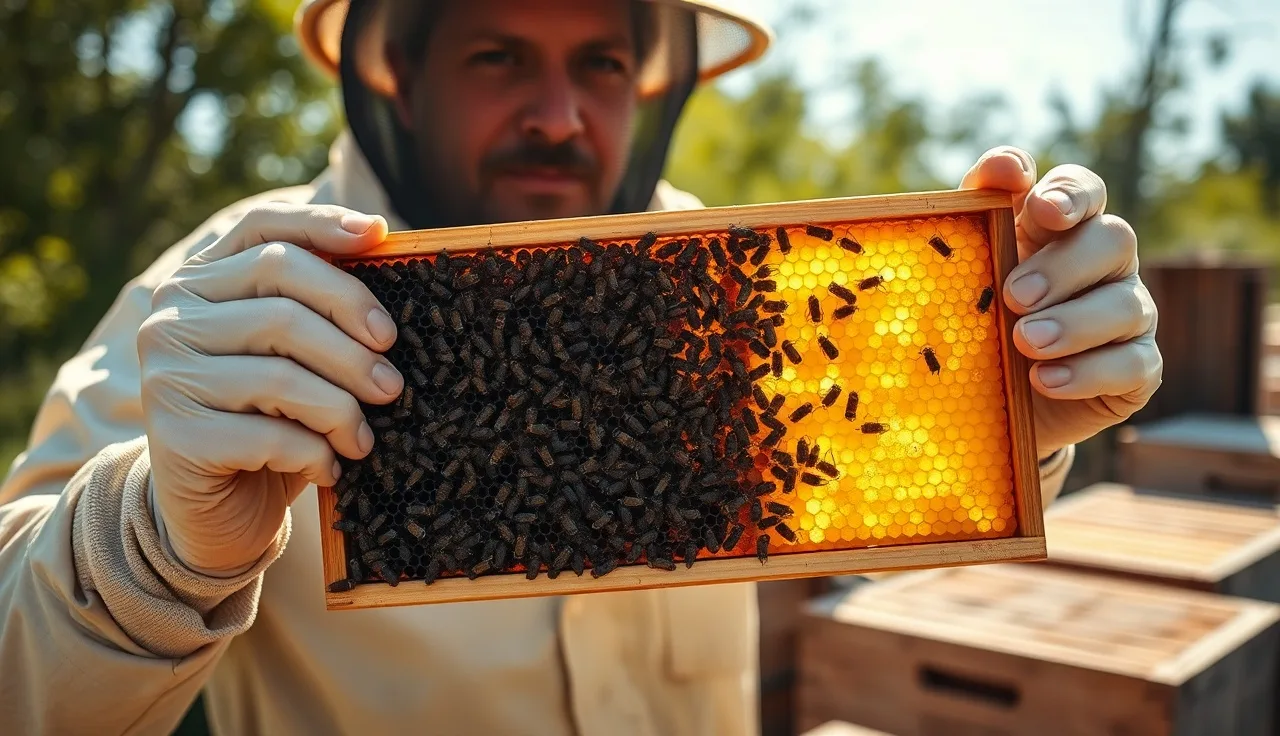
A comb rotation program is a scheduled plan to replace old brood comb with fresh foundation at a predictable rate, usually cycling out the entire set of brood frames over three to five years. Old comb is not neutral. It accumulates everything the colony has ever touched: miticide residues, fungicide drift from nearby farms, wax-borne pathogens like Nosema spores and chalkbrood cysts, and the physical legacy of thousands of brood cycles that shrink cell diameter with each cocoon layer.
For varroa specifically, the comb matters because Varroa destructor reproduces only inside capped brood cells. [1] The mite mother enters a cell just before capping, lays eggs on the developing pupa, and her daughters mate inside that same cell. Anything that changes cell conditions, including cell wall thickness, residue load, and cell diameter, can shift how successfully mites reproduce and how well treatments reach them.
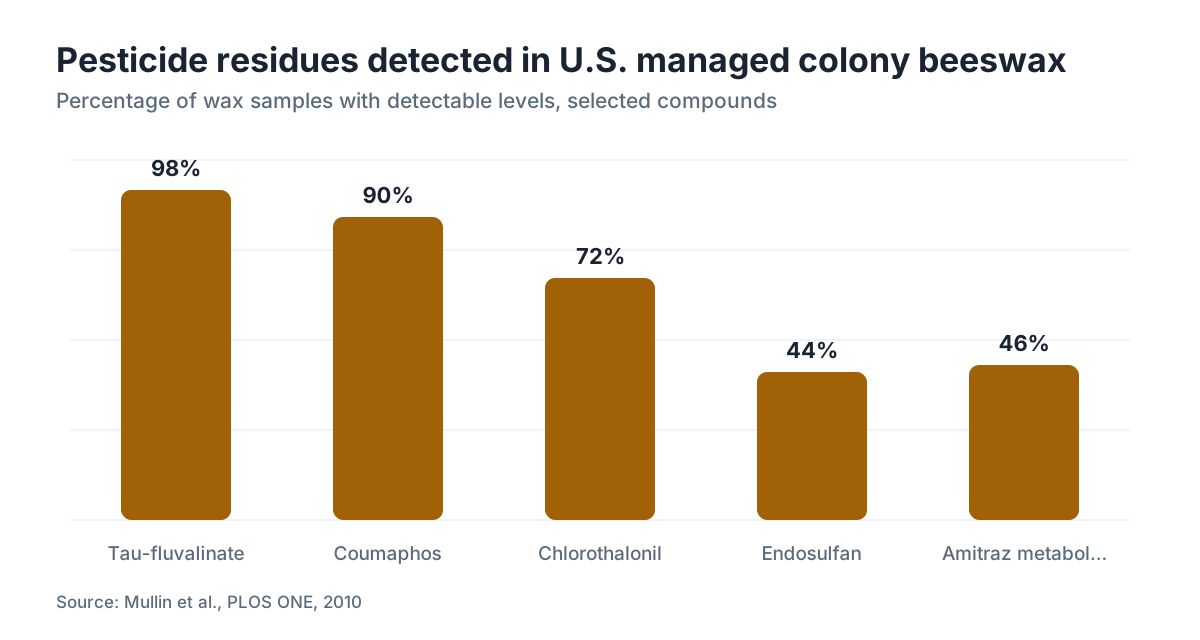
Old comb also carries sublethal doses of miticides from previous treatments. A study published in PLOS ONE found that beeswax from managed colonies contained detectable levels of tau-fluvalinate and coumaphos in a large majority of samples tested across the United States, with some samples showing more than a dozen pesticide residues at once. [2] Bees raised in heavily contaminated wax show reduced learning ability, navigational deficits, and shorter lifespans, which weakens the colony's ability to groom mites and survive winter. Rotating comb breaks that chemical accumulation cycle.
None of this makes comb rotation a standalone mite treatment. It is not. Mite counts will not drop because you added fresh foundation. Think of it as lowering the background disadvantage your bees are operating under, so your treatments hit harder and your colony bounces back faster.
How does old brood comb give varroa mites a reproductive advantage?
Each time a bee is raised in a cell, it leaves behind a cocoon layer fused to the wall. After 20 or more brood cycles, that cell is noticeably smaller in diameter and the walls are much thicker. Research from the Honey Bee Health Coalition and multiple university groups points to this as a factor in brood cell dynamics, though the direct effect on varroa reproductive success is still debated. [3]
What is less debated is the contamination angle. Coumaphos, sold historically as Checkmite+, is highly lipophilic and binds hard to beeswax. Once it is in the comb, it stays there for years. Exposure to coumaphos-contaminated wax has been shown to reduce drone sperm viability and queen reproductive performance in controlled trials. [2] A colony raising queens on contaminated comb starts at a deficit before a single mite is counted.
There is also evidence that varroa mites favor older, darker brood cells over lighter comb, though the mechanism is not pinned down. Whether that preference comes from chemical cues, physical fit, or temperature differences in older wax stays an open research question. Beekeepers see one thing consistently: fresh comb colonies, all else equal, tend to be more vigorous. That vigor shows up as better hygienic behavior, which is the main non-chemical defense against varroa.
For more background on varroa mite biology and the full reproduction cycle, that article covers the science in detail.
How fast should you rotate comb, and what does a real schedule look like?
The target you will hear most often is replacing all brood comb within three to five years. [3] Run a standard 10-frame deep with two boxes and you have 20 brood frames to cycle through. Replacing four frames per hive per year gets you through a full rotation in five years. Replacing seven per year gets you there in three. Most hobbyists land around four to five per year, which is manageable without hammering the colony.
Here is what the schedule looks like in practice. In early spring, before the main nectar flow, find the two or three darkest, oldest frames in each brood box. They are usually easy to spot: the comb is nearly black, the cells look compressed, and there may be visible propolis patchwork. Pull those frames, move them to the outside positions, and let the queen shift off them over a week or two. Once they are mostly empty of brood, remove them and drop in fresh foundation or drawn comb from a clean source.
In late summer, after your main mite treatment window, do another pass. Pull one or two more old frames. This timing pairs well with the Honey Bee Health Coalition's advice to treat colonies in late summer when mite loads peak and brood starts to contract. [3] Fewer brood frames during treatment means more mites are exposed in the phoretic phase, which makes treatments land harder.
A condensed five-year rotation for a two-deep hive:
| Year | Frames replaced | Cumulative % replaced |
|------|----------------|-----------------------|
| 1 | 4 | 20% |
| 2 | 4 | 40% |
| 3 | 4 | 60% |
| 4 | 4 | 80% |
| 5 | 4 | 100% |
Managing several hives? Mark frames when you install them with a permanent marker on the top bar, using a simple color code by year. Then you pull frames by age instead of guessing by appearance.
What do you do with old comb you pull out?
Do not put it back in another hive. That defeats the whole point. Old comb removed from one hive carries the same residues, pathogens, and mite eggs (if any brood is still present) that you were trying to get rid of.
The standard disposal method is rendering. Old brood comb melts down to separate the wax from the cocoon debris. The recovered beeswax still carries lipophilic chemical residues, so it is not suitable for lip balms, cosmetics, or food-grade products. Some beekeepers sell it to candle-makers who do not care about purity, or just toss it. The cocoon debris, called slumgum, goes in the trash or compost.
If you run a solar wax melter, old brood comb is fine for basic wax recovery. Just keep that wax stream separate from your clean cappings wax. Cappings from honey extraction come from comb that has never held brood and carries almost no residue. Mixing them degrades your clean wax.
Some beekeepers freeze old frames before disposal to kill any small hive beetles, wax moths, or remaining mites. Forty-eight hours below 20 degrees Fahrenheit is the commonly cited threshold for killing wax moth eggs and larvae. [4] That step is optional if you are rendering right away, since the heat handles it.
Does comb rotation actually reduce varroa mite counts on its own?
No, and any source that claims it will is overselling. Comb rotation does not kill mites. It does not interrupt the reproduction cycle mid-season. It is a long-game practice that improves colony health and cuts chemical background load, which makes your actual mite treatments more effective over time.
The evidence for comb rotation improving mite outcomes is mostly observational and mechanistic rather than from head-to-head controlled trials. Nobody has good long-term randomized data on mite counts in matched hives with different rotation schedules. The closest supporting evidence comes from the contaminated wax literature showing impaired bee health from residue-laden comb [2], and from the Honey Bee Health Coalition's integrated pest management framework that lists comb replacement as a cultural practice supporting treatment efficacy. [3]
Here is what to expect from a consistent rotation program: colonies that are generally more vigorous, queens that perform better on clean wax, and a lower chemical background that may improve the performance of organic acid treatments like oxalic acid and formic acid, which work through direct contact and vapor rather than lipophilic absorption. Whether your mite wash counts drop specifically because of comb rotation is nearly impossible to isolate in a real apiary. The effect is real but indirect.
Want a structured way to track mite loads alongside your comb schedule? The free tools at VarroaVault include a seasonal protocol planner where you can log frame ages and mite counts in the same dashboard, which at least lets you see patterns over multiple years.
How does comb rotation fit into an integrated varroa management plan?
Integrated pest management for varroa has four general layers: monitoring (alcohol wash or sugar roll to know your mite load), cultural practices (comb rotation, brood breaks, selecting locally adapted stock), biological controls (using naturally mite-resistant bees where available), and chemical treatments (oxalic acid, formic acid, thymol, amitraz). [3] Comb rotation sits firmly in the cultural layer.
The timing of comb removal can line up with treatment windows to get more out of both. Pull old frames in late July or early August, right before your late-summer oxalic acid or formic acid treatment, and you are doing two things at once: shrinking the brood nest, which exposes more phoretic mites to treatment, and removing old comb before bees raise the winter bee population on it. The bees that come out of cells from September through October are the ones that need to survive until April. Raising them on clean wax, with lower residue exposure, is a reasonable bet.
The Honey Bee Health Coalition's Varroa mite management guide specifically recommends combining cultural controls with chemical treatments and notes that no single method is sufficient. [3] Their treatment threshold guidance: colonies reaching 2% mite infestation (2 mites per 100 bees in an alcohol wash) during the active season warrant treatment. Comb rotation does not change that threshold, but it may help colonies stay below it longer by supporting bee health and immune function.
For hobbyists keeping a few hives, the practical message is short. Treat when your counts say to treat, and rotate comb steadily in the background. Do not delay a treatment because you think fresh comb will solve an active infestation. It will not.
Should you use new foundation, drawn comb, or small-cell foundation when replacing old frames?
Standard foundation is fine for most beekeepers. The small-cell debate has mostly played out: multiple controlled studies, including work published in peer-reviewed apiculture journals, have not found a reproducible varroa suppression effect from small-cell comb. [5] If you are using standard foundation and it is working, stick with it. If you switch foundation types for other reasons, that is your call, but do not expect a mite reduction from the geometry alone.
Drawn comb from a clean, known source can speed colony buildup a lot compared to foundation, since the bees do not have to burn energy and wax to draw it out. The catch is provenance. Drawn comb from unknown sources, including purchases from other beekeepers or from collapsed colonies, can bring in pesticide residues, pathogens, or even mites. If you accept drawn comb, freeze it for 48 hours first to kill wax moth eggs, and ask the source what treatments they have used in the past three years. If they cannot tell you, treat that comb as old comb for rotation purposes and plan to replace it sooner.
Plastic foundation with a beeswax coating holds up well in high-varroa-pressure setups because it is more durable than wax foundation under repeated inspections. It also cannot absorb lipophilic residues the way natural beeswax does, which is a genuine advantage when you are trying to break the contamination cycle. Bees generally accept it if the wax coating is thick enough. Some beekeepers add another layer of fresh beeswax before installing.
Can a brood break accomplish the same thing as comb rotation?
These are related but separate tools. A brood break stops queen laying for two to four weeks, either by caging the queen, removing her temporarily, or splitting the colony. During that break, all brood hatches out, leaving no capped cells for varroa to reproduce in. That collapses mite populations mid-season fast: a well-timed brood break followed by an oxalic acid treatment can cut mite loads by 90% or more, because oxalic acid works best against phoretic mites (those riding on adult bees rather than hidden in capped cells). [6]
Comb rotation does not create a brood break. The queen keeps laying throughout the rotation process. You are pulling frames that are mostly empty of brood, not stopping reproduction colony-wide.
The two pair well. A brood break in late summer, followed by oxalic acid treatment, followed by swapping two or three old frames for fresh foundation before winter, is a strong end-of-season protocol. The colony goes into winter with a reduced mite load, fresh comb for the cluster, and no accumulated residues undermining the winter bees. That combination is hard to beat.
One thing to watch: pulling brood frames from a colony that is already stressed, or during a dearth, can trigger robbing. Be deliberate about timing and reduce entrances when you are disrupting the brood nest.
What are the risks and common mistakes in a comb rotation program?
The biggest mistake is pulling too many frames at once. Removing four or five frames from an active colony during the main flow can crash population growth, leave the queen with too little laying space, and trigger a swarm response or supersedure. The rule of thumb most experienced beekeepers use: no more than two frames at a time from a single box, and never more than 20-25% of the brood nest in a single inspection. [3]
Another common mistake is pulling frames that still hold significant open or capped brood. Those bees die if the frame comes out. Wait until the frame has naturally declined. Move it to an outside position and let the queen deprioritize it, or wait until a natural brood break reduces what is on it. If only a handful of capped cells are left, you can shake the adult bees off, brush any emerged bees back, and move the frame to a nuc box over fresh foundation to let the remaining brood hatch before disposal.
Not tracking frame age is a slow-motion mistake. Without a marking system, you pull frames by gut feeling, which means you may cycle the same recently added frames while leaving truly ancient comb untouched in a corner. Mark every frame when it goes in.
Some beekeepers treat comb rotation as a substitute for actual mite monitoring. It is not. Check your mite loads with an alcohol wash at least four times a year, more if you have a history of high counts. [3] Fresh comb will not save a colony sitting at 5% infestation in July.
How does comb rotation interact with chemical varroa treatments?
This is where the practical fit between comb rotation and treatment chemistry gets real. Oxalic acid (Api-Bioxal) works mainly through direct contact with phoretic mites on adult bees. It does not penetrate capped cells. So the more brood you have in a hive, the lower the efficacy of any single application, because a large share of the mite population is hiding in capped cells. Shrinking the brood nest, which happens naturally late in the season and can be managed through comb rotation and frame removal, improves oxalic acid effectiveness a lot. [6]
Formic acid (Formic Pro, Mite Away Quick Strips) does volatilize into capped cells to some degree and has efficacy against mites in brood, which makes it a stronger mid-season option. [7] But formic acid treatments are temperature-sensitive and can stress queens, especially in colonies with older, contaminated comb where bees may already be physiologically stressed. A colony on clean comb tolerates the treatment better, anecdotally.
Amitraz-based treatments (Apivar) are strips that release amitraz slowly over 6-10 weeks. Amitraz is lipophilic and absorbs into comb wax over time, adding to the residue burden. That is a real reason to rotate comb in hives where you have used Apivar repeatedly: the amitraz building up in old comb is not neutral. The EPA-registered Apivar label specifies removing strips after the treatment period to limit residue buildup. [8]
The practical upshot: rotate comb consistently, treat based on mite counts, and think of fresh comb as cutting the chemical noise your bees are fighting through while treatments do their job. Finding good beekeeping supply companies to source clean foundation and frames at reasonable prices makes the annual rotation budget easier to swallow.
How much does a comb rotation program cost per year?
The main cost is foundation and frames, or drawn comb if you buy it. As of 2025, standard deep frames run roughly $1.50 to $3.50 each depending on whether they arrive assembled or in kit form, and wax foundation runs $1 to $2 per sheet. Replace four frames per hive per year and the annual material cost per hive lands around $10 to $22, plus your time to assemble and install. [9]
For five hives, that is roughly $50 to $110 per year in material cost to maintain a full rotation schedule. That is less than a single package of Apivar strips ($25-35 per hive), which puts the number in perspective. The labor is real but modest: marking, inspecting, and replacing four frames takes about 20 minutes per hive if you are organized.
Render your old comb and you recover some wax value, though old brood comb yields poorly compared to cappings (roughly 60-70% recovery versus near 90% for clean cappings wax, and the quality is lower). Recovering and using or selling that wax offsets part of the cost, but not most of it.
The indirect savings, healthier colonies with lower winter loss rates, are real but impossible to pin down for any single beekeeper. Colony loss costs roughly $150-250 for a new package or nuc to replace a dead hive. If consistent comb rotation and good mite management saves even one colony per year across a small apiary, the math is obvious.
Frequently asked questions
How often should you replace brood comb for varroa management?
The standard recommendation is to cycle out all brood comb within three to five years. For a two-deep hive with 20 brood frames, replacing four frames per year hits the five-year cycle. Replace two per year if you want a lighter touch. The Honey Bee Health Coalition lists comb replacement as a cultural practice in their integrated varroa management framework, though they do not specify a rigid annual number.
Will rotating comb actually lower my mite count?
Not directly. Comb rotation does not kill mites or interrupt reproduction mid-season. It removes accumulated pesticide residues and old cell structure that undermine colony health and bee immunity. Healthier bees show better hygienic behavior, which helps suppress varroa over time. But if your mite wash shows 2% or higher infestation, you need a chemical or organic treatment, more than fresh comb.
What is the best time of year to rotate brood comb?
Early spring before the main nectar flow and late summer after your main mite treatment window are both good. Late summer is especially strategic: pulling old frames then reduces the brood nest slightly, which raises the proportion of phoretic mites exposed to oxalic acid treatment. The bees that hatch from September onward, the critical winter bee population, also benefit from cleaner wax.
Can I reuse old brood comb in a different hive?
You should not. Old comb carries the pesticide residues, pathogen load, and shrunk cell diameter specific to that hive's history. Moving it to another hive transfers those problems. If the comb is truly old and dark, render it for wax and replace it with fresh foundation. Shuffling problematic comb around your apiary does not eliminate the issue, it spreads it.
Does small-cell foundation help with varroa compared to standard foundation?
No, not based on current evidence. Multiple controlled studies have failed to find a reproducible varroa suppression effect from small-cell comb geometry. If you are replacing old comb, standard foundation or plastic coated foundation works fine. The key benefit of replacement is eliminating accumulated residues and aging wax, not changing cell size.
How do I know which frames are old enough to pull?
The easiest method is to mark every frame top bar with a permanent marker showing the year it was installed. A simple color code or two-digit year works well. Pull the oldest frames first. Visually, old brood comb is nearly black, the cells look compressed, and there is often heavy propolis caulking around the frame. Without a marking system, age guessing is unreliable.
Is there a risk of disrupting the colony when pulling brood frames?
Yes, if done carelessly. Never pull more than two frames at once from a single box, and avoid frames that still carry significant capped brood. Move old frames to outside positions first and let the queen naturally deprioritize them. During a dearth or in a stressed colony, disrupting the brood nest can trigger robbing. Reduce the entrance when doing significant frame work.
How does comb rotation interact with oxalic acid treatments?
Oxalic acid works on phoretic mites, those riding on adult bees, not mites inside capped cells. Pulling old brood frames in late summer slightly reduces the brood nest, which raises the phoretic mite proportion and improves oxalic acid efficacy. The two practices support each other when timed together. Api-Bioxal is the EPA-registered oxalic acid product for U.S. beekeepers.
What chemicals accumulate in old brood comb and why do they matter?
Tau-fluvalinate, coumaphos, amitraz breakdown products, and agricultural fungicides are among the most common residues found in beeswax from managed colonies. A PLOS ONE study found detectable tau-fluvalinate and coumaphos in the majority of U.S. beeswax samples tested. These compounds are lipophilic and bind permanently to wax. Bees raised in heavily contaminated comb show reduced learning ability, shorter lifespans, and impaired navigation.
Can I use drawn comb from a dead-out to replace old frames?
Be very careful here. Comb from a dead colony can carry the cause of death, whether that is Nosema, American foulbrood, or a high mite load from the last generation. At minimum, identify the cause of death before reusing any equipment. If the cause is unknown, freeze the comb for 48 hours to kill wax moths, inspect for disease signs, and treat that drawn comb as suspect until proven otherwise. AFB-contaminated comb should be burned, not reused.
How does comb rotation fit with a brood break strategy?
A brood break stops queen laying temporarily, forcing all mites to become phoretic and vulnerable to oxalic acid treatment. Comb rotation does not create a brood break. The two complement each other: use a late-summer brood break plus oxalic acid treatment to knock down mite loads, then replace two or three old frames with fresh foundation before winter. That combination addresses both the acute mite problem and the chronic comb quality issue.
How many frames should I replace per year in a single-deep hive?
A single-deep brood box typically holds 10 frames. Replacing two to three frames per year cycles through all comb in three to five years. Since single-deep setups have less margin for disruption, err toward two frames per rotation session rather than three, and time it for spring or late summer when the colony can quickly draw out the fresh foundation.
Does comb rotation help with American foulbrood or other diseases?
Not directly for AFB, which requires burning infected equipment. But old comb that harbors Nosema spores, chalkbrood cysts, or European foulbrood pressure does get removed through regular rotation. Fresher comb means a lower baseline pathogen environment, which supports colony immune function alongside varroa management. AFB is a separate, serious situation that requires immediate action beyond any rotation program.
What is the cheapest way to run a comb rotation program?
Buy unassembled frame kits and wax foundation in bulk at the start of the season. As of 2025, deep frames in kit form cost roughly $1.50 to $2.50 each, and foundation runs $1 to $2 per sheet. For four frames per hive, the annual cost is $10 to $18 per hive in materials. Render old comb in a solar wax melter to recover some wax value, though the residue-heavy wax from old brood comb only suits candles or non-cosmetic uses.
Sources
- USDA ARS, Varroa destructor biology overview: Varroa destructor reproduces exclusively inside capped brood cells
- Mullin et al., PLOS ONE, 'High Levels of Miticides and Agrochemicals in North American Apiaries', 2010: Tau-fluvalinate and coumaphos were found in the majority of U.S. beeswax samples; multiple pesticide residues co-occur in managed colony wax
- Honey Bee Health Coalition, Varroa Mite Management Guide (4th edition): Comb replacement is listed as a cultural control practice; 2% mite infestation threshold for treatment; no single method is sufficient; late-summer treatment timing recommended
- University of Florida IFAS Extension, wax moth management: 48 hours below 20 degrees Fahrenheit is the commonly cited threshold for killing wax moth eggs and larvae
- Coffey et al., Journal of Apicultural Research, 'Brood cell size has no influence on the population dynamics of Varroa destructor mites in the native western honey bee', 2010: Controlled studies have not found a reproducible varroa suppression effect from small-cell comb geometry
- EPA, Api-Bioxal (oxalic acid) product registration: Oxalic acid is most effective against phoretic mites on adult bees; efficacy is reduced when significant capped brood is present
- EPA, Formic Pro (formic acid) product registration: Formic acid volatilizes into capped cells and has efficacy against mites in brood
- EPA, Apivar (amitraz) product registration: Apivar label specifies removing strips after the 6-10 week treatment period to minimize residue buildup in comb
- Mann Lake Ltd., beekeeping equipment pricing reference: Deep frames in kit form cost approximately $1.50-$3.50 each; wax foundation $1-$2 per sheet as of 2025
Last updated 2026-07-10