Seasonal varroa treatment calendar template for hobbyist beekeepers
TL;DR
- Varroa management runs on four seasonal windows: late winter brood break (oxalic acid), spring buildup (monitor and threshold-treat), midsummer (Apivar or MAQS when counts climb), and late summer before winter bees emerge.
- Miss the late-summer window and your colony almost certainly won't survive.
- This calendar maps treatments to biology, not the month on your wall.
Why does varroa treatment need a seasonal calendar?
Varroa destructor doesn't run on a monthly schedule. It runs on brood cycles. At any given moment, 70 to 85 percent of the mites in your hive sit inside capped brood cells, where nearly every approved treatment can't touch them. [1] That single fact is why timing beats product choice: treat at the wrong moment and you're only hitting the minority of mites riding around on adult bees.
A seasonal calendar forces you to think about the hive's biology first, then drop a treatment decision on top of it. Four windows matter. Late winter, during a brood break or near-break. Spring buildup. Midsummer, before the winter-bee generation starts. And the actual winter brood break, if you live somewhere that gets one. Each window has a different mite-to-bee ratio, a different product toolbox, and a different penalty for getting it wrong.
The Honey Bee Health Coalition's Varroa management guide puts the late-summer window bluntly: colonies treated after early August in most of the U.S. may not raise enough healthy winter bees to survive. [1] Plan the whole year in advance. Don't react when you finally spot bees with deformed wings, because by then the damage is baked in.
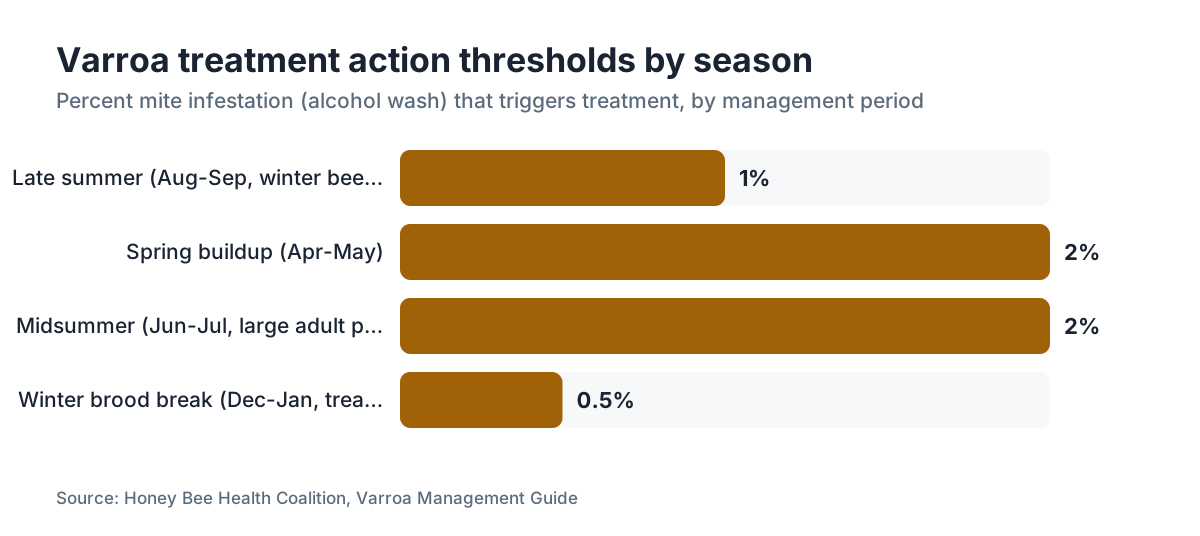
What mite threshold should trigger treatment at each time of year?
The most widely cited action threshold is 2 percent on an alcohol wash: 2 or more mites per 100 bees, treat. [1] The Honey Bee Health Coalition and most state extension programs use that number, though some labs push it to 3 percent outside the sensitive late-summer window.
Thresholds shift with the season because the stakes aren't the same year-round.
| Season | Common action threshold | Why it's tighter or looser |
|---|---|---|
| Late summer (Aug, Sep) | 1 to 2% | Winter bees developing; damage is irreversible |
| Spring buildup (Apr, May) | 2% | Rapid mite growth can outpace colony |
| Midsummer (Jun, Jul) | 2 to 3% | Large adult population dilutes count; monitor closely |
| Winter brood break (Dec, Jan) | Any mites present | Brood absent; OA is maximally effective |
A couple of notes on that table. The 1 percent late-summer number comes from researchers who'd rather over-treat than gamble on winter bees, and the Coalition recommends treating before August in many regions regardless of count because waiting costs more than treating. [1] The "any mites present" winter threshold reflects a hard number: oxalic acid vaporization during a true brood break kills close to 95 percent of mites in one shot, so there's almost no reason to hold off. [2]
Alcohol wash is the method most extension programs recommend because it's accurate. A sugar roll is gentler but roughly 30 percent less accurate, per work from the Bee Informed Partnership. [3] Use alcohol wash for threshold decisions, especially around late summer, when a false low count can cost you the colony.
What does a full-year varroa treatment calendar look like month by month?
This template is built for temperate North America, roughly USDA hardiness zones 5 through 7. Push every date 2 to 4 weeks earlier in the Deep South or California, and 2 to 4 weeks later in the northern Great Plains or New England. The dates assume you monitor monthly with an alcohol wash.
January / February: Winter brood break window
If your colony is broodless or nearly so, this is the best moment of the whole year to apply oxalic acid. A single vaporization when brood is absent hits close to 95 percent of mites because none are hiding in cells. [2] Oxalic acid dihydrate (OxaVar, Api-Bioxal) is EPA-registered for this use. Follow label rates exactly. The Api-Bioxal label specifies 1 gram of oxalic acid dihydrate per brood box for a dribble, plus specific vapor exposure times for a vaporizer. [4] If your colony has brood (common in the South and on the West Coast), one treatment won't cut it. Plan on 3 to 5 vaporizations 5 days apart, or switch to a strip product.
March / April: Spring buildup monitoring
Start monthly alcohol washes as soon as there's consistent brood. Mite populations outgrow bee populations in spring because the mite's reproductive rate in brood outpaces the colony's ability to dilute it. If you treated well in winter and your February wash was low, an April wash over 2 percent still demands action. Formic acid products (MAQS, Formic Pro) work in cool weather down to 50 F ambient, which makes them a reasonable spring pick. [5] Apivar (amitraz strips) also works in spring but needs 6 to 8 weeks of contact time, so plan the runway.
May / June: Pre-honey-super management
Harvesting honey narrows your options fast, because most approved miticides aren't labeled for use with supers on. Oxalic acid is the exception: the Api-Bioxal label permits vaporization with supers in place as long as honey from those supers isn't intended for human consumption that season (check the current label for exact language). [4] Most beekeepers in this window either treat before supers go on, run a brood-break strategy, or accept that chemicals are off the table and plan a hard late-summer hit the moment supers come off. Monitor monthly no matter what.
July: The decision month
July is when a lot of hobbyists make the mistake that kills their colony the following February. If your July wash comes back at 2 percent or above, treat now, not after the honey harvest. The Honey Bee Health Coalition's research summary states that colonies carrying high mite loads in late summer raise winter bees with shortened lifespans and reduced fat body mass, and those bees can't be replaced before winter. [1] Get supers off. Treat with Apivar or Formic Pro. Eat the hit on a late harvest if that's the trade.
August / September: The window that decides the year
This is where the calendar lives or dies. Treatment from August through early September knocks mites down before the colony raises the long-lived fat bees that carry it through winter. Most extension programs want treatment complete, more than started, by September 1 in the northern U.S. and Canada. [6] Apivar needs 6 to 8 full weeks, so strips going in August 1 should come out by mid-September. Formic Pro works in two 7-day treatments, which buys flexibility. Watch your temperatures: MAQS and Formic Pro carry upper limits (above 85 to 92 F depending on formulation) that can kill queens. [5]
October / November: Post-treatment monitoring and winter prep
Pull strips, run a final alcohol wash, and decide whether a follow-up oxalic acid treatment is worth it before brood drops off completely. In the northern U.S., colonies often go broodless by November, which opens another high-efficiency OA window. Feed light colonies. Your big decisions are locked in by now, and the work is confirming whether they paid off.
December: Brood-break window again
Northern colonies broodless by late November or December can take another oxalic acid vaporization. This mops up mites that survived the fall treatment, especially if you ran Apivar while the colony had heavy brood coverage. Cold weather isn't an excuse to skip monitoring.
Which varroa treatments are approved for each season?
The EPA regulates every varroa miticide sold in the U.S. as a pesticide. Buy and use only products with a valid EPA registration number. Off-label use is illegal and breeds resistance. [7] Here's a working breakdown of the main options and where they fit the calendar.
| Treatment | Active ingredient | Seasonal fit | Honey super restriction | Notes |
|---|---|---|---|---|
| Api-Bioxal / OxaVar | Oxalic acid | Winter brood break; any brood break | Yes (check label) | ~95% effective when broodless; much lower with brood |
| Apivar | Amitraz | Spring or late summer; 6 to 8 weeks | No supers on | Resistance documented in some apiaries; rotate |
| MAQS | Formic acid | Spring and fall; 50 to 85 F | Not with supers | Fast acting; queen risk at high temps |
| Formic Pro | Formic acid | Spring and fall; extended temp range | Not with supers | 2x7-day applications common |
| Apiguard / ApiLife Var | Thymol | Summer to fall; above 60 F | No supers on | Temperature-sensitive; works poorly in cold |
| Hopguard 3 | Hops beta acids | Spring/summer; limited efficacy data | Check label | Best as supplemental, not standalone |
Resistance is a real problem with amitraz (Apivar). A 2020 study in PLOS ONE documented amitraz resistance-associated mutations in Varroa populations across multiple U.S. states. [8] Extension programs recommend rotating treatment classes every 1 to 2 years. Don't run the same product in your spring and fall windows in the same year if you can help it.
Check registrations and current labels through the EPA's pesticide registration pages. [7] Read the current label before every treatment season, because registrations and label language change.
How do you build a varroa calendar template you'll actually use?
A calendar that lives in a binder and never gets opened is worthless. Here's how to build one that turns into a habit.
Start with monitoring dates, not treatment dates. Write in alcohol washes every 4 weeks from March through October, then once in December. Those washes are non-negotiable anchor points. Everything else flows from what the mites tell you.
Mark your treatment windows in pencil, because weather and colony conditions will move them. Two windows belong on the calendar every year regardless of counts: the winter brood-break oxalic acid opportunity and the late-summer pre-winter-bee window. Even when counts look low, those are the moments when cheap, high-efficiency action is on the table.
Then add your honey super dates. Working backward helps: if supers come off September 1, a late-summer Apivar treatment must start no later than August 1 to get its full 6 weeks. That logic hardens into a firm date, not a vague intention.
Tools like the one at VarroaVault can generate a location-adjusted template automatically, which is a decent starting point before you tailor it to your apiaries and your style. The final product should be a one-page calendar you print and tape inside your hive toolbox.
One note for anyone running more than one yard: if your colonies carry different mite loads or sit in different locations, each apiary needs its own calendar. A single calendar averaged across sites will shortchange your worst colonies, which are exactly the ones most likely to crash and then drift mites into your healthy hives.
How does climate and geography change the treatment schedule?
The hard truth about any template is that it can't be one-size-fits-all. A beekeeper in Minnesota and a beekeeper in Georgia face different colony biology, and a calendar built for one will fail the other.
In the Deep South, colonies rarely go fully broodless. That collapses the winter brood-break OA window, or shrinks it to a few short broodless stretches in January or February. Beekeepers there lean on multiple OA vaporizations timed for the coldest weeks, or on strips that work with brood present. [6]
In the Pacific Northwest, the mild maritime climate stretches winter bee production later, and some colonies raise brood nearly year-round at low levels. The practical effect: the late-summer treatment window shifts earlier, often into late July.
At altitude, short summers squeeze every window. A beekeeper at 7,000 feet in Colorado might not see spring buildup start until May, with a late-summer treatment window that runs only from late June to late July before the cold nights come back. Thymol products (Apiguard, ApiLife Var) need ambient temperatures above 60 F to vaporize, which can rule them out entirely in mountain apiaries. [9]
The Honey Bee Health Coalition's Varroa management guide includes region-specific timing that's the best starting point for localization. [1] Your state department of agriculture or university extension program usually has a state-specific publication too. University of Minnesota Extension and Penn State Extension both publish varroa calendars calibrated to their regions. [6][9]
What monitoring method should you use, and how often?
Monitoring frequency is where most hobbyist programs fall apart. Counting mites once a year in the fall isn't a management program. It's an autopsy.
The minimum schedule that catches problems in time to act:
- Every 4 weeks from March through October
- Once in December if you have any reason to doubt the fall treatment
- 3 to 4 weeks after any treatment, to confirm it worked
Alcohol wash is the method most extension programs recommend for decision-making. Collect about 300 bees (roughly half a cup) from a frame near the brood nest, not the entrance and not the outer frames. Add 70 percent isopropyl alcohol, shake for 60 seconds, pour through a mesh lid, and count the mites that wash through. Divide mites by bees, multiply by 100. That's your percent infestation. [3]
The Bee Informed Partnership's survey data, drawn from more than 9,000 respondents, found that beekeepers who monitor mite levels regularly lose fewer colonies than those who don't monitor at all. [3] The exact loss gap shifts year to year, but the direction has held across multiple seasons of their annual loss survey.
Sticky-board mite drop counts aren't reliable for treatment decisions. They correlate poorly with real infestation and can trick you into underestimating a dangerous load. Use them for rough trend-watching, never as threshold data.
For the biology driving all of this, the varroa mite article on this site covers the parasite's reproductive cycle in detail.
What happens if you miss a treatment window?
The cost of a missed window isn't uniform. Missing a spring treatment when counts sit below threshold costs you almost nothing. Missing the late-summer window with a load above 2 percent is nearly always fatal by February.
Here's why. The bees raised from August through October are the colony's winter bees. They carry enlarged fat bodies, higher protein stores, and lifespans up to 6 months, against 6 weeks for a summer bee. Varroa feeding during the pupal stage of these bees directly cuts their fat body mass and shortens their lives. A 2019 study in the Journal of Insect Physiology found varroa-parasitized winter bees had measurably reduced hemolymph protein titers compared to non-parasitized cohorts. [11] A colony of compromised winter bees can look fine in November and be dead by January, because those bees run out of life before spring arrives.
If you've missed the window and it's already September, you still have moves. Oxalic acid vaporization during any brood break, even a partial one from caging the queen for 24 days, can cut mite loads hard. Some beekeepers make a split or requeen to force a brood break, then treat. These are recovery strategies, not preferred management, but they're documented in extension literature. [6]
Don't assume a high-mite colony won't drift mites into your other hives. It will. Varroa spreads through drifting bees, robbing, and swarms. A collapsing colony is a mite bomb for every hive within flight range.
How do you record and track treatments for regulatory and practical purposes?
Record-keeping isn't bureaucratic overhead. It's how you notice that your Apivar didn't drop mites the way it should have, or that winter survival tracks with specific treatment timing.
At minimum, record for each hive: monitoring date, method, mite count, and percent infestation; treatment applied, product name, EPA registration number, lot number, application date, and removal date; and any queen status or abnormalities you saw. A paper log in a weatherproof sleeve under the hive lid works fine. So does a spreadsheet.
Sell honey and a treatment log becomes your defense against pesticide residue questions, and in some states it may be required. The USDA National Organic Program prohibits synthetic miticides, including amitraz and coumaphos, in certified organic operations, so if you're chasing organic certification, your records need to show only approved substances went in. [12]
Once you're past a handful of hives, tracking a whole season by hand gets unwieldy. That's another use for the free tools at VarroaVault, where you can log treatment events and monitoring results in one place and watch your infestation trends without building a spreadsheet from scratch.
For sourcing the treatments and equipment themselves, a reliable beekeeping supply company makes a real difference in getting products in hand before your window closes.
Can you manage varroa without chemicals, and does it fit into a seasonal calendar?
You can cut chemical use a lot. You probably can't drop it entirely and keep a healthy colony long-term, at least not without trading in a heavy dose of labor. The research on fully treatment-free management is real, but the conditions are narrow: survivor stock bred for varroa resistance, small isolated populations, or a willingness to accept higher annual losses.
Mechanical and cultural controls that slot into a seasonal calendar:
Brood breaks, made by caging the queen or removing her for a walk-away split. A 24-day brood break clears all capped brood and leaves the colony fully open to a single OA treatment. It's labor-intensive but effective, and it fits a late-spring or midsummer slot.
Drone comb trapping in spring. Varroa prefers drone brood, infesting it at roughly 8 to 10 times the rate of worker brood. [1] Put a frame of drone comb in the brood nest in April or May, then freeze it once it's capped, and you pull a real mite load before the midsummer spike. Not a standalone fix, but a meaningful supplement.
Resistant stock. Colonies bred for Varroa Sensitive Hygiene (VSH) or general hygienic behavior genuinely hold lower mite loads. [13] Requeening with VSH stock in May or June is a calendar event worth planning. It won't end monitoring or all treatment, but it can keep you under threshold more of the year with fewer interventions.
Foundationless and small-cell comb haven't shown consistent mite reduction in controlled studies, despite years of anecdotal enthusiasm. The evidence isn't there to recommend it as a treatment strategy.
The honest answer: a well-timed oxalic acid program plus one or two strip treatments a year, backed by resistant stock and drone trapping, is the closest thing to a low-chemical calendar that reliably works for hobbyists.
What's the single biggest mistake beekeepers make with varroa timing?
Waiting until you can see the problem.
Deformed wing virus, crawling bees, bald brood patches. By the time these show up, your infestation is almost certainly past 5 percent and the colony has already raised a generation of compromised bees. The Honey Bee Health Coalition's data places varroa-driven collapse as the leading cause of winter loss in managed U.S. colonies, and the story is almost always the same: a beekeeper who noticed symptoms in October and treated too late. [1]
The second-biggest mistake is treating without checking afterward. You ran Apivar for 6 weeks. Good. Did it work? An alcohol wash 3 to 4 weeks after removal tells you whether your load actually dropped below 2 percent, or whether placement, temperature, or resistance sabotaged it. Roughly 15 to 20 percent of treatments miss their expected efficacy, from resistance or application error. [8] Skip the follow-up wash and you won't find out until your winter bees are already compromised.
The third mistake is buying the cheapest or most convenient product instead of the one that fits the window. Apiguard needs 60 F nights. Apivar needs 6 weeks of contact. Oxalic acid without a brood break drops from around 95 percent efficacy to below 50 percent. [2] The wrong tool for the window is no better than not treating.
Plan the calendar in January. Adjust as the season develops. Treat on your monitoring data, not on what the neighbor is doing this week.
Frequently asked questions
When is the best time of year to treat for varroa mites?
Late summer, roughly July through early August in most of the U.S., is the single most important window. Treating before the colony raises its winter bees protects the long-lived fat bees that carry it through cold months. The winter brood break is the most efficient moment (oxalic acid hits close to 95 percent of mites), but missing the late-summer window is what actually kills colonies.
How often should I do a varroa mite wash?
Every 4 weeks from March through October, minimum. Add a December wash if your fall treatment results felt uncertain. Always run a follow-up wash 3 to 4 weeks after any chemical treatment to confirm it worked. That post-treatment check catches resistance or application problems before they cost you the colony.
What is the 2% varroa threshold and where does it come from?
Two mites per 100 bees on an alcohol wash (2 percent infestation) is the widely cited action threshold in the U.S. It comes from the Honey Bee Health Coalition's Varroa management guide, which pulls together research and extension recommendations. In late summer, some programs lower the threshold to 1 percent because underestimating infestation during winter-bee production is irreversible.
Can I use oxalic acid when the hive has brood?
Yes, but efficacy drops hard. Oxalic acid only kills mites on adult bees, not mites sealed in capped cells. During a true brood break, a single vaporization reaches roughly 95 percent of mites. With brood present, one application may hit fewer than 50 percent. If you must treat with brood in the hive, plan 3 to 5 vaporizations 5 days apart to catch mites as they emerge.
How long do Apivar strips need to stay in the hive?
The Apivar label specifies a minimum of 6 weeks and a maximum of 8 weeks of contact time. Pulling strips early is a common mistake that leaves treatment incomplete. Plan your calendar so strips go in early enough to run the full 6 to 8 weeks and still come out before or shortly after your target end date, typically mid-September for a late-summer treatment.
What varroa treatments are safe to use with honey supers on?
Very few. Most approved miticides, including Apivar, MAQS, Formic Pro, and Apiguard, aren't labeled for use with supers on. Api-Bioxal (oxalic acid) has a label provision for vaporization with supers present in some situations, but honey from those supers may not be sold for human consumption that season. Always read the current EPA-registered label before applying any product.
Does my varroa treatment calendar need to differ by region?
Yes, a lot. In the Deep South and California, colonies rarely go fully broodless, which limits the winter OA window and shifts timing earlier overall. In the northern Great Plains and New England, the fall window is compressed and thymol products may not get warm enough nights to work. Adjust all template dates by 2 to 4 weeks based on your local brood-break timing, not the calendar month.
How do I know if my varroa treatment actually worked?
Run an alcohol wash 3 to 4 weeks after removing or completing any treatment. If your count is still at or above 2 percent, the treatment failed or resistance is present. Sticky-board mite drop counts aren't accurate enough for this. A failed late-summer treatment needs immediate follow-up with a different treatment class before winter bees are sealed.
Is it possible to manage varroa without chemicals?
Possible, but demanding. Brood breaks from caging the queen, paired with oxalic acid vaporization, can substantially cut chemical strip use. Drone comb trapping in spring pulls a real mite load. Requeening with VSH or hygienic stock genuinely helps. But fully chemical-free management in standard colonies usually means accepting higher losses or heavy labor substitution that most hobbyists find unsustainable.
What happens if I miss the late summer varroa treatment window?
Your winter bees, raised from August through October, will likely be parasitized during pupation. Those bees carry reduced fat body mass and shorter lifespans. The colony can look fine in November and be dead by January. Emergency options include forcing a brood break by caging the queen and then treating with oxalic acid, but that's a recovery move, not a substitute for timely fall treatment.
How do I create a brood break to improve oxalic acid efficacy?
Cage the queen in a hair curler or push-in cage for 24 days. Workers build no new brood while she's confined, and all capped brood present at caging emerges within 12 days. After day 24, the hive is effectively broodless. Apply oxalic acid vaporization right away. Release the queen after treatment. This pairs well with requeening if you planned to replace her anyway.
Should I treat varroa in spring even if my mite count is below 2%?
Not necessarily. Below-threshold spring counts don't require treatment, but they do require continued monthly monitoring. Mite populations can double every 4 to 6 weeks during spring buildup. A 1 percent count in April can hit 3 to 4 percent by June in a fast-growing colony. Monitoring every 4 weeks is the safeguard; treatment follows the data, not the month.
What's the difference between MAQS and Formic Pro for varroa?
Both use formic acid, but the formulations differ. MAQS releases formic acid faster, over about 7 days, with a narrower temperature window (50 to 85 F) and higher queen risk at the top end. Formic Pro releases more slowly across 14 days using two 7-day applications, with a slightly wider temperature tolerance. Both penetrate capped brood to some degree, a real advantage over oxalic acid when brood is present.
How do I track varroa treatments for multiple hives across a season?
At minimum, keep a paper log per hive recording monitoring date, method, mite count, and percent infestation, plus treatment product name, EPA registration number, application date, and removal date. Past 5 to 10 hives, a spreadsheet or dedicated record tool helps you spot patterns across the apiary and catch hives that repeatedly run high counts, which often signals a queen issue or resistant mites.
Sources
- Honey Bee Health Coalition, Varroa management guide: 2% infestation action threshold, late-summer treatment critical for winter bee health, drone trapping rationale, and regional timing guidance
- Honey Bee Health Coalition, Tools for Varroa Management guide (oxalic acid efficacy): Oxalic acid efficacy approximately 95% when colony is broodless; efficacy falls sharply with brood present
- Bee Informed Partnership, annual colony loss survey and monitoring methods: Alcohol wash is more accurate than sugar roll by approximately 30%; beekeepers who monitor regularly lose fewer colonies
- EPA, Api-Bioxal (oxalic acid) pesticide label and registration: Api-Bioxal label specifies 1 gram OAD per brood box for dribble application; vaporization approved with and without supers under specific conditions
- EPA, MAQS and Formic Pro product labels: MAQS labeled for use at 50 to 85 F ambient temperature; upper temperature limit for Formic Pro label application
- University of Minnesota Extension, Varroa mite management: Treatment should be complete by September 1 in northern U.S.; emergency brood-break strategies for late treatment
- U.S. EPA, Pesticide Registration: All varroa miticides sold in the U.S. require EPA registration; off-label use is illegal
- Beaurepaire et al. 2020, PLOS ONE, amitraz resistance in Varroa destructor: Amitraz resistance-associated mutations documented in Varroa populations across multiple U.S. states; 15-20% of treatments may underperform due to resistance or application error
- Penn State Extension, Varroa mite control in honey bee colonies: Thymol-based products require ambient temperatures above 60 F; regional treatment calendar guidance for northeastern and mid-Atlantic U.S.
- Doke et al. 2019, Journal of Insect Physiology, varroa effects on winter bee physiology: Varroa-parasitized winter bees had measurably reduced hemolymph protein titers compared to non-parasitized cohorts
- USDA Agricultural Marketing Service, National Organic Program: NOP prohibits synthetic miticides including amitraz and coumaphos in certified organic operations
- USDA ARS Honey Bee Breeding, Genetics and Physiology Research Laboratory, VSH stock information: Colonies bred for Varroa Sensitive Hygiene (VSH) maintain lower mite loads; requeening with VSH stock reduces treatment frequency
Last updated 2026-07-09