Varroa Treatment Log Template: Free Download for Beekeepers
Beekeepers who use a structured treatment log detect unlogged treatment events in their own records within the first month of using one. That's not a knock on anyone's memory. It's just what happens when you create a formal structure: gaps become visible. You realize you applied Apivar in June but never wrote down the removal date. You find a note that says "treated" with no product name. You discover a two-year period with no counts at all.
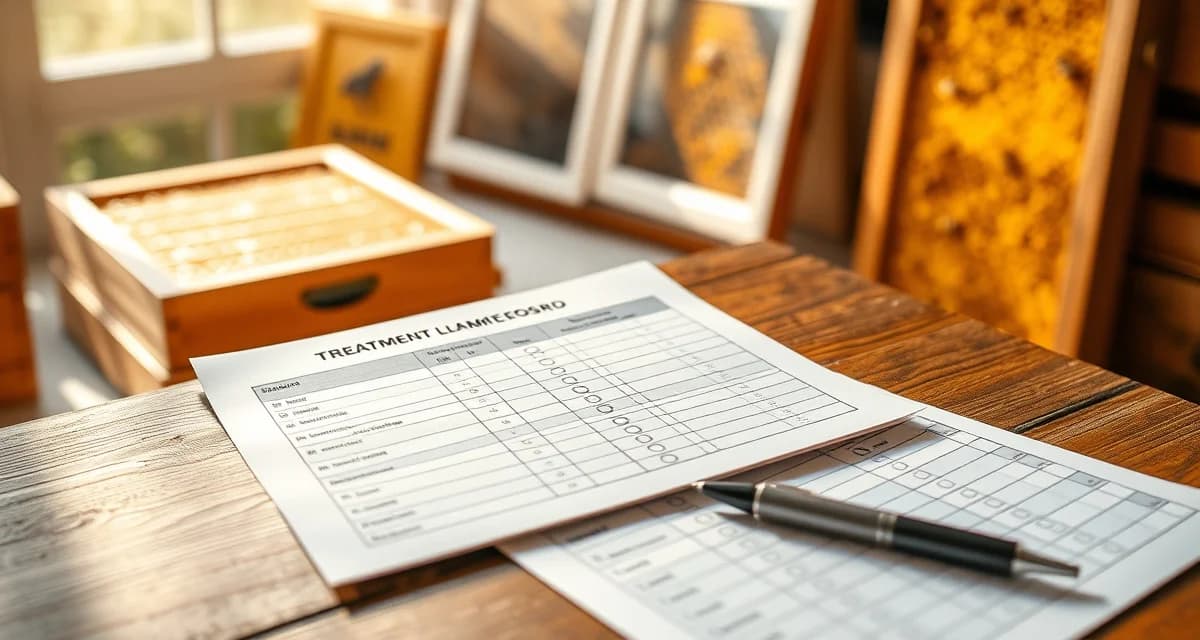
The template fixes that by giving every treatment a required set of fields. Download the free VarroaVault treatment log template as a PDF for paper use or Excel for digital entry.
TL;DR
- This guide covers key aspects of varroa treatment log template: free download for beekeepers
- Mite monitoring should happen at minimum every 3-4 weeks during active season
- The 2% threshold in spring/summer and 1% in fall are standard action points based on HBHC guidelines
- Always run a pre-treatment and post-treatment mite count to calculate efficacy
- Treatment records including product name, EPA number, dates, and counts are required for state inspection compliance
- VarroaVault stores all monitoring and treatment data with automatic threshold comparison and state export formatting
What the Treatment Log Template Includes
Treatment Product and Active Ingredient: Full product name and the active ingredient (amitraz, oxalic acid, formic acid, thymol, etc.). This matters for state inspection records and for tracking your rotation to avoid resistance development.
Application Date: Exact date, not "spring."
Removal Date (if applicable): For strip treatments like Apivar or Apistan, when the strips were removed. This is often forgotten and creates compliance gaps.
Dose and Amount Applied: How many strips, how many mL of dribble solution, how many grams of OA crystals. The dose field matters for efficacy assessment and for state records.
Colony Identifier and Apiary: Which hive in which apiary. Essential for multi-hive operations and required by most state inspection programs.
Colony Strength at Time of Treatment: Estimated bee population (frames of bees) or a simple description (strong, medium, weak). Treatment efficacy correlates with colony strength, and this field helps you interpret post-treatment counts.
Brood Status: Broodless, minimal brood, active brood. Critical for OA treatments especially, where brood status determines expected efficacy.
Pre-Treatment Mite Count: The count that triggered this treatment, with date and percentage. Links the count to the treatment decision.
PHI Calculation: The pre-harvest interval for the product used, with the calculated harvest-safe date. This is the field that prevents honey contamination.
Post-Treatment Count: Scheduled count date and space for the result when you do it. This column is usually blank in paper logs, which is the most common treatment failure: not confirming the treatment worked.
Notes: Application conditions, temperature, any observations about the colony's response.
The PHI Calculation Section
The PHI section of the template is the most practically important for any beekeeper who harvests honey. For each product:
- Apivar (amitraz): 56-day PHI. Write the application date, add 56 days, and write the earliest safe harvest date.
- MAQS / Formic Pro: 0-day PHI. Write the treatment end date. Harvest is permitted the same day.
- Oxalic acid products: 0-day PHI. Harvest permitted same day.
- Apistan (tau-fluvalinate): 56-day PHI.
- Apilife Var (thymol): 56-day PHI after last application.
The Excel template calculates the PHI clearance date automatically when you enter the application date and select the product from a dropdown menu.
Upgrading to Digital PHI Tracking
The paper template requires you to remember to check your PHI date before adding supers. A phone notification from VarroaVault doesn't rely on your memory. The pre-harvest interval tracker in VarroaVault calculates and displays your PHI clearance date on the hive dashboard. You see it every time you look at the hive record.
For a full step-by-step guide to moving your paper records to digital tracking, see our guide on how to track hive treatments digitally. You can use the paper template to capture treatments that have already happened and then enter them into VarroaVault's historical import to build your full treatment history.
Using the Template for State Inspections
The paper template, completed consistently, meets the basic documentation requirements for most states. For formal state inspection, export your completed Excel log as a PDF and make it available when an inspector visits.
VarroaVault's compliant export meets the same requirements with less effort: automatic data capture, formatted output, and no manual PDF creation required. But the paper template is a legitimate option for beekeepers who prefer it, and having any structured record is far better than freeform notes.
Frequently Asked Questions
What fields should a varroa treatment log include?
The essential fields are: treatment product and active ingredient, application date, dose or amount applied, colony identifier, colony strength at time of treatment, brood status, pre-treatment mite count with date, PHI clearance date, scheduled post-treatment count date, and a notes field. State inspectors also want to see your beekeeper registration number. The VarroaVault template includes all of these.
Is a paper treatment log acceptable for state inspections?
Yes, in most states. Paper records meeting the required content fields are acceptable as long as they're legible, complete, and available during inspection. The key is having all required fields completed consistently. Inspectors in some states, particularly for large commercial operations, may expect more formal documentation, but paper logs are generally accepted for hobbyist and small commercial beekeepers.
How does VarroaVault improve on a paper treatment template?
VarroaVault automates the PHI calculation and displays it on your hive dashboard as a countdown. It sends reminders for scheduled post-treatment counts. It links your treatment records to mite count history so you can see whether the treatment worked. It generates state-compliant exports instantly. And it stores records indefinitely, which eliminates the risk of losing paper records to water, fire, or simply misplacement.
How do I know if my varroa treatment is working?
Run a mite count 2-4 weeks after the treatment ends and compare it to your pre-treatment count. The efficacy formula is: ((pre-count - post-count) / pre-count) x 100. A result above 90% indicates effective treatment. Results below 80% should trigger investigation for possible resistance, application error, or reinfestation. Log both counts in VarroaVault to track efficacy trends across treatment cycles.
How often should I check mite levels in my hives?
At minimum, once per month (every 3-4 weeks) during the active season. Increase to every 2 weeks when counts are near threshold or after a treatment to verify it worked. In fall, monitoring frequency matters most because the window to treat before winter bees are raised is narrow. VarroaVault's monitoring reminders can be set to your preferred interval for each apiary.
What records should I keep for varroa management?
Each record should include: date of count or treatment, hive identifier, monitoring method used, number of bees sampled, mites counted, infestation percentage, treatment product name and EPA registration number, dose applied, treatment start and end dates, and PHI end date. State apiarists typically expect this level of detail during inspections. VarroaVault captures all of these fields in a single log entry.
What is Varroa Treatment Log Template: Free Download for Beekeepers?
A Varroa treatment log template is a structured record-keeping form that helps beekeepers document every aspect of mite management — including product name, EPA registration number, application dates, removal dates, and pre- and post-treatment mite counts. VarroaVault offers a free version available as a PDF for paper use or an Excel file for digital entry, ensuring no treatment event goes unrecorded and gaps in your mite management history become immediately visible.
How much does Varroa Treatment Log Template: Free Download for Beekeepers cost?
The VarroaVault Varroa treatment log template is completely free to download. It's available in two formats — PDF for beekeepers who prefer paper records and Excel for those who want a digital spreadsheet. For beekeepers who want automated threshold alerts, state inspection export formatting, and centralized data storage across multiple hives and seasons, VarroaVault's full software platform offers additional paid features beyond the free template.
How does Varroa Treatment Log Template: Free Download for Beekeepers work?
The template works by giving every treatment a required set of fields that must be completed: product name, EPA number, application date, removal date, and mite counts before and after treatment. Beekeepers fill in each field at the time of treatment, creating a timestamped record. When reviewed, the log makes gaps immediately visible — such as a missing removal date or a multi-year period with no mite counts recorded.
What are the benefits of Varroa Treatment Log Template: Free Download for Beekeepers?
The primary benefit is visibility. A structured log turns vague memory into verifiable records, making it easy to calculate treatment efficacy, track threshold crossings over time, and identify seasons where mite pressure spiked. It also supports regulatory compliance — many state inspectors require documentation of product name, EPA registration number, and treatment dates. For operations with multiple hives, a consistent log format ensures nothing is missed across the entire apiary.
Who needs Varroa Treatment Log Template: Free Download for Beekeepers?
Any beekeeper managing Varroa mites can benefit, but the template is especially valuable for those with more than one hive, those preparing for state inspections, or anyone who has struggled to reconstruct treatment history from scattered notes. New beekeepers benefit from building good habits early, while experienced beekeepers often discover their existing records have more gaps than expected once they apply a formal structure to their documentation.
Sources
- American Beekeeping Federation (ABF)
- USDA ARS Bee Research Laboratory
- Honey Bee Health Coalition
- Penn State Extension Apiculture Program
- Project Apis m.
Get Started with VarroaVault
The information in this guide is most useful when you have your own mite count data to apply it to. VarroaVault stores every count, flags threshold crossings automatically, and builds the treatment history you need for state inspections and effective management decisions. See pricing and free tools at varroavault.com.