Should you treat a feral swarm before adding it to your apiary?
TL;DR
- Treat any feral swarm before or right after you hive it.
- Wild colonies miss the varroa management that keeps mite loads down, and unmanaged colonies routinely cross the 2% treatment threshold and can crash within weeks, seeding mites into your other hives.
- One oxalic acid treatment in the first 48 hours, while the swarm is still broodless, plus a follow-up wash three weeks later, is the safest move.
Why does a feral swarm need varroa treatment at all?
A feral swarm looks healthy. The bees are flying, the cluster is tight, and the queen is laying. That appearance tells you almost nothing about its mite load.
Feral colonies live outside any management program. Nobody has been applying oxalic acid, nobody has been tracking alcohol wash counts, and nobody has been pulling brood breaks. The Honey Bee Health Coalition's Varroa Management Guide states that unmanaged colonies in the U.S. typically collapse from varroa within one to three years [1]. The bees in front of you survived. Surviving is not the same as having low mite loads.
Here's one small piece of good news. When a colony swarms, the prime swarm leaves with a relatively low mite load compared to the parent, because a big fraction of the varroa are still capped inside the brood frames left behind. The catch is that the swarm still carries phoretic mites on the adult bees, and the queen starts laying almost immediately once she has comb. Once that first brood caps, mite reproduction begins.
Even a swarm that left a tree cavity last Tuesday can reach a 2 to 3% infestation rate within four to six weeks if you leave it alone, especially in summer when the brood nest expands fast [1].
What mite levels do feral colonies actually carry?
This is where the data gets uncomfortable. Feral colonies are not some magical varroa-resistant strain. Research on wild bee populations in New York found infestation rates roughly comparable to unmanaged managed hives, meaning the bees carried real mite loads [2]. The USDA Agricultural Research Service's Bee Research Laboratory has documented that unmanaged colonies routinely exceed the 2% economic threshold most extension services use as a treatment trigger [3].
Run the math. You catch a swarm of roughly 10,000 adult bees. At a 2% infestation on adults alone, that's 200 mites, and many of them are ready to reproduce the moment brood is available. The queen starts laying within 72 hours. By the time the first worker brood caps, you're standing at the bottom of an exponential growth curve.
A colony carrying 3 to 4% mite load in summer can reach 5 to 10% by fall, and that's the range where collapse becomes likely [1]. When that colony crashes, drifting and robbing carry its mites to every hive nearby.
Nobody has a precise average mite load for "all U.S. feral swarms." That number doesn't exist in the literature. What does exist is consistent evidence that unmanaged colonies are not low-mite colonies. That's enough to act on.
What is the risk to your other hives if you skip treatment?
This is the question that should decide it for you. The real issue is bigger than whether this one swarm survives. It's whether a failing colony contaminates the hives you've managed carefully all season.
When varroa overwhelms a colony, it often collapses through what beekeepers call a mite bomb. Bees from the dying colony drift into neighboring hives, carrying phoretic mites with them. Robbers from healthy hives strip the carcass and haul mites home. Research on mite dispersal has shown that a single collapsing high-mite colony within 100 meters can drive measurable mite spikes in surrounding hives within weeks [4].
Keep even two or three hives, and an untreated feral addition threatens your whole yard. Sideline beekeepers running ten or twenty hives have more to lose. The asymmetry is stark. Treating a new swarm costs about fifteen minutes and a few dollars of oxalic acid. A mite bomb going off inside your apiary costs you colonies.
For background on how varroa mites move between colonies and what the mite lifecycle looks like, that context explains why the timing of your treatment matters so much.
Should you treat before or after hiving the swarm?
You have two realistic options: treat during the catch, or treat within the first few days after hiving. Both work. Here's how to pick.
Treating before the swarm touches your apiary is ideal on paper for biosecurity. In practice it's awkward. A swarm is a loose cluster. You can dribble or vaporize oxalic acid while they're confined in a catch box, but you need them contained, you need your gear ready, and you need to move before the bees abscond.
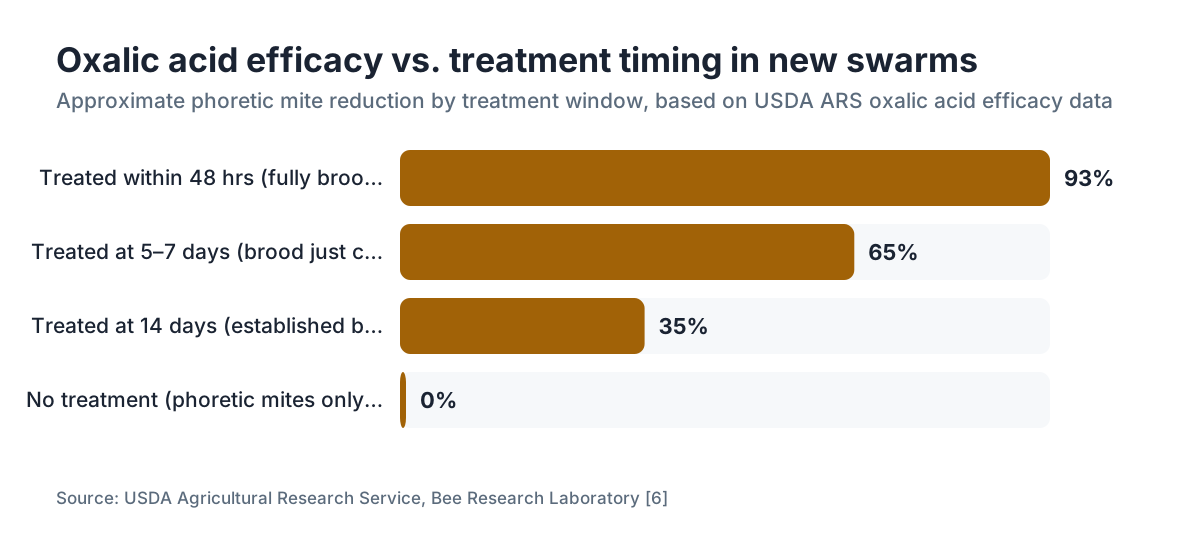
Treating within 48 to 72 hours of hiving is more practical for most people, and the window is tight. You want to treat before the queen's first round of brood caps. Once brood is sealed, phoretic mites drop into the cells, and oxalic acid (which only kills phoretic mites) loses most of its punch. Hive on Monday, and if the queen starts laying the moment she has drawn comb, brood can be capped by Wednesday or Thursday. So "within 48 hours" is not an exaggeration.
Oxalic acid vaporization is the most practical treatment at this stage. It's fast, it doesn't require pulling frames, and it hits phoretic mites hard. The EPA-registered label for Api-Bioxal allows use in occupied hives, including packages and new installations [5]. Follow the label exactly. Under FIFRA, label instructions are the law, not suggestions.
A single oxalic acid vapor treatment in a broodless swarm cuts phoretic mite load by more than 90% [6]. That's about as good as it gets short of a full brood break.
Which treatment is best for a newly caught swarm?
Oxalic acid vaporization is your best tool for a fresh swarm. Here's why it beats the alternatives.
Oxalic acid dribble also works when the colony is broodless, and it's cheaper to set up because you skip the vaporizer. Efficacy is comparable to vaporization in broodless conditions [6]. The trade-off is more physical disturbance of the cluster, and you have to get the concentration right (3.5% w/v in sucrose syrup per the Api-Bioxal label [5]).
Amitraz strips (Apivar) are the wrong tool here. They work over an eight to ten week exposure period and are built for colonies with brood. They'll knock mites down eventually, but they won't protect you during that first high-risk window before the colony is established.
Hop-Guard strips (hops beta acids) are registered and do hit phoretic mites, but efficacy runs lower than oxalic acid in most studies, and the evidence base is thinner [7].
Formic acid products like Mite Away Quick Strips or Formic Pro are temperature-dependent, can be rough on queens, and are overkill for a new swarm. Save formic for an established colony with brood.
So the practical answer for most beekeepers: get a vaporizer, use Api-Bioxal per label, do one treatment within 48 hours of hiving, then run an alcohol wash or sugar roll three weeks later to see if you need a follow-up. The VarroaVault protocol tools can schedule that follow-up wash and set threshold reminders so the monitoring doesn't slip.
For a broader look at the beekeeping supplies you want on hand for a swarm intake workflow, having a vaporizer ready before swarm season starts is one of the higher-return purchases you can make.
How do you actually assess mite load in a new swarm?
Fair question. If you want data before deciding how hard to treat, you can run an alcohol wash on the swarm cluster before hiving.
The method: scoop roughly 300 adult bees (about half a cup) into a jar, add isopropyl alcohol or windshield washer fluid, shake for 60 seconds, pour through a screen, and count mites. Divide mites by bee count for a percentage. This is the same method the Honey Bee Health Coalition recommends for established colonies [1].
The honest caveat: this is harder to do accurately on a clustered swarm than on a frame of bees in an established hive. Swarm clusters are dense and chaotic, and pulling a representative sample takes care. Aim for nurse-age bees over the outermost foragers, since phoretic mites prefer younger bees.
Above 2% means treat immediately. Below 2% still means treat, because that number climbs fast once brood is present and mite reproduction starts.
For a feral swarm, the pre-treatment wash is optional. The baseline risk is high enough that treating first and washing three weeks later to confirm efficacy is a defensible approach. The pre-wash earns its keep mainly when you're deciding between a single oxalic vapor treatment and a more aggressive multi-treatment plan.
Are feral swarms ever actually varroa-resistant?
This comes up constantly. Short answer: some populations show real genetic traits linked to reduced mite reproduction, but most feral swarms in the continental U.S. are not reliably resistant.
Tim Seeley's work on the Arnot Forest bees in New York documented a feral population that survived varroa without treatment for decades [2]. Those bees showed higher rates of hygienic behavior and possibly some grooming-related resistance. The research is real and it matters. It has also been stretched to justify never treating random swarms.
A swarm from a feral colony in your area is not necessarily from a Seeley-caliber population. Without genetic testing or years of observation, you can't know. And even if a colony carries some VSH (Varroa Sensitive Hygiene) or mite-biting behavior, that slows mite reproduction, it doesn't stop it. Slow mite growth still becomes a problem if you never treat.
Africanized honey bee populations in the American Southwest are one case with legitimate varroa tolerance data, driven by behavioral differences, but that's a separate and complicated situation. In Arizona or southern Texas, a feral swarm may behave differently than one a hobbyist catches in Ohio. For more on how bee genetics interact with varroa management, the africanized honey bee article covers that regional variation.
My take: hope for resistance, plan for susceptibility. Treat the swarm.
What other diseases and parasites should you screen for?
Varroa gets the headline, but it's not the only reason to quarantine a feral swarm before you fully bring it into your apiary.
American Foulbrood (AFB) is the big one. It's caused by Paenibacillus larvae and can persist as spores in equipment for decades. A feral colony living in an old tree cavity may have been exposed. You cannot treat AFB. In most states, infected equipment must be burned under state apiary inspector direction [8]. Before you give a swarm access to shared equipment or let foragers drift, watch the brood pattern for the first two to three weeks. Sunken, punctured, or greasy-looking cappings with a foul smell are the warning signs.
Nosema (both N. apis and N. ceranae) is common in feral populations. You can't diagnose it by eye, but a beekeeper with a microscope and the USDA diagnosis guide can check a sample of bees. Nosema doesn't warrant AFB-level panic, but it does drag on colony health.
Small Hive Beetles matter in warmer regions. A feral swarm from the Southeast may carry SHB pressure your northern apiary hasn't faced.
Pesticide exposure is harder to assess but worth remembering. A feral colony that lived in or near an agricultural area may have accumulated sublethal pesticide loads in its wax and bodies.
The practical move: keep the new swarm physically isolated from your other hives for at least two to three weeks, ideally in a separate corner of your property. That quarantine lets you watch for disease signs while you run your first varroa treatment.
What does a practical treatment protocol look like, step by step?
Here's what I'd actually do, in order.
Step 1: Catch the swarm into a clean nuc or hive body with undrawn foundation or empty frames. Don't hand them drawn comb from your existing hives until after treatment and quarantine, because cross-contamination runs both ways.
Step 2: Within 24 to 48 hours of hiving, run one oxalic acid vaporization using an EPA-registered product (Api-Bioxal is the main one). Follow the label dose of 1 gram of Api-Bioxal per brood box [5]. Seal entrances for the treatment period, then reopen. One treatment is right here because the colony should still be broodless or close to it.
Step 3: Keep the hive in quarantine, physically separated from your main apiary if possible, for 21 days. That's one full worker brood cycle.
Step 4: At the 21-day mark, run an alcohol wash. If the count is above 2%, run a second oxalic vapor treatment, or move to a longer treatment like Apivar depending on the season and whether you now have capped brood.
Step 5: Inspect for AFB and other brood diseases during that same 21-day window. If everything looks clean and mites are under control, move the hive into your main apiary.
The whole protocol costs a few dollars of oxalic acid and about 30 minutes of real work spread over three weeks. There's no reasonable case for skipping it.
Do local regulations or labeling rules affect how you treat a swarm?
Yes, and this matters more than most hobbyists realize.
In the United States, every miticide used in honey bee colonies must be applied according to its EPA-registered label under the Federal Insecticide, Fungicide, and Rodenticide Act (FIFRA) [9]. The label is the law. You cannot use treatments at off-label doses, in off-label configurations, or on bees with honey supers present if the label prohibits it.
Oxalic acid products like Api-Bioxal are labeled for use in hives without honey supers present. If you catch a swarm during a flow and install them straight into a setup with honey supers, pull those supers before treating. For a fresh swarm without drawn comb this usually isn't an issue, but keep it in mind.
Some states add apiary registration requirements. A few require you to notify your state apiary inspector when you acquire a swarm, especially from an unknown location. Check with your state department of agriculture. The National Honey Bee Survey and state apiary programs run through USDA-APHIS in coordination with state departments [10].
Amitraz (Apivar) carries specific label restrictions around honey supers and timing. Always read the current label, not a forum post about what someone did last year. Labels get updated.
Is a feral swarm even worth adding to your apiary?
Fair question. Feral swarms have real advantages. They're free. They've shown some survival capacity. Their queen is already mated and laying. In regions where good queens are hard to source, a feral swarm can be a genuinely useful addition.
The genetics angle deserves a moment. A feral swarm in the Northeast or Pacific Northwest may carry some varroa-adapted genetics from decades of selection pressure on surviving colonies. It's not guaranteed, but it's plausible, and those bees may show better hygienic behavior than an average commercial package. Some beekeepers hunt local feral swarms for exactly this reason.
The risk side is just as real, as this whole article lays out. Disease exposure, unknown mite history, possible Africanization in the Southwest (see africanized honey bee for what to watch for), and the biosecurity threat to your existing hives all count.
My actual opinion: a feral swarm is worth taking if you treat it and quarantine it. It's not worth taking if you'll drop it into your apiary untreated and hope for the best. The risk-reward math only works if you run the protocol.
For beekeepers tracking treatment history across multiple hives, including new swarms, the VarroaVault protocol tools log treatment dates, wash results, and follow-up schedules in one place.
What should you have ready before you ever catch a feral swarm?
Preparation is everything here, because you rarely get much advance notice on a swarm call.
Have this on hand before swarm season: a clean nuc box or hive body with frames (undrawn is fine), an oxalic acid vaporizer, a supply of EPA-registered oxalic acid (Api-Bioxal), safety gear for vaporization (gloves and a respirator rated for oxalic acid vapor), a jar and alcohol for the wash, and a quarantine spot at least 10 to 15 feet from your established hives.
For the alcohol wash you need 70% isopropyl alcohol or windshield washer fluid, a wide-mouth jar, and a mesh screen for the lid. That's it.
The beekeeping supplies for swarm intake are simple. The failure mode is not having them ready when the call comes in at 7am on a Saturday.
One more thing. Confirm your state's apiary registration rules before you take in a swarm from an unknown location. Some states track swarm origins as part of disease surveillance. Your state extension apiculturist can tell you the requirements for your situation.
Frequently asked questions
Can I use oxalic acid on a swarm that has already started laying?
Yes, but efficacy drops sharply once brood is capped. Oxalic acid, vaporized or dribbled, only kills phoretic (on-bee) mites, not mites inside sealed cells. If the queen has been laying more than five or six days, plan a second treatment after that brood hatches, or move to a longer-acting product like Apivar once the colony is established enough to hold strips.
How long should I quarantine a feral swarm before adding it to my apiary?
A minimum of 21 days, which is one full worker brood cycle. That gives you time to watch the brood for American Foulbrood signs, run your first varroa treatment while the colony is still broodless, and do a follow-up mite wash to confirm the treatment worked before the swarm shares airspace and foragers with your established hives.
What mite level is considered dangerous in a new swarm?
The standard treatment threshold most extension services use is 2% on an alcohol wash, or 2 mites per 100 bees. The Honey Bee Health Coalition recommends treating at or above that level during the active season. For a summer swarm, even a result just under 2% should get treated, because mite loads grow exponentially once brood is present and capped.
Do feral swarms in the U.S. have natural varroa resistance?
A few studied feral populations, most famously Tim Seeley's Arnot Forest bees in New York, show traits tied to lower mite reproduction. But most random feral swarms in the continental U.S. are not reliably resistant. Without years of observation or genetic testing, you can't assume resistance. Treat the swarm and monitor it as you would any new colony.
Is it safe to hive a swarm directly into a hive body that had a previous colony with varroa?
It depends on why the previous colony is gone. If it died to varroa collapse, the equipment may hold high mite contamination on remaining bees or debris. Freeze frames for 48 hours to kill any varroa on the wax, then clean and inspect before use. American Foulbrood spores can persist in old comb indefinitely, so inspect drawn comb carefully before reusing it with any new colony.
Should you treat a swarm you caught from one of your own hives?
Yes, still treat it. A swarm from your own bees left most of its mites behind in the parent colony's capped brood, so it starts with a lower load. But that load climbs quickly once the new queen begins laying. Run an oxalic vapor treatment within 48 hours while the swarm is still broodless, then do an alcohol wash three weeks later to confirm.
Can a feral swarm bring American Foulbrood into my apiary?
Yes. American Foulbrood spores survive almost indefinitely, and a feral colony from an unknown location may have had exposure. Watch for sunken, perforated, or greasy-looking cappings and a sour smell during the 21-day quarantine. If you suspect AFB, contact your state apiary inspector immediately. Do not move any equipment until you have a confirmed diagnosis.
What is the best time of year to add a feral swarm to your apiary?
Spring and early summer are the best windows. A swarm caught in April or May has the full season to build population, store honey, and go into winter strong. Late-summer swarms caught in August or September are risky because they have little time to build stores. Late swarms also need aggressive varroa management, since mite pressure usually peaks in late summer.
How do you do an alcohol wash on a newly caught swarm cluster?
Scoop roughly 300 bees (about half a cup by volume) from inside the cluster into a wide-mouth jar. Add 70% isopropyl alcohol or windshield washer fluid to cover. Seal the jar with a mesh lid, shake hard for 60 seconds, then strain the liquid through the mesh and count the mites in the wash fluid. Divide mite count by bee count for your infestation percentage.
What if I can't treat immediately after catching a swarm?
Keep the swarm in a catch box or nuc and treat as soon as you can, ideally within 48 hours. If you slip past 72 hours, the queen may already have capped brood and a single oxalic treatment will be less effective. In that case, plan two oxalic vapor treatments seven days apart, or transition to Apivar once the colony has drawn enough comb to hold strips properly.
Does the region where a feral swarm came from change the treatment approach?
Region matters somewhat. In the American Southwest, Africanized honey bee genetics change how you handle the colony entirely, beyond varroa treatment. In areas with heavy agricultural pesticide use, feral bees may carry sublethal pesticide exposure that affects health. But regardless of region, the varroa protocol is the same: oxalic acid while broodless, alcohol wash follow-up three weeks later.
How many oxalic acid treatments does a feral swarm need?
Usually one, if you treat within 48 hours while the colony is still broodless. A single oxalic vapor application to a broodless colony cuts phoretic mite load by over 90% according to USDA research. Verify with an alcohol wash at 21 days. If mites are still above 2%, treat again. If you missed the broodless window, plan two or three treatments timed to when capped brood is hatching.
Is it legal to catch and keep a feral swarm?
In most U.S. states, catching a swarm on public land or your own property is legal without special permits, but you may need to register the hive with your state apiary program once it's installed. A few states require apiary permits before you can legally keep bees at all. Check with your state department of agriculture before you start. Rules vary a lot by state.
Sources
- Honey Bee Health Coalition, Varroa Management Guide (latest edition): Unmanaged colonies in the U.S. typically collapse from varroa within one to three years; 2% infestation rate is the standard treatment threshold during active season
- Seeley TD, Arnot Forest feral honey bee research, Cornell University: Feral colonies in a forested New York population had mite infestation rates comparable to unmanaged managed hives; long-surviving Arnot Forest bees showed hygienic behavior traits
- USDA Agricultural Research Service, Bee Research Laboratory: Unmanaged colonies routinely exceed the 2% economic threshold; unmanaged bees face exponential mite growth once brood is present
- Apidologie journal, research on mite dispersal from collapsing colonies to neighboring hives: A single collapsing high-mite colony within 100 meters can cause measurable mite spikes in surrounding hives within weeks via drifting and robbing
- EPA, Api-Bioxal (oxalic acid) registered pesticide label: Api-Bioxal label specifies 1 gram per brood box dose for vaporization, use only when honey supers are not present; 3.5% w/v in sucrose syrup for dribble application; label is legally binding under FIFRA
- USDA ARS Bee Research Laboratory, oxalic acid efficacy studies: A single oxalic acid vapor treatment in a broodless colony reduces phoretic mite load by more than 90%
- Penn State Extension, Varroa Mite Management: Hop-Guard (hops beta acids) is registered for varroa control but shows generally lower efficacy than oxalic acid in most field studies
- USDA Agricultural Research Service, Bee Research Laboratory, American Foulbrood guidance: American Foulbrood is caused by Paenibacillus larvae, cannot be cured, and infected equipment is typically burned under state apiary inspector direction
- EPA, Federal Insecticide, Fungicide, and Rodenticide Act (FIFRA) overview: All pesticides including miticides used in honey bee colonies must be applied per EPA-registered label; label is legally binding
Last updated 2026-07-09