How to treat a nuc for varroa before combining it with a hive
TL;DR
- Test the nuc's mite load with an alcohol wash before you combine.
- At 2 mites per 100 bees or higher, treat and retest before merging anything.
- A single mite-loaded nuc can import enough mites to collapse a healthy colony within weeks.
- Oxalic acid dribble (broodless) or vaporization (with brood) are the safest picks for small nucs.
Why does treating a nuc for varroa before combining actually matter?
A nuc is a compressed colony. Fewer bees, fewer frames, but often the same mite pressure per bee as a struggling full-size hive. When you combine that nuc with a healthy production colony, every mite rides along. The host's larger brood nest hands those mites more reproductive sites than they had before, and the infestation climbs fast.
The math is unforgiving. A nuc running 3 mites per 100 bees might hold 500 to 800 bees, so you could be adding 15 to 24 mites at the low end. Sounds trivial. But mite populations double roughly every 4 to 6 weeks during peak brood season [1]. Give them three months in a strong colony and a small import turns into a real problem.
The Honey Bee Health Coalition's Varroa Management Guide puts the economic injury threshold for most of the U.S. at 2 mites per 100 bees during brood season and 1 to 2 mites per 100 bees heading into winter [2]. A nuc above either number is a liability, not an asset, until you treat it.
Here's the trap people miss. A small population can hide a heavy load by drifting or dying off faster than a full colony would, so the count you read understates the real trouble. Treat first. Combine second. Every time.
How do you test mite levels in a nuc before treatment?
Testing a nuc is the same process as testing a full hive, just with a smaller haystack to find the needle in. You need about 300 adult bees, roughly half a cup, for an alcohol wash. On a 3 to 5 frame nuc, collecting 300 nurse bees without tearing the whole box apart takes patience. Go straight for the frame with the most capped brood and scoop bees off that surface, because nurse bees there carry the highest mite load.
Alcohol wash is the accurate one. Drop your half cup of bees into a jar with 70% isopropyl alcohol, shake for 60 seconds, pour through a mesh screen, and count the mites in the liquid [2]. Divide mite count by bee count (call it 300 unless you actually counted) and multiply by 100. That number is your infestation rate.
Sugar rolls are gentler and give you the bees back alive, but the Honey Bee Health Coalition's own data shows they undercount mites by roughly 40% against alcohol wash [2]. For a test that decides whether you treat, use the alcohol wash. This is not the moment to be gentle.
Sample the brood frame closest to the center of the cluster. Skip any frame that just came out of a chilled box, because cold bees shed mites before you ever collect them.
Record the date, the count, and which nuc. If you run more than a couple, those notes flag the ones that stay chronically high, which can point to a queen or genetics problem worth handling on its own.
Basic threshold charts and downloadable monitoring logs live on the varroa mite resource page here.
What are the varroa thresholds that should trigger treatment in a nuc?
Use the same thresholds you'd use for any colony, then tighten them. The Honey Bee Health Coalition recommends treating at 2 mites per 100 bees during brood season (roughly April through August across the northern U.S.) and 1 to 2 mites per 100 bees in late summer or early fall when winter bees are being raised [2].
For a nuc headed into a hive you care about, I'd drop the trigger lower, not raise it. You're injecting that population straight into a colony you want to protect. A reading of 1.5 mites per 100 bees in August sits just under the standalone threshold, but I'd still treat before combining. One oxalic acid treatment costs almost nothing next to losing a production colony.
If the nuc is broodless, either naturally or because the queen hasn't started laying after a recent install, a count below 1 per 100 bees on the adult bees is fine. Verify it's genuinely broodless first. A single frame of capped brood can hide a big mite population that never shows up in an adult wash.
| Timing | Treat if mites per 100 bees reaches... |
|---|---|
| Brood season (Apr-Aug) | 2 or above |
| Late summer / early fall | 1-2 or above |
| Pre-combination, any season | 1.5 or above (conservative) |
| Broodless nuc | 1 or above |
Which varroa treatments actually work in a nuc, and which ones are a bad fit?
Nuc size changes the math on nearly every treatment. A 3 to 5 frame nuc has less thermal mass, a smaller cluster, and often a recently mated or freshly installed queen. That rules some full-hive treatments out cold.
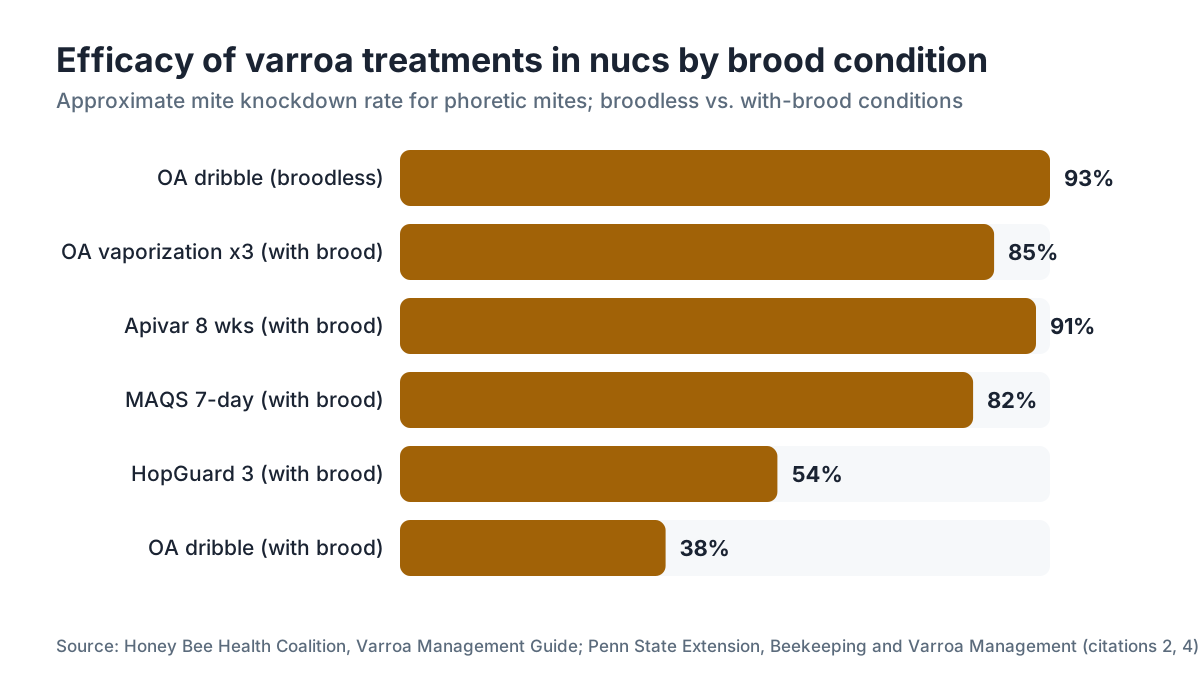
Oxalic acid dribble (Api-Bioxal) is the best match for a broodless nuc. The label allows a single dribble: 5 mL of a 3.2% oxalic acid solution per seam of bees, up to 50 mL total per colony [3]. A 3-frame nuc with 3 seams of bees gets 15 mL. Efficacy against phoretic mites (the ones on adult bees) runs above 90% under broodless conditions in multiple university extension trials [4]. Add brood and efficacy collapses, because oxalic acid doesn't reach mites inside capped cells.
Oxalic acid vaporization (Api-Bioxal, vaporized form) works whether there's brood or not, but you have to repeat it. The label allows up to 3 treatments, each 5 days apart, in a single episode [3]. For a nuc in a wooden box, seal the box well and wear proper respiratory protection. The NIOSH-approved respirator on the label is not optional.
Mite-Away Quick Strips (formic acid) work in nucs, with caution. The label sets a minimum temperature of 50 degrees F, a maximum around 85 degrees F, and wants the colony on at least 6 frames of bees for the full-strength version [5]. A 3-frame nuc may not have the mass to ride out formic fumes without losing the queen. Some beekeepers run a half-strip in small colonies, but that's off-label and I wouldn't do it with a queen I care about.
Apivar (amitraz strips) works well in nucs with brood, since amitraz is a contact acaricide that hits mites through sustained exposure. The rate is one strip per 5 frames of bees [6]. The catch is time. Apivar needs 6 to 10 weeks for full efficacy, which stretches your combining timeline. In a hurry, it's the wrong tool.
HopGuard 3 (hop beta acids) is labeled for nucs and small colonies [7]. The efficacy data is weaker than the other options, but there are no temperature restrictions, which is handy. I treat it as a backup or a second treatment behind a stronger primary.
Hard chemistry like Apistan (fluvalinate) and CheckMite+ (coumaphos) isn't worth considering for pre-combination work. Resistance is widespread and better options exist [8].
| Treatment | Works with brood? | Good for small nuc? | Waiting period before combining |
|---|---|---|---|
| OA dribble (Api-Bioxal) | No (phoretic only) | Yes | 1-2 weeks post-treatment |
| OA vaporization (Api-Bioxal) | Partial (repeat doses) | Yes | 1-2 weeks post-treatment |
| Apivar (amitraz) | Yes | Yes (1 strip) | 6-10 weeks minimum |
| MAQS (formic acid) | Yes | Risky (size limits) | 7 days post-treatment |
| HopGuard 3 | Partial | Yes | 2 weeks post-treatment |
| Apistan/CheckMite+ | Yes | Not recommended | N/A |
How long do you wait after treating a nuc before it's safe to combine?
It depends on the treatment and on whether the nuc had brood when you treated. The rule underneath all of it stays the same: treat, wait the full labeled period, retest with an alcohol wash, and only combine when the count is below threshold.
For an oxalic acid dribble on a broodless nuc, wait one to two weeks, then retest. The treatment hits phoretic mites within days, but you want to confirm the count dropped before you merge. A truly broodless nuc reading under 1 mite per 100 bees after treatment is good to go.
For oxalic acid vaporization as a series of three, finish all three (spaced 5 days apart), wait another 5 to 7 days, then retest. The full series runs about 15 to 17 days. That's your minimum.
For Apivar, the label's minimum treatment time is 6 weeks, and plenty of beekeepers run it 8 to 10 weeks for full efficacy [6]. If you combine at 6 weeks, pull the strip the day you combine. If the colony still has brood, mites in cells the amitraz never reached will emerge after the merge, so a post-combination test 3 to 4 weeks later is worth doing.
For MAQS, the label sets a 0-day honey withdrawal (legal to treat during a flow) and recommends removing strips after 7 days [5]. Give the colony another 5 to 7 days before combining so residual formic acid dissipates, especially if you're merging into a hive with honey you plan to harvest.
Still high after all that? Treat again before you proceed. There's no shortcut that beats a clean retest.
What's the actual step-by-step process for treating and combining a nuc?
Here's the sequence I'd follow, laid out plainly.
Step 1: Test the nuc. Alcohol wash 300 bees from the brood frame. Calculate mites per 100 bees. Write down the date and count.
Step 2: Decide whether to treat. At 2 mites per 100 bees or above during brood season, treat without argument. Between 1 and 2, treat anyway if you're combining into a colony you value.
Step 3: Check for brood. If the nuc is broodless (queen just started, or you made it broodless on purpose), oxalic acid dribble is your fastest and cheapest option. If there's brood, vaporized oxalic acid in a series or Apivar are the right calls.
Step 4: Apply the treatment by the label. The EPA registration for Api-Bioxal is Registration Number 80289-3 [3]. Follow the dose, temperature limits, and protective equipment instructions exactly. These are legal requirements, not suggestions.
Step 5: Wait the full period. Mark your calendar. Don't combine early just because the nuc looks healthy.
Step 6: Retest. Another alcohol wash. Below threshold, proceed. Above it, repeat the treatment or switch to a product that reaches brood.
Step 7: Combine with the newspaper method or direct introduction. The newspaper method (one sheet between the two colonies so they chew through and merge over 2 to 3 days) cuts fighting and forgives minor mismatches in queen pheromone [9].
Step 8: Check the combined colony 3 to 4 weeks later with another mite wash. Combining shuffles mite distribution, and the merged colony now has more brood for mites to work with.
VarroaVault's free protocol tools include a printable combining timeline and a post-treatment retest reminder, which helps when you're tracking waiting periods across several nucs at once.
Should you make a nuc broodless before treating to get faster results?
Worth taking seriously if you need a clean combine. Caging or removing the queen makes a nuc broodless in about 24 days, the time for the last capped brood to emerge. Cage the queen for 3 to 4 weeks, let all the brood hatch, watch every capped mite become phoretic, and a single oxalic acid dribble knocks out 90% or more of the mite population in a few days [4].
The cost is time. Cage the queen and wait for brood to hatch, and you're looking at 24 to 28 days before treatment, then another week or two for the wash. Call it 5 to 6 weeks from the day you decided to combine, which is longer than just running Apivar.
For a queen you trust and a nuc you plan to combine before fall buildup, the broodless OA route makes sense. For a nuc with an unknown queen that might get superseded anyway, skip it. Run Apivar and combine when the treatment period ends.
Some beekeepers split the difference: cage the queen 7 to 10 days (long enough to break the brood cycle and cut mite-infested brood), then hit it with vaporized OA in the window before capped brood returns. Not a bad approach. It just needs careful timing and a queen cage on hand.
What if the nuc has no queen or an unknown queen status?
A queenless nuc goes broodless on its own eventually, which actually widens your treatment options. Inheriting a queenless nuc from another beekeeper? Give it a week to confirm the status, then treat with an OA dribble once the brood hatches out. Combine into a receiving hive that has a known queen, and pull any emergency queen cells the nuc started.
If you can't find the queen and you're genuinely unsure, do an alcohol wash first. Low count, you can combine cautiously and let the stronger colony settle the queen question naturally. High count, treat with Apivar regardless of brood status, wait 8 weeks, retest, then combine.
Never drop a queenless, high-mite nuc straight into a healthy hive on the hope that the bigger colony sorts it out. It won't fix the mites. It'll just swallow them.
Can varroa mites spread from a nuc to a nearby hive even before you combine?
Yes, and hardly anyone plans for it. Mites move between colonies through drifting bees, robbing, and the beekeeper shuffling frames around. A mite-heavy nuc sitting 3 feet from a production hive is already sharing mites with it through those routes [1].
Got a nuc in the apiary waiting to be combined? Treat it promptly, or move it away from your other hives during the treatment window. Robbing season (late summer and fall) is when lateral spread between colonies peaks. A weak nuc is a prime robbing target, and robbers carry mites home when they leave.
The USDA ARS Bee Research Laboratory has documented that robbing accounts for a meaningful share of mite increases in apiaries during late summer, though the precise percentage varies by study and location [10]. Moving a mite-loaded nuc a quarter mile off during treatment is the cleanest fix if you have somewhere to put it.
Does the size or age of a nuc change how you approach treatment?
Size matters practically more than biologically. A fresh 2-frame nuc off a split might hold under 2,000 bees total. Pulling a 300-bee sample for the wash is easy enough, but losing 300 nurse bees hits a small unit proportionally harder than a 5-frame one. Take the sample carefully and get it back on the box quickly.
A commercially bought nuc that sat in transit or got held for a week can carry a higher mite load than its origin apiary's records suggest. Mite reproduction doesn't pause for shipping. Test it yourself no matter what the seller claims.
A nuc that's been running 6 to 8 weeks since a split, with a full laying pattern on 4 or 5 frames, is basically a small colony. Treat it like one. Apivar or a full OA vaporization series both fit. Don't default to a dribble just because the thing started life as a nuc.
Age shapes the queen picture too. A nuc with a very recently mated queen (under 4 weeks laying) may hold less total brood than you'd guess, which changes the treatment choice. Read the brood pattern before you pick a product.
Are there risks to the receiving hive from the combining process itself?
Three main ones: queen fighting, disease transfer, and (if you skipped treatment) mite import. Queen fighting is the most common, and the newspaper method blunts it by slowing the merge so the colonies homogenize their scent before they ever touch [9].
Disease transfer deserves real thought. A nuc from a different apiary or a different beekeeper can carry American foulbrood spores, Nosema, or other pathogens no matter how clean its mite count is. Inspect the brood pattern before combining. Sunken, perforated, or discolored cappings are a red flag. A strong foul smell is a full stop. Don't let a mite-treated nuc march straight into your hive if the brood looks wrong.
Shopping for gear to treat nucs? The beekeeping supply companies directory helps you find Api-Bioxal, mite wash supplies, and queen cages. Some suppliers ship free, which matters when you're buying a single treatment product. Check the free shipping honey bee supply companies list if cost is a factor.
Mite import is the one combining risk that's entirely on you. A $12 treatment erases it. Do the work.
What records should you keep when treating a nuc before combining?
Keep a dated log for each nuc: initial mite count, treatment applied, date applied, date treatment ended, post-treatment count, and date combined. Six data points per nuc. Two minutes of writing.
Why bother? Because if the combined colony crashes 8 weeks later, you need to know whether it was the nuc's mites, a treatment failure, or something else. Without records, you're guessing. With them, you can spot a nuc source that runs consistently high, a treatment that isn't working in your apiary (a possible resistance signal), or a pre-combination threshold you need to tighten.
Running 5 or more nucs at a time? The free protocol tools at VarroaVault include a combining log template that tracks all six data points across multiple colonies on one sheet, which beats scattered notebook entries.
The Honey Bee Health Coalition calls colony-level mite records the foundation of any serious varroa program [2]. This isn't paperwork for its own sake. It's the only way to know if what you're doing actually works.
Frequently asked questions
Can I combine a nuc with a hive without testing for mites first?
Technically yes, but it's a bad bet. A nuc running even 2 to 3 mites per 100 bees can import enough to push a healthy colony over the treatment threshold within weeks. The test takes 15 minutes and costs almost nothing. If you truly can't test, at minimum apply a single oxalic acid dribble to a broodless nuc, or one Apivar strip to a nuc with brood, before combining. Don't skip it entirely.
What is the fastest way to treat a nuc for varroa?
Oxalic acid dribble on a broodless nuc. With no capped brood, one dribble (5 mL of 3.2% oxalic acid solution per seam of bees) hits phoretic mites within days at above 90% efficacy. Retest after one to two weeks. From treatment to confirmed-clean can be under two weeks if the nuc is broodless when you start.
Will oxalic acid hurt the nuc's queen?
At the correct label dose, oxalic acid dribble has minimal direct toxicity to queens. The bigger risk is chilling a small cluster during application in cool weather, which stresses a laying queen indirectly. Apply when daytime temps top 50 degrees F, work fast, and close the hive promptly. The Api-Bioxal label dose is 5 mL per seam of bees, up to 50 mL per colony.
How many mites per 100 bees is too many to combine without treating?
The Honey Bee Health Coalition sets the brood-season treatment threshold at 2 mites per 100 bees. For a pre-combination call, I use 1.5 as my personal cutoff, since you're importing those mites straight into a colony you want to protect. Below 1 mite per 100 bees in late summer or fall, you're likely safe to proceed, but retest the combined colony 3 to 4 weeks later.
Can I use Apivar in a nuc before combining?
Yes. One Apivar strip per 5 frames of bees is the labeled dose, so a 3-frame nuc gets one strip. The drawback is time: Apivar needs 6 to 10 weeks for full efficacy, so it's wrong if you need to combine within the month. It's a good fit for fall prep, when you have time to run a full treatment before winter consolidation.
Should I use the newspaper method when combining a treated nuc?
Yes. The newspaper method puts a single sheet between the nuc frames and the receiving hive, letting the colonies chew through it over 2 to 3 days. That slow merge cuts queen fighting by giving bees time to exchange scent gradually. It works whether the nuc was treated or not, and it's the standard university extension recommendation. Remove the chewed paper after 3 to 4 days.
Does the season affect which treatment I should use for a nuc?
Significantly. Above 85 degrees F, formic acid strips like MAQS are off-label and can kill queens. Below 50 degrees F, oxalic acid dribble loses effectiveness and stresses small clusters. Oxalic acid vaporization covers the widest temperature range and is generally the most season-flexible option for nucs. Apivar has no strict temperature limits and works spring through fall.
How do I test a very small nuc for varroa if I can't get 300 bees?
If the nuc is too small to spare 300 bees, collect as many as you safely can (even 100 to 150) and run the alcohol wash on that smaller sample. Your count carries a wider margin of error, so read even 1 to 2 mites per sample as a reason to treat. With very small populations, treating preventively without a full test isn't unreasonable: the treatment costs less than the risk of a wrong guess.
What should I check for besides varroa when inspecting a nuc before combining?
Check the brood pattern for American foulbrood (sunken, discolored caps, foul smell, ropy string test) and European foulbrood (twisted larvae, sour smell). Look for sacbrood or chalkbrood as secondary signs of immune stress. A nuc with a good mite count but diseased brood is still a liability. Don't combine a diseased nuc under any circumstances; treat or destroy it first.
Can I combine two nucs together instead of combining into a full hive?
Yes, and the same rule holds: test both, treat any above threshold, wait the full period, retest, then combine. If both are clean, a direct newspaper-method merge works fine. The combined 6-frame unit grows quickly if both queens are healthy. Keep one queen (usually the younger or more prolific one) and remove the other before combining.
How soon after combining should I retest the mite level in the combined colony?
Test the combined colony 3 to 4 weeks after combining. That gives any mites that were in capped brood at merge time a chance to emerge and show up in an adult wash. If the count is above threshold then, treat immediately. Don't wait for the next scheduled inspection. Early detection after combining is when the fix is cheapest.
Is it legal to treat a nuc with oxalic acid if it has honey supers on it?
Nucs almost never carry honey supers. But if yours does (rare), the Api-Bioxal label allows treatment with supers in place for the vaporized form, as long as the supers aren't intended for human consumption during the treatment period. The dribble form's label also permits supers. Always check the current EPA-registered label at the time of use; label language can change between registration cycles.
What protective equipment do I need to treat a nuc with oxalic acid?
For a dribble: chemical-resistant gloves and eye protection at minimum. For vaporization, the Api-Bioxal label requires a NIOSH-approved respirator rated for acid vapors (an N95 won't do; you need an OV/P100 cartridge respirator), plus gloves and eye protection. These are EPA label requirements. Vaporizing OA without proper respiratory protection is dangerous and a violation of federal pesticide law.
Sources
- USDA ARS Bee Research Laboratory, Beltsville MD: Mite populations can double every 4 to 6 weeks during peak brood season; mite transmission through robbing contributes substantially to mite increases in apiaries in late summer
- Honey Bee Health Coalition, Varroa Management Guide (5th ed.): Treatment threshold is 2 mites per 100 bees during brood season and 1-2 mites per 100 bees going into winter; alcohol wash is more accurate than sugar roll, which undercounts by roughly 40%
- EPA, Api-Bioxal (Oxalic Acid) Registration, Reg. No. 80289-3: Api-Bioxal label specifies 5 mL of 3.2% oxalic acid solution per seam of bees, up to 50 mL per colony; NIOSH-approved acid vapor respirator required for vaporization
- Elanco, Mite-Away Quick Strips (MAQS) product label: MAQS label requires minimum 50 degrees F temperature, maximum approximately 85 degrees F, and colony on at least 6 frames of bees; strips removed after 7 days
- Vita (Europe) Ltd, Apivar (amitraz) product label and prescribing information: Apivar dose is one strip per 5 frames of bees; minimum treatment time is 6 weeks, with 8-10 weeks recommended for full efficacy
- BetaTec Hop Products, HopGuard 3 product label: HopGuard 3 is labeled for use in nucs and small colonies with no strict temperature restrictions
- Michigan State University Extension, Varroa Mite Resistance to Miticides: Widespread resistance to fluvalinate (Apistan) and coumaphos (CheckMite+) has reduced efficacy of these products across many U.S. apiaries
- University of Minnesota Bee Lab, Combining Colonies Guidance: The newspaper method reduces queen fighting by slowing the merge and letting colonies exchange scent before physical contact
- USDA ARS, Varroa Mite Colony-to-Colony Transmission Research: Robbing behavior is a documented mechanism for inter-colony mite transmission in late summer apiaries
Last updated 2026-07-09