Apiary-wide varroa treatment strategy: how to protect every hive
TL;DR
- An apiary-wide varroa treatment strategy means treating all colonies in your operation at the same time, using the same protocol, with mite-wash verification before and after.
- Spot-treating one hive while others stay infested causes reinfestation within weeks.
- The Honey Bee Health Coalition recommends a 2% or higher economic threshold and synchronized treatment across every hive on the same yard.
What is an apiary-wide varroa treatment strategy?
An apiary-wide strategy means every colony you manage gets treated on the same schedule, verified with the same monitoring method, and judged against the same mite-load threshold before a single treatment goes on. It's the opposite of reactive spot-treatment, where you notice a dead-out in April, panic, slap an oxalic acid dribble on the surviving hive next to it, and wonder why the same hive crashes by June.
The logic is simple but easy to underestimate. Varroa mites don't respect hive boundaries. Heavily infested colonies throw off drifting bees and robbers loaded with mites, and those bees walk right into your cleanest hive [1]. If you treat six of seven hives and leave one untreated because it "seems fine," that seventh hive becomes a mite reservoir that reinfests everything you just cleaned up, usually within four to six weeks depending on flight distance and colony density [2].
This isn't complicated in principle. It's operationally demanding, because it asks you to monitor every hive on a fixed schedule, keep records, make treatment decisions from data instead of gut feeling, and coordinate timing across a yard. Most hobbyists skip the monitoring step and go straight to calendar-based treatment. Better than nothing. Still weaker than threshold-based decisions.
The Honey Bee Health Coalition's Varroa management guide puts it plainly: "All colonies in an apiary should be monitored and treated together to prevent reinfestation from untreated colonies." That one sentence is the whole argument for the apiary-wide approach.
Why does treating just one or two hives fail?
Reinfestation is the main reason. A study by Frey and Rosenkranz in Experimental and Applied Acarology tracked mite levels in treated colonies placed next to untreated ones and found treated colonies climbed back to pre-treatment mite levels within five to eight weeks, mostly through bee drift and robbing [2]. That's fast enough to undo a full oxalic acid vapor treatment before your next monitoring window even arrives.
The second problem is asynchronous brood cycles. Varroa reproduce inside capped brood. If neighboring hives are packed with brood while yours sits broodless during treatment, the mites in that outside brood ride out your entire miticide window untouched. They emerge later and start over.
There's also a math problem. Say your yard has eight hives and you treat seven. You might cut the total mite population by 85%. Sounds good. Then remember the 15% reservoir in the untreated hive keeps reproducing at roughly 25% monthly growth under typical summer conditions [3]. Within two months it rebuilds to levels that threaten all eight hives again.
Spot-treating also breeds resistance faster. Repeated sub-lethal exposures in undertreated colonies select for mite populations that shrug off your miticide of choice. A coordinated, full-dose, apiary-wide treatment removes more of the population every time and leaves fewer survivors to pass on tolerance [4].
What mite thresholds should trigger an apiary-wide treatment?
The most widely cited threshold comes from the Honey Bee Health Coalition: treat when any colony in your yard reaches 2 mites per 100 bees (2%) from March through August, and 1% from September through November, when winter buildup does more damage [1]. Those numbers come from research showing colony-level damage to brood and bee longevity starts at or just above those levels.
Here's the practical apiary-wide reading: if any single hive hits or crosses threshold, you treat the whole yard. You don't wait for hive two and hive five to catch up. One hive at 3% is enough to set the whole operation back.
Testing method matters. Alcohol wash (a sample of roughly 300 bees from the brood nest area) gives you a reliable percentage and is the gold standard for accuracy [1]. Sugar roll is gentler on bees but tends to undercount by 30 to 40%, so confirm it with an alcohol wash if you're making a borderline call. Sticky boards give you a drop count, not a percentage, and their correlation to true infestation rate wanders too much to trust as a standalone trigger.
Monitor every hive, not only the ones that look weak. Strong colonies often carry the highest mite loads, because they also carry the most brood cells for mites to reproduce in. A hive that looks like it's thriving can sit at 4% in August and be dead by October.
Run apiary-wide monitoring at minimum in four windows: early spring (before population buildup accelerates mite reproduction), midsummer, late summer before winter bees are raised, and post-treatment to verify efficacy. That's four data points per colony per year. Ten hives means forty alcohol washes a year. It takes time. Do it anyway.
For a closer look at varroa mite biology and reproduction cycles, understanding how mites move through the brood nest makes clear why these seasonal thresholds land where they do.
Which treatments work best for an apiary-wide protocol?
There's no single best treatment for every situation. The right choice depends on your temperature at treatment time, whether colonies have capped brood, your tolerance for labor, and your mite load going in.
| Treatment | Active Ingredient | Brood Present? | Temperature Range (°F) | Application Method | Typical Efficacy |
|---|---|---|---|---|---|
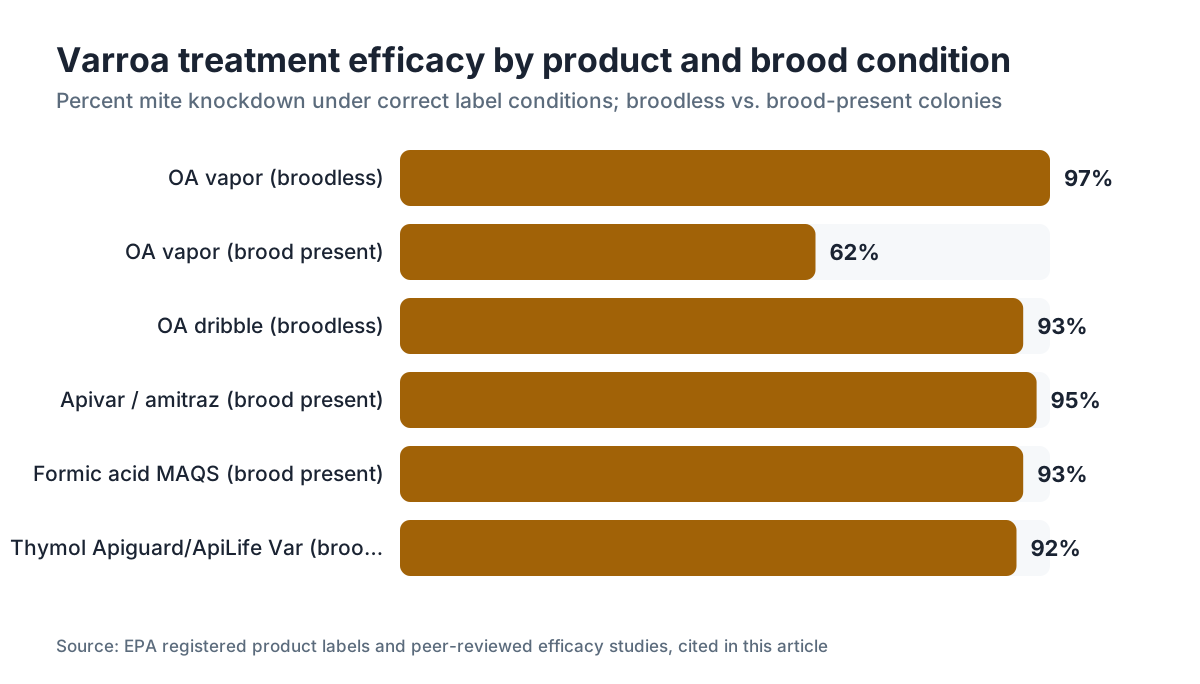
| Oxalic acid vapor | Oxalic acid | No (best) / Yes (reduced) | 20 to 105 | Vaporizer, 1 to 3 treatments | 90 to 99% broodless; 50 to 70% with brood [5] |
| Oxalic acid dribble | Oxalic acid | No only | Any (above freezing) | Dribble over seams | 90 to 95% broodless [5] |
| ApiLife Var / Apiguard | Thymol | Yes | 60 to 105 (ideal 65 to 85) | Pad/gel in hive | 90 to 95% in range [6] |
| Mite Away Quick Strips | Formic acid | Yes | 50 to 85 | Paper strips on frames | 90 to 95% in range [7] |
| Apivar | Amitraz | Yes | Above 50 | Plastic strips in brood nest | 90 to 99% in trials [8] |
Oxalic acid vapor is my go-to for a broodless winter treatment across the whole yard. One vaporizer unit moves quickly from hive to hive, and efficacy runs very high when there's no capped brood for mites to hide in. It takes more visits if you're running multiple rounds on colonies with brood, but the cost per treatment is low, around $0.50 to $1.00 per hive in product at current bulk prices.
Apivar (amitraz strips) is what I'd reach for in a late-summer crisis with high brood levels and mite loads above 3% across multiple hives. It works in brood, doesn't need a narrow temperature window, and you leave it in for 56 days minimum per the EPA label [8]. The downsides: contamination risk in wax over time, and you have to pull strips before you extract honey. You cannot use Apivar in a honey super that's on the hive. Ever.
Formic acid (Mite Away Quick Strips, MAQS) is the only treatment approved for use with honey supers on in the U.S., which matters if you're treating during a nectar flow [7]. The temperature window is real: above 85°F it can kill queens and damage brood. Below 50°F it just doesn't work. Plan accordingly.
Thymol products need warmth to volatilize properly, so they're a poor fit for a fall treatment in northern climates. In temperate conditions they work well and leave no detectable residues in honey at label rates [6].
For building a full treatment calendar and sourcing product, see what's carried by beekeeping supply companies that stock EPA-registered miticides.
How do you build an apiary-wide treatment calendar?
A practical calendar has four nodes: spring check, summer treatment if needed, late-summer mandatory treatment, and winter broodless treatment. Most operations should plan for at least two treatment events a year regardless of mite counts, because even low-count yards can spike fast in late summer when brood area contracts and mites pack into fewer cells [3].
Here's a framework for a northern temperate operation (shift timing three to six weeks earlier for southern beekeepers):
March to April: Run an alcohol wash on every hive before spring buildup hits full speed. If any hive is at or above 2%, treat the whole yard. Oxalic acid dribble or vapor works while brood is still minimal. Record every result.
June to July: Mid-season check. Many yards read clean here, because spring population growth dilutes the mite percentage even as absolute numbers rise. Don't let a clean June reading talk you into skipping August.
August 1 to August 15: The most important treatment window of the year, and most hobbyists miss it or treat too late. The winter bees that carry your colony through to March are being raised right now. Mites carrying deformed wing virus that reproduce in this brood damage those winter bees before they even emerge. Treat in September and you're already late for the bees that matter most. Formic acid or thymol work here if temperatures cooperate. Apivar strips can go in now too, but remember the 56-day exposure runs into October in many zones.
December to February (broodless window): Oxalic acid vapor or dribble. One to three applications of OAV seven days apart during a hard broodless stretch can drive mite loads to near zero going into spring. Cheap insurance, low labor per hive once you own a vaporizer.
If you want a pre-built version of this seasonal protocol, VarroaVault's free management tools let you log wash results by hive and get threshold-triggered treatment reminders across your whole operation.
How do you monitor an entire apiary efficiently?
Efficiency in monitoring comes from standardizing your method, batching your visits, and keeping records in one place.
For an alcohol wash, the workflow per hive takes about five minutes once you're practiced: pull a frame from the brood nest edge, knock or shake roughly 300 bees into a jar with a mesh lid, add 70% isopropyl alcohol to cover them, shake for 60 seconds, pour the liquid through the mesh into a white tray, count the mites, divide by the number of bees in the jar (count them after they've been washed out), and multiply by 100 for your percentage [11].
For ten hives, that's about an hour of monitoring per apiary visit. Reasonable, given that a single colony collapse costs you the bees, the equipment, and often the drawn comb, worth $100 to $200 or more depending on your setup.
Batch your visits so every hive gets checked the same day. Mite populations shift week to week, especially in summer, and a two-week gap between checking hive one and hive ten introduces enough drift to skew your threshold decisions.
Keep a physical or digital log with the date, hive ID, sample size, mite count, and percentage. Over two or three seasons you'll see which hives run chronically high and which stay clean. That pattern tells you something real: about genetics, about beekeeper error in specific hives, or about location-driven robbing pressure.
What about neighbor apiaries and mite-bombed colonies arriving from outside?
Your neighbors' hives are your problem, like it or not. Varroa-laden bees from an unmanaged feral colony or a neglectful beekeeper's yard within a mile or two will drift and rob their way into your operation. You can't stop that entirely, but a few things help.
First, don't let your colony density work against you. Overcrowded yards with hives entrance-to-entrance see more robbing and more drift than yards with some physical separation. Even a few feet between hives and varied entrance directions cuts the confusion that leads to drift.
Second, get more aggressive with your late-summer threshold if you know there are unmanaged colonies or non-treating hobbyists nearby. Drop your action threshold to 1% instead of 2% from July onward. The extra margin costs you one treatment and buys you a buffer against outside reinfestation pressure.
Third, new packages, nucs, or swarms coming into your yard should be treated before introduction, or at minimum sampled and quarantined until you know their mite load. A nuc bought in May can arrive at 3% mites and reinfest your whole yard by July if you just drop it in and forget. This happens all the time. Check every new colony before it joins the operation.
Feral swarms are high-risk. Research suggests feral populations in North America often carry mite loads well above managed-colony thresholds, partly because they've been surviving untreated with varying degrees of hygienic behavior [3]. Hive them separately, sample within a week of establishment, and treat if at threshold before you fold them into the main yard.
How do you verify a treatment actually worked?
Post-treatment monitoring is the step most beekeepers skip, and it's where you find out if your apiary-wide effort actually moved the needle.
Run an alcohol wash on every hive three to four weeks after treatment completes. For Apivar, that's 56 days after strips went in, then wash. For oxalic acid vapor in a broodless colony, test seven to ten days after your last application [5]. For formic acid or thymol, test two weeks after the last pad or strip is out.
You want a post-treatment mite level below 1%. If you come back and find hives still parked at 2% or above, you have a problem. Either the treatment went on wrong (bad temperature, bad placement, too short an exposure), efficacy has dropped to resistance, or reinfestation from outside has already begun.
If post-treatment counts stay high after a correctly applied treatment, run a resistance test or switch treatment class entirely. The Honey Bee Health Coalition's guide and the Beltsville Bee Lab both recommend rotating treatment classes to slow resistance [1][4]. Using Apivar every single year for five years is a straight line to amitraz resistance in your local mite population.
Document the results. The post-treatment wash is your proof of whether the strategy worked, and it's the data you need to decide what to change next season.
Does using varroa-resistant bee genetics change the apiary-wide approach?
Yes, but it doesn't replace it. Stocks bred for hygienic behavior, Varroa Sensitive Hygiene (VSH), or mite-biting behavior can run lower mite loads and cross treatment thresholds less often [9]. That's genuinely useful and worth pursuing. But even the best commercially available VSH stock doesn't wipe out varroa. It slows population growth.
The honest reality: resistant genetics in one hive don't protect your other hives if those colonies run conventional stock. The monitoring protocol doesn't change. The threshold doesn't change. You may find VSH colonies hit threshold later in the season or less often, which trims your treatment frequency, which trims cost and chemical exposure. Real benefit.
If you're converting your yard to resistant stock, do it gradually and keep monitoring through the transition. Don't assume a VSH queen means you can skip summer monitoring. Test them the same way you test everything else.
For what it's worth, I'd rather run moderately hygienic local bees I can monitor reliably than import VSH queens that never adapt to my local forage and turn into weak colonies despite better mite tolerance. Your mileage will vary by region.
More on bee stock selection lives in the article on beekeeping species if you're weighing genetics for your operation.
What does an apiary-wide strategy cost, and is it worth the investment?
Let's look at real numbers. For a ten-hive operation running four monitoring events and two treatment events a year:
Monitoring supplies (isopropyl alcohol, jars, trays): roughly $15 to $25 a year for a ten-hive yard.
Oxalic acid vaporizer (one-time): $100 to $200. Vaporizer-grade OA crystals run about $15 to $25 per pound, and one pound treats 30 to 50 hives depending on dose. That's under $1 per hive per application.
Add a summer Apivar treatment across ten hives and a pack of ten strips runs about $40 to $60 depending on supplier [8].
Total annual treatment budget for ten hives: $60 to $100 in a typical year, or $6 to $10 per hive.
A single colony loss costs you $150 to $200 for a replacement package or nuc, plus the time to start over, plus any lost honey production. Operations that lose 30 to 40% of colonies a year (the U.S. average annual loss rate has run 40 to 45% in recent survey years) [10] are bleeding far more to untreated varroa than they'd ever spend on a systematic monitoring and treatment program.
The apiary-wide approach costs more than spot-treating, because you treat all hives whether they look sick or not. The cost gap between spot-treating four hives and treating all ten is real but modest. The gap in outcome is not modest.
For sourcing treatments and monitoring supplies at a fair price, compare options across beekeeping supply companies that carry EPA-registered products.
What are the most common apiary-wide treatment mistakes?
Starting too late in summer is probably the single most common error. Late July through mid-August is the window for protecting winter bees, and most hobbyists don't treat until they spot dead bees or a crashing colony in October. By then the winter bees hit by deformed wing virus are already sealed in cells or dying on the bottom board.
Treating without monitoring first is the second one. If you don't know your pre-treatment mite level, you don't know if your treatment worked, and you don't know if your apiary needed treatment at all or if you just added chemical residues to wax for nothing.
Not finishing the full treatment duration. Apivar stripped out after 30 days instead of 56. OAV done once instead of three times in a colony with brood. A single formic acid strip in a six-frame colony when two are needed. These shortcuts cut efficacy in a way you can measure, and they hand survivor mites more chances to pass on any tolerance they carry.
Treating outside temperature limits. Formic acid above 85°F damages queens. Thymol below 60°F barely volatilizes and does almost nothing. OAV above 105°F can create vapor concentration problems. Read the label. The EPA requires labels to be followed, and those temperature ranges exist because the efficacy studies were run inside those ranges [5][6][7].
Ignoring the post-treatment wash. Treat in August, don't check back until spring, and you have no idea if anything worked. You're flying blind into the most dangerous season for colony survival.
Skipping new colonies coming into the yard. One untested nuc set next to seven treated hives can undo your whole season. Every new colony gets sampled before it joins the operation. No exceptions.
Frequently asked questions
How often should I treat my entire apiary for varroa?
Most operations need at least two treatment events per year: a late-summer treatment (August 1 to 15 in northern climates) to protect winter bees, and a broodless-window treatment in winter using oxalic acid. A third event may be needed in spring or midsummer if any hive hits the 2% threshold on an alcohol wash. Monitor first, then decide.
Can I skip treating a hive that looks healthy?
No. Strong, healthy-looking colonies often carry the highest mite loads because they have the most brood. Visual inspection tells you nothing reliable about mite levels. Only an alcohol wash gives you a real percentage. If any hive in your yard hits the 2% action threshold, treat the whole yard, including the one that looks fine.
What is the economic threshold for varroa treatment?
The Honey Bee Health Coalition recommends treating any colony at or above 2 mites per 100 bees (2%) from March through August, and at 1% or above from September through November, when varroa damage to winter bees is more severe. These thresholds trigger apiary-wide treatment, not treatment of the affected colony alone.
How do I do an alcohol wash correctly?
Pull a frame from the edge of the brood nest area, shake or knock roughly 300 bees into a jar with a mesh lid, add 70% isopropyl alcohol to cover them, shake for 60 seconds, pour through the mesh into a white tray, and count the mites. Divide the mite count by the number of bees (counted separately from the washed sample), then multiply by 100 for your percentage.
Is oxalic acid safe to use when there's honey on the hive?
The EPA-registered oxalic acid label allows use when honey supers are not present, or only if they hold honey not intended for human consumption. Oxalic acid occurs naturally in honey at low levels, but to stay within label compliance and dodge contamination questions, pull supers before any oxalic acid treatment. Formic acid (MAQS) is the main option approved for use with supers on.
How long do Apivar strips need to stay in the hive?
Apivar (amitraz) strips require a minimum of 56 days of continuous contact with bees in the brood nest for full efficacy, per the EPA product label. Removing them early cuts how many reproductive mite cycles the treatment covers. Two strips are needed for colonies over five frames of bees, and they must sit directly in the brood area.
What's the best treatment for varroa during a honey flow?
Mite Away Quick Strips (formic acid) is currently the only EPA-registered miticide in the U.S. approved for use while honey supers are on the hive, provided temperatures stay between 50 and 85 degrees F during treatment. Above 85°F it can damage brood and queen viability. Every other approved treatment requires super removal.
How do I know if varroa mites are becoming resistant to my treatment?
Run a post-treatment alcohol wash three to four weeks after treatment completes. If mite levels stay at 2% or above after a correctly applied, full-duration treatment at the right temperature, efficacy has likely dropped. Resistance is more common with amitraz (Apivar) after repeated use. Rotate treatment classes and report suspected resistance to your state apiarist or the Beltsville Bee Lab.
Do I need to treat newly caught swarms or packaged bees from outside?
Yes. Packages and nucs from outside sources should be sampled within one week of installation. Feral swarms often carry mite loads well above threshold. Don't assume purchased stock is clean. Run an alcohol wash before integrating any new colony into the main yard, and treat the whole apiary if the new colony comes in above threshold.
How does bee genetics affect my apiary-wide varroa strategy?
Varroa-resistant stocks like VSH or locally adapted hygienic bees can slow mite population growth and may reduce how often your hives hit treatment thresholds. They don't remove the need for monitoring or the apiary-wide approach. Keep testing all colonies the same way regardless of stock. Resistant genetics in one hive won't protect neighboring conventional colonies.
What records should I keep for apiary-wide varroa management?
For each hive, log the date of every alcohol wash, the sample size (number of bees), the mite count, and the resulting percentage. Record treatment product, application date, removal date if applicable, temperature at treatment time, and post-treatment wash result. Over two to three seasons these records tell you which hives run chronically high and whether your treatments hit adequate knockdown.
Can I treat for varroa in cold weather?
Oxalic acid dribble and vapor both work in cold weather and are specifically recommended for broodless winter colonies. Oxalic acid vapor has been used at temperatures as low as 20°F with good results when colonies are broodless. Formic acid and thymol need warmer conditions (above 50°F and 60°F respectively) to be effective and should not be used in cold-weather treatments.
How far do mites spread between apiaries?
Varroa spreads mainly through bee drift and robbing within an apiary, most intense within 100 meters of hive entrances. Between apiaries, spread depends on foraging overlap and robbing distance, which can reach one to two miles for strong colonies. Research shows treated colonies next to untreated ones can return to pre-treatment mite levels within five to eight weeks through this route.
Sources
- Honey Bee Health Coalition, Varroa Management Guide (honeybeehealth.org): 2% threshold March-August, 1% September-November; alcohol wash as gold standard; all colonies in an apiary should be monitored and treated together
- Frey & Rosenkranz, Experimental and Applied Acarology, colony reinfestation after treatment: Treated colonies returned to pre-treatment mite levels within 5-8 weeks when adjacent to untreated colonies, primarily through drift and robbing
- USDA ARS Bee Research Laboratory, Beltsville, varroa biology and management information: Varroa populations can grow approximately 25% per month under summer conditions; feral colonies often carry above-threshold mite loads
- EPA, Pollinator Protection and IPM for Varroa Mites in Honey Bees: Rotating treatment classes is recommended to slow resistance development in varroa populations
- EPA, Oxalic Acid Section 3 miticide registration (Api-Bioxal label): Oxalic acid vapor efficacy 90-99% in broodless colonies; 50-70% with capped brood present; temperature range 20-105°F on label
- Journal of Apicultural Research, thymol product efficacy and residue studies: Thymol-based treatments (ApiLife Var, Apiguard) achieve 90-95% efficacy in temperature range 65-85°F and leave no detectable residues in honey at label rates
- EPA, Mite Away Quick Strips (formic acid) product registration: MAQS is the only EPA-registered miticide approved for use with honey supers on; temperature range 50-85°F; above 85°F can damage brood and queens
- EPA, Apivar (amitraz) product registration: Apivar requires minimum 56-day exposure; must not be used when honey supers intended for human consumption are present; two strips for colonies over 5 frames
- Apidologie, VSH and hygienic behavior genetics in varroa management: VSH and hygienic bee stocks carry lower mite loads and cross treatment thresholds less frequently, but do not eliminate varroa from managed colonies
- USDA NASS, Honey Bee Colonies report, annual colony loss survey: Annual U.S. managed honey bee colony loss rates have ranged from 40-45% in recent survey years; varroa is the primary driver of overwintering losses
- Penn State Extension, Varroa Mite Management for Beekeepers: Alcohol wash method: ~300 bee sample, 70% isopropyl alcohol, 60-second shake, mite count divided by bee count times 100 gives infestation percentage
- University of Minnesota Extension, Varroa mites and honey bee management: Late summer (August 1-15) is the most critical treatment window for protecting winter bees; mite damage to this cohort is the primary driver of spring deadouts
Last updated 2026-07-09