Small hive beetle and varroa double stress on colonies
TL;DR
- Small hive beetles and varroa mites hitting a colony together can collapse a hive far faster than either pest alone.
- Varroa suppresses bee immune function and shrinks adult populations.
- SHB then exploits any gap in hive defensive coverage.
- Managing both takes coordinated timing, because some varroa treatments can accidentally feed beetles instead of starving them.
Why do small hive beetles and varroa hit colonies at the same time?
Both pests peak in late summer across most of the United States, right as colony population starts dropping toward fall. That timing is no accident. A large, healthy summer population polices SHB hard, chasing beetles into corners and sealing them in propolis prisons where they starve. The same big population keeps up hygienic behavior that pulls varroa-infested pupae before the mites finish reproducing. When one pest starts dragging the colony down, the other cashes in immediately.
Varroa destructor has been established in North American apiaries since the late 1980s [1]. Small hive beetle (Aethina tumida) came from sub-Saharan Africa and turned up in the United States in Florida in 1998 [2]. Within about a decade both pests were widespread across the continental U.S. That double-pest environment is the normal baseline now for hobbyist and sideliner beekeepers, not a rare bad year.
The geographic overlap matters. SHB pressure is heaviest in the southeastern states, Gulf Coast, and California, but it has pushed into the Midwest and Mid-Atlantic. Varroa is everywhere. If you keep bees in the U.S., you have varroa. In most southern states you almost certainly have SHB pressure too, at least through summer.
How do these two pests make each other worse?
Most beekeeping guides skip this part. The pests do not simply stack their damage. They feed on each other in ways that make the combined threat worse than the sum.
Varroa mites feed on the fat bodies of developing bees [3]. Bees that emerge from infested cells come out lighter, with weaker immune response, shorter lifespans, and worse learning ability. A colony with a mite wash above 2 percent is already building a workforce that is physically compromised before it ever leaves the hive to forage. Those bees are worse at the constant patrolling that keeps beetle numbers down. A 2014 study in PLOS ONE reported that varroa infestation sharply lowers hemolymph protein in adult bees, which directly cuts their ability to mount immune defenses against secondary challenges [3].
SHB larvae, once they overrun a colony, physically wreck comb. They tunnel through brood, defecate in honey, and set off a fermentation that turns stored food inedible and drives bees to abscond [2]. A colony already thinned by varroa and the viruses varroa carries (Deformed Wing Virus and Sacbrood especially) has fewer adults and does less propolis sealing, so beetles reach more of the hive faster.
The loop runs like this. High varroa loads cut adult bee numbers. Smaller clusters cannot guard every beetle hiding spot. Beetle numbers climb. Larvae chew comb and spoil food stores. The colony's nutrition drops further. Surviving bees groom each other less (grooming is the main physical control on varroa), and mite loads rise again. Once that cycle starts, neither problem gets solved alone.
For a full breakdown of the mite itself, see the varroa mite overview on this site.
What are the warning signs of dual pest stress in a hive?
Some signs are obvious. Adult beetles bolting from light when you crack the hive, larvae wriggling through comb, and slimy fermented honey all point straight at SHB. A mite wash above 2 percent (some labs push it to 3 percent by late summer) is a clear varroa action threshold [4].
The combined-stress signs are quieter.
Watch for population decline that runs faster than the season should cause. If a summer colony should hold 40,000 to 50,000 bees, but your inspection shows frames with big patches of open cells and no capped brood filling the gaps, both pests may already be working together. Heavy varroa often produces spotty brood as hygienic bees remove infested pupae, and that same spotty pattern hands SHB larvae easy access to open cells full of pollen and eggs.
Other combined-stress signals:
- Bees clustering tight in the top box while abandoning lower frames, where you then find beetle larvae and slimed honey
- Adult bees with crumpled wings (Deformed Wing Virus, carried by varroa) sitting next to beetle damage in the same inspection
- A sharp fermentation smell (SHB) paired with a population that drops more than 20 percent between inspections two weeks apart
- A queen who stops laying or lays erratically in a hive holding both pests (beetle-driven nutritional stress compounds virus-driven queen failure)
See any of these? Don't wait. Run an alcohol wash or sticky board count today, and check your SHB traps at the same time.
How bad can the combined losses get?
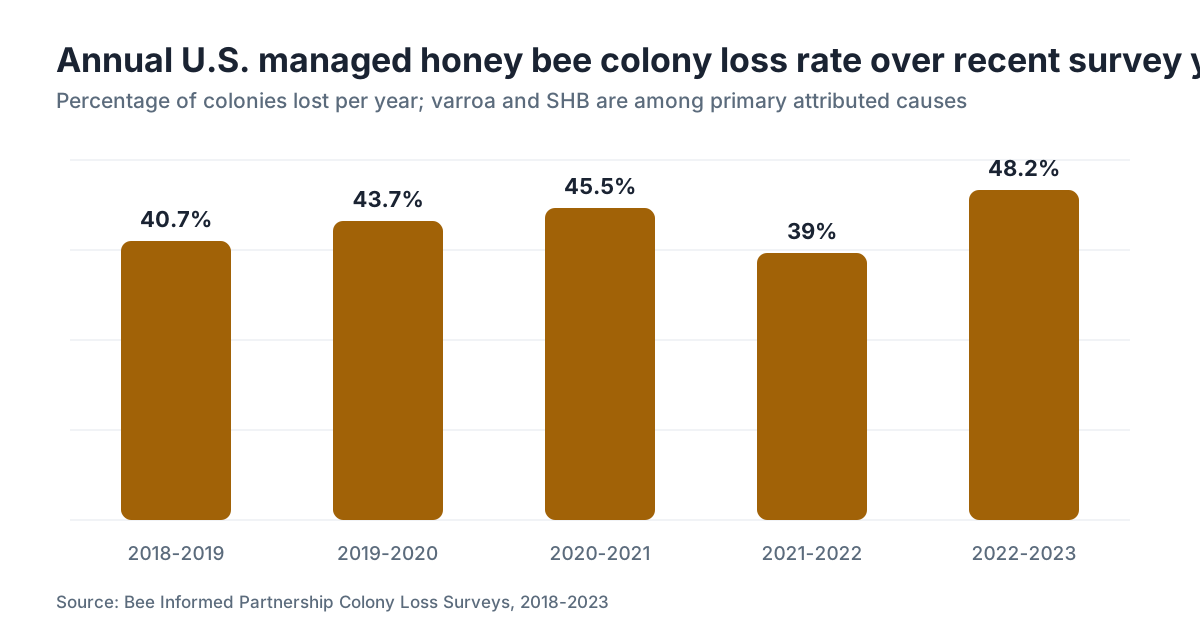
Clean combined-loss numbers are hard to pull out, because most colony loss surveys don't separate causes. The USDA National Agricultural Statistics Service and the Bee Informed Partnership document annual losses but attribute causes to ranges, not single agents [5][12]. The 2022-2023 Bee Informed Partnership survey reported a national managed colony loss rate of 48.2 percent over the survey year [5]. Most researchers blame the bulk of that on varroa and varroa-carried viruses, but SHB shows up as a contributing factor across the southern states.
Here is what the research documents cleanly. SHB can collapse a weakened colony in as little as one week once larval density hits a critical point, especially in warm weather where beetle development from egg to larva runs just two to four days [2]. A colony already 30 percent below normal population from varroa has no buffer left.
The Honey Bee Health Coalition's "Tools for Varroa Management" guide states that colonies carrying varroa above threshold show higher rates of winter loss and are more open to secondary stressors [4]. SHB is exactly that kind of secondary stressor.
What varroa treatments work best when SHB is also present?
This is where timing gets genuinely tricky. There's real tension between what's best for varroa control and what's safest under SHB pressure.
Oxalic acid (OA) by vaporization or dribble is the standard for broodless or low-brood conditions. It hits phoretic mites (mites riding adult bees) hard and leaves no honey residue [4]. Apivar (amitraz strips) works over a long window regardless of brood levels and is one of the most effective synthetic options. ApiLife Var and Apiguard (thymol-based) work well but need temperatures above 60°F and ideally below 105°F.
Here's the SHB wrinkle. Some beekeepers report that grease patties used to spread thymol vapor, or protein supplements placed to keep nutrition up during treatment, can draw SHB when a colony can't eat them fast enough. It isn't universal, but keep an eye on it. If you use thymol in a high-SHB region, check the hive every five to seven days and pull any material the bees haven't finished.
Oxalic acid vaporization probably brings the fewest SHB complications. It leaves no beetle-attracting residue, needs almost nothing extra in the hive, and done in late fall when brood is naturally low, it lands in the same window when beetle numbers are dropping too (beetles overwinter in soil outside the hive). The Honey Bee Health Coalition's treatment guide breaks down efficacy by brood condition for each registered product [4].
For tracking mite counts and treatment windows against your SHB inspections, a structured tool helps. VarroaVault's free varroa management tools let you log mite washes and pest observations in one place, so you read trends across inspections instead of managing from memory.
Apivar strips stay in the hive 6 to 8 weeks. Keep beetle trap maintenance going the whole time. The strips do nothing to beetles, and a colony mildly stressed by the strips may police beetles a little less in the first week or two as bees contact the material.
| Treatment | Effective against varroa | SHB concern | Notes |
|---|---|---|---|
| Oxalic acid vapor | Yes (phoretic mites) | Minimal | Best in broodless period; no residue |
| Oxalic acid dribble | Yes (phoretic mites) | Minimal | One-time application, broodless only |
| Apivar (amitraz) | Yes (all stages) | None direct | 6-8 week strips; don't attract SHB |
| Apiguard/ApiLife Var (thymol) | Yes | Low-moderate | Grease patties can attract SHB |
| Formic acid (MAQS/Formic Pro) | Yes (under cappings too) | Minimal | Temperature sensitive; short treatment window |
| CheckMite+ (coumaphos) | Yes | None direct | Resistance concerns; restricted use in some states |
What are the best SHB control methods when varroa is also present?
The most effective SHB control is a strong population, which is exactly what varroa attacks. That's the central tension. You can't beetle-proof a dying colony with traps alone. Traps help. They're a management aid, not a fix.
Physical traps are the frontline SHB tool. Oil-based traps (AJ's Beetle Eater, Hood Trap, West Trap) placed on the bottom board or between frames work by exploiting beetle behavior. Beetles retreat from bees into crevices, and a well-placed trap beats the hive's own corners as a hiding spot [2]. Refresh the oil every one to two weeks in warm weather. Vegetable oil works fine and costs almost nothing.
Bottom board management matters. A solid bottom board concentrates beetles where bees can reach them. A screened bottom board lets some beetles fall through and escape, but improves ventilation (which nudges varroa counts down a little by keeping humidity lower). The Honey Bee Health Coalition notes that neither bottom board type is dramatically better for SHB control by itself. Trap placement makes the difference.
Hive placement and soil treatment. SHB pupate in soil within about 90 cm of the hive. Moving hives now and then, or setting stand legs in oil-filled containers, cuts the rate of adult beetles walking back to the hive. Permethrin soil drenches (labeled for ground around hives) are registered in some states. Check your state extension service before applying [6].
Nematodes (Steinernema carpocapsae and S. feltiae), sold as Scanmask or Nemasys, go on the soil around hives to kill pupating SHB larvae. University of Florida research found that entomopathogenic nematodes reduced soil-stage SHB populations, though field results swing with soil moisture and temperature [7]. Cost runs about $30 to $60 for enough to treat the ground around several hives, and they need moist soil to work.
For sourcing quality traps and supplies, many beekeepers compare beekeeping supply companies on price and availability, especially when buying for multiple hives.
How should you sequence treatments and inspections across the season?
A dual-pest calendar isn't complicated, but it does take being deliberate about how often you inspect. Here's a practical seasonal framework built on extension recommendations and the Honey Bee Health Coalition protocol [4].
Early spring (roughly March to April). Run an alcohol wash as soon as the colony is active enough to sample. Target: below 2 percent mites per 100 bees. Check for overwintered adult SHB, which can show up even in northern states once temperatures climb past 50°F. Place traps now so they're ready before beetle season starts.
Late spring (May to June). Mite populations grow as brood ramps up. Wash every three to four weeks. SHB egg-laying picks up as soil warms. This is when thymol loses some punch in warm climates (temperatures above 105°F break down thymol stability). If mite counts hit threshold, reach for Apivar or formic acid now instead of waiting for summer heat.
Summer (July to August). The critical window. Varroa peaks around late July to August across most of the U.S. SHB peaks too. Inspect every two weeks at minimum. A mite count above 2 to 3 percent right now predicts real fall losses [4]. Treat without delay. Refresh beetle traps every one to two weeks. Watch the population trend hard.
Fall (September to November). The single most important varroa window for protecting winter bees. Oxalic acid vaporization during the natural broodless period (usually November or later up north, earlier down south) is highly effective and cheap. SHB pressure drops as it cools, but leave the traps in until overnight lows stay below 50°F.
Winter. Varroa mites ride adult bees all winter. An OA treatment on a broodless cluster is the most effective single treatment a beekeeper can run. SHB adults sit in the soil, not damaging the hive, but a warmer-than-average winter can keep SHB active year-round in the south.
The Honey Bee Health Coalition's "Tools for Varroa Management" guide (6th edition, 2022) is the best free reference for treatment timing and thresholds. Download it and keep it on your phone [4].
Can a colony recover from heavy dual pest stress on its own?
Short answer: rarely, and waiting costs you.
Colonies do not self-correct from high varroa loads without a beekeeper. The mite reproduction rate outruns natural bee removal of infested cells in nearly all genetic lines, except stock bred for varroa-sensitive hygiene (VSH) or suppressed mite reproduction (SMR) [8]. If you run standard stock and a mite wash above 3 percent in summer, the colony declines without treatment.
SHB is a little different. A strong colony can genuinely hold a moderate beetle population in check through active guarding and propolis sealing. That balance only holds while the colony stays strong. Once varroa pulls the population below the point where bees can police every corner, beetles get a foothold that grows fast.
The honest answer: beekeeper intervention is required, and faster intervention beats watching and waiting every time. USDA AMS National Honey Bee Survey data repeatedly shows that colonies with documented varroa counts above threshold that went untreated had worse survival than treated colonies in the same apiaries [1].
If you run many hives and want to catch which colonies are dropping faster than the rest, a tool that logs inspections over time earns its keep. VarroaVault's free protocol tools are built for exactly this, so you can flag colonies for priority treatment before they crash the rest of the yard through mite dispersal.
Does hive equipment design affect susceptibility to both pests?
Yes, in a few practical ways.
Bottom boards. Screened bottom boards let some SHB escape but also drop humidity a little. Research from North Carolina State University found screened bottom boards did not significantly cut mite loads on their own, but they let mites fall off and were useful alongside a sticky board for monitoring [9]. Bottom board type isn't a primary control for either pest, but solid boards concentrate beetles where bees can reach them.
Hive volume. Small colonies rattling around in big hive bodies (more space than the bees can cover) are far more open to SHB. Beetles exploit uncovered comb. A standard eight-frame Langstroth with a small colony has way more unguarded area than a five-frame nuc holding the same number of bees. Shrink hive volume to match colony size in late summer and early fall, when both varroa and SHB peak. Pull empty supers. Add entrance reducers.
Entrance size. Smaller entrances make it easier for guard bees to control beetle traffic. It's no substitute for population strength, but it helps at the margins.
Non-standard hive designs, including the mud beehive and other traditional builds, often have smaller internal volumes that cut some SHB pressure. That's rarely a good reason on its own to pick an alternative design, but it's a real side effect.
Are some bee stocks more resistant to both pests together?
Here the research is real, but practical access is thin for most hobbyists.
VSH (Varroa-Sensitive Hygiene) bees came out of USDA research at the Baton Rouge Bee Lab. Queens from VSH lines hold varroa at much lower levels than standard stock, with some trials showing mite suppression above 70 percent compared to unselected bees [8]. The USDA Agricultural Research Service describes VSH as a heritable trait where worker bees detect and pull mite-infested pupae before the mites reproduce.
For SHB, work from several university programs shows that some Africanized honey bee populations (where they've established) carry lower SHB loads, apparently because of their more defensive and attentive colony behavior [10]. That's observational, not a breeding target, and most U.S. beekeepers can't and wouldn't chase africanized honey bee stock as a management strategy given the public safety problems.
Hygienic behavior in general, of which VSH is one specific form, also tracks with better SHB control. Colonies that clear debris, cap and uncap cells readily, and stay busy inside the hive are better at finding beetle eggs in comb. If you can source locally adapted, hygiene-selected queens, do it. Several state and regional queen programs now sell VSH or VSH-hybrid queens for $30 to $50 each.
The practical takeaway: genetics help, but they don't replace treatment when mites are already at damaging levels. Requeening does not fix a current varroa crisis. It helps prevent the next one.
What does a practical dual-pest inspection routine look like?
This doesn't need to be elaborate. Here's what beekeepers who fight both pests in high-pressure areas actually do.
Every inspection (every two weeks in season): check beetle traps, refresh oil if needed, count the adult beetles running from light. Count the visible larvae. Log both.
Once a month from April through September: run an alcohol wash on a 100-bee sample from the brood nest. Record the count. Compare it to your last count. A rising trend matters as much as the absolute number.
At any inspection: note adult population by frames of coverage, brood pattern quality (solid versus spotty), any slimed comb or fermentation smell, and any bees with deformed wings. All of it feeds the dual-pest picture.
If mite count crosses 2 percent in summer or 1 percent going into fall: treat. Don't wait for a second sample. Pick the product that fits your brood conditions and ambient temperature. Start beetle trap maintenance the same day.
If beetle larvae are in the comb: act the same day. Pull infested frames, freeze them 24 to 48 hours to kill larvae (freezing kills every SHB life stage), and judge whether the colony has enough bees to defend the space that's left. If not, combine it with a stronger colony or reduce it to a nuc.
Logging both pest observations together over time is the single biggest upgrade most hobbyists can make. A notebook or spreadsheet works fine. A digital tool that charts colony trends across a season works better, and that's what the varroa mite management resources and the VarroaVault protocol tools are built around.
Are there any integrated treatments that address both pests at once?
Honestly, no. No registered product in the U.S. treats varroa and SHB effectively in one shot. The two pests are biologically different enough that their controls don't overlap in any useful way.
The closest thing to an integrated approach is a system, not a product: treat varroa on schedule so the colony stays strong enough to suppress SHB on its own. That's the integration. The colony is your best SHB tool, and varroa is what breaks that tool. Fix varroa first, and SHB gets manageable.
Some beekeepers have tried CheckMite+ strips (coumaphos) laid in the bottom of the hive, labeled in some states both for SHB management (in a trap configuration) and as a secondary varroa miticide. The EPA product label allows a specific trap-tray configuration for SHB [11]. But coumaphos resistance in varroa is well documented, and most extension services now steer beekeepers away from using it as a primary varroa treatment. Using it only for the SHB label use, with a separate product for varroa, sidesteps the resistance problem.
The Honey Bee Health Coalition's approach, the closest thing to an authoritative consensus in U.S. beekeeping, treats integrated pest management as sequential and coordinated, not simultaneous: monitor both pests on the same inspection schedule, treat each with its own registered product, and let colony health carry the gap [4].
Frequently asked questions
At what mite level does a colony become too weak to fight off small hive beetles?
There's no single published threshold linking varroa percentage to SHB vulnerability, because it rides on total colony population, temperature, and food. Practically, most experienced beekeepers report colonies with a mite wash above 3 percent in summer start showing noticeably weaker beetle-policing behavior. Treating above 2 percent in summer heads off the population decline that hands beetles the advantage.
Do small hive beetles spread varroa mites between hives?
No. Varroa spreads through robbing, swarms, and beekeeper equipment movement. Beetles do not carry mites. The link between the two pests is indirect: beetles exploit the weaknesses varroa creates. Managing varroa cuts the beetle damage opportunity, but you still need separate physical controls for beetles in high-pressure regions.
Can I treat for varroa while beetle larvae are already in the comb?
You can, but treat the beetle infestation first. Pull and freeze heavily damaged frames. Once the colony is stable and the beetle population is knocked back to a level bees can manage, start varroa treatment. A colony fighting active larval SHB damage has depleted nutritional stores and may not keep good contact with treatment materials. Stabilize the immediate crisis, then treat the chronic problem.
How do I tell if my colony collapsed from SHB or varroa?
Look at what's left. An SHB collapse usually leaves slimed, fermented comb, visible larvae or adult beetles, and often a strong fermentation smell. A varroa collapse tends to leave a small cluster of bees with deformed wings, dead brood in cells, no single-event drop in adult population, and high mite loads on remaining bees. In practice, many late-summer collapses involve both, and you'll see evidence of each.
Do oil traps for SHB interfere with varroa treatments in the hive?
No. Oil-based beetle traps on the bottom board or between frames don't interact with oxalic acid, amitraz, thymol, or formic acid. Run them at the same time. The only marginal concern is with protein or grease patties sometimes used alongside thymol treatments, which can draw beetles if the bees don't eat them fast. Standard oil traps are fine year-round.
Is it worth treating for varroa in a colony that already has heavy SHB damage?
If the colony still has a laying queen and enough bees to cover three or four frames, yes. Pull damaged comb, shrink the hive volume, treat varroa immediately, and monitor. Some of these colonies do recover. If it's down to fewer than two frames of bees and the queen is gone or failing, combining it with a healthy colony and treating that merged unit for varroa is a better use of resources.
Do nematodes for SHB soil treatment affect anything else in the apiary?
Steinernema carpocapsae and S. feltiae are host-specific in practice and don't harm earthworms or plants at label rates. They can't survive drying out, so they need moist soil to work. They pose no risk to bees above ground. University of Florida research found efficacy against SHB pupae in moist soil, but results in dry climates or compacted soils are limited. Apply when soil around the hives is moist and temperatures are above 60°F.
Why do some beekeepers say screened bottom boards help with varroa but not SHB?
Screened bottom boards let mites that fall off bees drop through instead of re-attaching. The effect on mite counts is modest without a trap or sticky board underneath. For SHB, screens let some beetles fall out and escape rather than being trapped where bees can kill them, a slight disadvantage. Neither effect is dramatic enough to make bottom board choice a primary pest control decision.
How often should I run a mite wash when SHB pressure is also high?
Monthly at minimum from April through September. If your last wash ran above 1.5 percent, re-sample in three weeks instead of four. High SHB pressure is a reason to check mite levels more often, not less, because a colony bleeding population to beetles shows accelerating mite load as the ratio of mites to bees shifts.
Can combining two weak colonies help if both have varroa and SHB problems?
Combining helps with population, but treat both colonies for varroa before you merge them. Merge two untreated high-mite colonies and you double the mite load in one box, and the combined colony still crashes. Kill the beetles by removing damaged frames first, treat varroa in each colony separately, wait one week, then combine. Put newspaper between the two colonies as usual.
Is SHB a problem in northern states, or only the south?
SHB is mostly a warm-weather pest. It does the most damage in states below roughly the 40th parallel, including the Southeast, Gulf Coast, and parts of California. Adult beetles overwinter in soil and can't survive hard freezes at depth. But SHB has turned up in Michigan, New York, and other northern states in summer. Northern beekeepers should inspect for beetles June through September, though chronic pressure is far lower than in the south.
What is the cheapest effective SHB trap I can make or buy?
A plastic container (a used yogurt cup works) with small holes cut in the lid, half-filled with vegetable oil, wedged between frames, works and costs essentially nothing. Commercial traps like the Hood Trap or AJ's Beetle Eater run $5 to $12 each and are easier to refill. The homemade version performs about the same if sized to fit snug so bees can't fall in. Use olive or vegetable oil, not mineral oil, which can taint honey.
How do I monitor for both pests on the same inspection visit?
Start with the bottom board: check oil trap beetle counts and any debris. Then open the hive, note adult beetles fleeing the light, and check corner frames for beetle hiding. Pull a brood frame for your mite wash sample once a month. Read the brood pattern for varroa signs (sunken or perforated cappings) and SHB signs (larvae in cells, slimed areas). Record both pest observations together on the same log entry every time.
Sources
- USDA Agricultural Research Service, Honey Bee Research: Varroa destructor has been established in North American apiaries since the late 1980s; USDA ARS honey bee lab tracks varroa surveillance and control research
- University of Florida IFAS Extension, Small Hive Beetle Management: Small hive beetle arrived from sub-Saharan Africa and was first detected in Florida in 1998; larvae can destroy comb in days; beetle egg-to-larva development takes two to four days in warm conditions
- PLOS ONE, varroa fat body and hemolymph protein research, 2014: Varroa mites feed on fat bodies of developing bees; infestation dramatically reduces hemolymph protein in adult bees, compromising immune function
- Honey Bee Health Coalition, Tools for Varroa Management Guide (6th edition): Action threshold of 2 percent mites per 100 bees in summer; colonies above threshold show significantly higher winter loss; oxalic acid is highly effective for phoretic mites; treatment timing and efficacy data by brood condition
- Bee Informed Partnership, Colony Loss and Management Survey 2022-2023: National managed colony loss rate of 48.2 percent over the 2022-2023 survey year; varroa and varroa-vectored viruses attributed as primary cause; SHB listed as contributing factor in southern states
- EPA, Pesticide Registration: Permethrin soil drenches are registered in some states for use around beehives to reduce soil-pupating SHB; state-specific registrations apply
- University of Florida IFAS, Entomopathogenic Nematodes for Small Hive Beetle Control: Steinernema carpocapsae and S. feltiae reduced soil-stage SHB populations in field trials; results vary with soil moisture and temperature
- USDA Agricultural Research Service, Honey Bee Breeding (Baton Rouge Bee Lab): VSH is a heritable trait where workers detect and remove mite-infested pupae before mites reproduce; some trials show mite suppression exceeding 70 percent versus unselected bees
- North Carolina State University Apiculture, Screened Bottom Boards and Varroa Monitoring: Screened bottom boards did not significantly reduce mite loads on their own but are useful combined with sticky boards for monitoring mite fall
- University of Florida IFAS, Africanized Honey Bee and Pest Resistance Observations: Some Africanized honey bee populations maintain lower SHB loads, associated with more defensive and attentive colony behavior
- EPA, Pesticide Registration (CheckMite+ coumaphos label): CheckMite+ EPA label allows a specific trap-tray configuration for SHB management as well as secondary varroa miticide use; coumaphos resistance in varroa is documented
- USDA National Agricultural Statistics Service, Honey Bee Colonies: USDA NASS documents annual colony loss rates and contributing factors including varroa and SHB; data used in annual colony surveys
Last updated 2026-07-09