Split hive technique for reducing varroa load

TL;DR
- Splitting a hive removes or reduces capped brood, which is where varroa reproduces.
- A well-timed split can cut the mite population in a colony by 50 to 70% without any chemical treatment.
- The brood-break effect is the mechanism, not the act of dividing bees itself.
- Splits work best in spring and early summer and pair well with oxalic acid applied to the resulting broodless splits.
How does splitting a hive actually reduce varroa?
Varroa destructor reproduces only inside capped brood cells. A female mite slips into a cell just before the bees cap it, lays her eggs, and her offspring mate and ride out on the emerging adult bee. No capped brood, no mite reproduction. That's the whole trick. [1]
When you split a hive, you divide the adult bees and the frames of brood between two or more boxes. The half that ends up without a laying queen goes broodless for the 14 to 21 days it takes to raise a new queen to mating and egg-laying. That broodless window is the point of the whole exercise. Mites riding on adult bees (the phoretic population) can't reproduce. They age, they die, or they drop onto sticky boards where you can count them. The mite load in that split falls fast.
The split that keeps the original queen still has brood, so mites in that half keep breeding. But you've cut the number of available cells roughly in half, and the mite-to-bee ratio often improves in both halves because you've also spread the adult bees across more space relative to the brood.
The real payoff lands when you treat the broodless queenless split with oxalic acid. No capped brood means no place for mites to hide, so oxalic acid vapor or dribble reaches nearly every phoretic mite. The Honey Bee Health Coalition's Tools for Varroa Management guide describes a brood break combined with oxalic acid as one of the most effective approaches available that doesn't drive chemical resistance. [2]
What types of splits create the best brood break for varroa control?
Not all splits are equal for mite work. The goal is stretching the time a portion of the colony spends broodless, and different split styles handle that differently.
Walk-away split. You divide frames of brood and bees into two boxes, leave one with the old queen, and let the queenless half raise its own queen from young larvae. The queenless half goes broodless for roughly 14 to 24 days depending on how old the larvae are when you split. This is the most common method and works well for varroa control if you treat with oxalic acid during that broodless gap. The downside: you don't control the timing precisely, and if all your larvae are too old to raise a queen, the split fails.
Nucleus colony (nuc) split with a caged or introduced queen. You pull frames of bees and brood into a nuc box, remove all capped brood (shake the bees off sealed frames and return those frames to the parent hive), and introduce a mated queen. The nuc starts with only open brood, so the window before new bees get capped runs about 9 days. Shorter brood break, faster population recovery. Better for production apiaries that need strength heading into a flow.
Artificial swarm (Pagden method). Move the original hive to a new location and put an empty box on the old stand. Field bees return to the old stand. The original hive, now mostly house bees with the old queen, loses many of its foragers. The box on the old stand gets a new queen. Each half manages mites differently, but the split on the old stand goes through a queen-introduction brood break. [3]
Full broodless split. Some beekeepers pull every frame of capped brood out of a colony, put the capped frames in a separate brood box with a few nurse bees and no queen, and leave the main hive with open brood and the queen. The main hive's varroa load drops fast. The brood box can be treated lightly or allowed to emerge naturally, then the frames go back. It's labor-heavy but gives the most complete brood break to the main colony.
For pure varroa control, the walk-away split followed by oxalic acid vaporization to the queenless half is the most practical approach for hobbyists.
When is the best time of year to split for varroa control?
Timing matters more than most people realize.
Spring (April, May in most of North America). This is the sweet spot. Colony population is building, drones are around for queen mating, and you have the whole summer ahead for colonies to rebuild strength. A spring split that triggers a brood break keeps mite loads low going into the summer buildup, which is exactly when varroa populations explode if you leave them alone. University of Minnesota Bee Lab recommends splitting in early spring as a preventive varroa strategy, ideally when colonies have 5 or more frames of brood. [4]
Early summer (June). Still good. Drone populations are high, queens mate well, and colonies bounce back fast. But you're closer to the summer mite peak, so time your oxalic acid treatment carefully in the queenless split.
Late summer (August). Risky as a standalone varroa strategy. Queens raised in late summer don't always mate reliably. And new colonies need to build up winter bees (the fat-bodied bees raised in August and September), and a split still working on population may not make enough of them. A late summer split is no substitute for a proper mite treatment before winter bees are raised.
Fall. Don't split for varroa control in fall. The math doesn't work. You'll weaken both colonies going into winter, and the brood break comes too late to protect the overwintering bees. Treat instead.
The general rule: split when you have at least 90 days of warm weather left in your region, and always check mite loads with an alcohol wash or sugar roll before you split so you know you actually need the intervention. [5]
How much does splitting reduce mite levels, and what does the research show?
These are honest ranges, not marketing claims.
A brood break with no chemical treatment can drop the total mite population in a colony by roughly 30 to 50% over a 3 to 4 week stretch, mostly because phoretic mites die of old age. Their lifespan off brood is about 5 days in summer, up to several weeks in winter. [1]
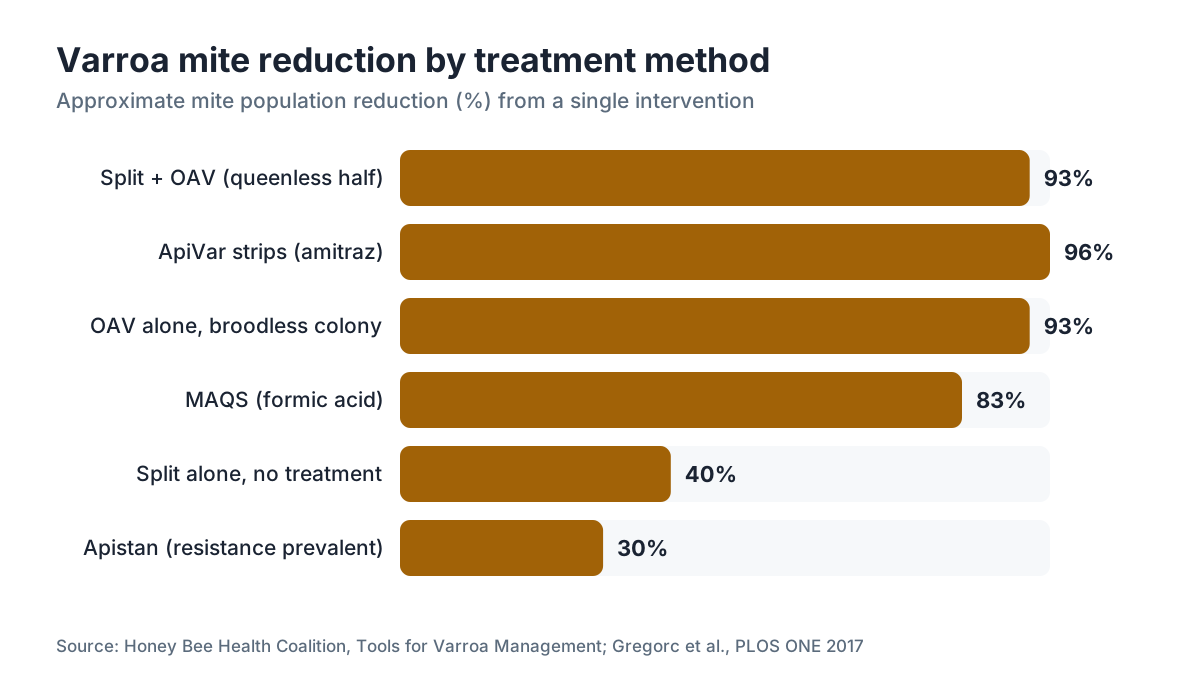
Combine a brood break from a split with oxalic acid during the broodless phase and efficacy in that queenless split climbs past 90 to 95% for phoretic mites. A 2017 study in PLOS ONE by Gregorc and colleagues found oxalic acid vaporization in broodless colonies achieved greater than 93% mite reduction. [6] The colony that kept the queen still carries reproducing mites, but its mite-to-bee ratio improves because you removed bees and brood that would have housed mites.
Treat the queenless split with vaporized oxalic acid, run a separate count on the queenright half, and the total mite load can drop well below the 2% trigger (2 mites per 100 bees) that the Honey Bee Health Coalition uses. [2]
Here's the honest caveat. No single published study has tracked the exact percentage reduction from a walk-away split alone, with no follow-up treatment, over a full season. Most data comes from brood-break studies in general (including queen removal and caging), and results swing with initial mite load, season, and local mite genetics. The most consistent figure across extension summaries is a 50 to 70% reduction in mite infestation rate when splits are paired with oxalic acid. [4]
Step-by-step: how do you perform a varroa-reduction split?
Here's the practical sequence for a basic walk-away split aimed at varroa control.
1. Confirm your mite load warrants a split. Do an alcohol wash on a 100-bee sample. At or above 2% (2 mites per 100 bees) before your main honey flow, a split makes sense. Below 1%, you can probably wait. [2]
2. Pick a warm, calm day. 60°F or above, no rain. You need calm bees and visible brood frames.
3. Find the queen. Mark her if you haven't. You'll place her in the queenright split on purpose, not by luck.
4. Divide the frames. Give each split roughly equal amounts of open brood, capped brood, honey, and pollen. A typical 10-frame hive can split into two 5-frame nucs, or you can use a second full box. The queenless half needs at least 2 to 3 frames of young open brood (larvae under 3 days old) so it can raise an emergency queen.
5. Make sure each split has enough bees. A split with too few bees can't hold brood temperature and will fail. Shake an extra frame of nurse bees into the queenless split if it looks light.
6. Separate the boxes by at least 6 feet, or move the queenless split to a different location. Otherwise field bees fly back to the original stand and leave the queenless split dangerously short of foragers.
7. Check the queenless split for queen cells after 5 to 7 days. You should see drawn-out queen cells on frames with young brood. Leave them alone.
8. Wait for the broodless window. About 14 days after the split, the last capped brood from the original hive will have emerged. Now the queenless split is fully broodless (the queen cell is still sealed). This is the treatment window. Apply oxalic acid vaporization per the label. EPA-registered oxalic acid products (Api-Bioxal is the common one) call for one treatment during a broodless period for best efficacy. [7]
9. Confirm queen establishment. Check for eggs 10 to 14 days after you last saw capped queen cells. Eggs mean your new queen mated.
10. Reassess mite loads in both halves 30 days post-split. An alcohol wash on each colony tells you whether the strategy worked. If the queenright half is still above 2%, treat it directly.
You can track these mite counts and treatment windows with the free protocol tools at VarroaVault, which formats the timing for your split date and region.
Can you make a split without losing your queen?
Yes, and in many cases that's the better plan for varroa control.
The classic approach: cage the original queen for 3 to 4 weeks inside the colony using a push-in cage or a queen excluder rigged as a cage. The colony goes broodless as existing brood emerges, and you treat with oxalic acid. Then release the queen. Some people call this a forced brood break rather than a true split, but it hits the same mite-control mechanism.
If you want to split but keep your original queen, do a split and reunite. Make the split, let the queenless half go broodless, treat with oxalic acid, then recombine both halves using the newspaper method after 3 to 4 weeks. You end up with a single strong colony, your original queen, and a much lower mite load. The cost is 3 to 4 weeks of reduced honey production and some disruption.
Want more colonies? The walk-away split with a naturally raised queen is the better outcome. Only want varroa control without changing your colony count? The caged queen or split-and-reunite approach is cleaner. [3]
What should you treat the broodless split with, and when?
Oxalic acid is the standard recommendation here. The EPA approves it for use in honey bee colonies, it leaves no honey residue at label rates, and it hammers phoretic mites. [7]
Api-Bioxal is the only EPA-registered oxalic acid product in the U.S. as of 2025. The label allows vaporization (using an approved vaporizer) or a dribble (direct application to bees between frames). Vaporization is more practical for splits because it spreads vapor through the box without opening it up.
Dosing per the Api-Bioxal label: 1 gram of oxalic acid dihydrate vaporized per brood box. A single treatment during a confirmed broodless period gets you the 93%+ reduction. [6] If you're not sure the colony is fully broodless, wait until you can confirm no capped cells, then treat once.
Skip amitraz and synthetic pyrethroids (Apistan, ApiVar) as your primary tool in a split. Those work by extended contact over 6 to 8 weeks regardless of brood cycle, so the brood-break advantage is mostly wasted on them. You'd be paying for a strip and throwing away the free window the split just handed you.
Mite-Away Quick Strips (formic acid) are another option with some brood-penetrating efficacy, meaning they can kill mites under cappings. They need temperatures between 50 and 85°F and a colony with at least 4 to 5 frames of bees to handle the vapor load. A small nuc split is often too light for MAQS. Follow the label to the letter. [8]
Does splitting a hive weaken it too much to survive?
This is the most common worry, and it's a fair one. A colony split too late in the season, too small to start, or left unmonitored can fail.
The minimum viable size for a split is generally 3 to 4 frames of bees (roughly 10,000 to 15,000 bees) in each resulting half. A colony with fewer bees than that struggles to hold brood temperature, fend off robbers, and raise a queen all at once.
If your hive is only 5 to 6 frames of bees total, a split is probably the wrong varroa strategy. A direct oxalic acid treatment or an extended-release strip (ApiVar) does less damage to colony strength than halving an already-small population.
Strong colonies (8+ frames of bees) mostly shrug off the strength concern. Research from the USDA Agricultural Research Service Bee Research Laboratory has found that colonies split in spring with adequate resources routinely reach pre-split strength within 4 to 6 weeks. [9]
Winter readiness is the real catch. A split done after mid-July in most Northern states doesn't leave enough time for the resulting colonies to build the fat winter bees they need. A good rule: if your last reliable nectar flow ends before October, get your splits done by early August at the absolute latest, and even that's tight.
How do splits compare to chemical treatments for varroa control?
Splits and chemical treatments aren't competing options. They work best together. But here's a realistic comparison for anyone weighing them.
| Method | Efficacy (mite reduction) | Resistance risk | Cost | Colony disruption | Best season |
|---|---|---|---|---|---|
| Walk-away split + OAV | 50 to 70% overall; 90 to 95% in queenless half [2][6] | None | Low (OAV cost ~$0.50/treatment) | Moderate | Spring/early summer |
| OAV (broodless colony, no split) | 90 to 95% [6] | None | Low | Low | Winter/brood break |
| ApiVar (amitraz strips) | 93 to 99% [10] | Moderate (resistance documented) | ~$20 to 25 per hive | Low | Any, 6 to 8 week strip |
| Apistan (tau-fluvalinate) | 10 to 50% (resistance widespread) [10] | High (resistance common) | ~$15 per hive | Low | Spring/fall |
| MAQS (formic acid) | 72 to 95% [8] | None | ~$15 to 20 per hive | Moderate | Temp-dependent |
| Splits alone, no treatment | 30 to 50% [1] | None | Labor only | High | Spring/early summer |
If you're in a region with established amitraz resistance (the southeastern U.S. has documented cases), the split-plus-OAV combination earns more consideration as a primary strategy. The Honey Bee Health Coalition's guide flags resistance as a growing problem and recommends rotating modes of action. [2]
For a hobbyist with 2 to 5 hives, the labor cost of splits is real. Each split takes 30 to 45 minutes plus follow-up checks. An ApiVar strip takes 10 minutes. The trade is that splits also give you more colonies and add zero chemical load to the hive. That's worth something if you're selling splits or trying to hold treatment costs down.
Can splits replace a full treatment program entirely?
Probably not as your only tool, and you shouldn't try.
A split only interrupts the mite reproduction cycle in the queenless half. The queenright half keeps breeding mites. And if you're in an area with heavy mite immigration from neighboring colonies (abandoned hives, feral colonies, or other beekeepers who don't treat), your freshly cleaned-up splits can get reinfested within weeks through robbing and drifting bees. [1]
The Bee Informed Partnership's national loss and management surveys have consistently found that colonies relying on brood breaks alone, with no chemical backup, lose more bees over winter than colonies that pair a brood break with at least one oxalic acid treatment. [11] The gap widens in high-density beekeeping areas.
The realistic role for splits: use them in spring to interrupt the mite reproduction cycle, treat the broodless halves with oxalic acid, monitor both halves with alcohol washes every 30 days, and keep ApiVar or formic acid in reserve for any hive that spikes above 2% heading into August. That's a balanced plan.
For the full-season treatment calendar and how to track mite counts across multiple hives, the varroa mite article on this site covers the lifecycle and monitoring protocols in depth.
What are common mistakes when using splits for varroa control?
A few errors come up over and over on forums and extension helplines.
Splitting too late. A July split in Minnesota doesn't give the queenless half enough time to raise a queen, build population, and prep for winter. Many hobbyists split in a panic when they see high mite counts in August, which is the worst possible timing.
Forgetting to treat. The brood break is only half the equation. Beekeepers who split and then skip the oxalic acid treatment during the broodless window waste the best mite-kill opportunity of the year. The mites are all out in the open and the treatment lands as close to 100% effective as beekeeping gets.
Making splits too small. A 3-frame nuc with two frames of capped brood and one frame of pollen has almost no mite-control benefit and a real risk of failing outright. Give each split enough bees.
Not separating the boxes far enough. Set the queenless split 2 feet from the queenright original and field bees drift back, leaving you lopsided: too many bees in one box, too few in the other. Move the queenless split at least 6 feet away, or better yet to a different yard.
Assuming the queen cell succeeded. Always confirm new eggs before you trust that a split has a working queen. A split left queenless for 6 weeks without a check is often a laying-worker colony by then, which is hard to rescue. Check at the 3-week mark.
Not monitoring after the split. A post-split alcohol wash 4 to 5 weeks out tells you whether the strategy worked. Skip it and small mite problems turn into big ones by August.
Are there any supplies or equipment you need specifically for varroa-reduction splits?
The equipment list is short and you probably own most of it.
A second hive box or nuc box (5-frame) for the split itself. Nuc boxes are lighter and easier to move, which helps if you're relocating the queenless half. For two-piece hives, a standard 10-frame deep is fine. If you're pricing options, the beekeeping supply companies page breaks down nuc box sources.
An oxalic acid vaporizer, if you don't already own one. Prices run from about $30 for basic battery-powered units to $150+ for commercial vaporizers. The cheap ones work. You need a 12V battery to power most models.
Api-Bioxal oxalic acid, available from most beekeeping suppliers. A 35-gram package (about $25 to 30 at retail) treats roughly 35 hive boxes at 1 gram each. [7]
An alcohol wash kit (jar, strainer, 70% isopropyl alcohol). Costs under $5 to put together. Non-negotiable for confirming mite loads before and after your split.
A queen marking kit, if you want to be sure where your original queen ends up. Not strictly required but it saves confusion.
You don't need special varroa strips, expensive screened bottom boards, or any of the gadgets marketed for split-based management. The basic gear covers it.
Frequently asked questions
How long does the broodless period last after a walk-away split?
Typically 14 to 24 days. If the queenless half has young larvae (under 3 days old) when you split, it takes about 16 days for a queen cell to produce an emerged, mated, laying queen. During that window, the last of the original capped brood emerges, leaving the colony fully broodless for roughly 5 to 10 days. That's your oxalic acid treatment window.
Can you use oxalic acid on a split that still has some capped brood?
You can, but efficacy drops hard. Oxalic acid doesn't penetrate wax cappings, so mites inside capped cells stay protected. The Honey Bee Health Coalition and the Api-Bioxal label both specify a broodless period for single-treatment efficacy. If the colony still has brood, you need multiple treatments or a longer-contact option like ApiVar.
Will splitting a hive cause it to swarm?
The opposite, usually. Splitting reduces swarming pressure by giving crowded bees more room and pulling the old queen out of part of the colony. Swarms happen when bees feel too cramped to expand. A well-run split copies the swarming process in a controlled way, so you're redirecting the swarm impulse rather than triggering it.
How do you know if a varroa-reduction split worked?
Do an alcohol wash (100-bee sample) on both halves 4 to 5 weeks after the split and oxalic acid treatment. A successful split-plus-OAV combination should push the queenless half below 1% infestation (1 mite per 100 bees). If the queenright half is still above 2%, treat it directly. Numbers above 3% in either half going into August need immediate action.
Can you split a hive more than once in a season for varroa control?
Yes, but returns diminish. Two splits in a season, one in April and one in early June, can hold mite loads low through summer. A third split usually backfires because colonies need population strength to overwinter. Most hobbyists with single hives do better with one split plus a fall oxalic acid treatment than with repeated division.
Does the queenright half of a split still need a varroa treatment?
Often yes. The queenright half keeps capped brood the whole time, so mites keep reproducing there. Do an alcohol wash 30 days post-split. If infestation is above 2%, treat with ApiVar, formic acid, or a second oxalic acid series (multiple applications if brood is present). Don't assume the split cleaned up both halves equally.
What mite level should trigger a varroa-reduction split?
The Honey Bee Health Coalition recommends taking action at 2 mites per 100 bees during brood-rearing season. A split is most useful as a preventive or early-intervention tool at 1 to 3%, before populations explode. Above 4 to 5% in summer, a direct chemical treatment is faster and more reliable than waiting out a split's brood break.
Is a varroa-reduction split the same thing as a swarm-prevention split?
Similar mechanics, different purpose. A swarm-prevention split removes bees and brood to relieve crowding. A varroa-reduction split is timed to maximize the broodless window and is specifically paired with oxalic acid treatment. A split can do both at once if you time it right, but if you're only preventing swarming you may not get the best mite control.
Do you need to move the split to a different location for varroa control to work?
Moving helps the split mechanics more than the varroa control directly. If the queenless split sits too close to the original hive, field bees drift back and weaken it. Mite reduction still happens based on brood availability, not hive location. But a queenless split that loses all its foragers to the old stand can fail as a colony, so moving it matters in practice.
Can you add a purchased mated queen to the split instead of letting it raise its own?
Yes, and it shortens the brood break. A mated queen accepted within a few days means new eggs within a week. The broodless window shrinks to roughly 9 days from split to new capped brood. You get less varroa control from the brood break, but the colony recovers strength faster. With a mated queen, treat with oxalic acid within the first 5 to 7 days before new eggs get capped.
How does a split affect varroa mite immigration from neighboring hives?
It doesn't. A split cleans up your colony's internal mite load but does nothing to stop mites arriving through robbing or drifting bees. This is one reason splits alone can't replace a full monitoring program. In apiaries with multiple hives or near feral colonies, reinfestation can restore pre-split levels within 4 to 6 weeks without follow-up treatment or monitoring.
What's the difference between a split and a nucleus colony for varroa management?
A nucleus colony (nuc) is a small split, usually 3 to 5 frames, often with a purchased or introduced queen. For varroa management, nucs have a shorter brood break than a walk-away split waiting for a virgin queen, so the oxalic acid window is smaller. Nucs are more useful for colony increase than for maximum mite reduction. Walk-away splits generally produce better mite control per event.
Do splits work for varroa control in top-bar hives or other non-Langstroth setups?
The principle holds regardless of hive style. You need to divide brood and bees to create a queenless broodless period in one half. The mechanics differ because top-bar combs aren't interchangeable boxes, but many beekeepers running Warré or top-bar hives do execute splits for varroa control using the same brood-break and oxalic acid logic.
Sources
- USDA Agricultural Research Service, Bee Research Laboratory: Varroa reproduces only inside capped brood cells; phoretic mites have a summer lifespan of approximately 5 days off brood.
- Honey Bee Health Coalition, Tools for Varroa Management guide: Treatment threshold of 2 mites per 100 bees during brood-rearing season; brood break combined with oxalic acid is among the most effective approaches that does not drive resistance.
- University of Minnesota Bee Lab: Description of Pagden artificial swarm method and walk-away splits as varroa management tools.
- University of Minnesota Extension, protecting bees and other pollinators section: Spring splits recommended as preventive varroa strategy when colonies have 5 or more frames of brood; 50 to 70% mite infestation rate reduction when splits are combined with oxalic acid.
- Penn State Extension, honey bees and beekeeping section: Alcohol wash recommended as standard method for confirming mite loads before treatment decisions.
- Gregorc A. et al., PLOS ONE, 2017, Oxalic acid vaporization efficacy in broodless honey bee colonies: Oxalic acid vaporization in broodless colonies achieved greater than 93% mite reduction in a single treatment.
- EPA, pesticide registration (Api-Bioxal oxalic acid label): Api-Bioxal is the only EPA-registered oxalic acid product for honey bees in the U.S.; label specifies 1 gram per brood box by vaporization.
- EPA, pesticide registration (Mite-Away Quick Strips formic acid label, NOD Apiary Products): MAQS label requires 50 to 85°F temperature range and minimum colony size for safe application; formic acid has brood-penetrating efficacy against varroa.
- USDA Agricultural Research Service, Bee Research Laboratory colony management research: Colonies split in spring and given adequate resources routinely reach pre-split strength within 4 to 6 weeks.
- Honey Bee Health Coalition, Tools for Varroa Management guide, treatment efficacy table: ApiVar (amitraz) efficacy 93 to 99%; Apistan (tau-fluvalinate) efficacy reduced to 10 to 50% where resistance is established; resistance documented for both chemistries.
- Bee Informed Partnership, national colony loss and management surveys: Colonies managed with brood breaks alone, without chemical backup, had higher winter loss rates than colonies combining brood breaks with at least one oxalic acid treatment.
- North Carolina State University Extension: Brood break mechanics and queen-rearing timeline reference for walk-away splits.
Last updated 2026-07-09