Spring deadout autopsy: signs of varroa collapse in your hive
TL;DR
- A varroa collapse deadout shows a small scattered cluster, deformed-wing bees frozen head-first in cells, spotty brood capped near the end of fall, mites in any surviving debris, and stored honey the bees never reached.
- These signs together point to varroa, not starvation or winter kill.
- They also tell you exactly what to change before next season.
Why do so many hives die over winter and why is varroa usually the reason?
Every spring, beekeepers pop open a hive and find silence. USDA colony loss surveys have tracked total managed losses averaging roughly 40 to 50 percent per year for hobbyists in recent survey years, and when researchers trace the causes, varroa destructor and the viruses it carries sit at the top of almost every list [1]. Starvation gets the blame because it looks simple and clean. Varroa collapse looks messier and is easier to misread.
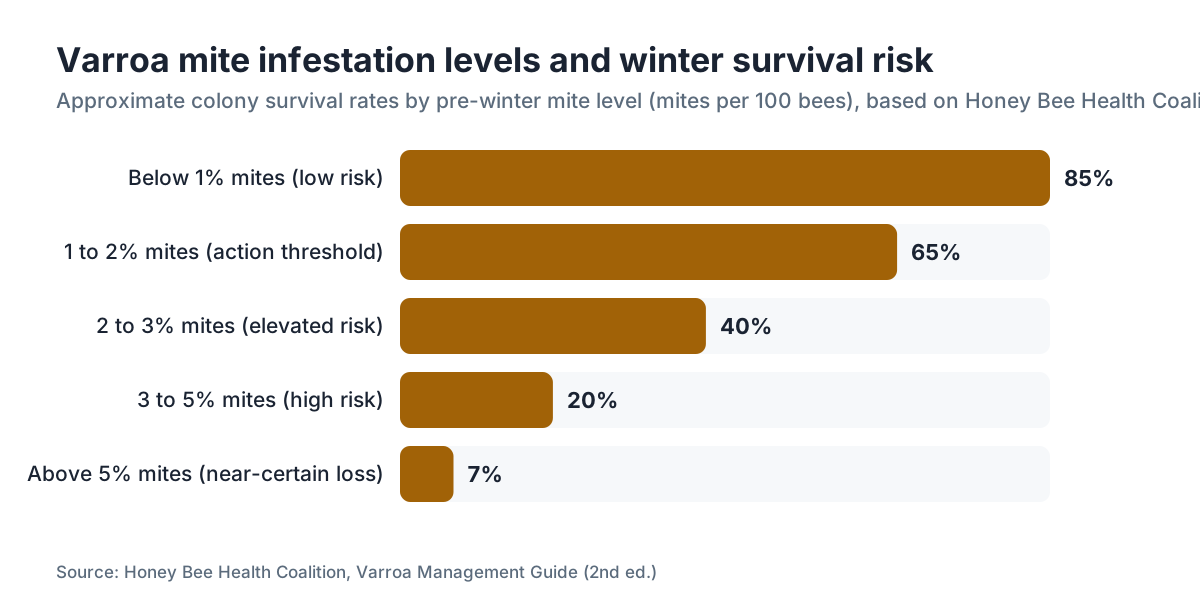
The mechanism is straightforward once you've seen it. Varroa reproduce inside capped brood, and they prefer nurse-bee pupae. Each reproductive cycle can inject deformed wing virus (DWV), sacbrood, and other pathogens straight into the developing bee. By the time a colony gives out, the adult population is old, immune-compromised, and dying faster than the queen can replace it. The Honey Bee Health Coalition's Varroa Management Guide describes the "mite bomb" pattern: a colony that hits autumn above roughly 2 to 3 percent infestation (2 to 3 mites per 100 adult bees) rarely survives winter in most temperate climates [2].
Here's the cruel part. The colony often looks great in August. Plenty of bees, good honey, an active queen. The mite population is compounding inside shrinking brood, and the beekeeper who skipped the August alcohol wash missed the one window that mattered.
When should you do a spring deadout autopsy, and how do you prepare?
Do the autopsy the same day you find the deadout, or within a couple of days if temperatures stay below 50 degrees F. Heat and humidity speed up mold and wax moth damage, and that damage erases the evidence you need. Can't get to it right away? Seal the entrance and any gaps with tape to keep robbers out and slow the decay.
You need a hive tool, a white sheet of paper or a white tray, a spray bottle with 70 percent isopropyl alcohol, a magnifying loupe (10x is fine), a notepad, and your phone for photos. That's the whole kit. No lab gear.
Before you pull a single frame, stand back and read the outside. Dead bees piled at the entrance point to something acute, like a pesticide kill. Very few dead bees outside a failed hive is normal for varroa collapse. The winter cluster shrinks quietly, and the bees die inside or during cleansing flights that never came.
What does a varroa collapse deadout actually look like inside?
Pull frames from the center of the hive first. These are the seven physical signs that you're reading a varroa collapse rather than starvation or another cause.
1. Small cluster, wrong location. A varroa-collapsed colony usually leaves a small cluster of dead bees, often only softball to grapefruit size, up in the upper center of the hive. The cluster is ringed by honey the bees never touched. Starvation looks different. There you get bees clustered tight with empty cells right at their heads, and little or no honey nearby.
2. Bees head-first in cells. Pull a frame from the cluster area and look for bees with heads buried in cells. These bees died reaching for honey during a brief warm break, or simply pitched into the cells as the cluster collapsed around them. It happens in starvation too, but paired with the other signs, it fits the varroa picture.
3. Deformed or stunted bees. Look at the dead bees on the bottom board and in the cluster. Shrunken abdomens, crumpled or missing wings, misshapen legs. That's the fingerprint of deformed wing virus carried by varroa. The Honey Bee Health Coalition notes DWV is the most common virus vectored by varroa and turns up in nearly all collapsing colonies [2]. Winter-kill or starvation bees look physically normal.
4. Mites in the debris. Spread white paper under the bottom board, or scrape the debris onto your white tray. Varroa are reddish-brown, oval, about 1.5 mm across. Finding even 10 to 20 mites in the debris of a small dead cluster is a red flag. A pile of hundreds is nearly diagnostic on its own [3].
5. Spotty or sunken brood caps from last fall. If any capped brood remains (a late collapse sometimes leaves some), open several caps with your hive tool. Sunken, perforated, or discolored cappings on worker brood point to sacbrood or European foulbrood, both of which get worse as varroa erodes the colony's resistance. More telling still: if the last fall brood pattern in your pre-winter photos looks like Swiss cheese, that's retrospective proof of a collapsing nurse-bee population.
6. Mite feces inside cells. Under your loupe, look inside empty brood cells near where the last brood was raised. Varroa leave white, chalky fecal streaks on the cell walls. People confuse this with chalkbrood spores, but the location and pattern differ. Mite frass shows as thin streaks or dots on the lower cell wall, not calcified lumps.
7. Population crash with stores intact. Flip through the full box. Two or more full frames of honey flanking the empty, bee-covered frames rules out starvation. The colony died surrounded by food. That's the signature of a population crash. Not too few calories, too few bees to hold a viable cluster.
How is varroa collapse different from starvation, chilling, or pesticide kill?
Getting the cause right matters because the fix is completely different. Here's a quick comparison.
| Cause | Cluster size at death | Food stores present? | Deformed bees? | Mites in debris? | Bees outside entrance? |
|---|---|---|---|---|---|
| Varroa collapse | Small, scattered | Yes, often plentiful | Frequently | Yes | Few |
| Starvation | Small, tight | No, cells empty | Rarely | Varies | Few |
| Chilling (isolation) | Sometimes moderate | Yes | Rarely | Varies | Few |
| Pesticide kill | Can be large | Yes | Rarely | Rare | Many, sudden |
| Nosema | Small to moderate | Yes | Rarely | Rare | Dysentery on front |
Chilling, also called isolation starvation, hits when a cluster can't move to honey frames during a cold snap. You'll find dead bees in a tight cluster with honey just centimeters away, but on a different frame. No deformed bees. If you're still unsure, the mite debris test breaks the tie: shake the bottom board debris into a cup of alcohol and look for mites.
Pesticide kills are dramatic. Hundreds to thousands of bees dead in a pile at or in front of the entrance, usually within a day or two. The bees look physically normal. The timeline is fast.
Varroa collapse is slow. The colony limps into fall, seems okay, then quietly drops below the cluster size it needs to make heat and dies sometime between November and February.
How do you check mite levels in a deadout to confirm varroa?
Even a dead colony gives up useful mite data. Scrape the bottom board debris into a white tray, grab your loupe, and count mites. This isn't a quantitative test, but 50 or more mites in the debris of a colony that died with a cluster smaller than a softball is strong circumstantial evidence.
If bees remain in the cluster (a few hundred sometimes cling to frames weeks after collapse), run an alcohol wash. Take about 300 bees (roughly half a cup), drop them in a jar of 70 percent isopropyl alcohol, shake for 60 seconds, and pour through a mesh strainer onto a white tray. Count the mites and divide by 3 to get mites per 100 bees. Anything above 3 percent in a spring survivor population tells you the colony that died carried even higher levels before it clustered [4].
University of Minnesota Extension and many state apiarist programs recommend the alcohol wash as the most accurate field test, with a detection rate well above sticky boards or powdered sugar rolls [4]. Oregon State University Extension materials report that sticky boards undercount by roughly 2 to 3 times compared with direct sampling [5].
For your next live colony, VarroaVault's free mite calculator and treatment timing tools track counts across the season so you can decide when to treat before the damage becomes irreversible.
What virus signs should you look for during the autopsy?
Varroa doesn't just drain hemolymph. It's the main vector for at least seven honey bee viruses, and the physical signs of several are readable in a deadout [2].
Deformed wing virus is the loudest. Bees with crumpled, stubbed, or absent wings are a near-certain sign of heavy DWV transmission, which means varroa was active during the last brood cycle before winter. A 2009 study in Science by Highfield and colleagues found varroa-driven DWV strains had largely replaced milder DWV variants across colonies they sampled, which is why wing deformity works as a reliable proxy for mite pressure [6].
Acute bee paralysis virus (ABPV) makes bees tremble, go hairless, and die at the entrance or just inside. You may spot a loose scattering of shiny, darkened bees near the cluster.
Sacbrood shows up in capped brood. Open a capping and you'll find a dead larva in a sac of fluid, usually yellowing to brown, lying flat instead of curled. Sacbrood happens without varroa, but it runs rampant in high-mite colonies because the nurse bees' immune response falls apart.
You can't confirm viruses without lab testing, but the physical signs still build the overall picture. The USDA ARS Bee Research Laboratory offers colony submission guidance if you want a confirmed diagnosis [7].
What should you do with the equipment from a varroa-collapsed hive?
Resist the urge to repopulate the equipment right away. Sort out what's actually reusable first.
Frames with heavy mold: scrape them and freeze for 48 hours at 0 degrees F to kill wax moth eggs and nosema spores before reuse. Frames that are badly molded, packed with rounds of old brood, or strong-smelling should go. Old dark comb carries pesticide residues and pathogen loads that pile up over years [8].
Frames with good capped honey are worth keeping. If the honey isn't fermented (smell it, watch for bubbling), use them as drawn comb to give a new package or nuc a head start. But if you have any reason to suspect American foulbrood (stringy, ropey brood, foul smell), those frames go into a sealed bag and then the trash or a burn pile. Don't gamble with AFB.
The boxes themselves just need scraping and a scorch with a propane torch on the interior if you want to sanitize. Varroa in the debris die without a host, and wood holds no long-term mite reservoir.
One thing beekeepers overlook constantly: pull the dead colony out fast. A deadout full of honey is a robbing beacon, and robbing spreads whatever killed it to your healthy hives nearby. Seal it or clean it out within a few days.
How should you use deadout findings to change your treatment plan?
An autopsy is only worth anything if it changes what you do. Here's the honest protocol shift that most varroa-killed deadouts call for.
The most common failure is skipping or delaying the late-summer treatment window. The Honey Bee Health Coalition's Varroa Management Guide is blunt about it: knock mite levels below 1 to 2 percent before the winter bee population is raised, which means August treatment across most of North America [2]. The bees raised in August and September are the ones that must survive until spring. Raise them from brood parasitized by unchecked mites and their fat bodies are compromised and their lifespans shortened before the first cold snap arrives.
If your deadout had a large cluster, strong population through fall, and still collapsed in January or February, the problem may be treatment efficacy, not timing. Oxalic acid vaporization (OAV) only kills phoretic mites riding on adult bees, never the mites sealed inside capped brood. Run OAV in late fall while brood is still present and the results disappoint. Many beekeepers get better winter outcomes by treating with an extended-release oxalic product or a formic acid product like Mite-Away Quick Strips in September as brood winds down, then following with OAV during a broodless stretch in December or January [9].
Each treatment product's EPA registration and label spell out approved application methods, temperature windows, and colony conditions. Check the current label before every treatment, because formulations and approved uses change [9].
Keep a simple log: date, mite count method, result, treatment applied. Colonies with documented pre-winter counts below 2 percent survive at much higher rates. Nobody has perfect data on the exact threshold, because it shifts with colony strength, local virus pressure, and winter length. The closest large synthesis, the Honey Bee Health Coalition's Varroa Management Guide pulling together multiple studies, puts the risk zone above 2 to 3 mites per 100 bees in late summer [2].
Can you prevent varroa collapse with a consistent monitoring schedule?
Yes, and the evidence backs it up. Colonies monitored and treated when counts cross the threshold survive at much higher rates than colonies treated on a calendar alone or left untreated. The catch is that monitoring takes about 10 minutes per hive, and beekeepers skip it.
A realistic minimum schedule for a hobbyist running 1 to 10 hives:
- Early spring (March/April): Alcohol wash after the first full brood cycle. Baseline count.
- Pre-honey flow (May): Wash again. A booming population can dilute the apparent mite percentage, so don't be fooled by a low reading on a huge colony.
- Post-honey flow (late July/August): This is the wash that decides winter. Treat immediately if you're above 2 percent. Don't wait for a recount.
- Pre-winter (October/November): Wash if you didn't treat in August, or if you're unsure the treatment worked. Apply OAV during any broodless period.
Go hands-on to check your varroa mite situation instead of guessing, and keep reliable beekeeping supplies on hand for running alcohol washes properly.
The Honey Bee Health Coalition's downloadable Varroa Management Guide has a month-by-month monitoring calendar that many state apiarist offices now hand out as their official recommendation [2]. It's free, it's peer-reviewed, and it's the single most credible resource a hobbyist can get on this topic.
What records should you keep from each deadout autopsy?
Record-keeping sounds bureaucratic. It's also how you actually get better. After three years of good records, you'll spot patterns in your own apiary that no guide can hand you.
For each deadout, note the date found, the approximate size of the dead cluster (softball, grapefruit, cantaloupe, or larger), honey stores present (yes/no and rough amount), deformed bees present (yes/no), mite count from debris or alcohol wash, any capped brood condition, and your best guess at cause. Add photos. Label them by hive ID and date.
Then add your last known live mite count from before winter, the treatment used, the application date, and the product (with lot number if you have it). This chain is what lets you tell a timing problem from a treatment efficacy problem, from a rebound problem (mites drifting in from collapsing neighbors), from something else entirely.
Beekeepers who keep records learn their own local mite rebound timelines, which swing hard by geography, bee density, and forage timing. What works for a beekeeper in Minnesota in August may be two weeks too late for someone in North Carolina. Your own data beats any generic calendar.
When does a spring deadout suggest something other than varroa?
Varroa is the most common cause of winter loss in North America. It isn't the only one, and a wrong diagnosis sends your effort in the wrong direction.
A small cluster with absolutely no honey in any nearby cells points to starvation. Feed earlier in fall, or move a honey frame from a strong hive as supplemental stores before the bees cluster.
A dead queen with a cluster that looks like it should have made it (plenty of bees, plenty of food) points to fall queen failure. This shows up more in second-year queens and is usually a management fix: replace queens every one to two years and requeen in summer instead of scrambling in fall.
Multiple hives dying at once with big piles of dead bees at the entrances points to pesticide exposure. File a complaint with your state department of agriculture. Keep a sample of the dead bees frozen in a sealed bag for possible testing.
Dysentery streaks on the hive front plus a small cluster with stored food can mean nosema, especially Nosema ceranae, which hides from a visual check. You need microscopy or PCR for a confirmed nosema diagnosis [10].
And once in a while you'll find a deadout that just stumps you. No clear sign of anything. That happens. Don't over-diagnose. Write it down as unknown cause and move on. NC State University's apiculture program has diagnostic guidance for sorting these winter losses apart [11].
Frequently asked questions
What does a varroa collapse deadout look like compared to a starvation deadout?
A varroa collapse shows a small scattered cluster ringed by unused honey, deformed-wing bees, and visible mites in the debris. A starvation deadout shows a tight cluster with empty cells right at the bees' heads and little or no honey nearby. Food sitting next to a dead colony is the clearest single sign that varroa, not starvation, ended the hive.
How do you find varroa mites in a dead hive?
Scrape the bottom board debris onto a white tray and look with a 10x loupe. Varroa are reddish-brown, about 1.5 mm, and oval. If bees remain in the cluster, run an alcohol wash: 300 bees in 70 percent isopropyl alcohol, shaken 60 seconds, strained onto a white surface. Count mites and divide by 3 for mites per 100 bees. Finding 50 or more mites in debris alone is a strong indicator of heavy pre-collapse infestation.
What are deformed wing virus bees and why do they appear in varroa deadouts?
Deformed wing virus (DWV) is transmitted by varroa during pupal development. Infected bees emerge with crumpled, stubby, or missing wings, shortened abdomens, and reduced lifespans. Those bees can't forage or hold a viable winter cluster. Finding them in your deadout confirms varroa was actively reproducing during the last brood cycle before winter, which is the defining sign of a varroa-driven collapse.
Is it safe to reuse frames and boxes from a varroa collapse deadout?
Boxes are safe after scraping and scorching the interior with a propane torch. Frames with good capped honey can be reused if the honey isn't fermented and there's no sign of American foulbrood. Badly molded frames or frames with ropey, foul-smelling brood residue should be discarded. Freeze all reusable frames at 0 degrees F for 48 hours to kill wax moth eggs and nosema spores before introducing them to a new colony.
Why did my hive die even though I treated for varroa in the fall?
Timing and method matter as much as treating at all. Oxalic acid vaporization only kills phoretic mites on adult bees, not mites inside capped brood. Apply OAV while brood is still present and you likely leave 80 to 90 percent of the mite population protected inside cells. The fix is treating earlier (late July or August) with a product effective through brood, then using OAV again during a broodless period in winter.
What mite level is too high going into winter?
The Honey Bee Health Coalition recommends keeping mite levels below 2 to 3 mites per 100 bees (2 to 3 percent) before the winter bee population is raised in late summer. Colonies above that in August or September are statistically likely to collapse before spring. It isn't a hard cliff, but risk climbs sharply above 3 percent, and the damage to winter bees is done before you ever see symptoms.
What is the best time to do a spring deadout autopsy?
Do it the same day you find the deadout, or within two to three days if temperatures stay cold. Heat, humidity, and wax moths degrade the evidence fast. Seal the entrance if you can't get to it right away. The physical signs of varroa collapse, including deformed bees, mite debris, and intact honey stores, are most readable in the first week after you find the hive.
How do I know if robbing or pesticides killed my hive instead of varroa?
Pesticide kills are sudden and dramatic: hundreds to thousands of physically normal bees dead at or near the entrance within a day or two. Robbing leaves a messy hive with torn cappings, little or no honey, and sometimes dead bees with stingers still engaged. Varroa collapse is slow and quiet, with a small final cluster, intact stores, deformed bees, and mite debris. Timeline and physical bee condition are your best diagnostic tools.
Can I send a dead colony to a lab for diagnosis?
Yes. The USDA ARS Bee Research Laboratory accepts colony samples for disease diagnosis. Your state apiarist may also offer testing or point you to a state lab. For a useful sample, collect about a cup of bees from the cluster and a frame of brood if available, seal them in a bag, and ship or refrigerate promptly. Lab confirmation matters most when you suspect American foulbrood, nosema, or pesticide exposure.
How many hives typically die from varroa each year?
USDA annual colony loss surveys have tracked total managed losses averaging roughly 40 to 50 percent per year for hobbyist beekeepers in recent survey years, with varroa and associated viruses named as the leading cause. Exact varroa-specific mortality is hard to isolate because stressors interact, but the Honey Bee Health Coalition's research synthesis identifies varroa as a contributing factor in the majority of unexplained winter losses.
Should I replace my queen after a varroa collapse in a surviving colony?
If the colony survived with heavy varroa damage and a depleted population, requeening with a locally adapted or mite-tolerant queen is a reasonable move. The surviving bees will be short-lived, and the colony needs a fresh laying queen to rebuild fast. Some breeders offer queens from lines selected for hygienic behavior, which correlates with better varroa resistance. It's no guarantee, but it beats a random replacement.
What records should I keep after finding a spring deadout?
Record the date found, cluster size at death, honey stores present, deformed bees present, mite count from debris or alcohol wash, brood condition, and your best-guess cause. Then add the last known live mite count, treatment product, and application date. Photos are worth adding. Three years of these records will reveal your local mite rebound timing and whether your treatment protocol actually works in your specific apiary conditions.
Do mite-resistant bee breeds prevent this kind of collapse?
Hygienic and Varroa Sensitive Hygiene (VSH) lines show measurably better mite-removal behavior in controlled studies, but no commercial breed removes the need for monitoring. VSH colonies can hold lower mite loads with less intervention, yet they still need regular alcohol washes. Mite-tolerant genetics are a useful part of a strategy, not a replacement for monitoring and treatment.
What is the broodless period and why does it matter for winter varroa treatment?
The broodless period is the winter window, usually December through January in temperate North America, when the queen stops laying and no capped brood is present. During that window every varroa mite is phoretic, riding on adult bees, which makes oxalic acid treatments up to 90 to 95 percent effective in a single application. Treating then is the most efficient use of OAV and is widely recommended by state apiarist programs and the Honey Bee Health Coalition.
Sources
- USDA NASS, Honey Bee Colonies Report: Annual colony loss surveys tracking approximately 40 to 50 percent hobbyist losses with varroa and associated viruses as leading causes
- Honey Bee Health Coalition, Varroa Management Guide: Treatment threshold of 2 to 3 mites per 100 bees before winter bee population is raised; DWV as most common varroa-vectored virus; mite-bomb collapse scenario description
- Pennsylvania State University Extension, Varroa Mite Monitoring and Management: Identifying varroa mites in bottom board debris and the diagnostic value of mite counts in dead colonies
- University of Minnesota Extension, Varroa Mite Sampling: Alcohol wash as most accurate field test for varroa; detection rate superior to sticky boards or powdered sugar rolls
- Oregon State University Extension, Honey Bee Varroa Mite Management: Sticky boards undercount mites by a factor of roughly 2 to 3 compared to direct sampling methods like alcohol wash
- Highfield et al., Science, 2009: Varroa-driven DWV strains largely replaced milder variants in sampled colonies; wing deformity as reliable proxy for mite pressure
- USDA ARS Bee Research Laboratory: Colony submission guidance for confirmed disease and virus diagnosis
- Mullin et al., PLOS ONE, Pesticide Loads in Wax, Pollen and Bees in Colonies: Old dark comb accumulates pesticide residues and pathogen loads over multiple brood cycles
- EPA, Oxalic Acid and Formic Acid Product Labels for Varroa Treatment: OAV registration, approved application methods, temperature windows, and colony brood conditions; Mite-Away Quick Strips formic acid registration
- USDA ARS, Nosema ceranae Diagnosis and Management: Nosema ceranae requires microscopy or PCR for confirmed diagnosis; dysentery signs on hive front as visual indicator
- NC State University Apiculture Program, Winter Colony Loss Diagnostics: Distinguishing varroa collapse from starvation, chilling, pesticide kill, and nosema in spring deadout investigations
Last updated 2026-07-09